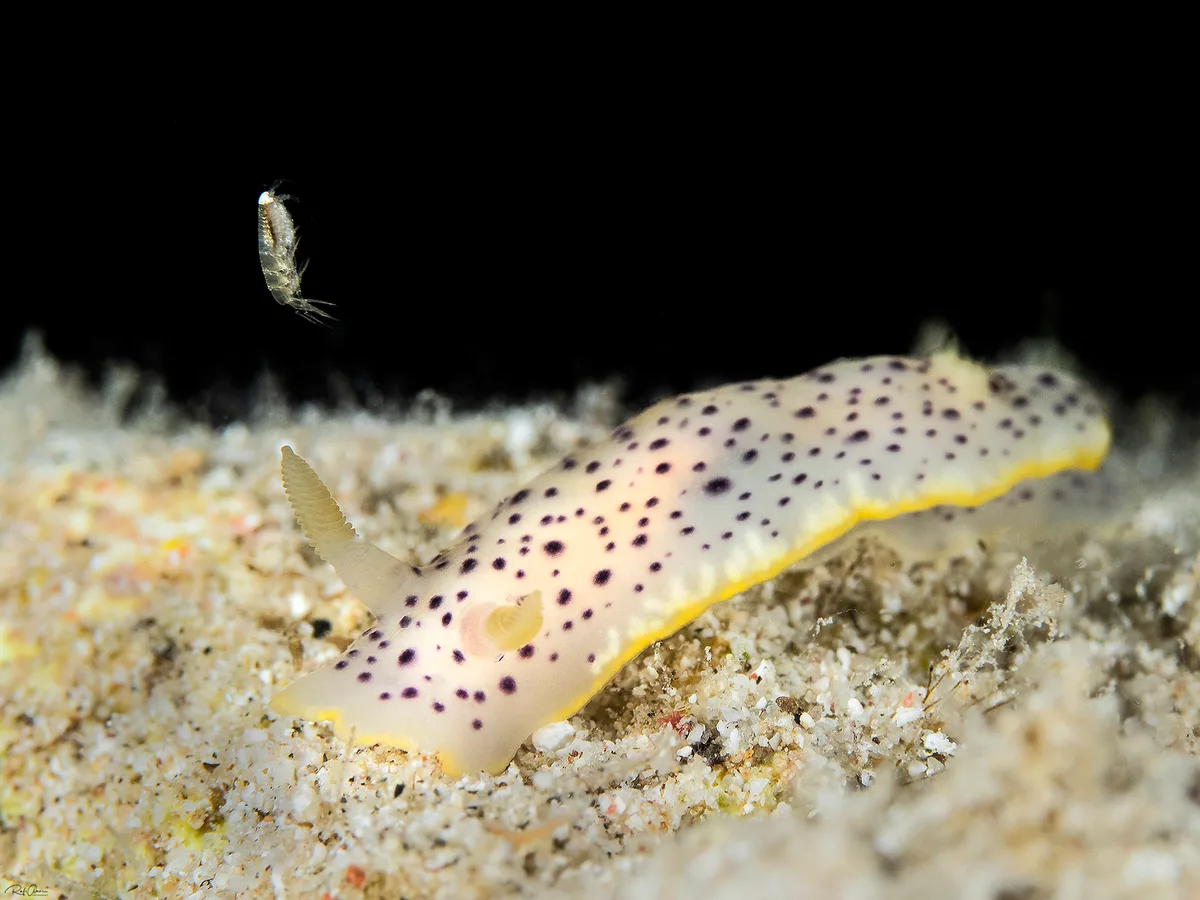
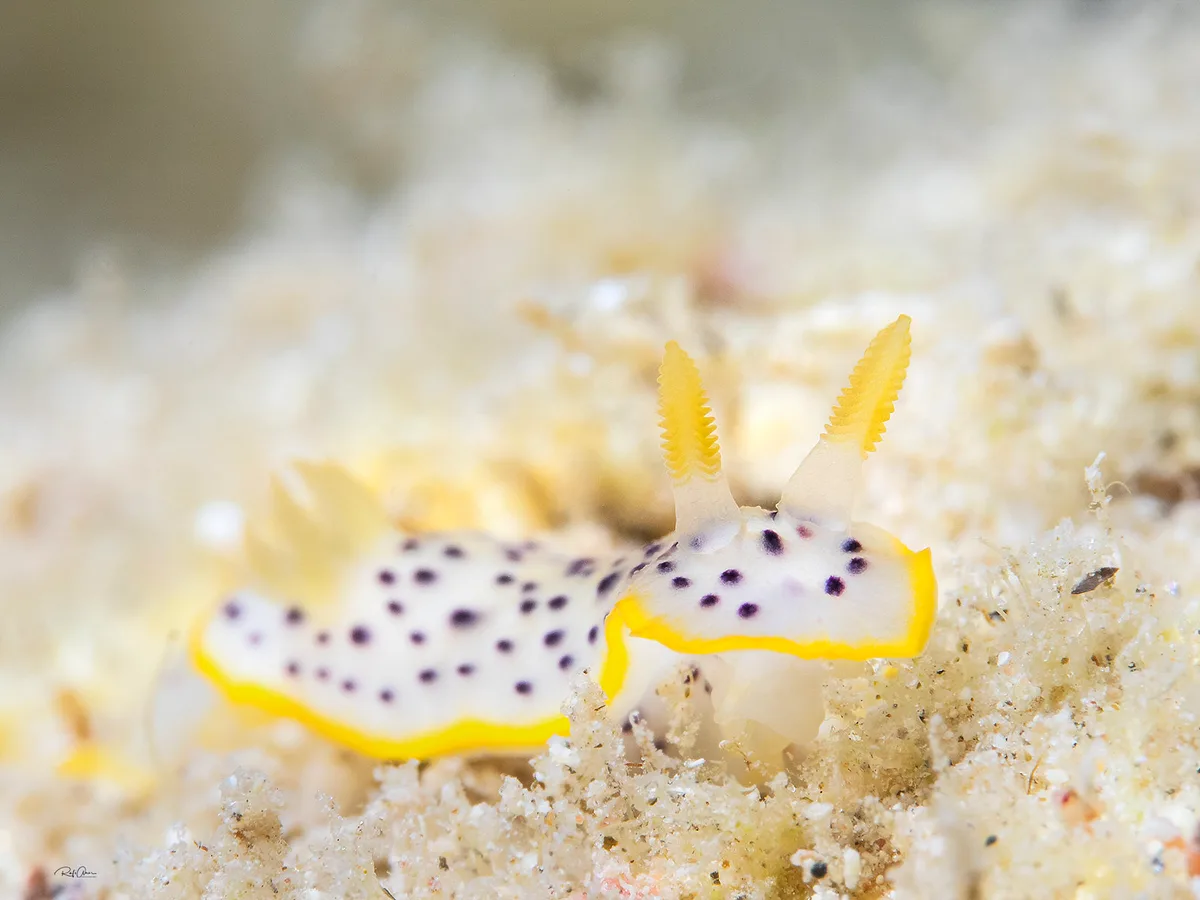
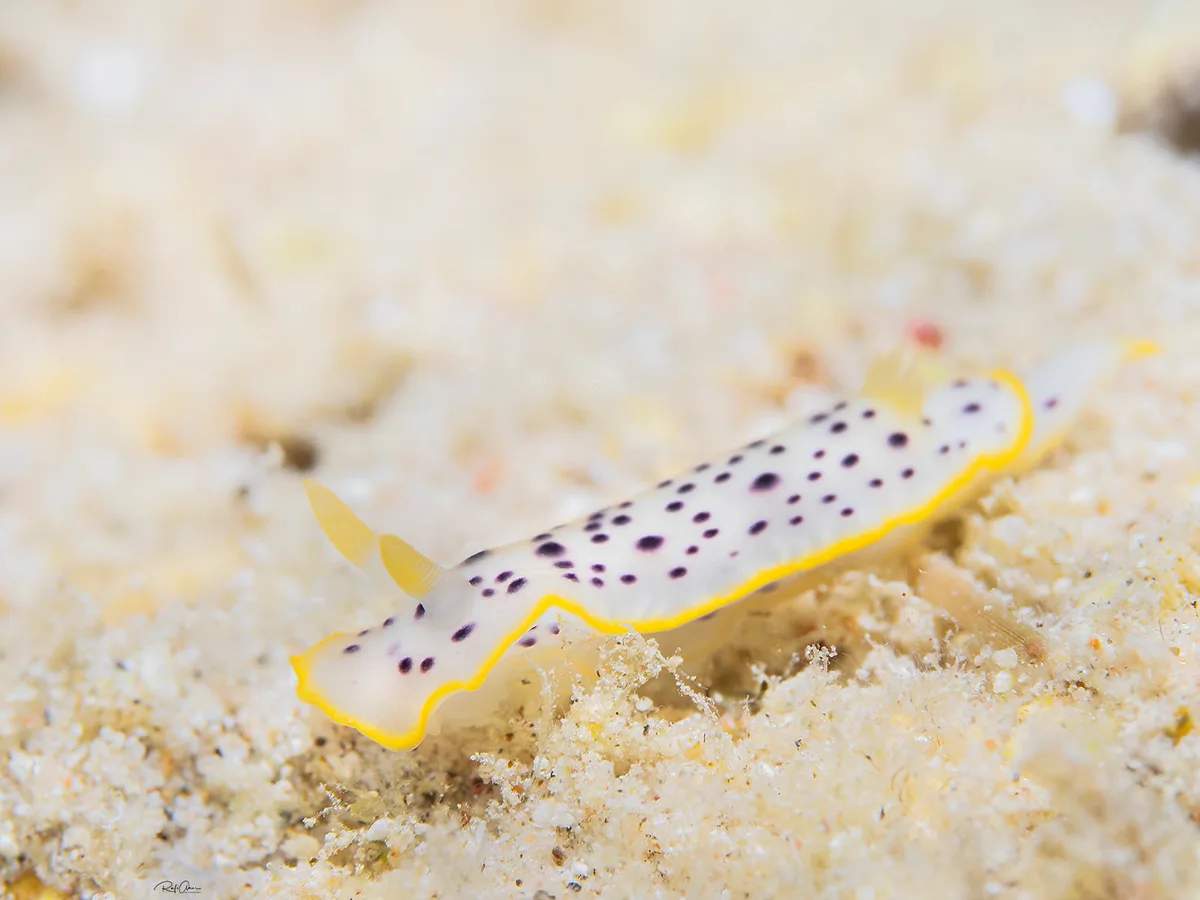
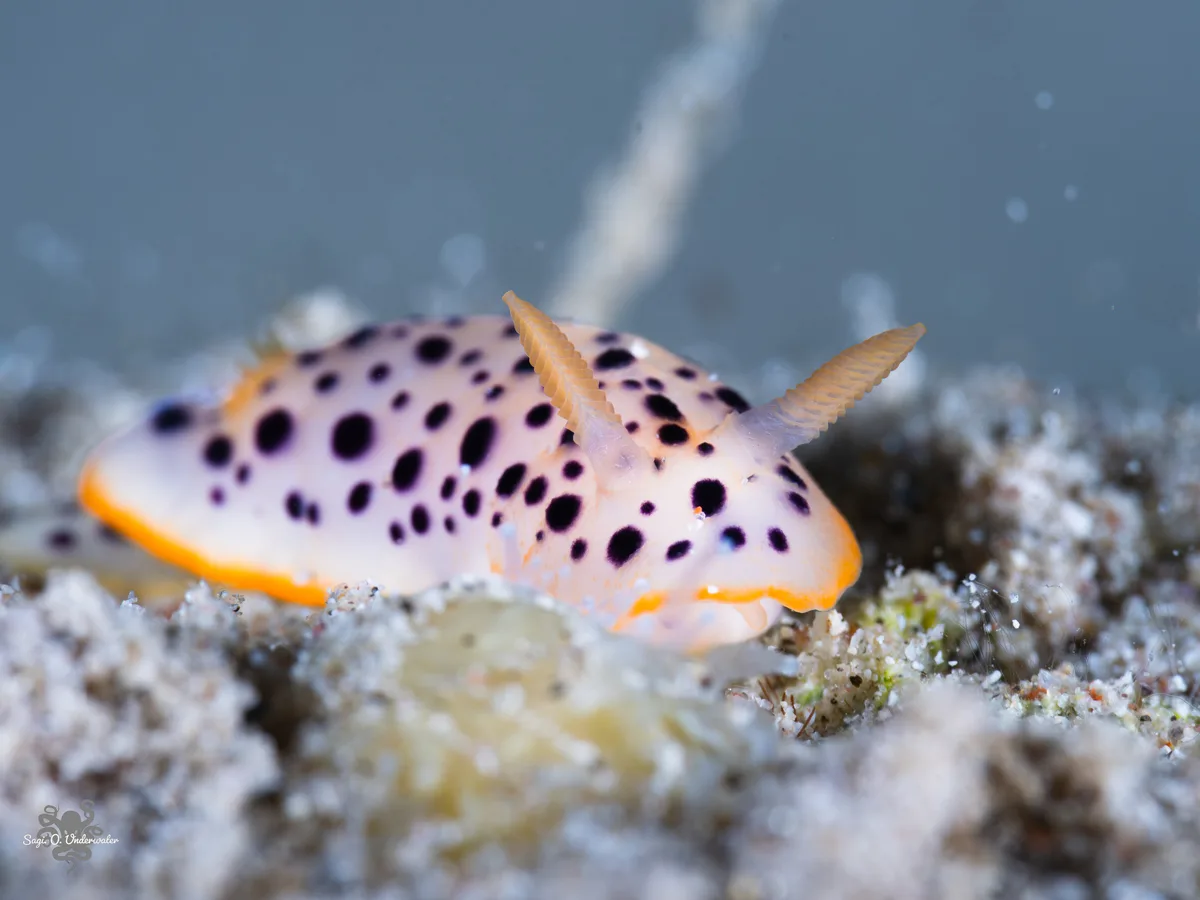
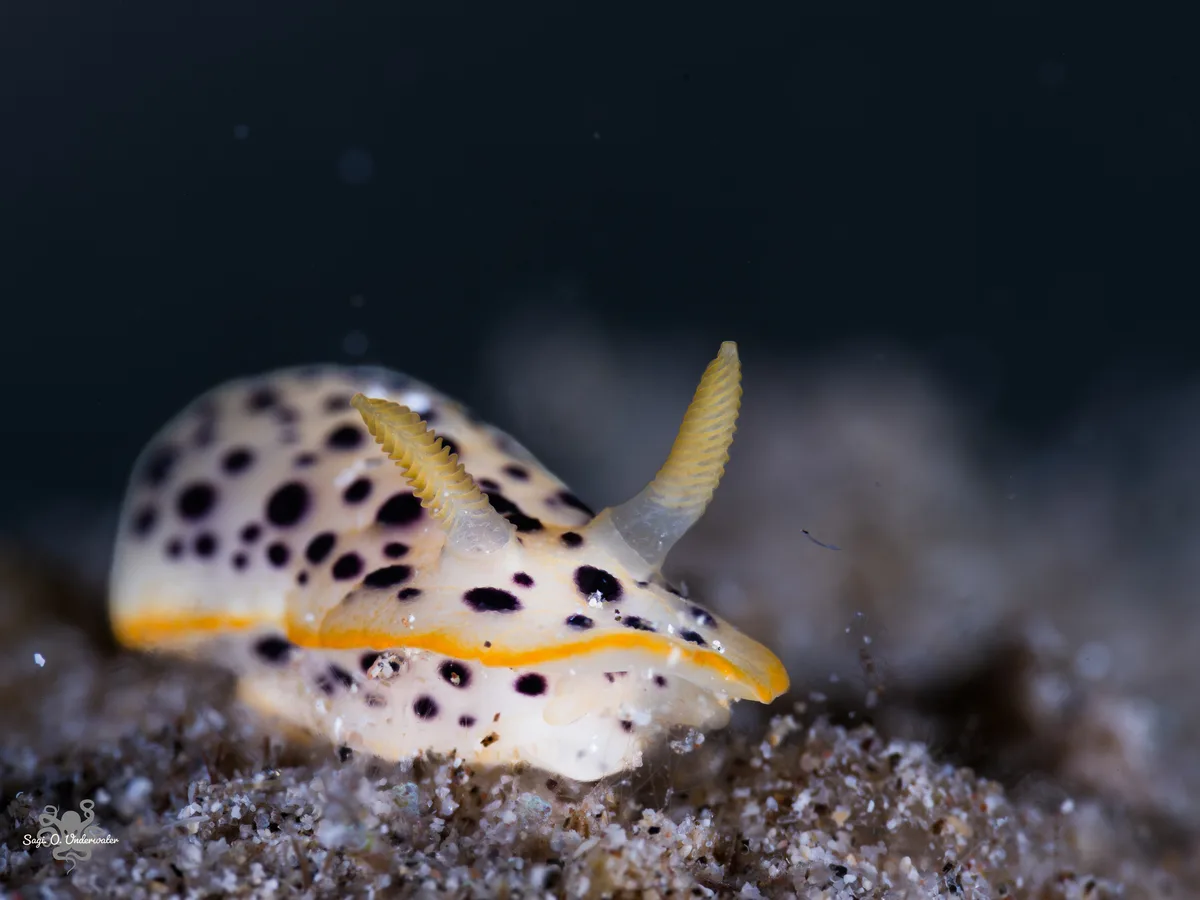
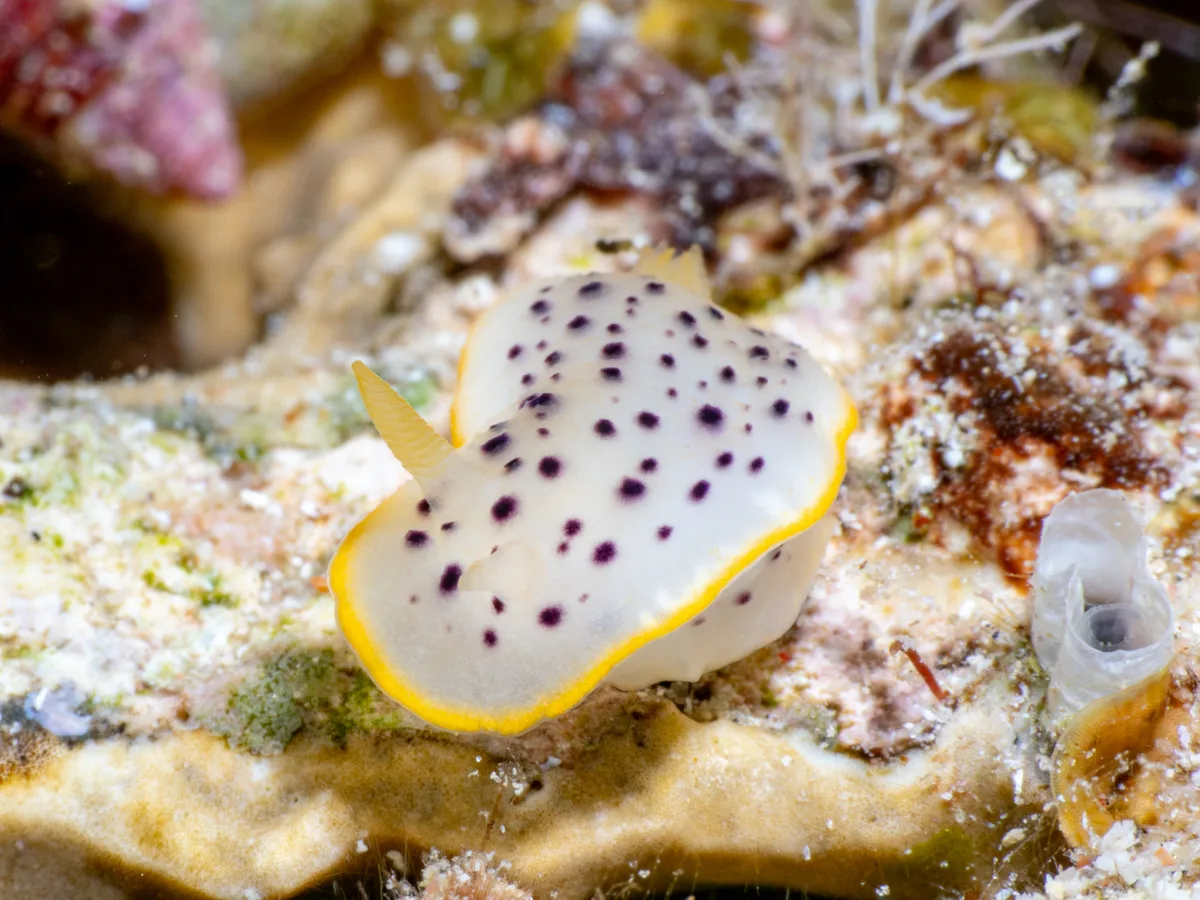
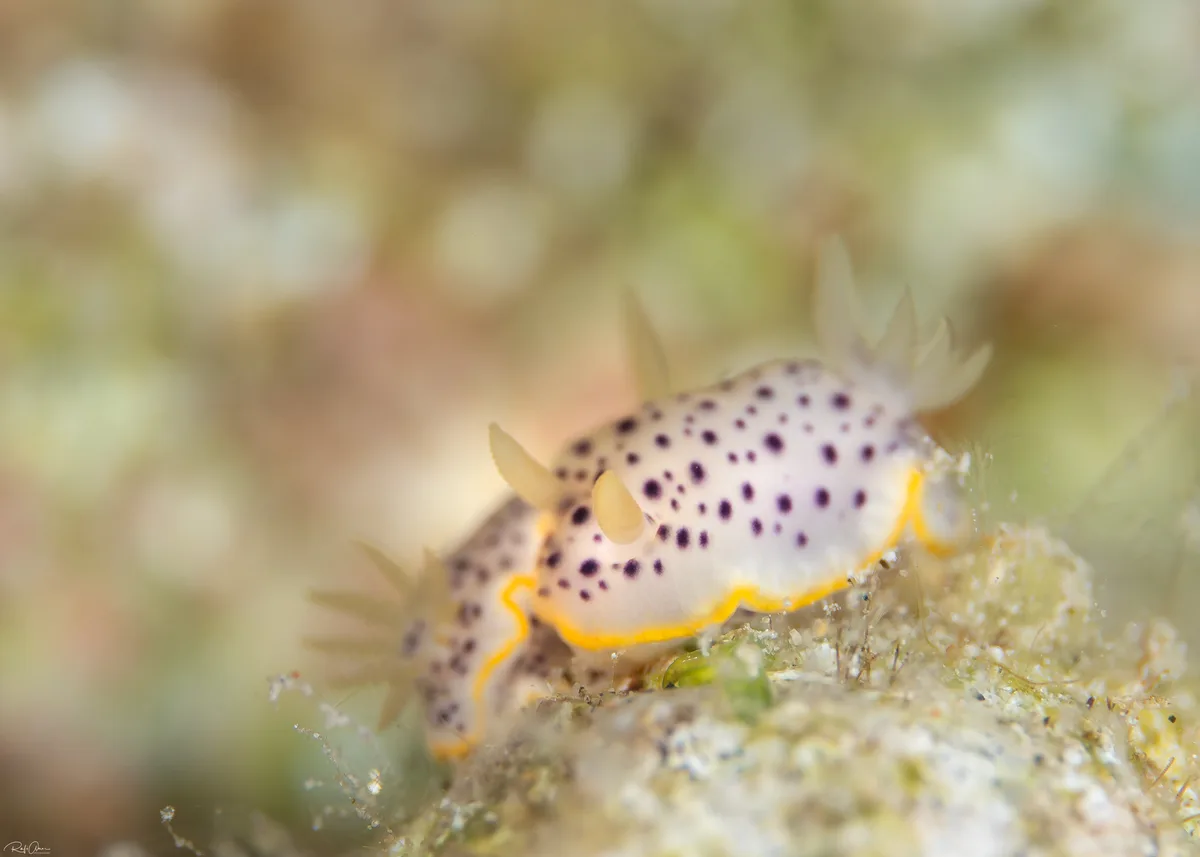
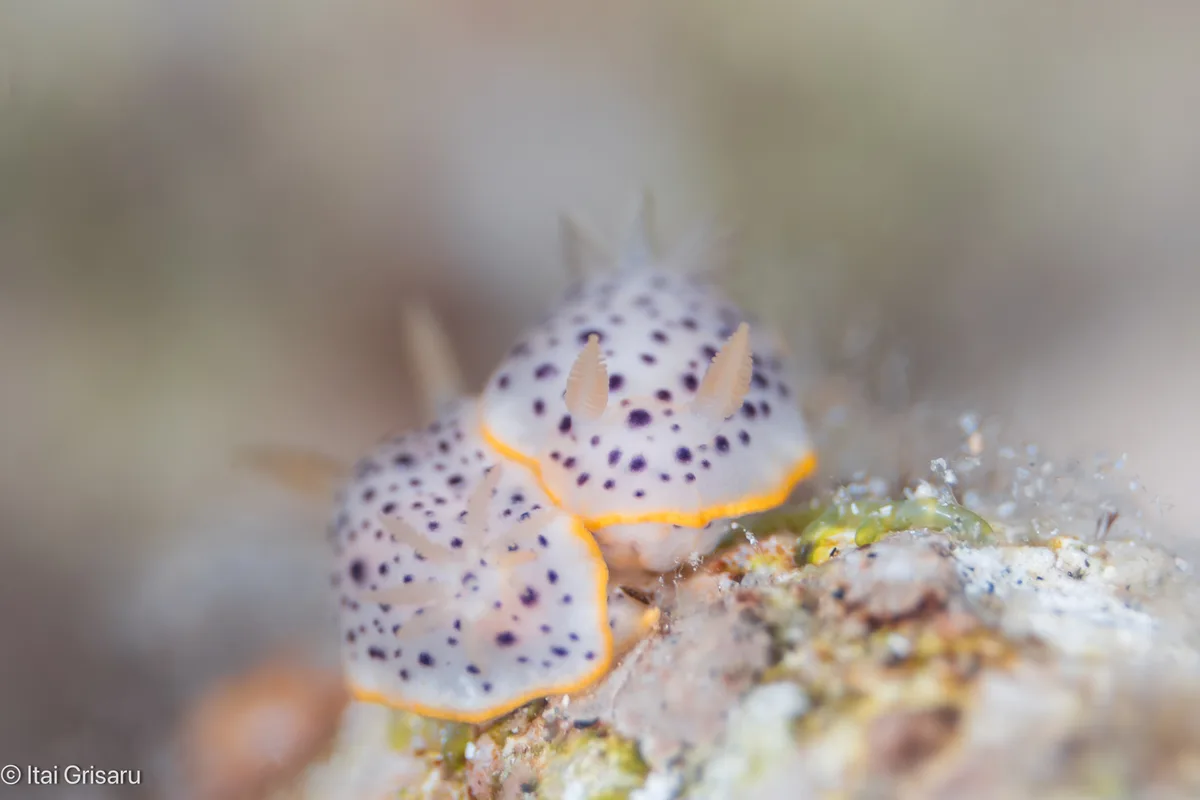
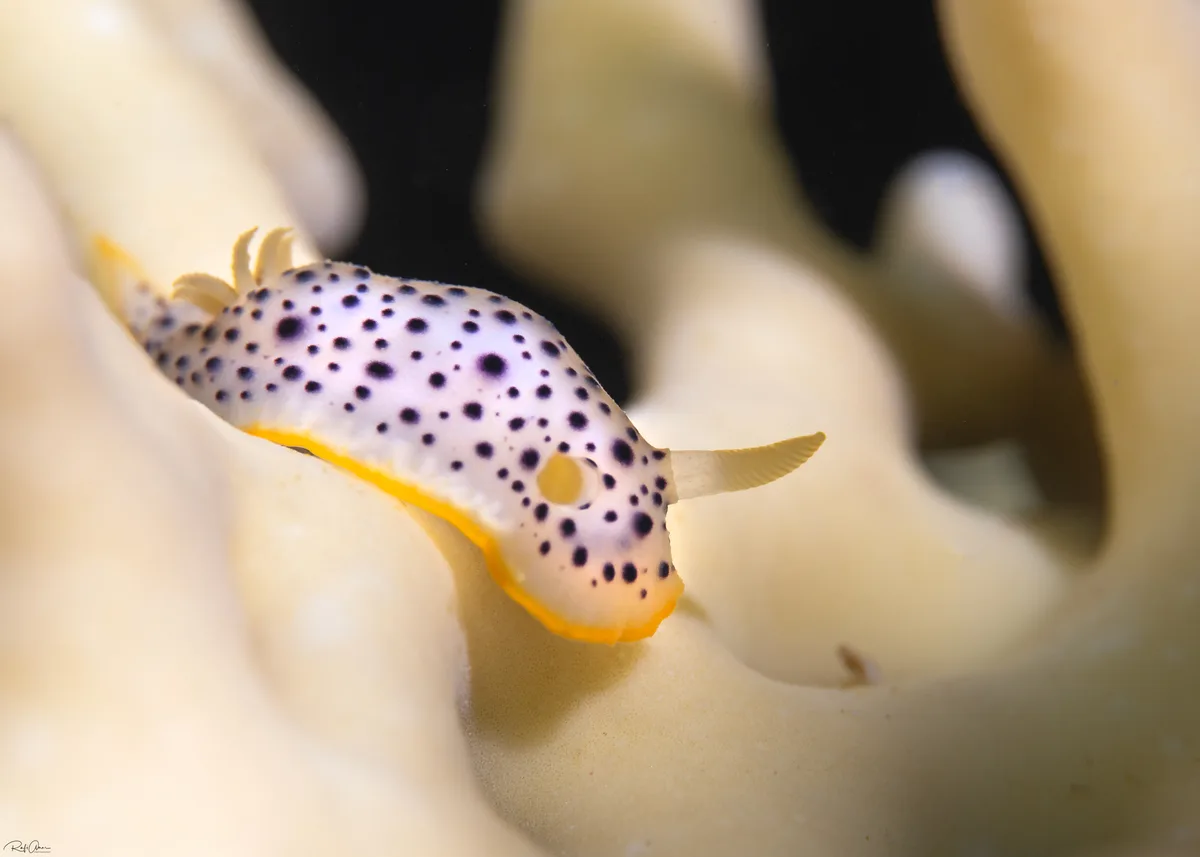
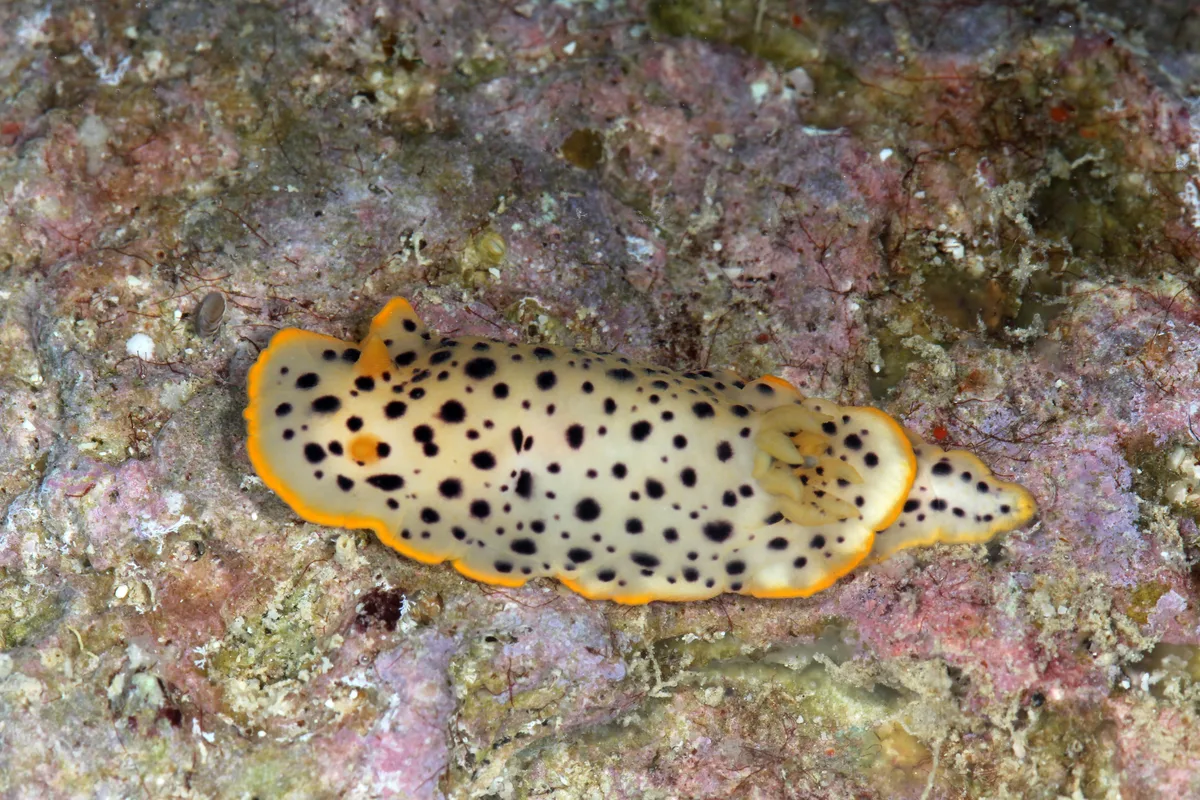
A five-centimeter animal in bright yellow and orange, crawling in the open on one of the most heavily dived coasts on Earth, and nobody gave it a name until 2020.
That is not an oversight so much as a measure of how chromodorid taxonomy works. The genus is full of species separated by the width of a colored band or the number of spots, characters that vary between individuals and fade in preserved animals, so for most of a century the whole complex was sorted into a few catch-all names. Untangling it needed genetics, and the recent revisions have been splitting long-accepted species into several, each with a smaller range. This one came out of that work, and its range is this sea alone.
What it means for a diver is that a photograph is now worth something. Old records of the common names are unreliable because nobody knows which of the newly separated species was in front of the camera, so a dated, located photograph of a 🌊 Red Sea chromodorid genuinely adds to the map.
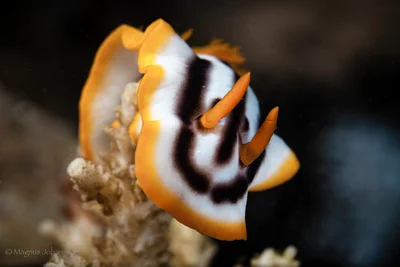
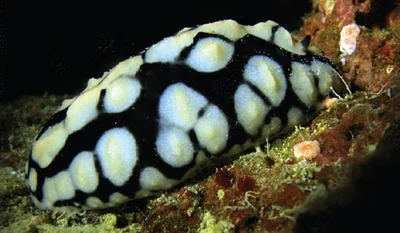
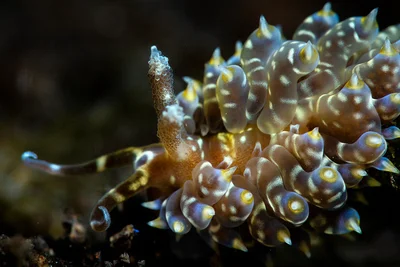
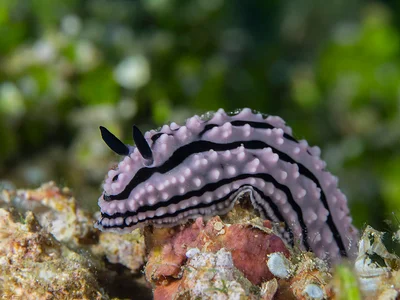
The animal itself: yellowish, with an orange band around the mantle edge and black spots scattered over the back, where its striped relatives carry unbroken lines. Like all of them it feeds on sponges and keeps the sponge's chemistry in the rim of its own mantle.
It is rare in the records, though that may say more about how recently anyone has been looking for it under this name.
- yellowish body with an orange margin and scattered black spots
- spots rather than the stripes its close relatives carry
- found in the Red Sea and nowhere else
- up to 5 cm