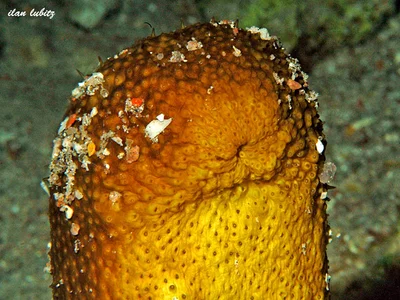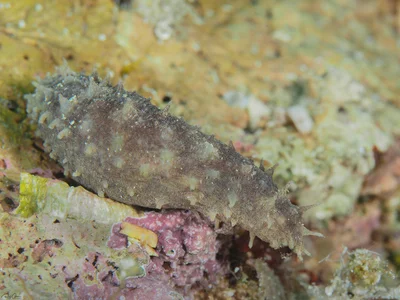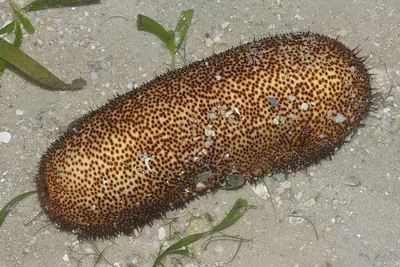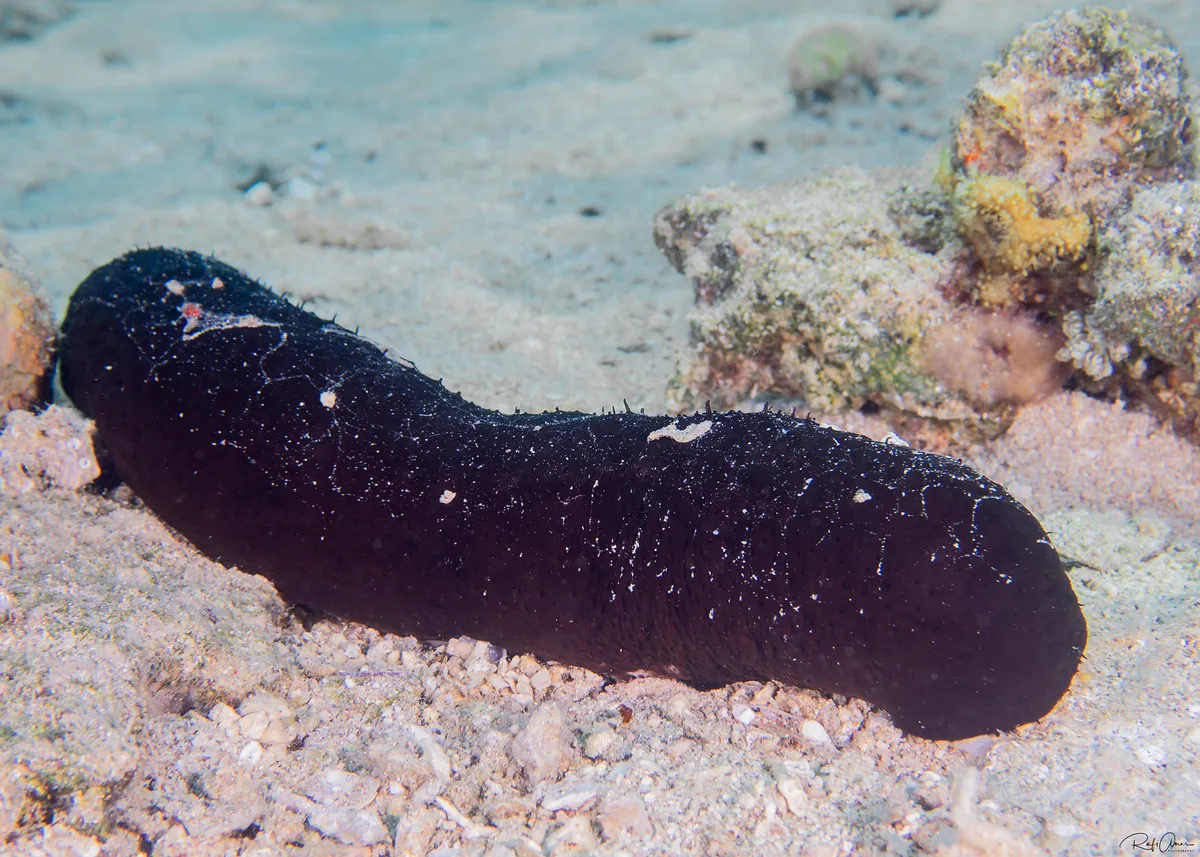
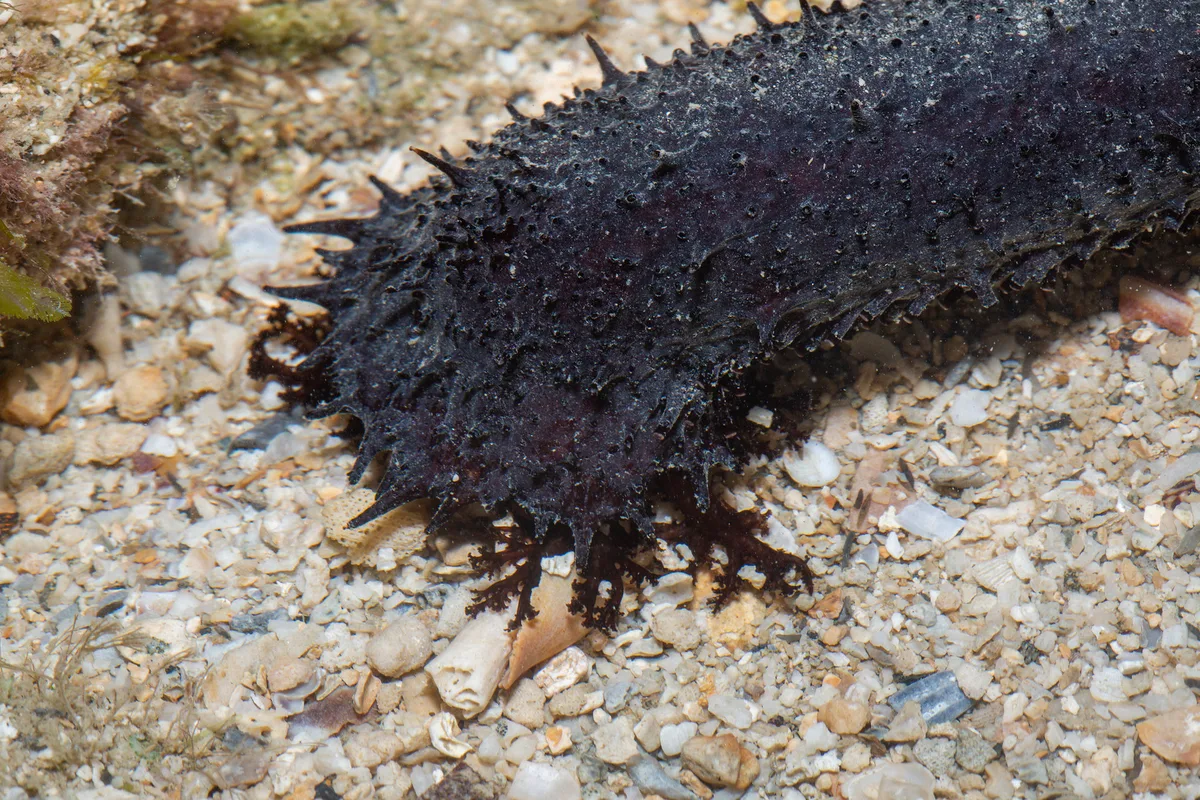
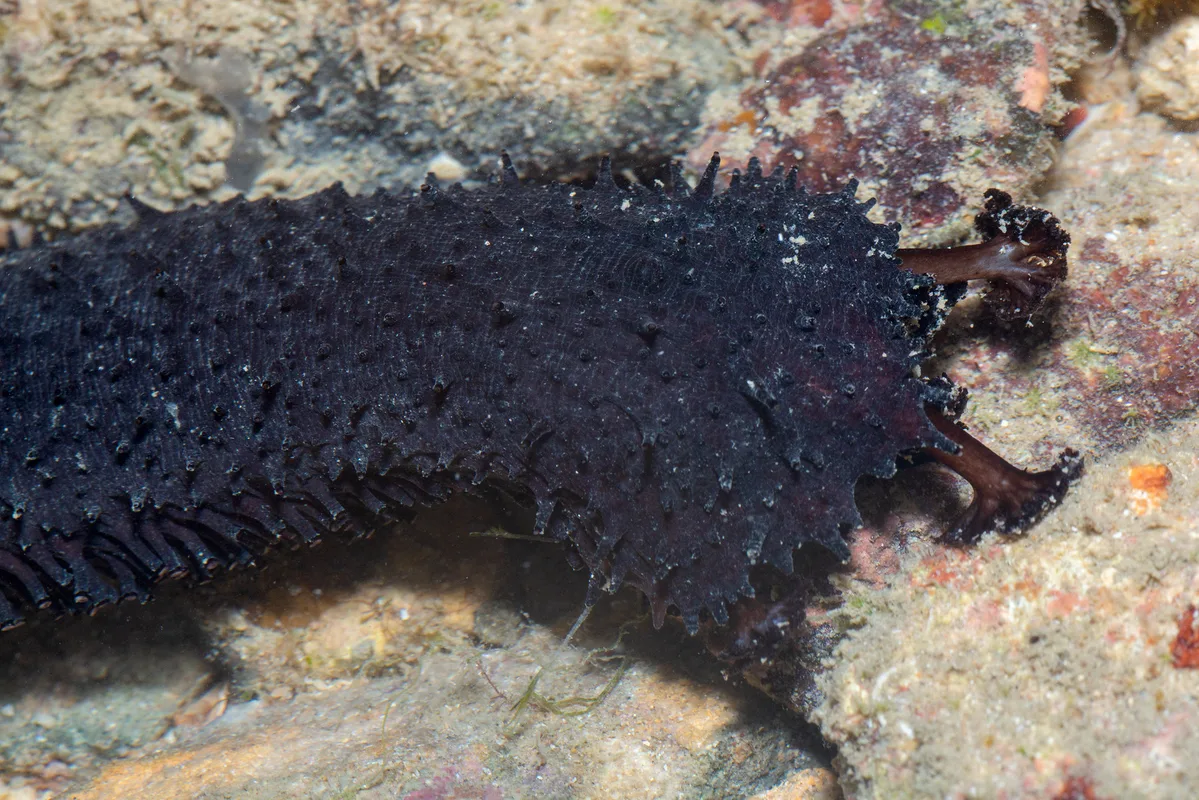
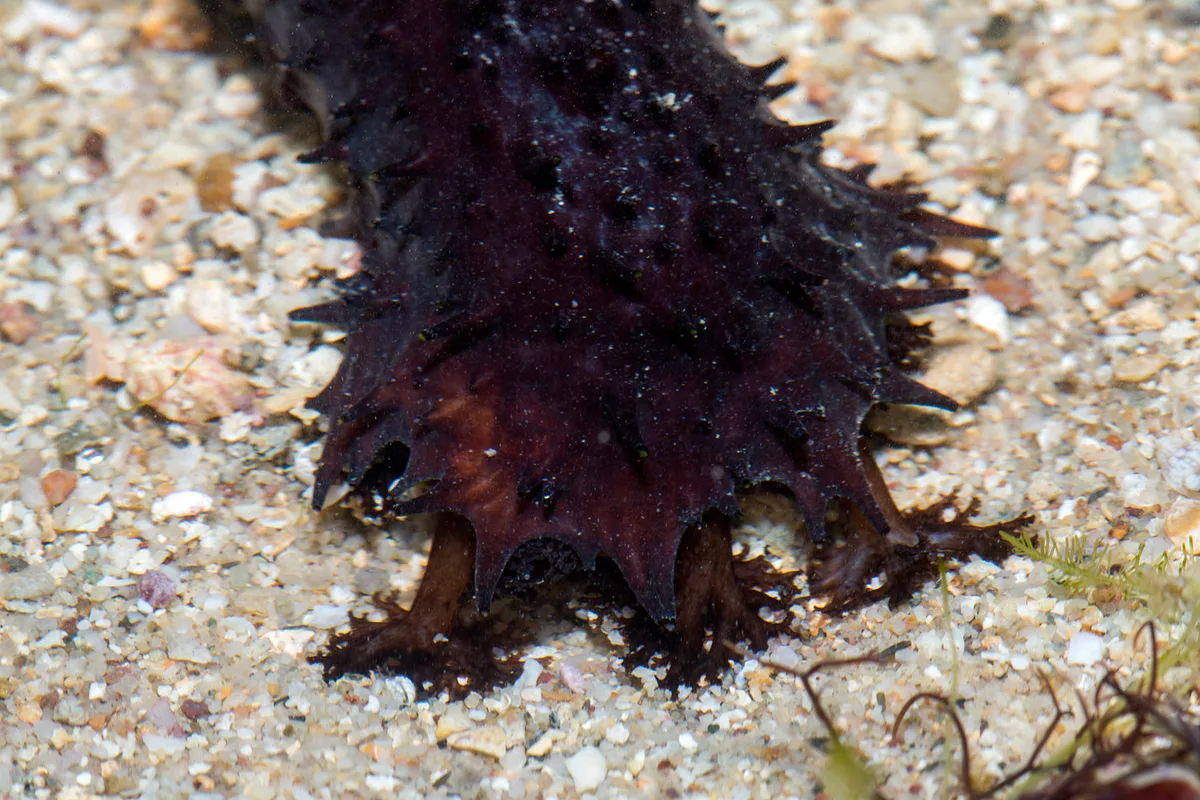
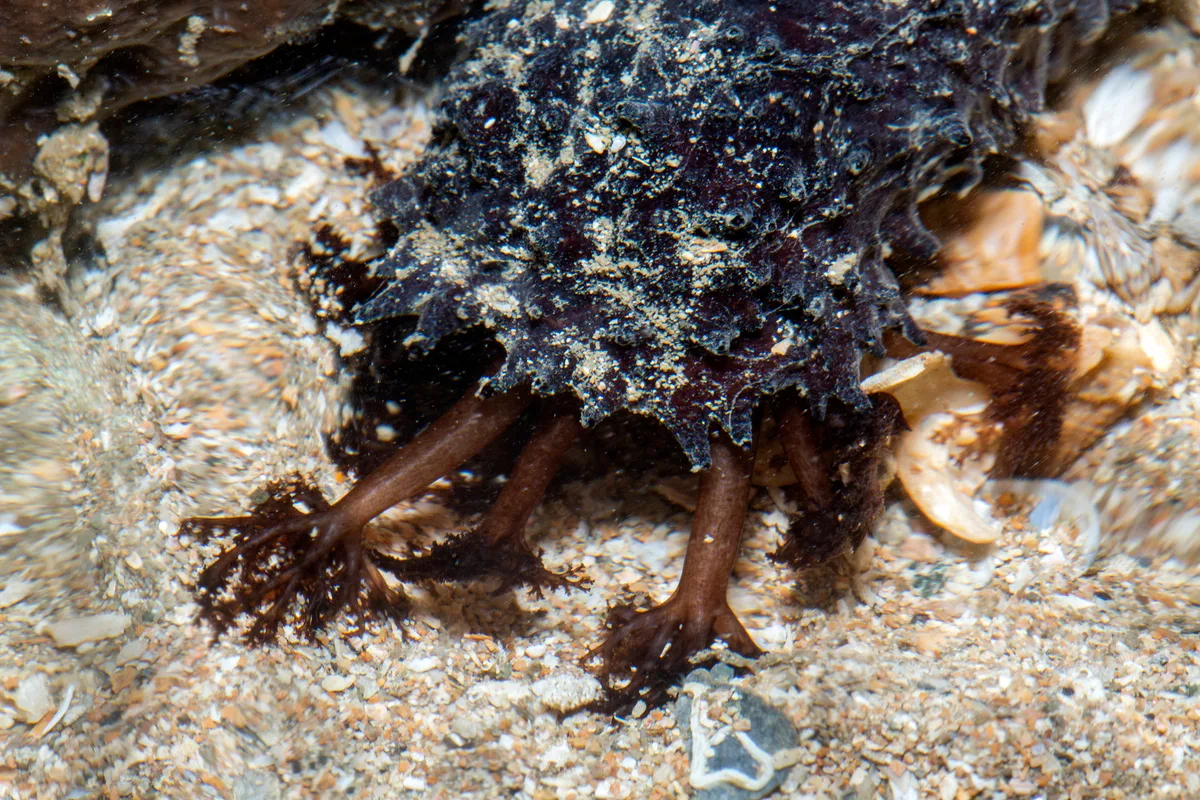
A soft black sea cucumber reaching about 40 cm (16 in), with a body wall so flexible that the animal looks bloated in one moment and stretched thin the next. There are no bright markings and no prominent papillae - just a dark, slightly sticky cylinder, usually with the front half jammed under a rock and the rear lying out in the open.
That is the normal posture on shallow rubble and rock down to about 15 m (50 ft): tentacles working the sediment in the shelter of the boulder while the exposed end faces whatever comes. Whatever comes usually regrets it. Provoked, the animal releases a mass of Cuvierian tubules through the vent - white threads that expand many times in water, adhere instantly and carry saponins strong enough to deter fish. They will stick to a glove just as well, and are hard to get off, which is reason enough to admire from a distance. It is among the most abundant large invertebrates in the shallows here, so the demonstration is easy to trigger and best left untriggered.
- soft black body, often bloated and shapeless
- front end hidden under rock, rear exposed
- masses of sticky white threads when disturbed
- length up to 40 cm
Why it's threatened
Threat classification from the IUCN Red List.