syn. Bohadschia bivittata, Bohadschia similis, Bohadschia tenuissima, Holothuria bivittata, Holothuria clemens, Holothuria similis +2 more
up to 30 cm0-25 mPoisonous
25
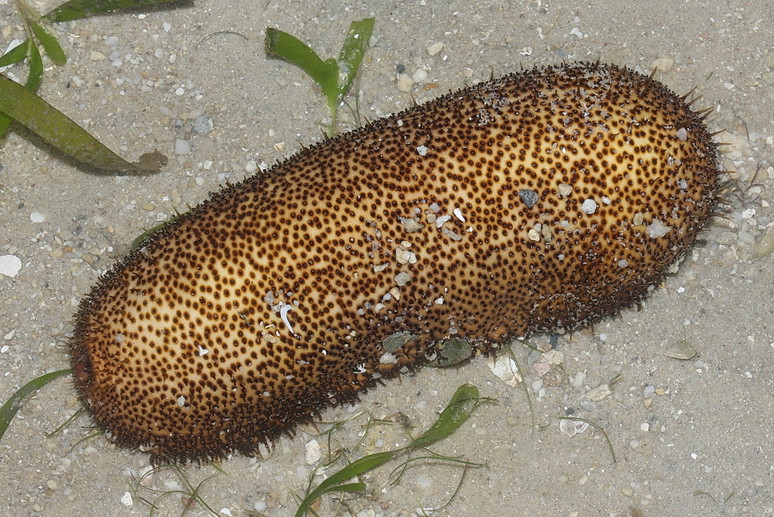
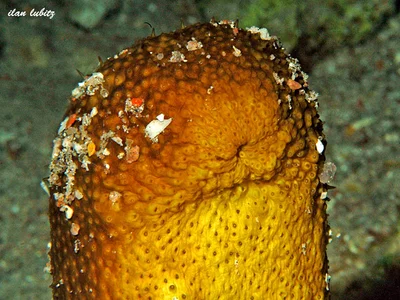
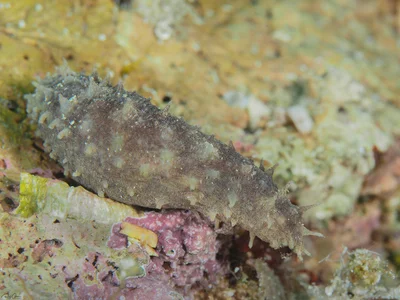
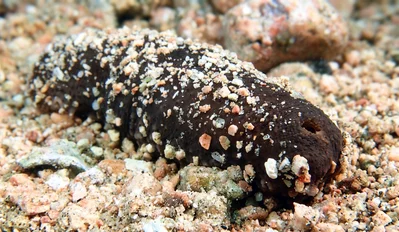
A pale brown sea cucumber growing to about 30 cm (12 in), marked with darker blotches and usually so thickly coated in adhering sand that the pattern only shows where the animal has recently moved. The skin is smooth and slightly sticky to the touch, without papillae or anal teeth.
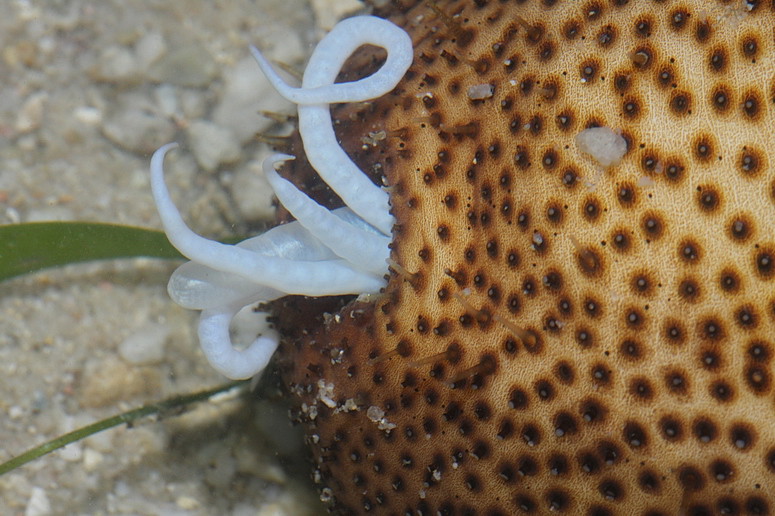
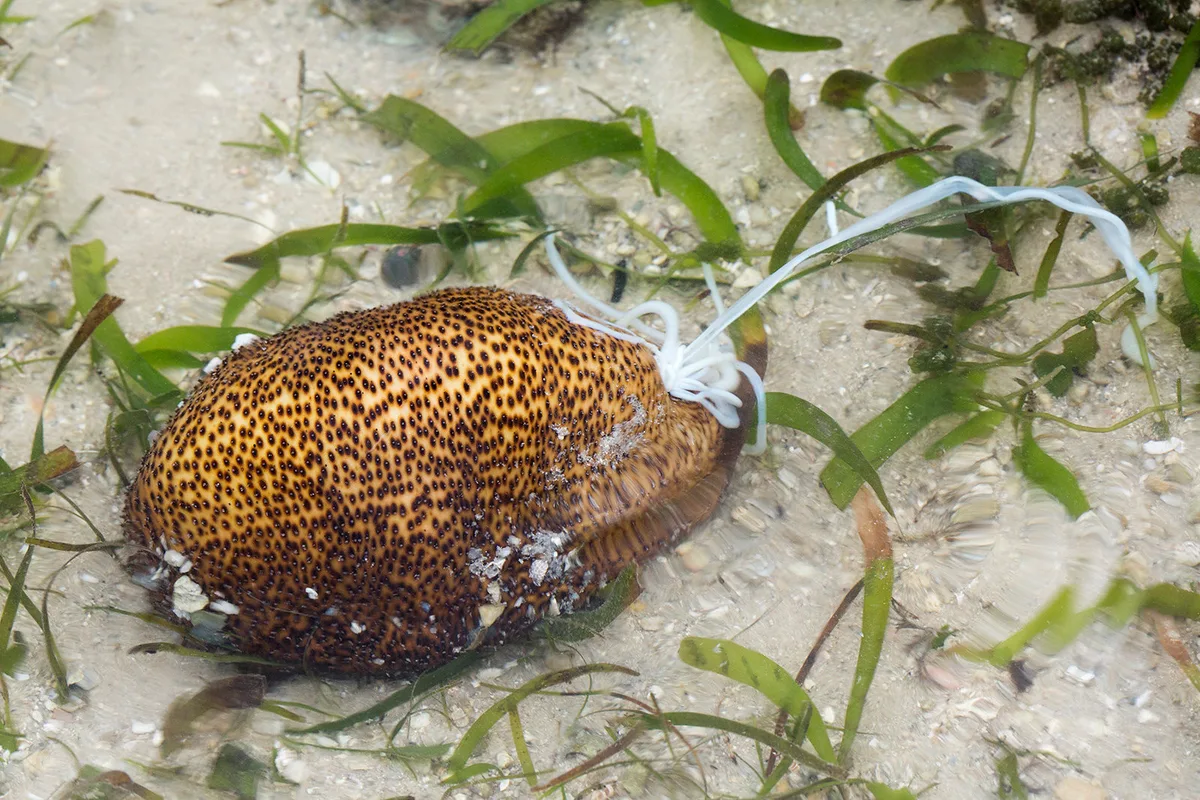
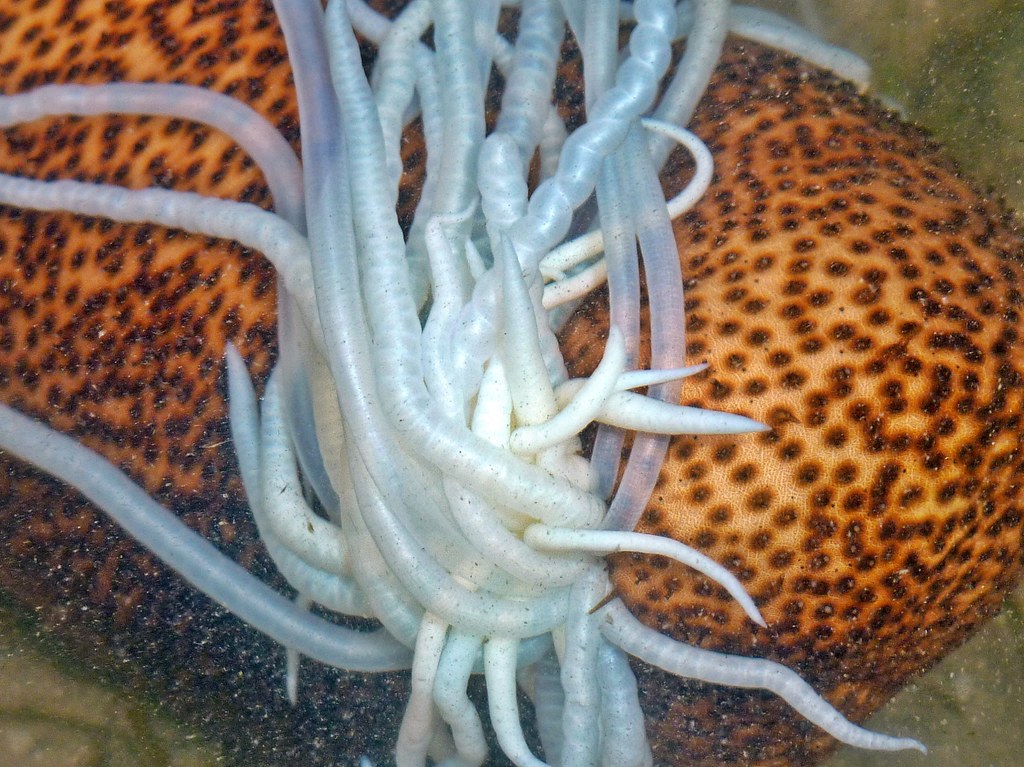
It lives on sheltered sand flats and lagoon floors from the shallows to roughly 25 m (80 ft), lying fully exposed and feeding continuously, a slow conveyor turning sediment over. Handled or attacked, it discharges Cuvierian tubules - white threads that lengthen dramatically in water and glue themselves to anything they touch. The threads regenerate over several weeks, which makes casual provocation an expensive nuisance for the animal. Juveniles of this species look nothing like the adults: they are boldly patterned in dark bands and are easily mistaken for a different species entirely, a change that has caused repeated confusion in the literature. Records from this coast are scattered but consistent, mostly from calm sandy bays rather than exposed reef.
In Kiribati, a multispecies fishery which included this species boomed from 2000 to 2002, but is now considered depleted. In Samoa, sea cucumber fishing activities started in the 1960s, but peaked in mid-1990s with this species accounting for 44% of the exports. The exports closed in 1994 and now the fishery supplies the local market only; however, in 2004 1.7 tonnes of this species and B. horrens were sold locally (Kinch et al. 2008). It is commercially exploited in Indonesia (Choo 2008). In Madagascar, this species has limited harvesting (Rasolofonirina 2007).
Although not one of the most important species (low value) for fishery purposes, it can be expected that this species may become more popular after the depletion or reduction of other species of higher commercial importance and value. This has been seen in Samoa, after the decline of S. horrens, in PNG after the decline of H. scabra and in Fiji after the decline of A. miliaris (Kinch et al. 2008).
In the Solomon Islands the average annual export price of this species increased from $1.90kg-1 in 1988 to $4.70kg-1 in 1993 for the highest grade catch. It was considered low-value during this time period (Holland 1994).
Threat classification from the IUCN Red List.
Comments
Please, sign in to leave a comment
Continue with a social account - yours will be created automatically.