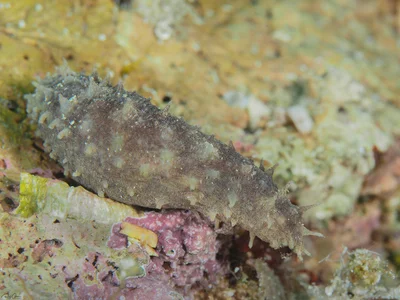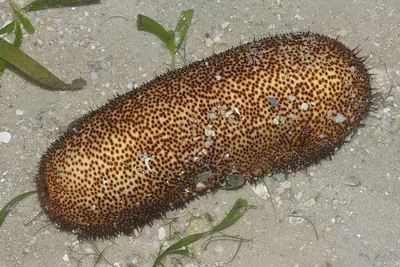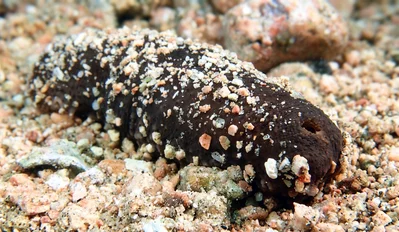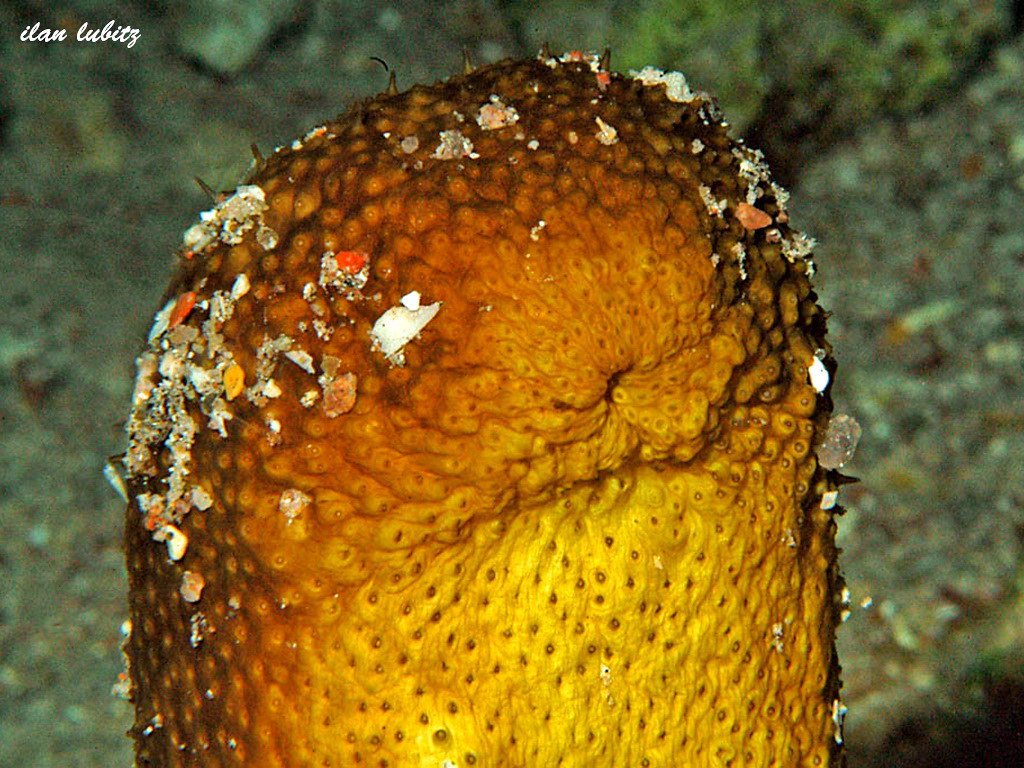
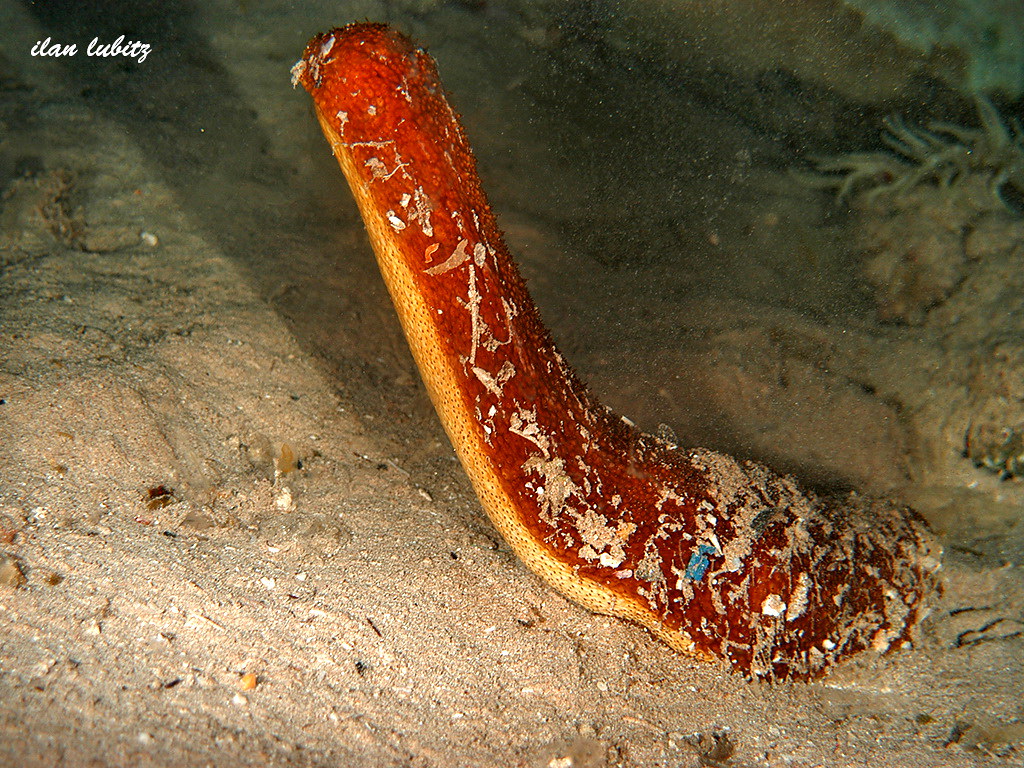
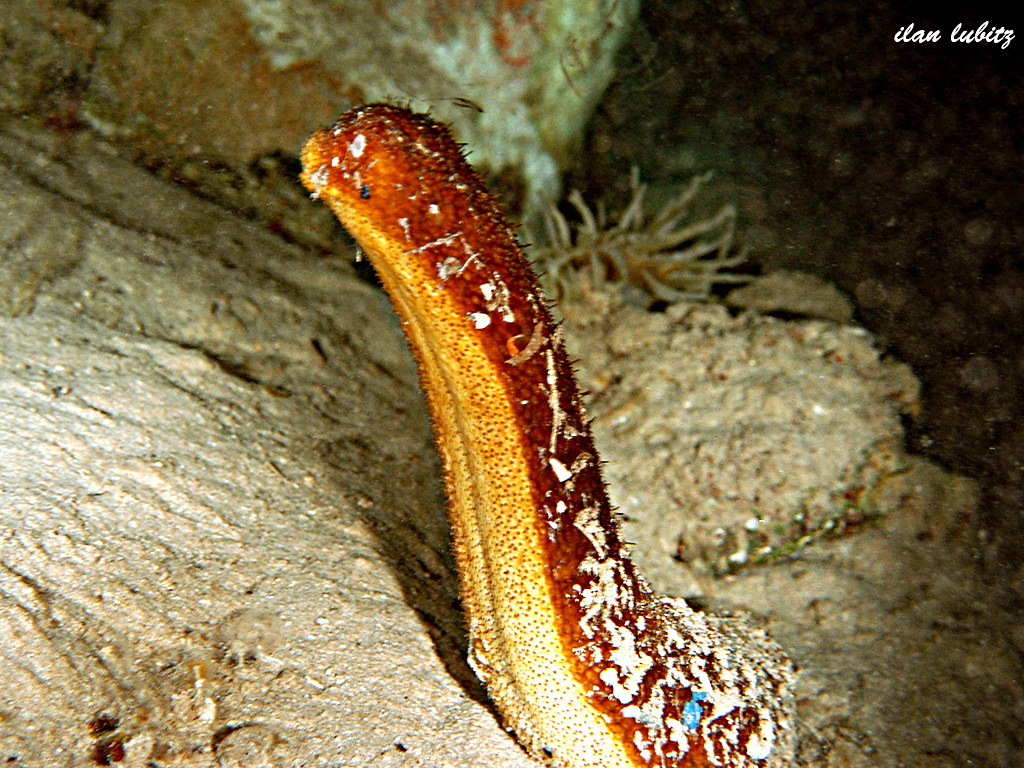
A stout, dark brown sea cucumber reaching about 24 cm (9 in), with a paler underside and short conical papillae scattered across the back. Like every member of its genus it carries five small calcareous teeth around the vent, which is the reliable way to separate an Actinopyga from the superficially similar Holothuria beside it. The body wall is thick and leathery, and sand grains usually stick to the upper surface.
It lives on sand and rubble patches beside reef, from the shallows to about 30 m (100 ft), and spends daylight tucked under coral slabs or ledges with only part of the body showing. At night it works across open sand, sweeping detritus and organic film into its mouth with short tentacles and passing clean sand out behind - a single animal processes several kilograms of sediment a year, which is why this family matters far more to a reef than its slow, uneventful appearance suggests. The species was described in 1944 from material collected in this sea, and its known range runs from here south to 🇲🇬 Madagascar. Unlike several of its relatives it has no Cuvierian tubules, so a handled animal produces no sticky white threads.
- dark brown body, paler underneath
- five small anal teeth around the vent
- short conical papillae scattered over the back
- length up to 24 cm
Why it's threatened
Water pollutants, including phosphates, may have a negative impact on this species (Shlesinger 1976).
Threat classification from the IUCN Red List.