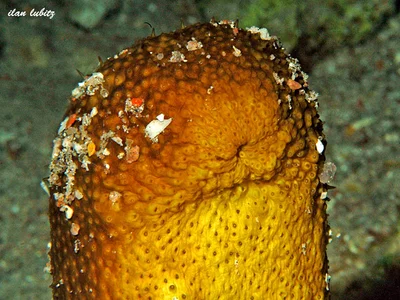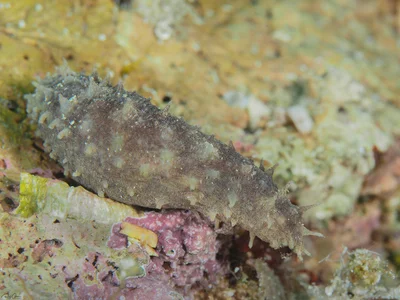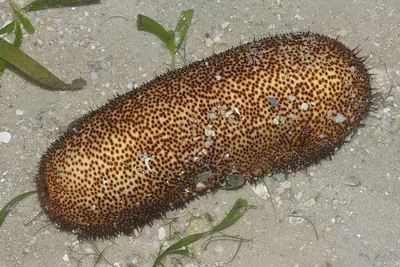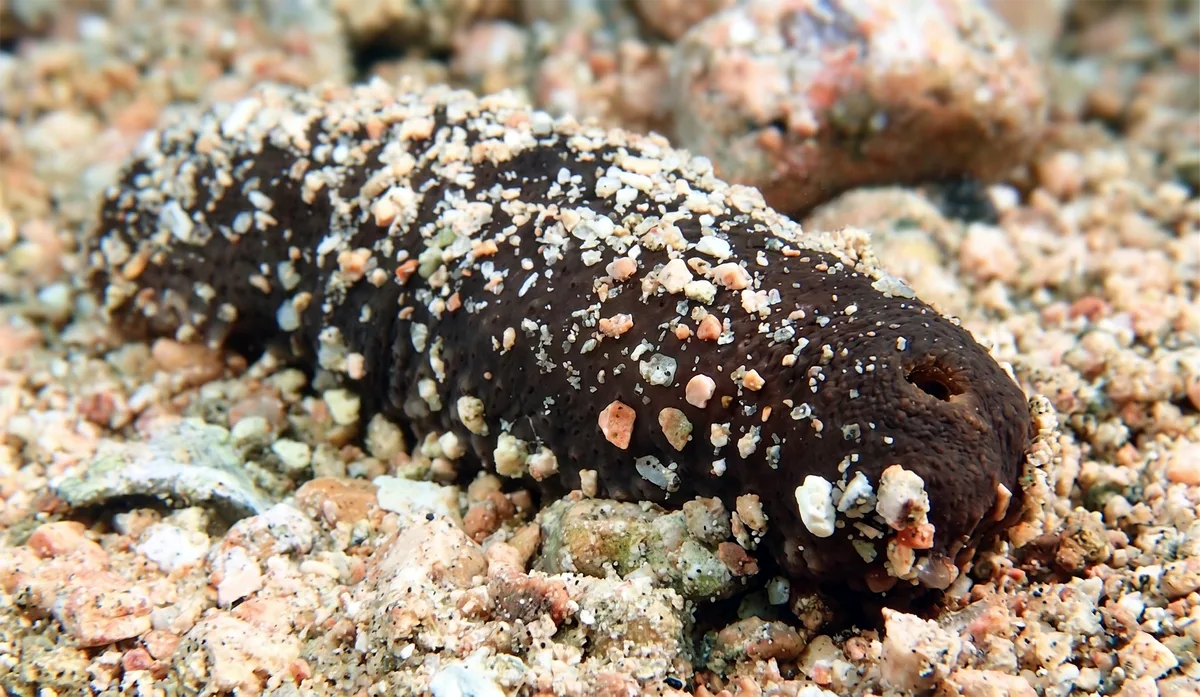
A smooth-skinned sea cucumber reaching about 22 cm (9 in), with coloring so variable that two animals side by side can look like different species - commonly mottled brown over cream, sometimes almost uniformly pale, sometimes dark. The body wall lacks the large papillae of Stichopus and the anal teeth of Actinopyga, and feels soft rather than leathery.
It lies openly on sand between coral heads from about 2 m down to 30 m (7 to 100 ft), feeding day and night by shovelling sediment with a fan of short tentacles. Disturb one and it fires Cuvierian tubules from the rear: fine white threads that swell, turn intensely sticky on contact and can immobilise a small predator entirely. They carry saponins and are worth keeping away from the eyes, but the animal itself is harmless to a diver who leaves it alone, and it pays for the display by having to regrow the lost tissue. Described in 1954 and named for Jacques-Yves Cousteau, it is known from this sea south to 🇰🇪 Kenya and 🇲🇬 Madagascar.
- highly variable color, often mottled brown on cream
- smooth body wall without large papillae
- sticky white threads released when disturbed
- length up to 22 cm
Why it's threatened
There are no known threats for this species.
Threat classification from the IUCN Red List.