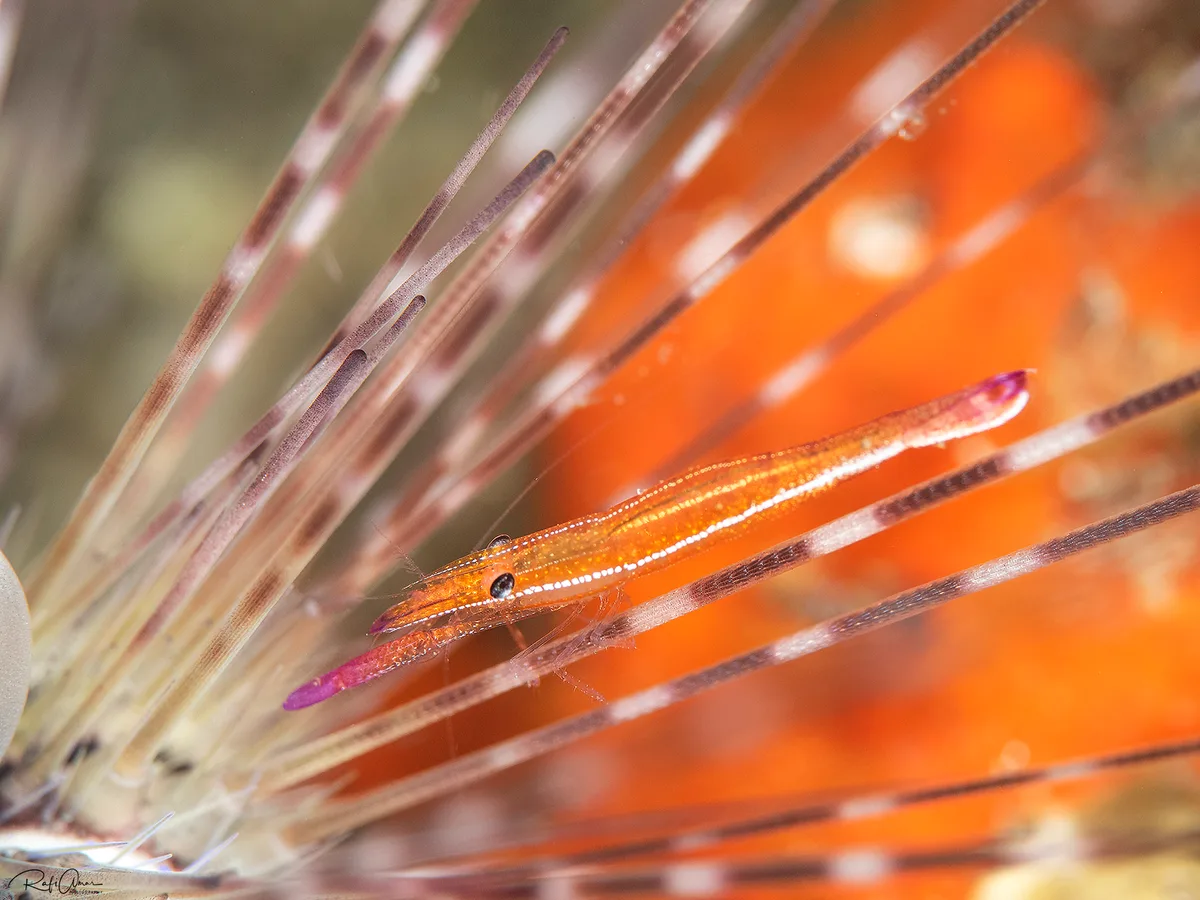
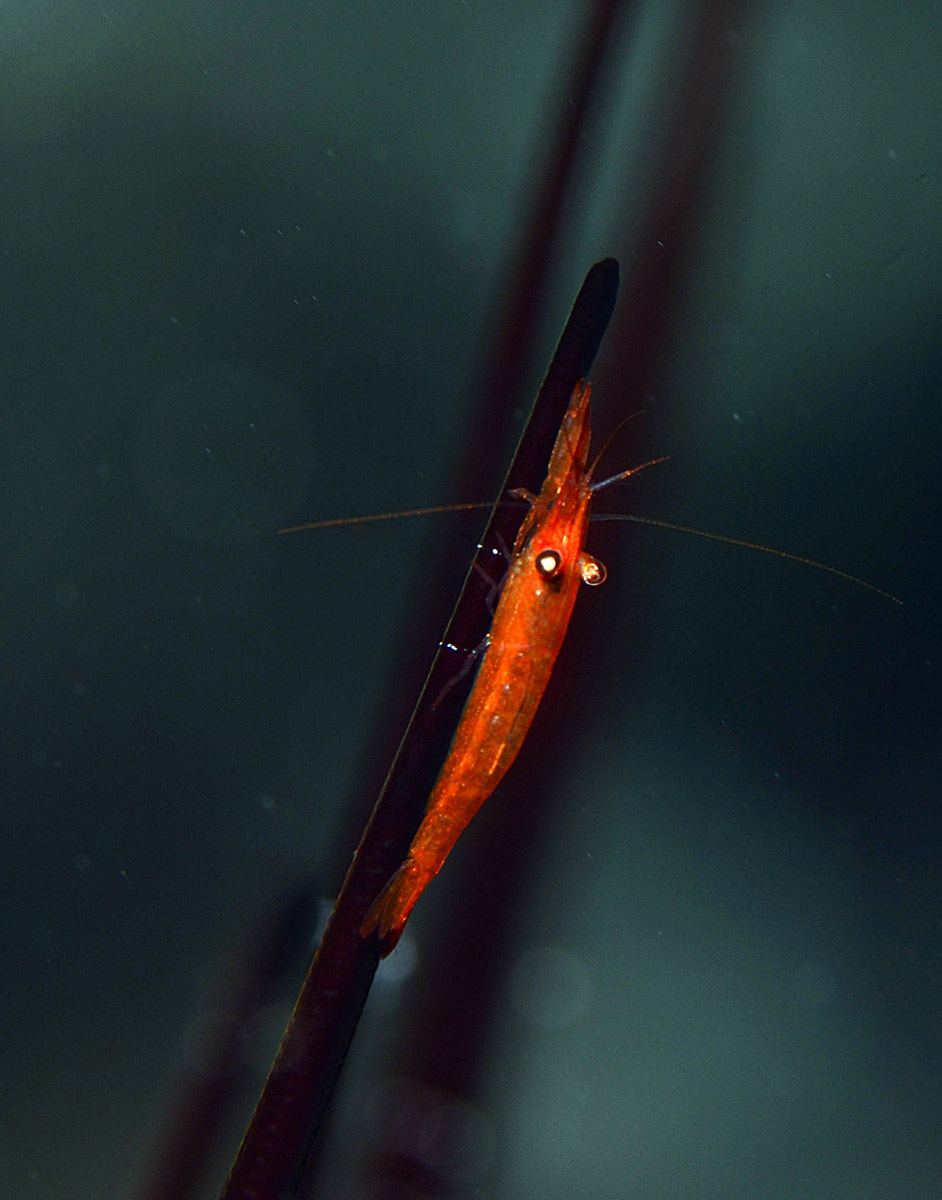
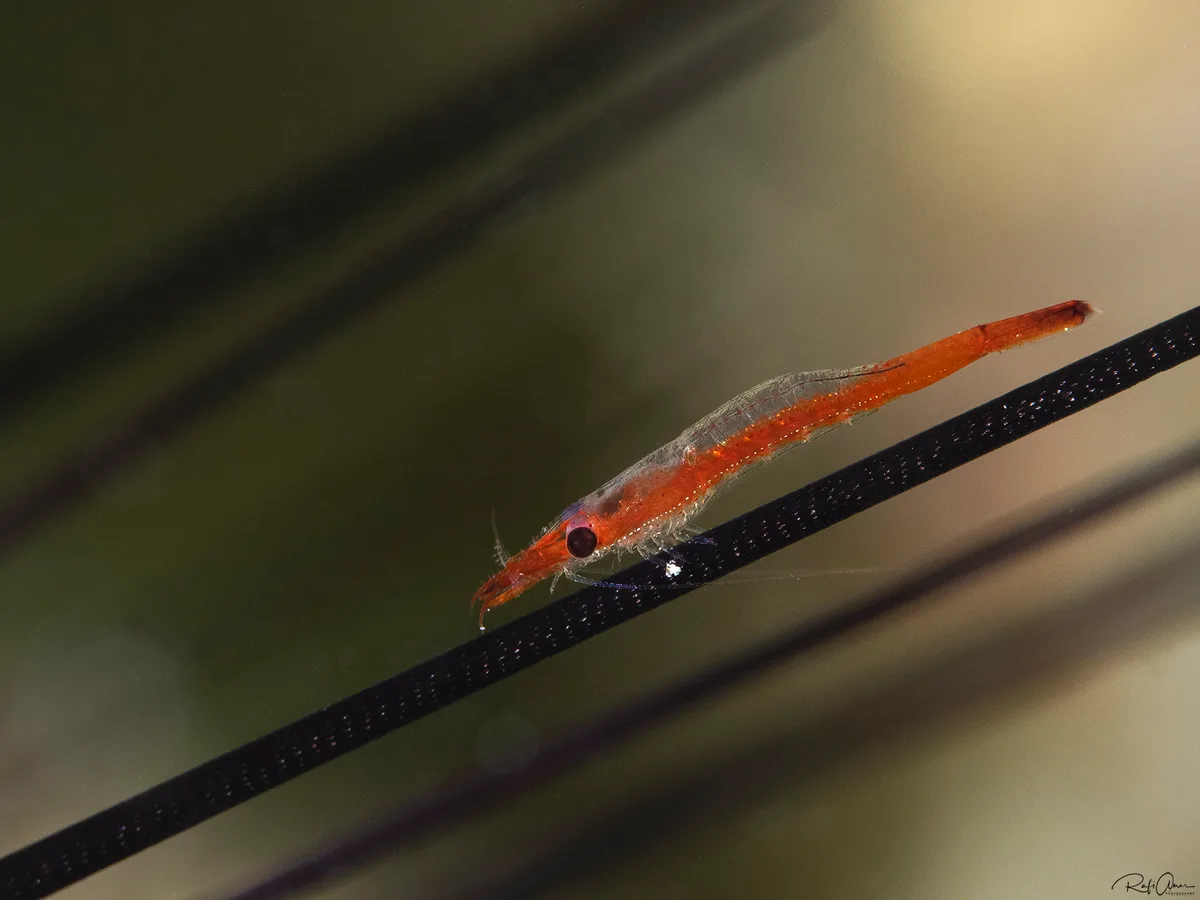
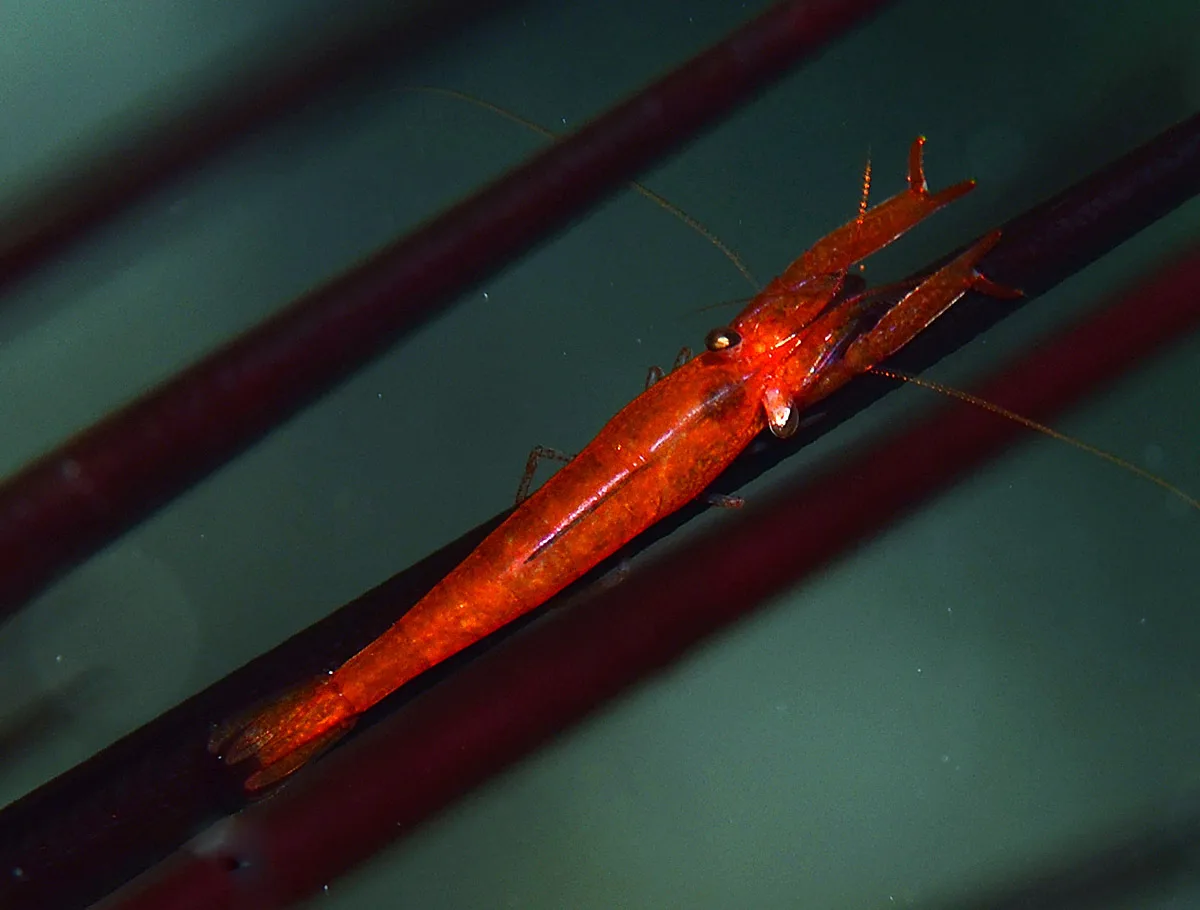
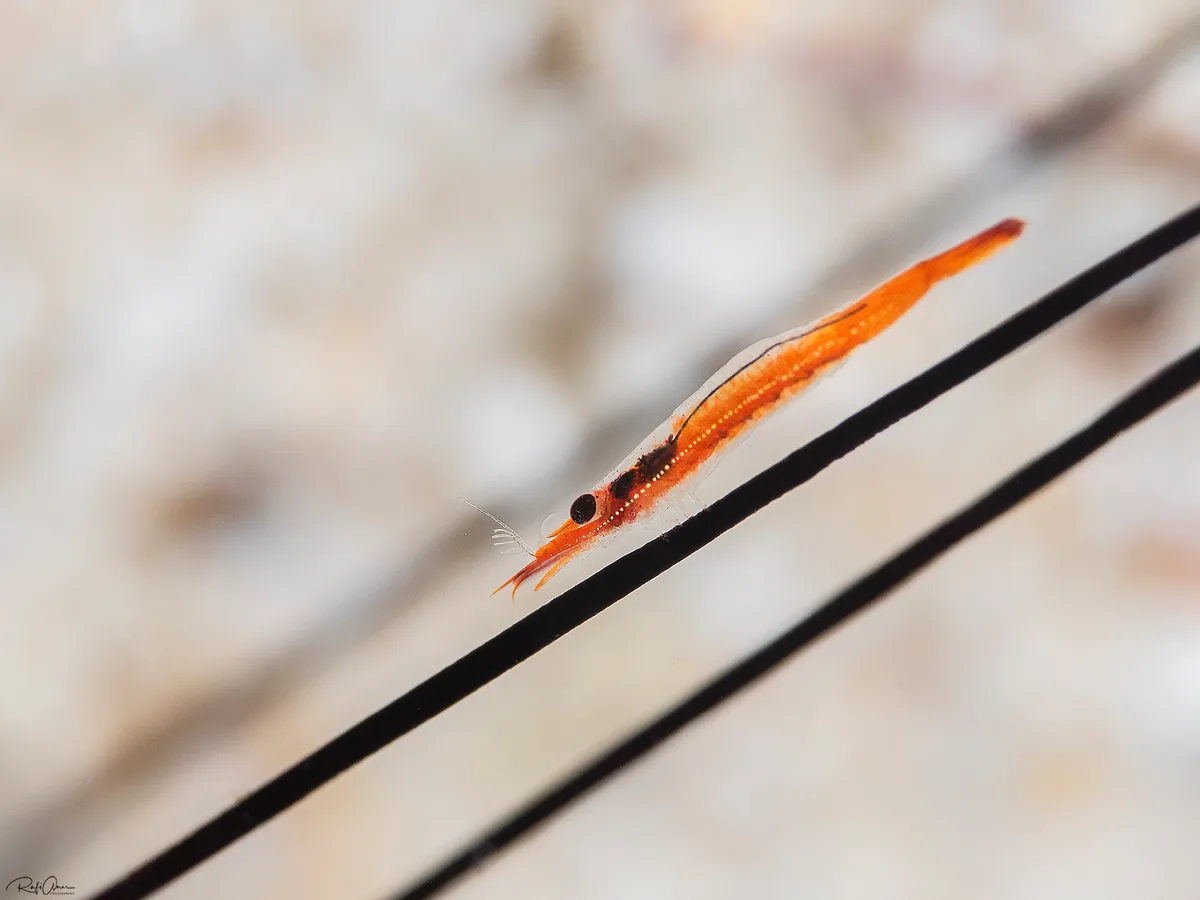
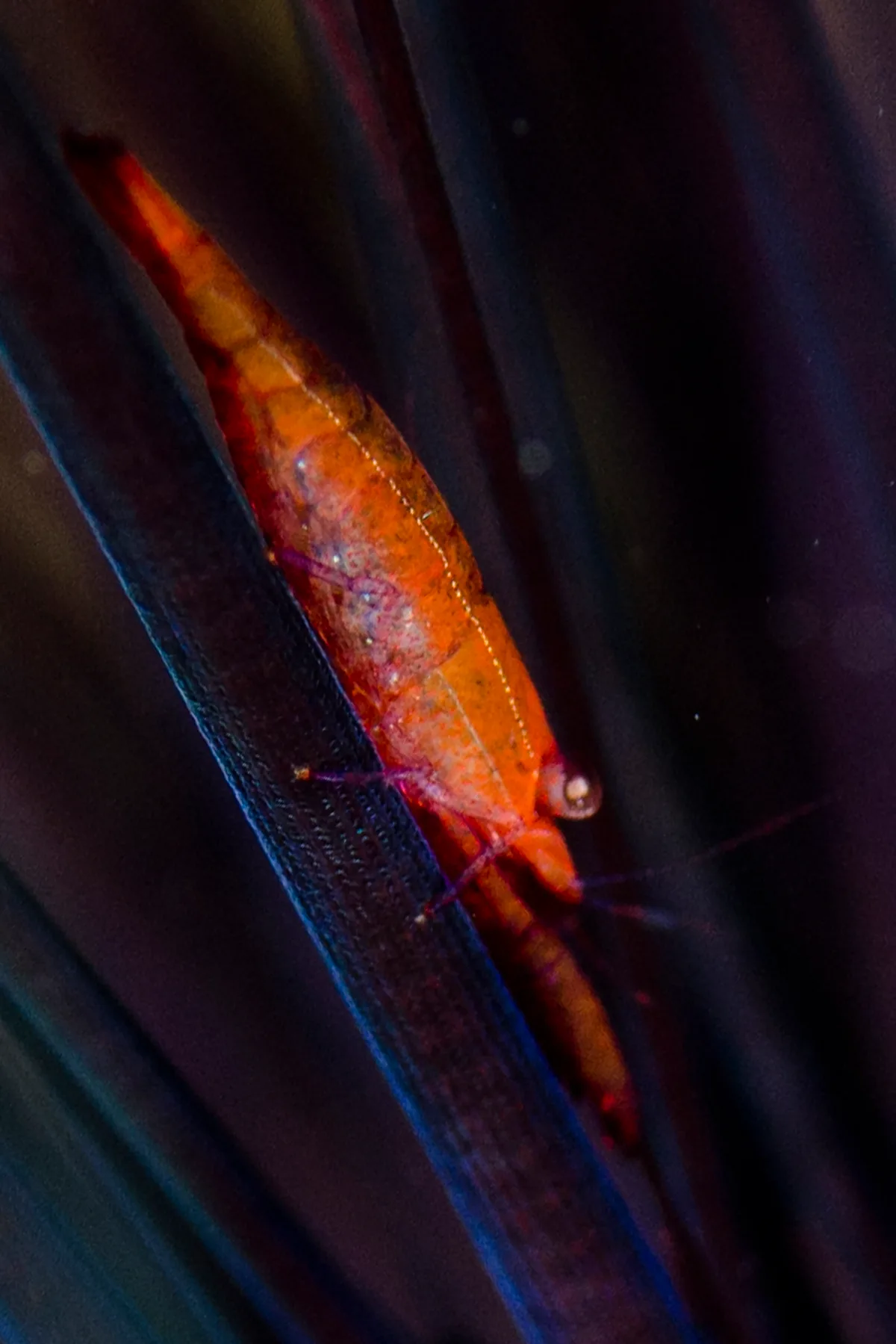
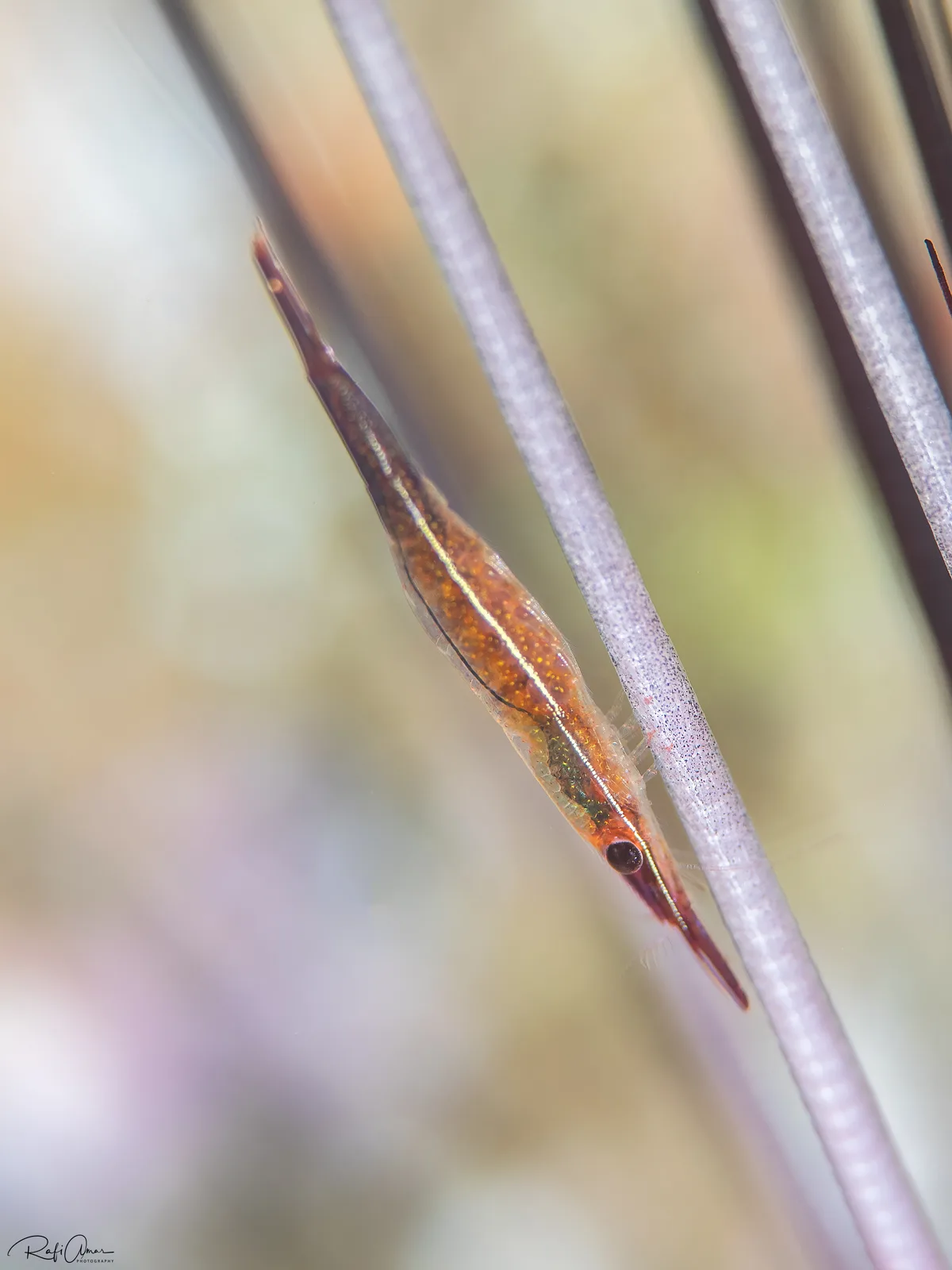
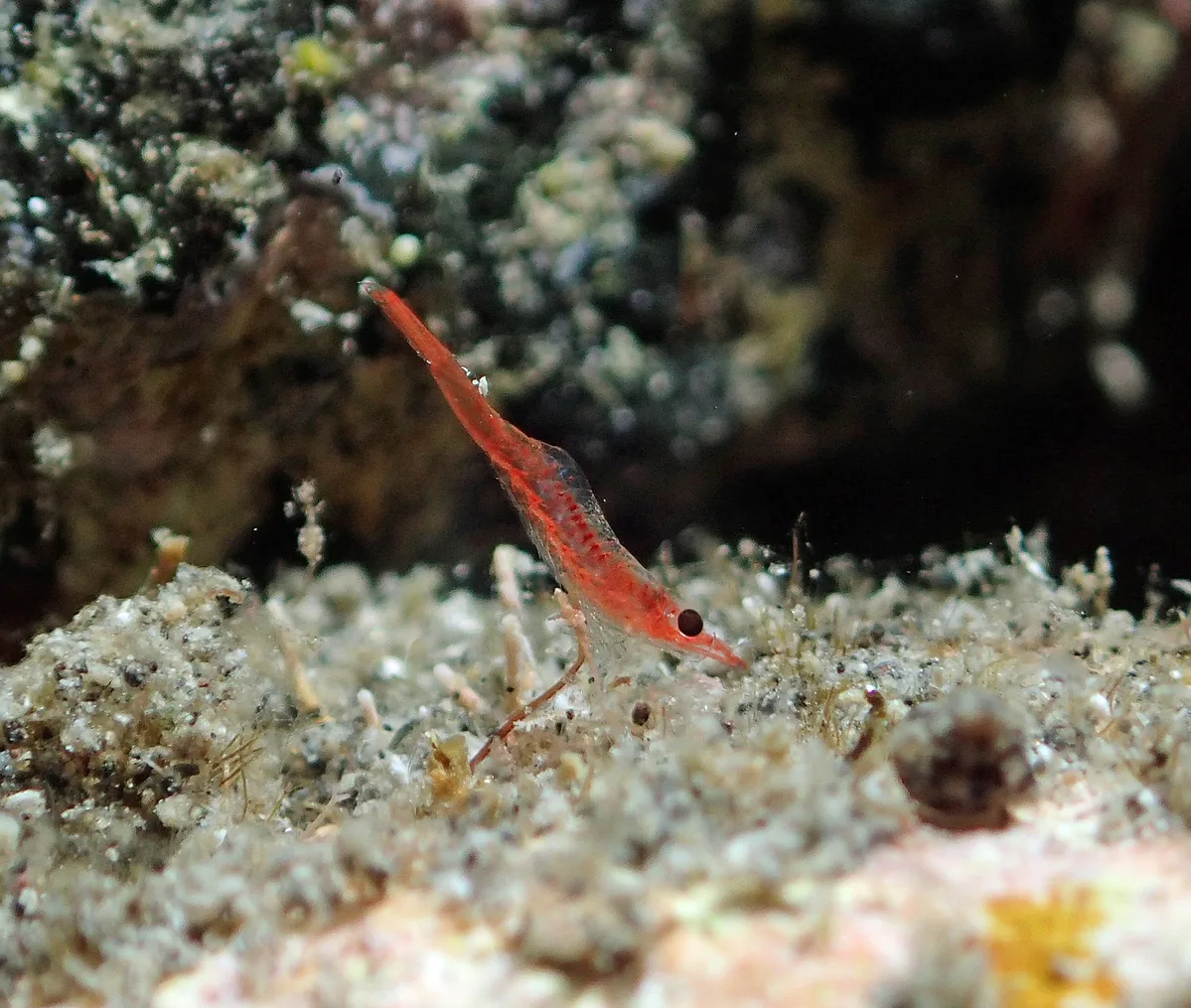
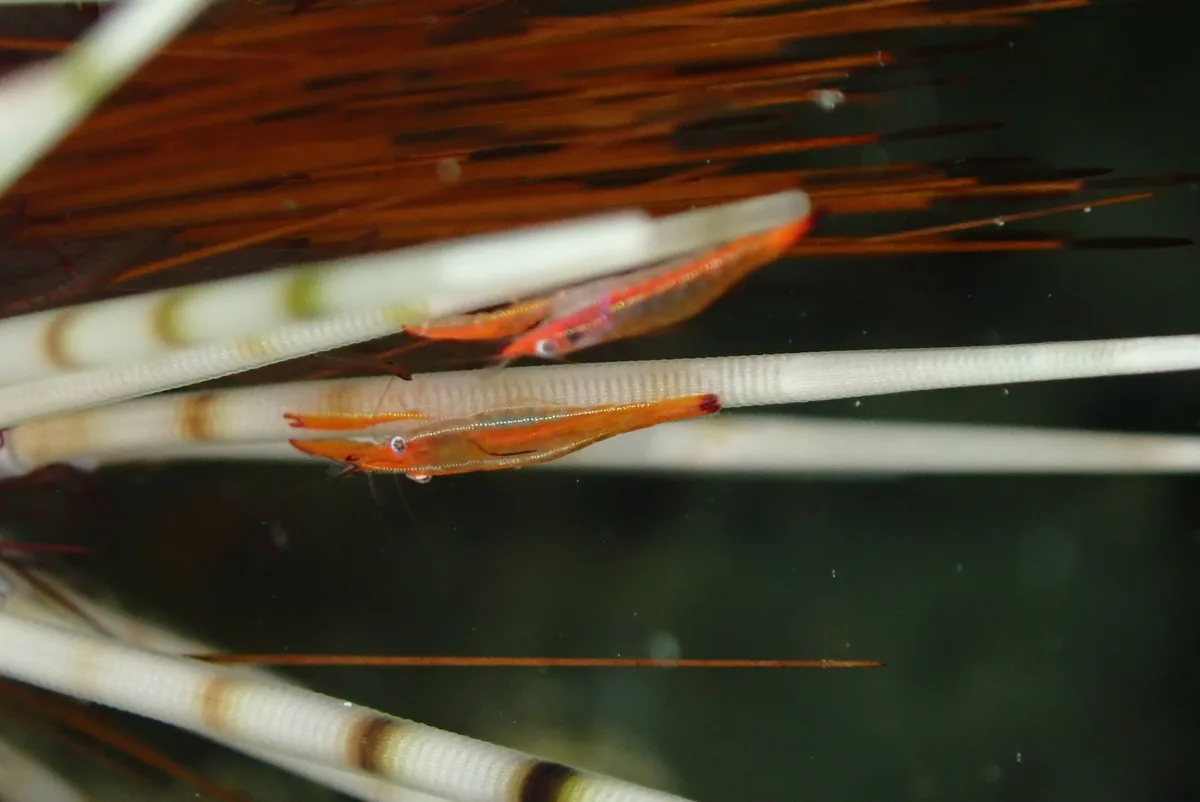
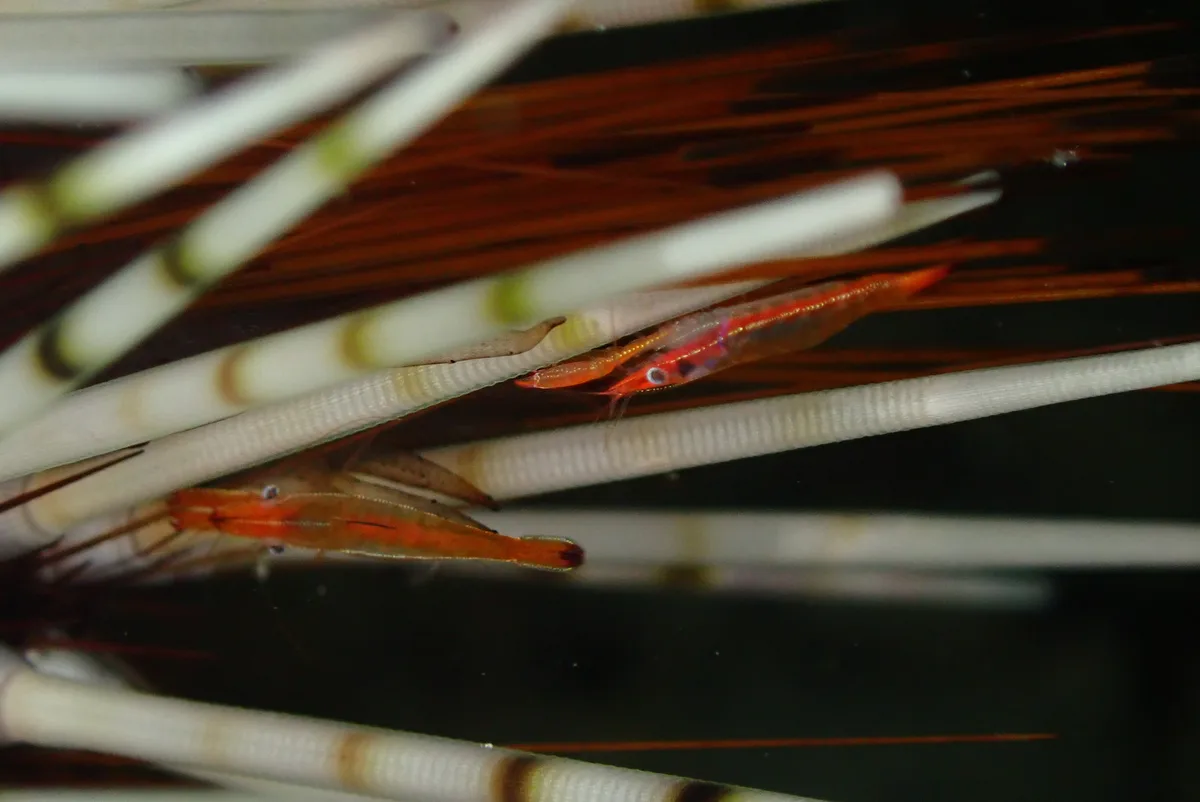
It does not just match the spines. It lines up with them.
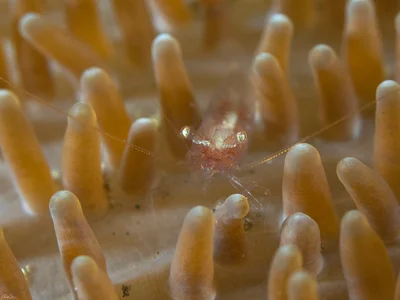
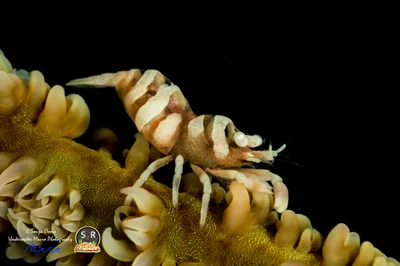
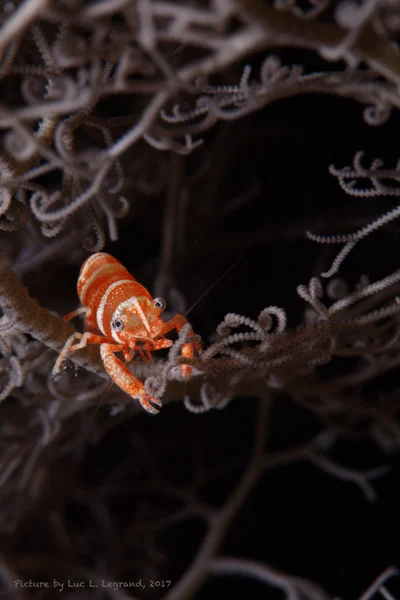
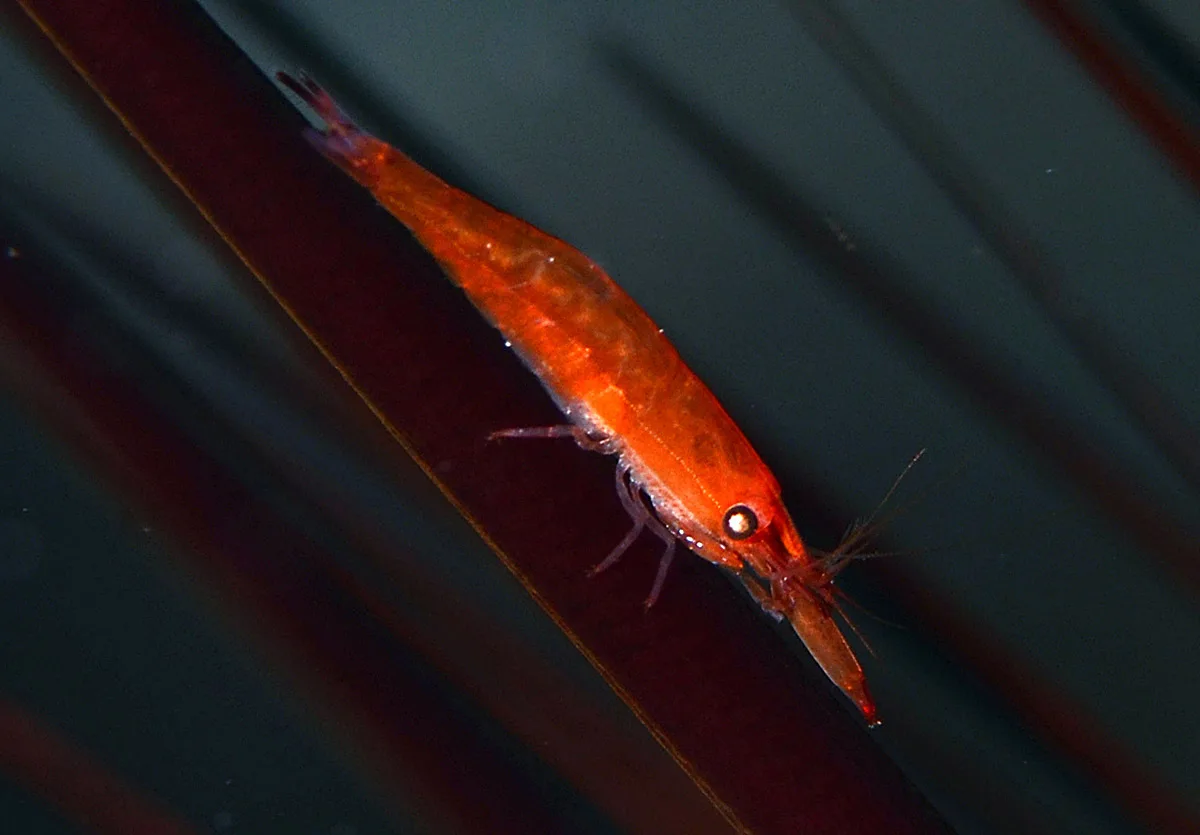
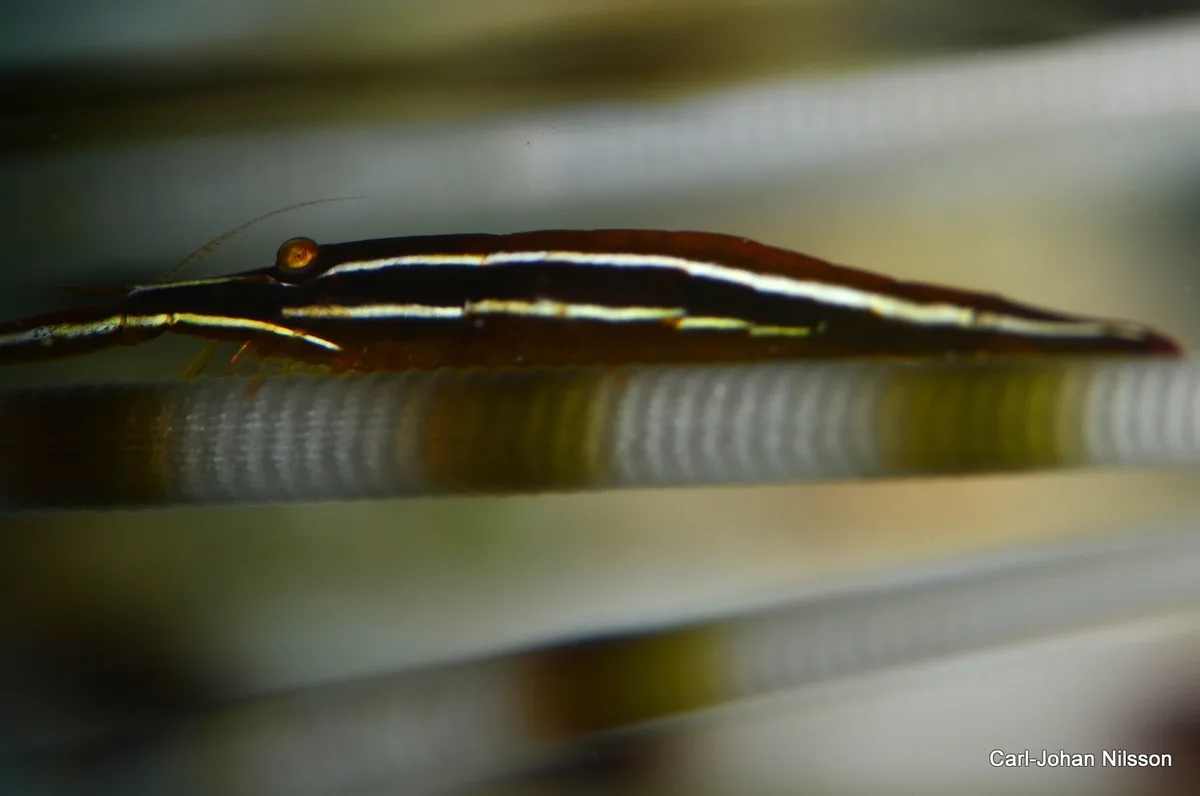
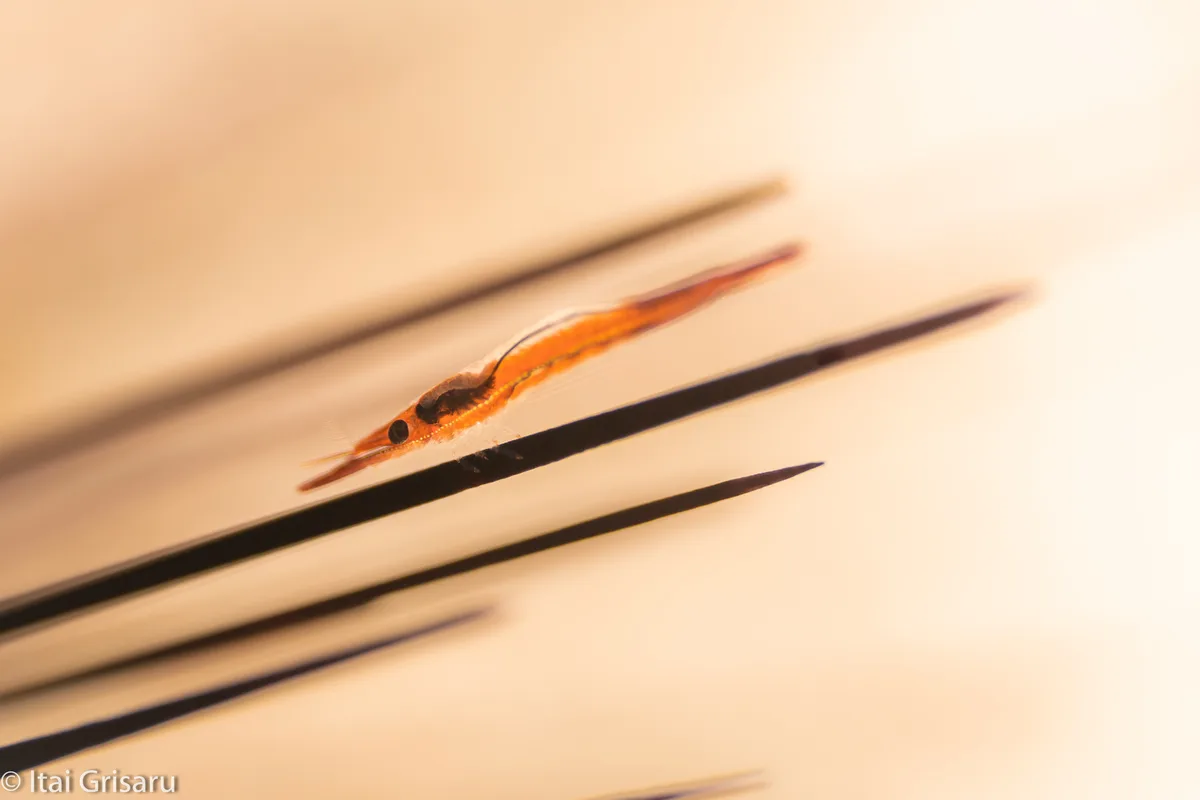
The shrimp is banded along its length in the same rhythm as a Diadema spine, which is a good start, but the behavior is what completes it: the animal orients its long axis parallel to the spines around it and shifts as they shift, so that from any angle it is one more line in a bundle of lines. Turn crosswise for a second and it becomes a shrimp again immediately.
That kind of postural camouflage - matching the geometry of the background rather than only its color - shows up in razorfish standing on their heads among the same spines, in pipefish lying along a gorgonian branch, and in stick insects on land. It is more effective than pattern alone and it requires the animal to keep working at it.
The host does the rest. A long-spined urchin is a moving cage of venomous needles, and nothing sensible reaches into it.
Two centimeters, banded, and easiest to find with a torch after dark when the urchins have moved out onto open rubble.
- slender body with dark and pale banding along its length
- holds itself parallel to the urchin's spines, not across them
- moves as the spines move
- up to 2.2 cm