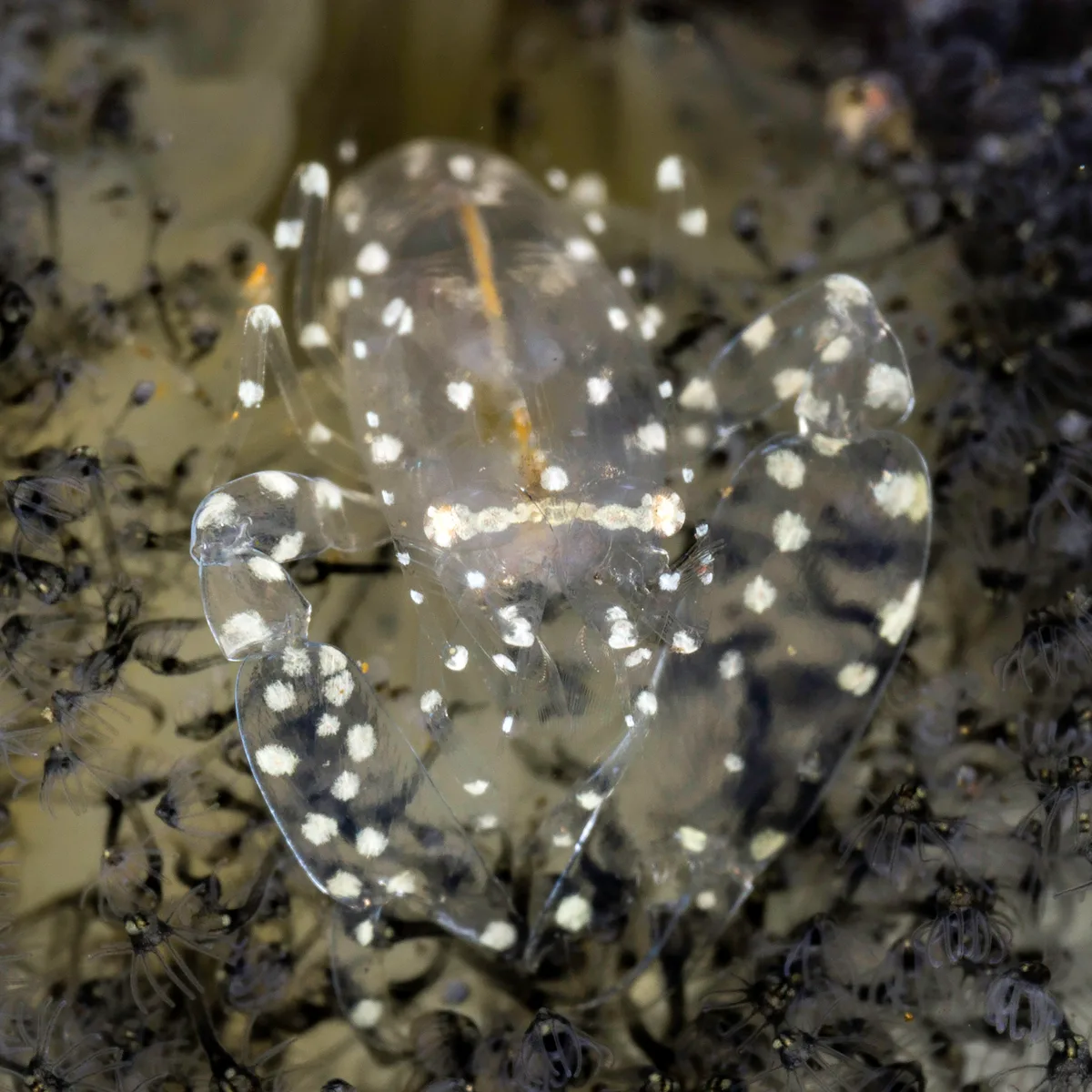
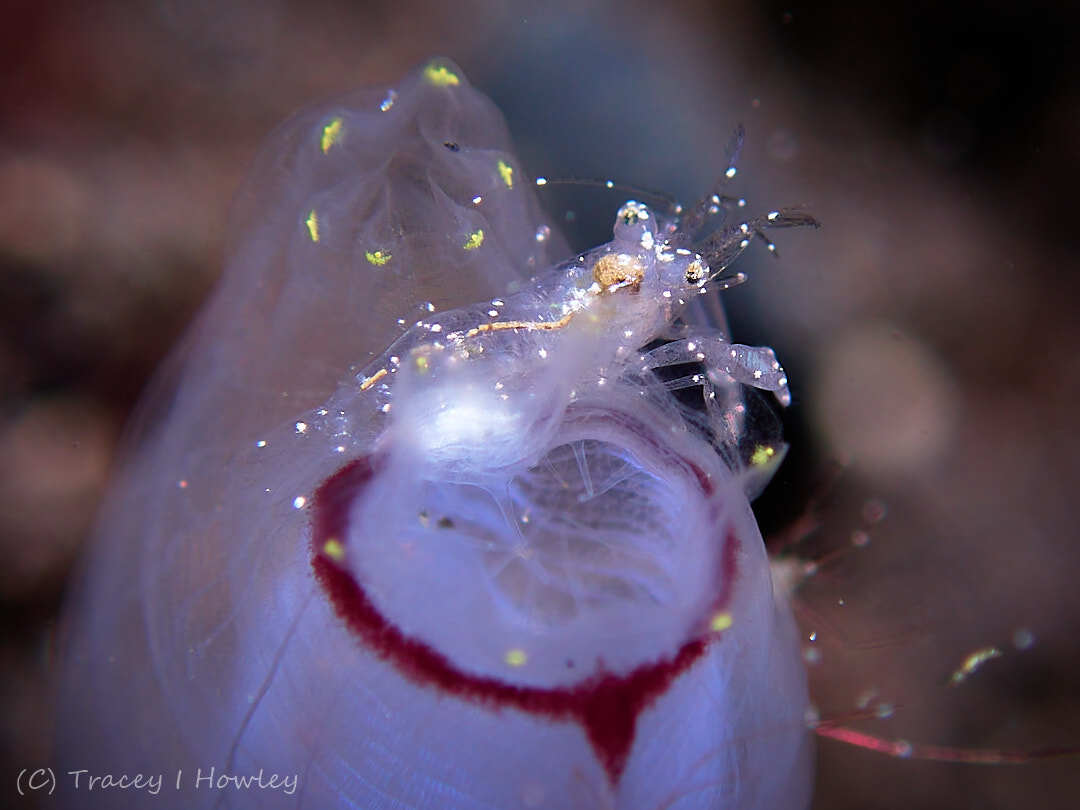
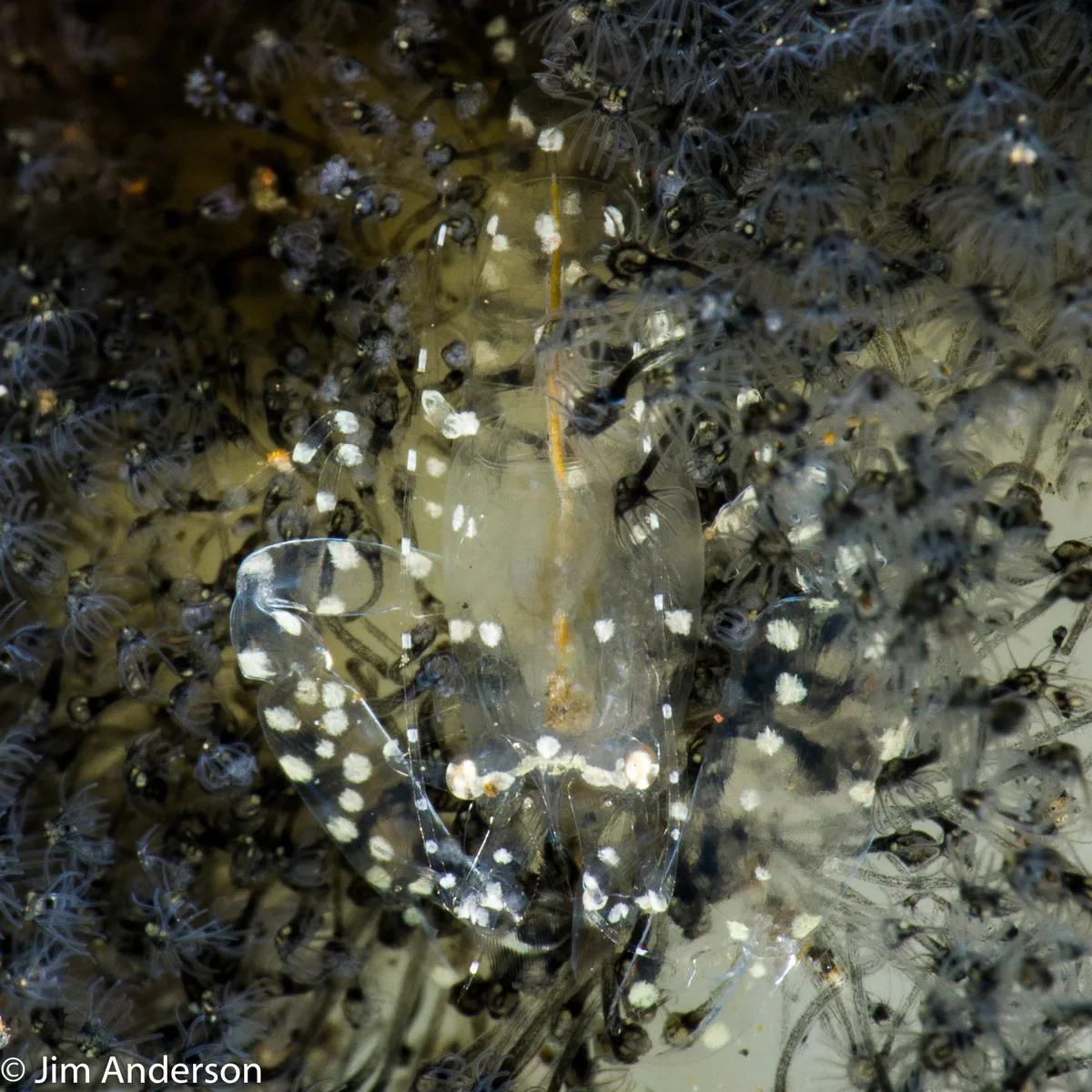
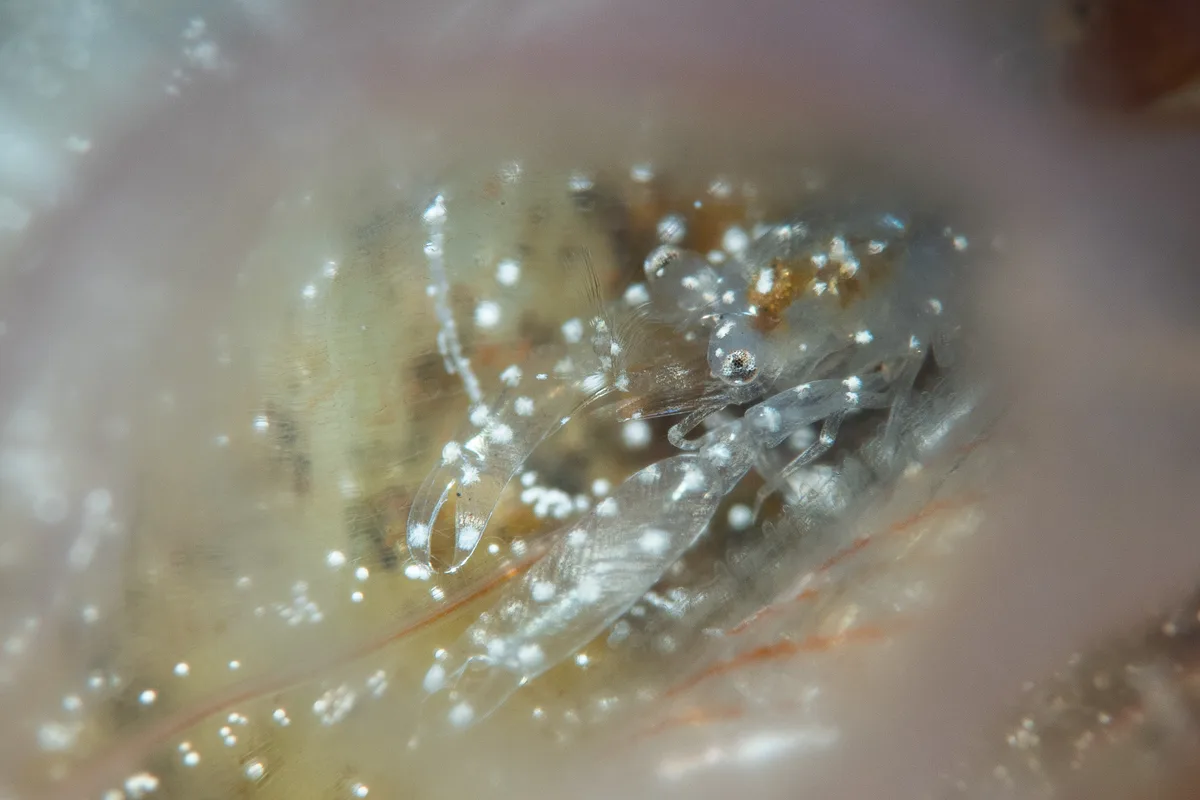
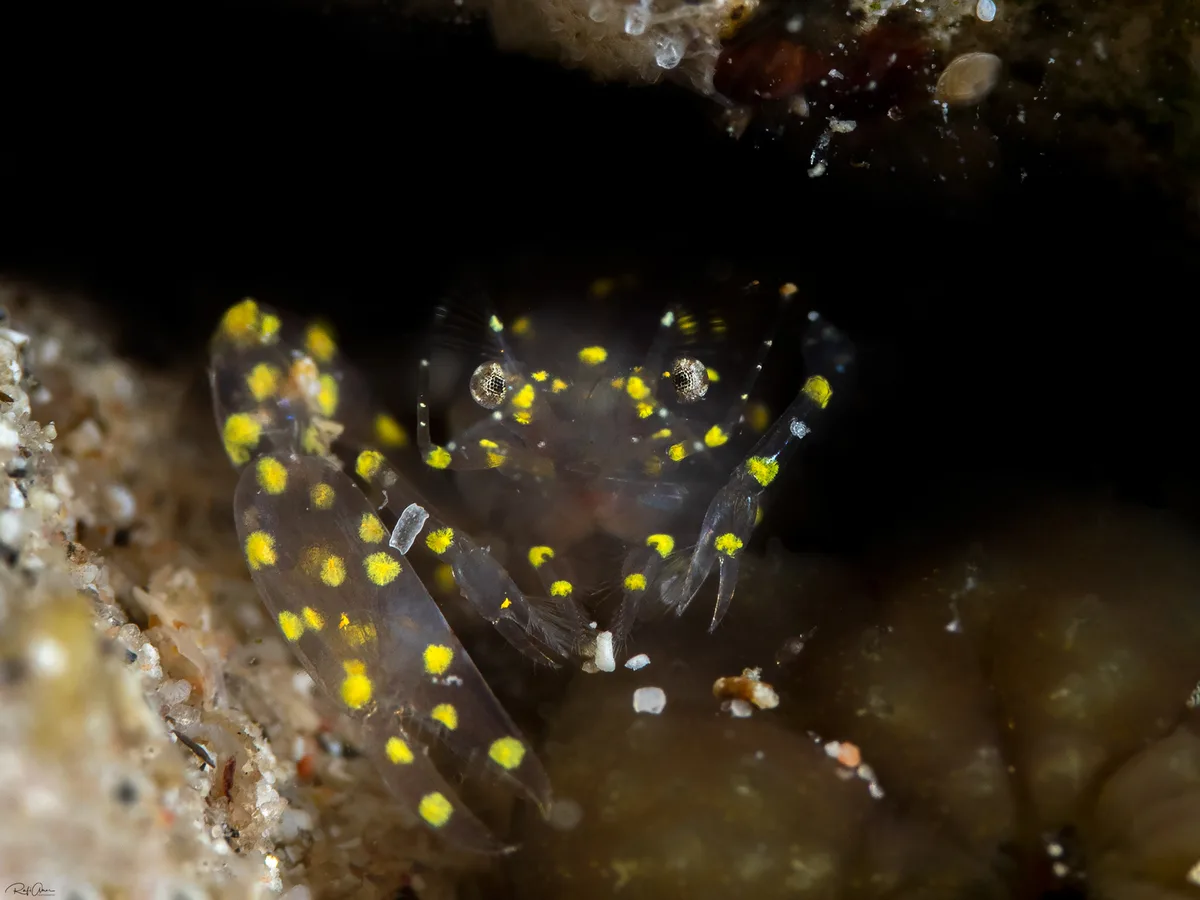
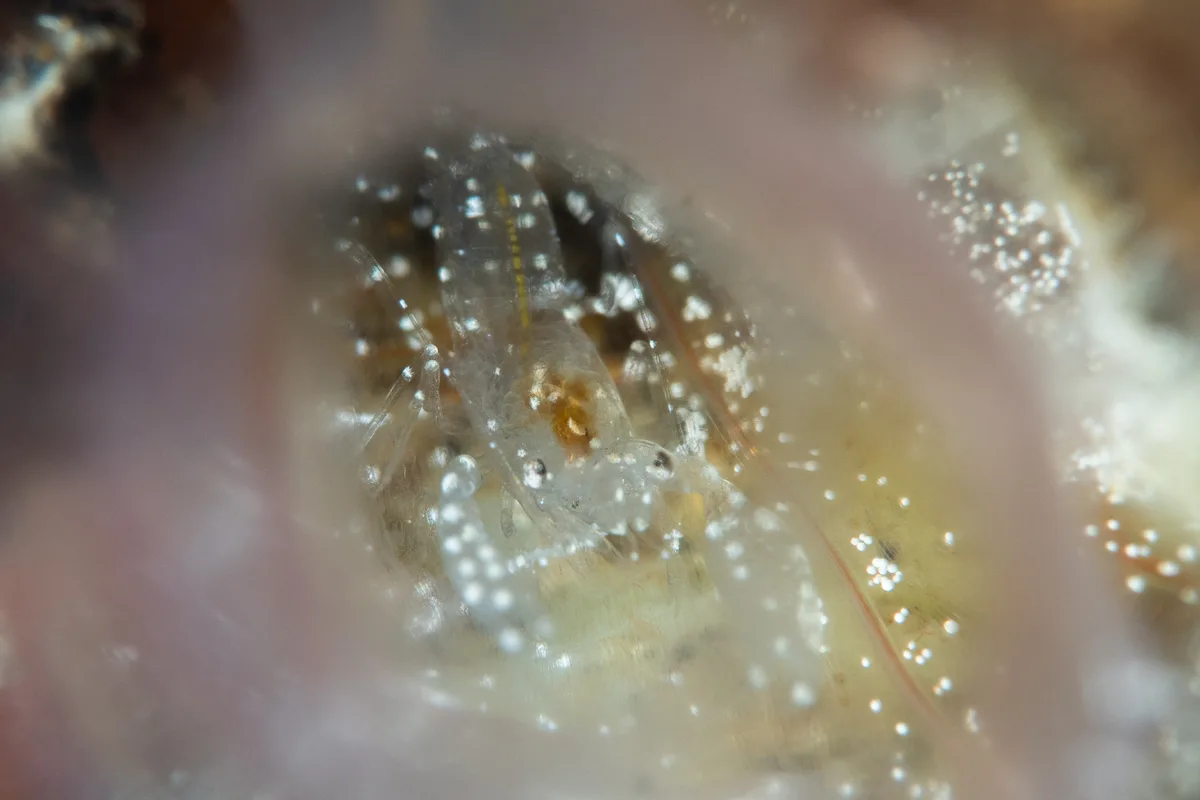
Its landlord is one of the least edible animals on the reef, which is the whole point.
Sea squirts defend themselves with a combination almost nothing tolerates: acid stored in the tissue, heavy metals including vanadium concentrated to levels found nowhere else in the sea, and a tough leathery tunic on top. Very few animals eat them, which means very few animals have any reason to go inside one.
So a shrimp that can live in that cavity has a house with a chemical moat. It sits in the water flow the ascidian generates, takes particles out of it, and comes out only briefly. What it costs is a tolerance most crustaceans do not have.
It is the same logic that produced the sea slugs that eat ascidians and the fish that nest in them, and it is a recurring pattern on a reef: anything unpleasant enough to be left alone eventually acquires tenants.
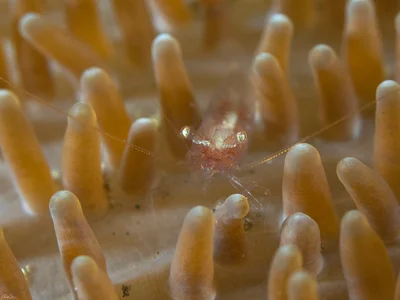
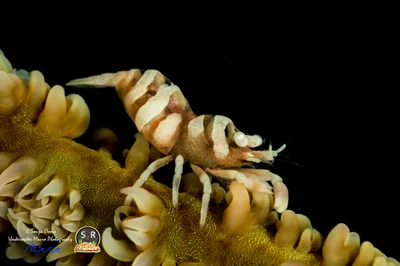
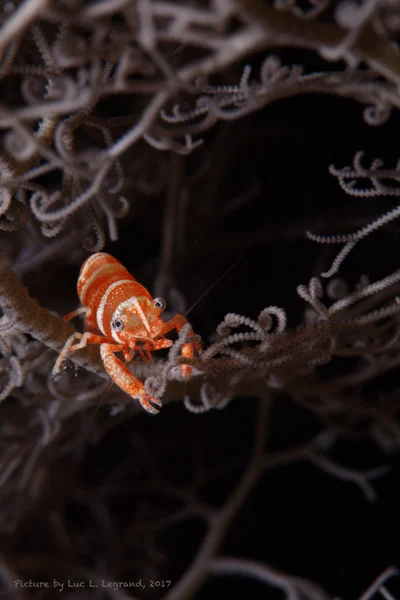
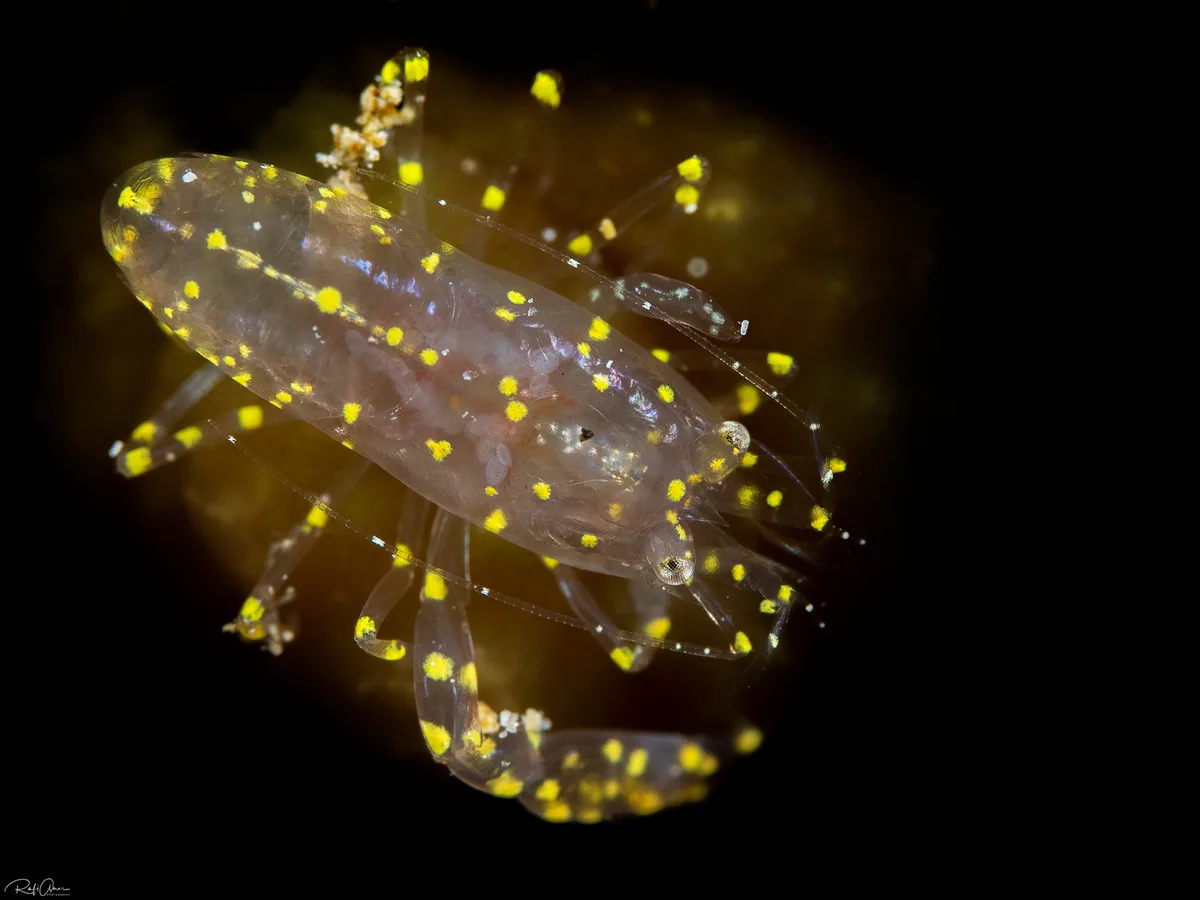
The shrimp is a centimeter long, glassy, and dusted with white spots, and it is usually found by looking through the open siphon of a large solitary sea squirt.
- translucent body scattered with white spots
- inside the body cavity of a sea squirt, visible through the siphon
- up to 1 cm