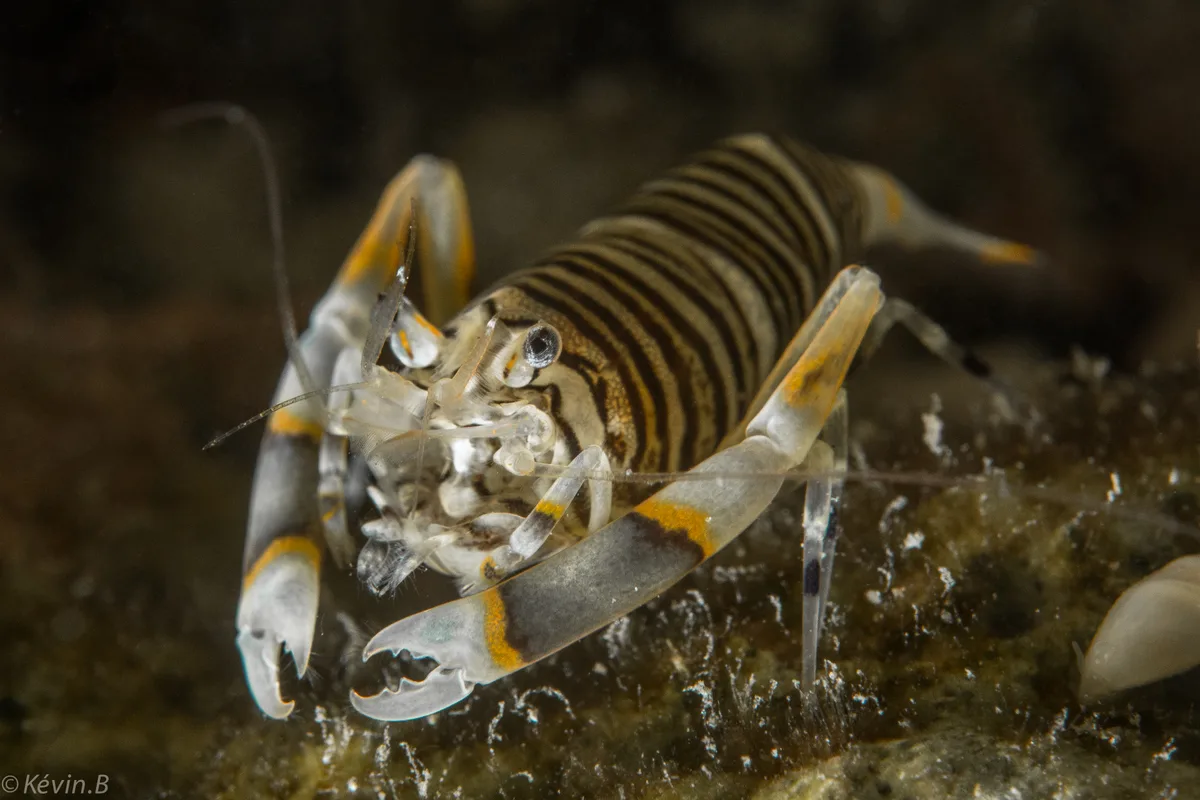
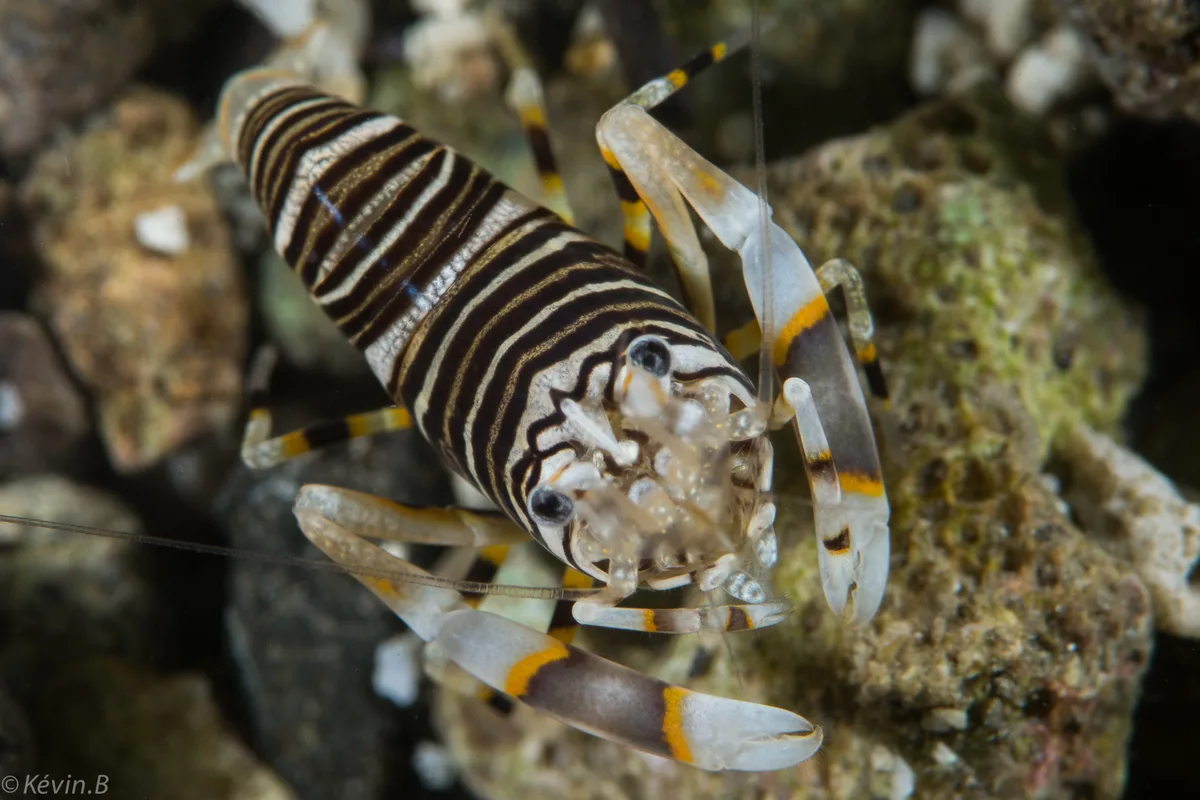
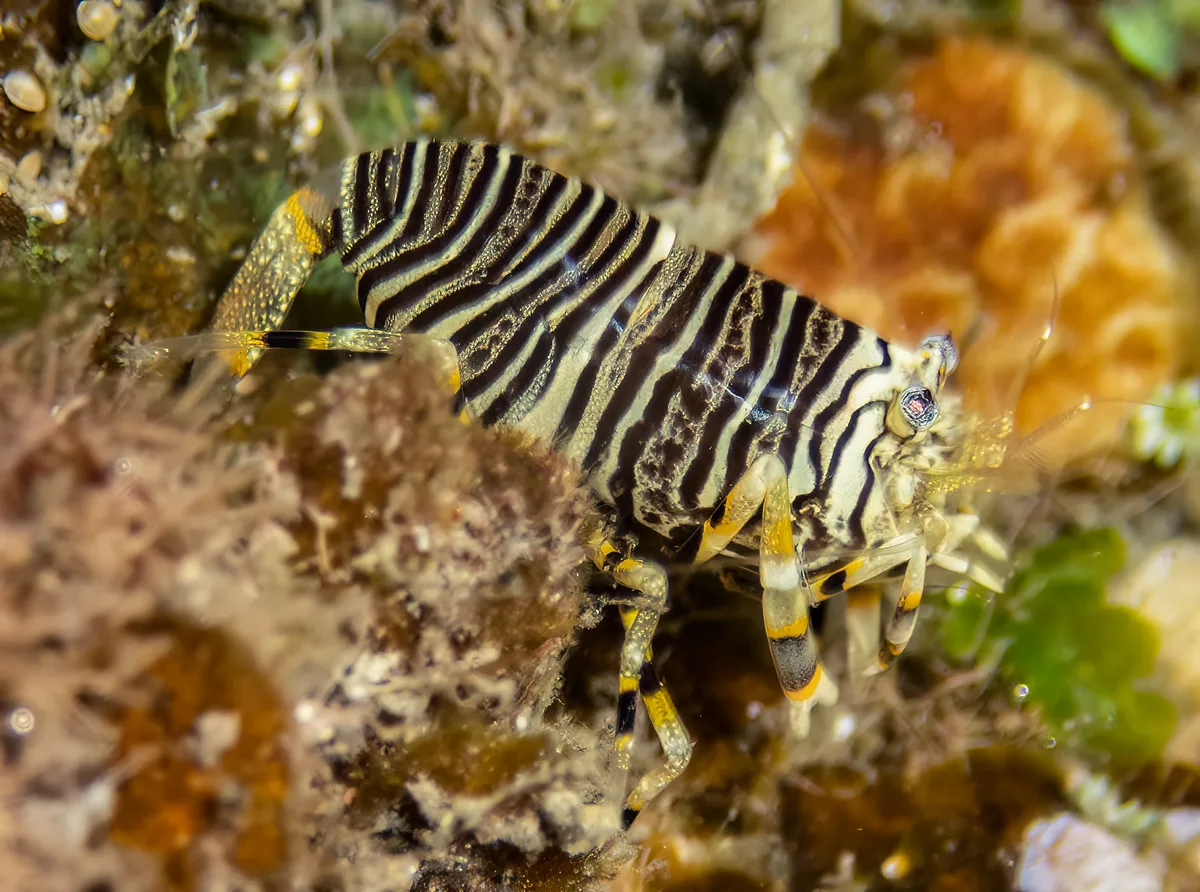
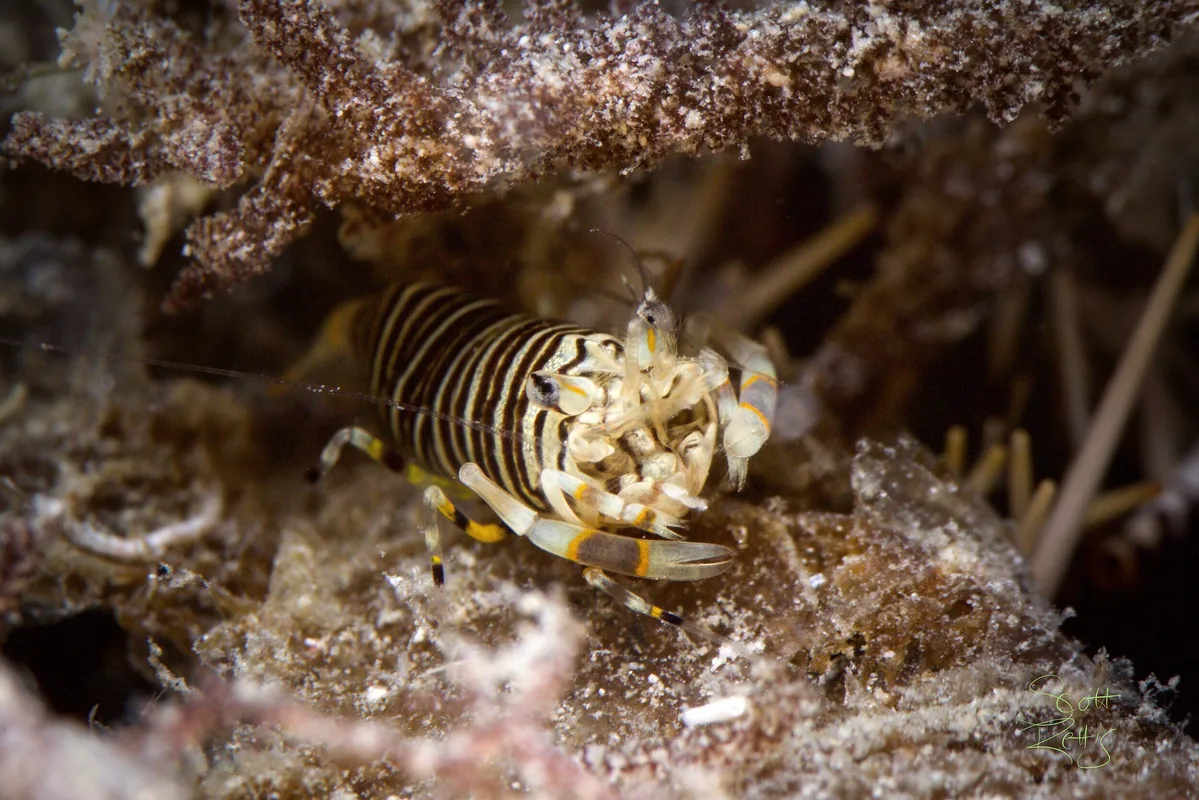
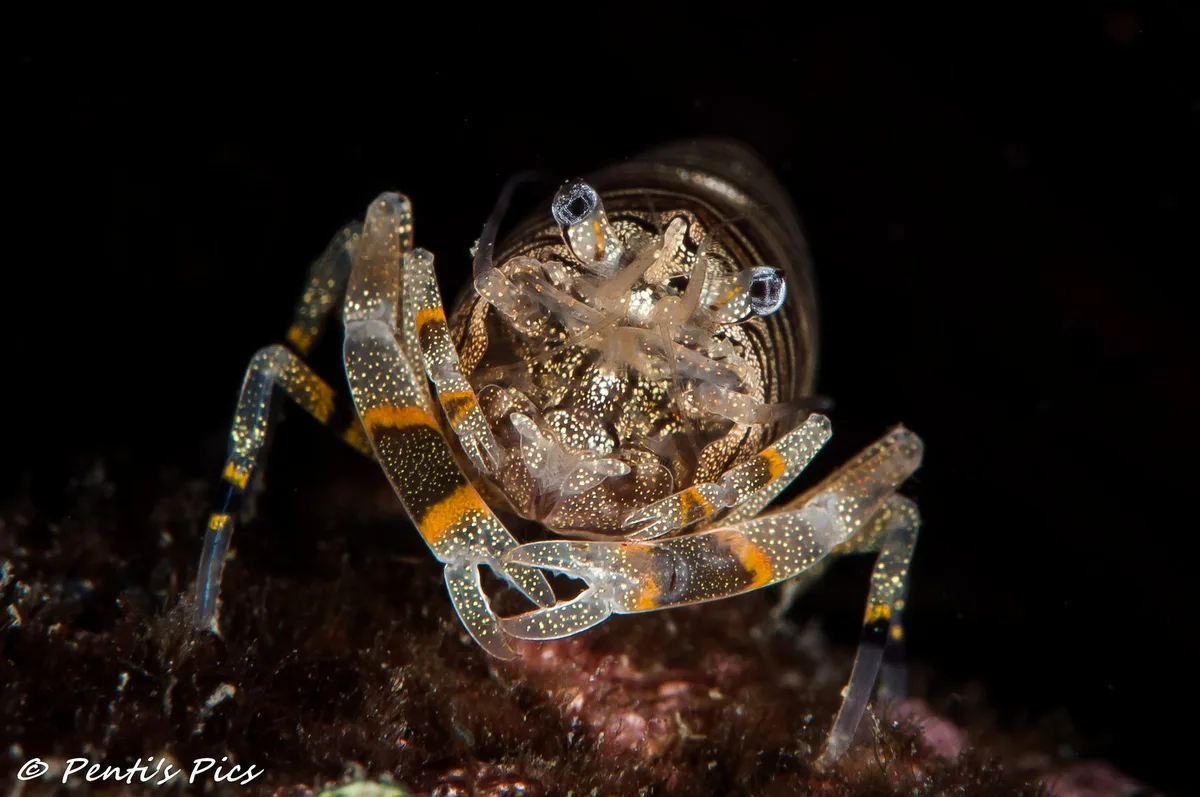
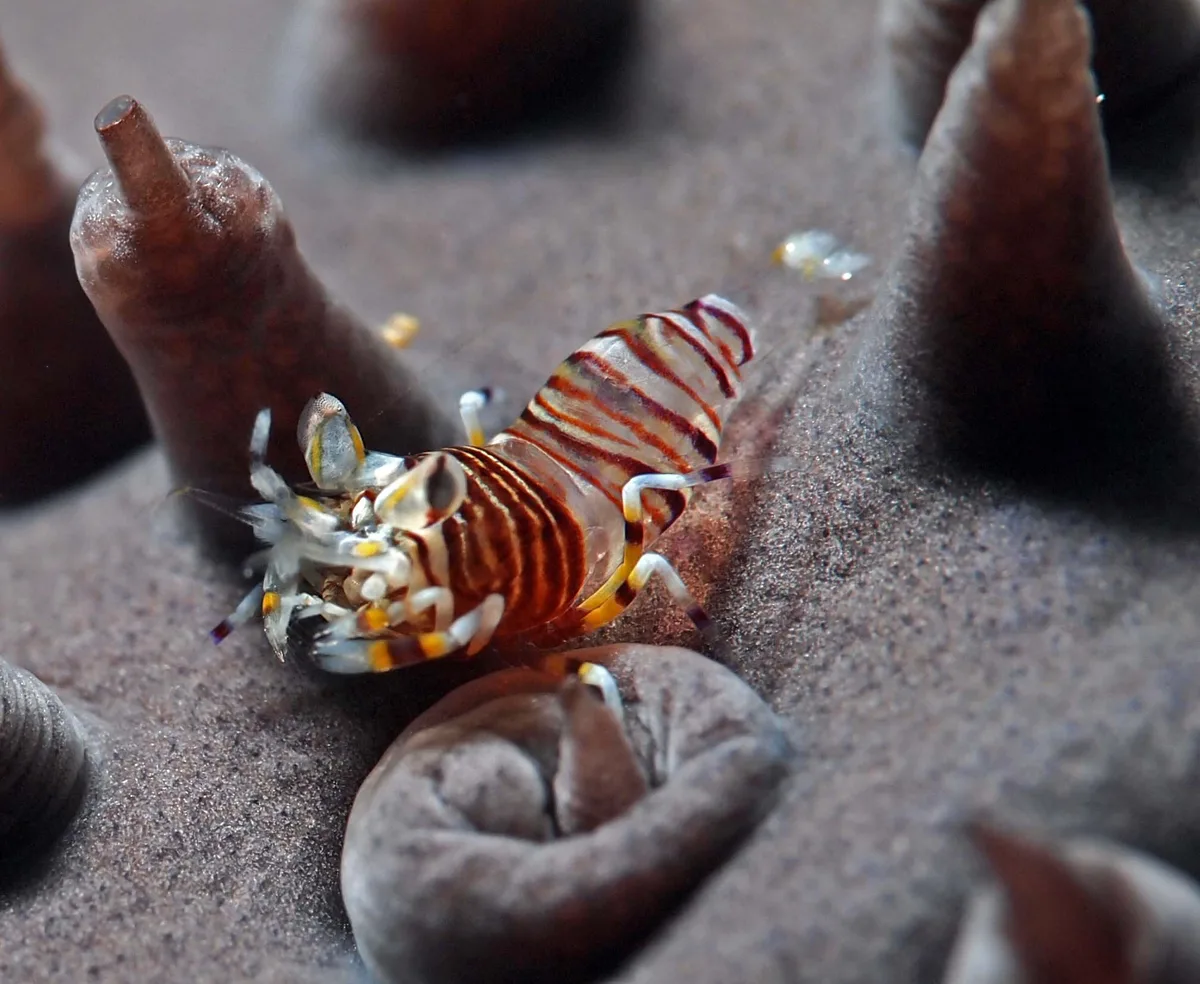
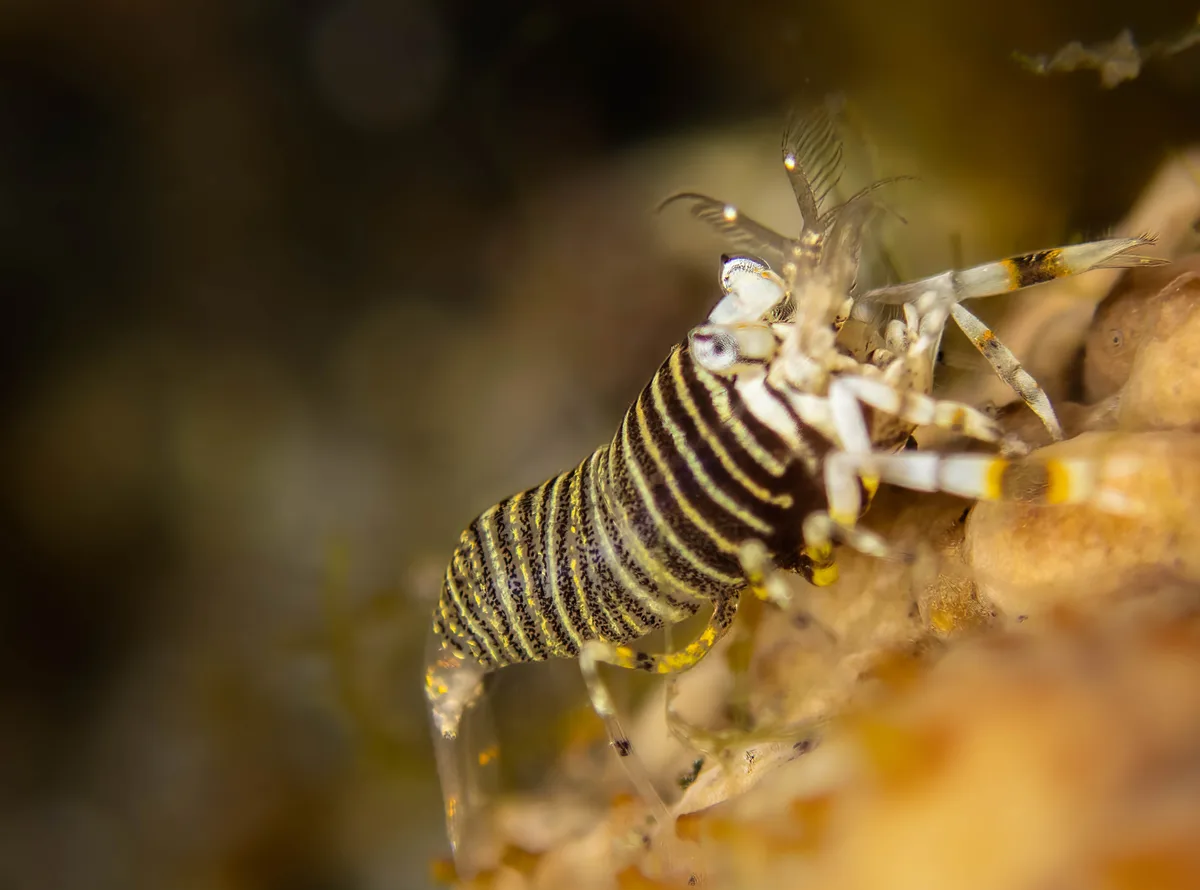
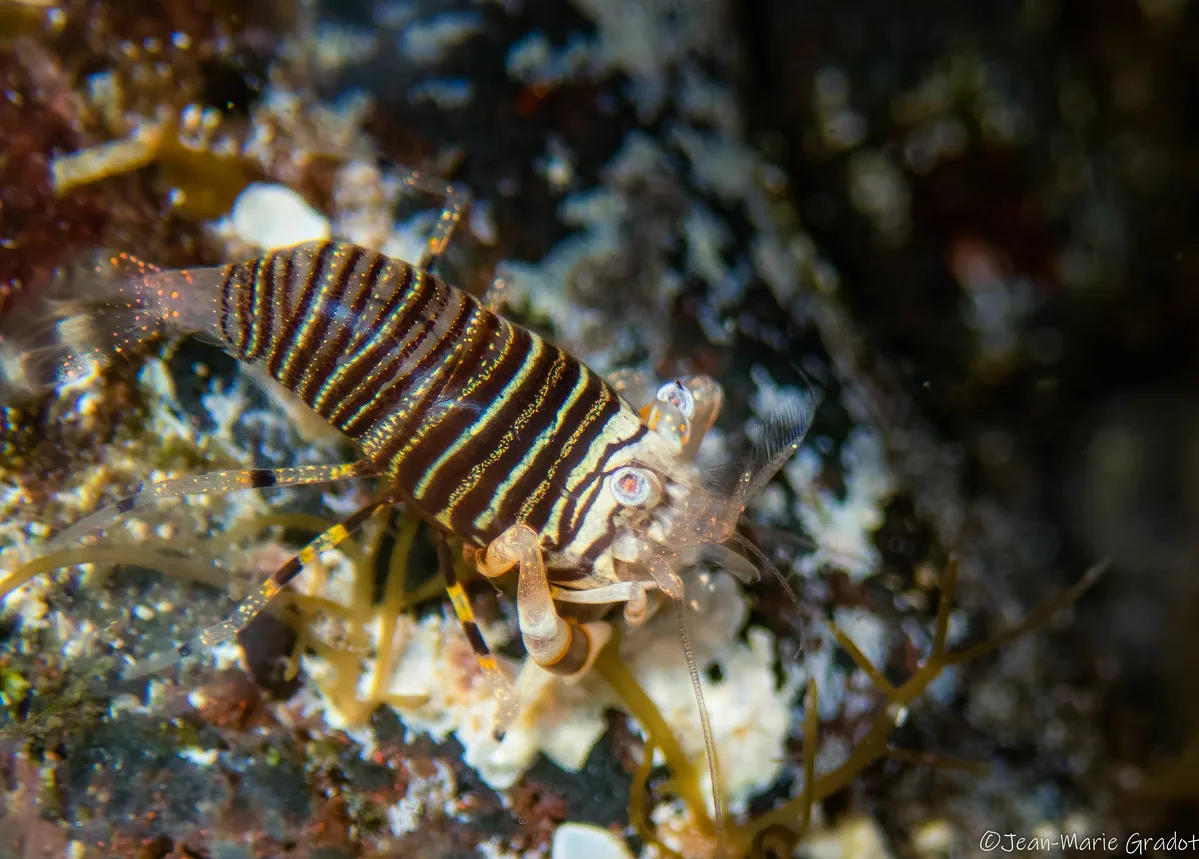
A stout little shrimp barely 2.5 cm (1 in), banded in black and cream with blue and yellow legs - a paint job that reads as a bumblebee at any distance and is easy to spot once you know it exists. Finding one is not a matter of searching the reef but of searching an animal.
It lives with echinoderms. Sea stars, brittle stars and urchins are its habitat, and it grazes on them: the tube feet and the soft tissue between the spines are the food, taken in small bites that the host survives. That makes it a parasite in the strict sense rather than a partner, though the damage is slight enough that the relationship is usually filed under commensalism.
The host is also the shelter. An animal covered in spines or armed tube feet is a bad place for a fish to hunt, and the shrimp stays inside that protection, moving to the underside when a light lands on it.
It is nocturnal, cryptic and small, which is why a species reported from warm seas worldwide is seen so rarely. Look under the arms of a sea star on a night dive.
- tiny shrimp banded black and cream like a bumblebee, with blue and yellow legs
- stout body with a short rostrum, unlike the slender cleaner shrimps
- almost always on or beside an echinoderm
- length up to 2.5 cm