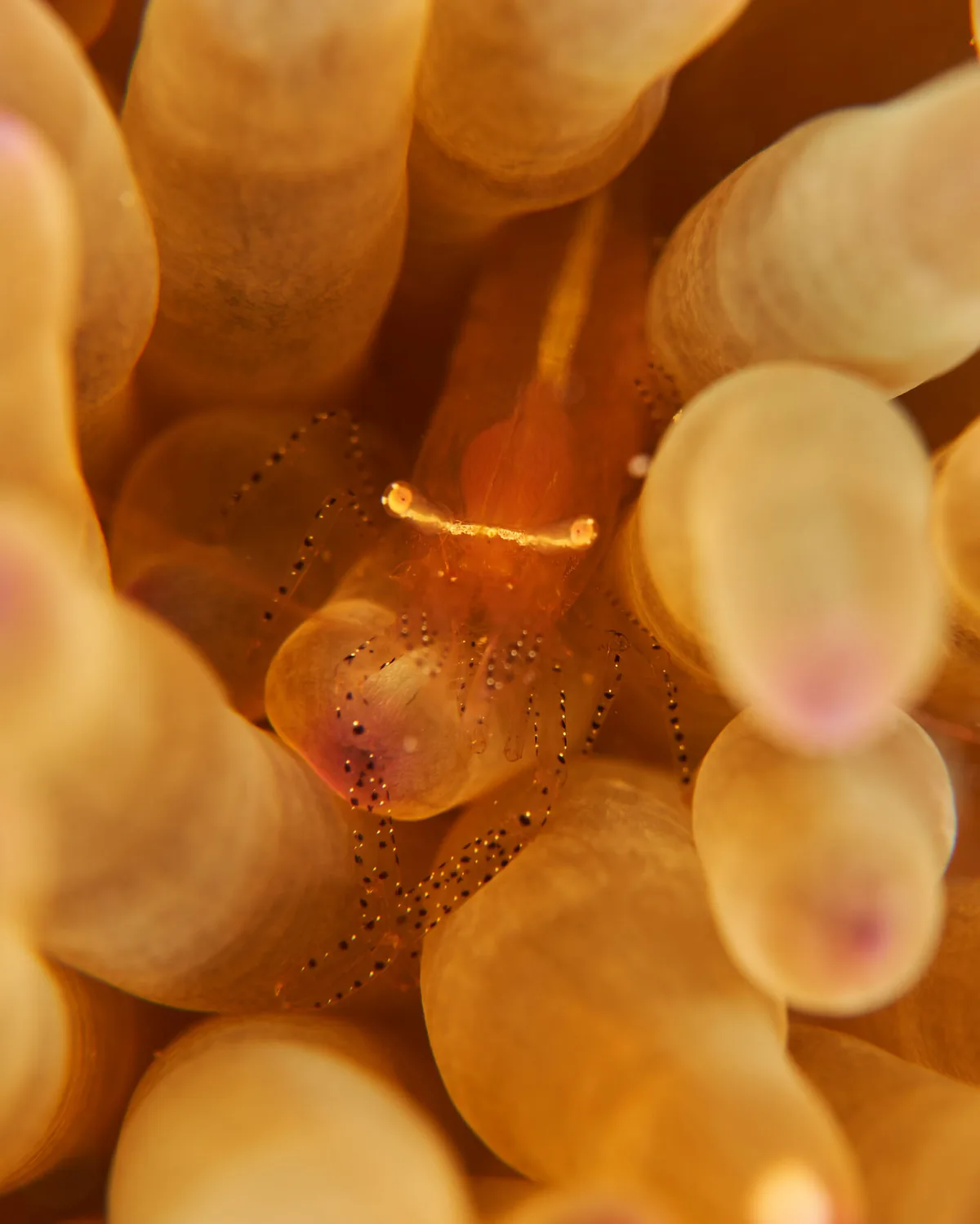
An anemone is real estate, and it is defended.
These shrimp live in pairs on one host and drive off other shrimp of their own kind, which is why a large anemone that could physically hold twenty animals usually carries two. The pair holds the ground, feeds on the anemone's leavings and on the film that collects on it, cleans fish that come in, and produces a run of broods on the same host over months.
The pairing is not sentimental. For a small animal that cannot cross open sand safely, a host is the only place worth being, and the cheapest way to guarantee a mate is to keep one and exclude everyone else. Remove one of a pair and the survivor will accept a replacement quickly, which tells you what the bond is actually about.
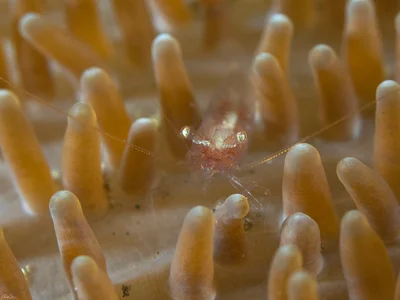
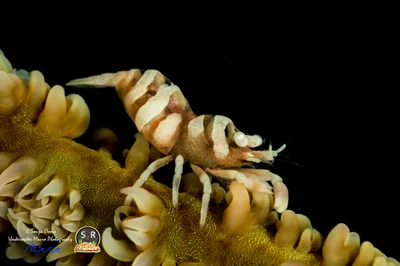
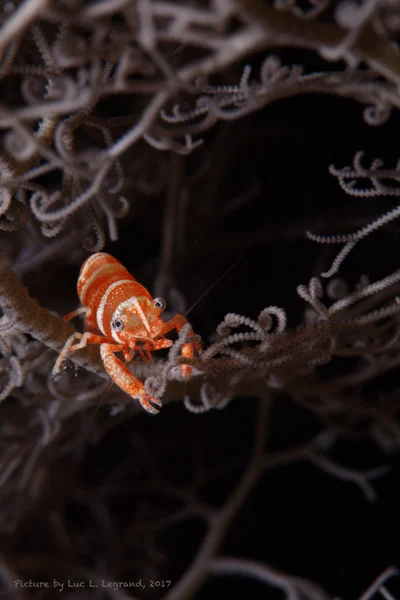
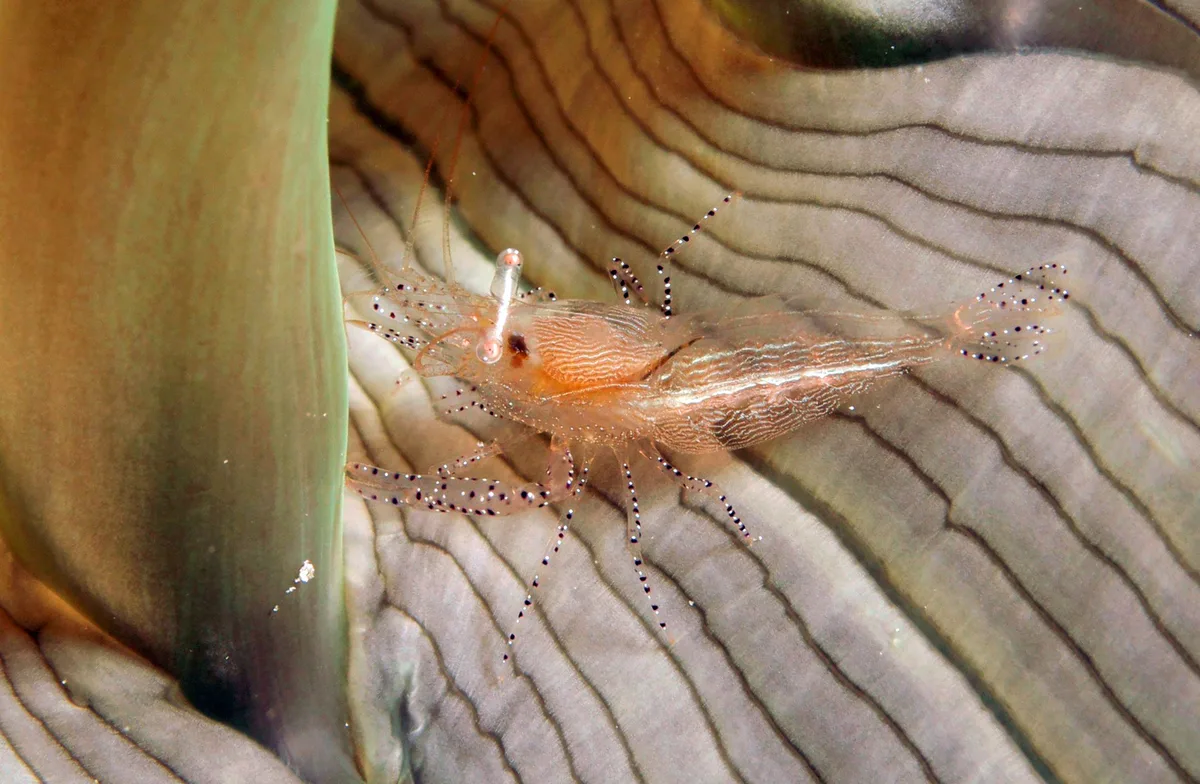
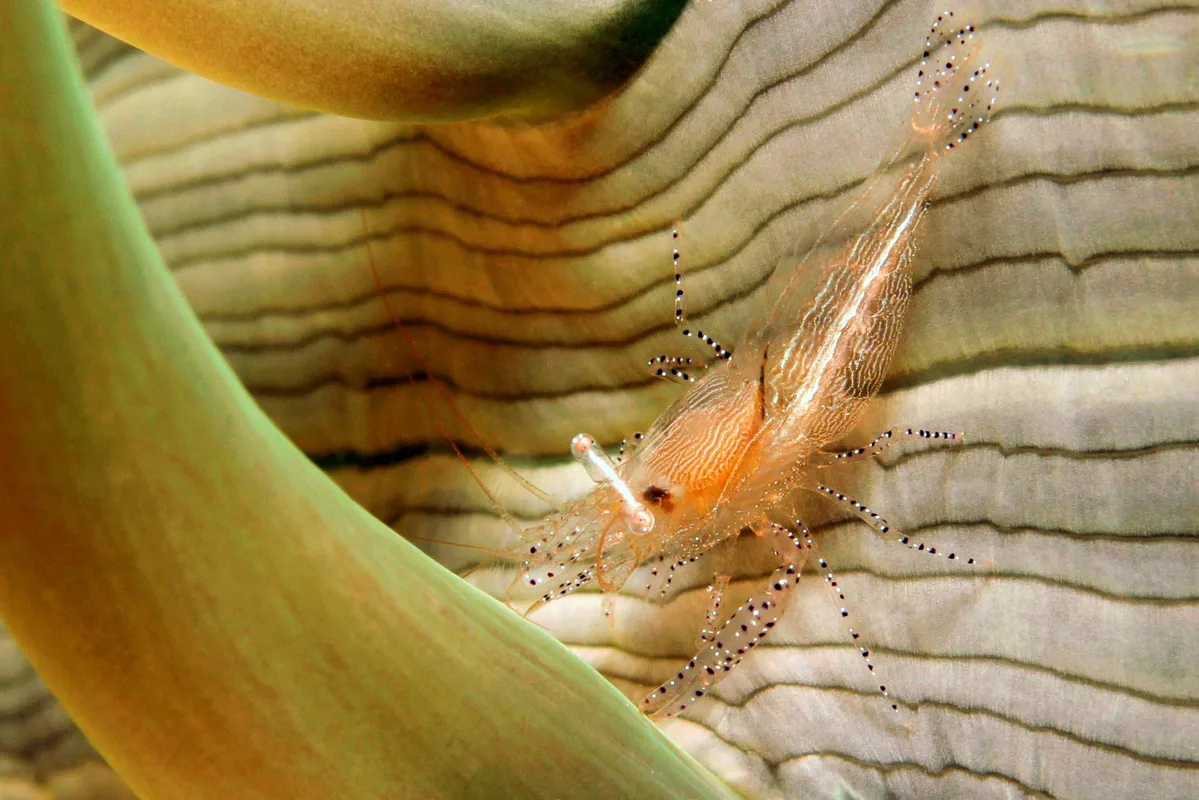
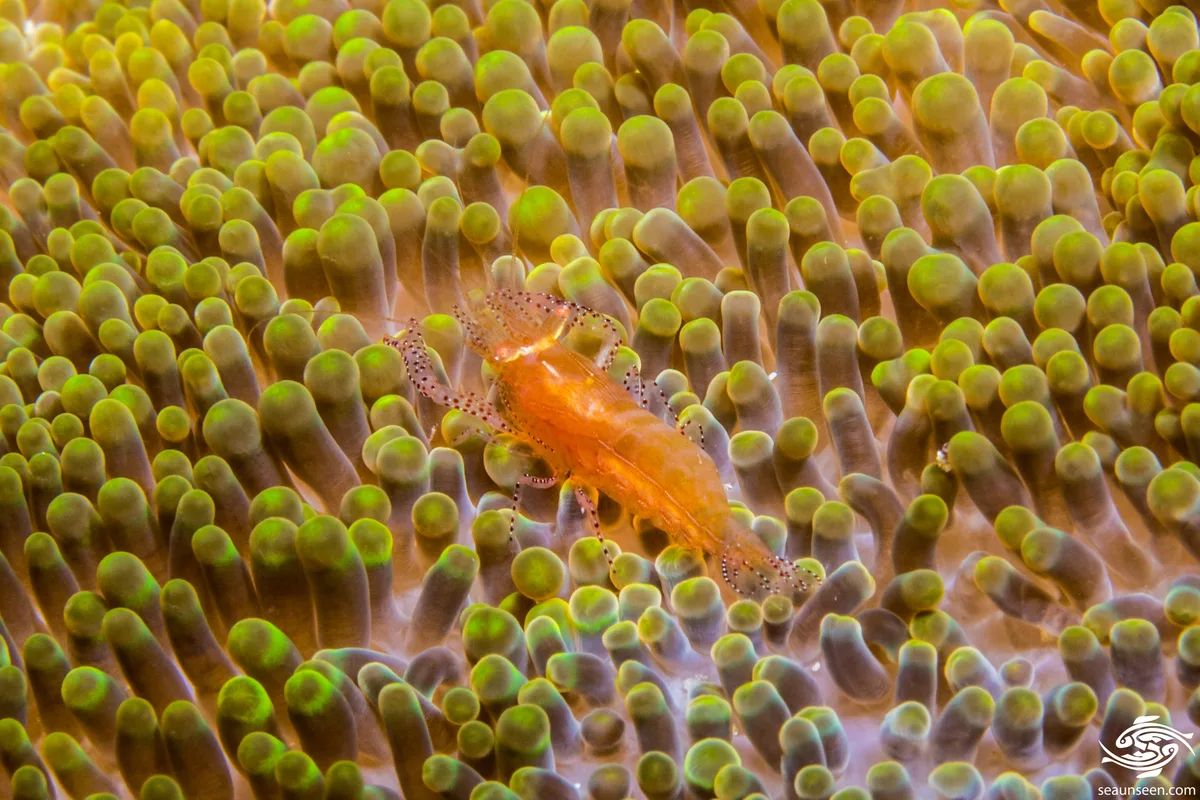
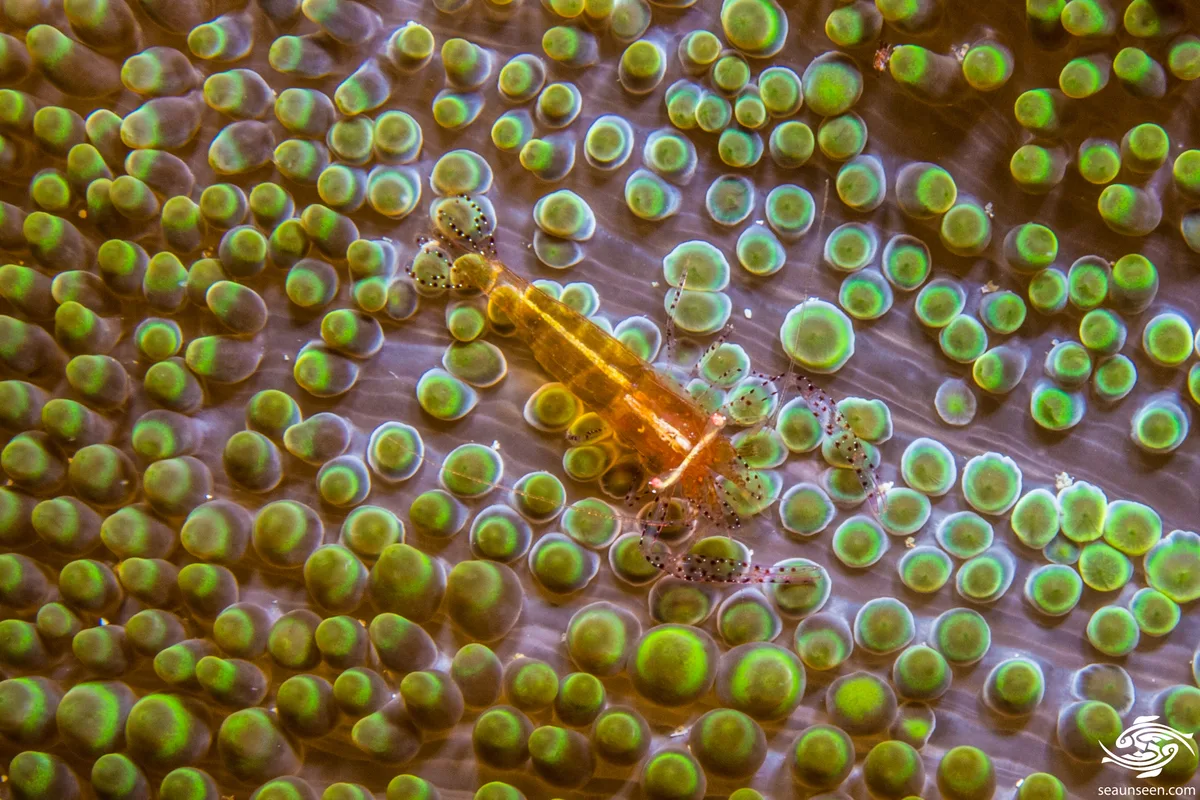
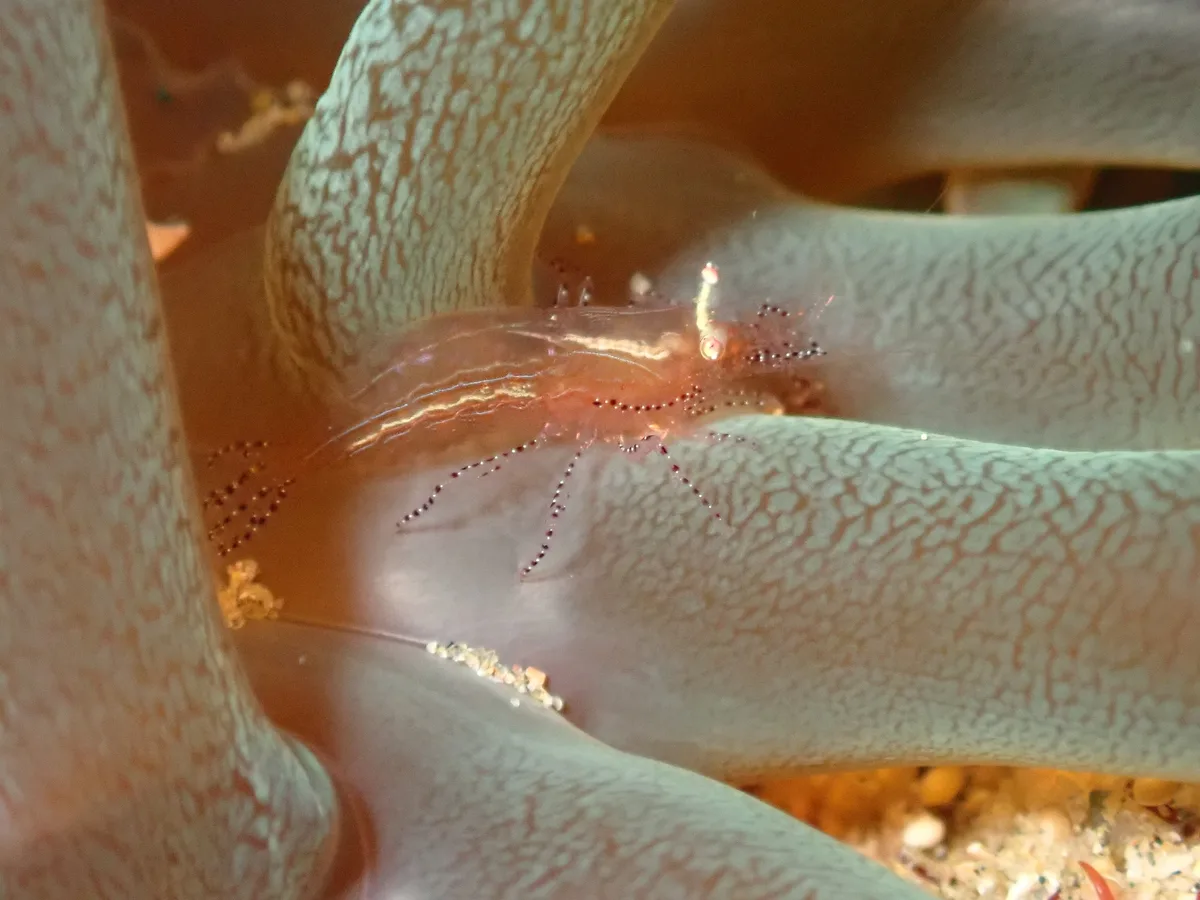
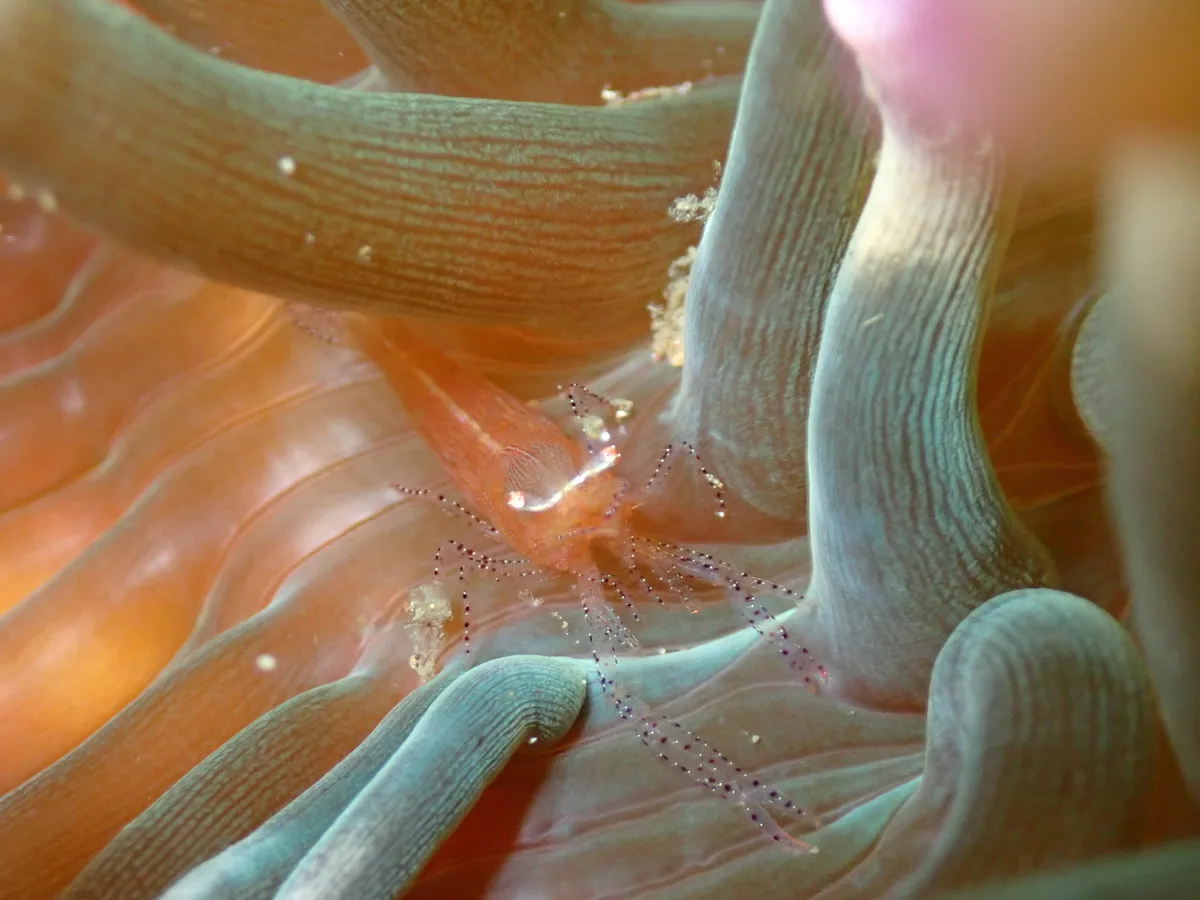
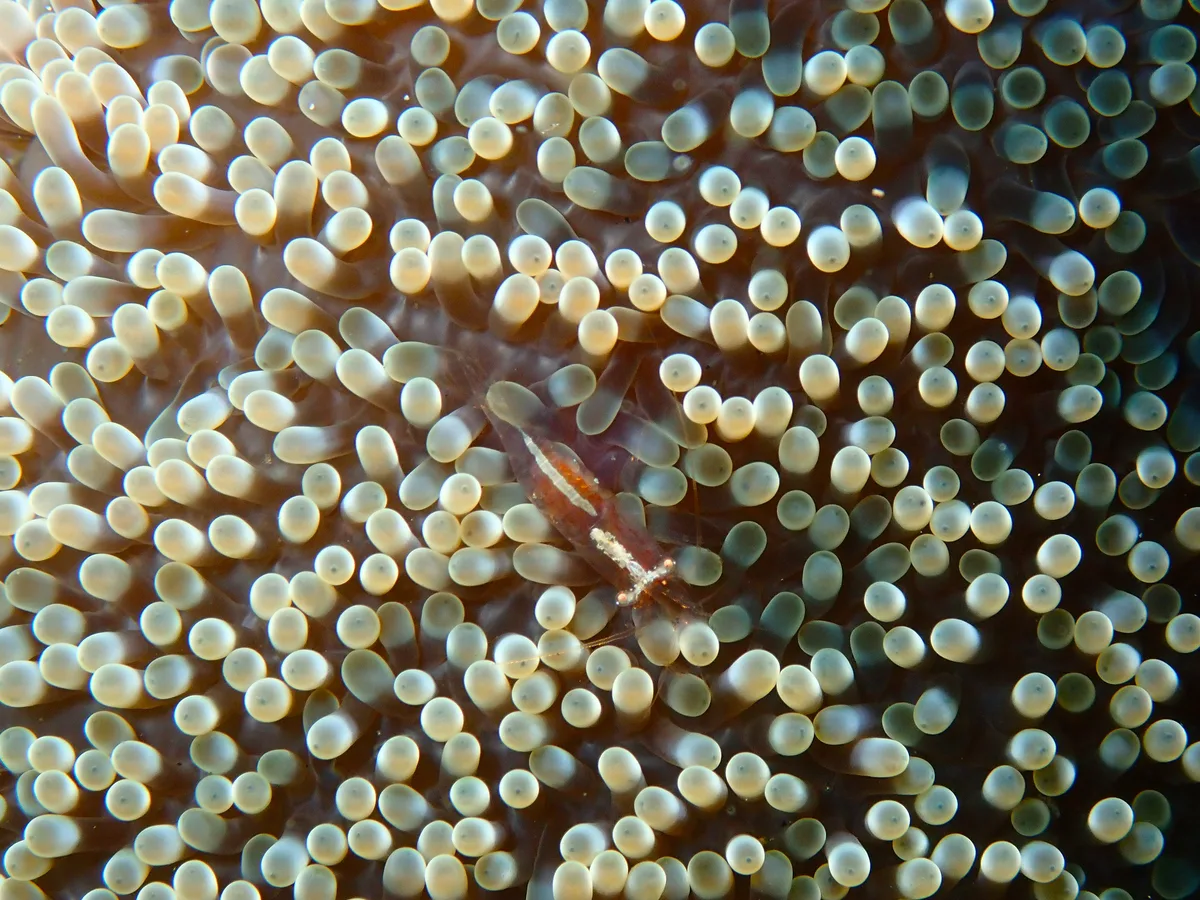
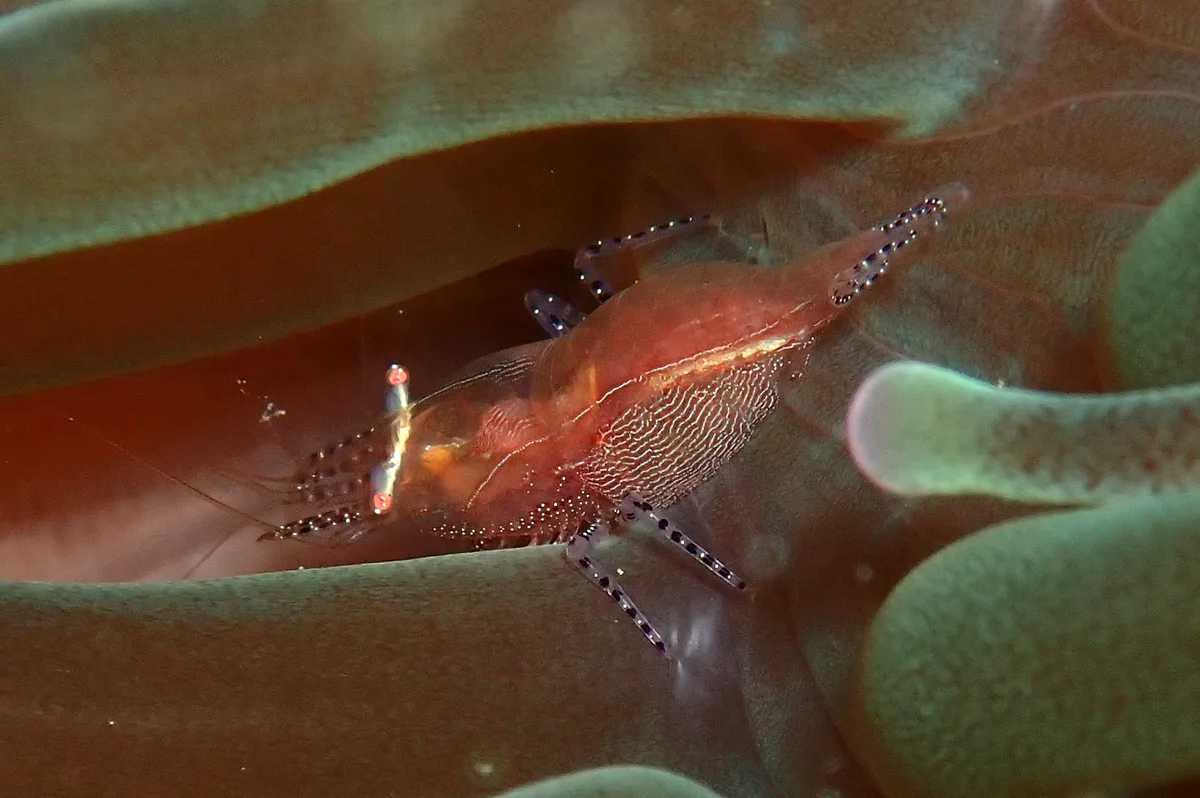
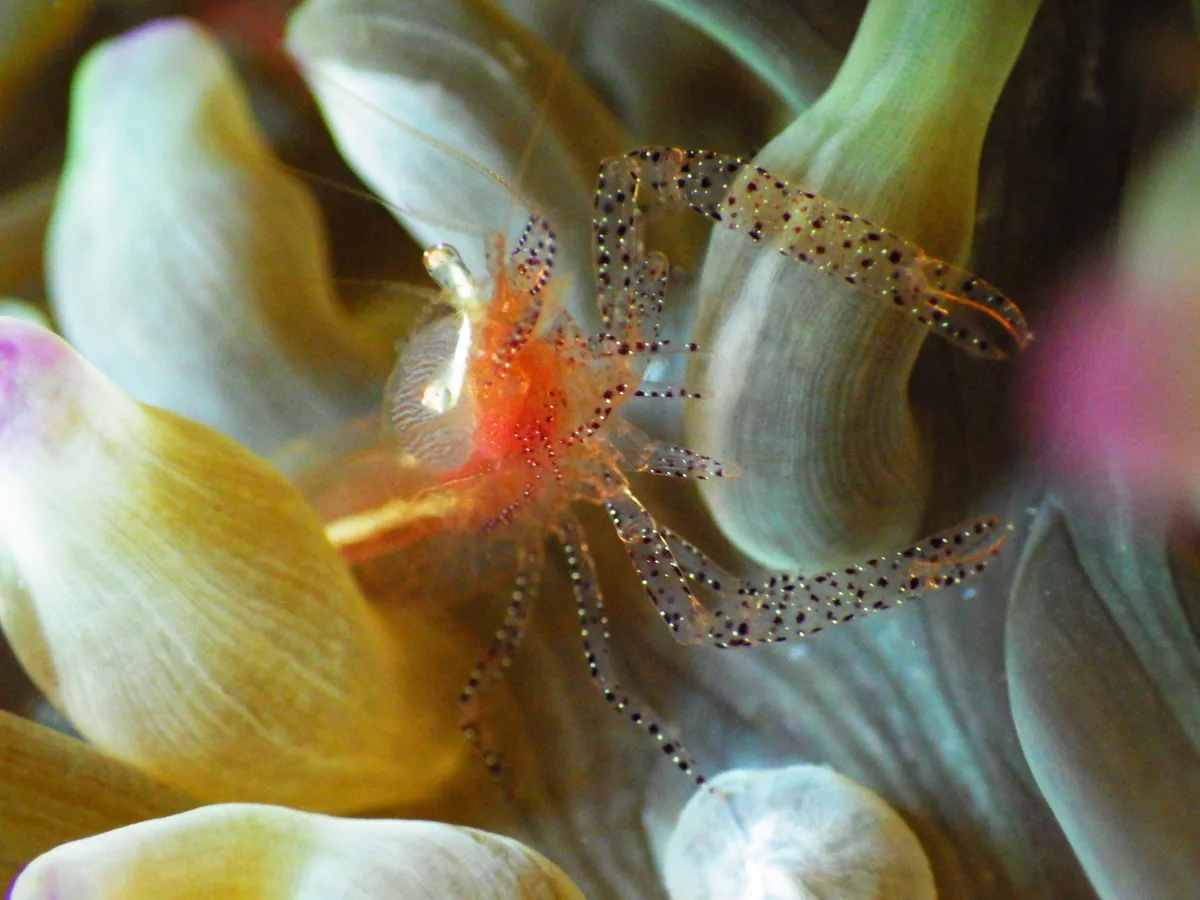
This is one of the larger and better-marked anemone shrimp here, four centimeters, transparent with bold white and orange-brown saddles and purple claw tips, and it is among the easiest commensals to photograph because it has no intention of leaving.
- transparent body with bold white and orange-brown markings on the back
- purple-tipped claws
- in pairs, defending one anemone
- up to 4 cm