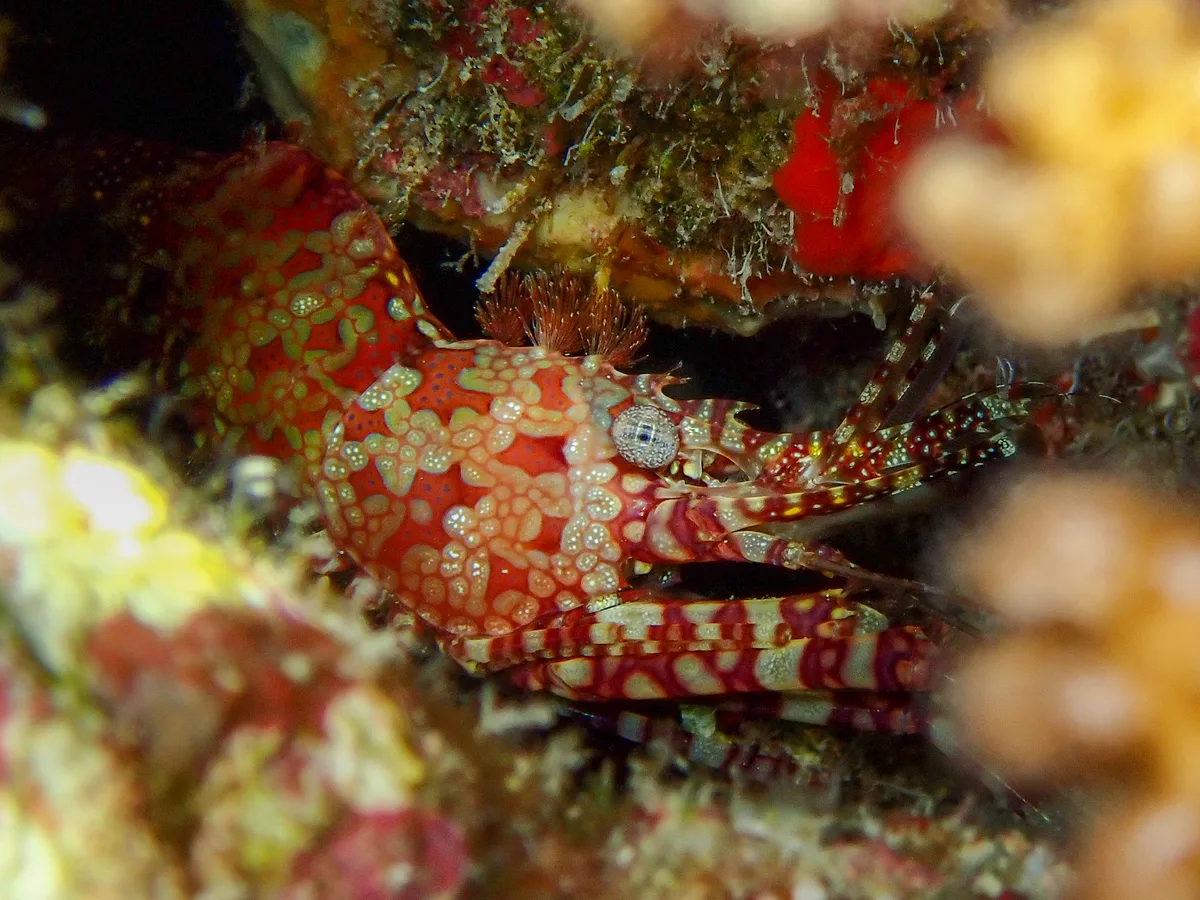
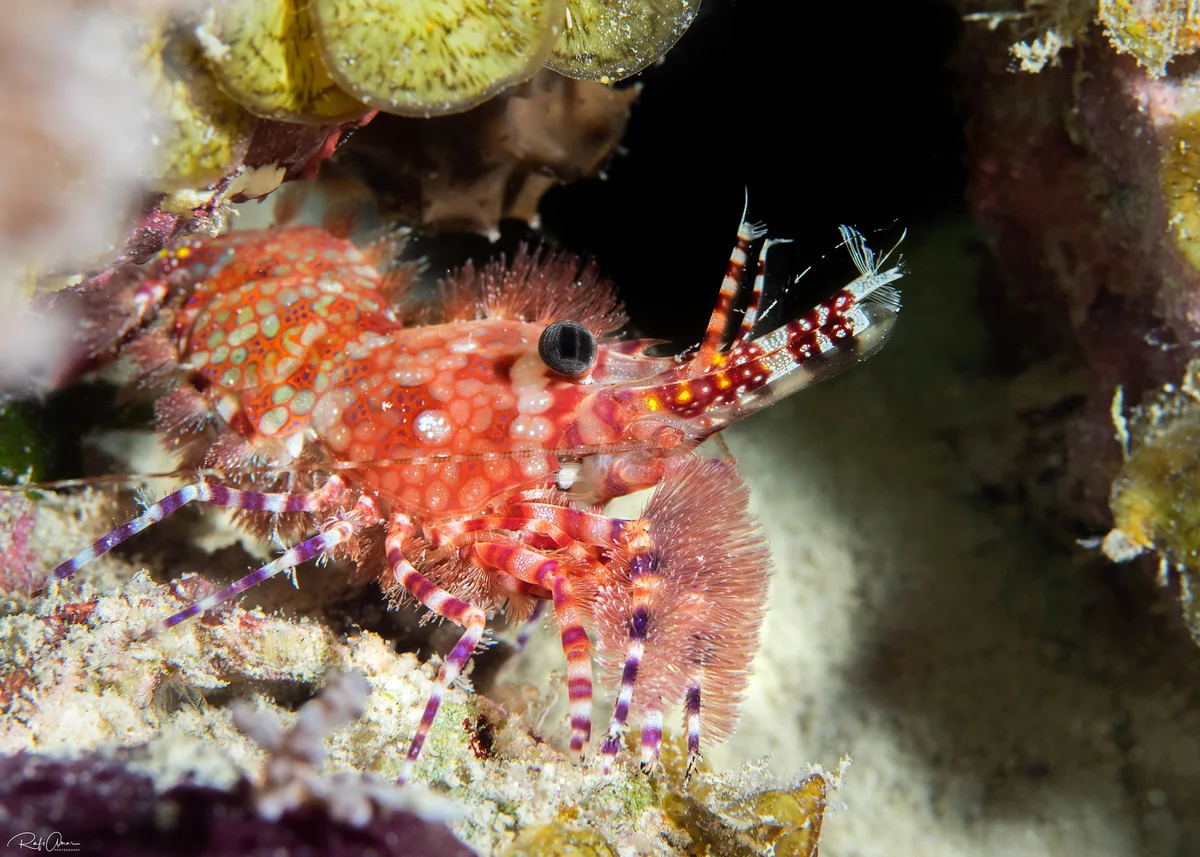
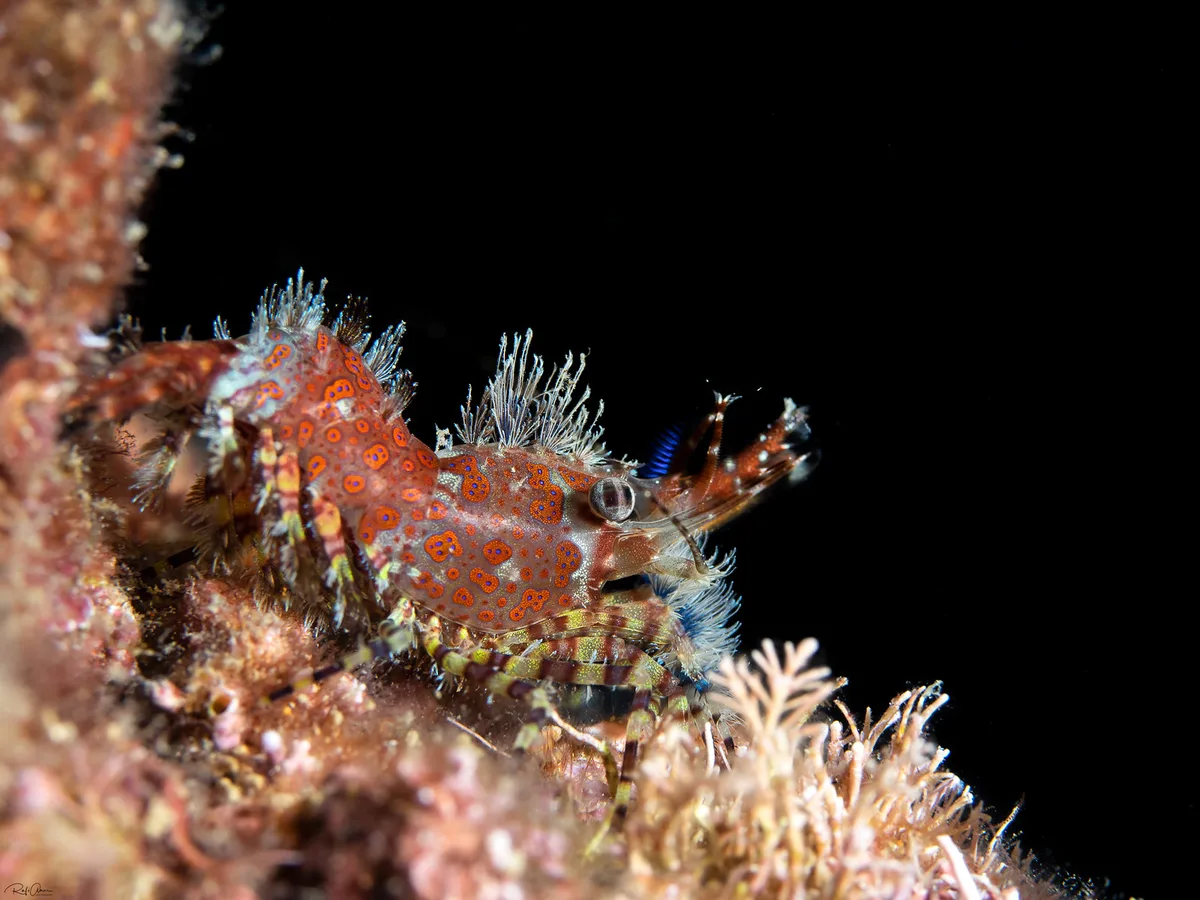
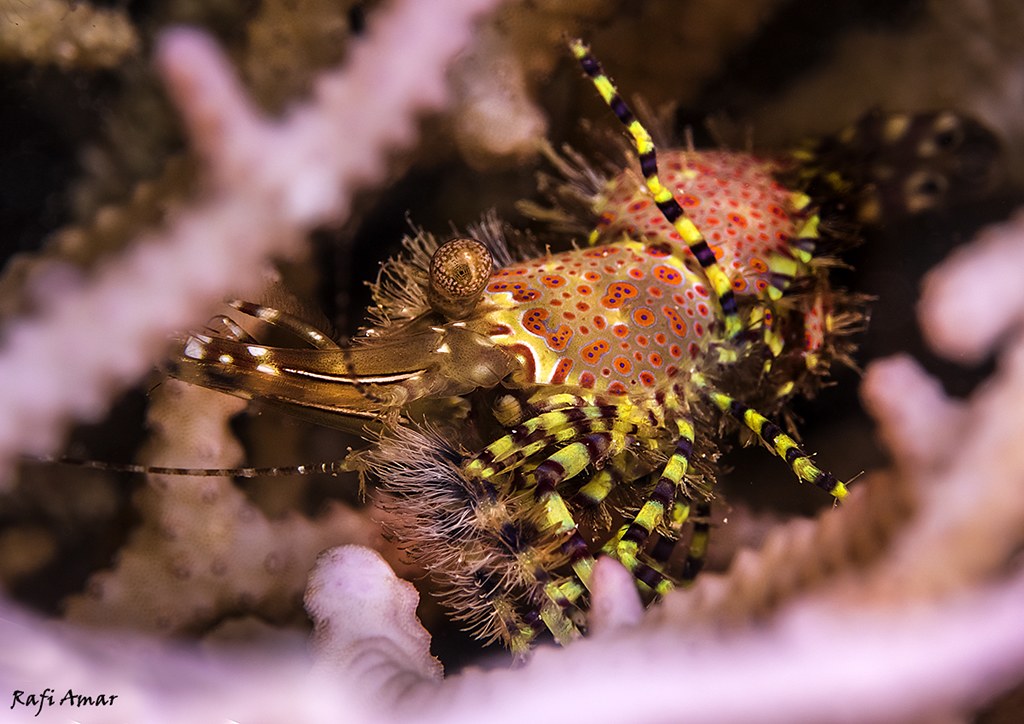
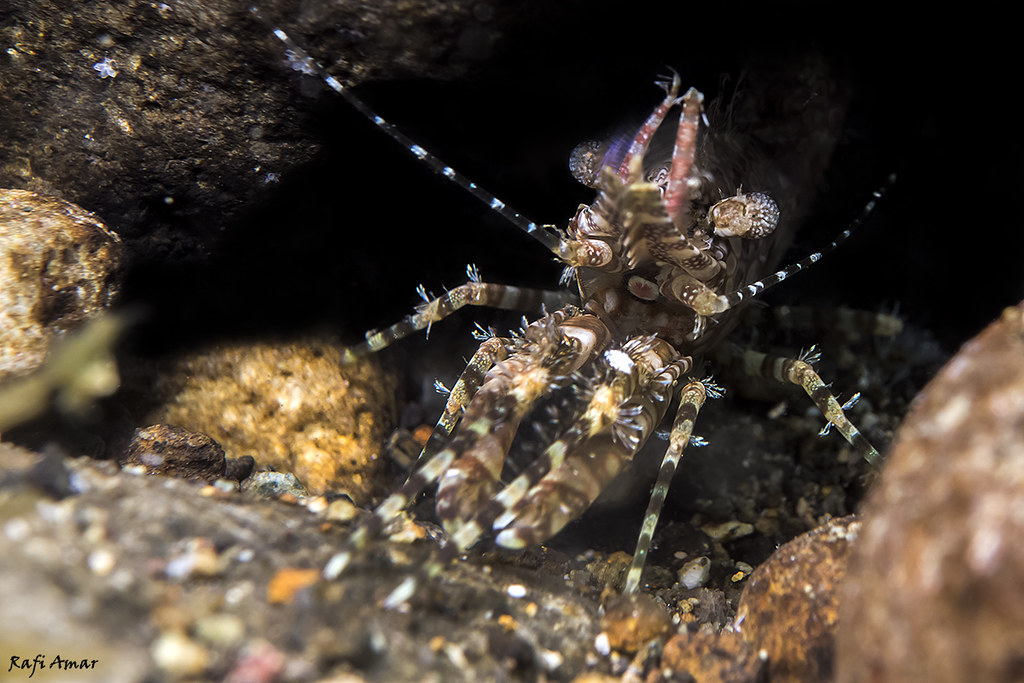
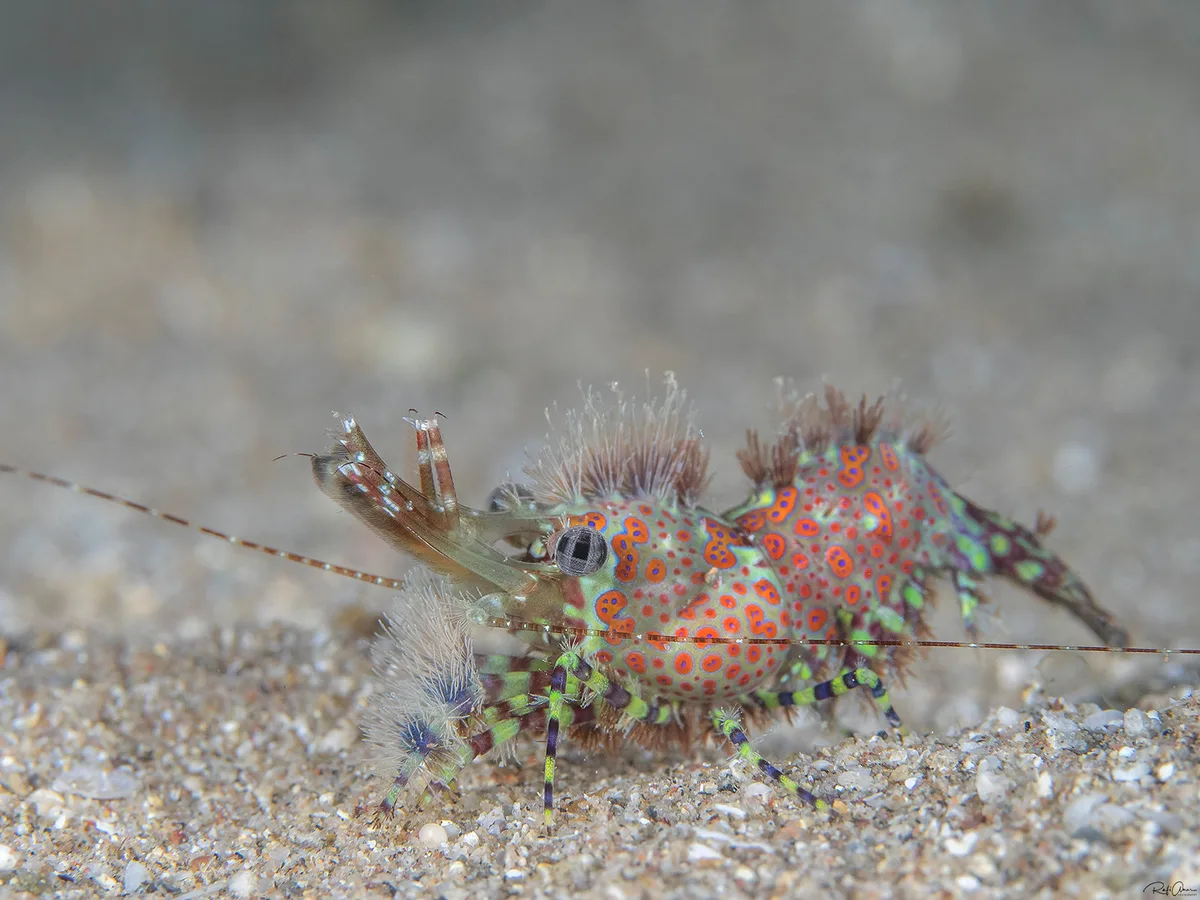
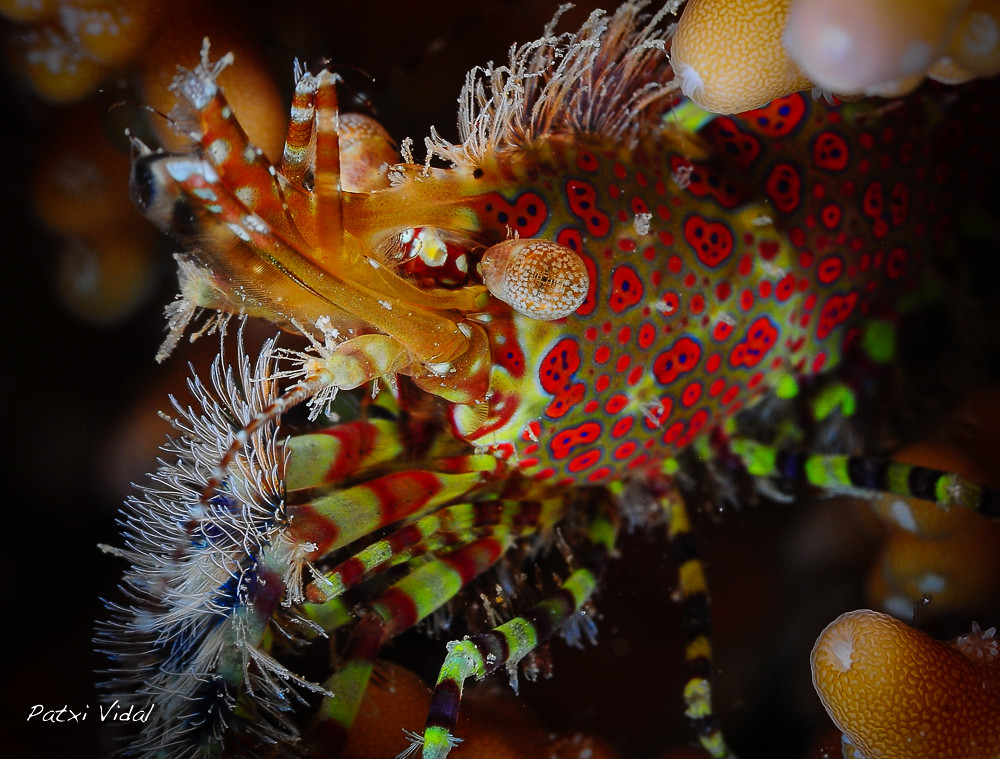
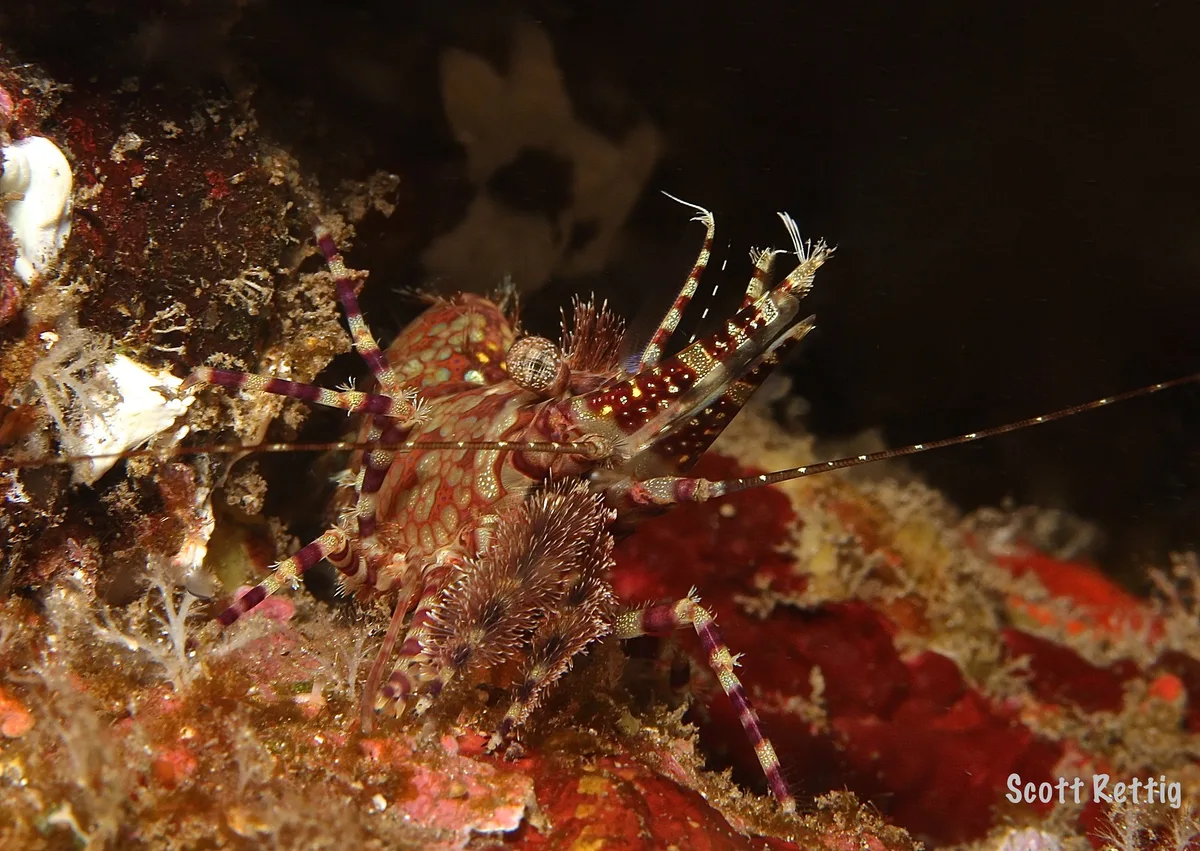
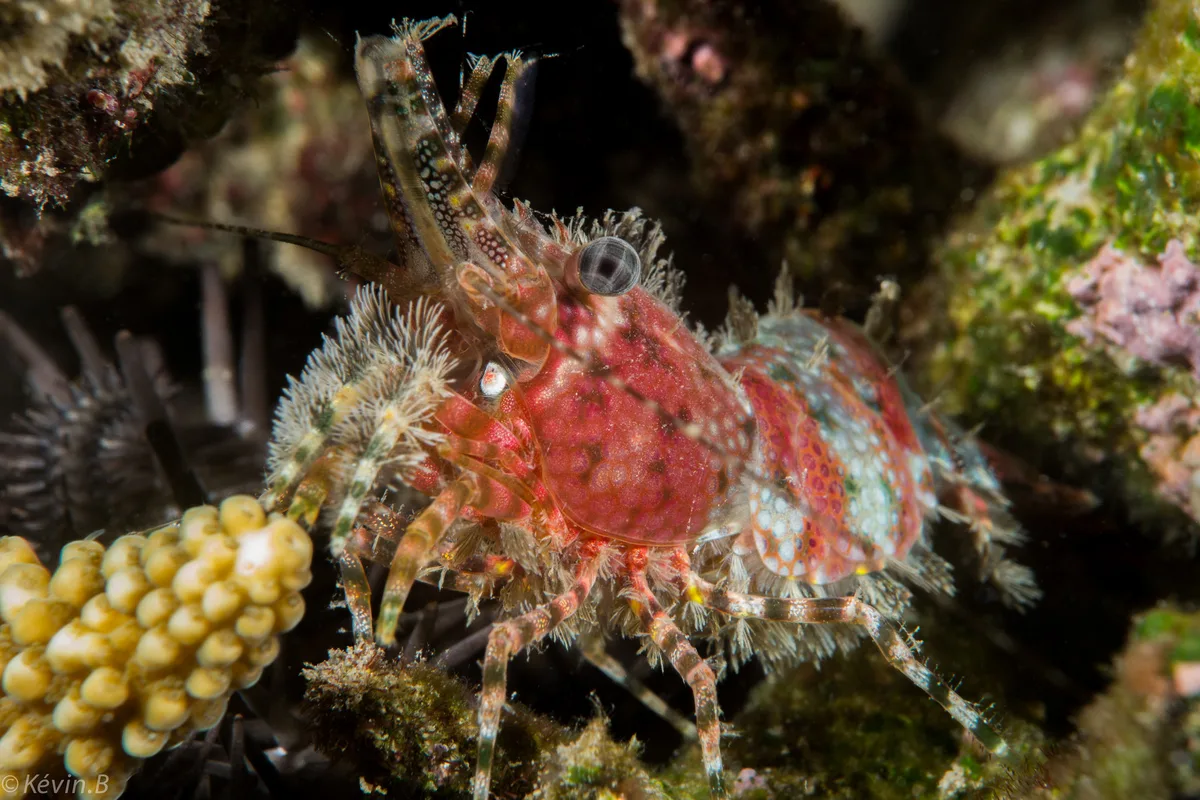
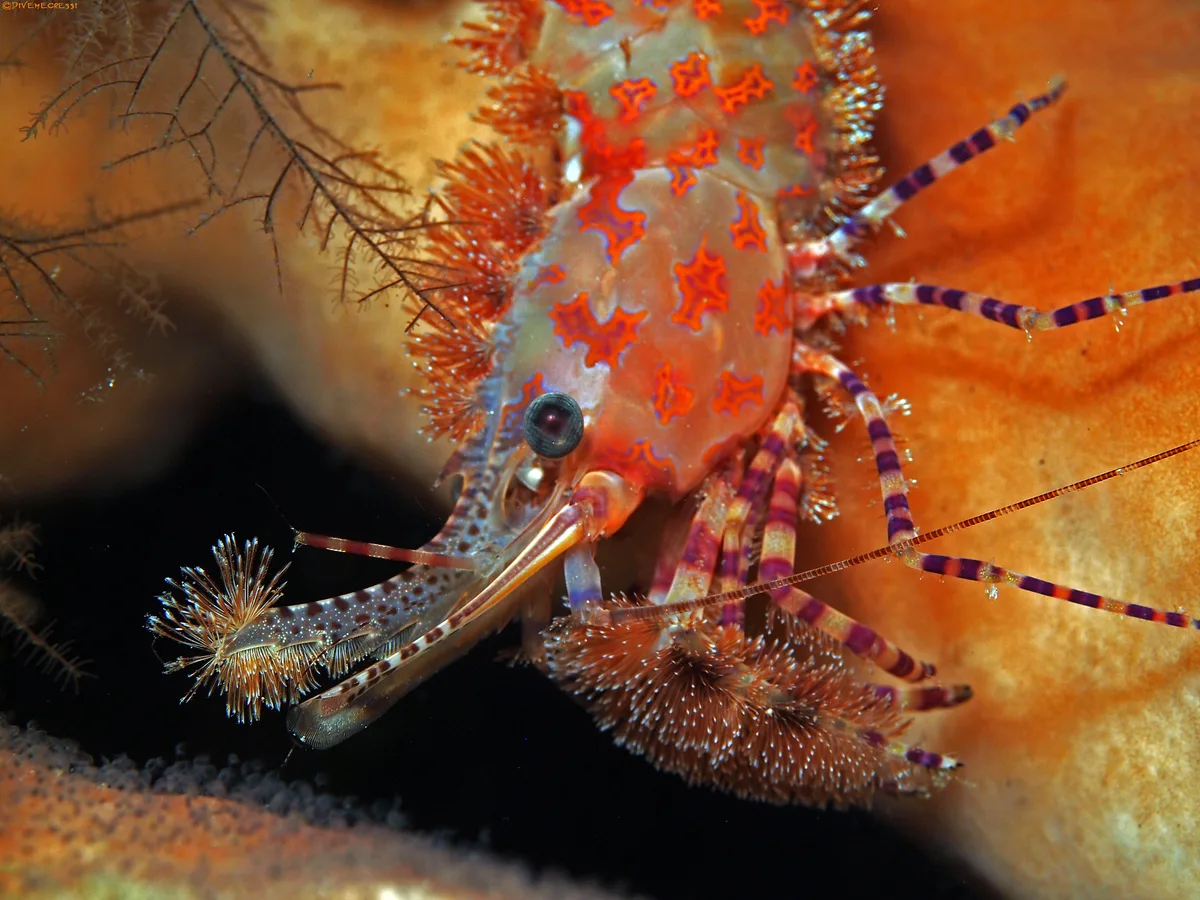
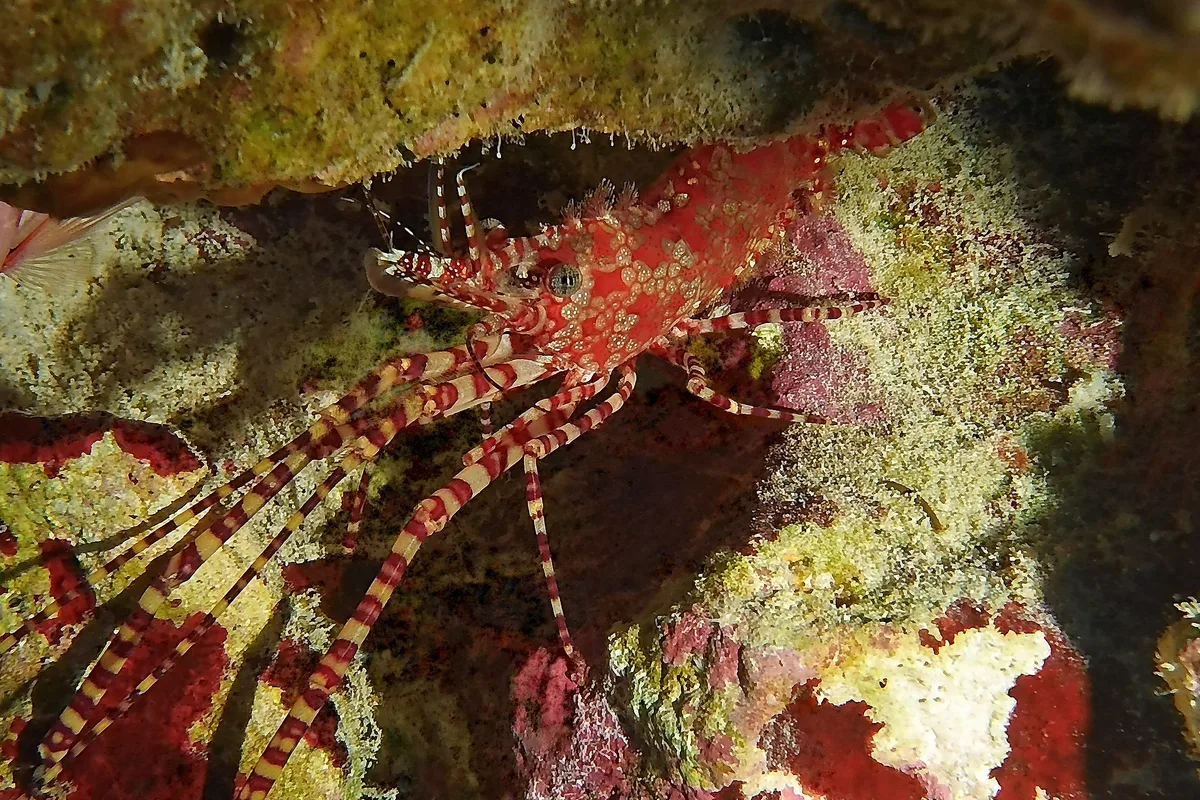
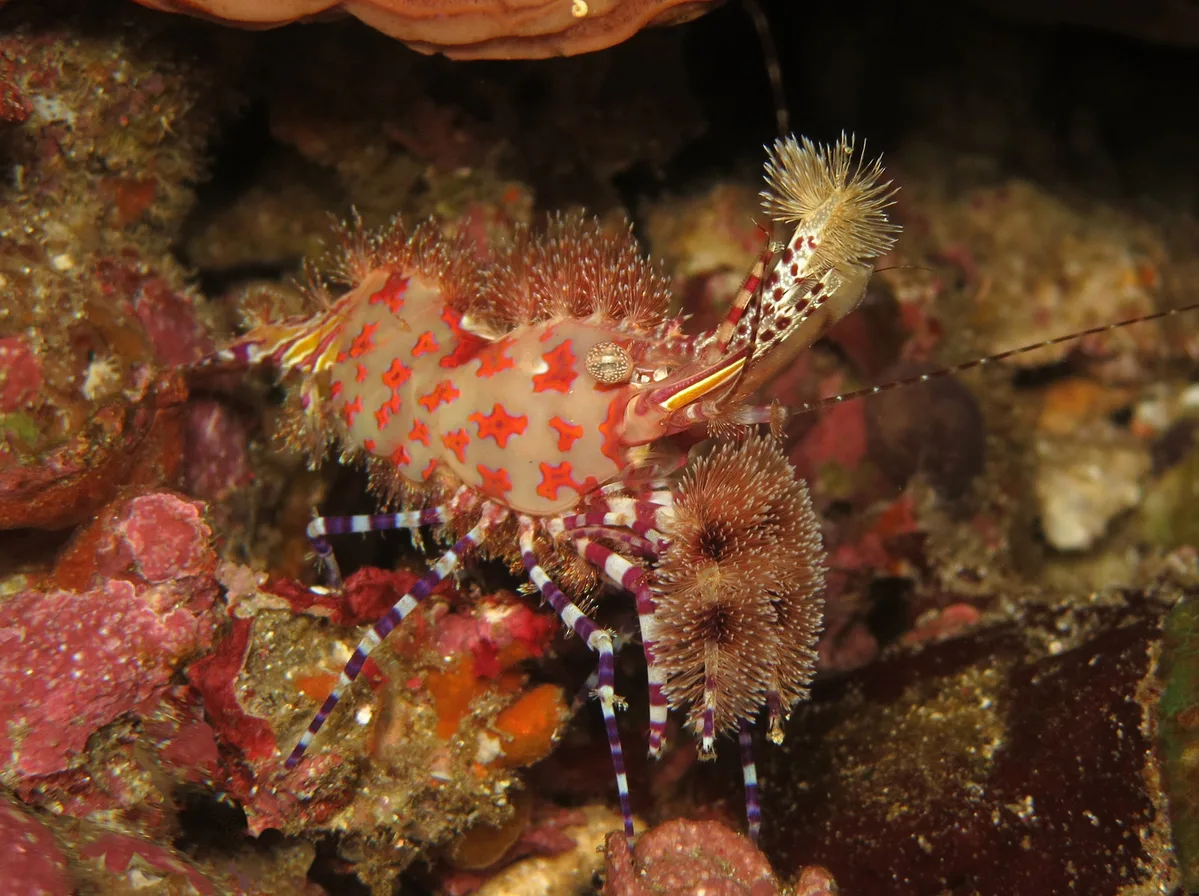
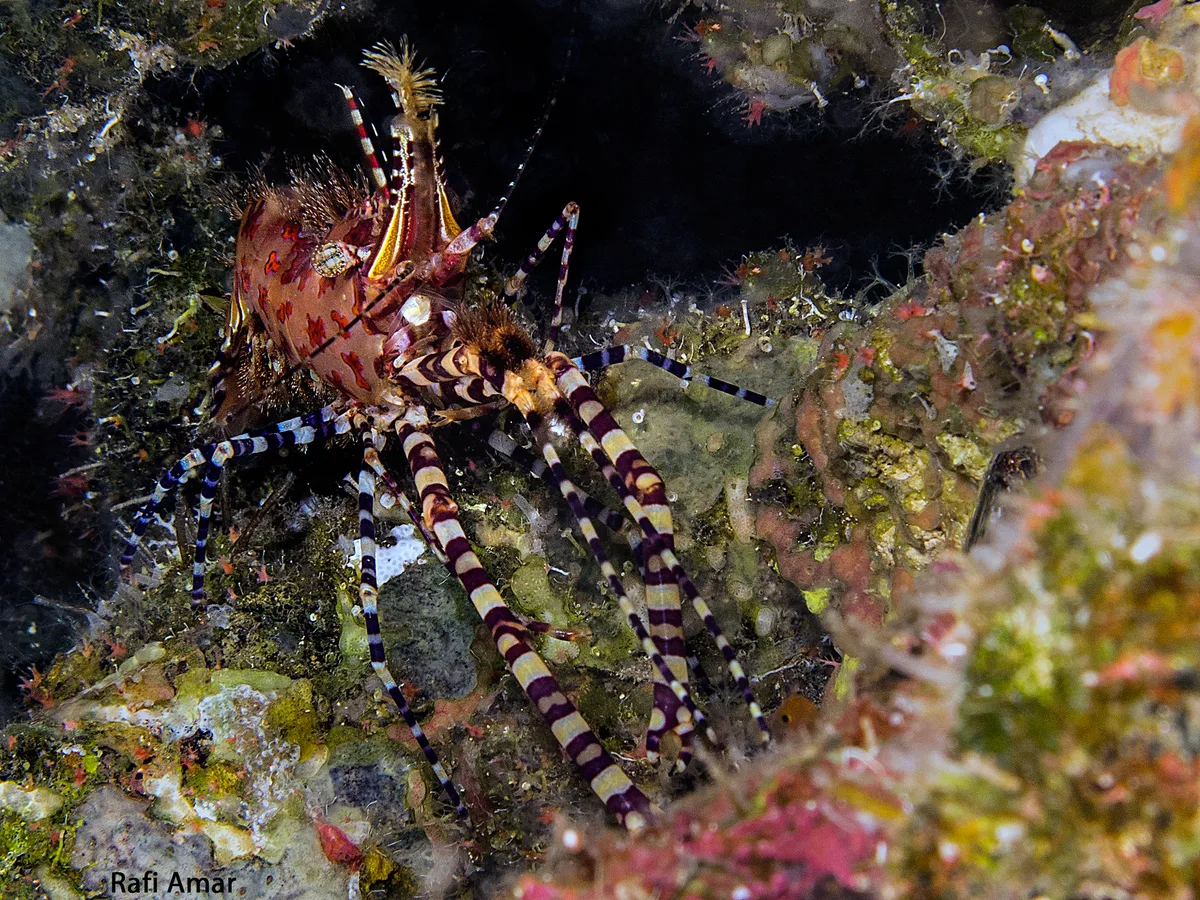
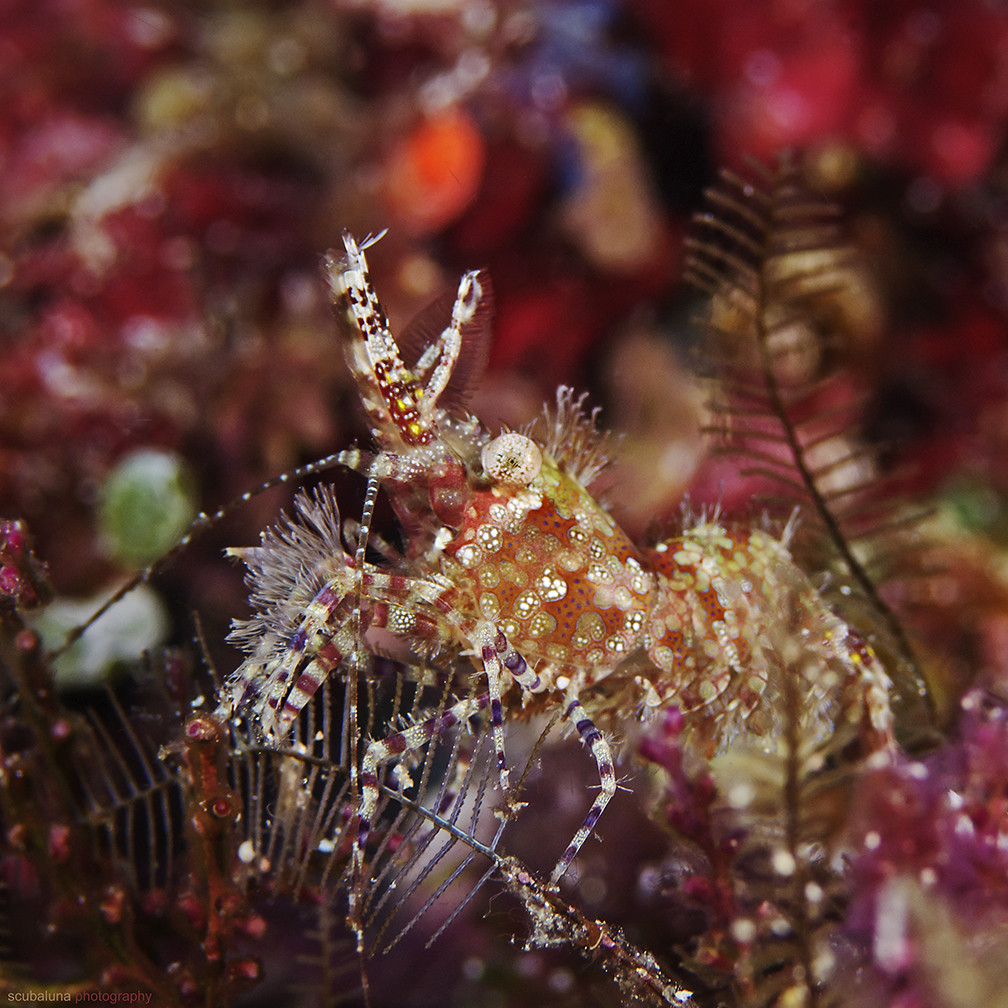
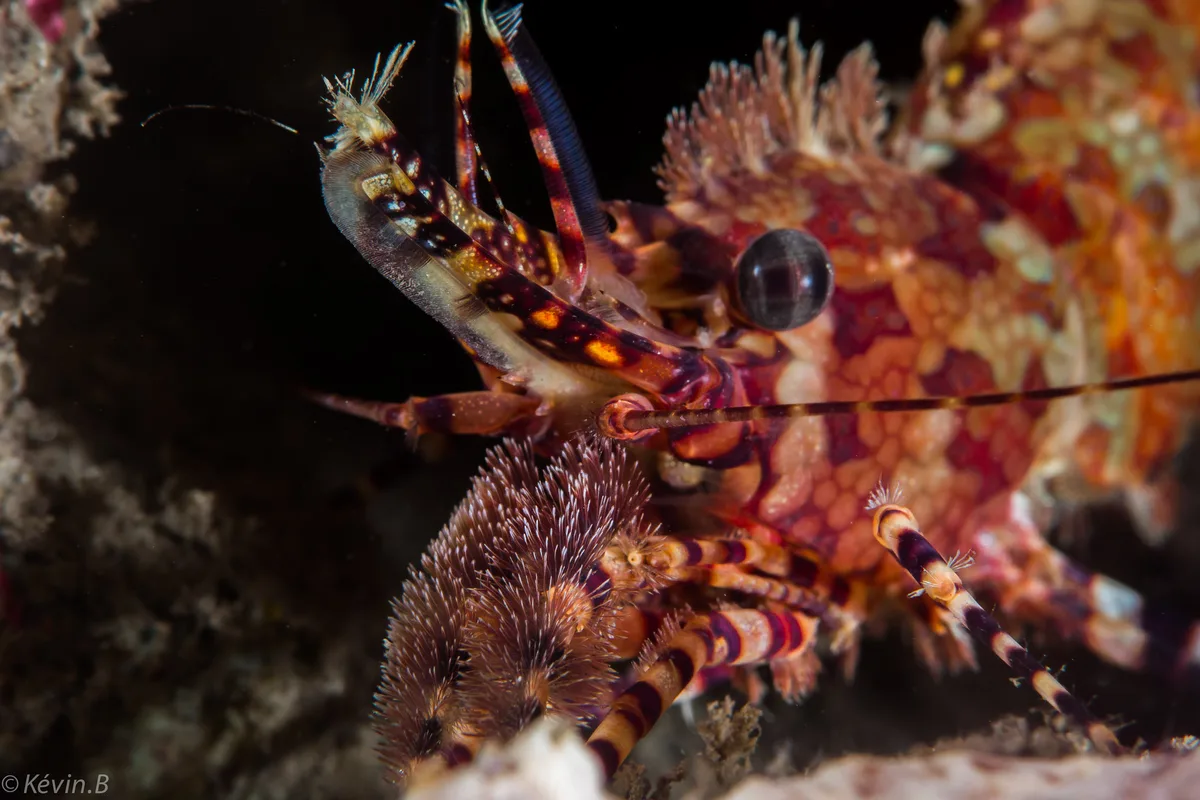
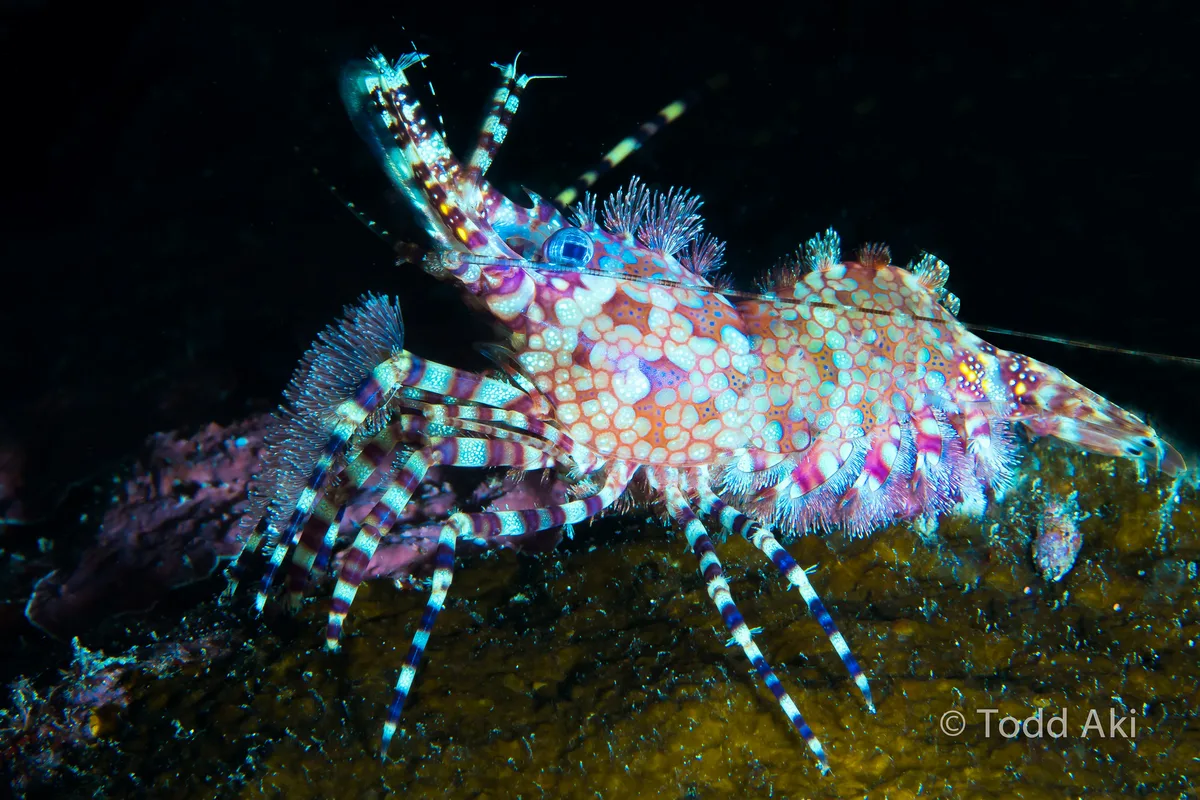
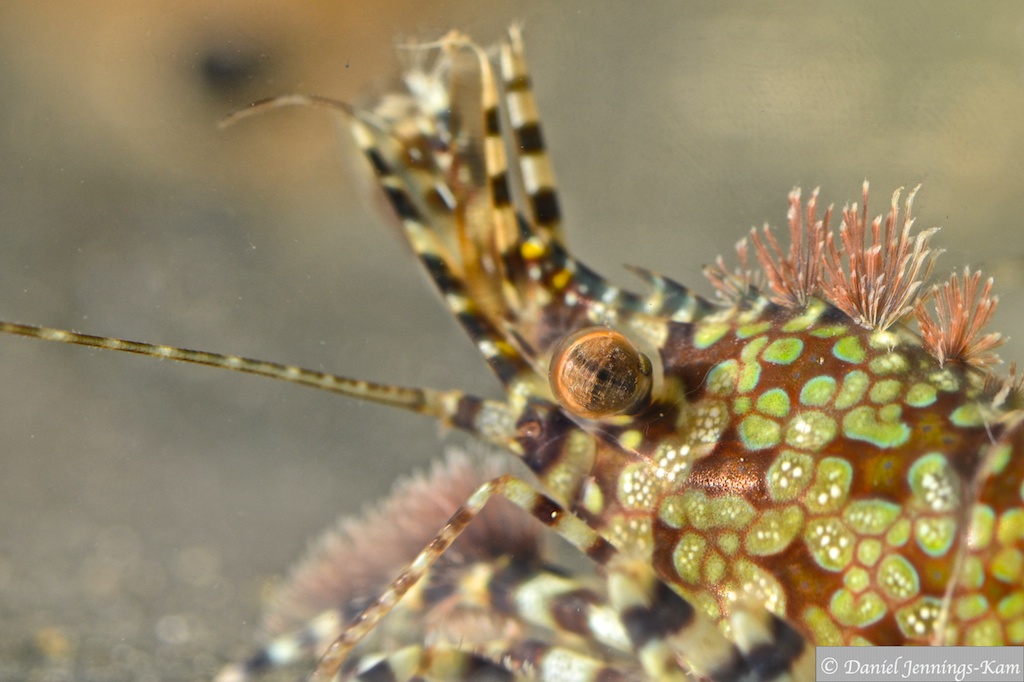
It is covered in hair, and the hair is the point.
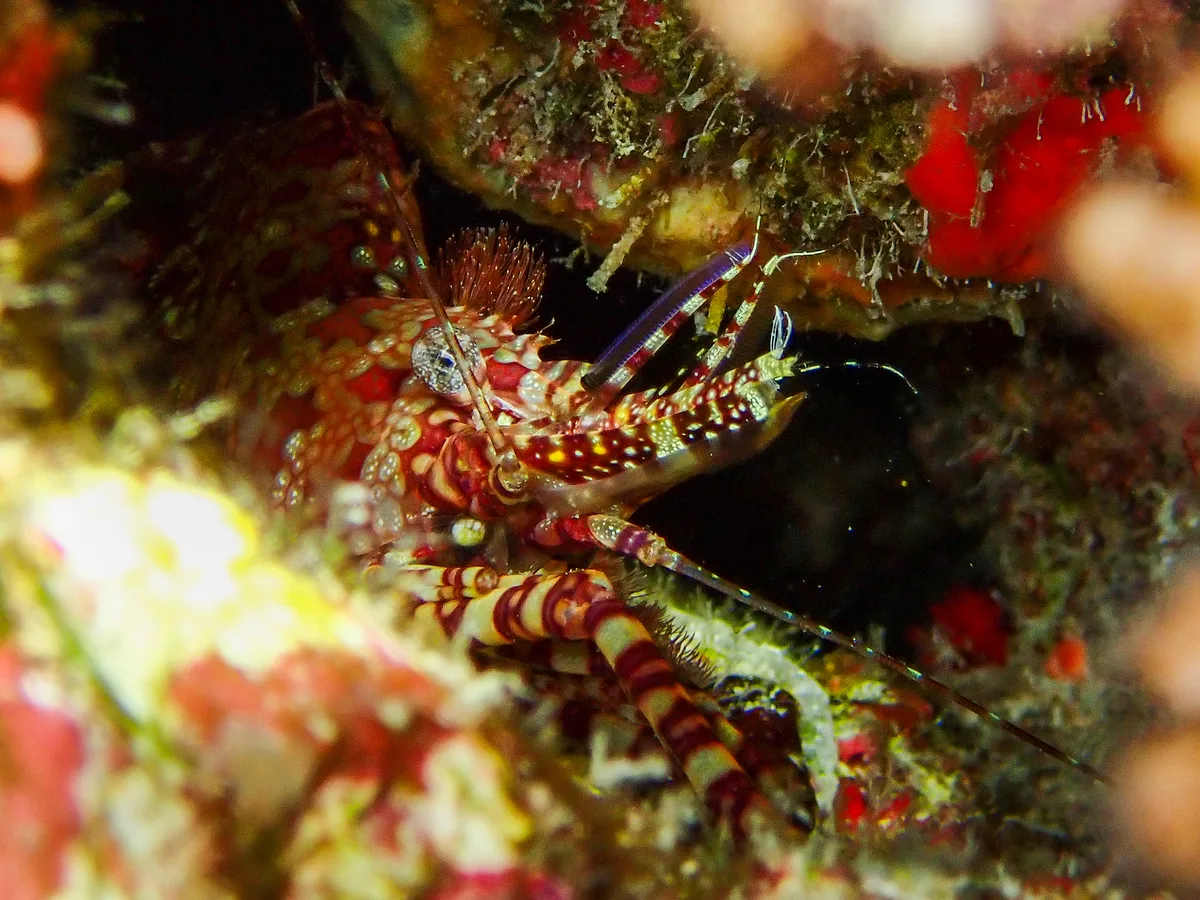
The body carries dense tufts of short bristles over most of its surface, and the effect is that the animal has no clean edge anywhere. A smooth shrimp on rubble is a shrimp-shaped thing; this one is a fuzzy irregular lump that also collects silt, algal filaments and debris in among the tufts until it is genuinely part of the substrate. Marbled green and brown on top of that, and it disappears entirely as long as it holds still.
The males are the odd ones. In this genus the first pair of walking legs in a male can be longer than the entire body, held out in front like a pair of tongs, and they are used in disputes with other males rather than for feeding. A large male Saron looks like a different species from the female next to it.
By day it stays in a crevice. At night it comes out over the rubble, and a torch picks up the pale eyespots on the back before it picks up the animal.
- body covered in dense tufts of short bristles, giving a mossy look
- marbled green, brown and red with pale eye-like spots
- males with the first pair of legs greatly elongated
- up to 5 cm