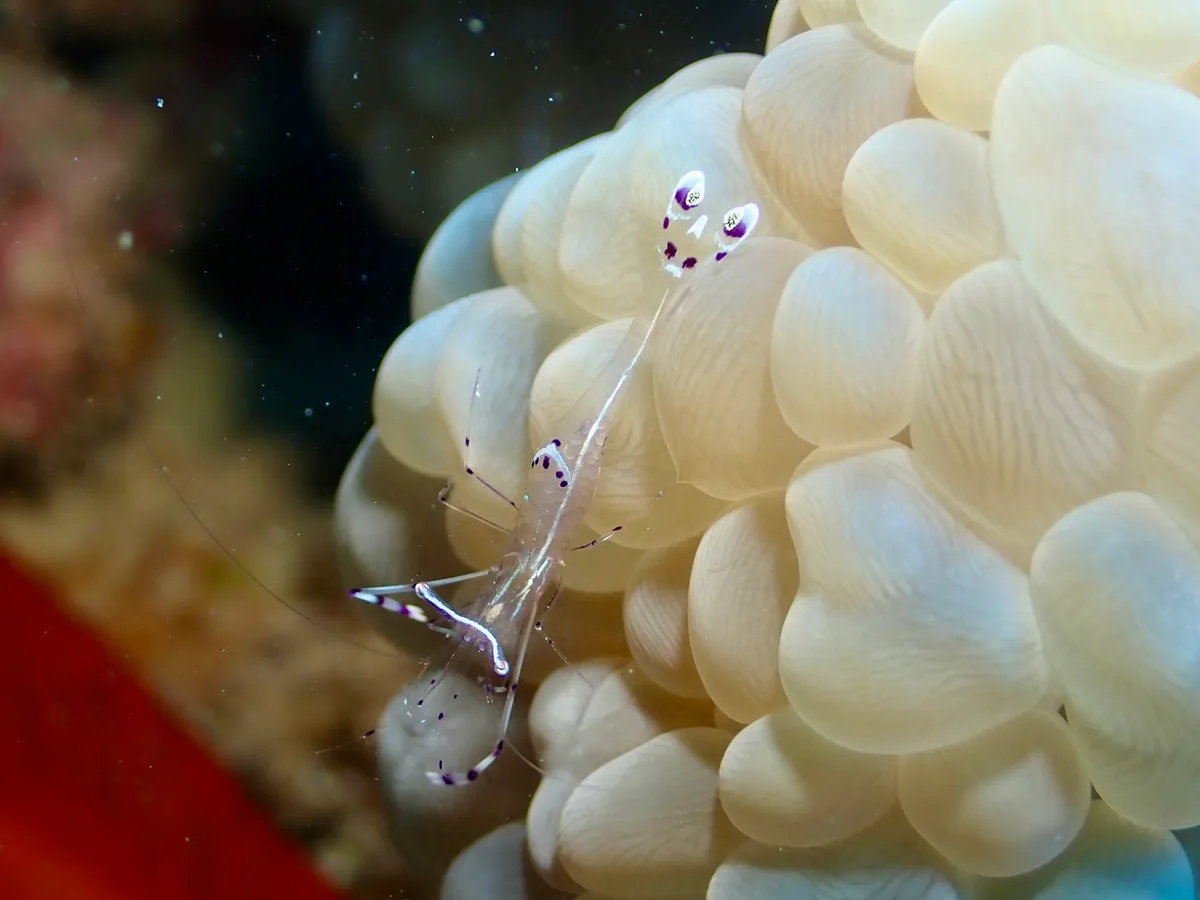
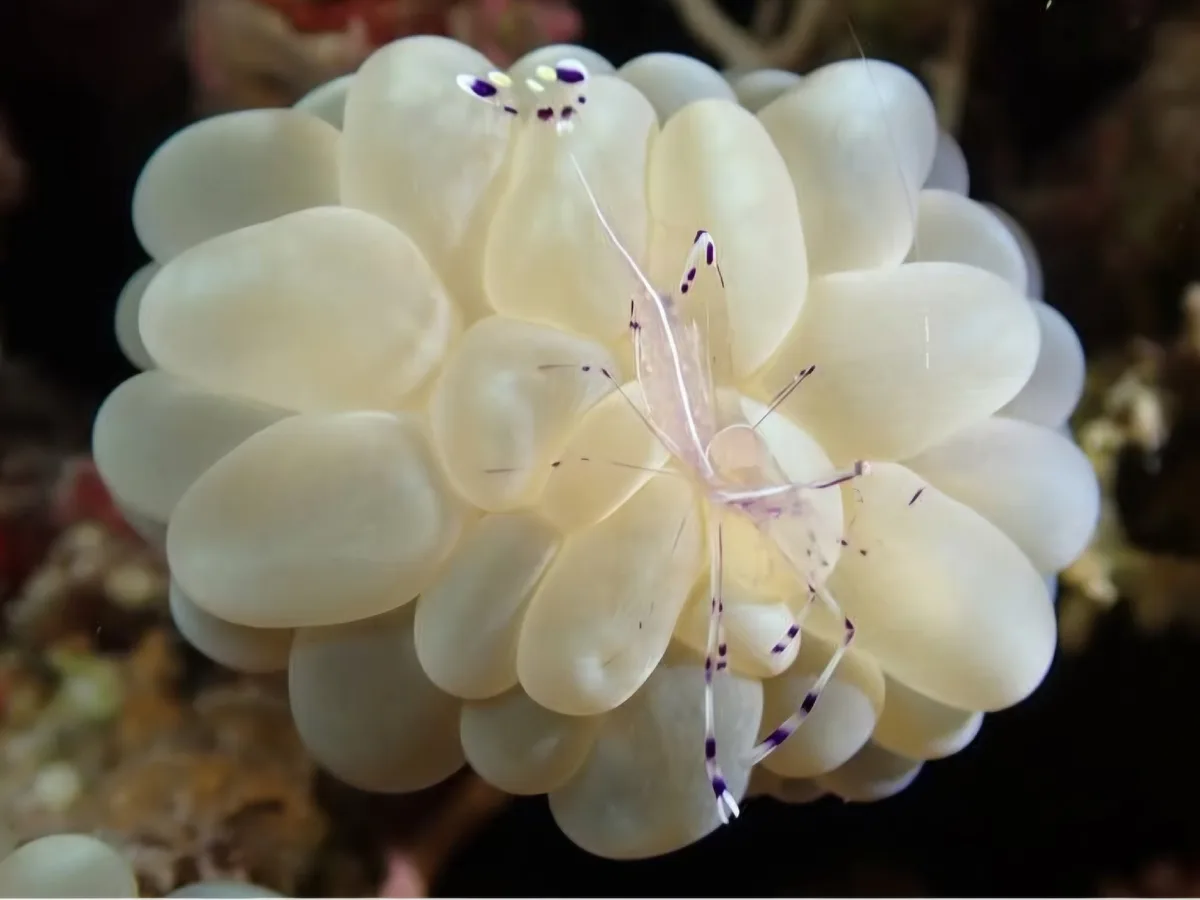
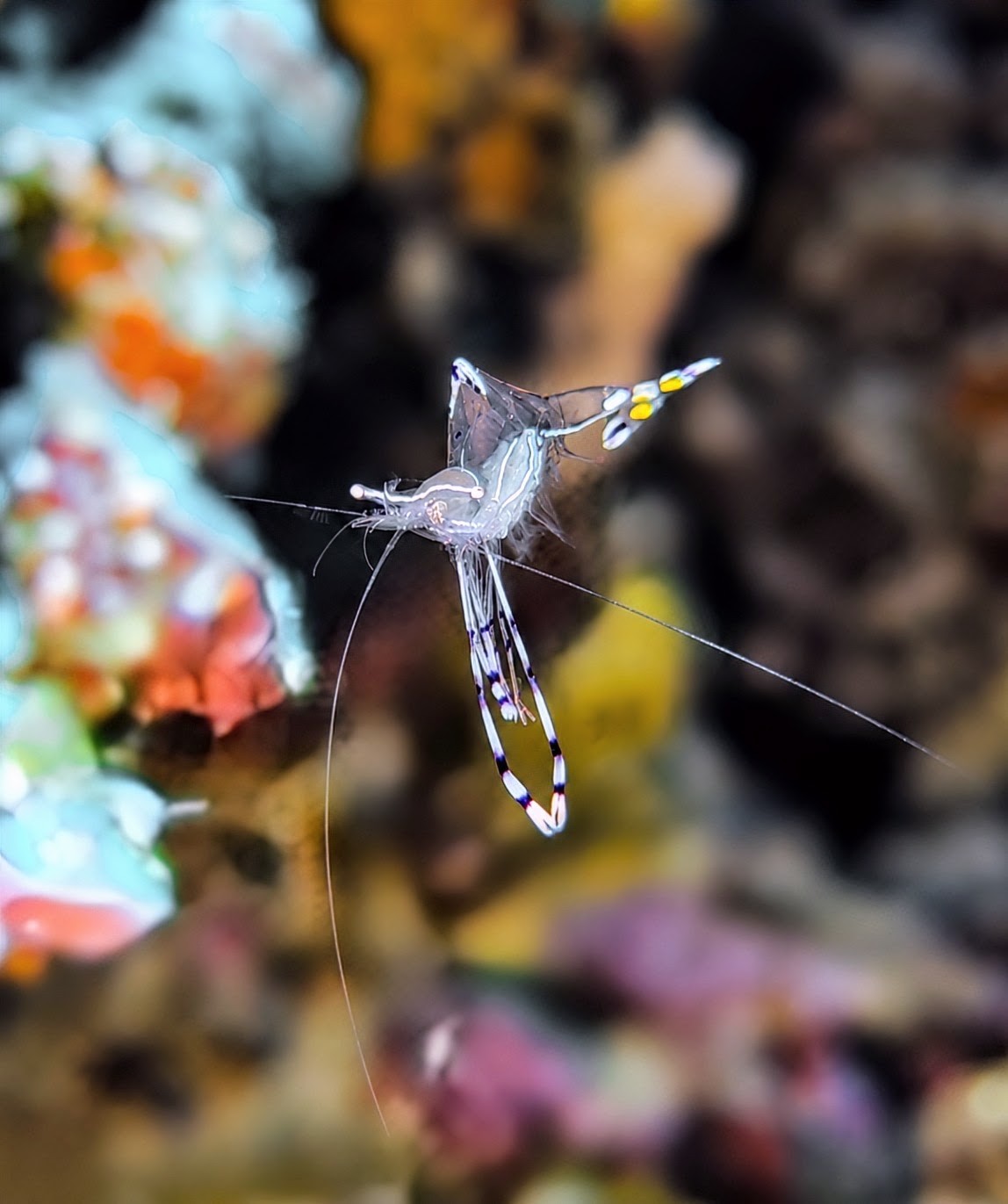
The white antennae are a uniform, and it is worn by animals that are not related to each other.
Cleaning has evolved separately in wrasse, gobies, several families of shrimp and a few crabs, and the advertising signals converged: long pale antennae or a bold contrasting stripe, waved or displayed from a fixed location. A fish arriving at a station does not need to know which species is on duty. It needs to recognize the signal, and the signal has been standardized by the clients rather than by the cleaners.
That is why a fangblenny can rob the system by copying a cleaner wrasse, and why a shrimp waving white antennae from an anemone gets approached by fish that have never seen that particular shrimp before.
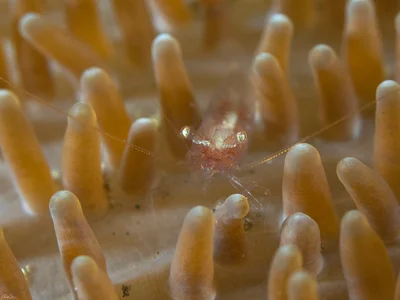
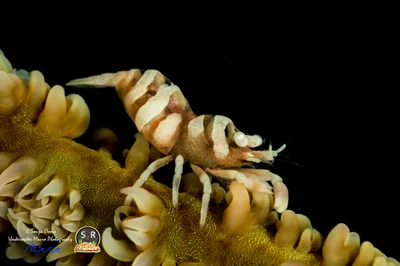
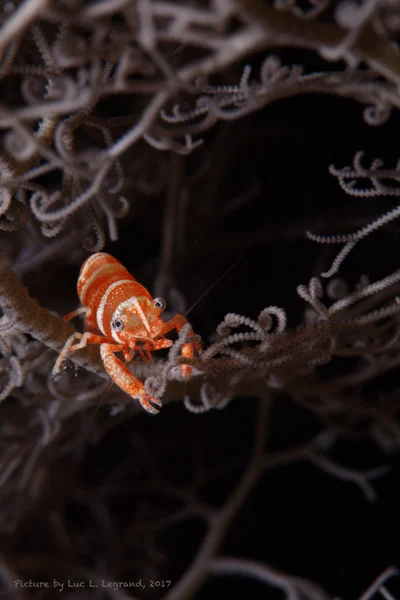
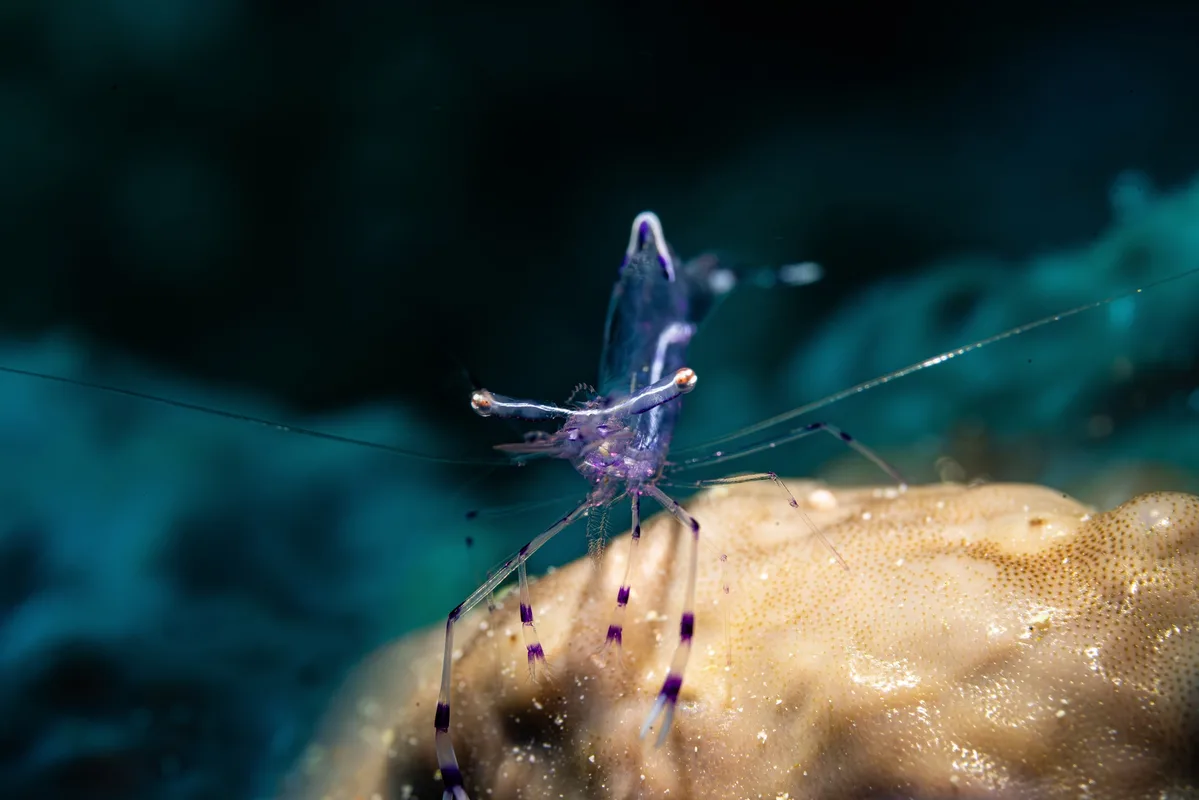
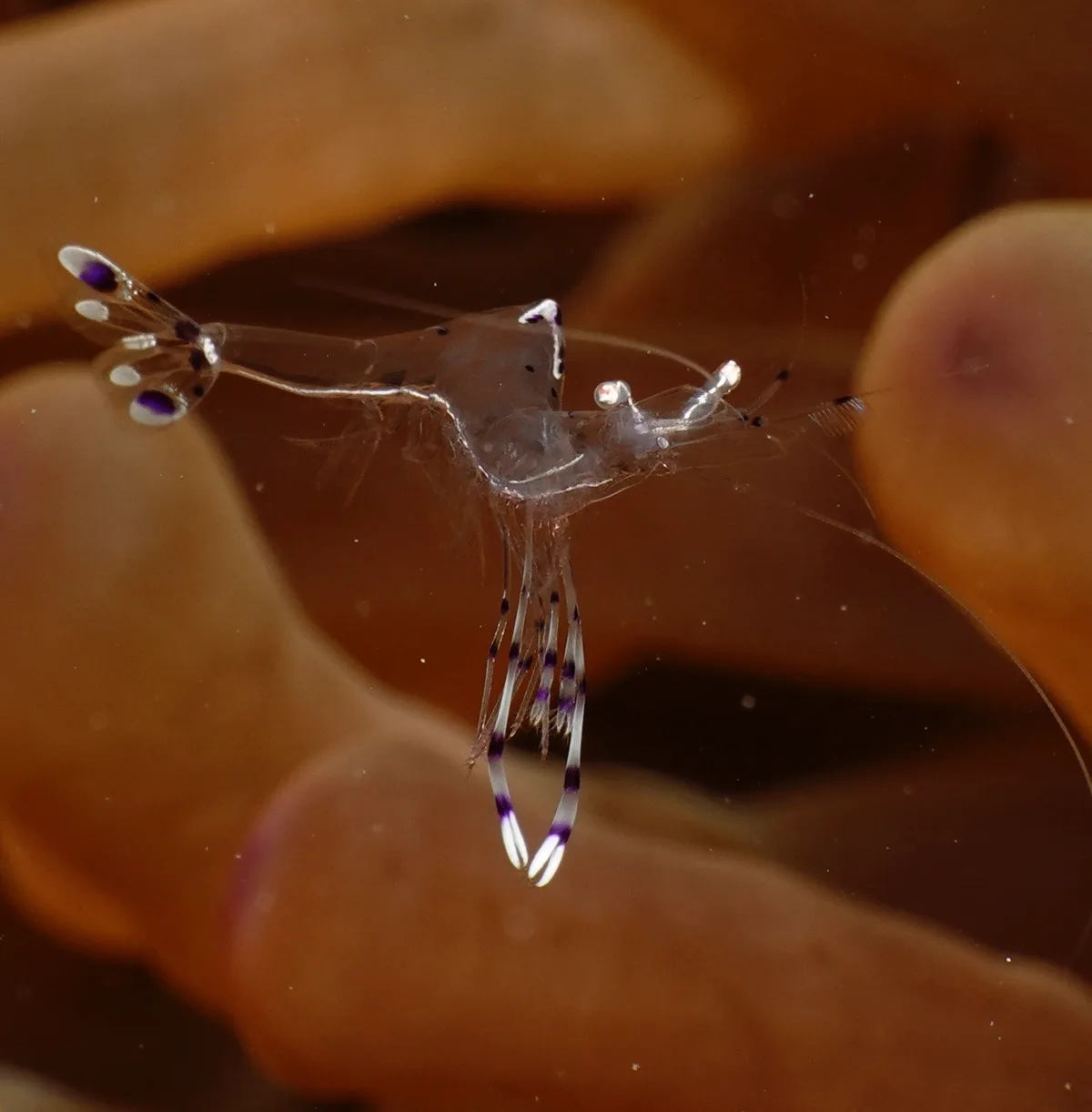
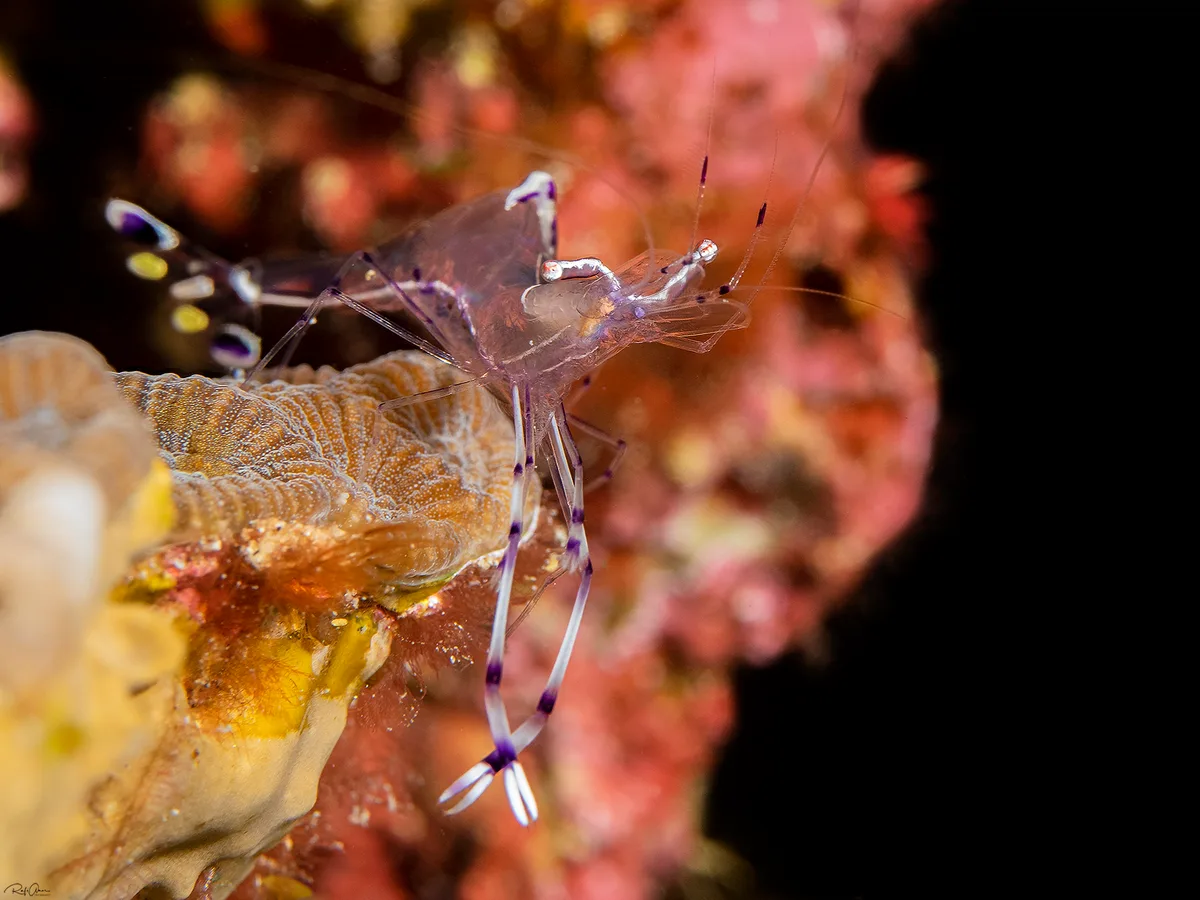
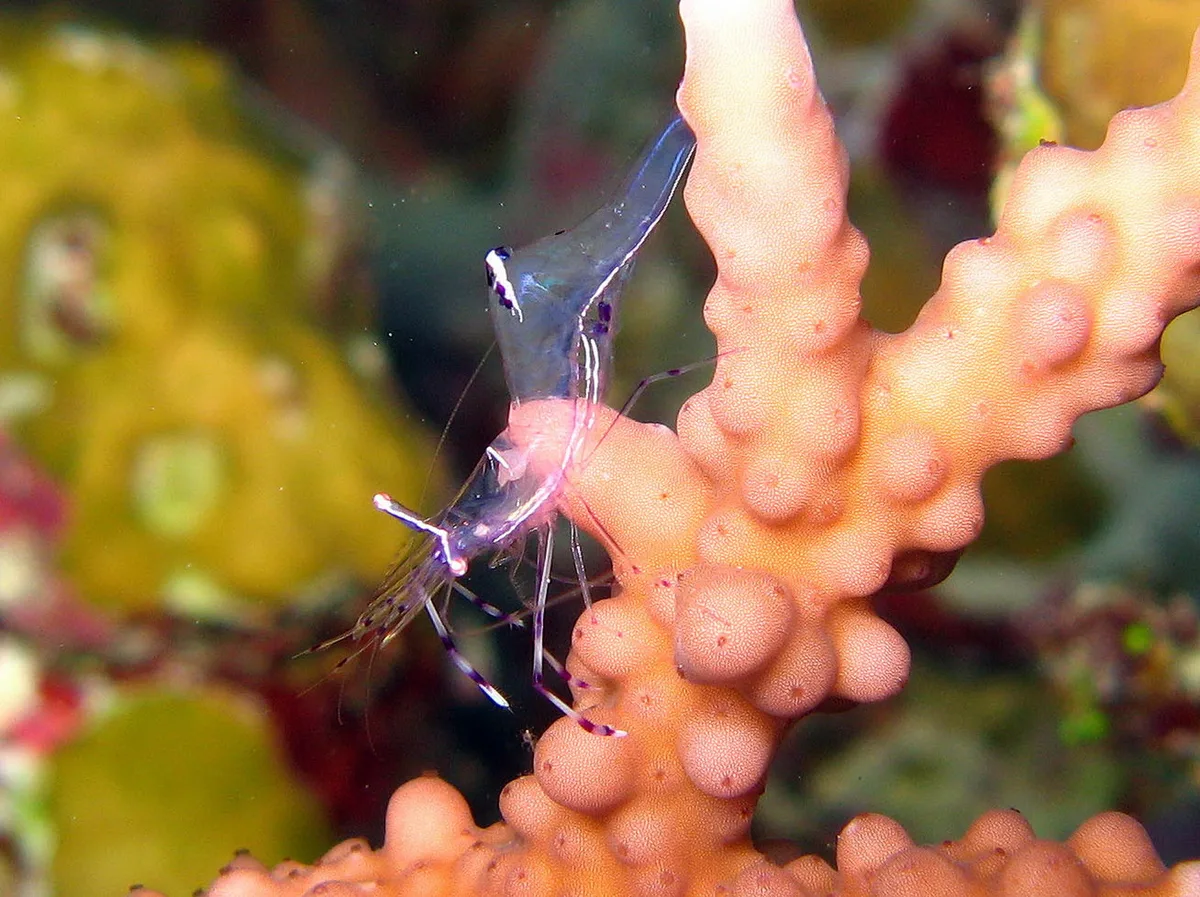
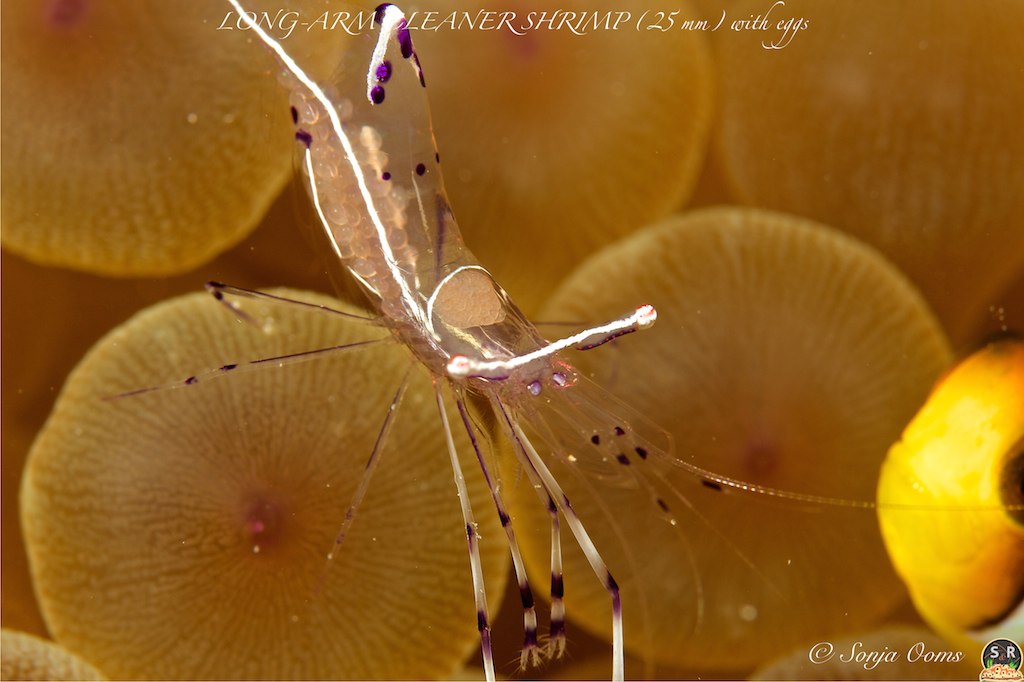
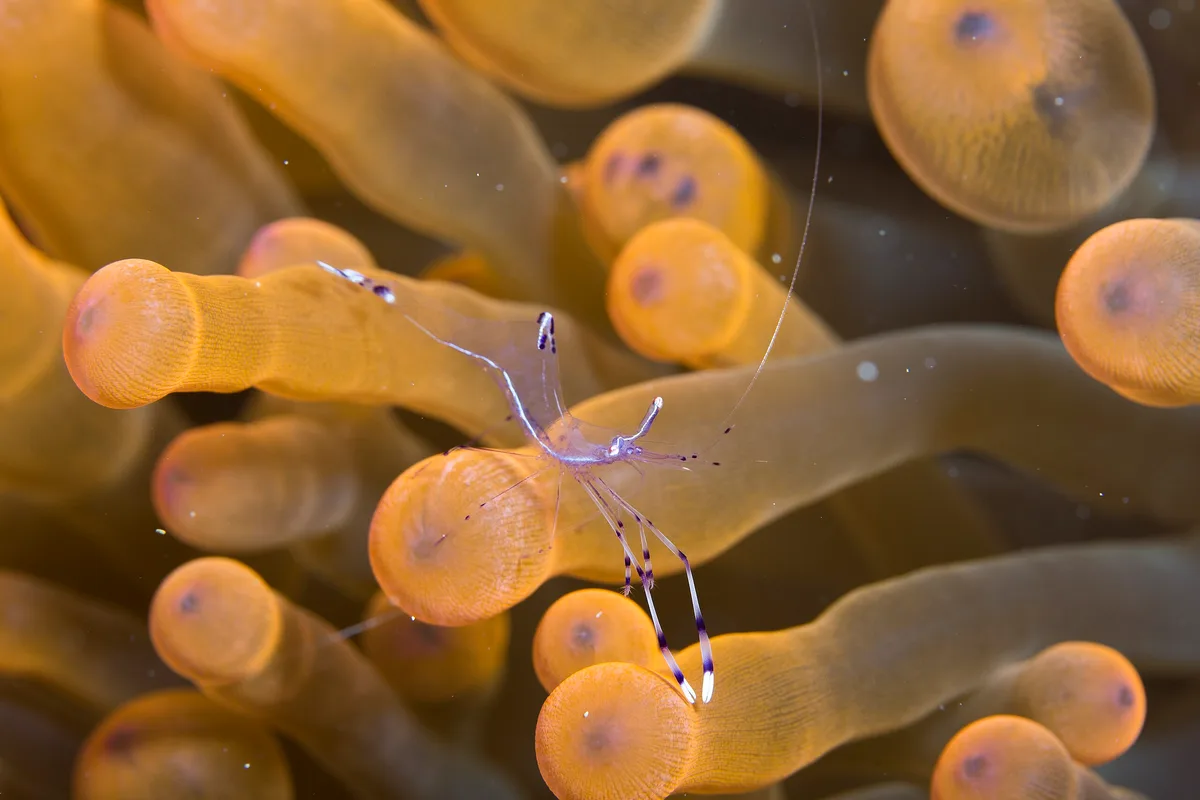
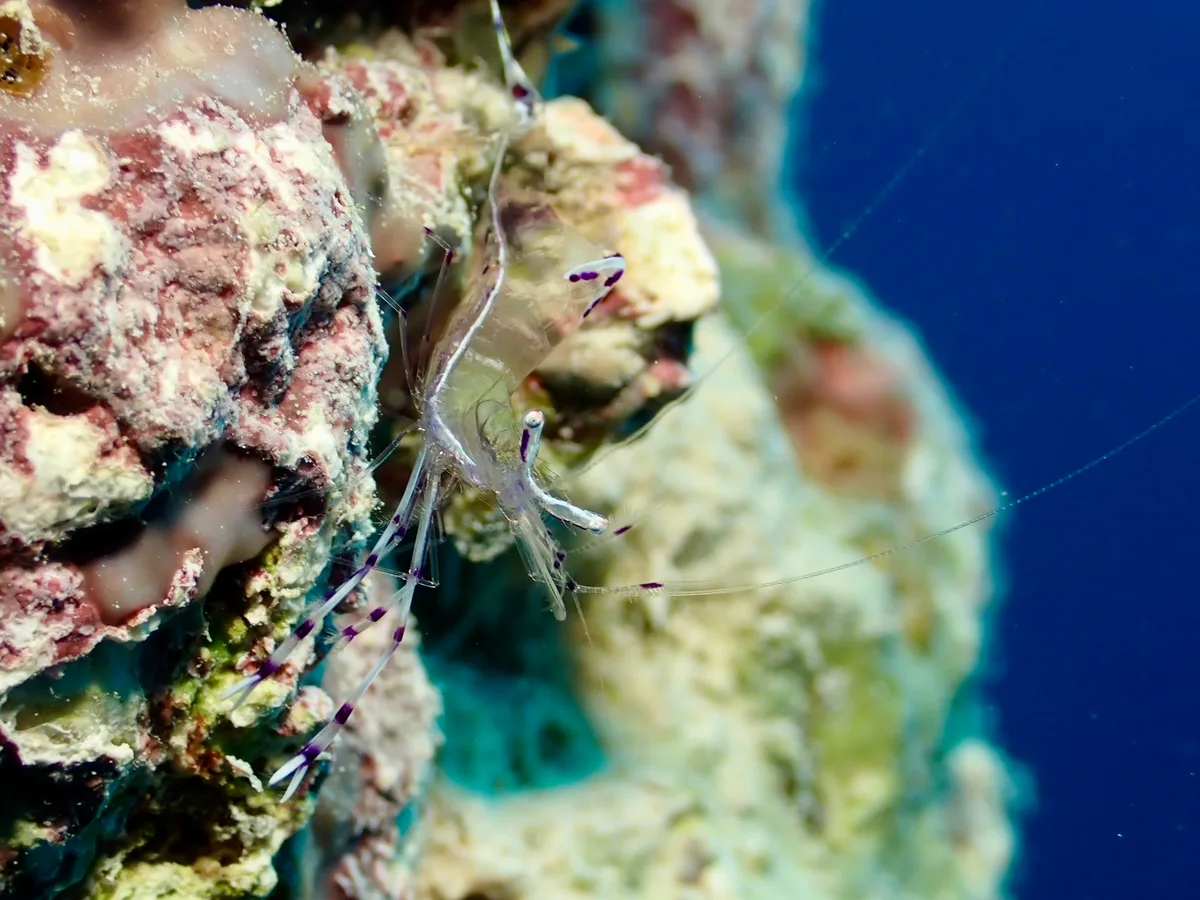
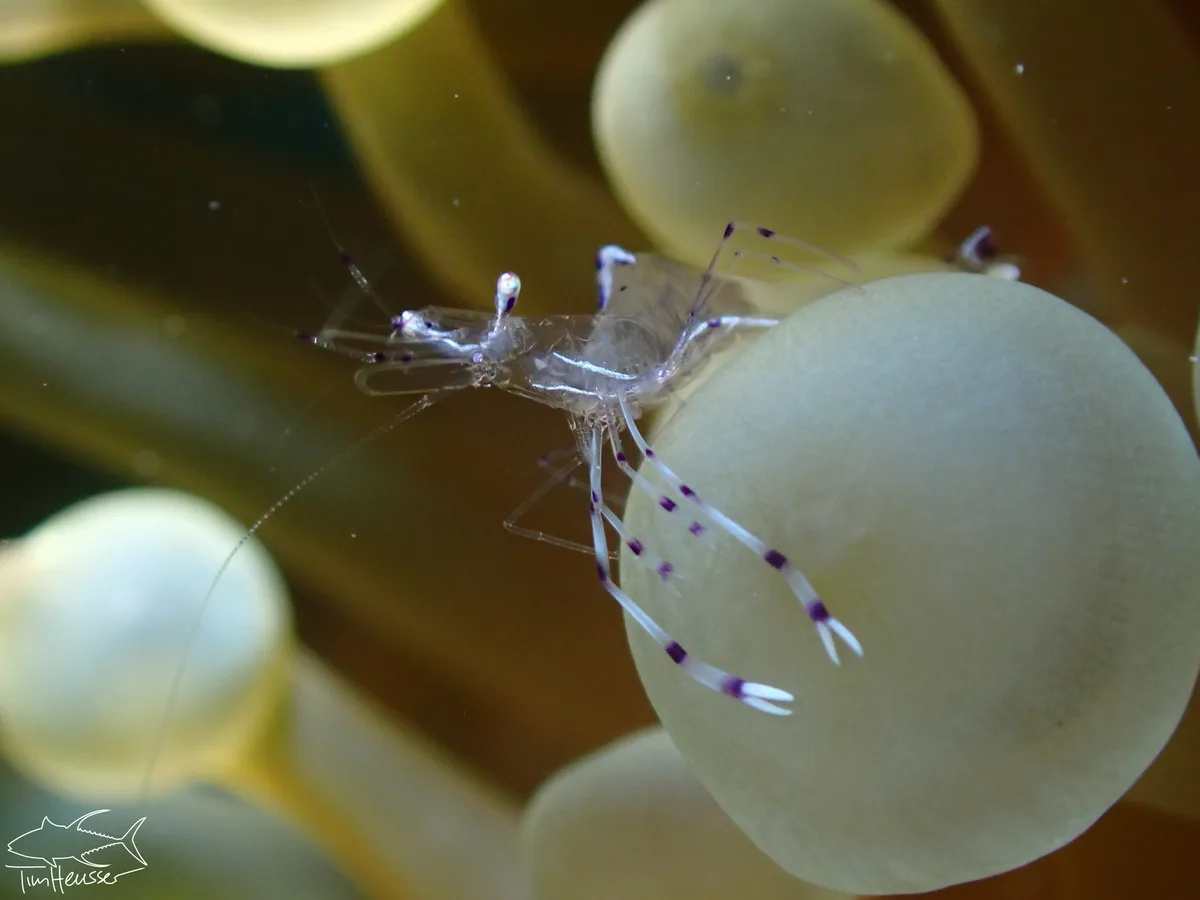
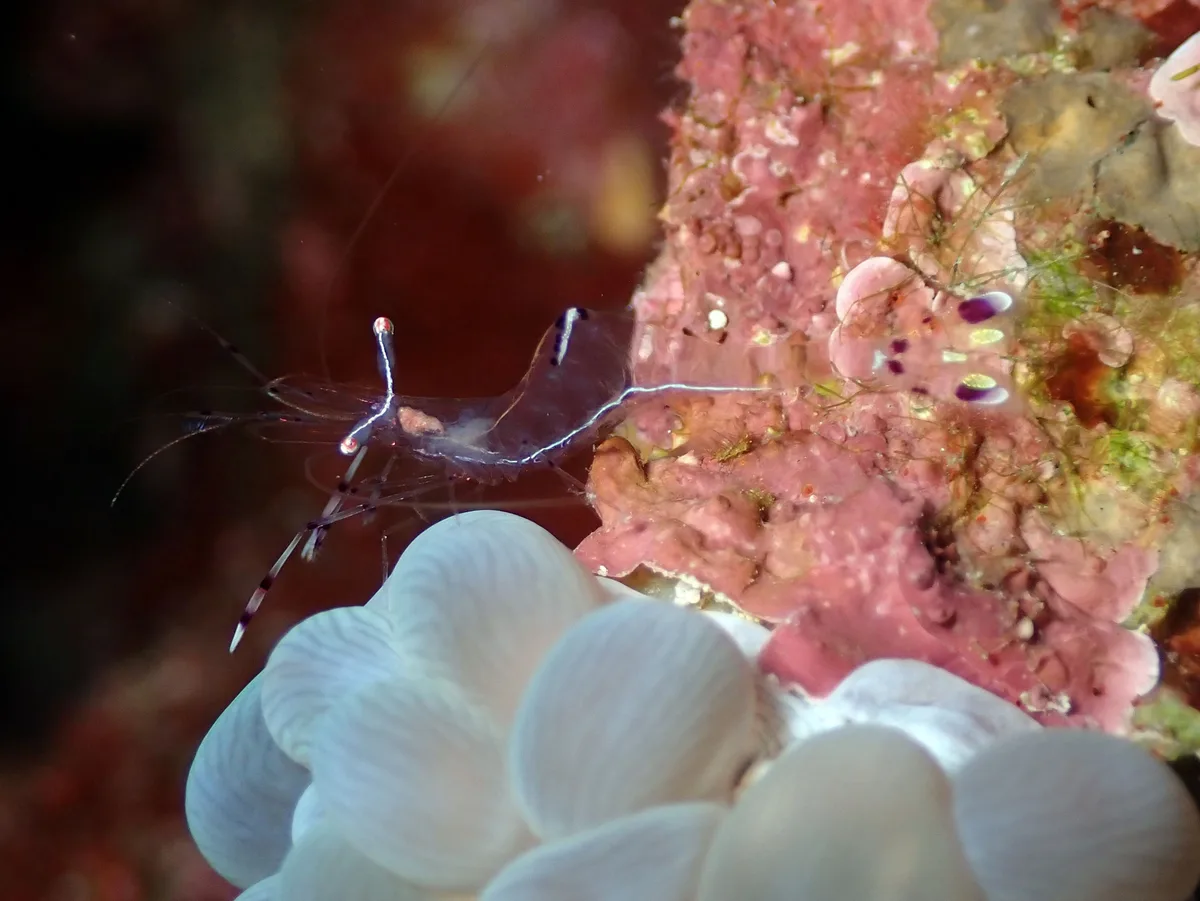
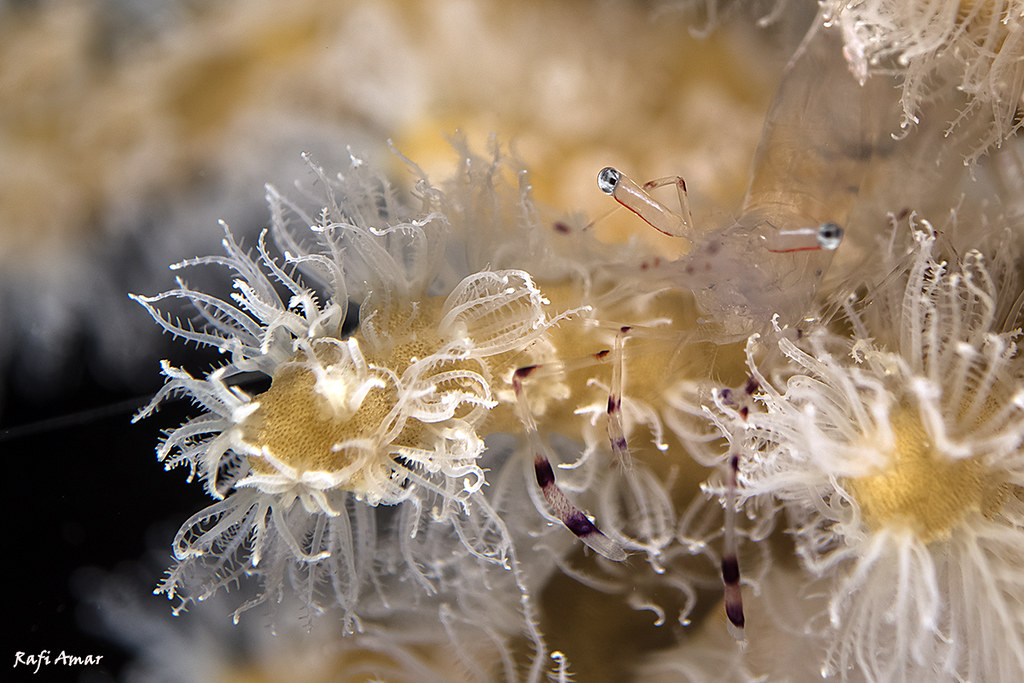
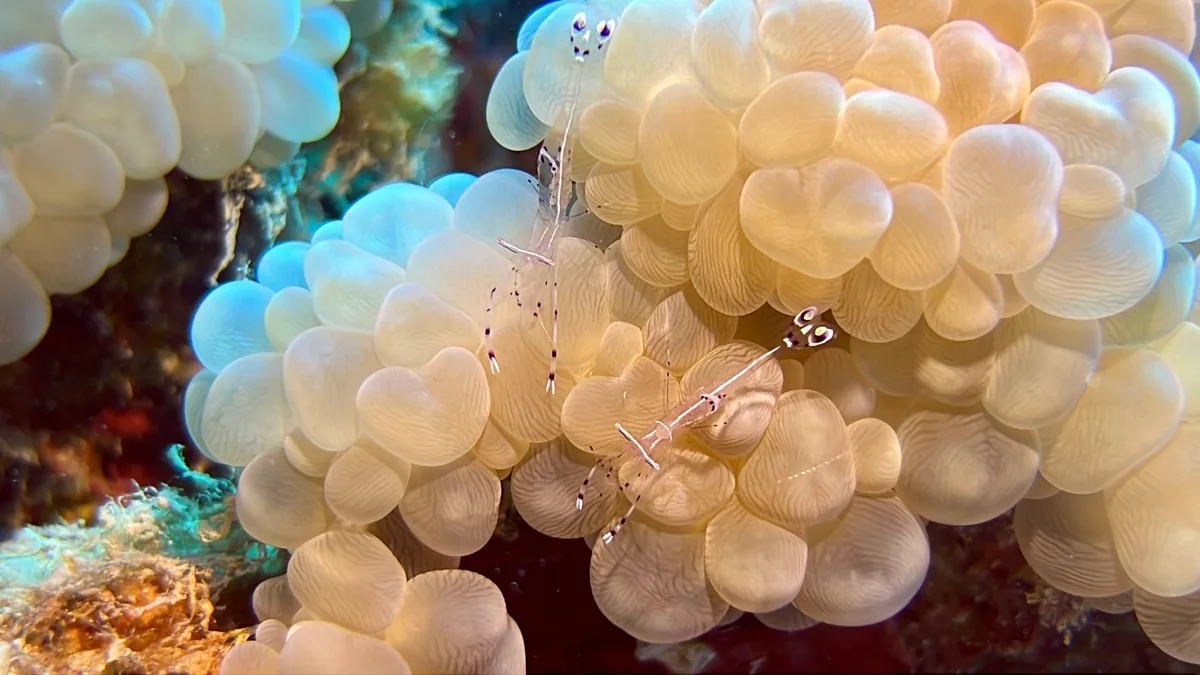
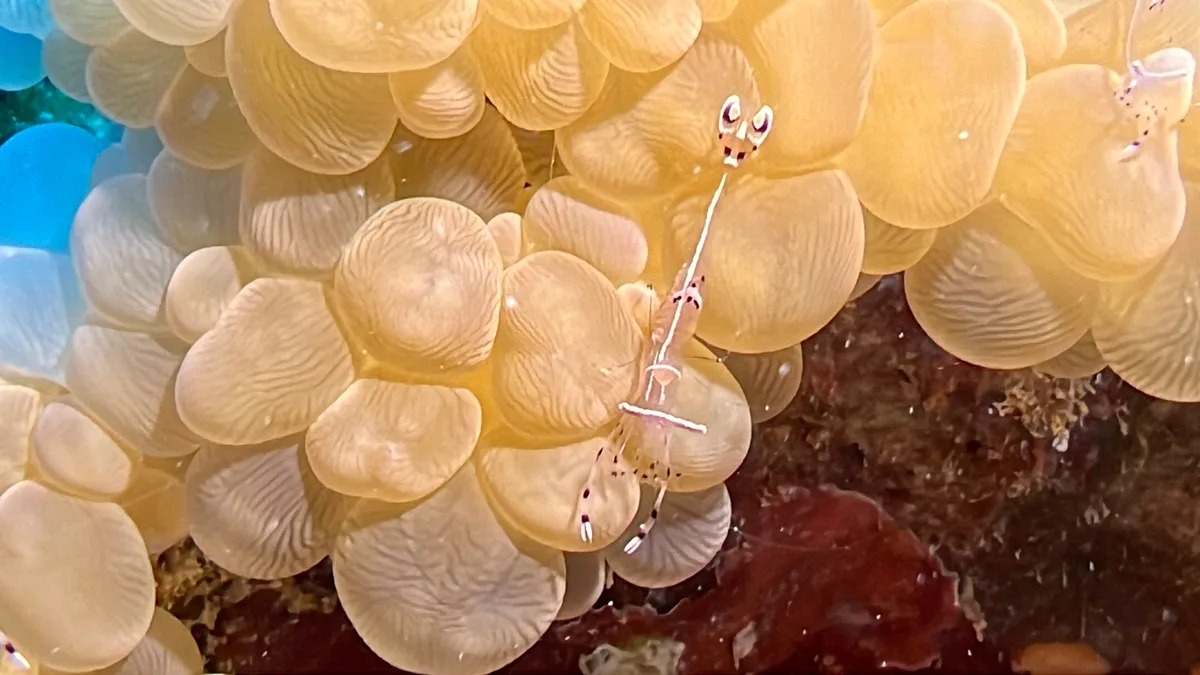
This one is a small transparent cleaner that lives on anemones, with white and violet markings and the long first walking legs its name refers to. It cleans from home rather than running a station of its own, and it is one of the easier commensal shrimp to find, because the anemone is the size of a dinner plate and the shrimp is not hiding.
- transparent body with white and violet markings and very long white antennae
- first pair of walking legs noticeably long and slender
- usually on an anemone rather than free on the reef
- up to 2.5 cm