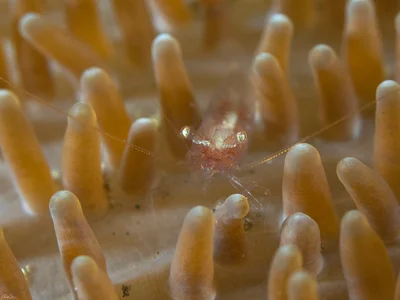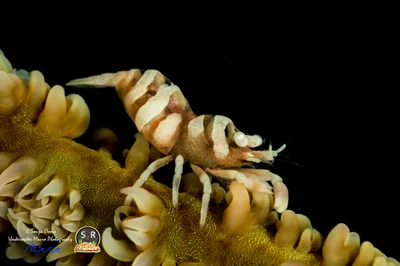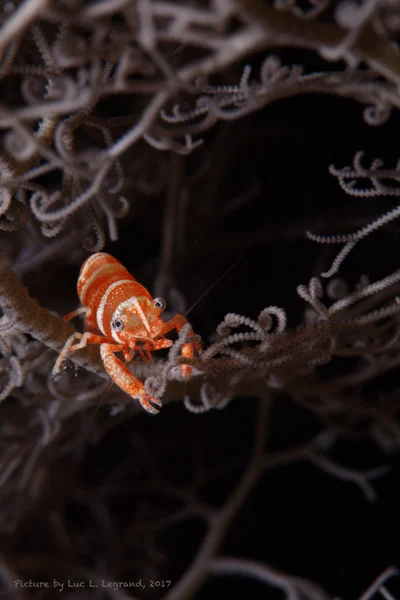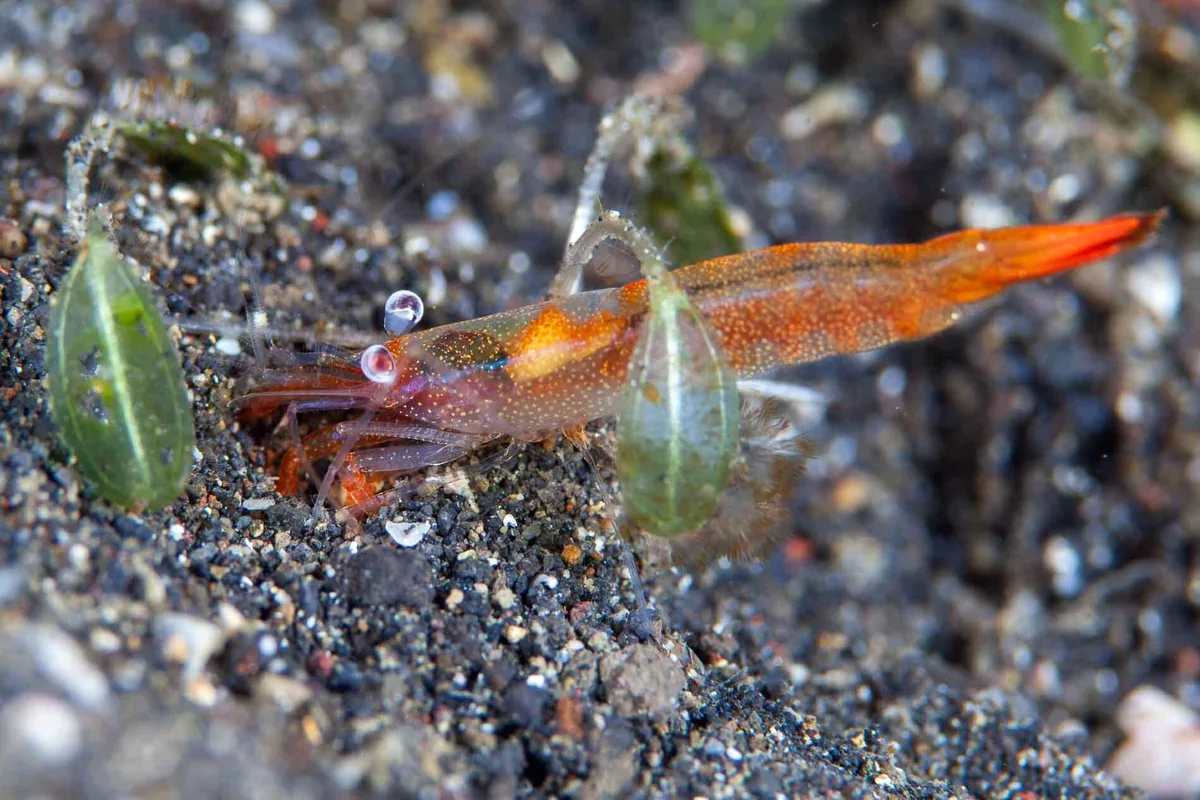
Its known range reads like a list of dive resorts: Anilao, Bali (🇮🇩 Indonesia), Okinawa (🇯🇵 Japan), a handful of others. That is not where the animal lives. That is where people with macro lenses and torches go at night.
Small cryptic invertebrates have distributions shaped almost entirely by observer effort. A species that is genuinely spread across the Indo-Pacific will be recorded from the four or five muck-diving destinations where guides know how to find it, be absent from the literature everywhere else, and appear to be a rarity with a strange scattered range. Then somebody photographs one on a coast nobody had looked at, and the map jumps.
That matters for a catalogue like this one. Records from the 🌊 Red Sea for animals like this are thin not because the animals are absent but because until recently very few people were doing night macro here.
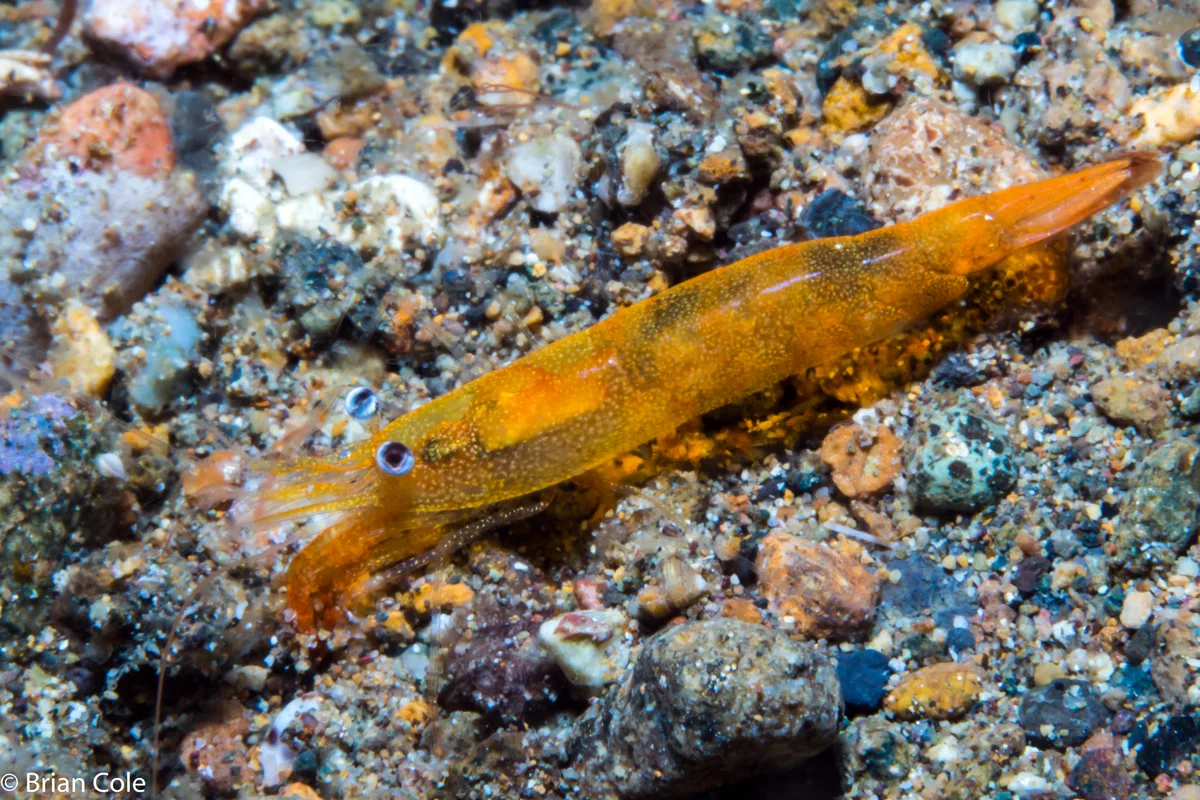
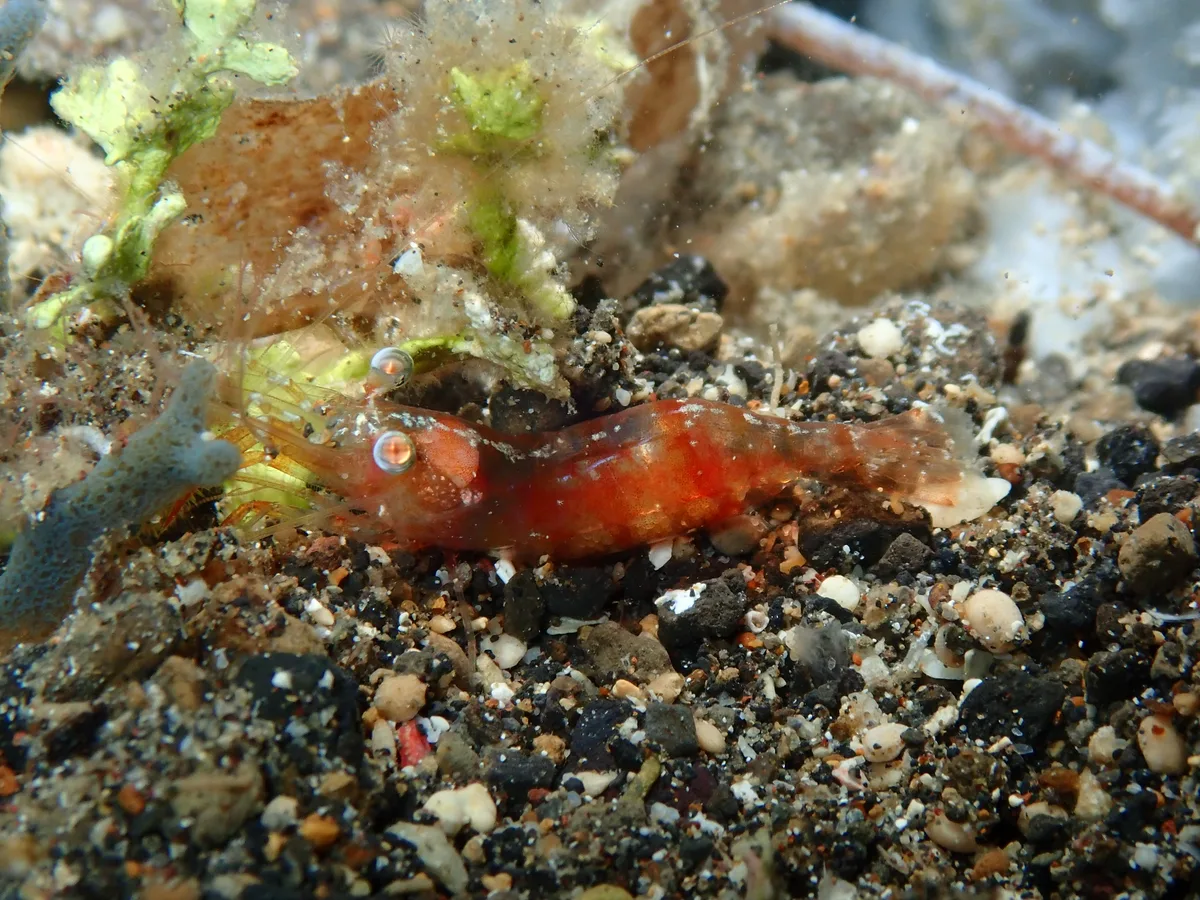
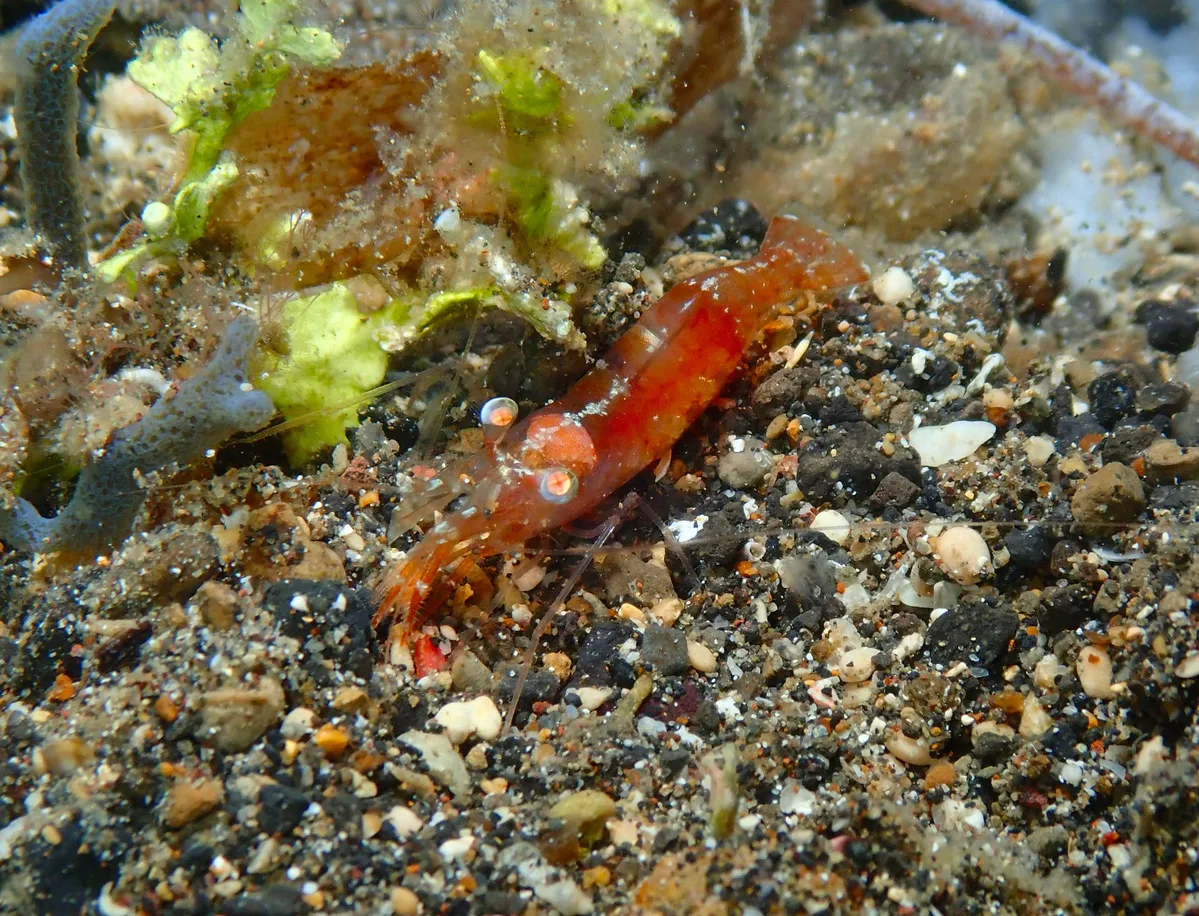
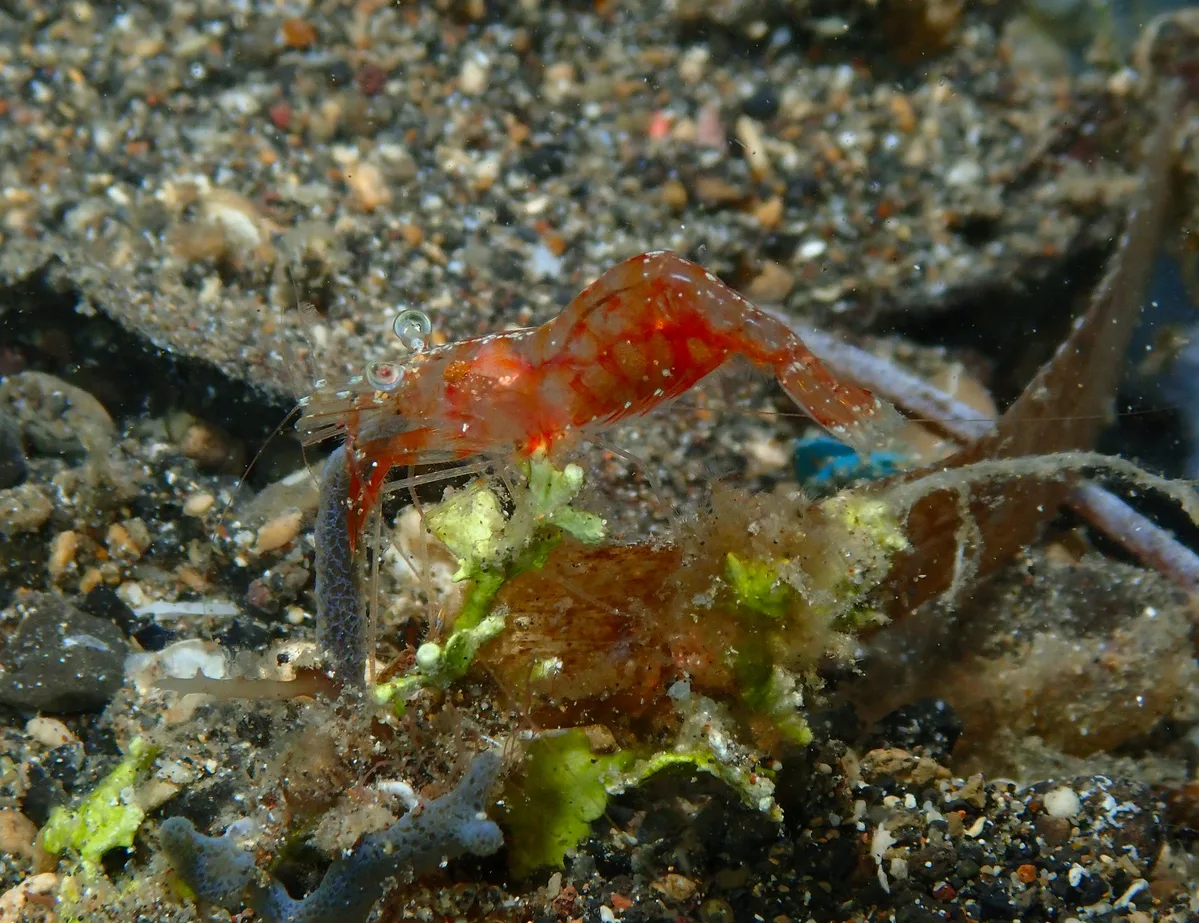
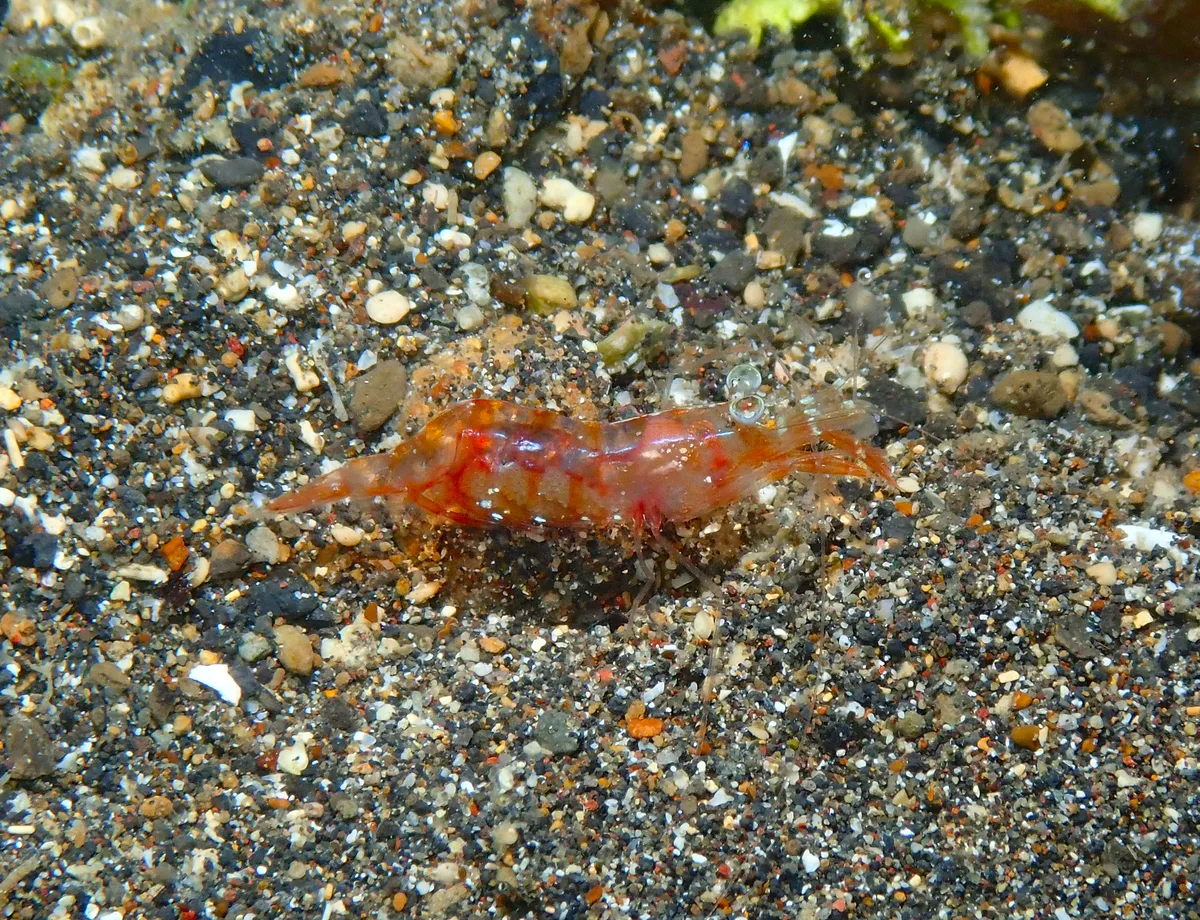
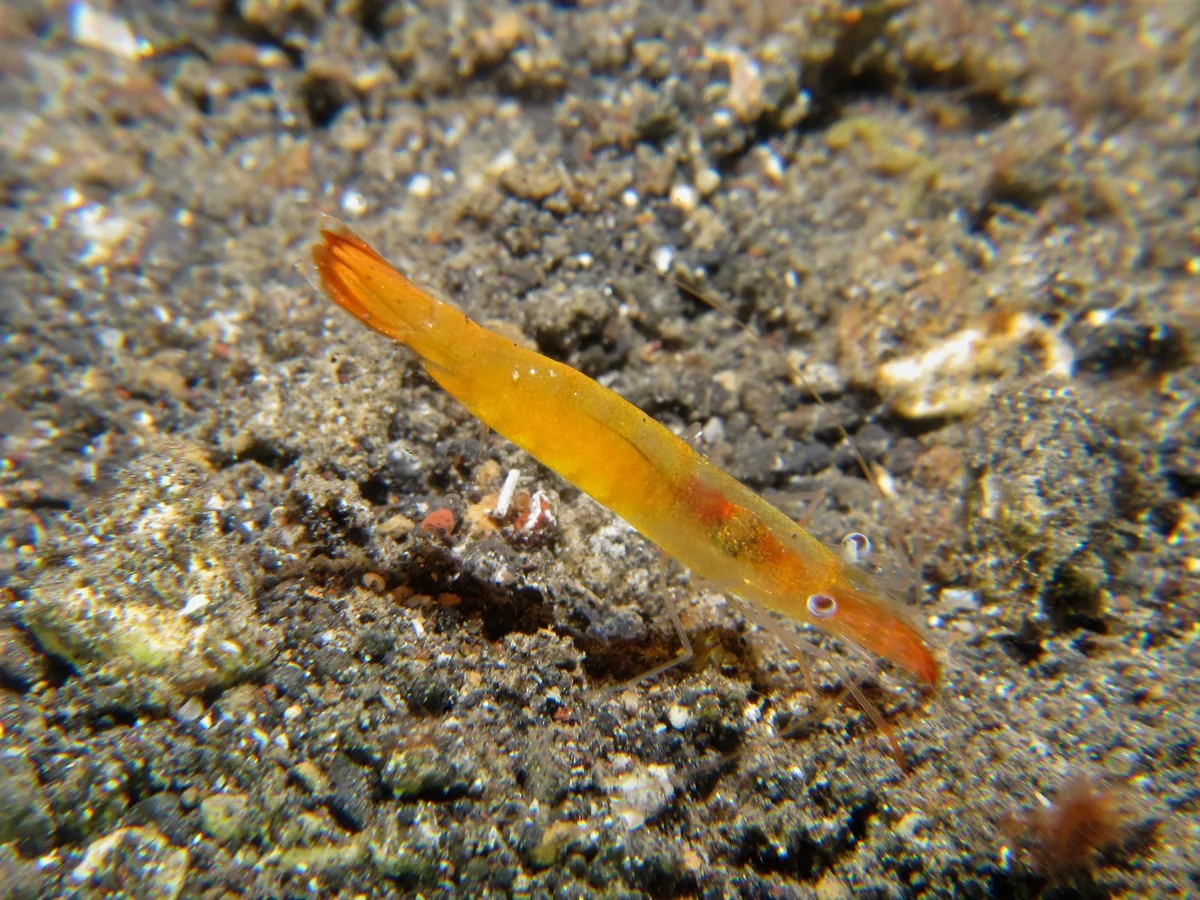
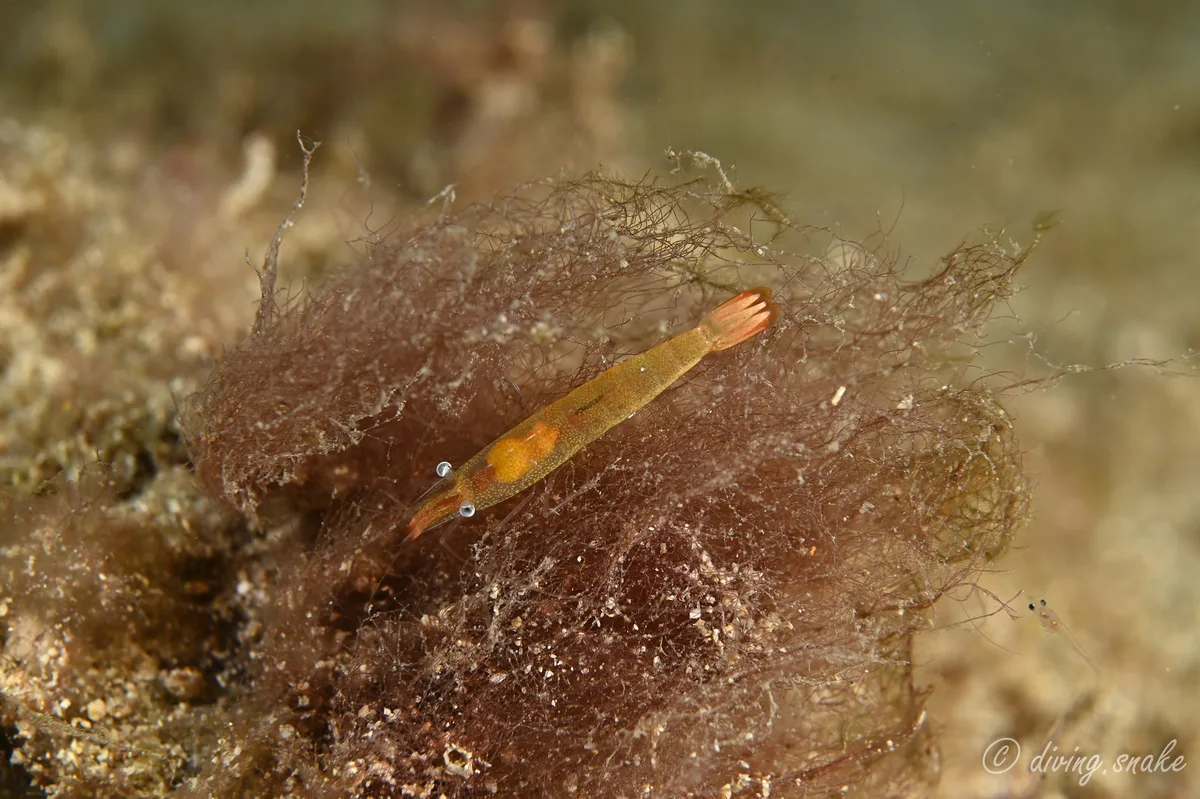
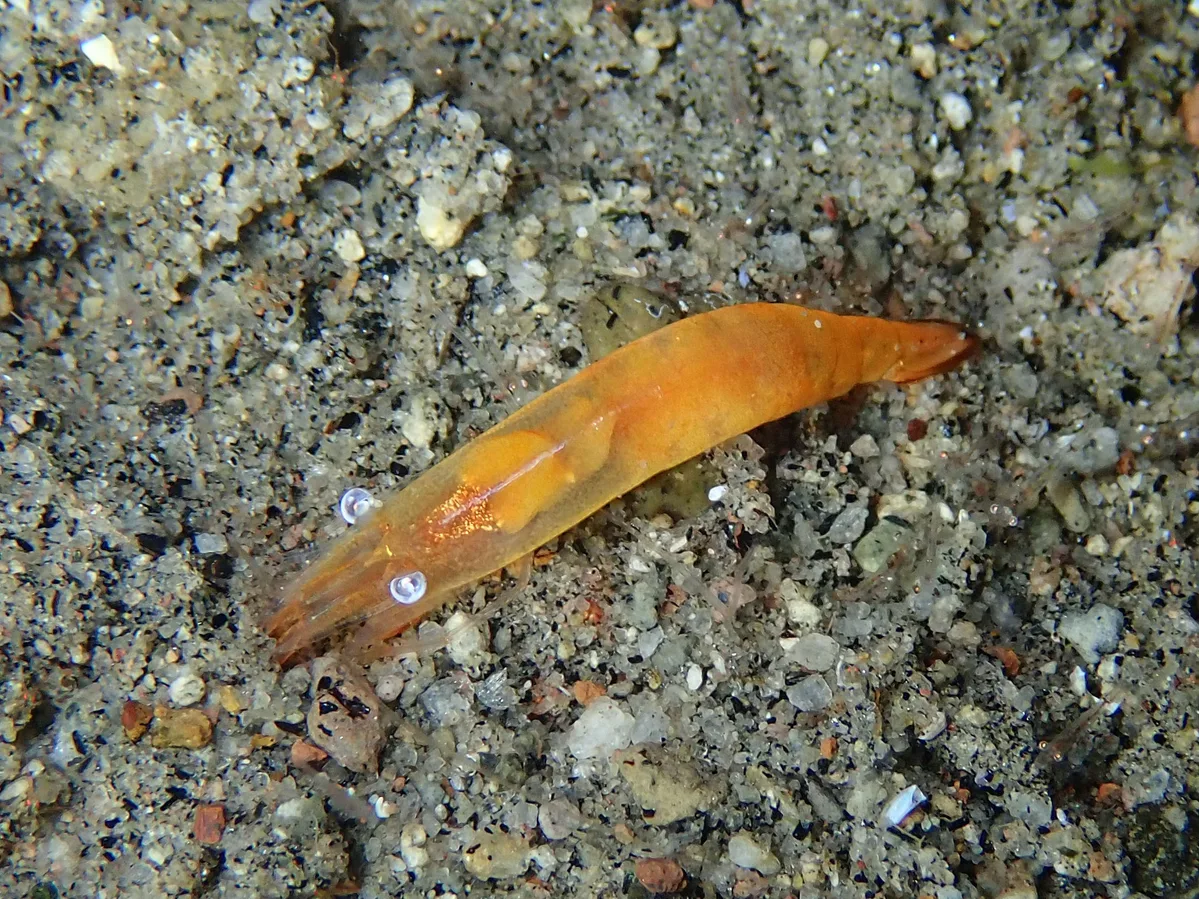
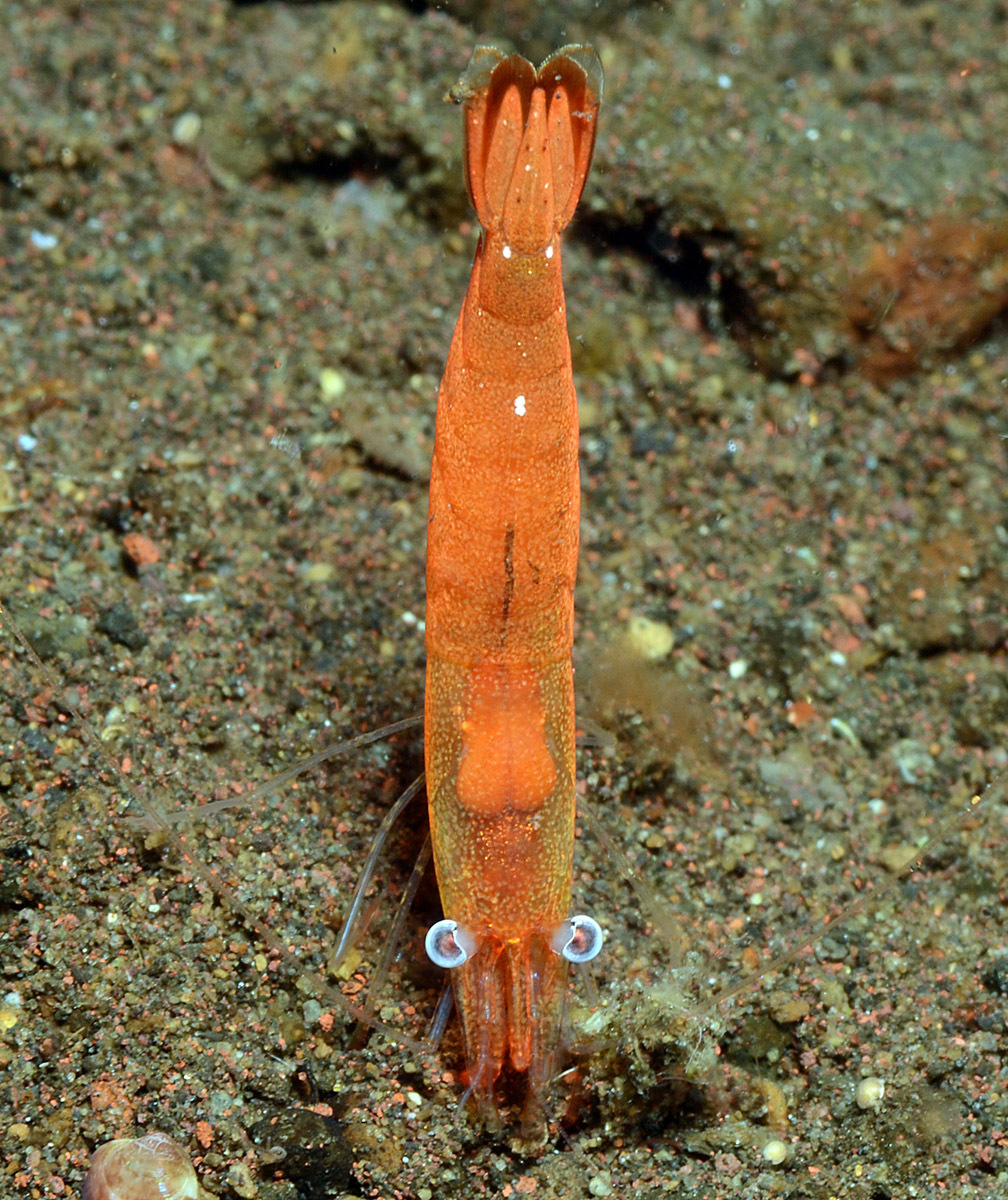
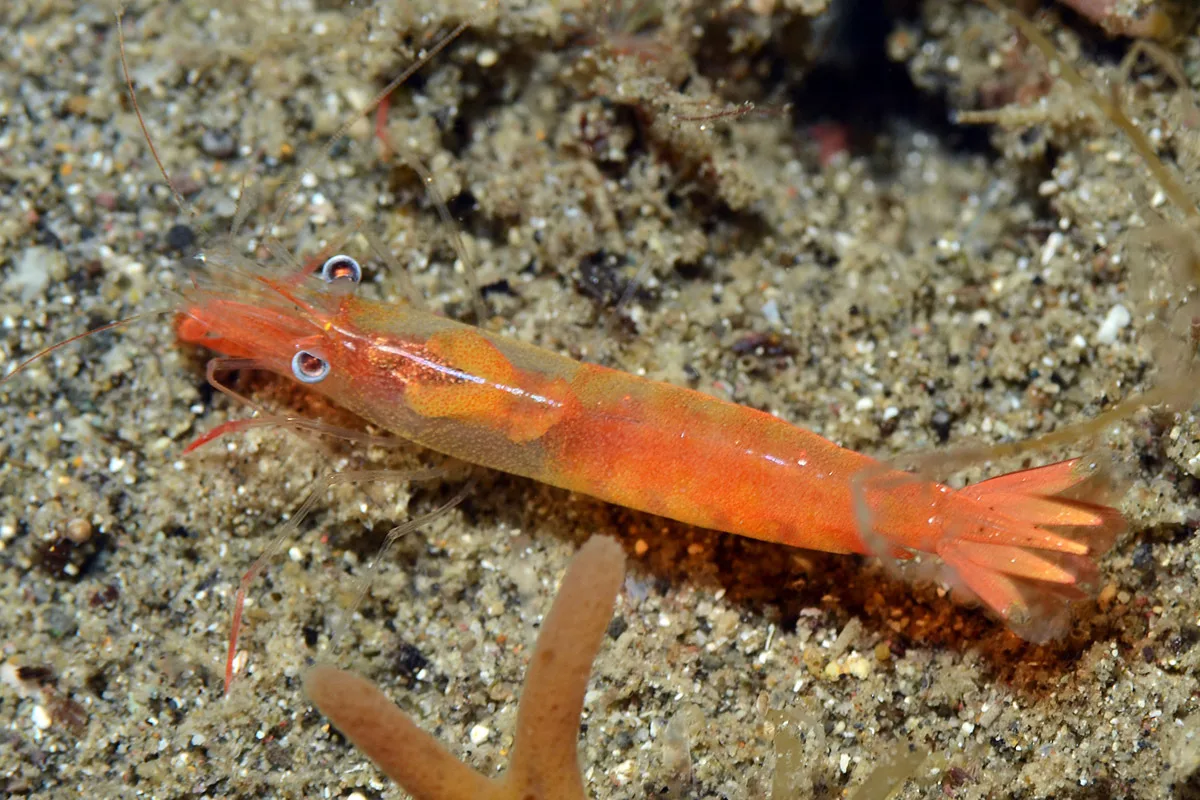
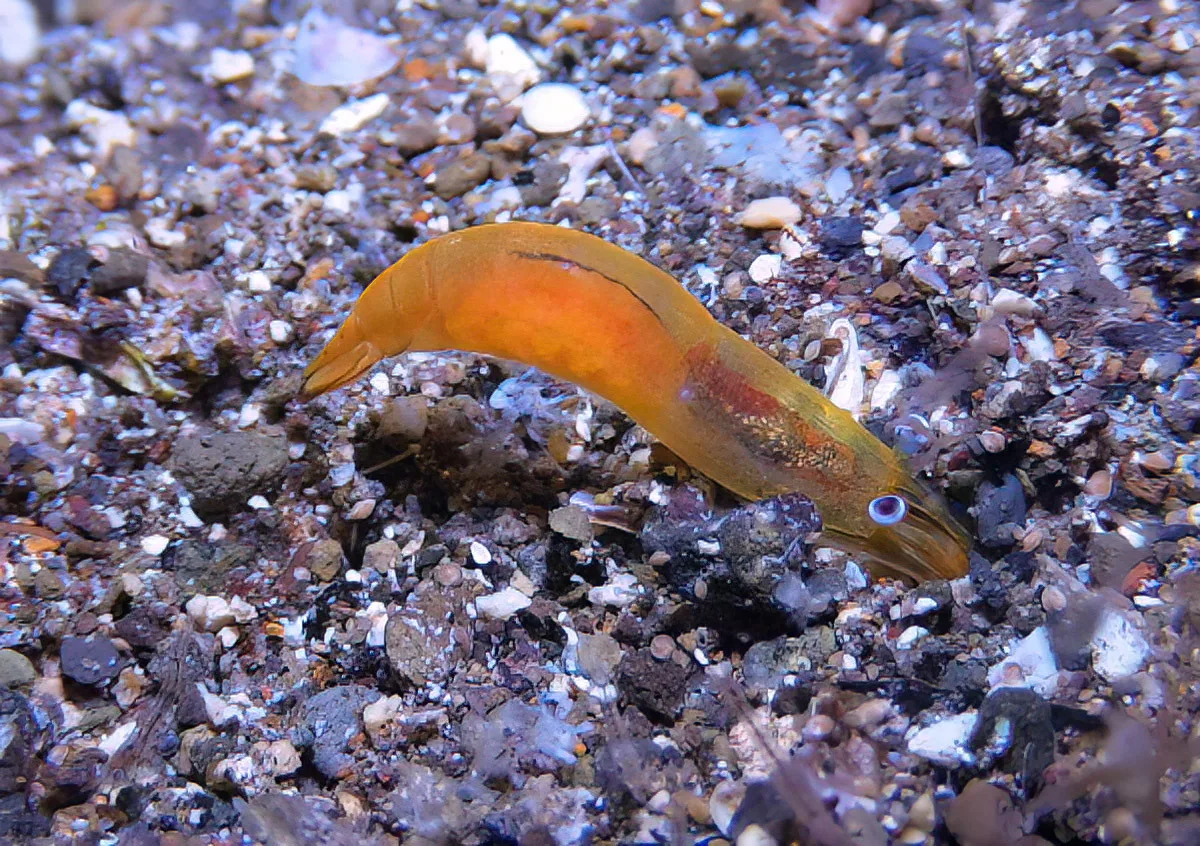
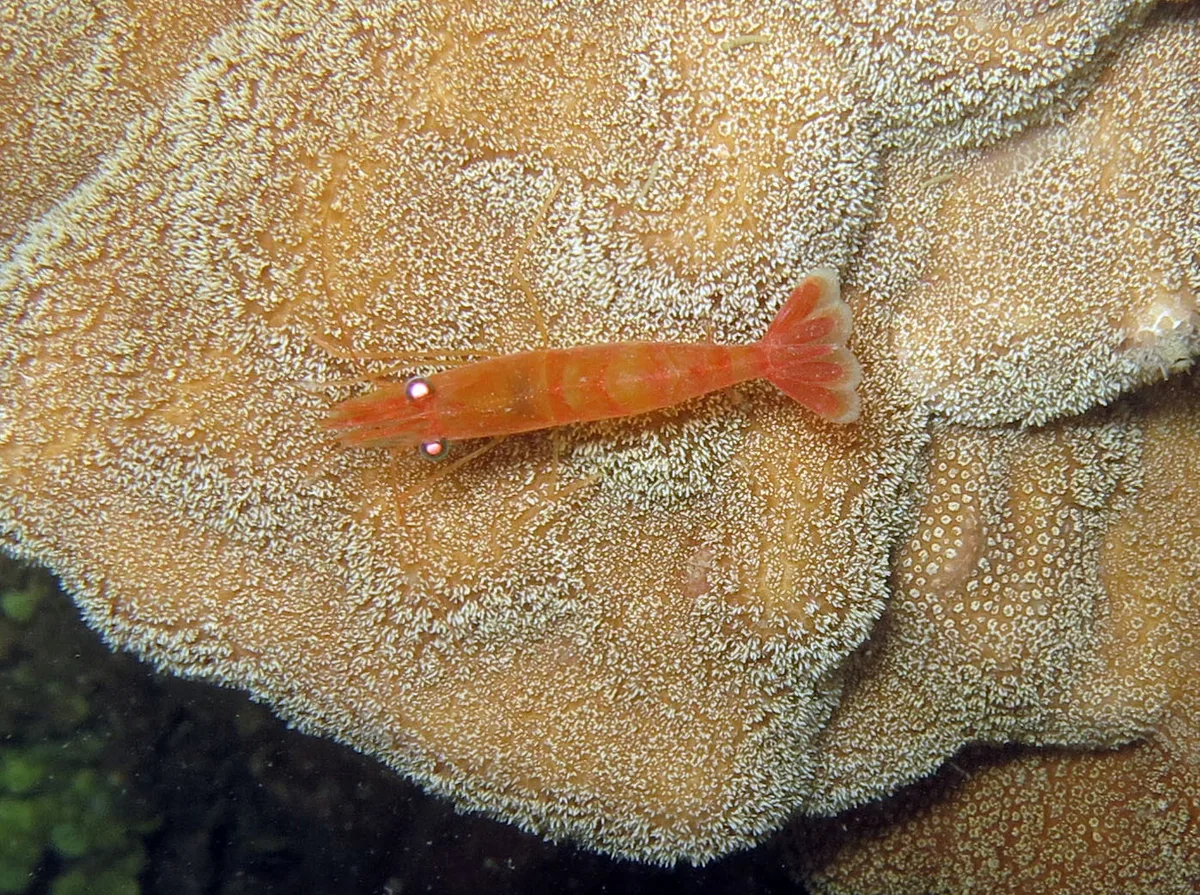
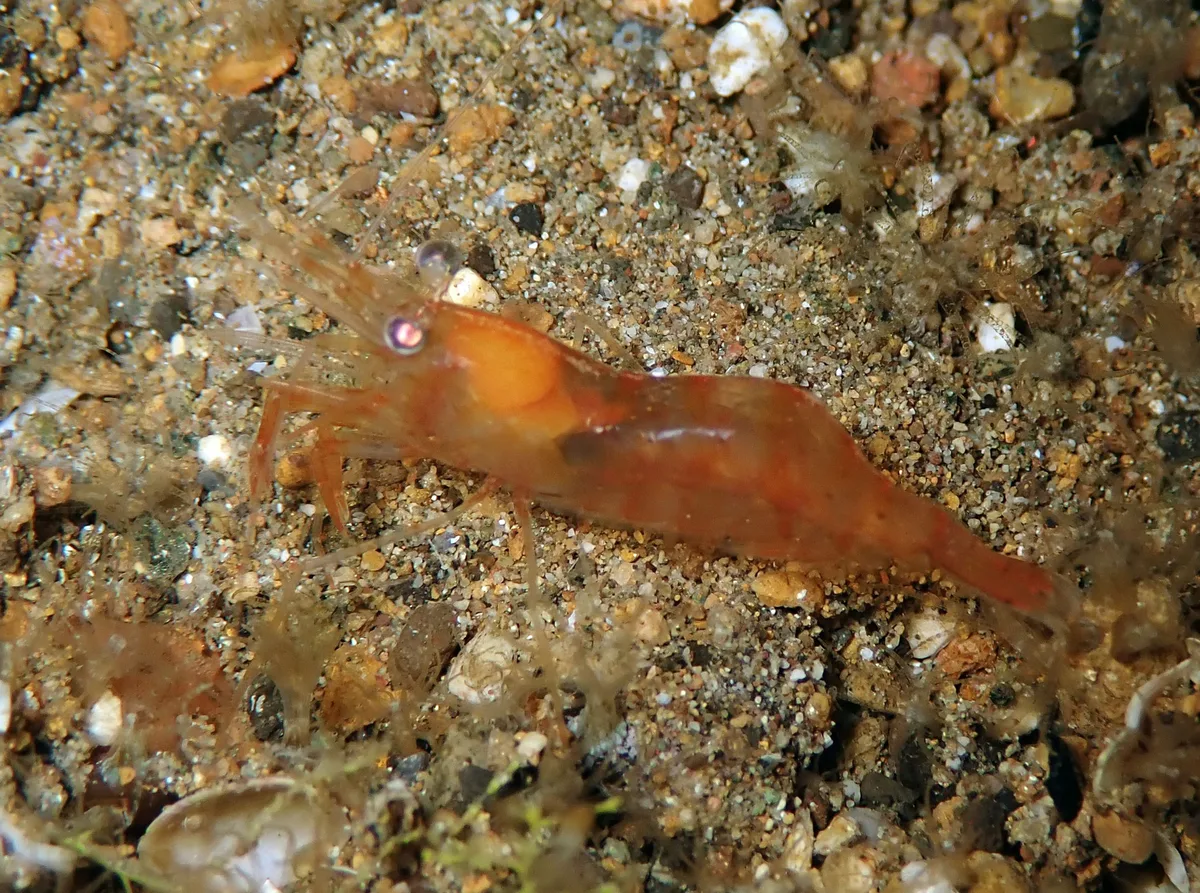
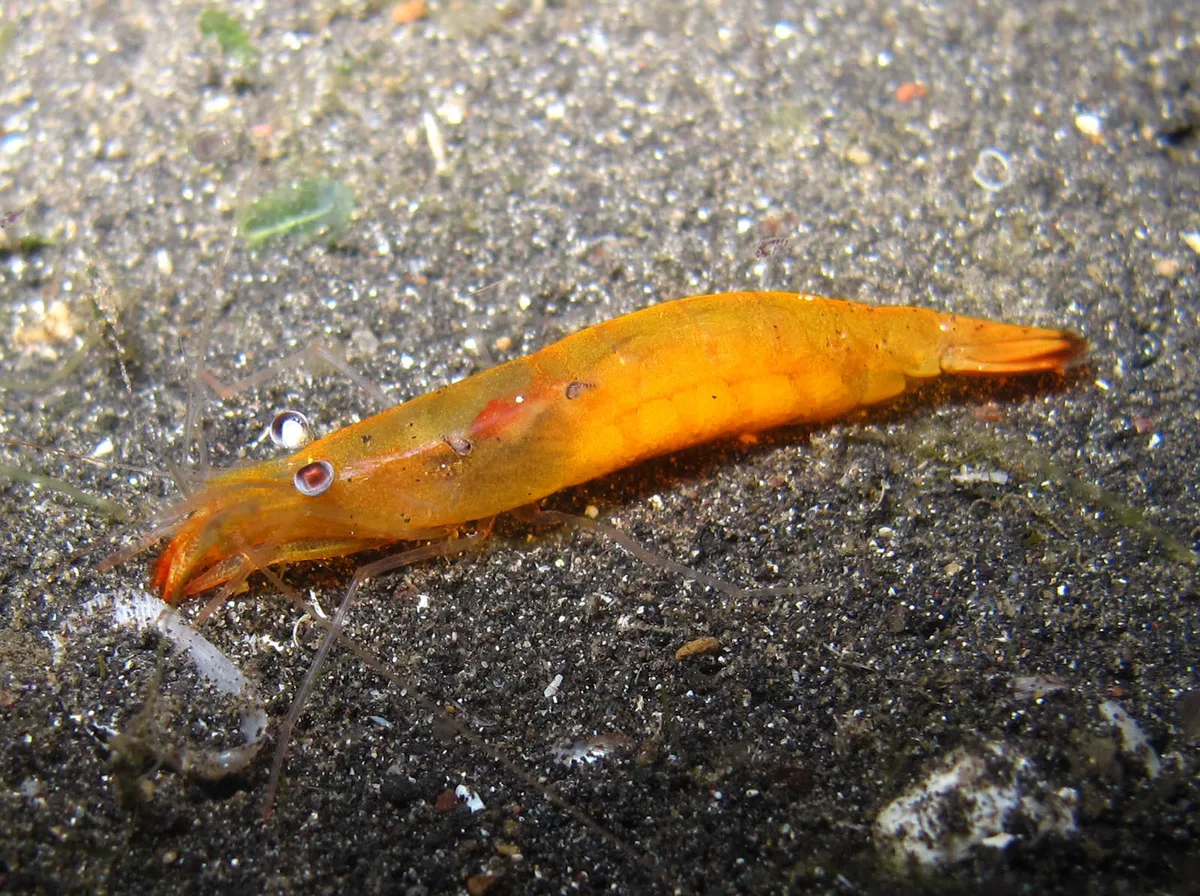
The shrimp itself is a small nocturnal hingebeak, red and white, out over the reef after dark and back in the rock before light.
- red and white patterning with a hinged rostrum
- large dark eyes that return a torch beam
- in crevices by day, out after dark
- up to 3 cm