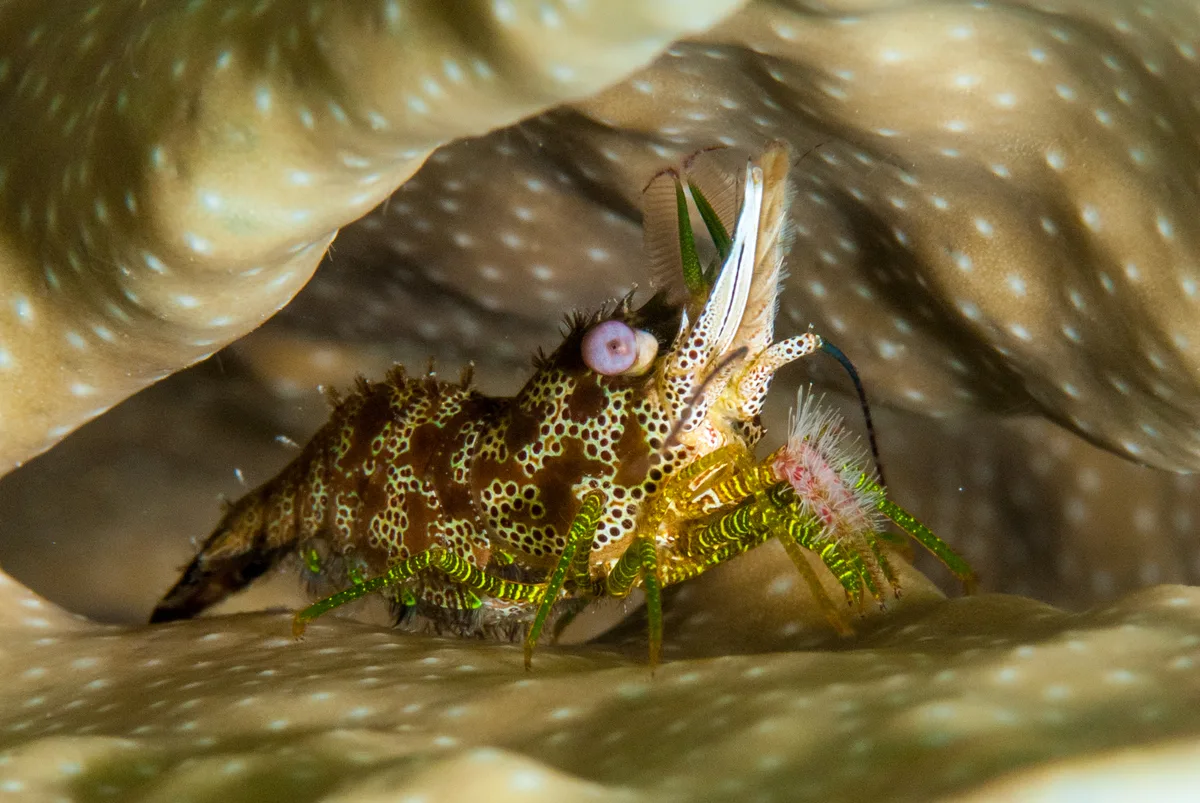
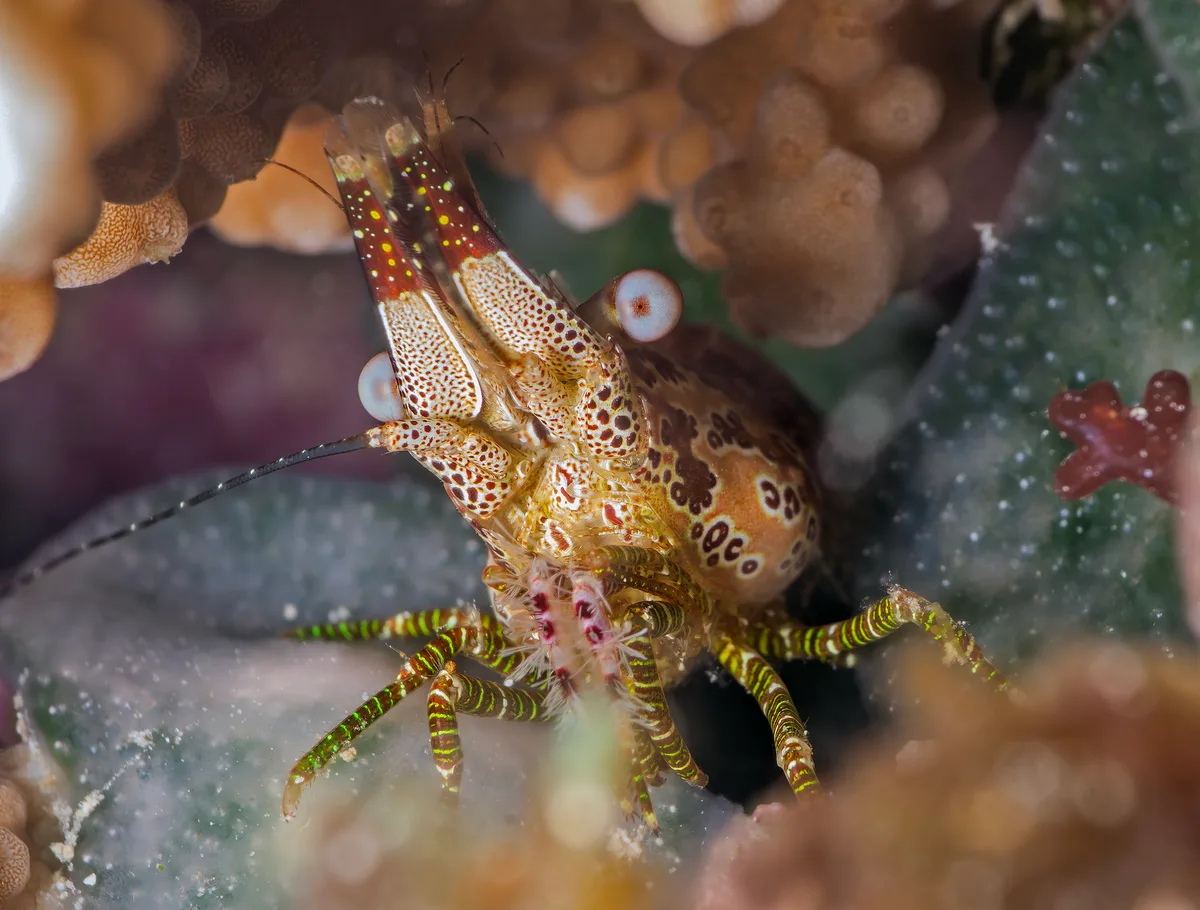
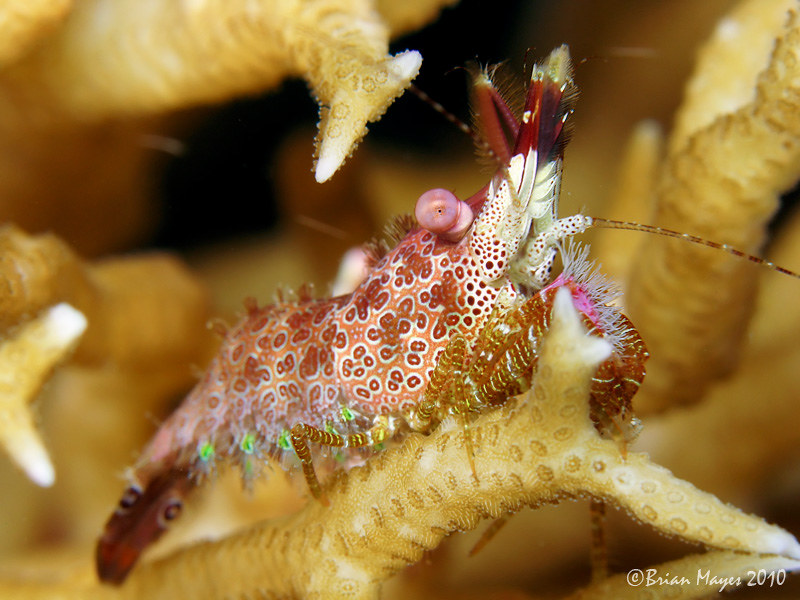
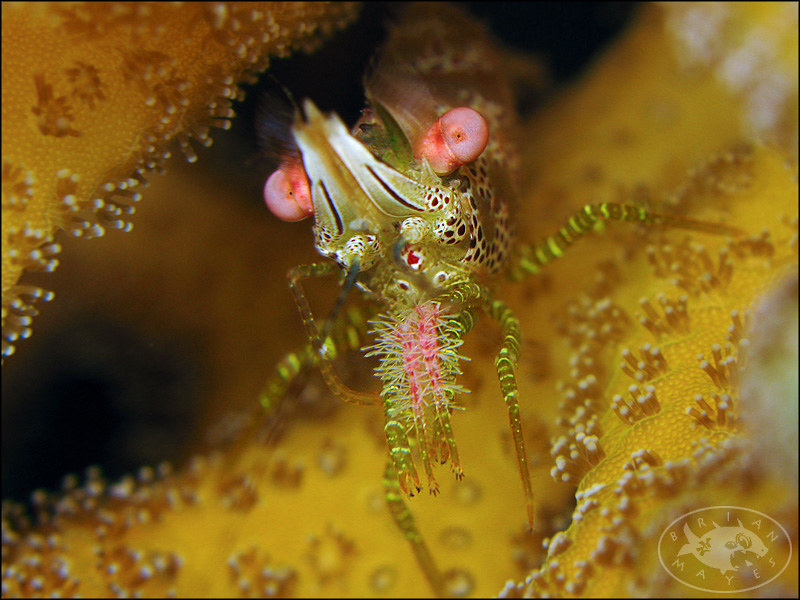
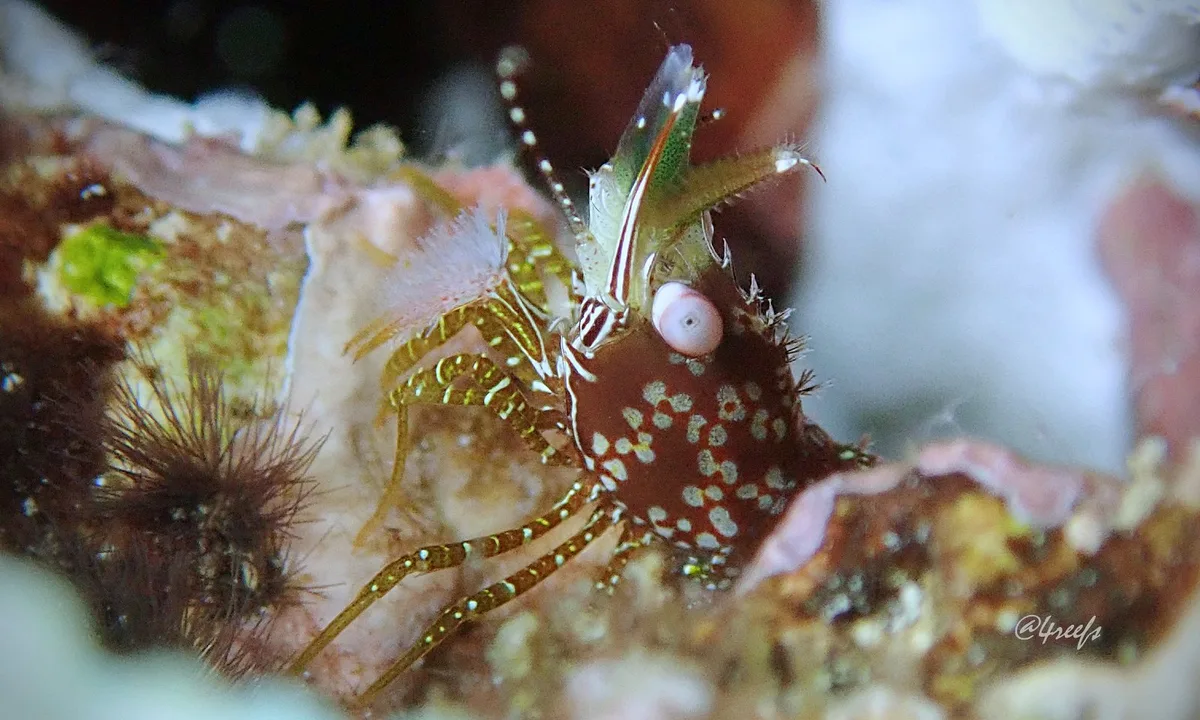
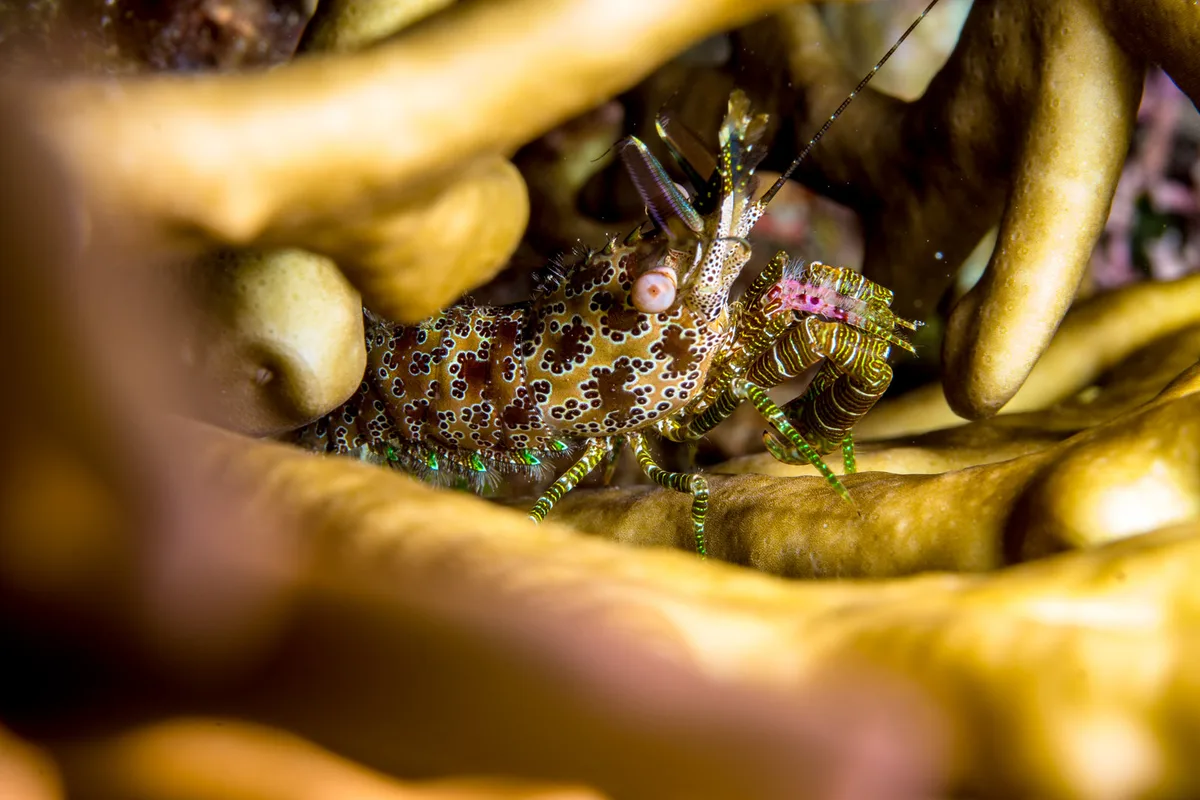
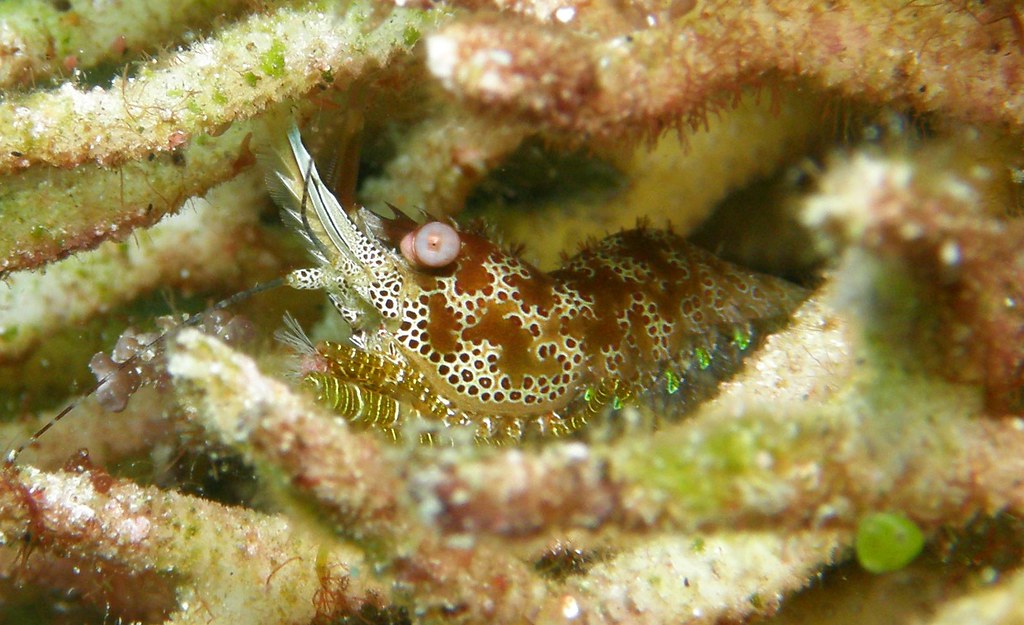
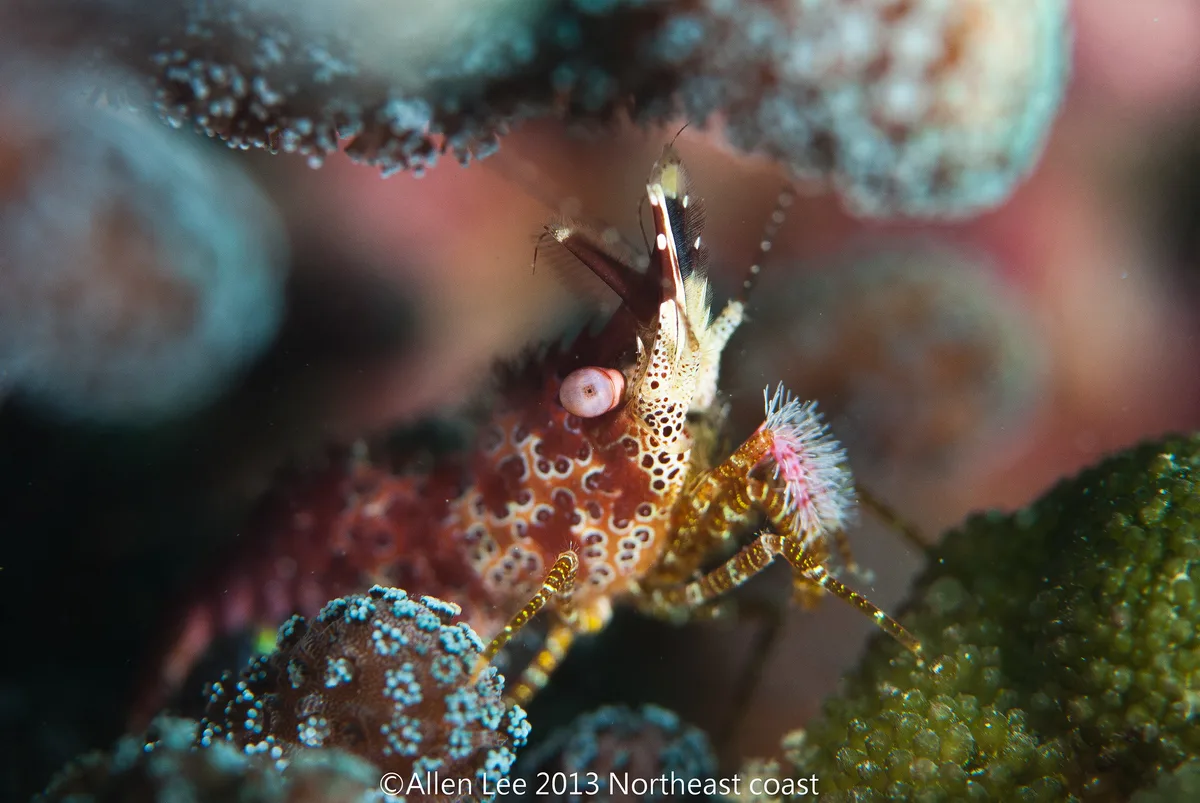
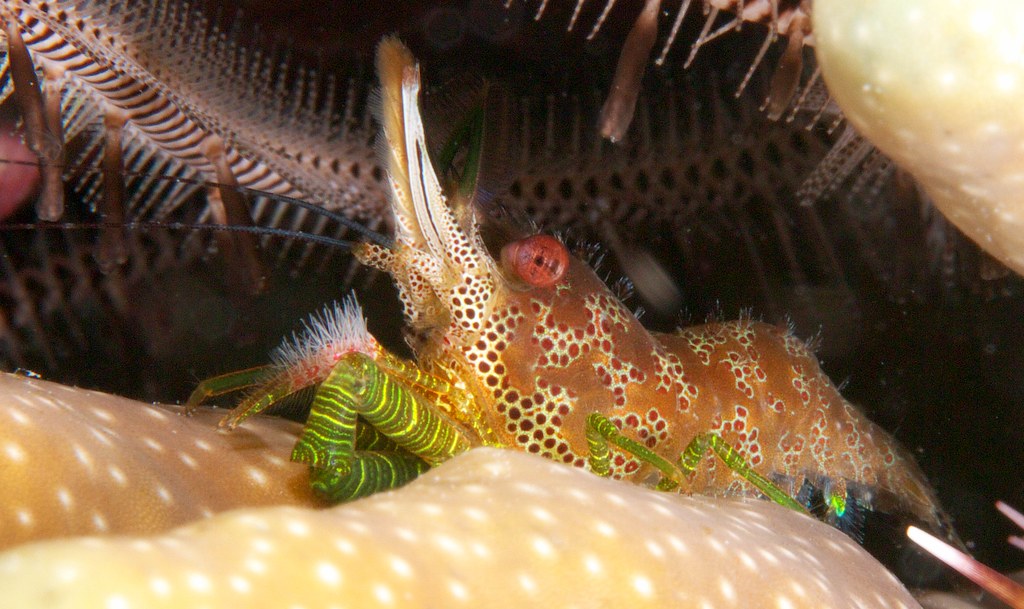
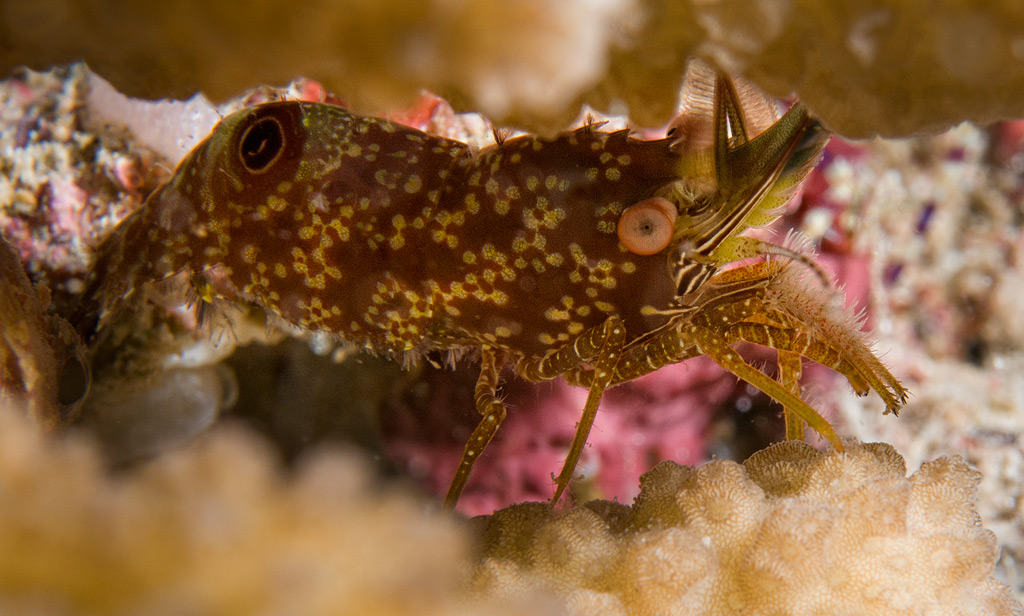
The same animal is a different color at midnight than it was at noon.
Shrimp shift color by moving pigment inside cells called chromatophores: spread the pigment and the animal darkens, pull it into a dot and the animal pales. It runs on a daily clock and keeps running even in constant darkness, which is how the rhythm was shown to be internal rather than a response to light.
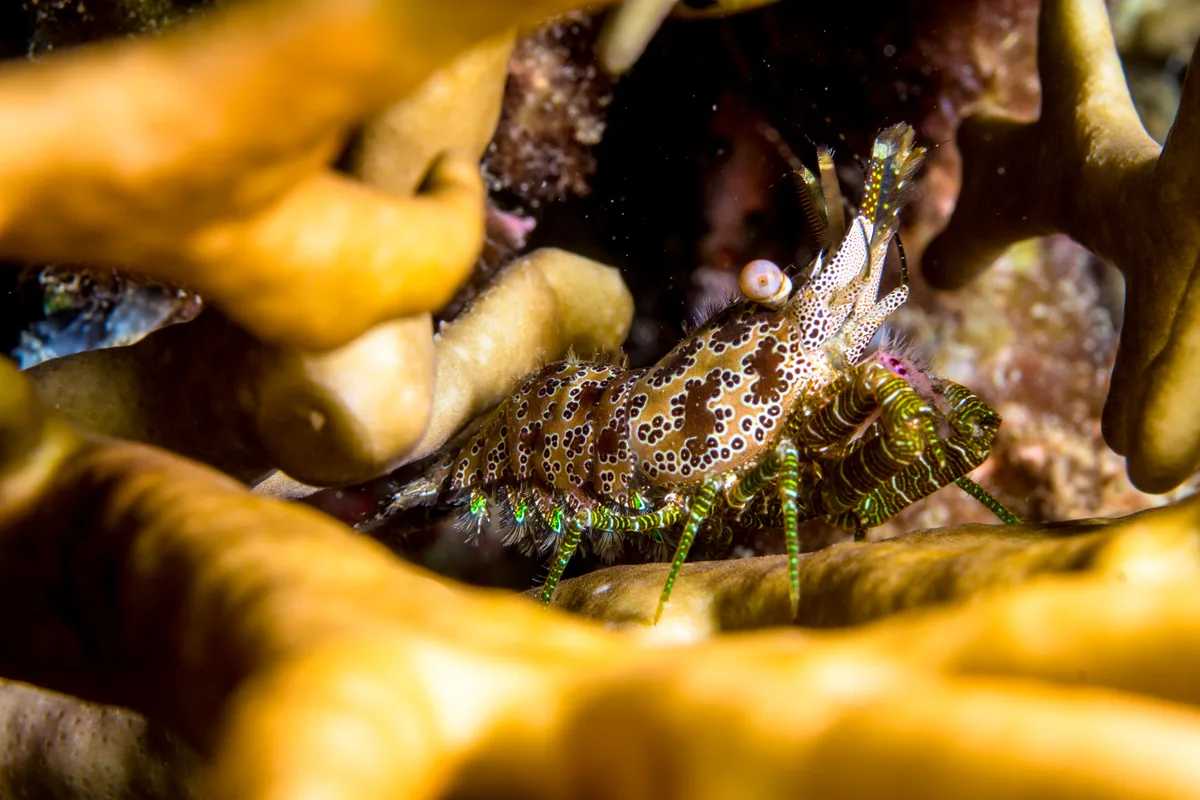
So this species is green and mottled by day, sitting in a crevice against algae-covered rock, and considerably redder at night, when it is out over open rubble and red is the same as invisible. It is dressing for where it will be, in advance.
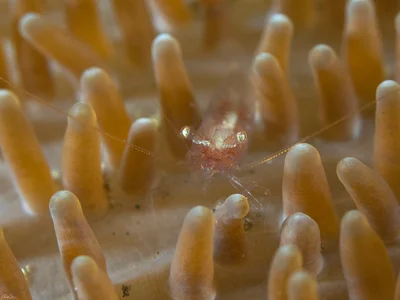
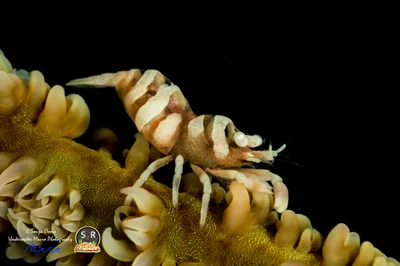
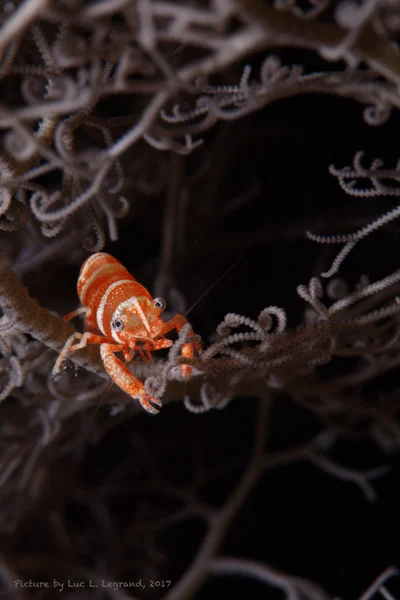
This also breaks identification from photographs. Two pictures of one species taken twelve hours apart can look like two animals, and a fair number of shrimp records rest on exactly that kind of image.
Like the rest of the genus it is bristly, marbled, and the males carry absurdly long front legs.
- green to olive by day, far redder at night
- bristly body with pale spots
- males with very long first walking legs
- up to 5 cm