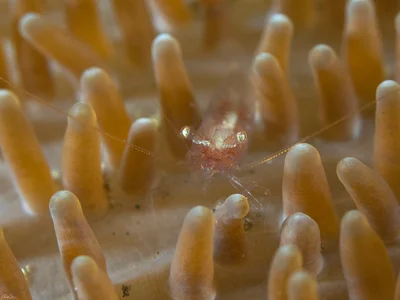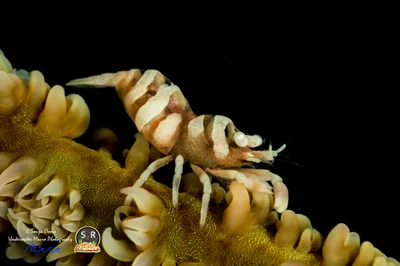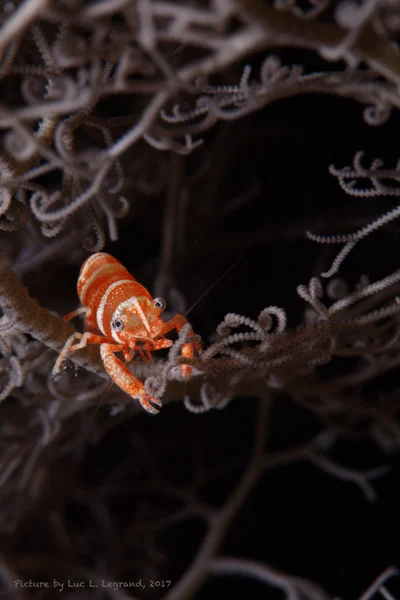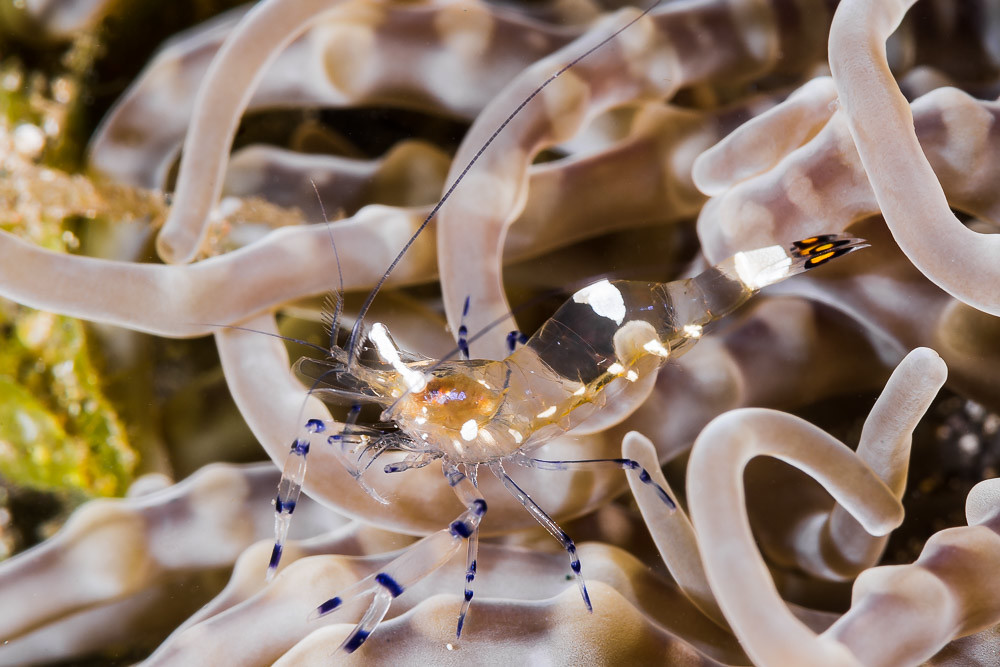
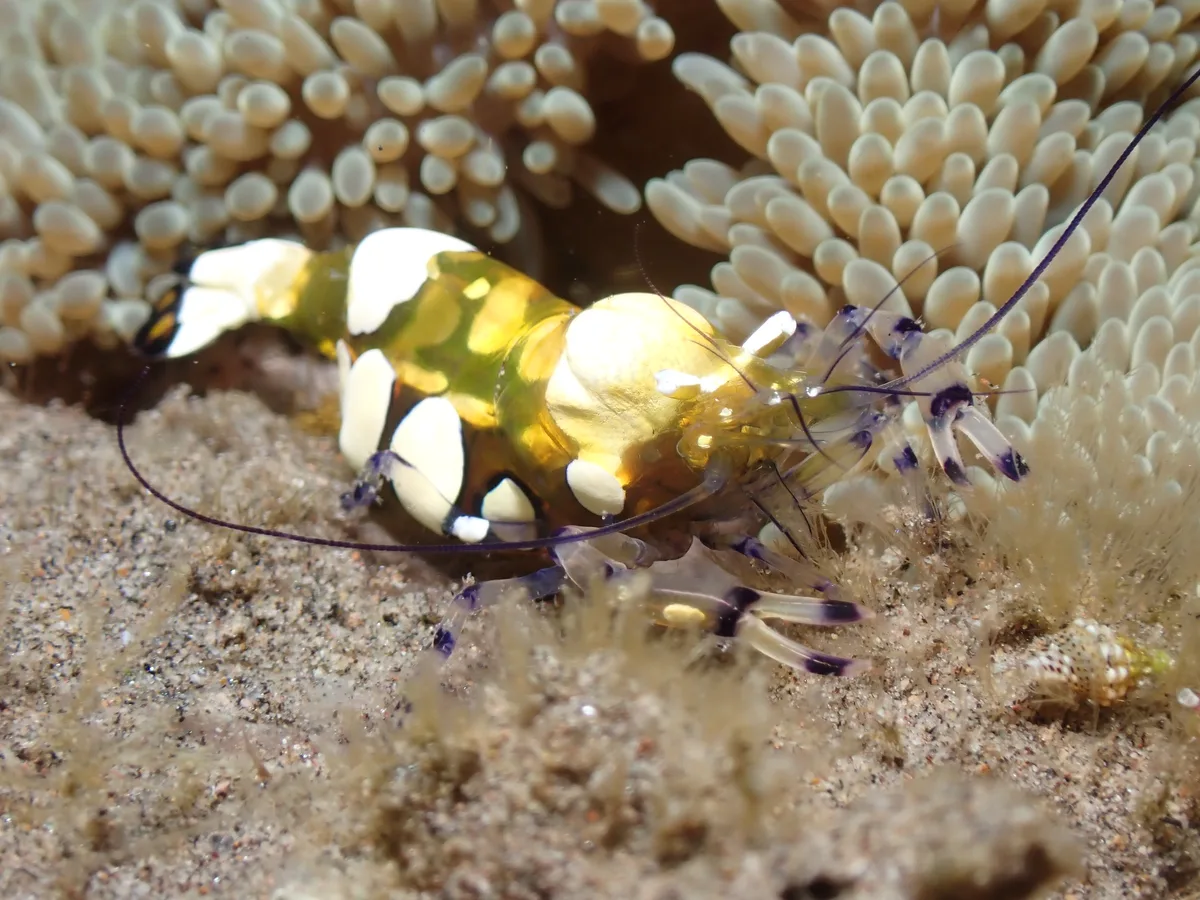
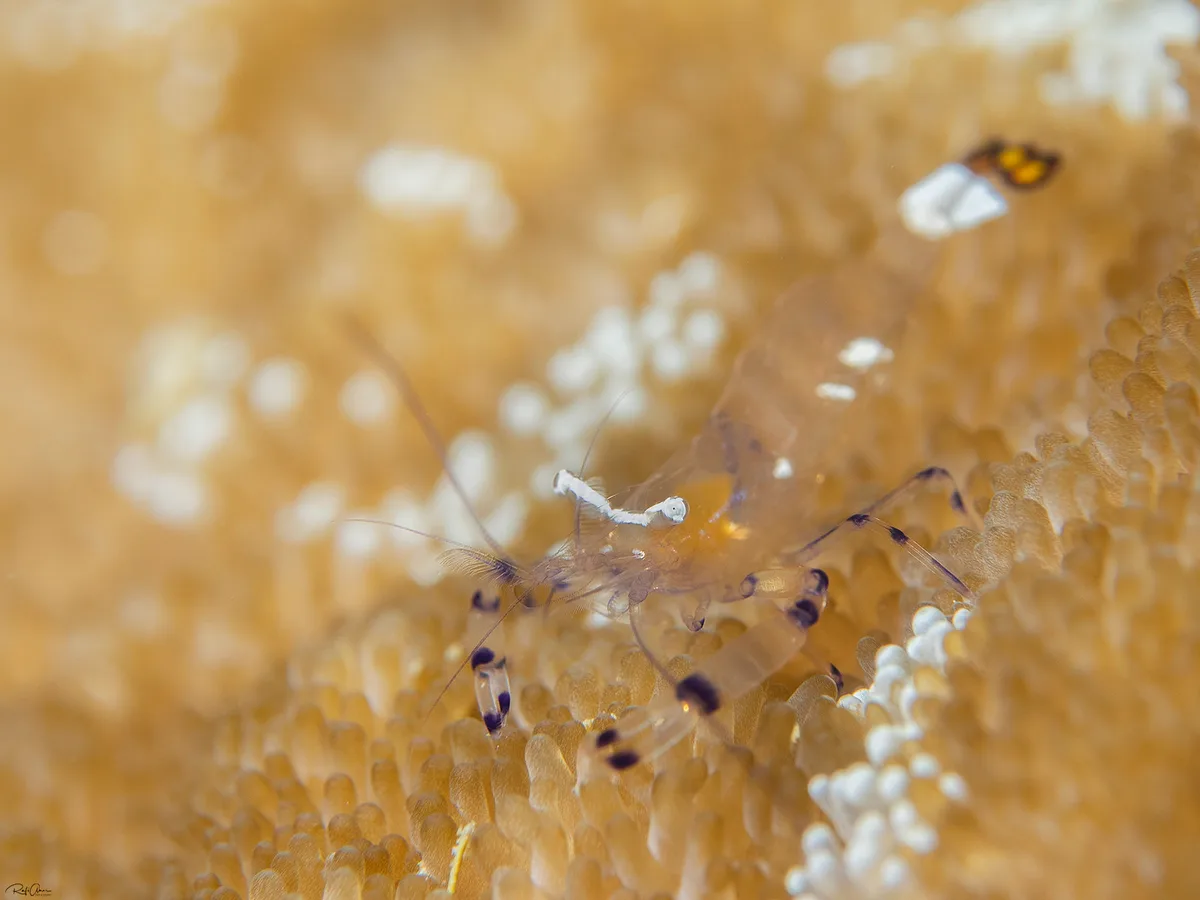
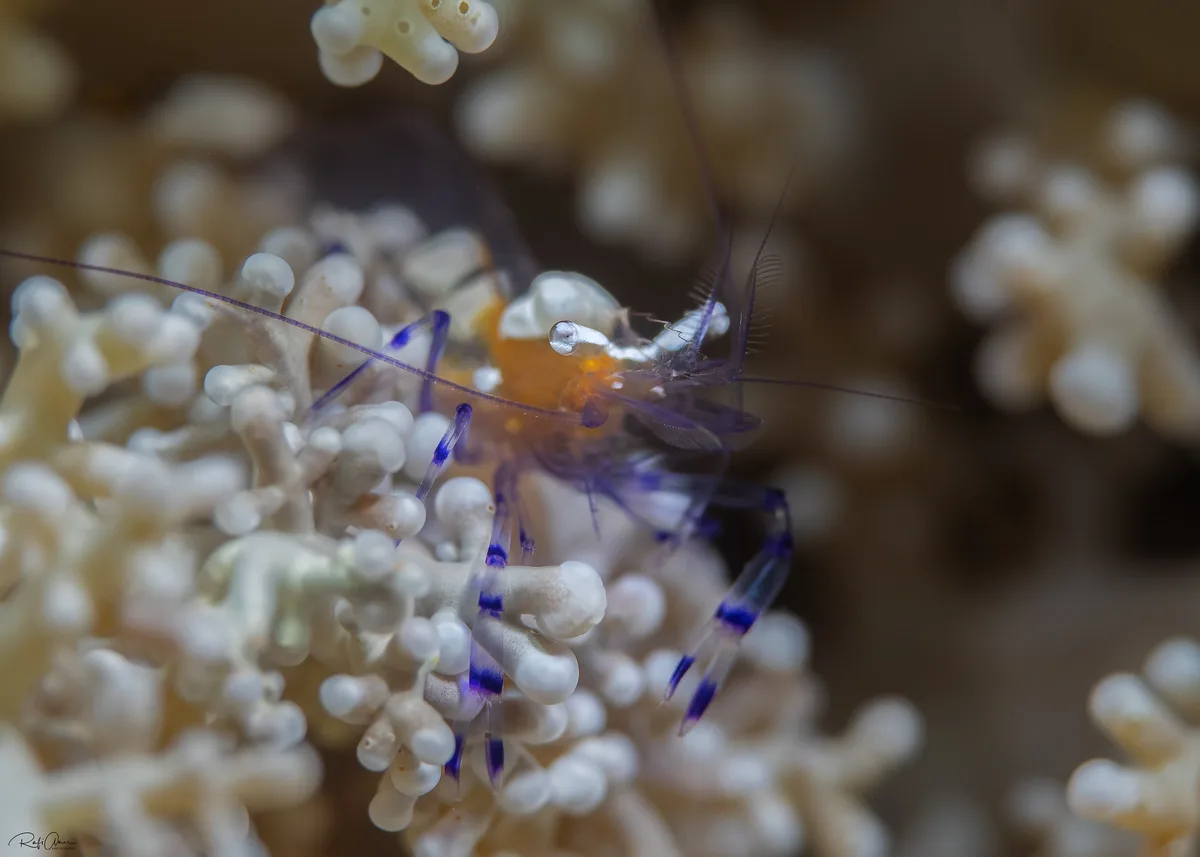
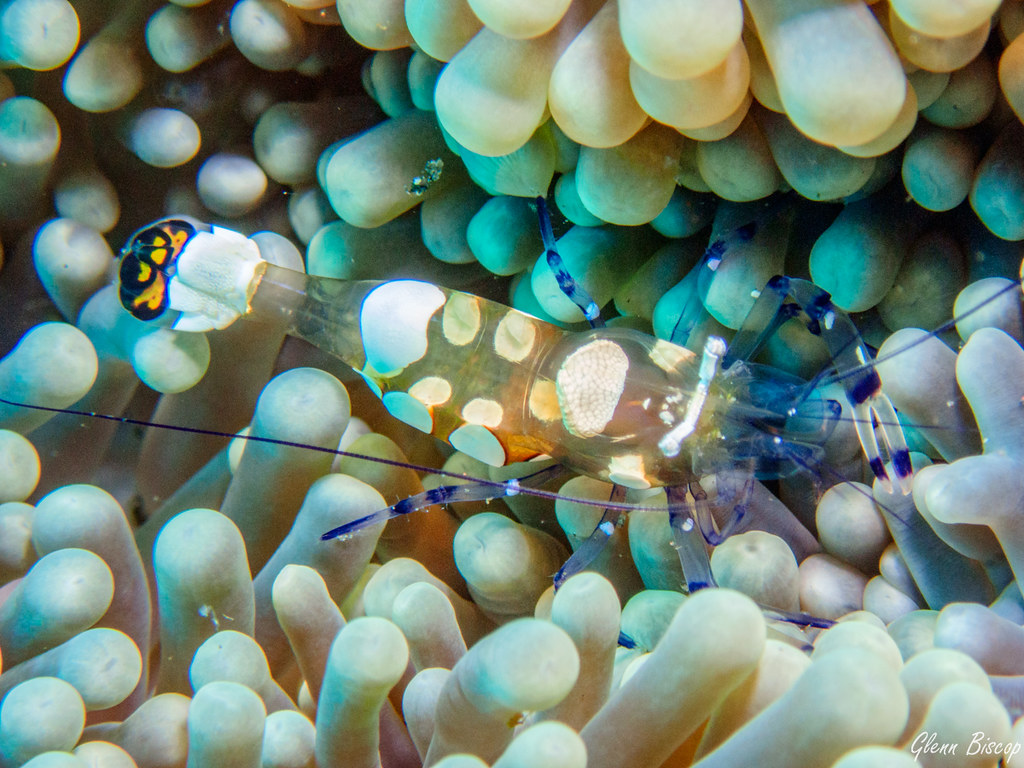
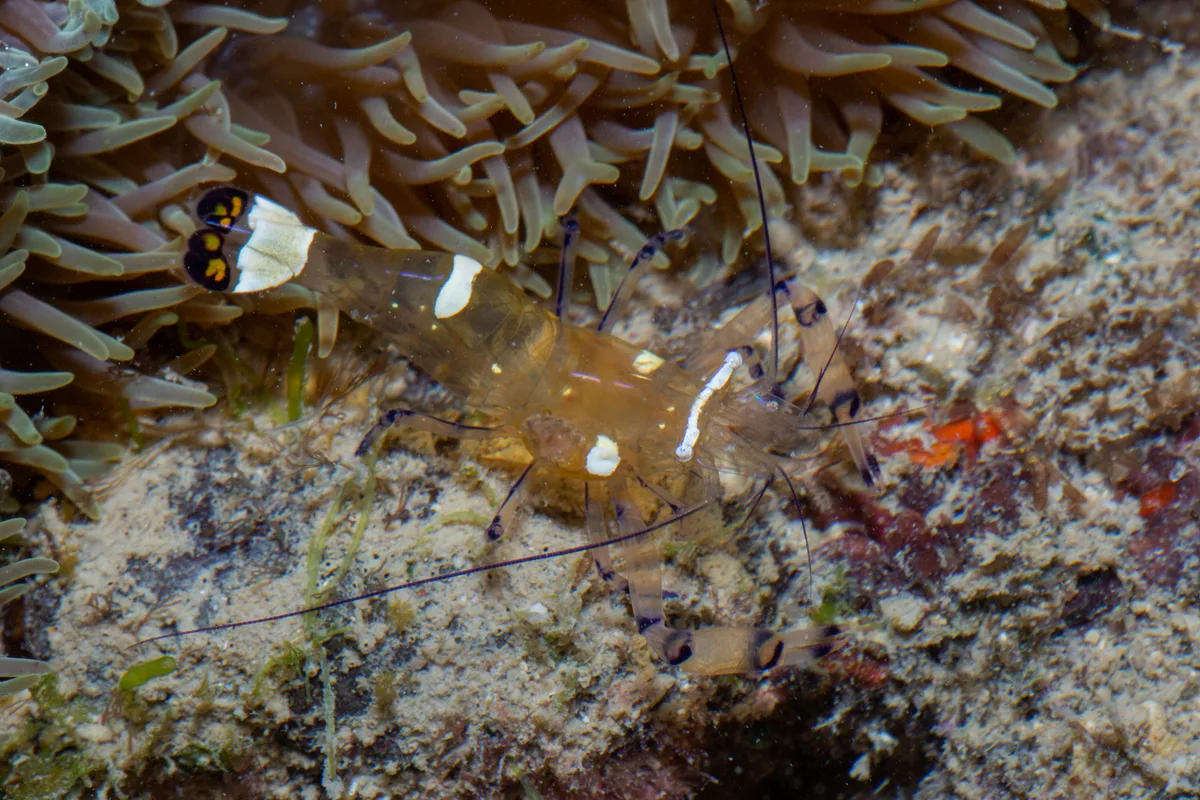
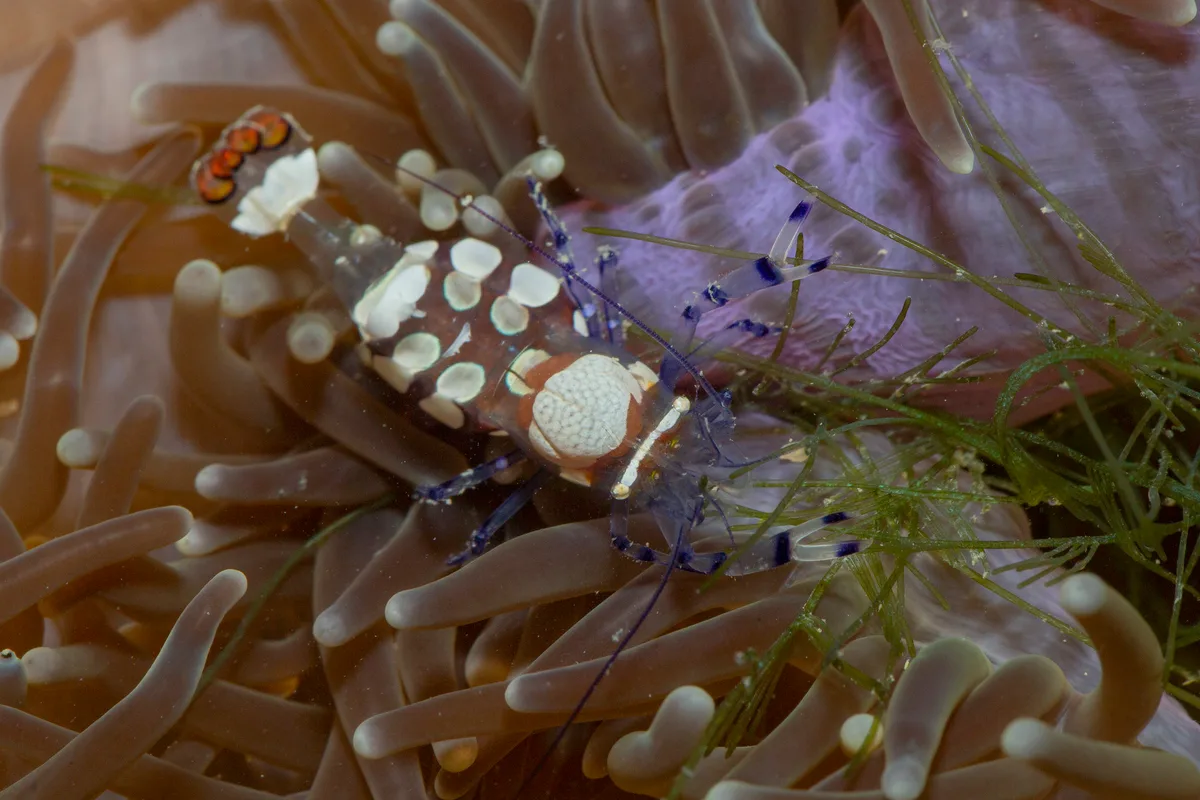
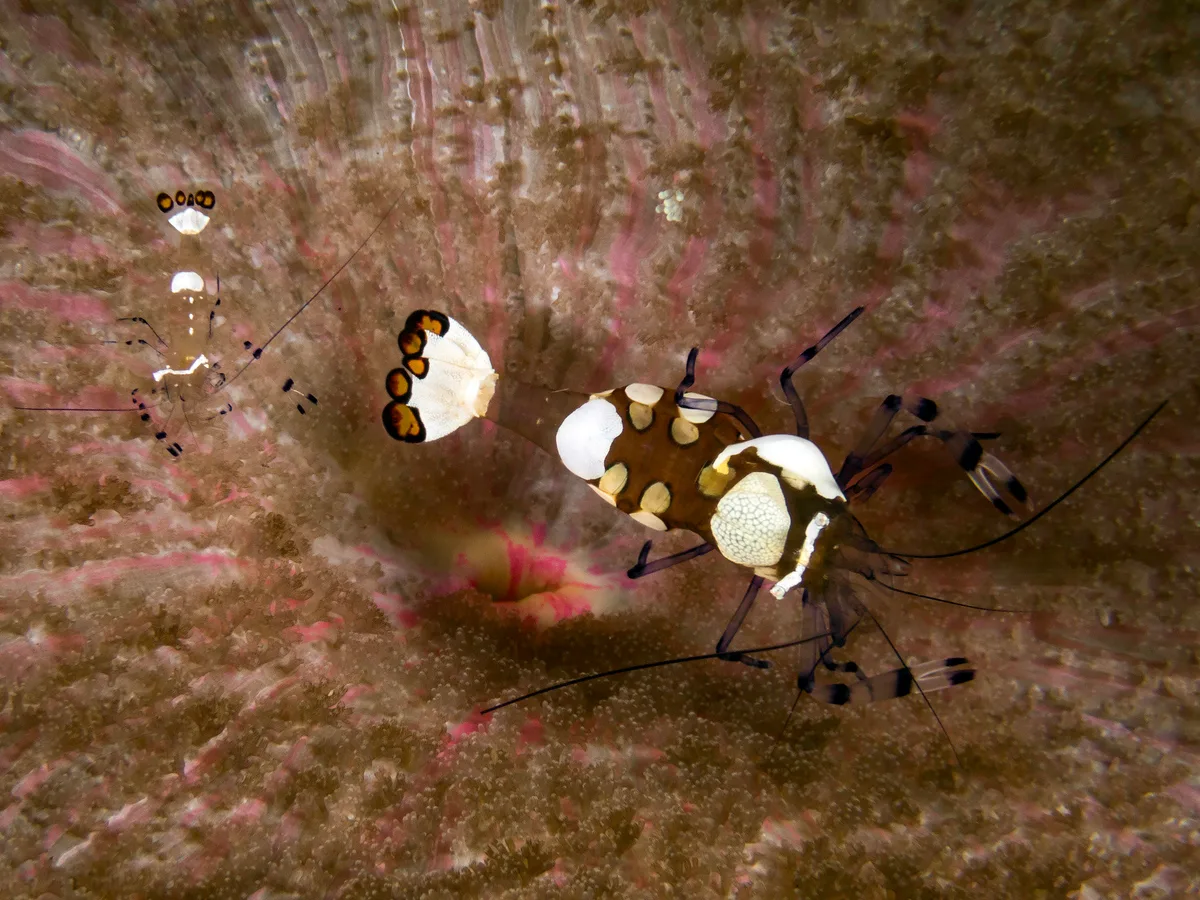
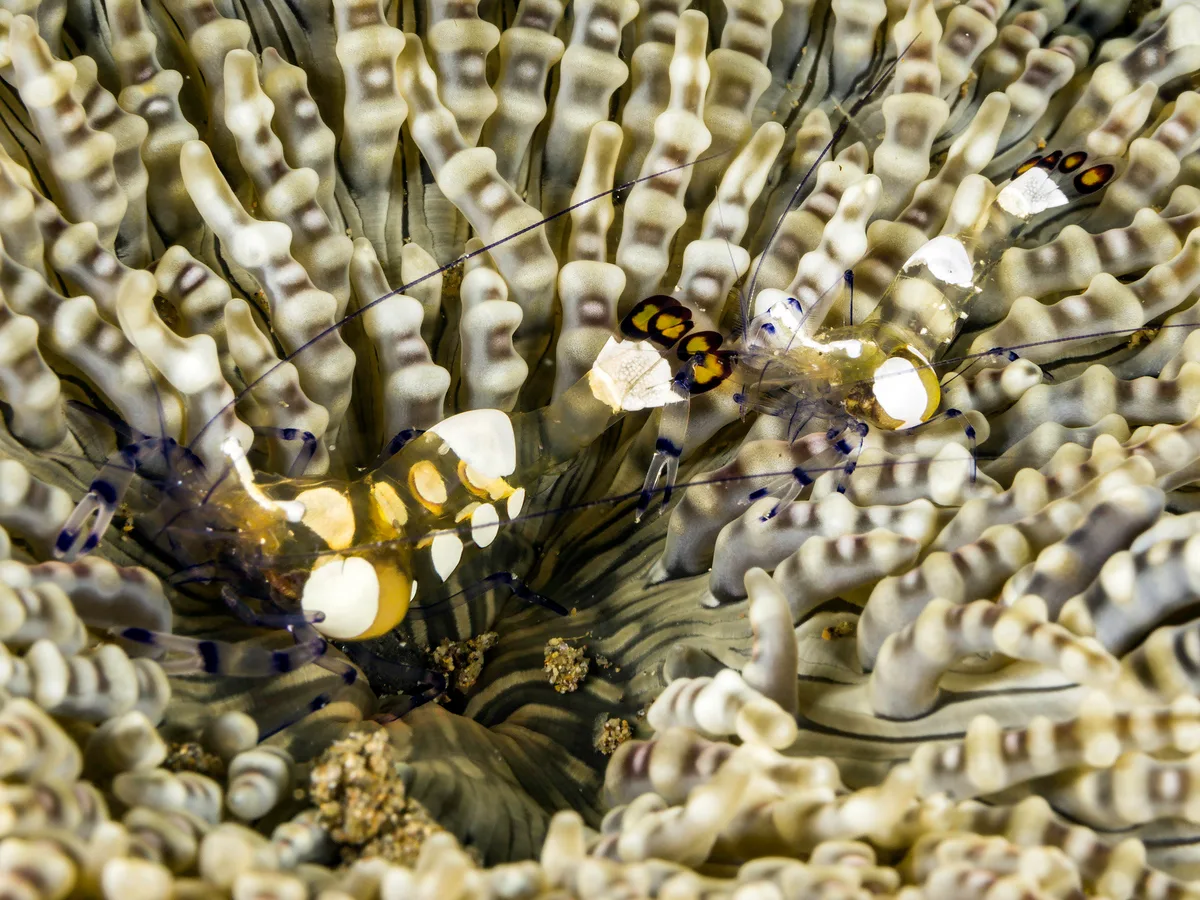
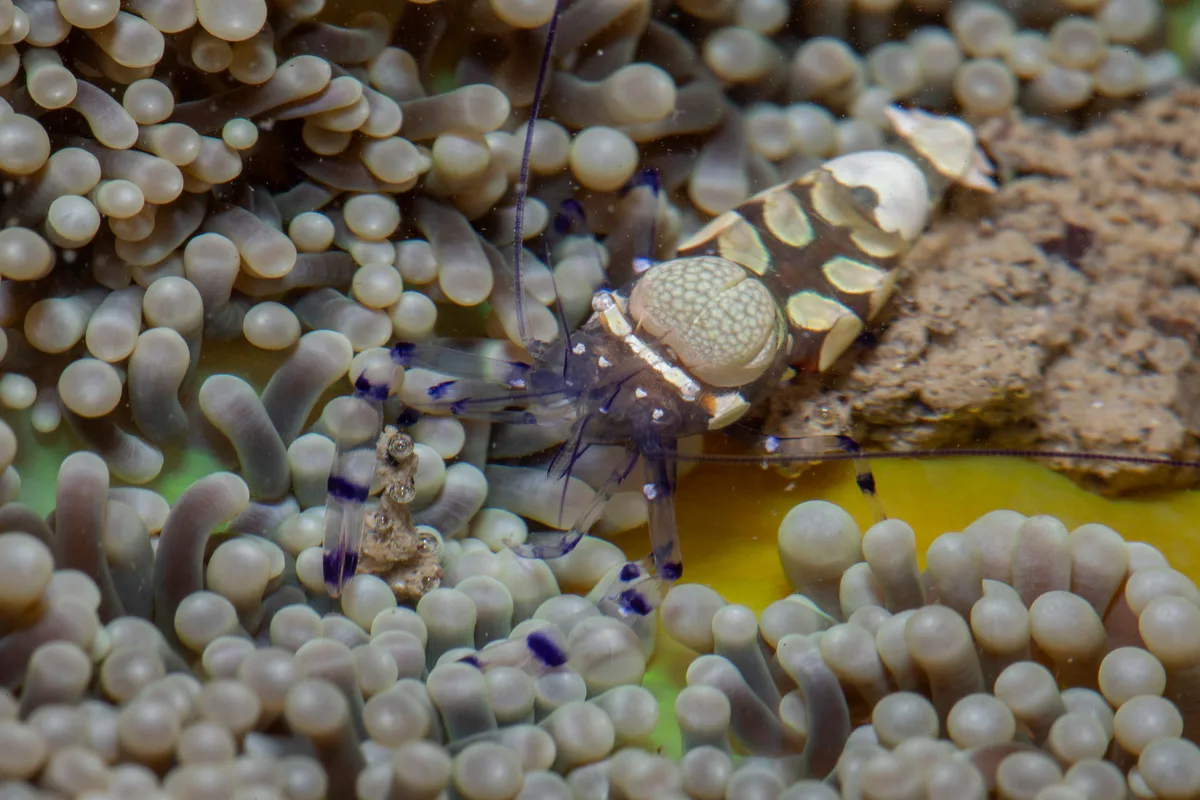
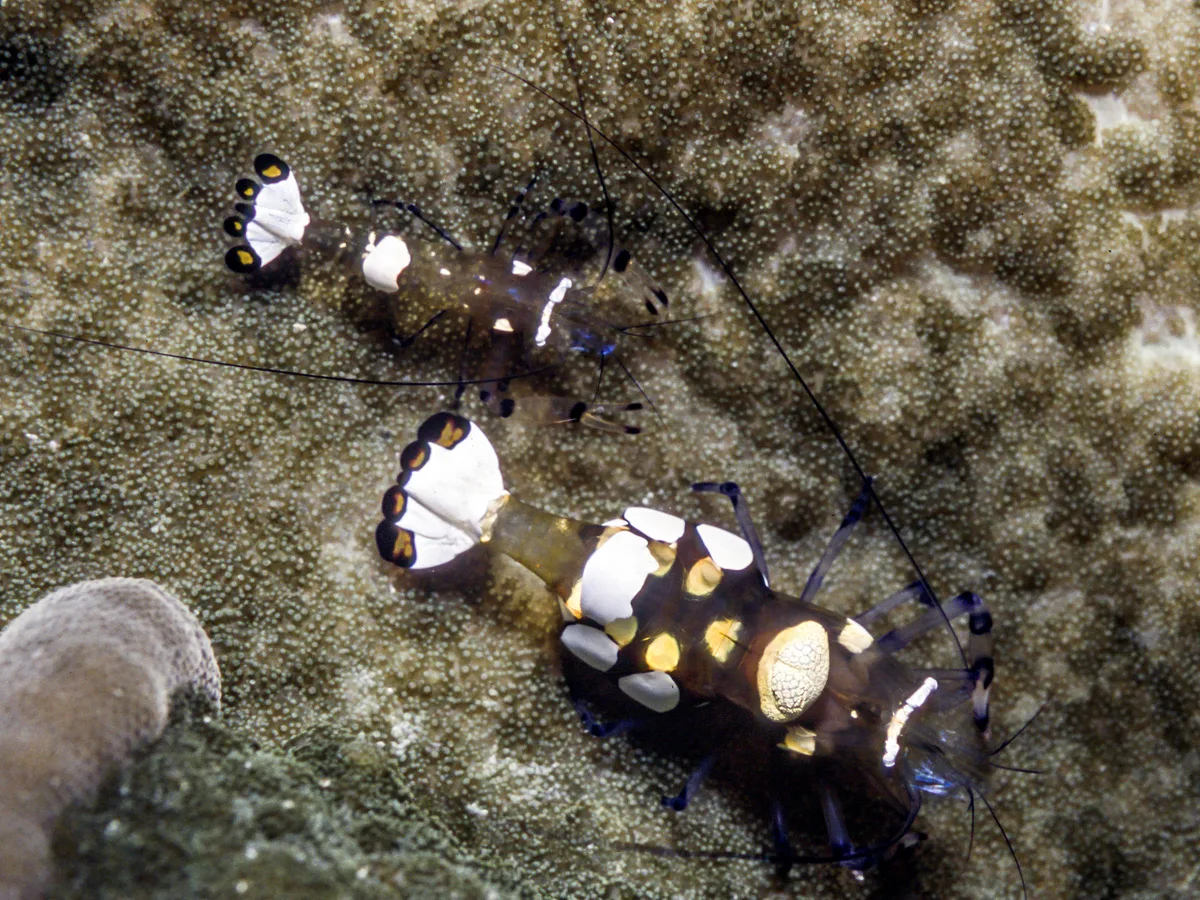
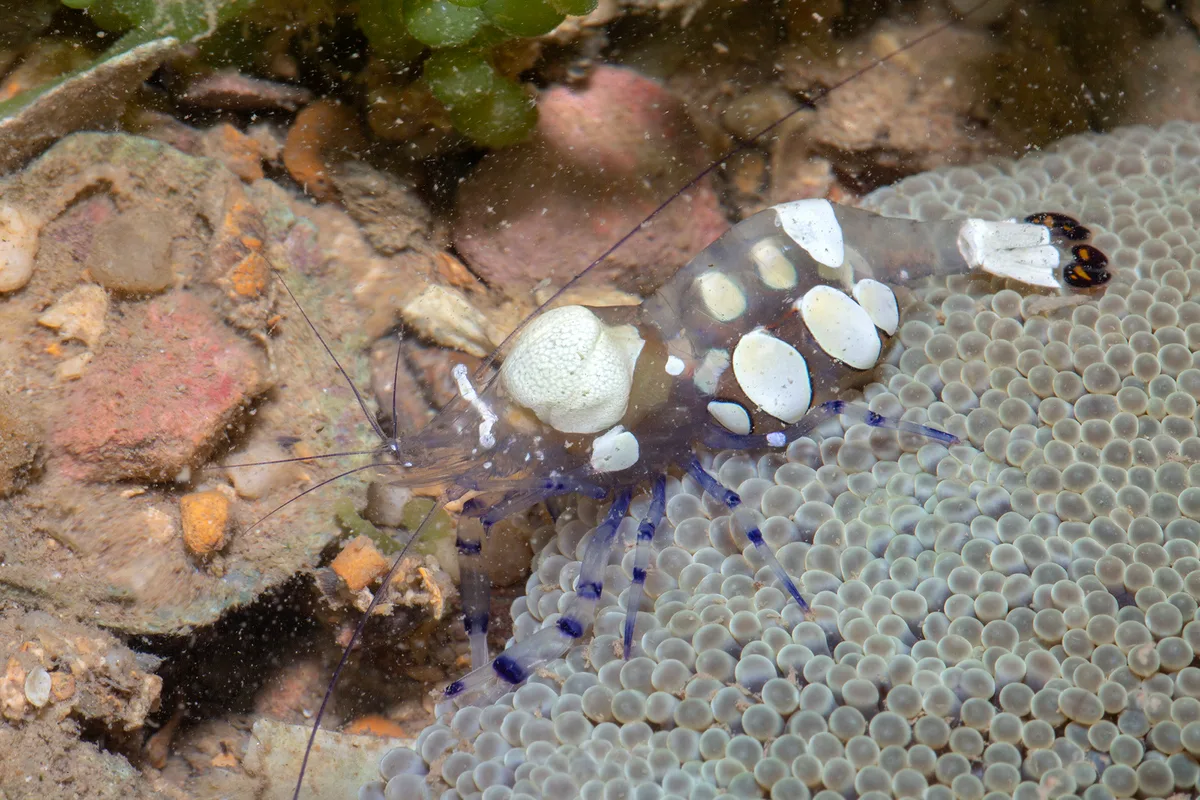
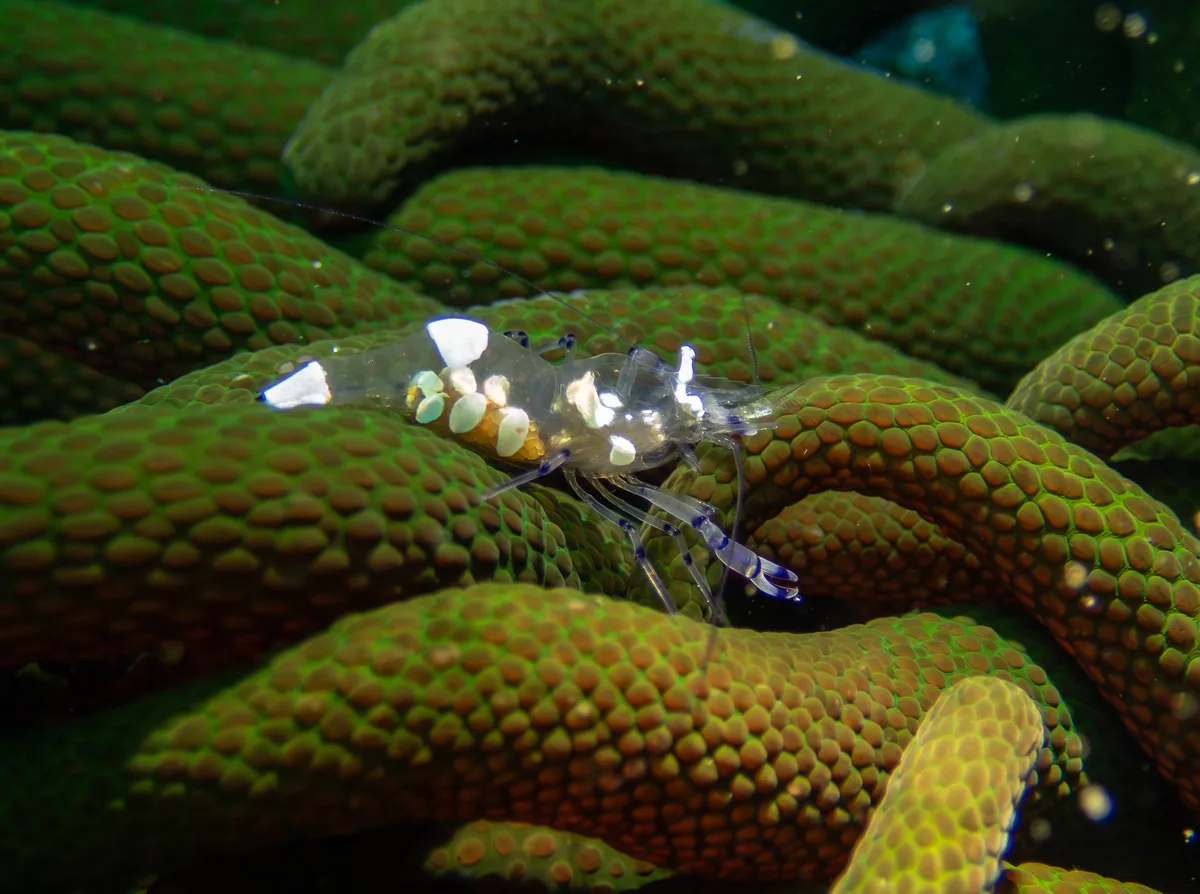
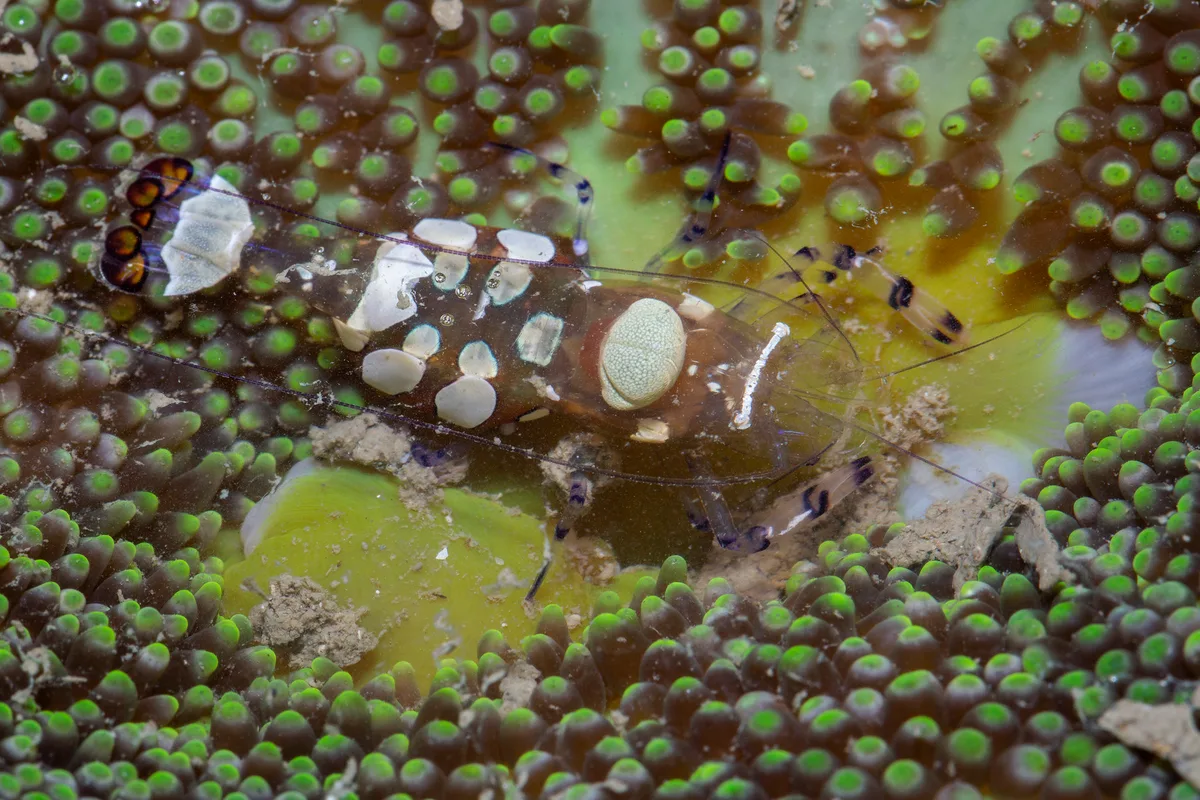
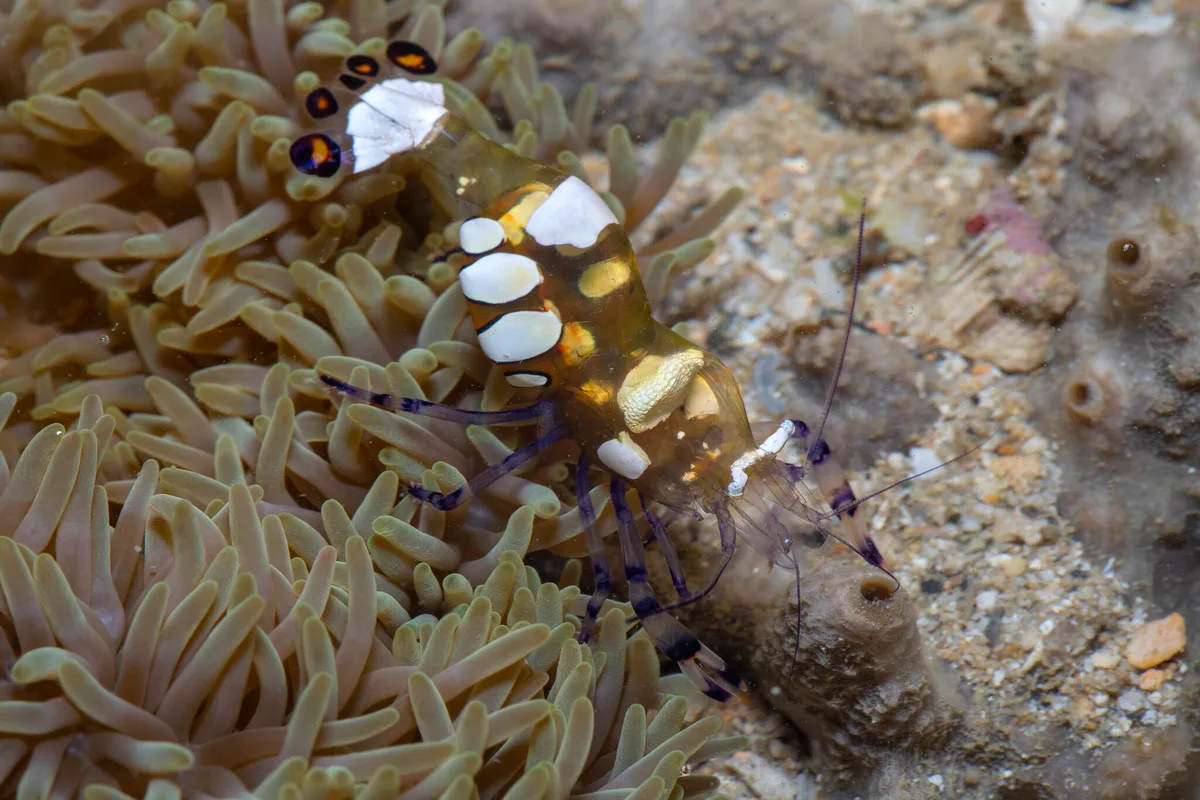
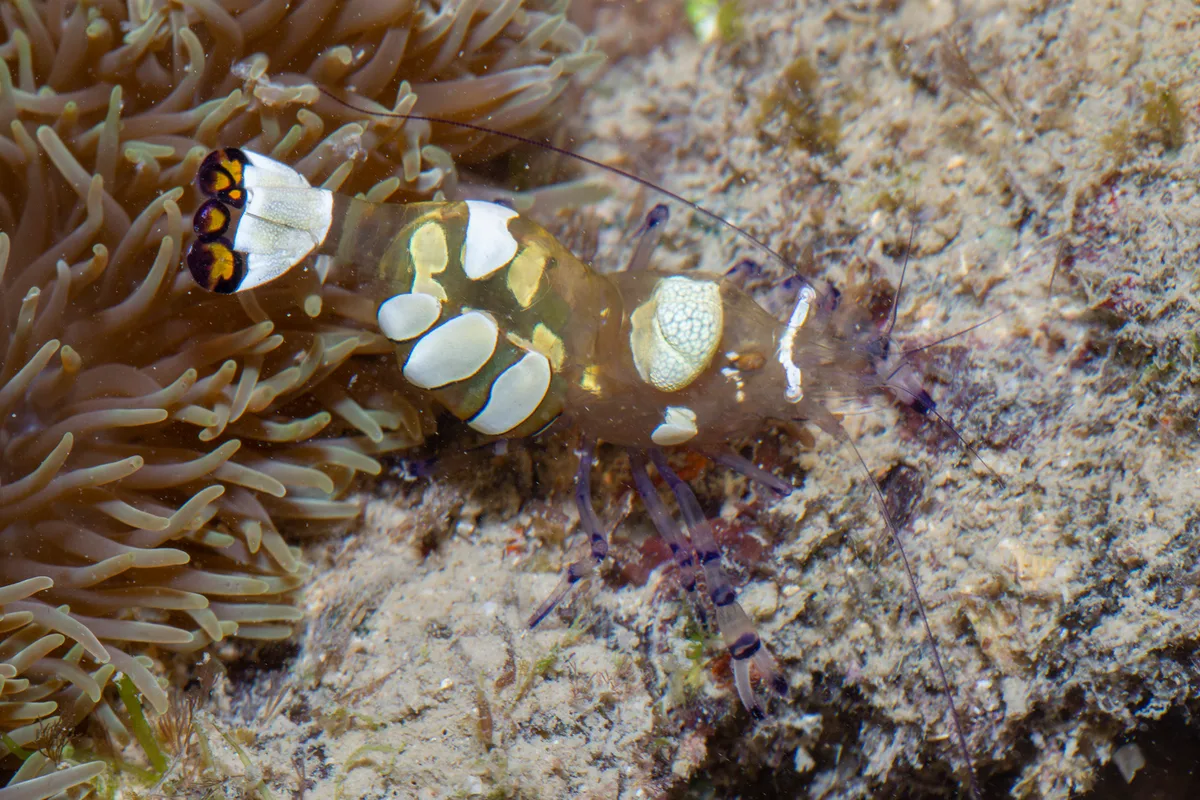
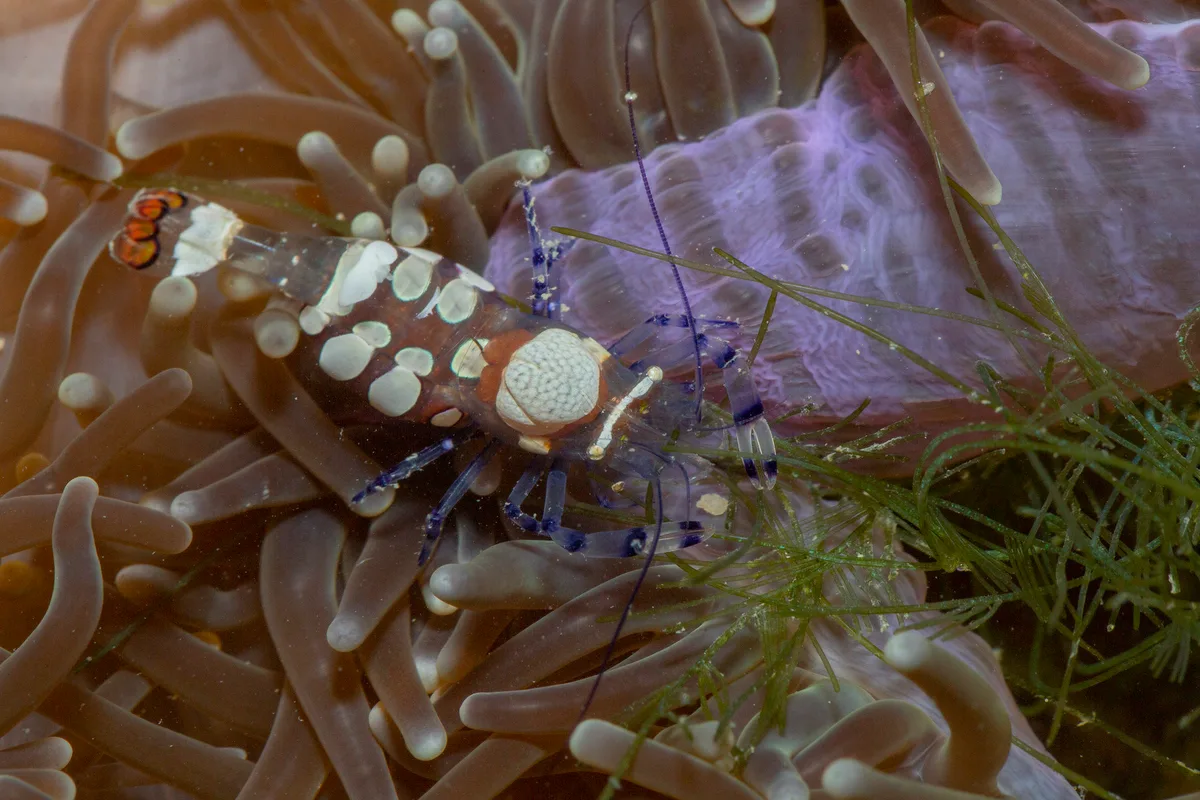
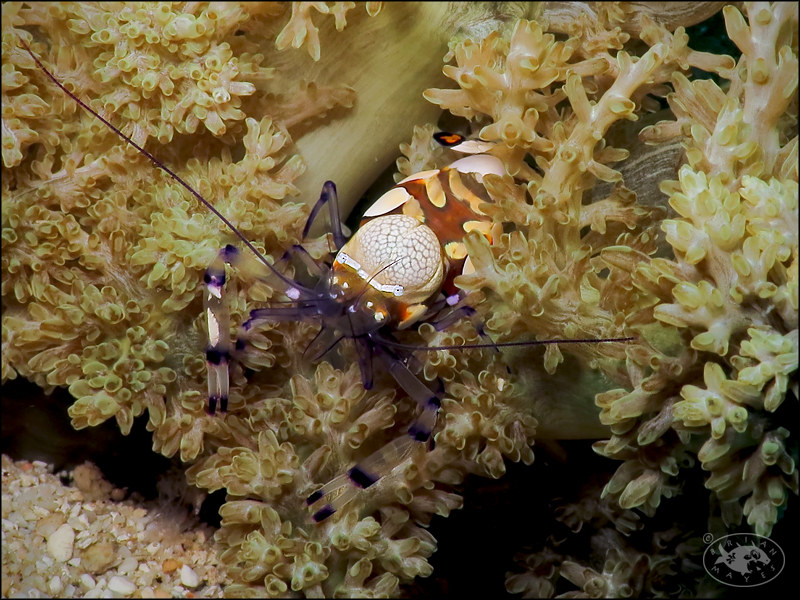
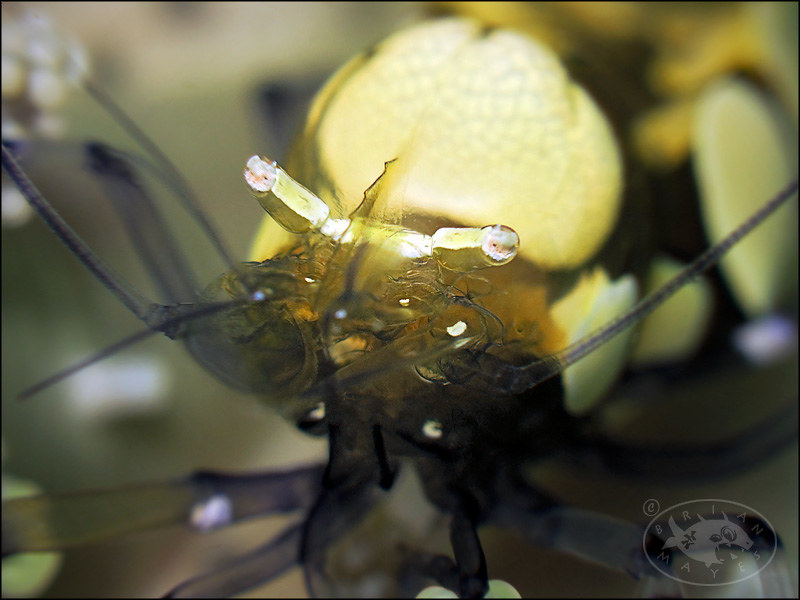
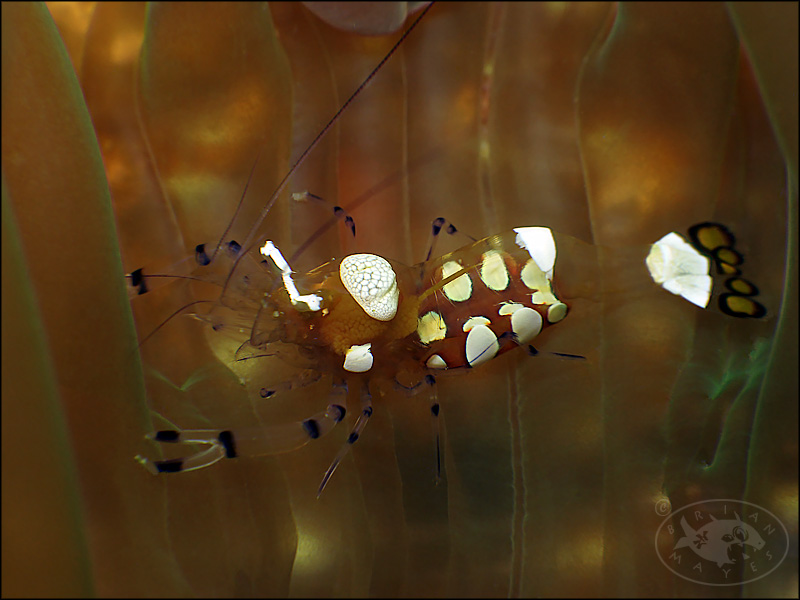
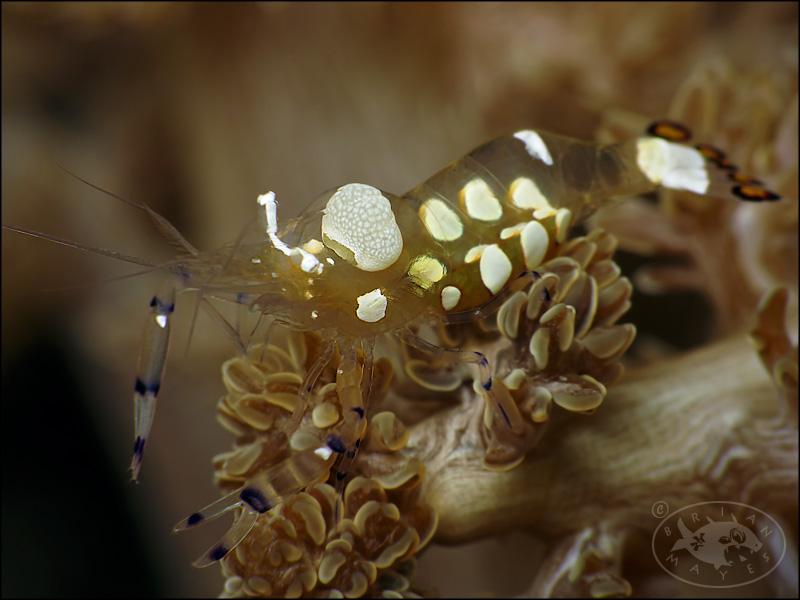
A transparent shrimp with white blotches and orange-ringed spots on its tail, walking across the tentacles of an anemone that would kill anything else its size.
How it gets away with that is the same problem clownfish solve, and probably the same answer: a coat of mucus that either does not trigger the anemone's stinging cells or masks the shrimp chemically. Animals moved away from their host and returned later have to reacquire the protection, which suggests the shrimp is wearing something rather than being immune to something.
What the anemone gets is unclear and probably very little. The shrimp takes scraps from its host's meals, cleans debris off the tentacles, and occasionally picks parasites off visiting fish - a lodger more than a partner.
Four centimeters (1.6 in), usually in twos, and one of the reliable subjects on any anemone worth photographing. Look at the tail: the orange-ringed spots are the field mark, and they are the only part of the animal that is not see-through.
- transparent body with a few large white blotches and orange-ringed black spots on the tail fan
- walks on the tentacles of an anemone, never on rock
- females much larger than males, often with a pair on one anemone
- length up to 4 cm