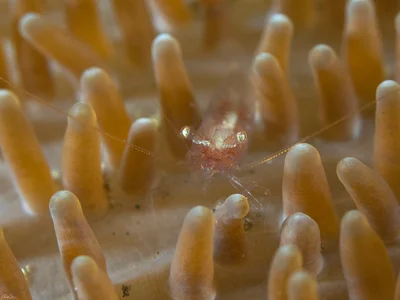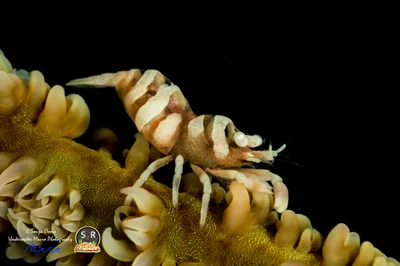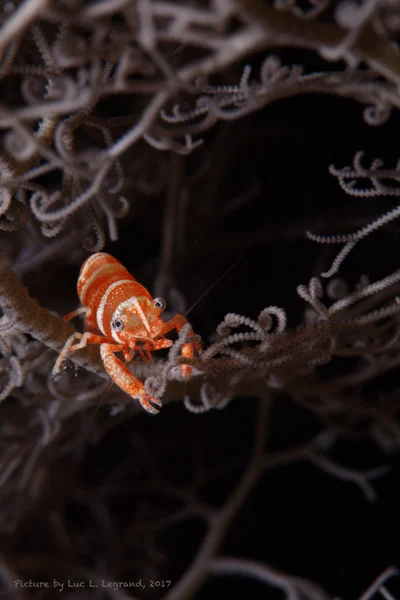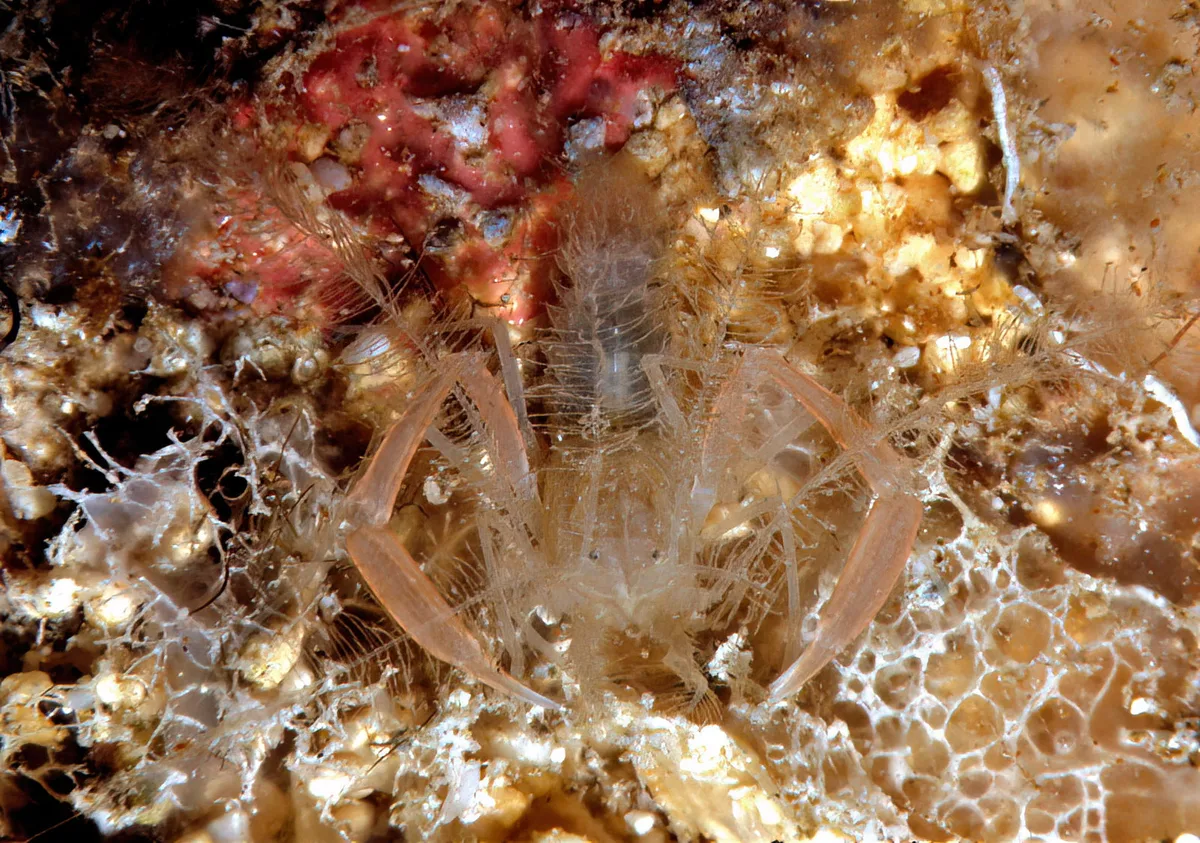
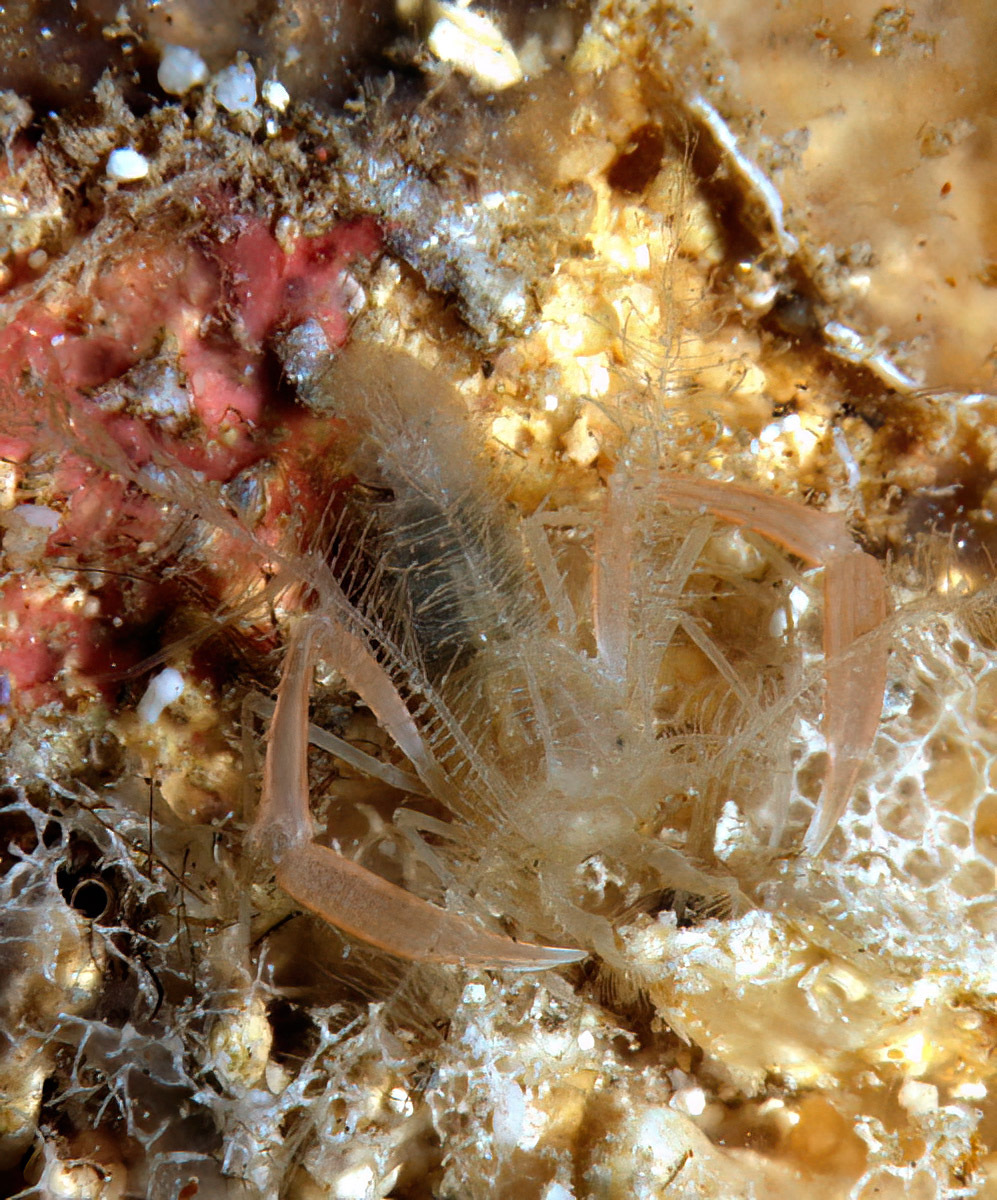
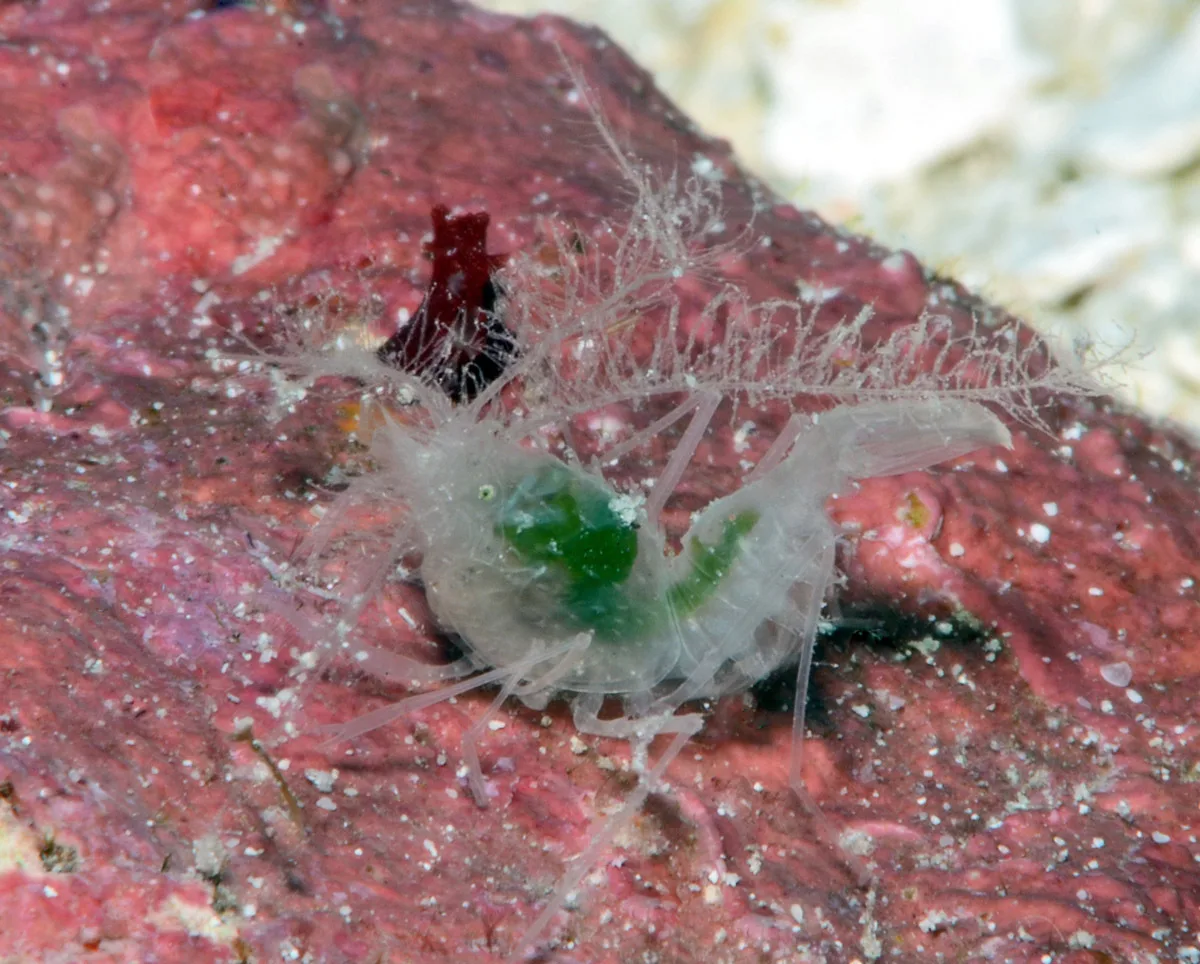
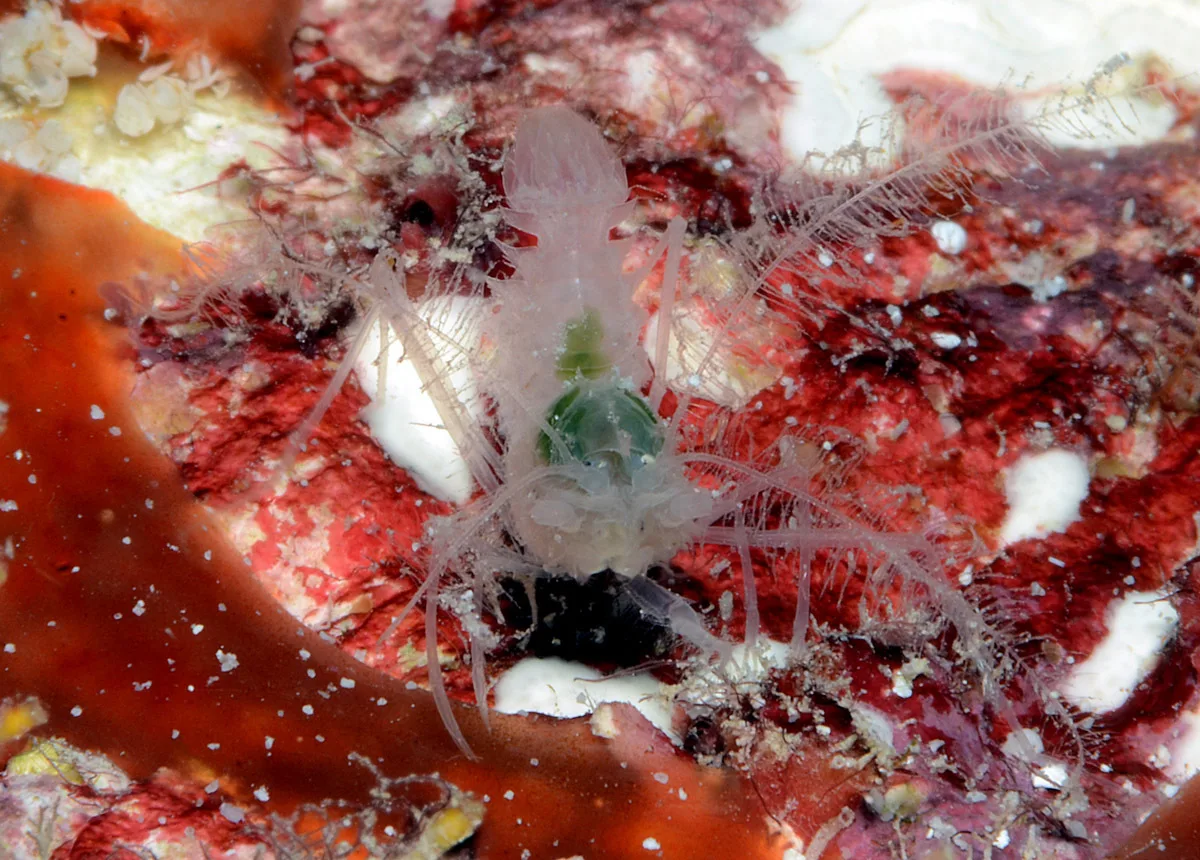
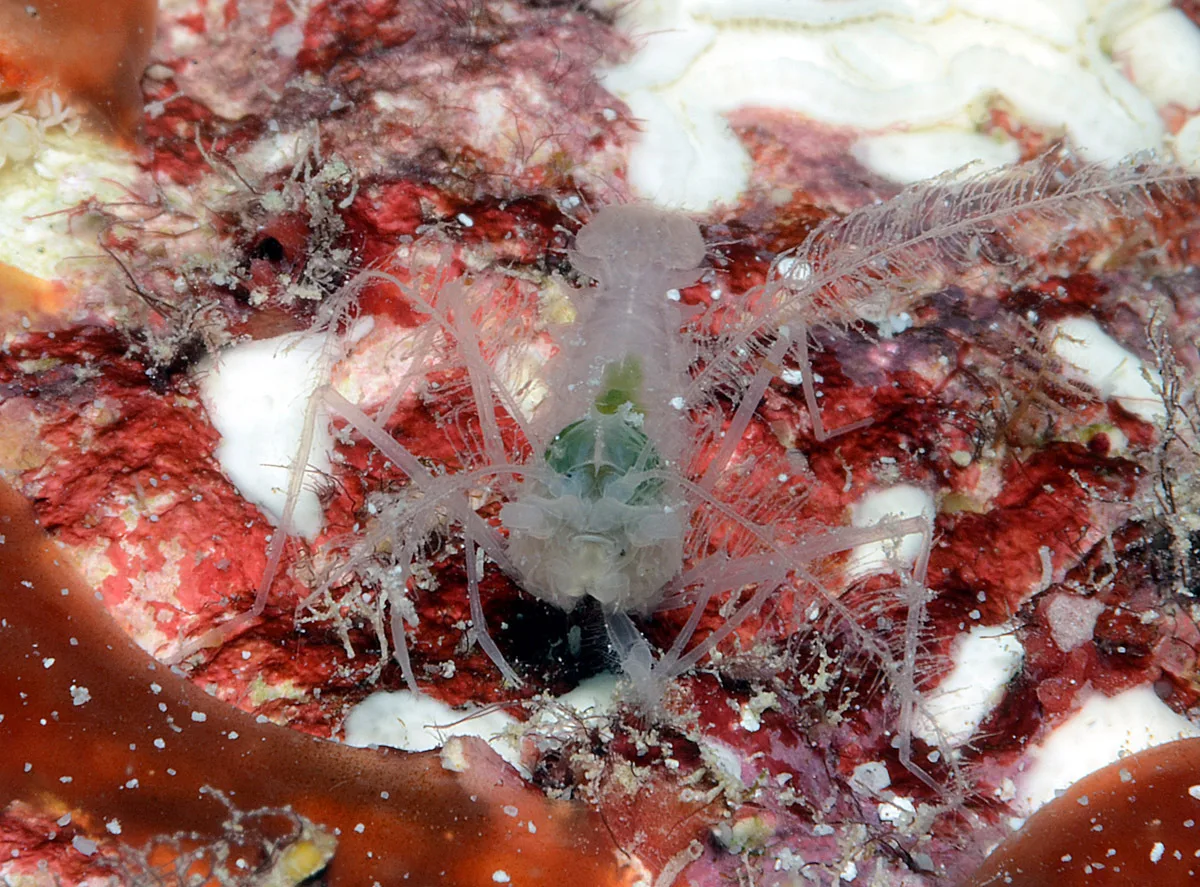
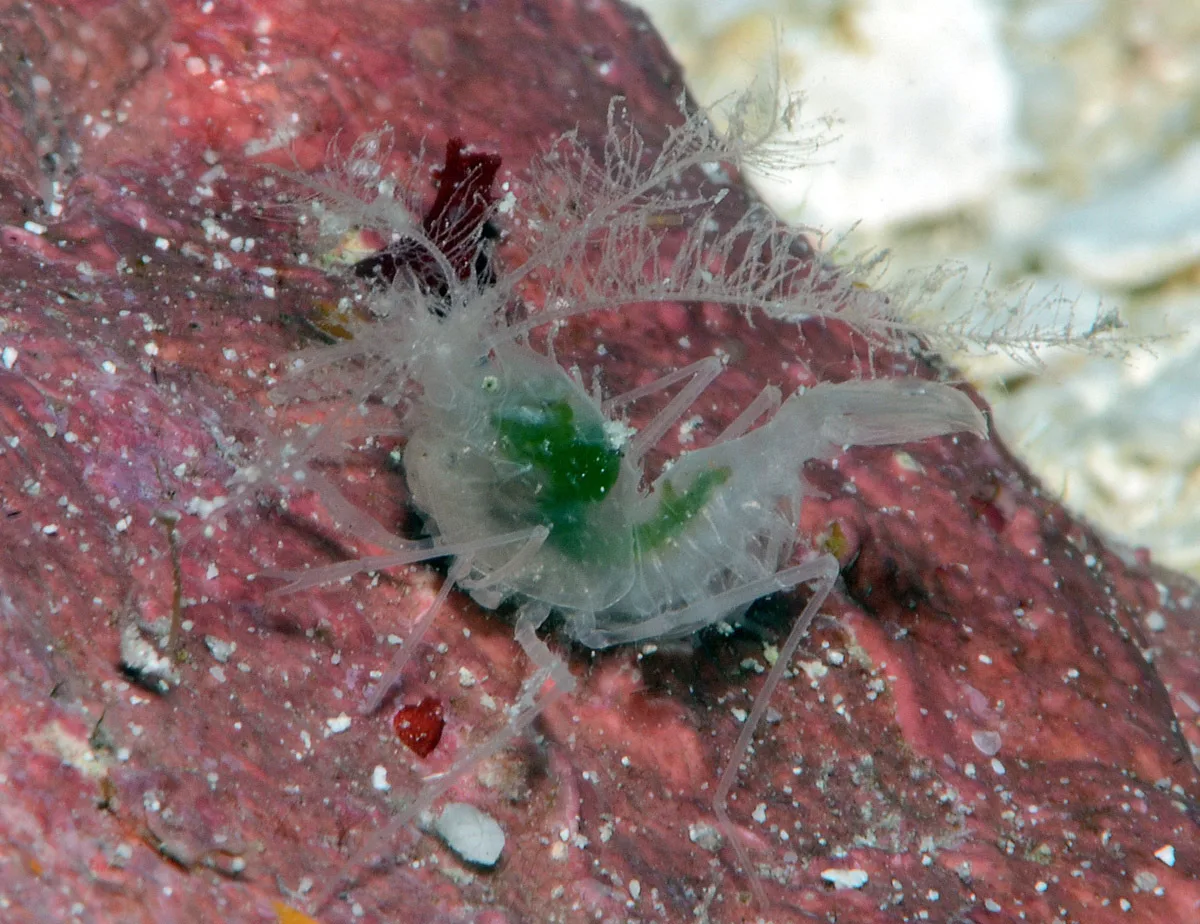
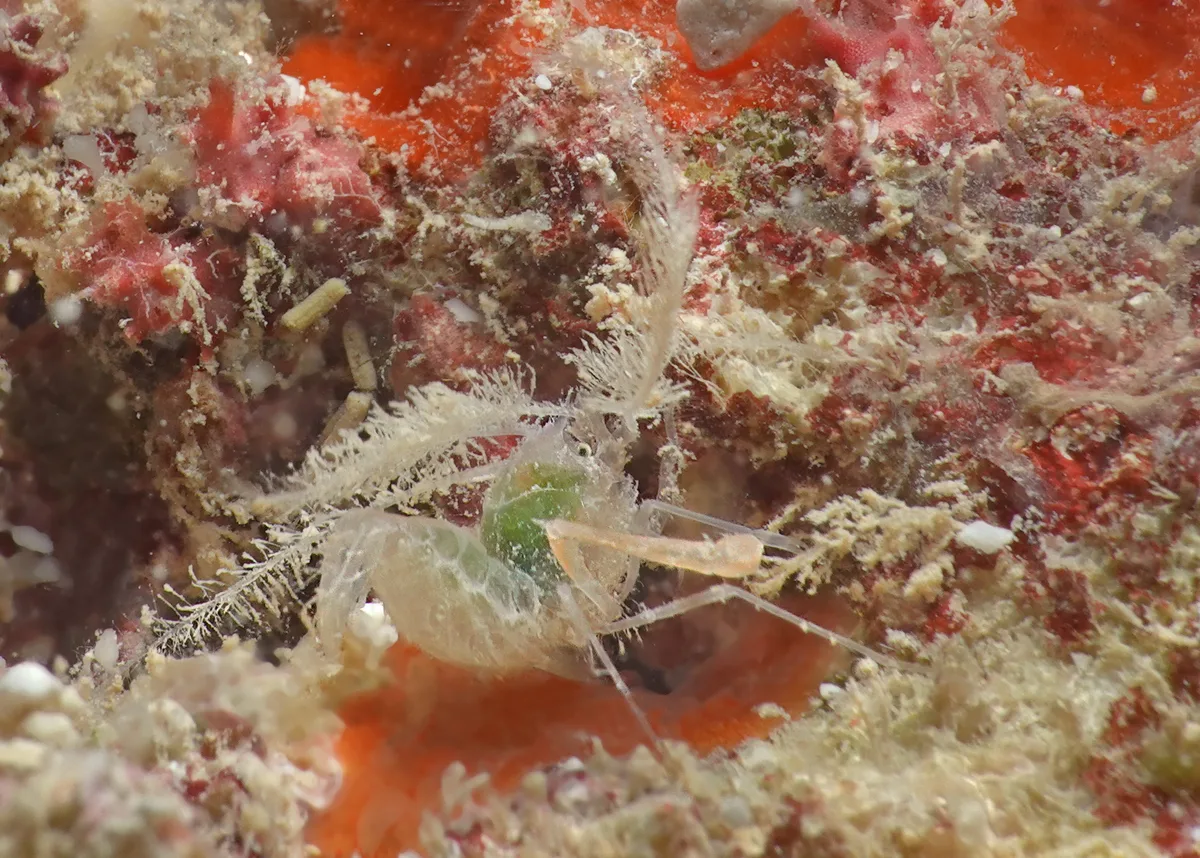
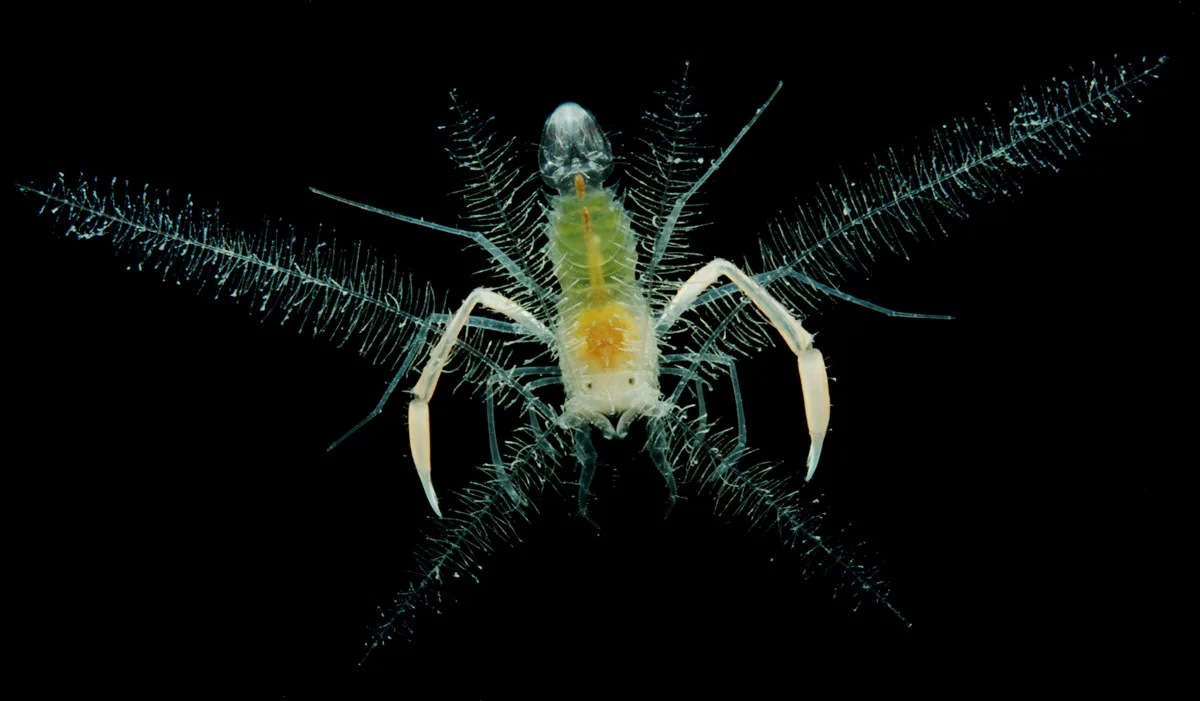
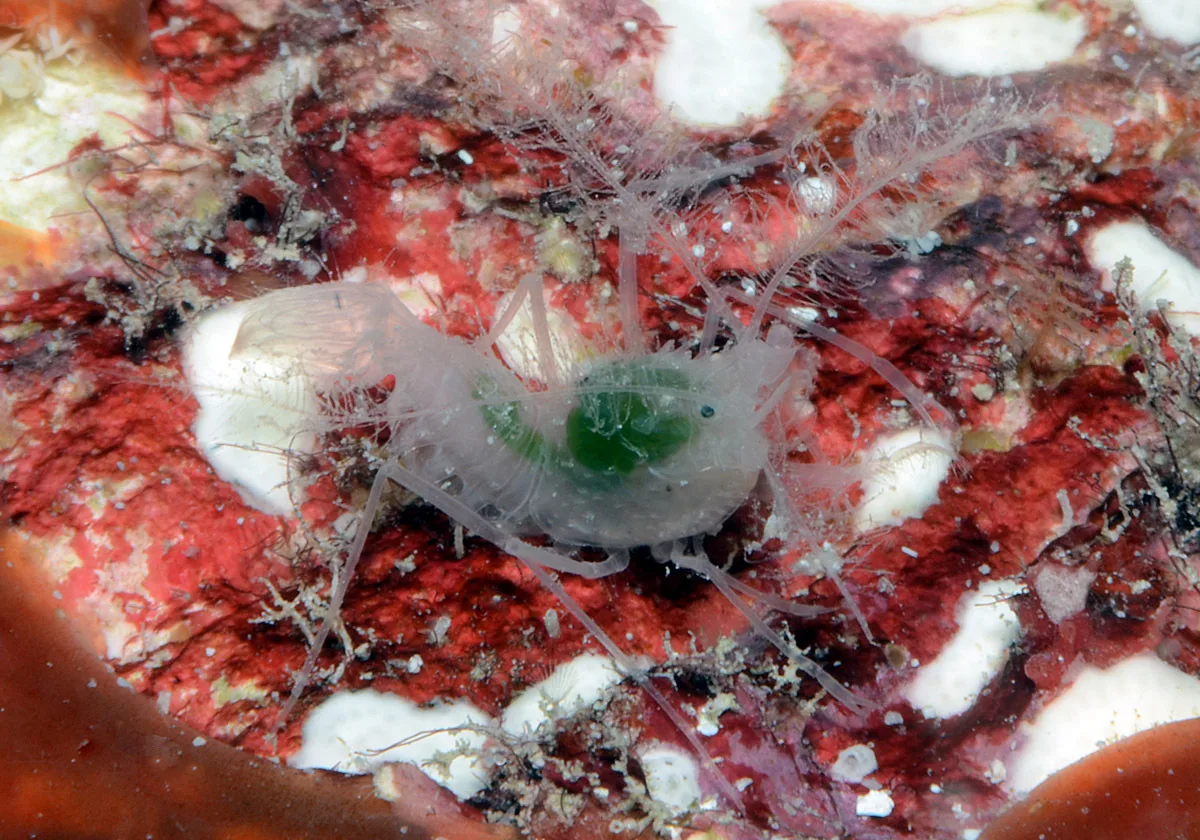
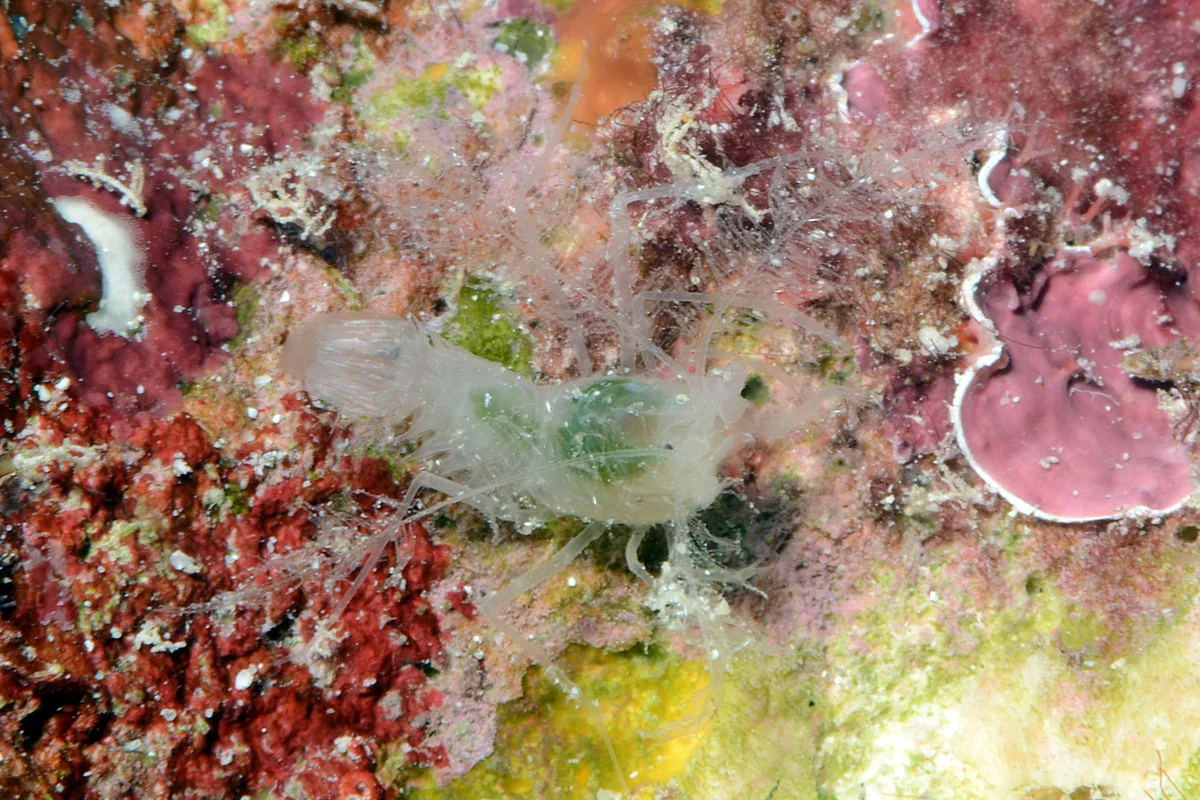
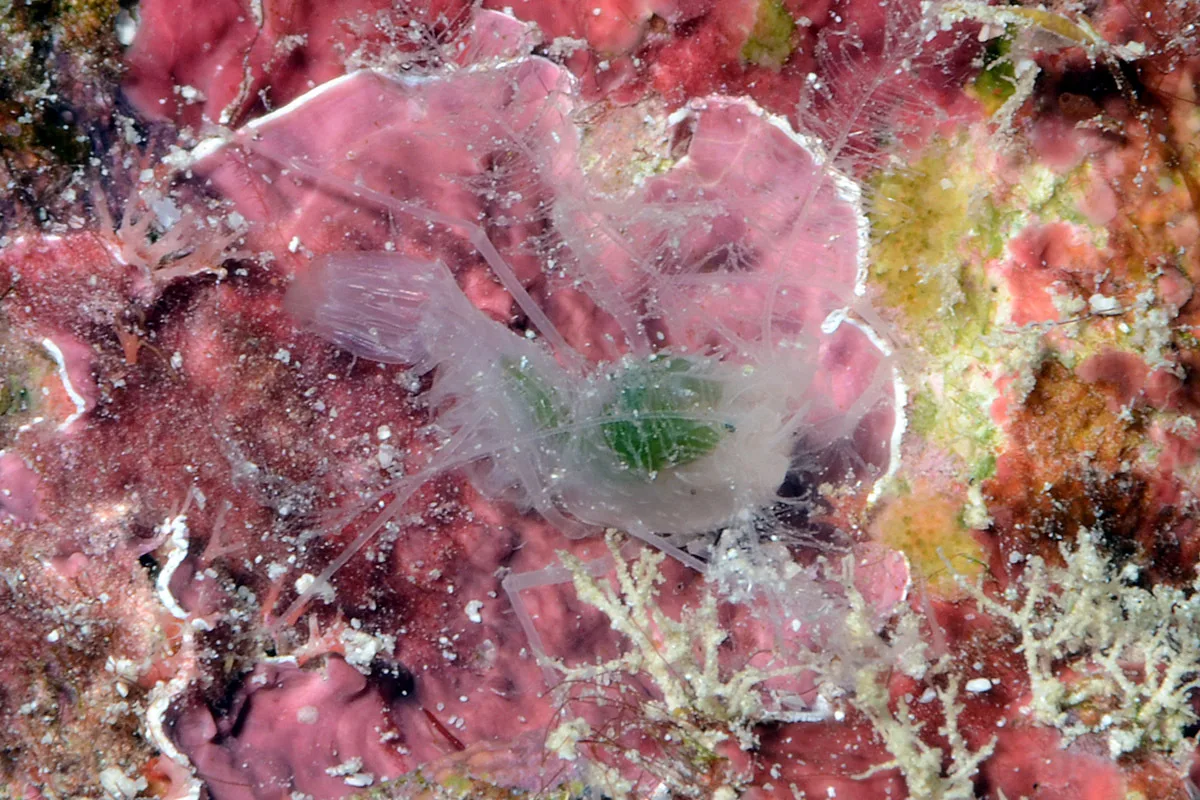
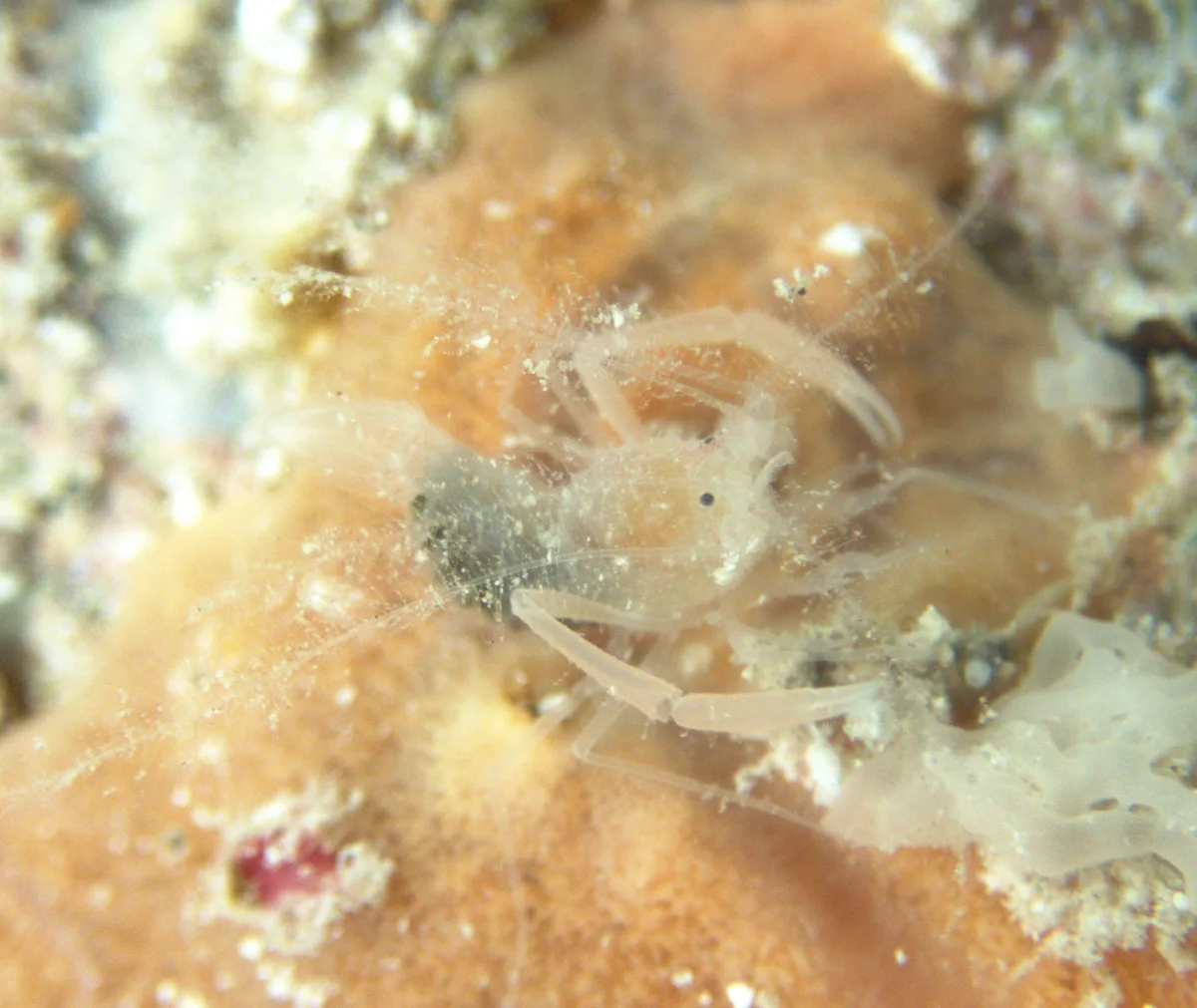
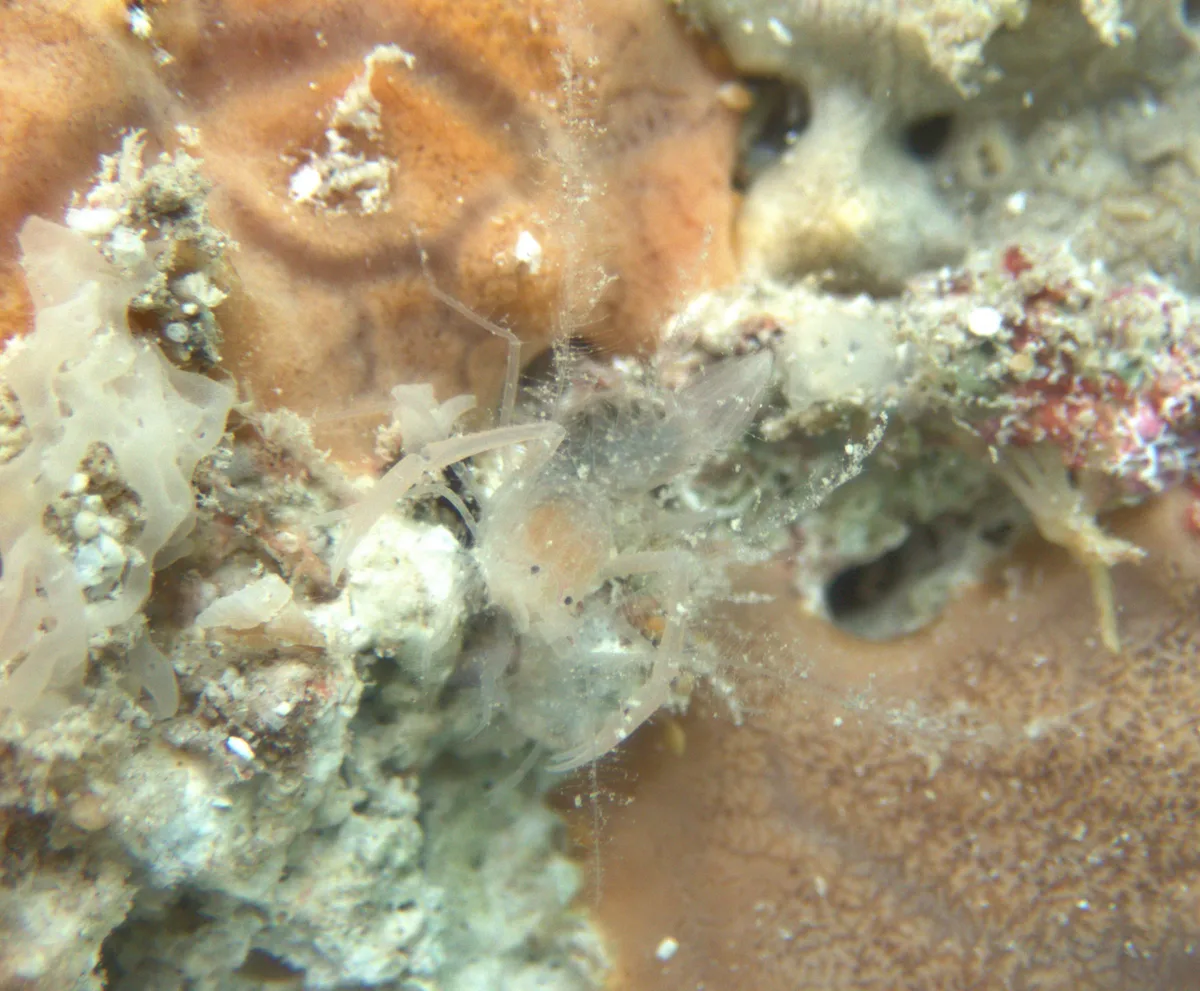
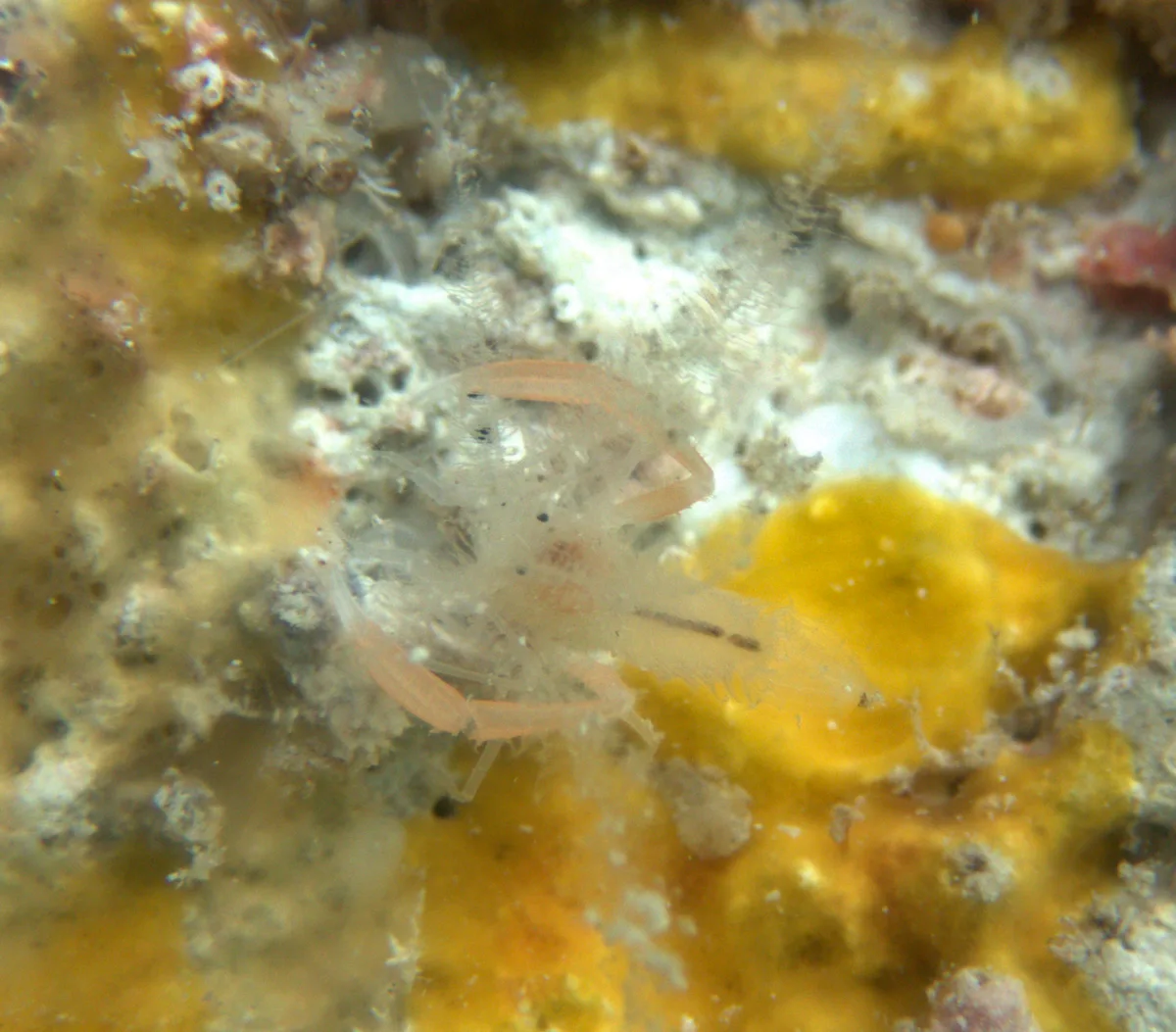
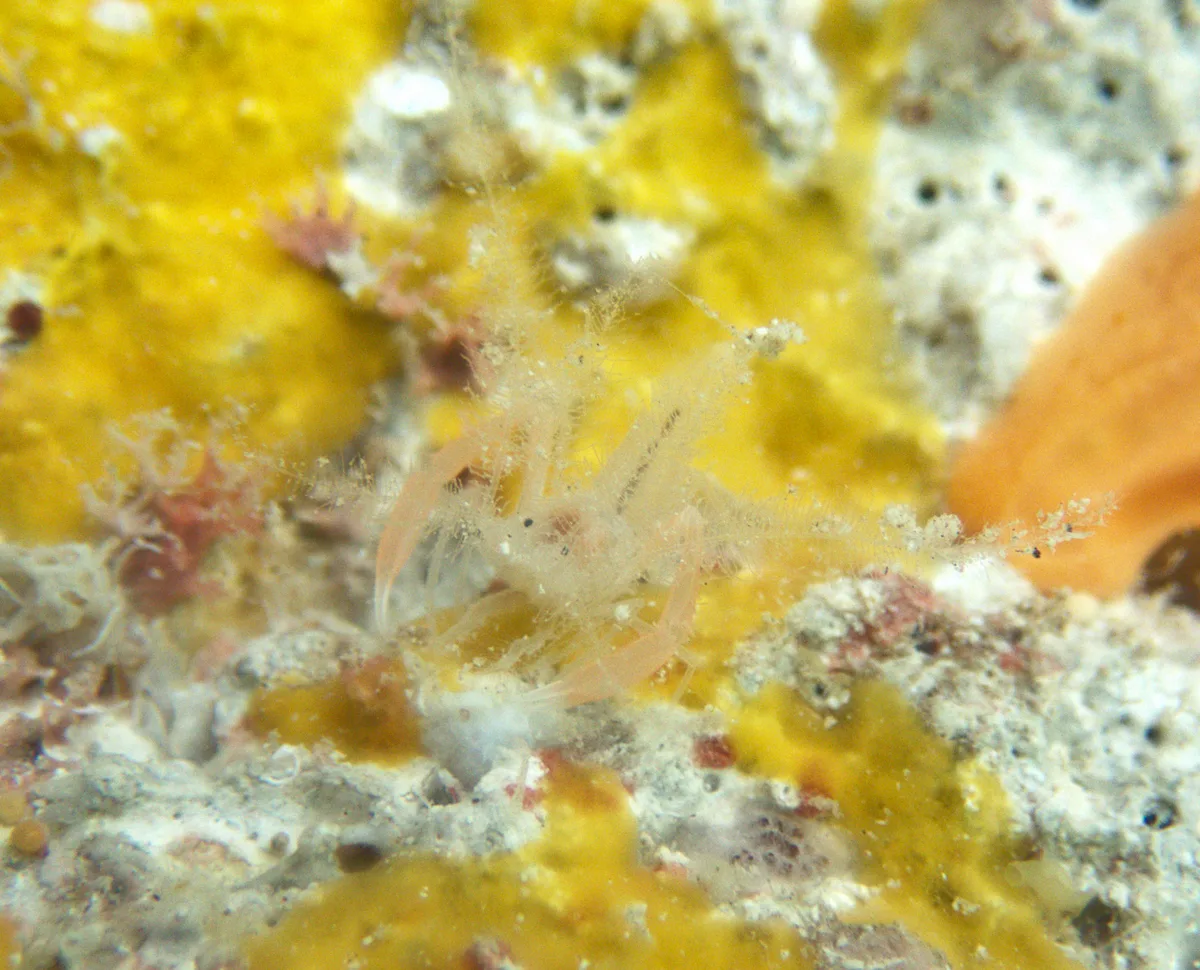
Most of the animals on this page are carideans. This one is not, and the difference is older than it looks.
The boxer shrimp lineage split from the true shrimp a very long time ago and kept a different body plan: the third pair of walking legs is enlarged into the main claws, rather than the first or second, which is why a boxer shrimp appears to be holding its weapons in the wrong hands. The abdomen does not fold in the same way, the gills are built differently, and the group is a separate branch that happens to look shrimp-like because that shape works.
So the word shrimp on this site covers several lineages that converged, in the same way that crab covers a set of animals that independently became crab-shaped.
This one is a small, feathery, banded stenopodid of caves and crevices, usually in pairs like most of its family, and it is rarely found because it is nocturnal, tiny, and lives in exactly the holes people do not put their lights into.
- third pair of legs much larger than the others, carried forward
- banded body with feathery tufts on the antennae and legs
- in crevices and under ledges, usually in pairs
- up to 5 cm