
Put your head underwater near a rubble bottom and listen. That constant crackle, like fat in a pan or rain on a roof, is not water moving. It is snapping shrimp, thousands of them, and in shallow tropical and temperate seas it is the loudest continuous sound in the ocean.
It was loud enough to matter. During the Second World War, submarines discovered that shrimp beds jammed sonar completely, and both sides learned to hide in them: a boat sitting over a shrimp bottom was effectively inaudible. The US Navy funded serious research into the noise, which is how a small burrowing crustacean ended up in the acoustics literature.
The sound is not the claw striking itself. The claw slams shut fast enough to fire a jet of water that boils from sheer speed, and the collapse of that bubble is the crack. One shrimp is a sharp click. A reef flat of them is weather.
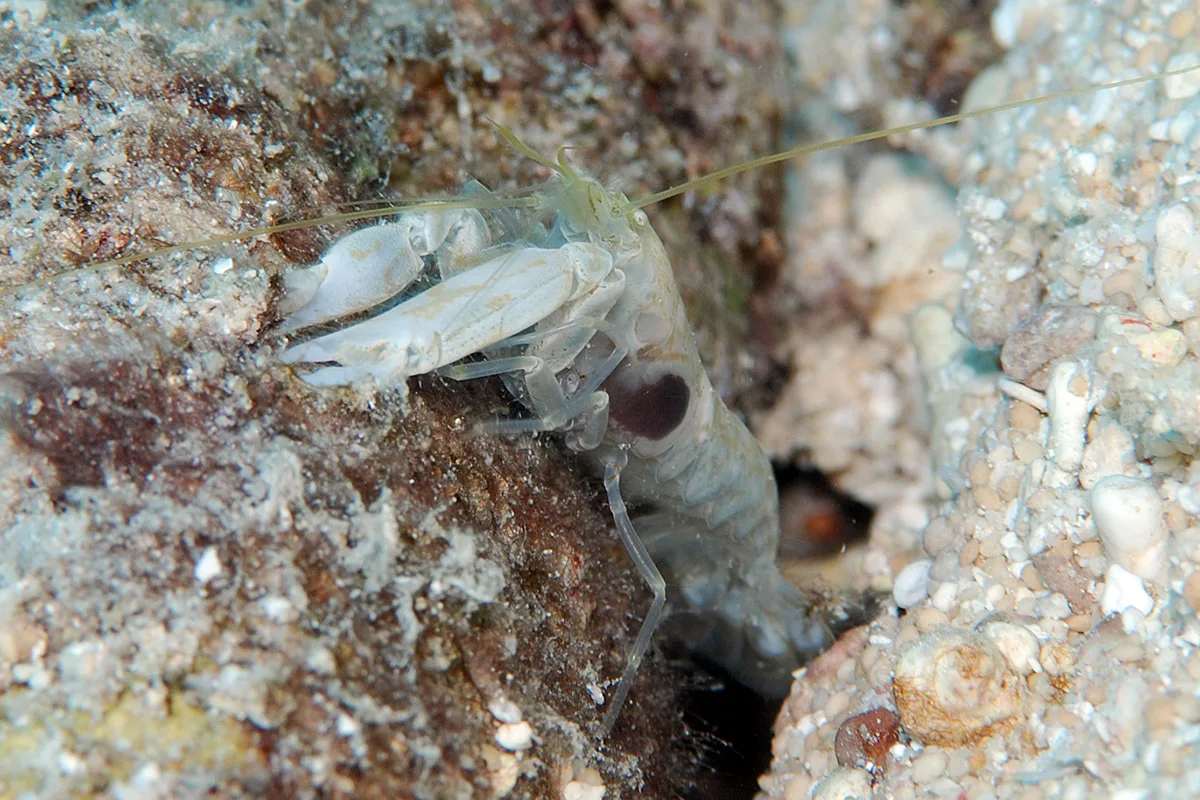
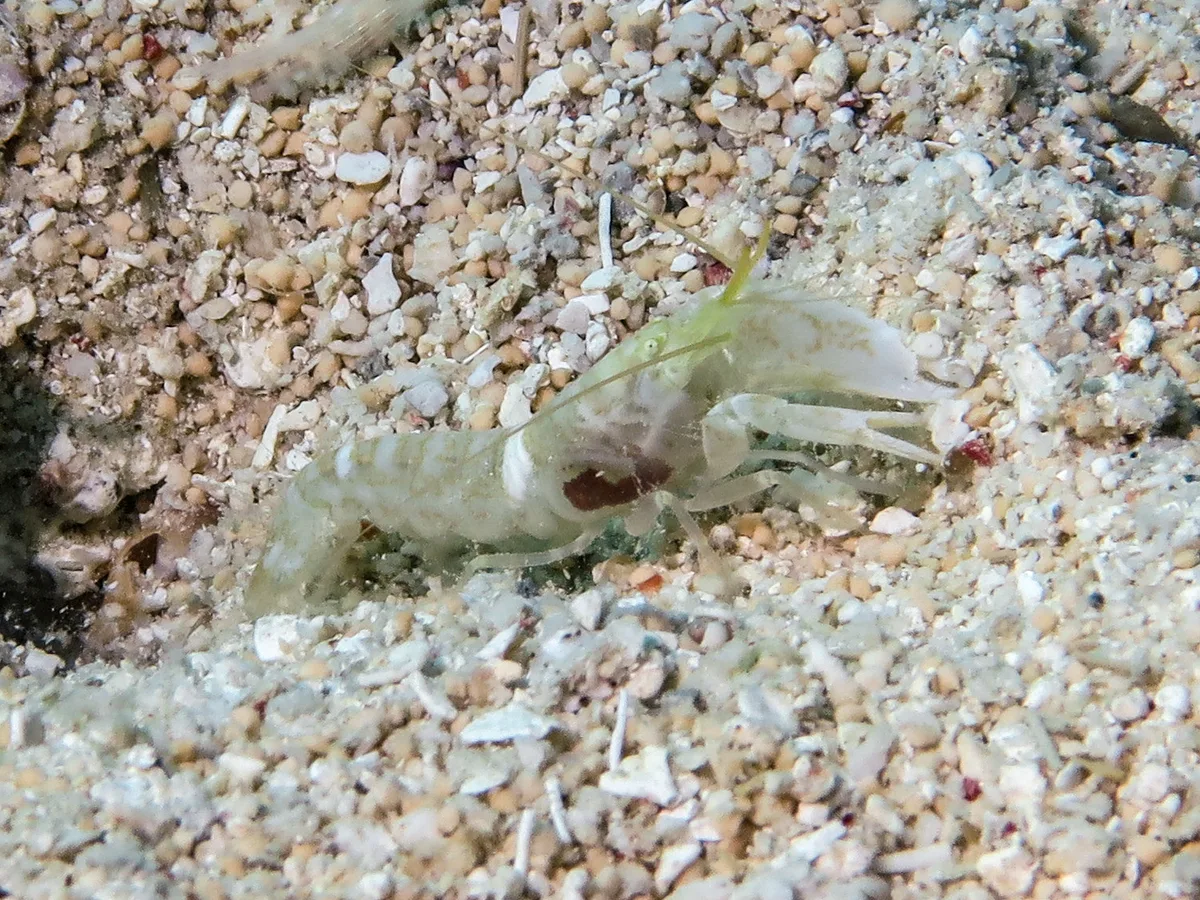
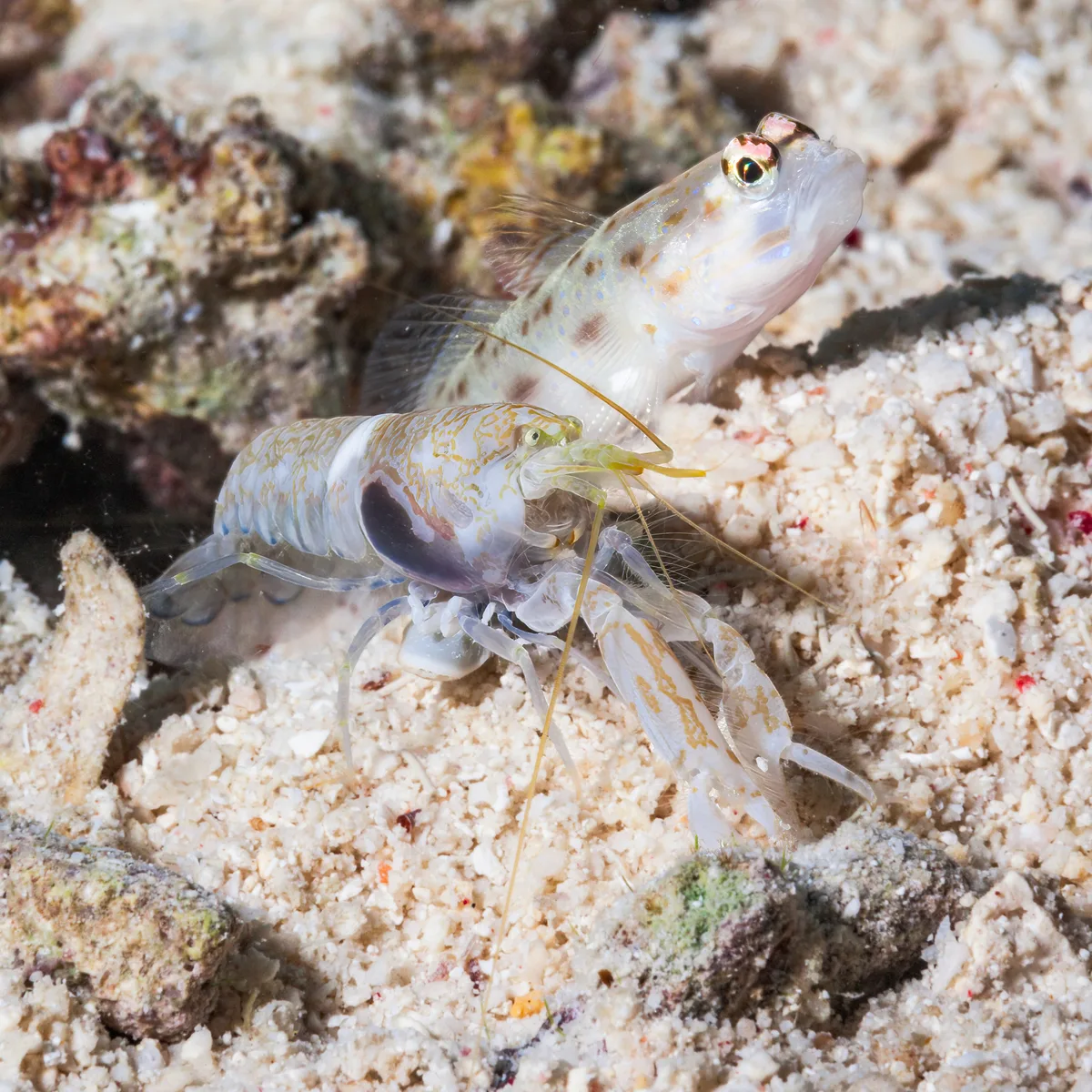
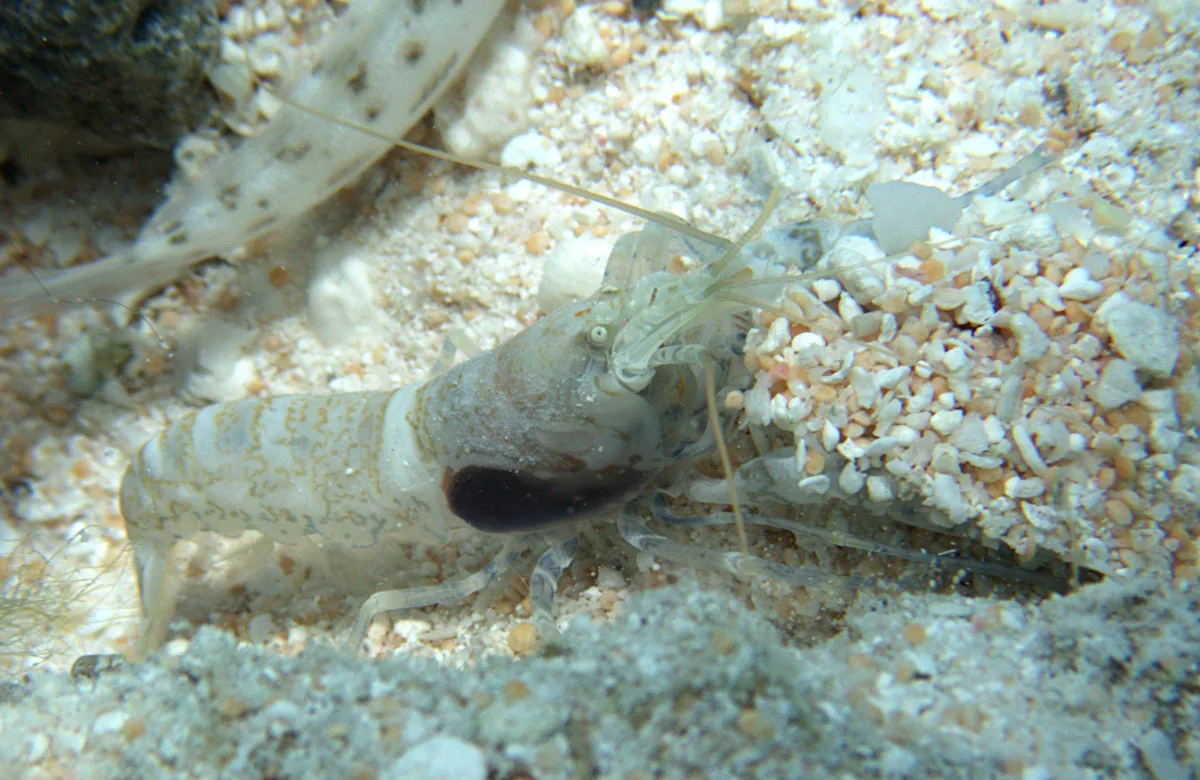
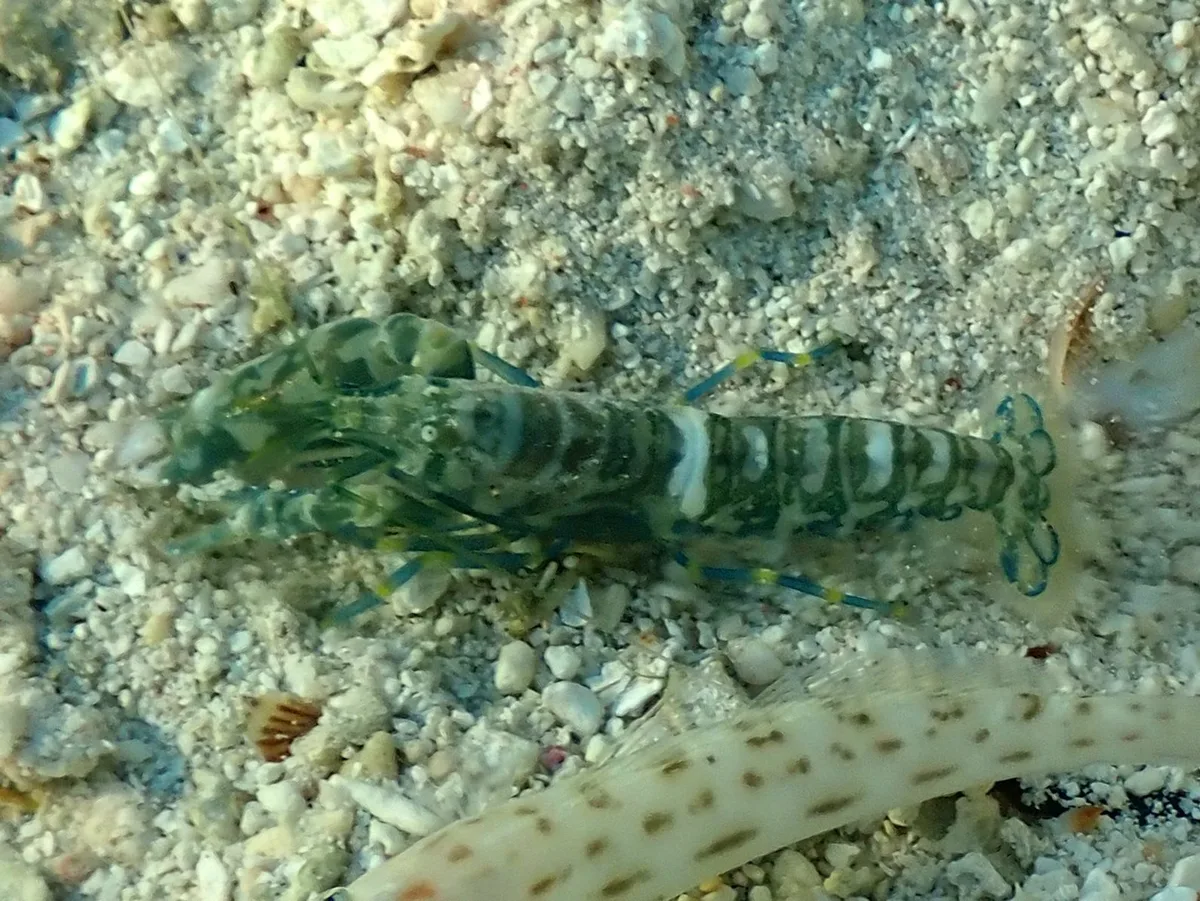
This species is named for Jeddah, on this coast, and lives in the top few meters in burrows in rubble and seagrass.
- one claw hugely enlarged, the other small
- banded or mottled body, usually only the claw showing from a hole
- audible before it is visible
- up to 5 cm