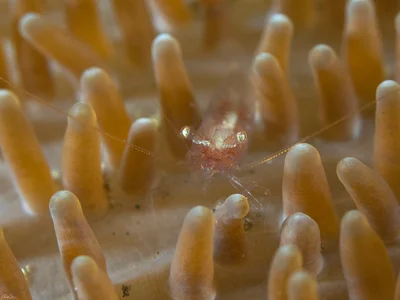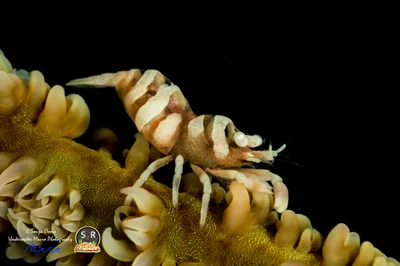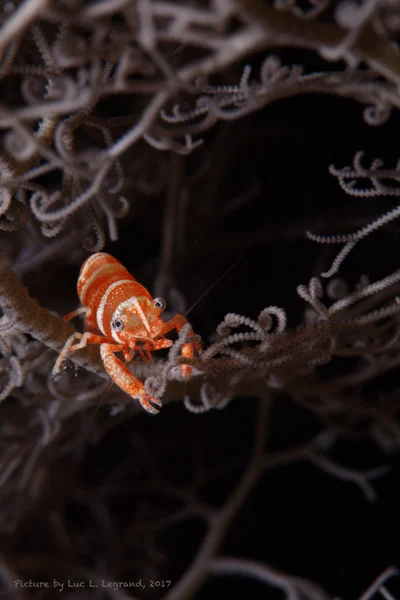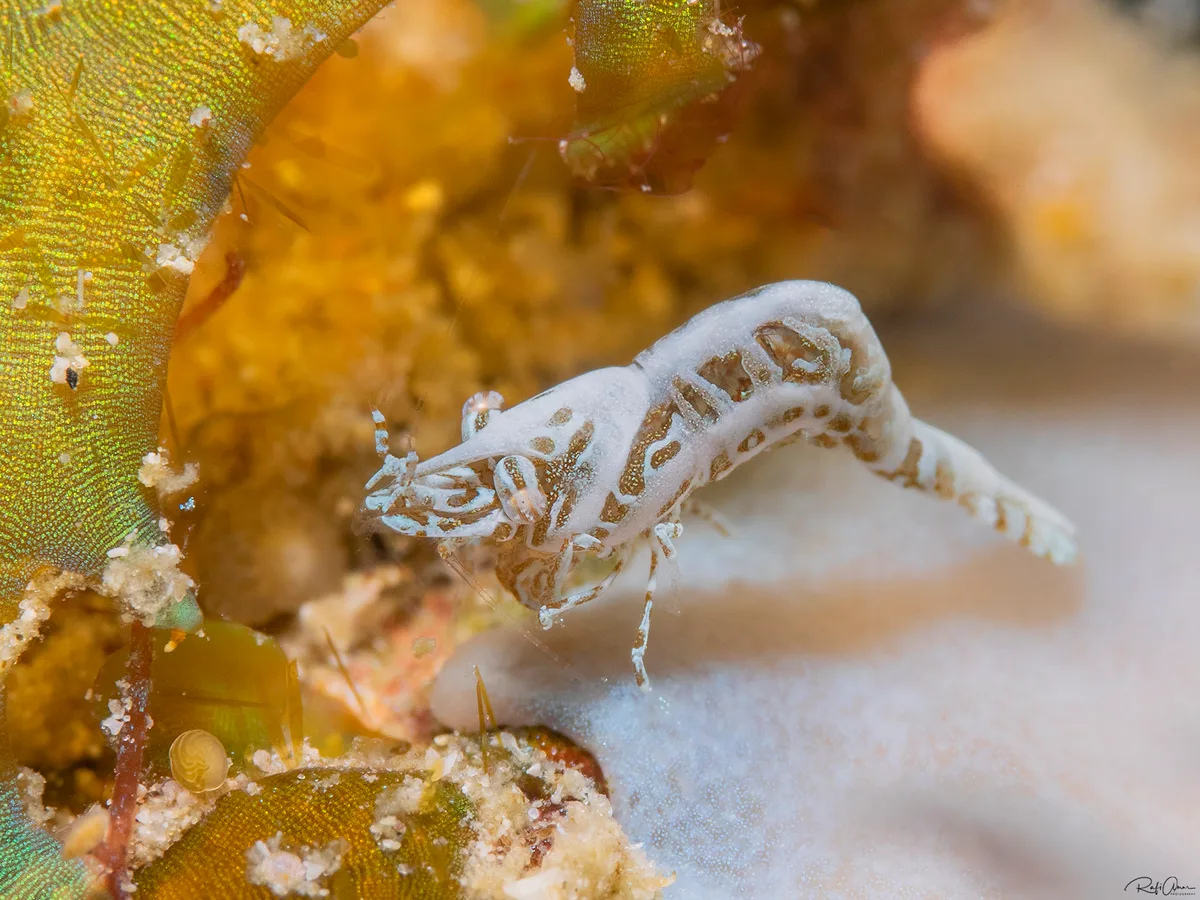
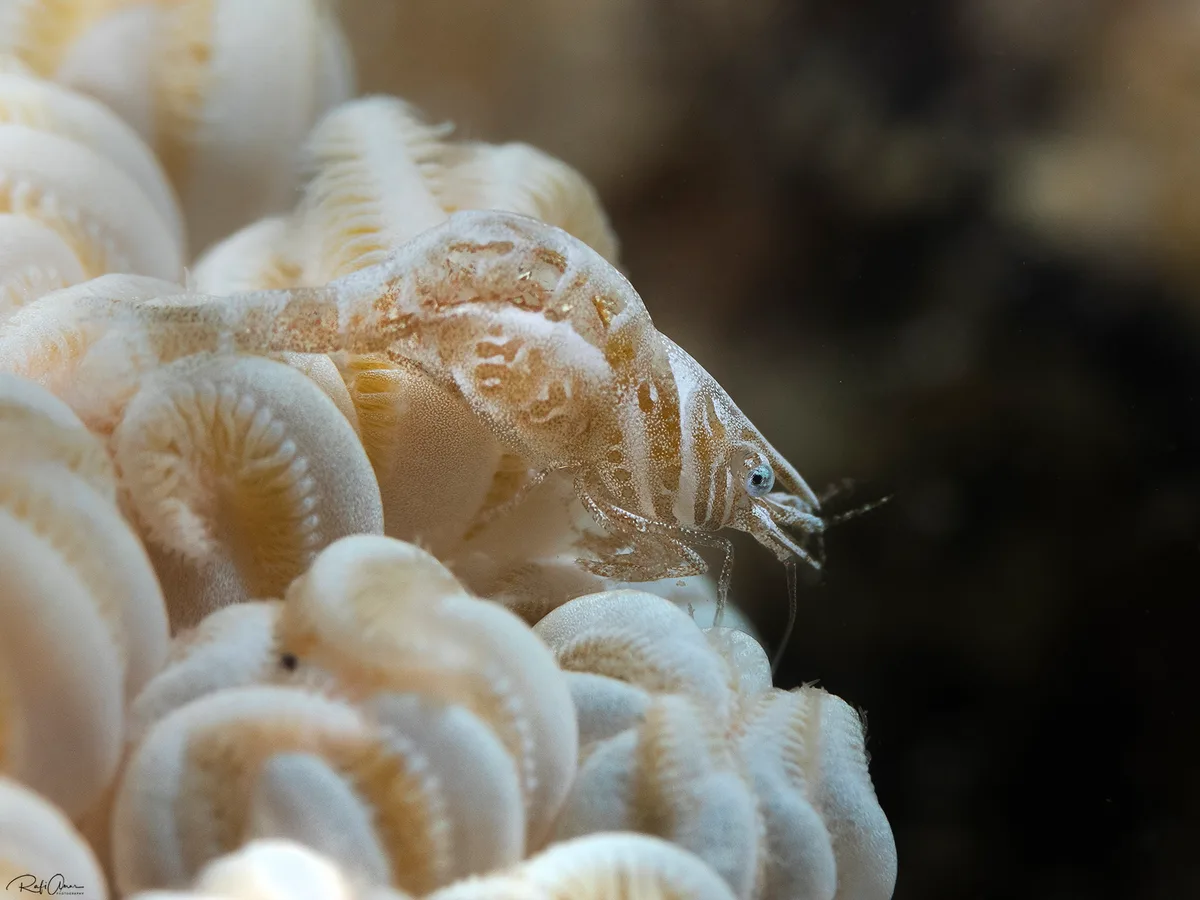
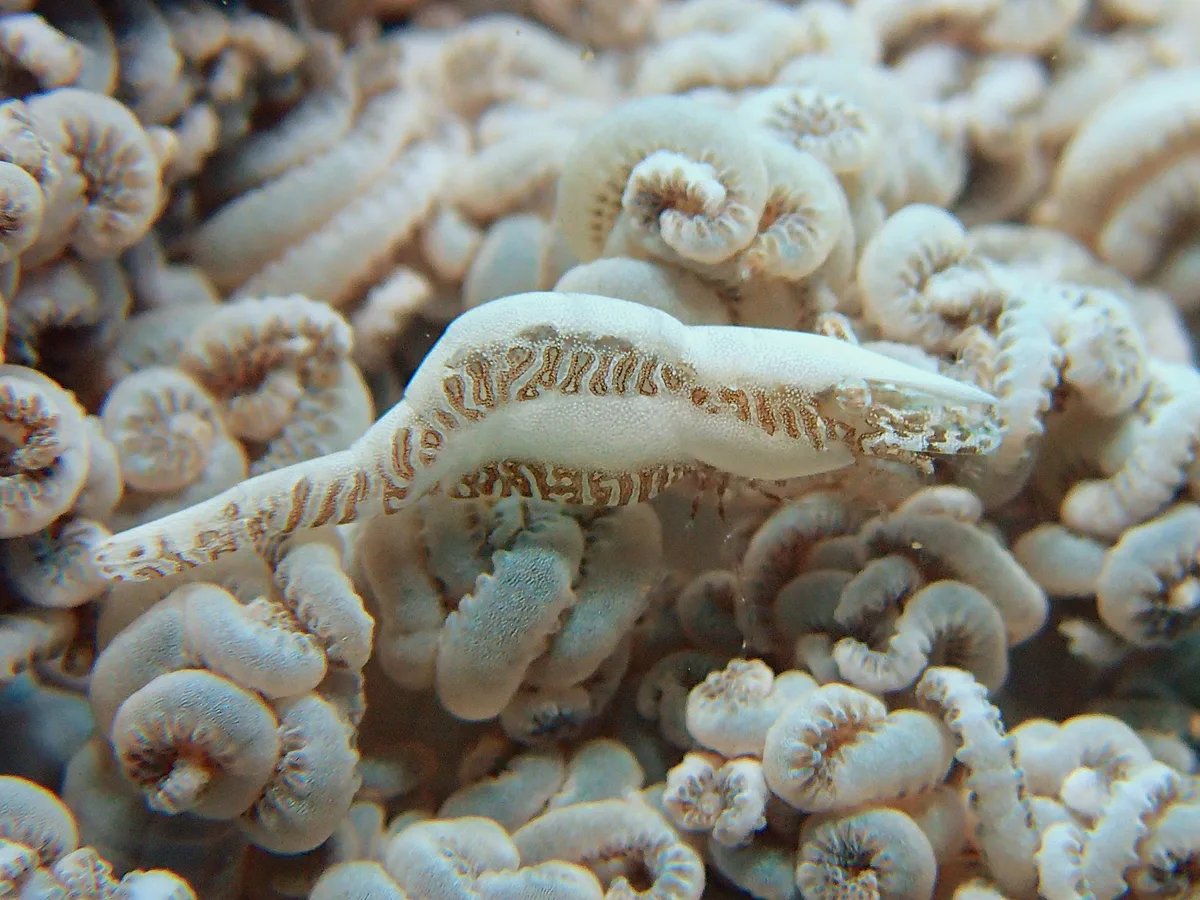
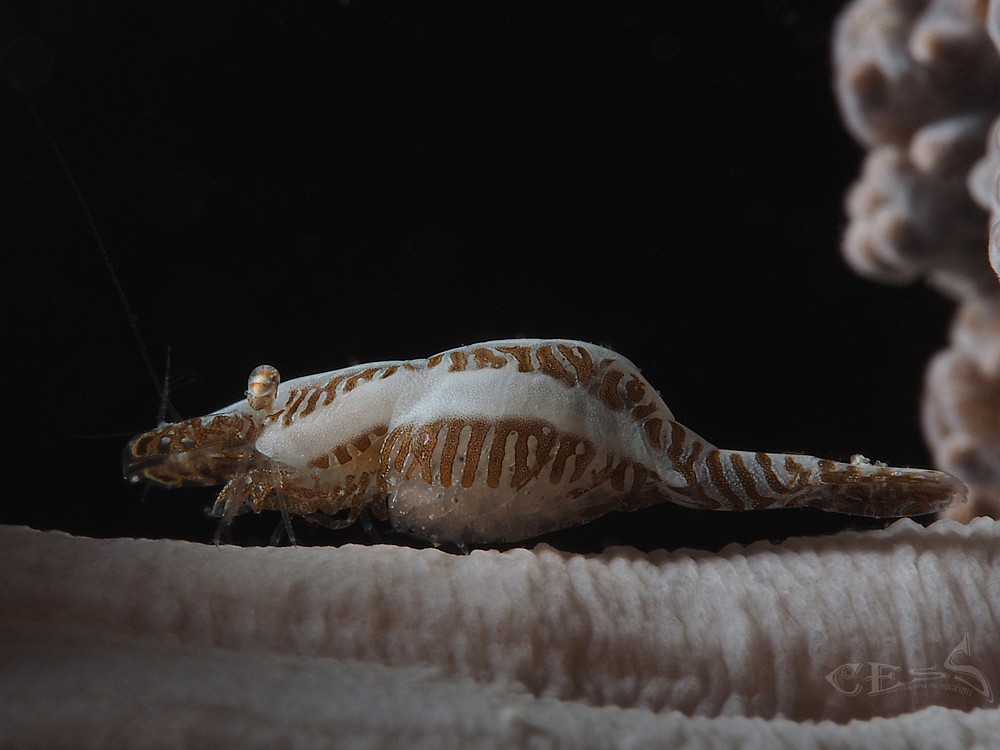
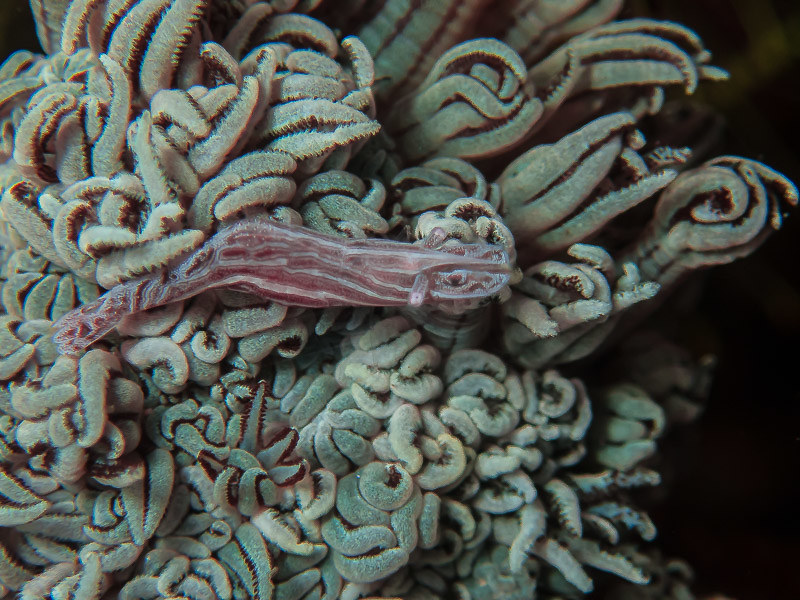
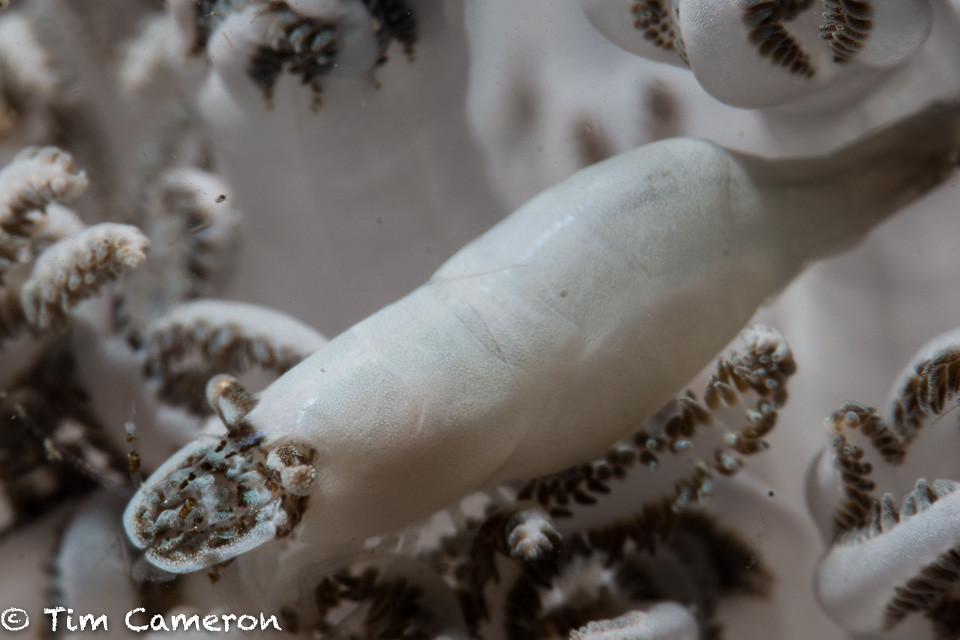
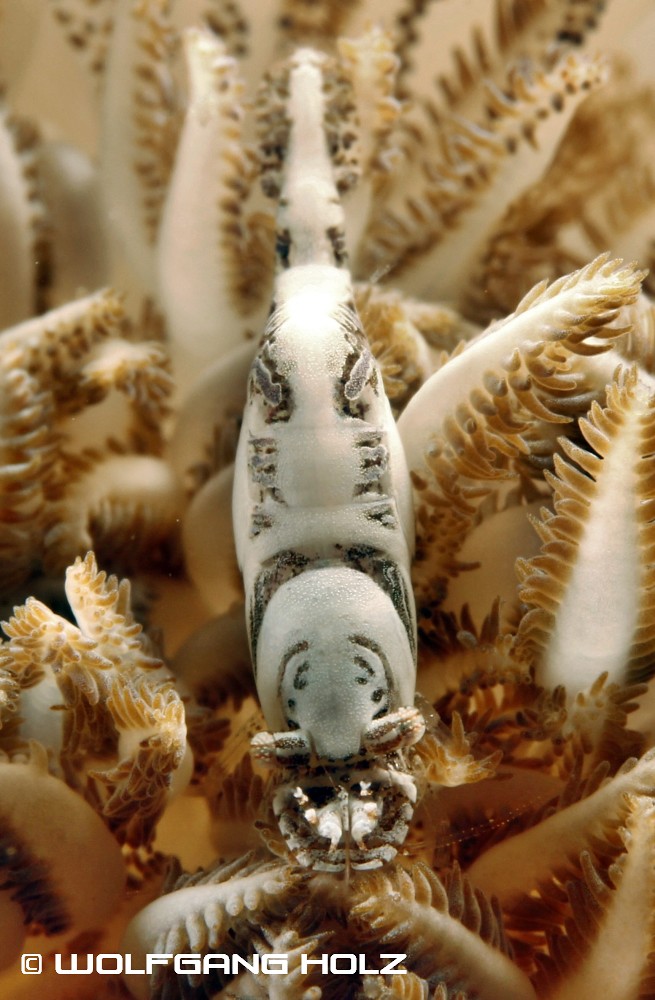
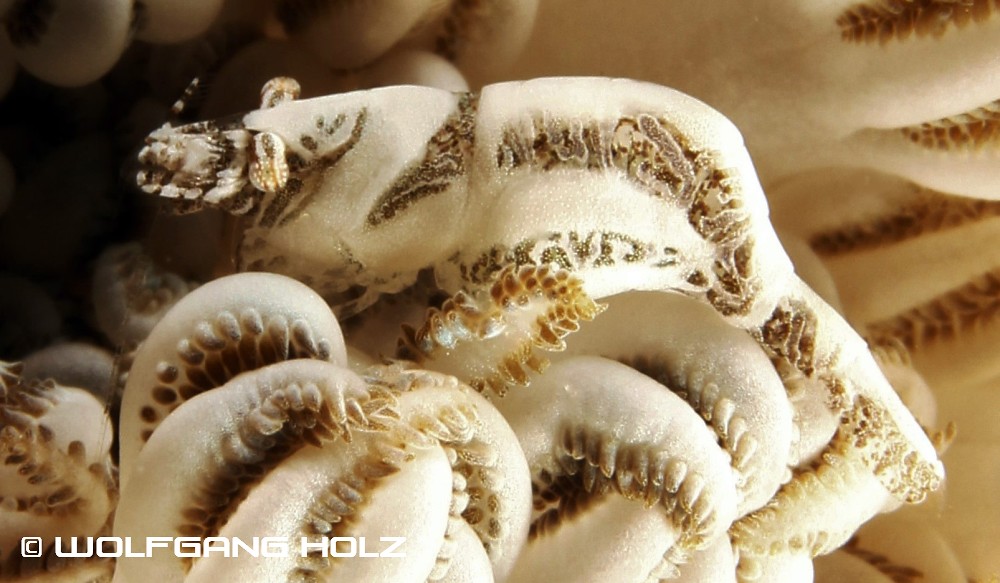
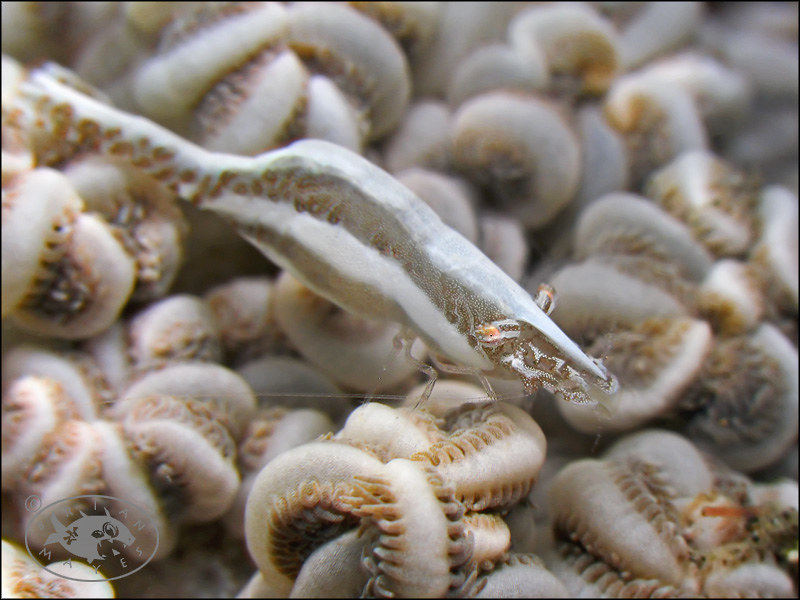
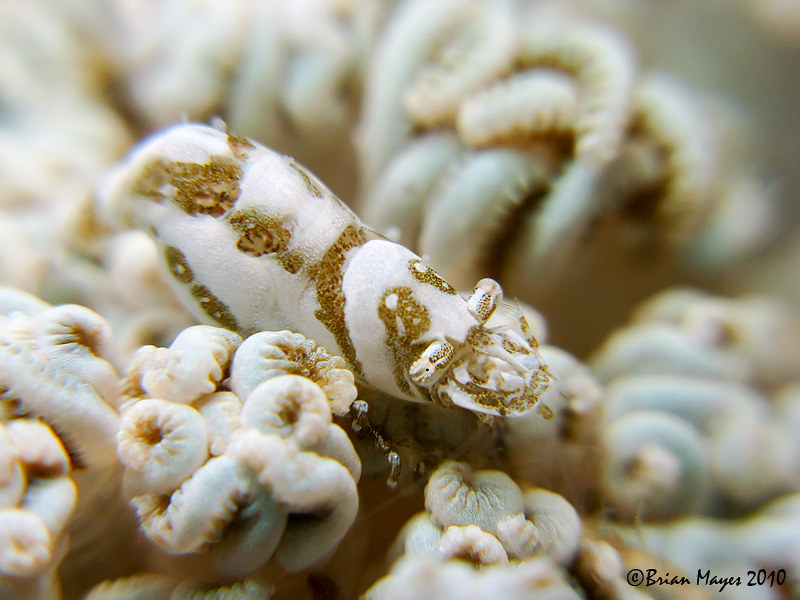
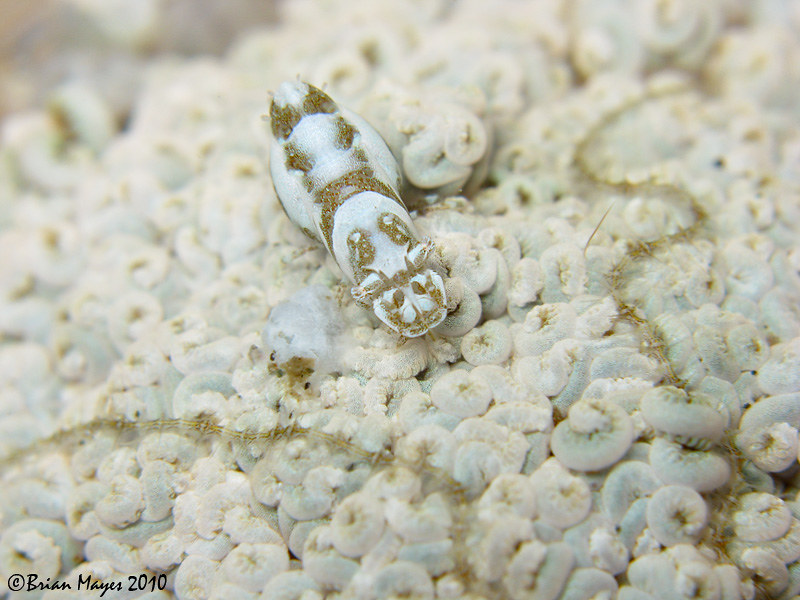
Two centimeters (0.8 in) of translucent shrimp living on a xenia - the soft coral whose polyps open and close in a slow, continuous pulse, one of the strangest things to watch on a reef.
The shrimp does not fight the movement. It sways with the colony, matching the rhythm, which is what makes it invisible: an animal holding still on a moving background is far more obvious than one moving with it. Divers stare at pulsing xenia for minutes without seeing the shrimp on it.
It feeds on mucus and trapped particles from the host and cleans debris off the polyps, an arrangement that costs the coral almost nothing.
Why xenia pulses at all is still argued: the best evidence is that the motion sweeps away oxygen building up around the tissue, which improves the photosynthesis of the algae living inside it. The shrimp is simply a passenger on a very unusual machine.
- small translucent shrimp with white and brown markings
- sits among the pulsing polyps of a xenia colony
- sways with the colony rather than holding still
- length up to 2 cm