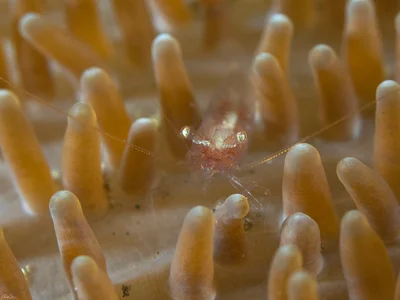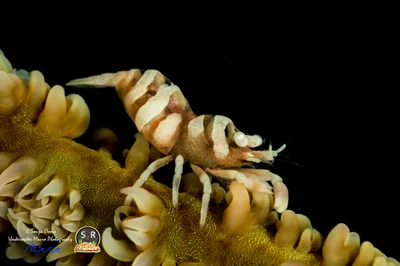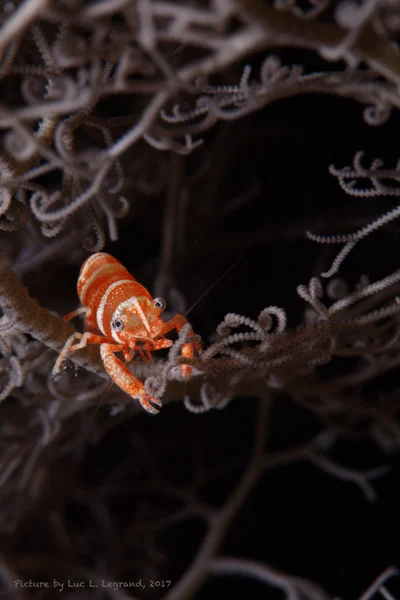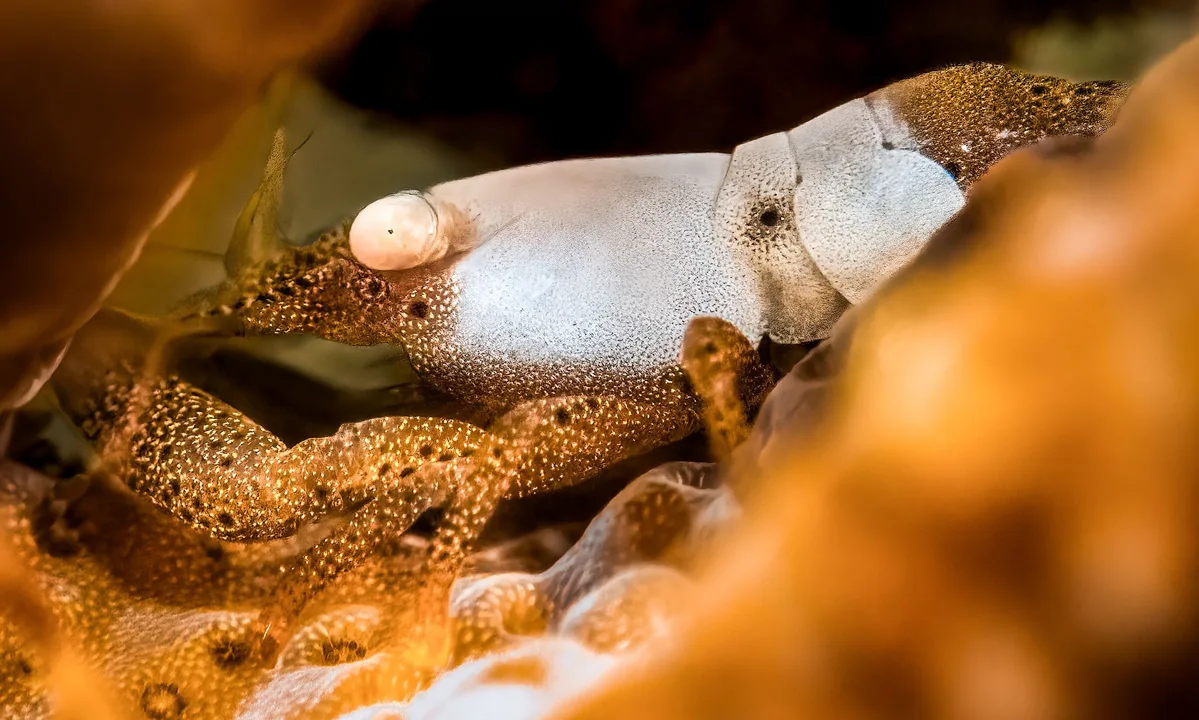
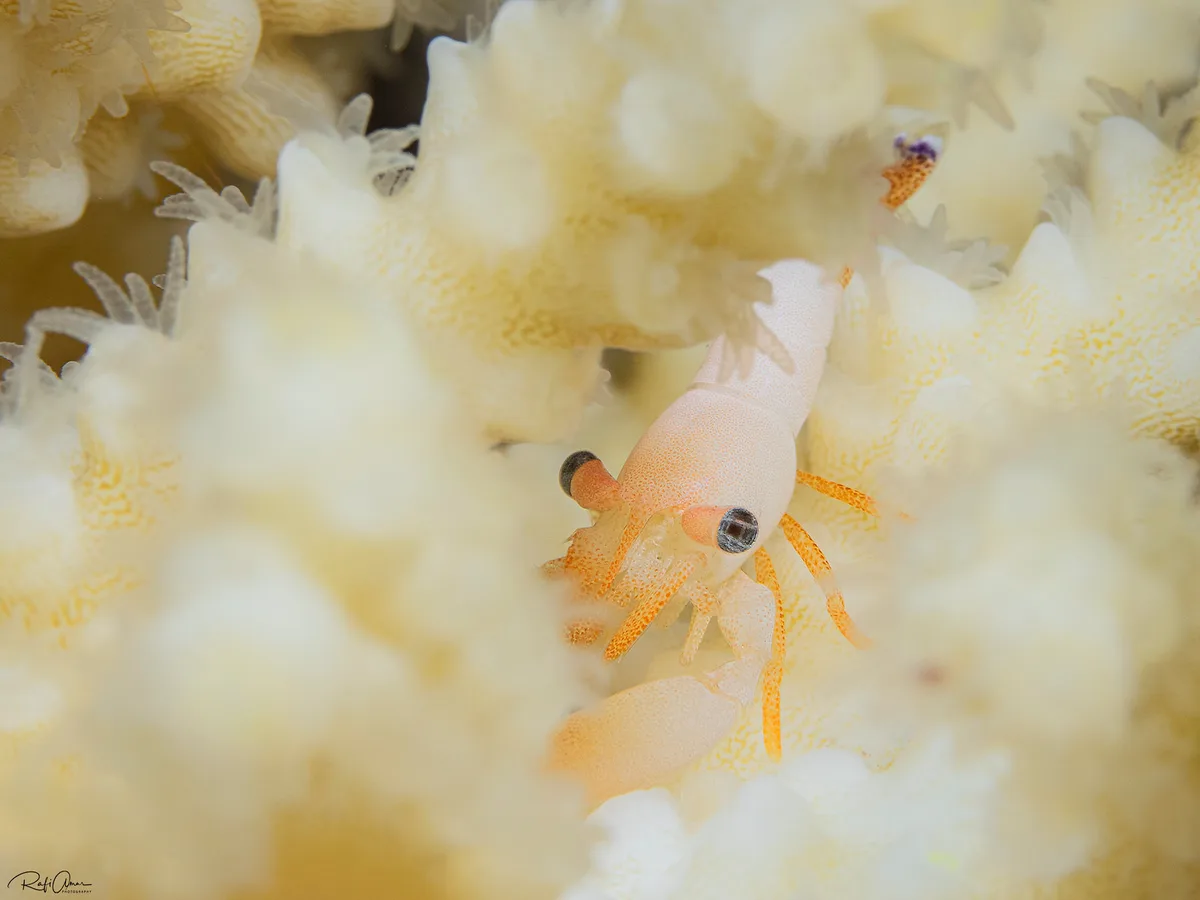
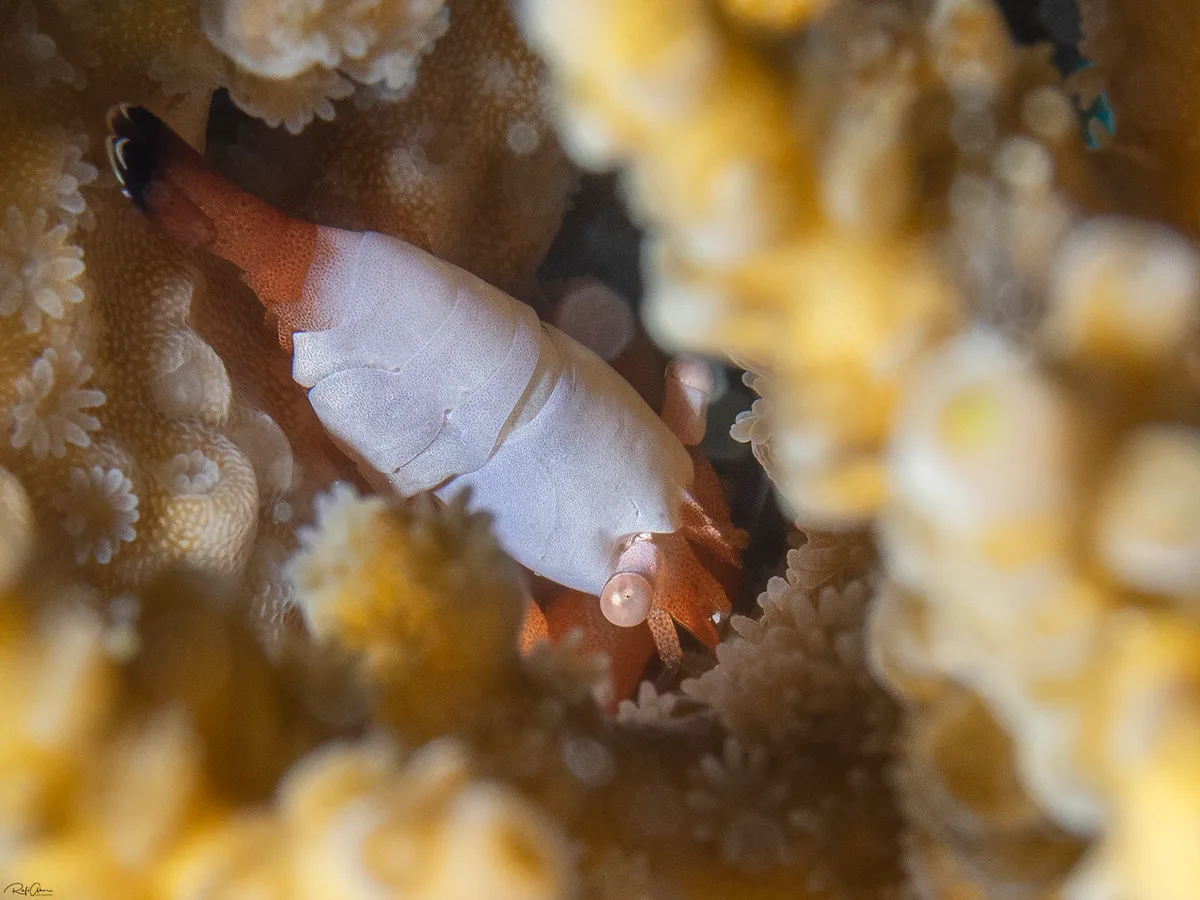
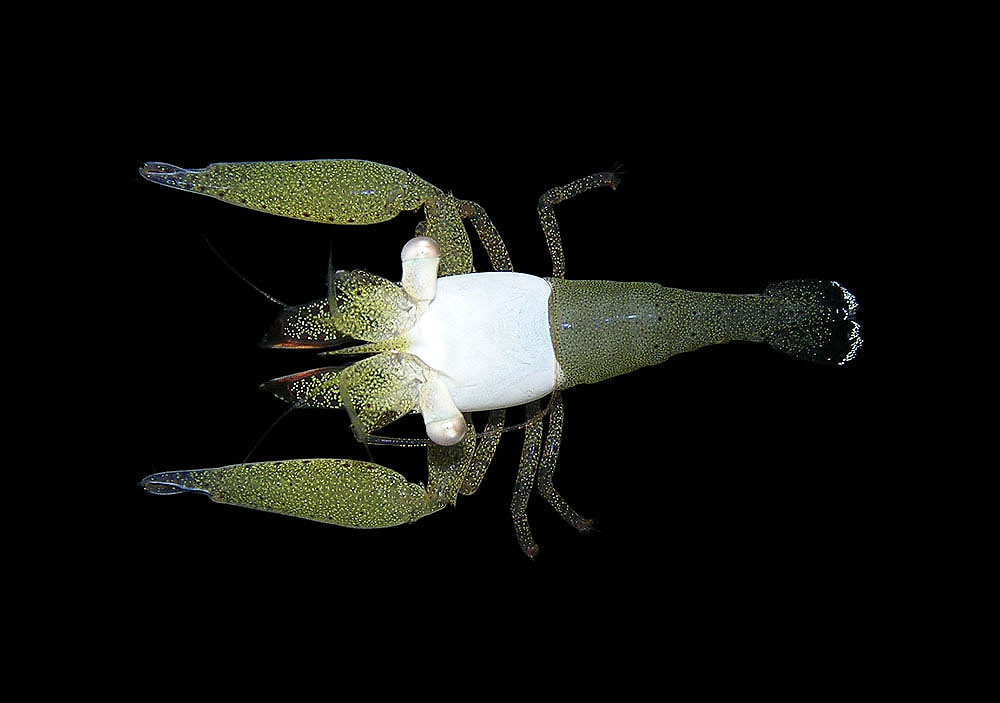
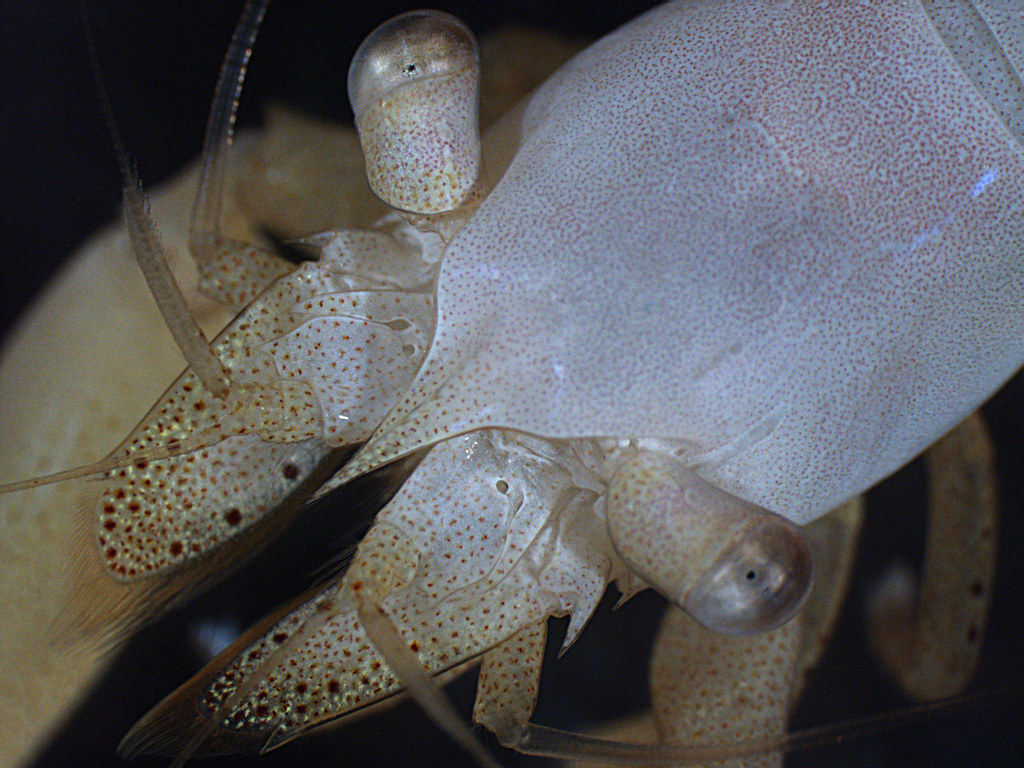
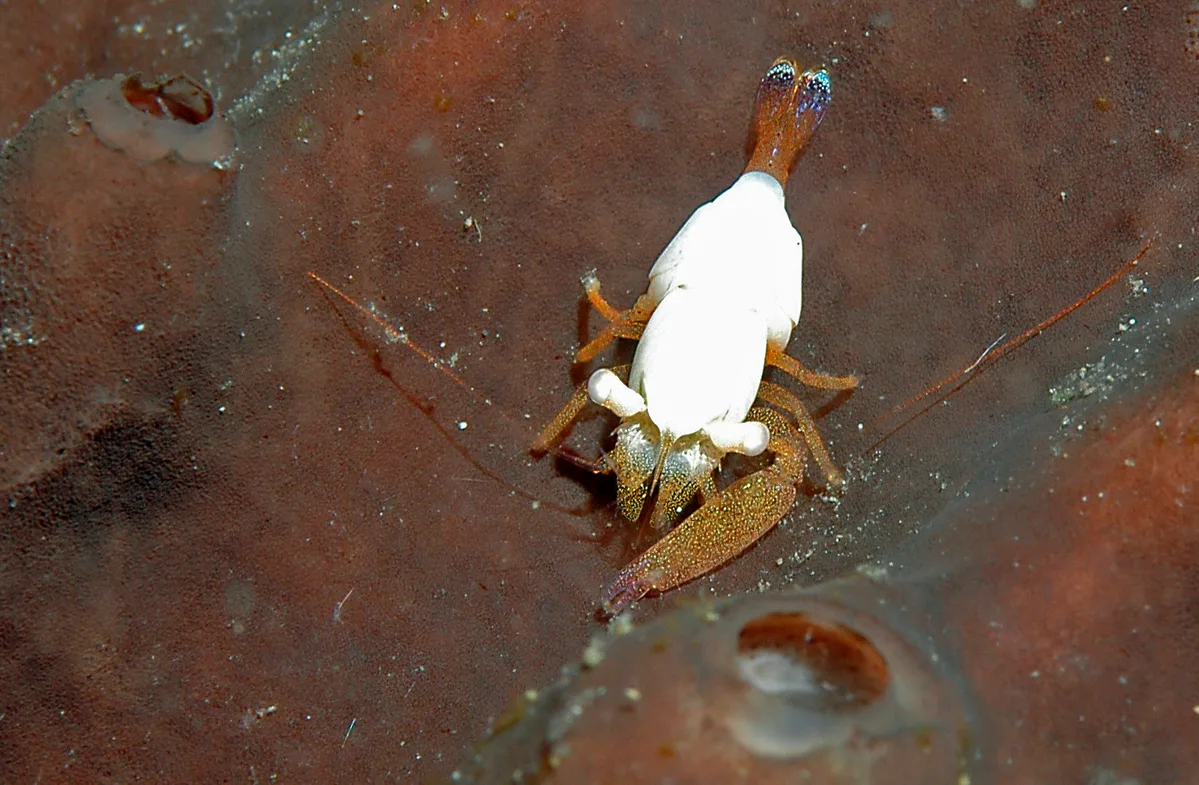
It lives inside a coral head in moving water, and the problem that solves everything else is grip.
The walking legs of these shrimp end in hooks: sharp, strongly curved dactyls that catch on the coral surface and hold. That sounds minor and it is not. A one-centimeter animal inside a branching Acropora in surge is subjected to water moving back and forth several times a minute, and anything that loses its footing is out in the open and gone. With hooks it can sit through it and even walk against it.
The rest of the arrangement follows. It never leaves the colony, it eats mucus and the material the coral traps, and it does not need camouflage in open water because it is never in open water.
So the shrimp is effectively a part of the coral, and if the colony bleaches and dies the shrimp does not relocate. Surveys after bleaching events find the coral-obligate crustaceans disappearing along with their hosts, which is a quiet part of what a reef loses in a hot summer.
- one centimeter, green to olive with white markings
- deep inside branching coral, never in the open
- claws large for the body
- up to 1 cm