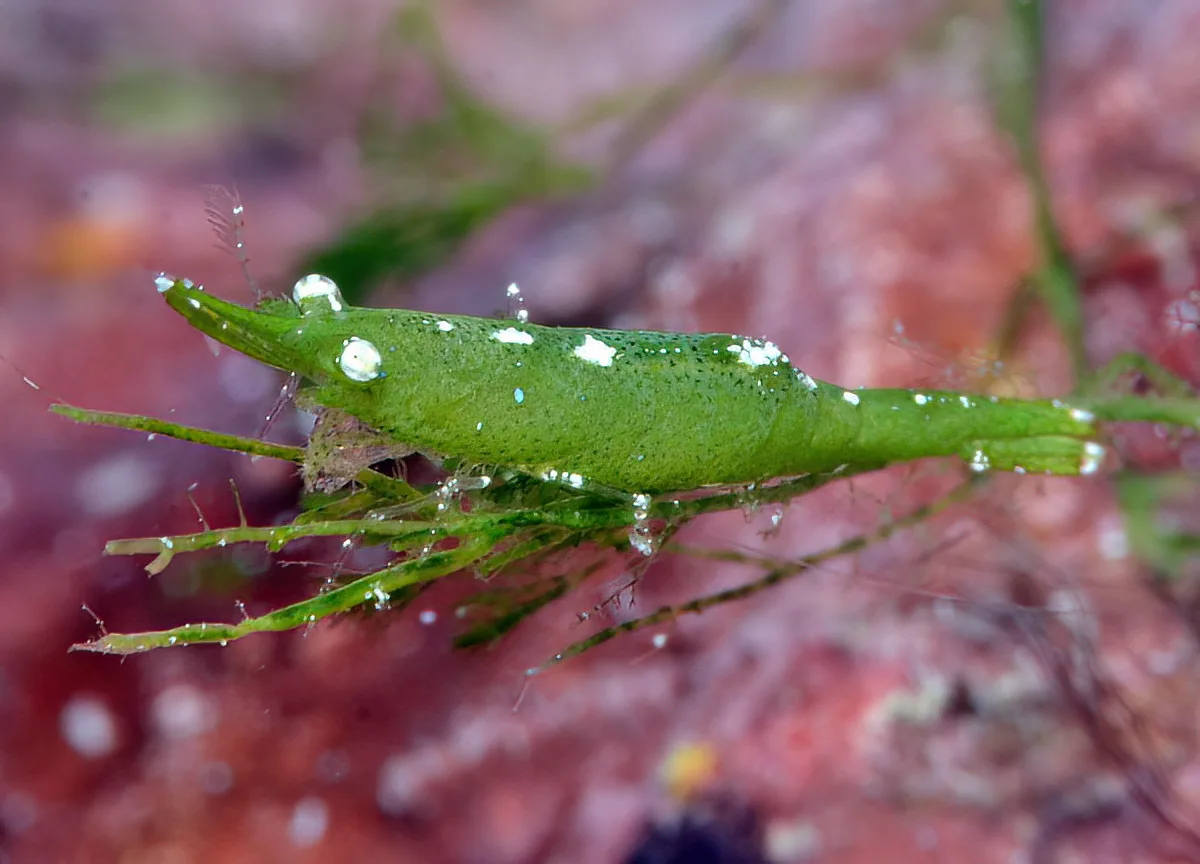
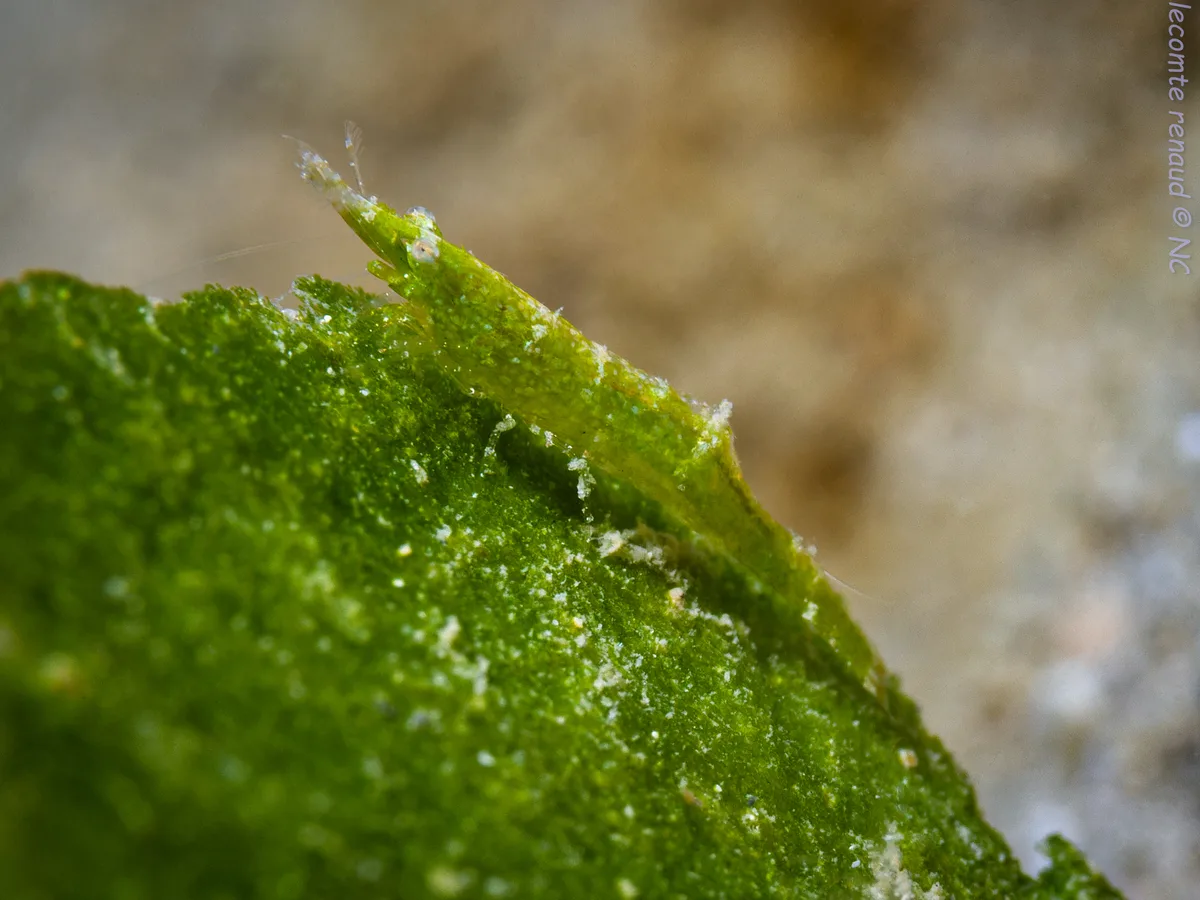
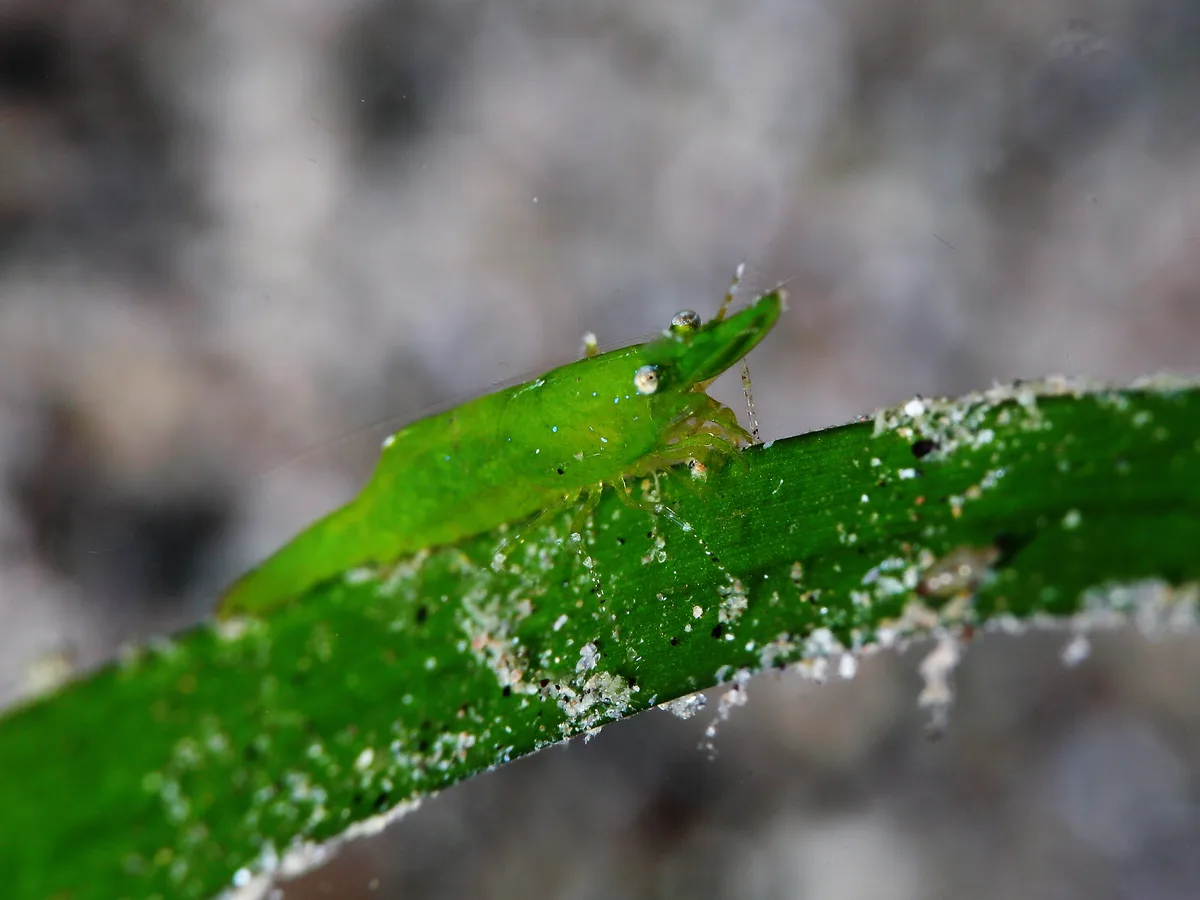
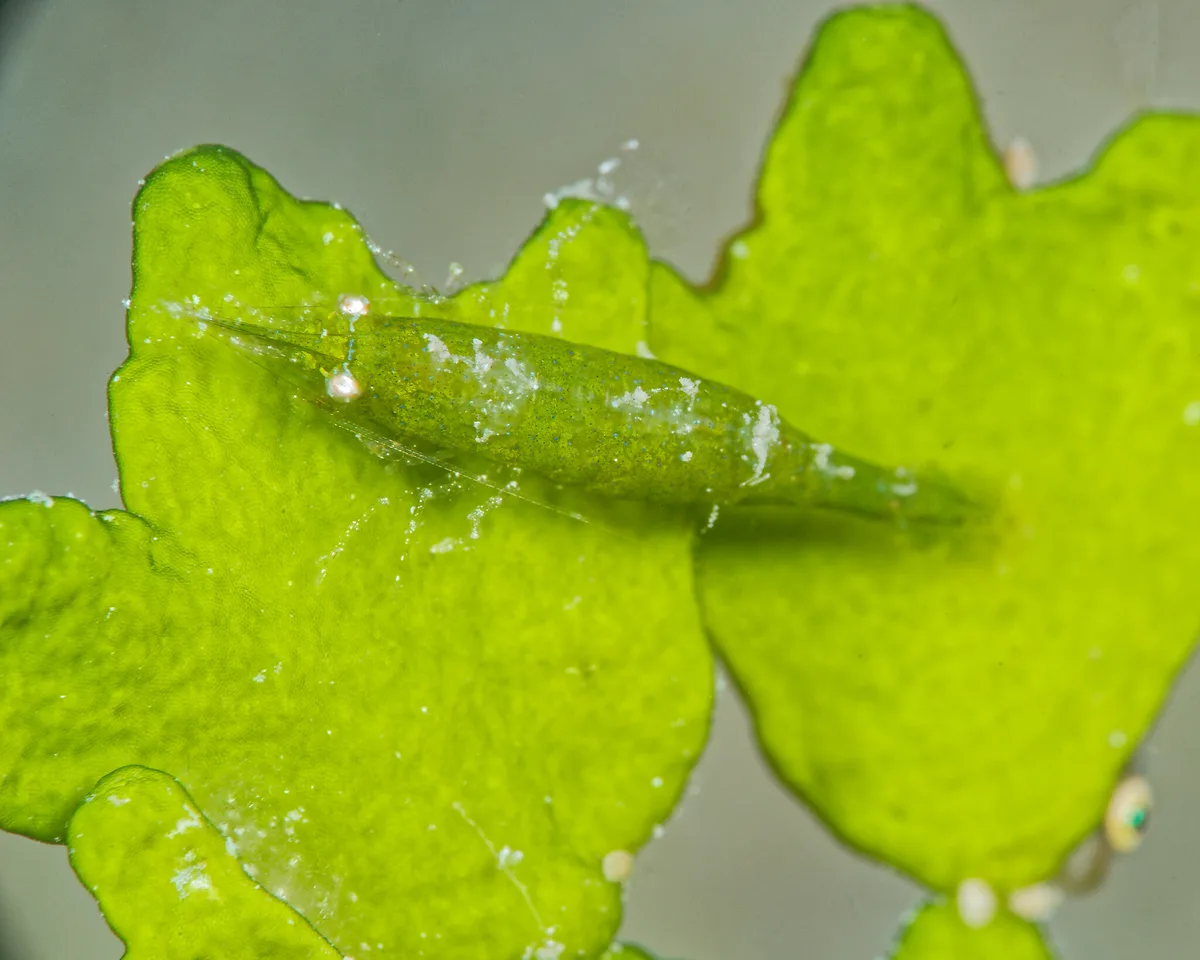
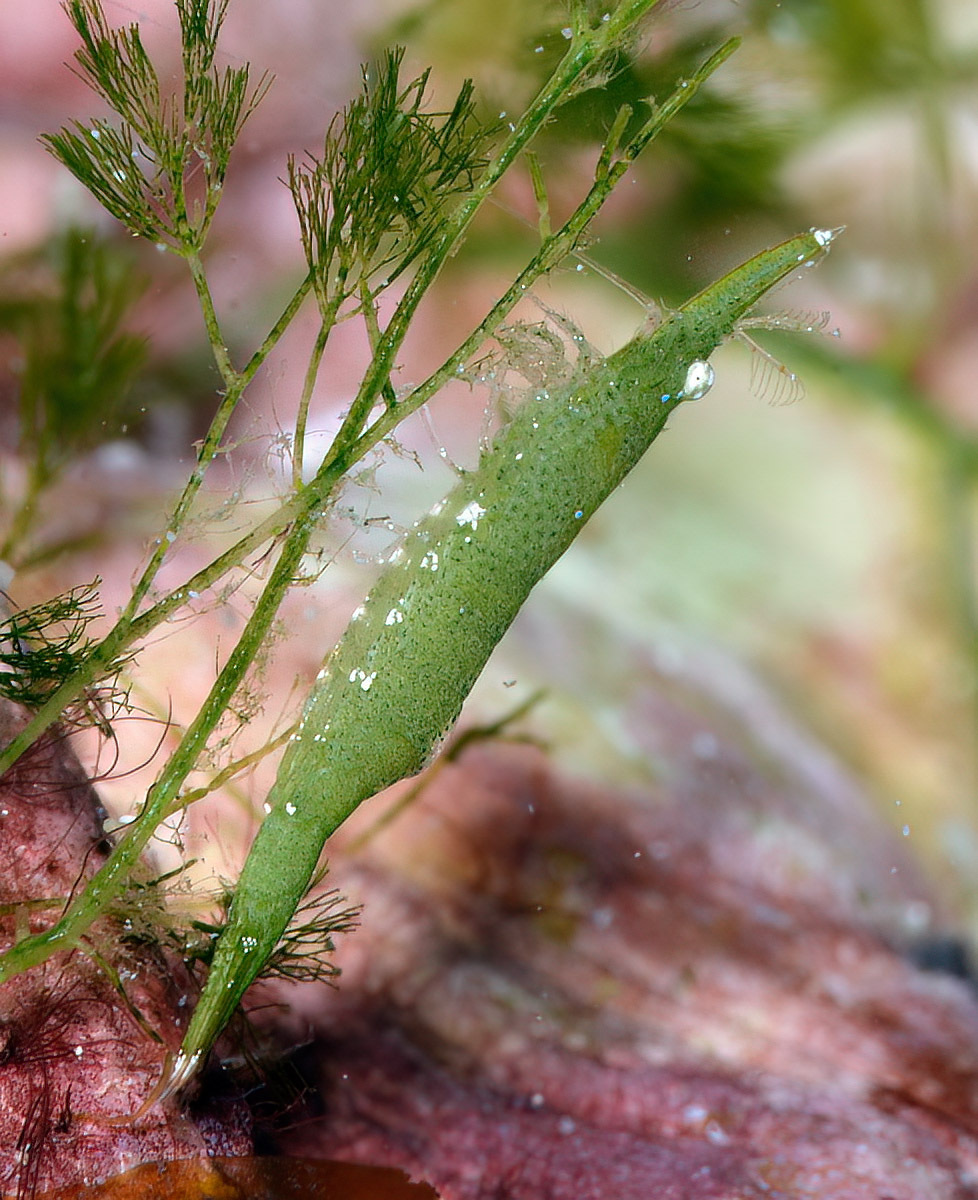
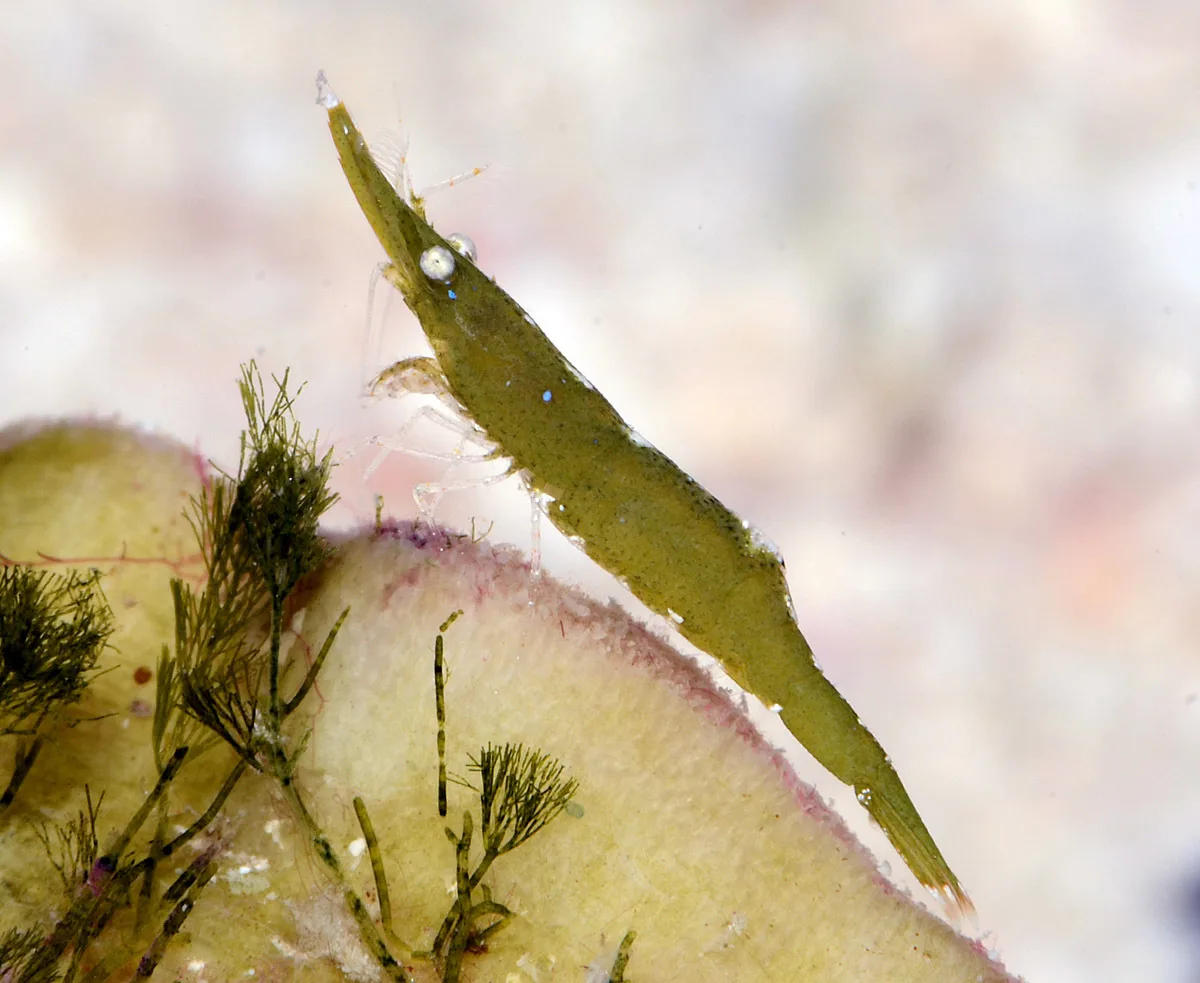

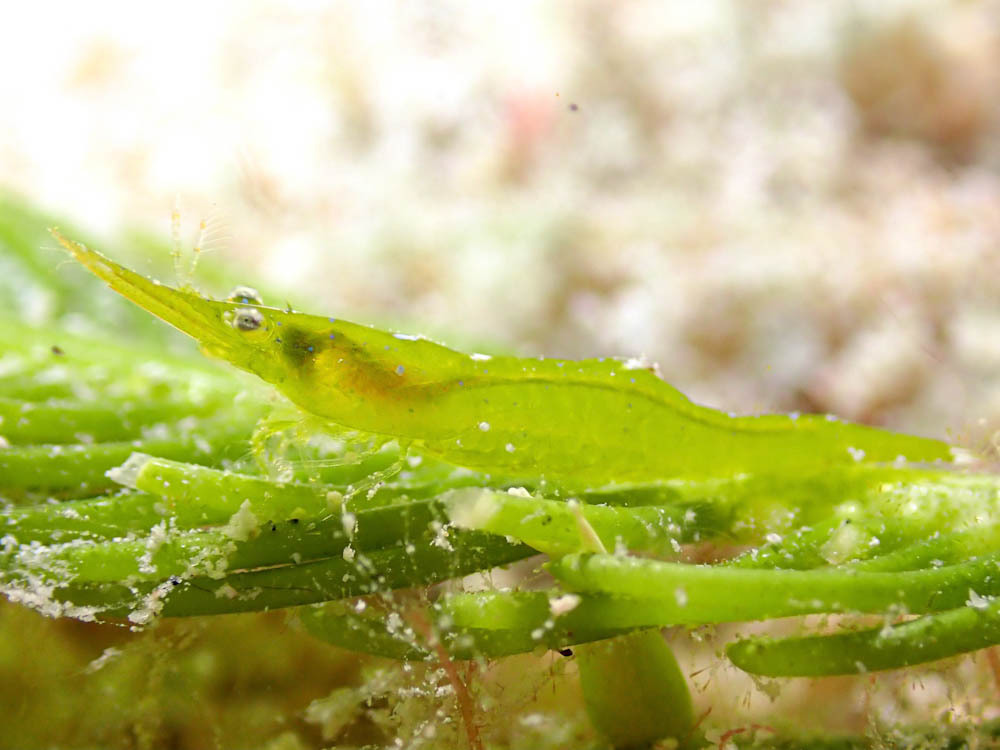
The nose is a leaf.
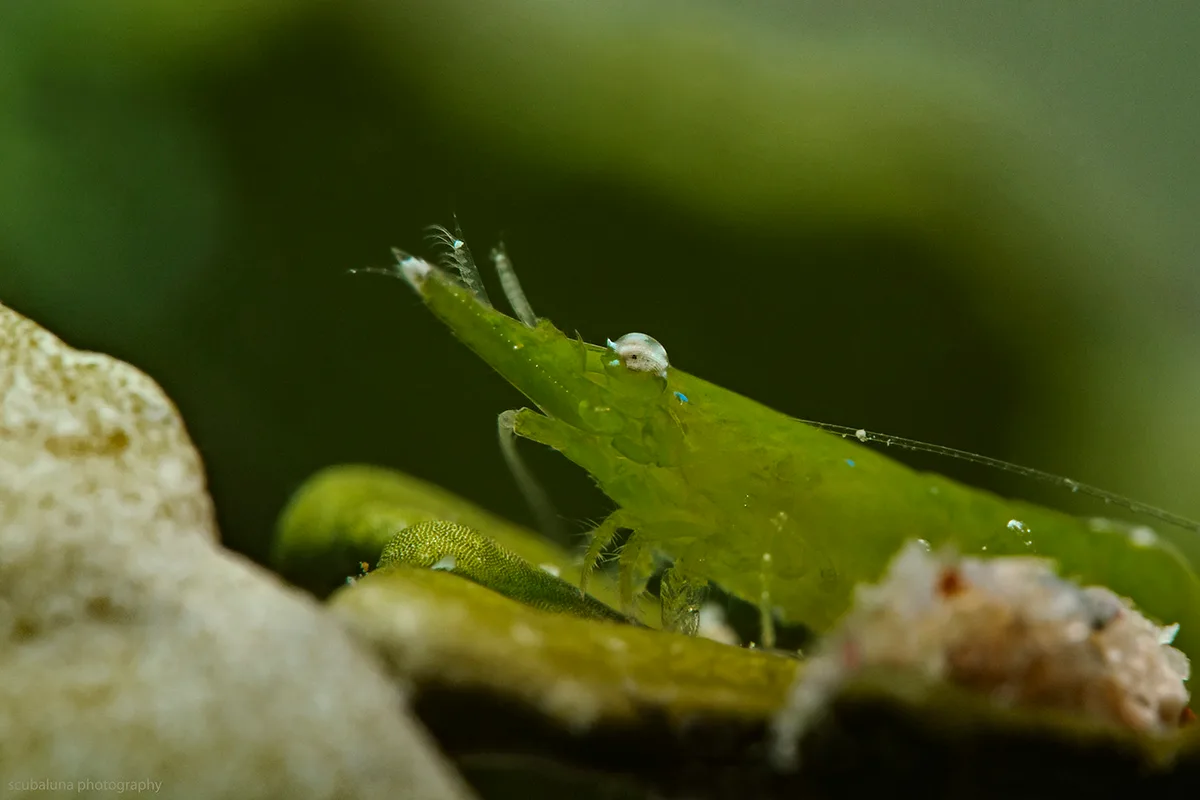
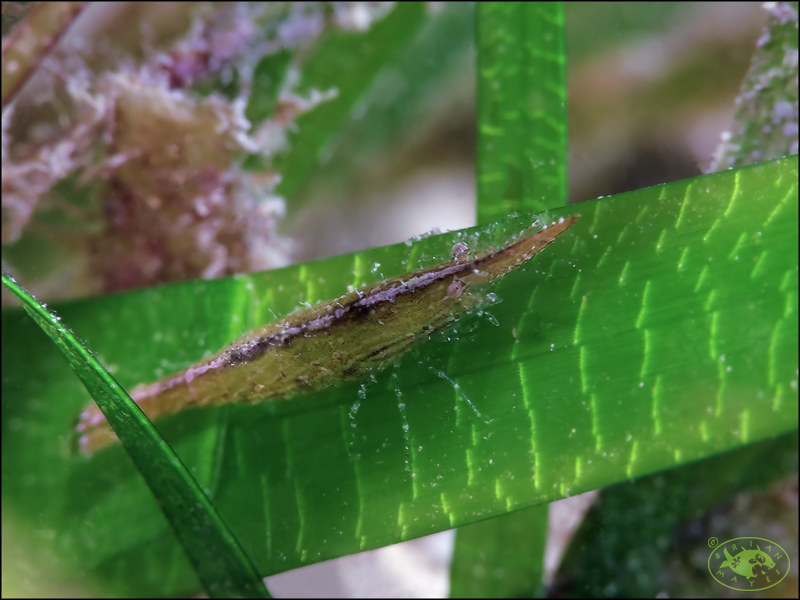
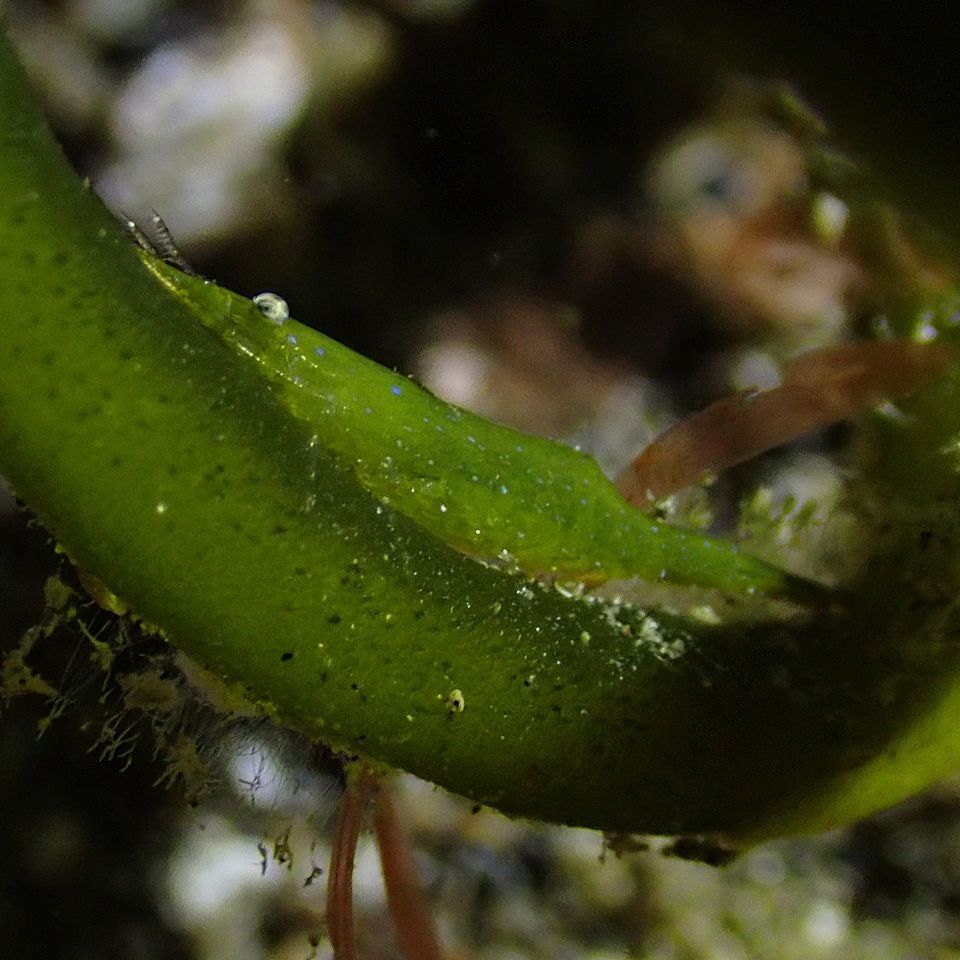
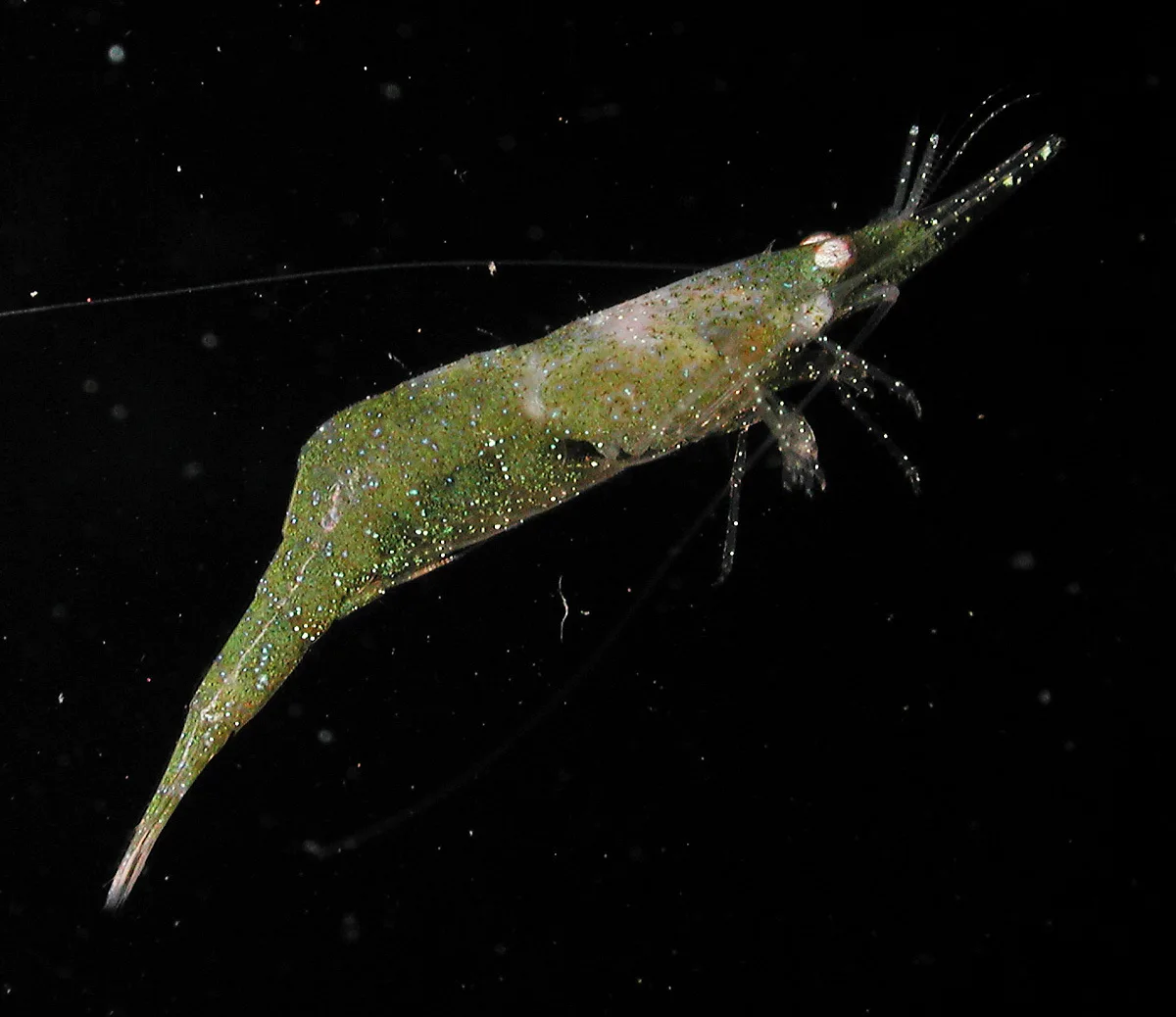
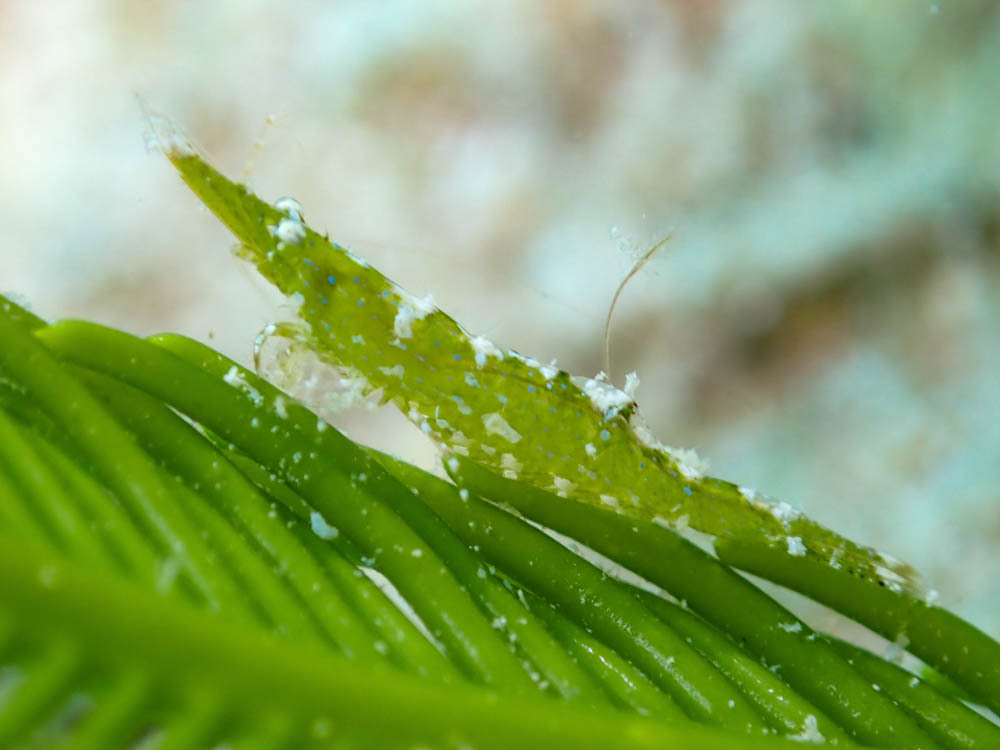
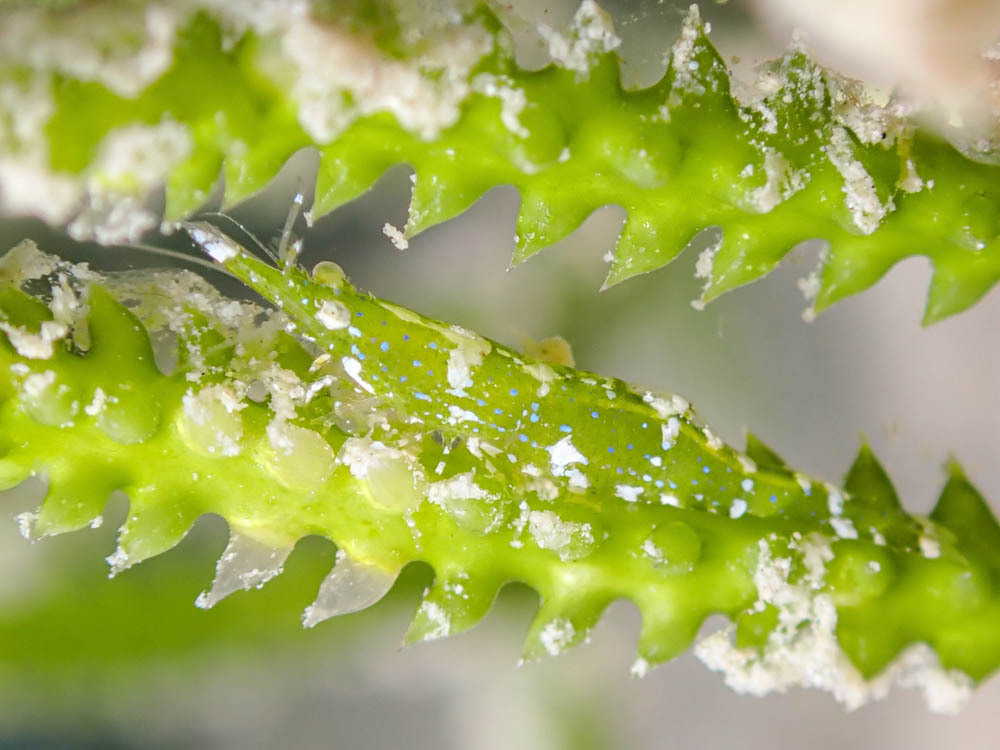
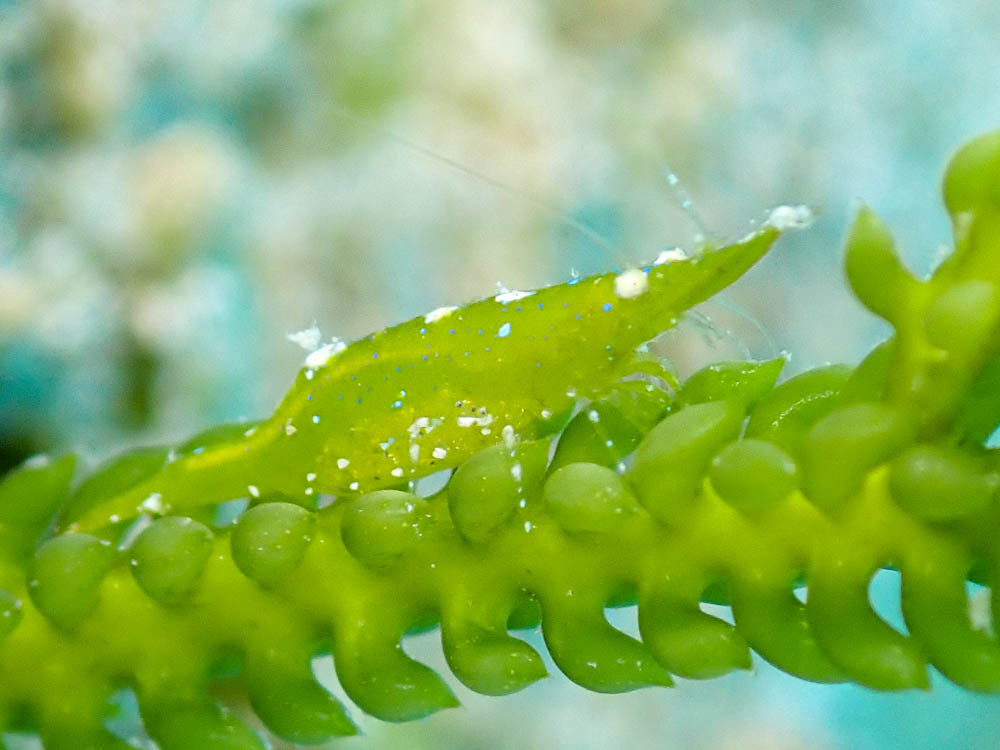
The rostrum on this shrimp is not the usual thin spike. It is deep, flattened and toothed along the edge, and held out in front so that the whole animal, clinging lengthwise to a seagrass blade, presents the outline of a narrower blade lying against a wider one. Green to brown to match, and it hangs along the grass rather than sitting under it.
Seagrass is a demanding place to hide. It is a habitat made almost entirely of long straight parallel lines, which is bad news for anything with a body that is not a long straight line, and the animals that succeed there have all been reshaped by it: pipefish, razorfish, this shrimp, and the seahorses that wrap themselves around the blades.
The meadow repays the effort. It is one of the most productive habitats on this coast and one of the least visited, and a slow swim over seagrass with a torch turns up animals that simply are not on the reef.
- tall blade-shaped rostrum, deep and toothed along the edge
- green to brown body matching the grass
- hangs along a blade rather than sitting on the bottom
- up to 2 cm