
Mantis shrimpStomatopoda
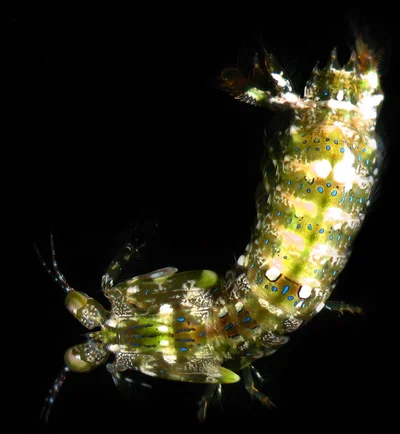
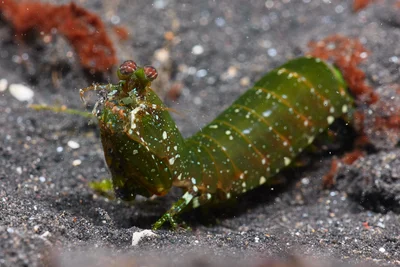
They are not shrimps. Stomatopods split from the rest of the crustaceans long before the animals we call shrimps existed, and almost nothing about them is borrowed: the folded raptorial arms, the burrow, the territorial temper, and above all the eyes.
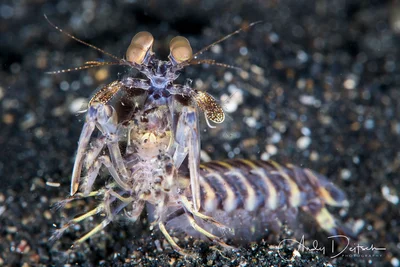
The strike is the famous part, and the species pages below deal with it. The stranger part is what is watching. Each eye sits on its own stalk and is cut across the middle by a band of extra receptor rows, so one eye takes three views of the same point and judges distance by itself. A mantis shrimp with a single working eye can still range a target, and it can do that while the other eye reads something else entirely.
Inside that band sit a dozen or more classes of color receptor, where a human retina has three. The obvious conclusion, that they see colors we cannot imagine, turned out to be wrong. Tested properly, mantis shrimp are worse than we are at telling similar colors apart. The eye is not comparing channels the way ours does; it appears to sweep the band across a scene and read out what each channel reports, a scanner rather than a mixing desk, trading fine discrimination for speed. For an animal that has to decide in milliseconds whether the thing in front of it is food, a rival or a problem, that is the better bargain.
They read polarized light as well, including circular polarization, which no other animal is known to detect, and some species carry markings that only appear in it. It amounts to a private channel: signals legible to another mantis shrimp and invisible to everything else on the reef.
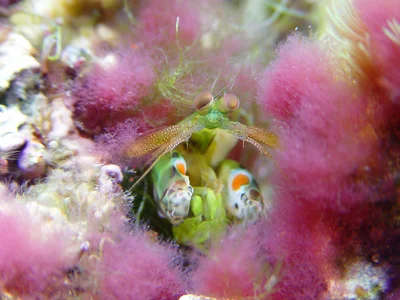
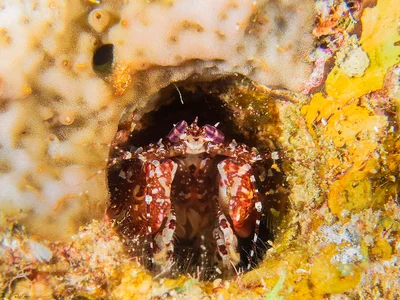
Here they live in burrows in rubble, sand and dead coral, and most sightings are a pair of eyes at a hole that withdraw as you settle. Some species pair for years and share one burrow, the male hunting and the female holding the eggs, so a hole with two sets of eyes in it is worth the wait.
- elongated, somewhat flattened body
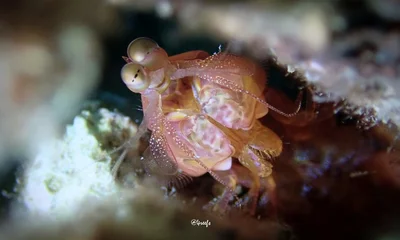
- large, independently moving stalked eyes
- prominent, powerful raptorial forelimbs held folded
- secretive, often peering from burrows or crevices
7 species in Mantis shrimp

Other groups in Crustaceans
Nearby in the catalogue.


Last Update: August 23, 2026