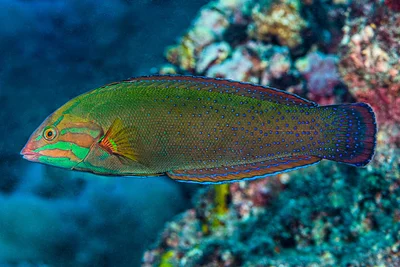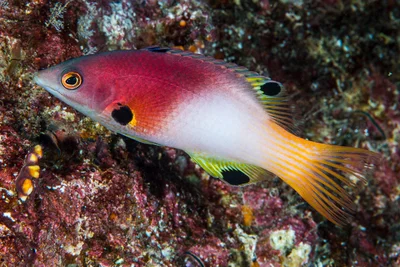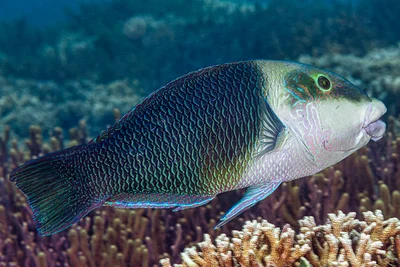

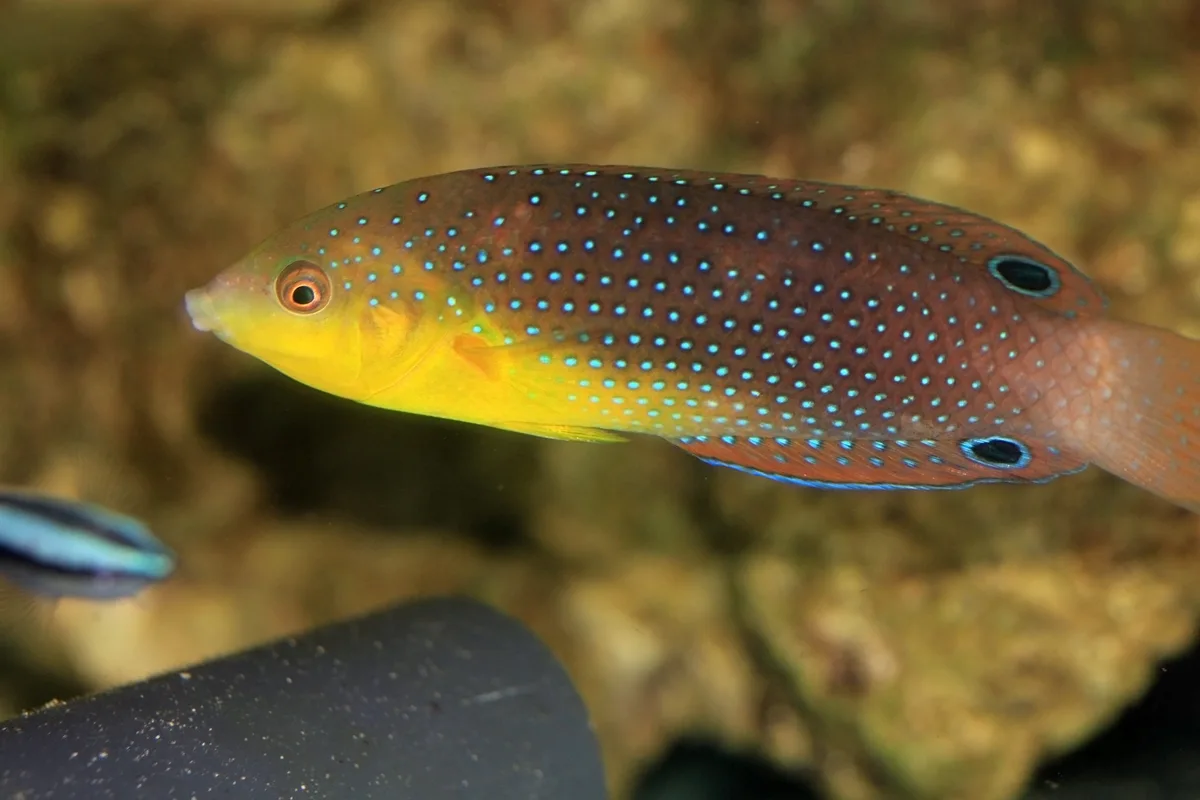
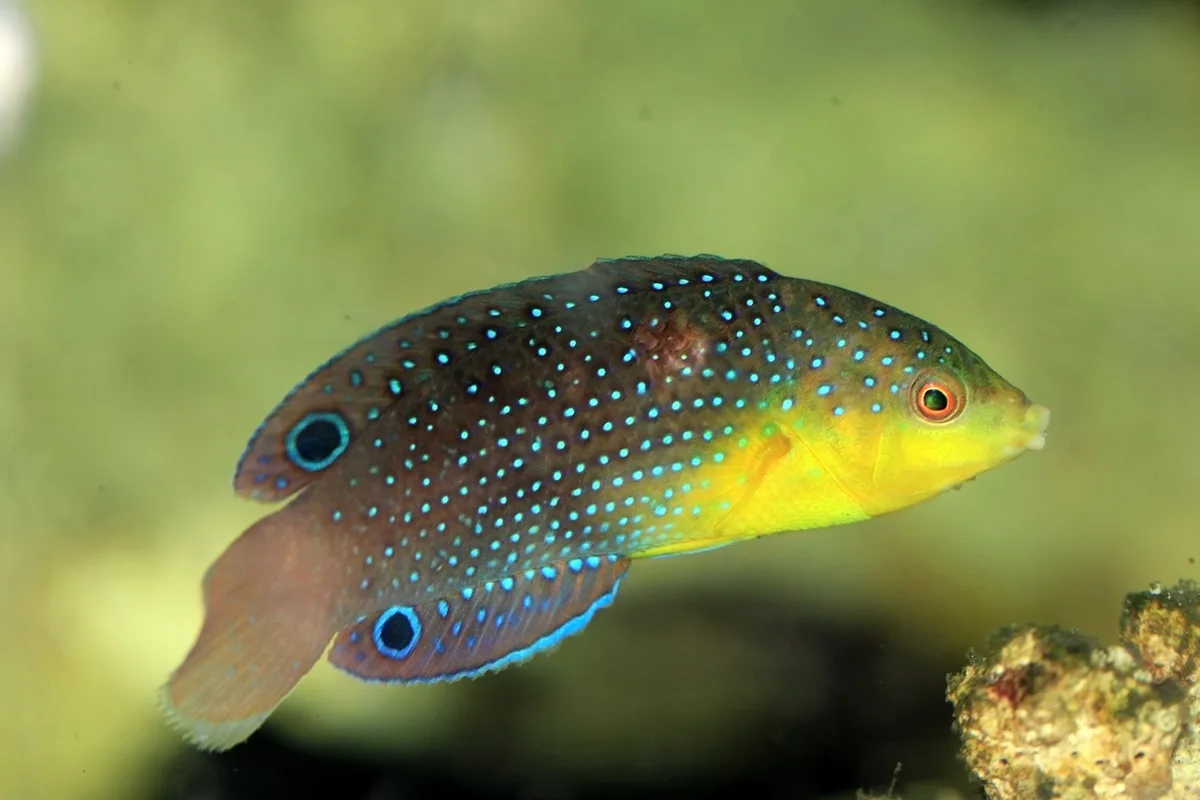
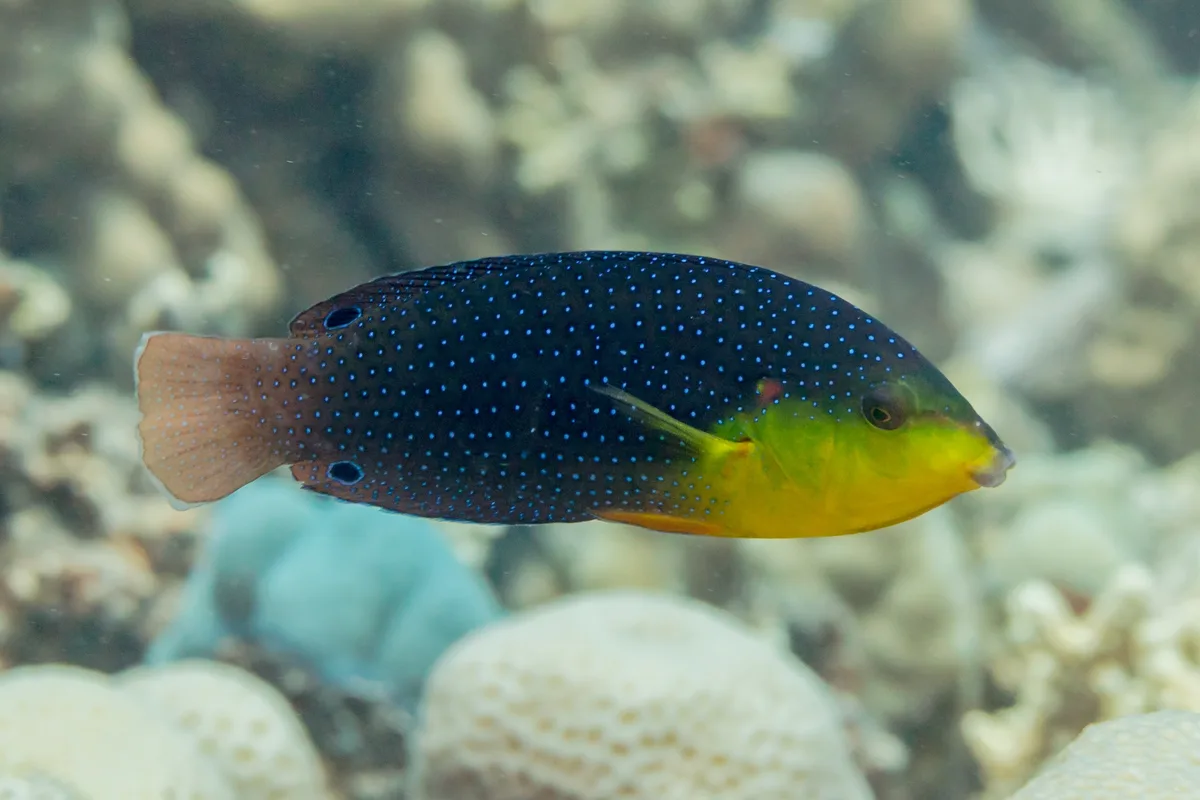
There are more wrasse species on this reef than almost any other family of fish, and they are worth knowing as a group.
Three things make a wrasse. It swims with its pectoral fins, rowing rather than beating its tail, which is why a wrasse cruising looks like it is being pulled along by two oars and why the tail only comes into use when it needs to be somewhere else quickly. It has protruding teeth at the front and a second set of grinding plates in the throat, which between them let the family exploit almost everything on a reef: coral, plankton, snails, urchins, fish, parasites off other fish, and the animals buried in sand. And nearly all of them start female and change to male, so the biggest, brightest individual in any group is a fish that used to look like the plain ones around it.
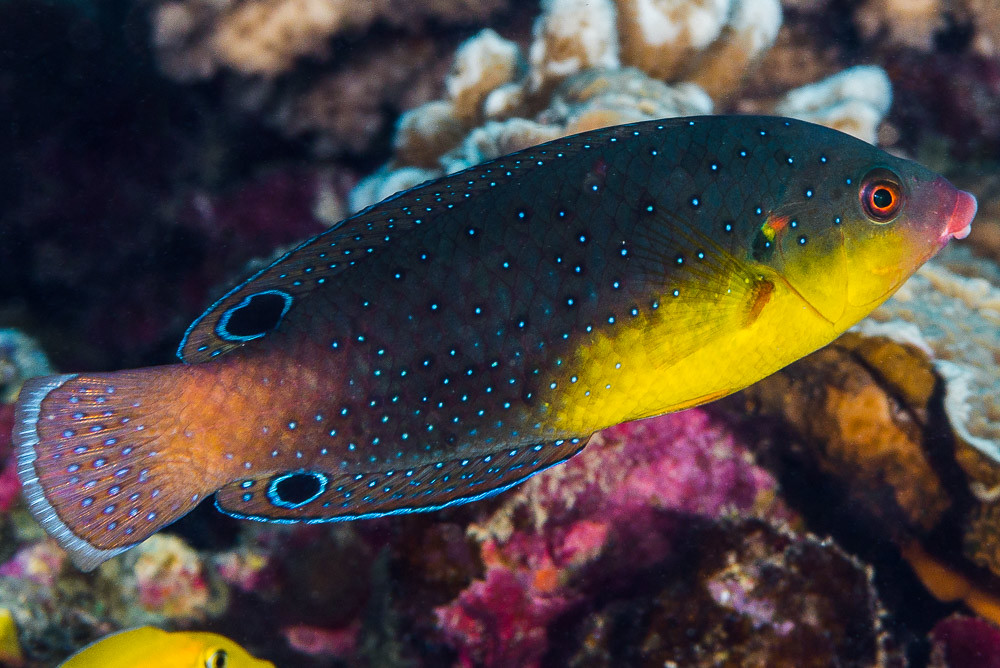
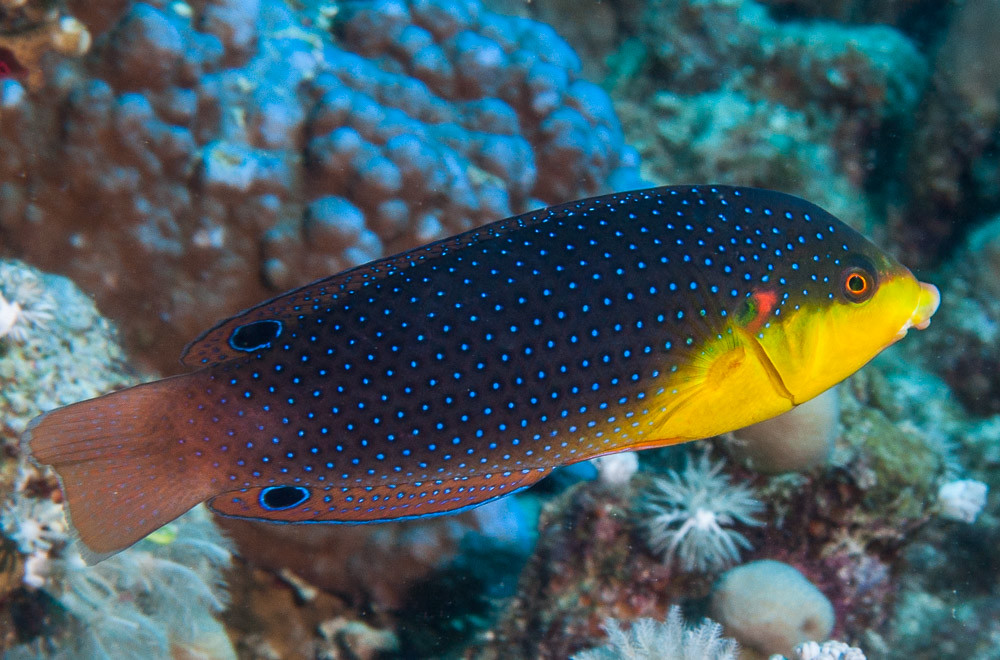
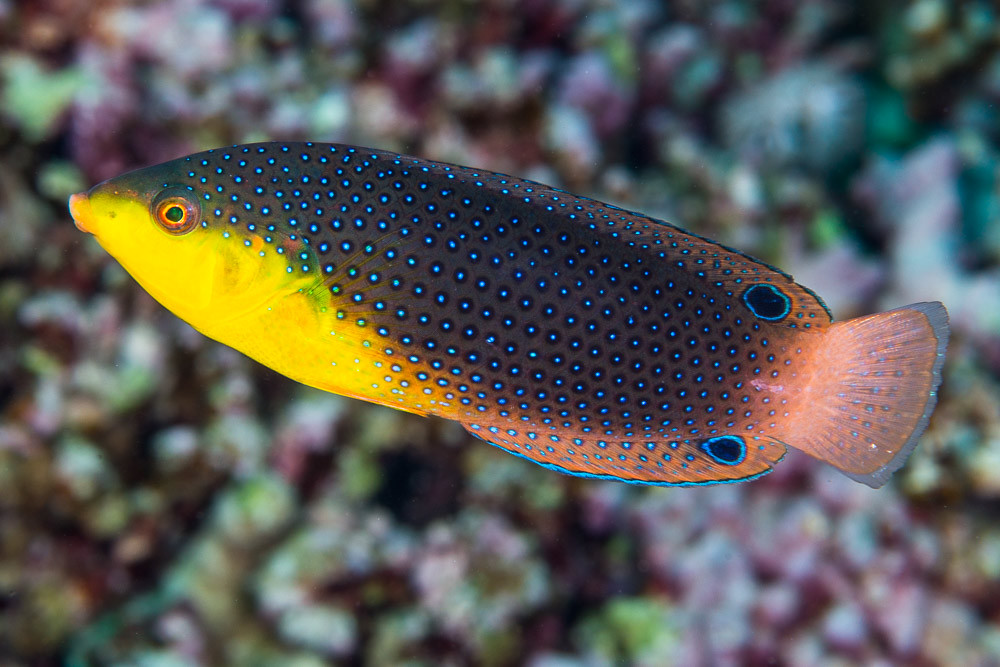
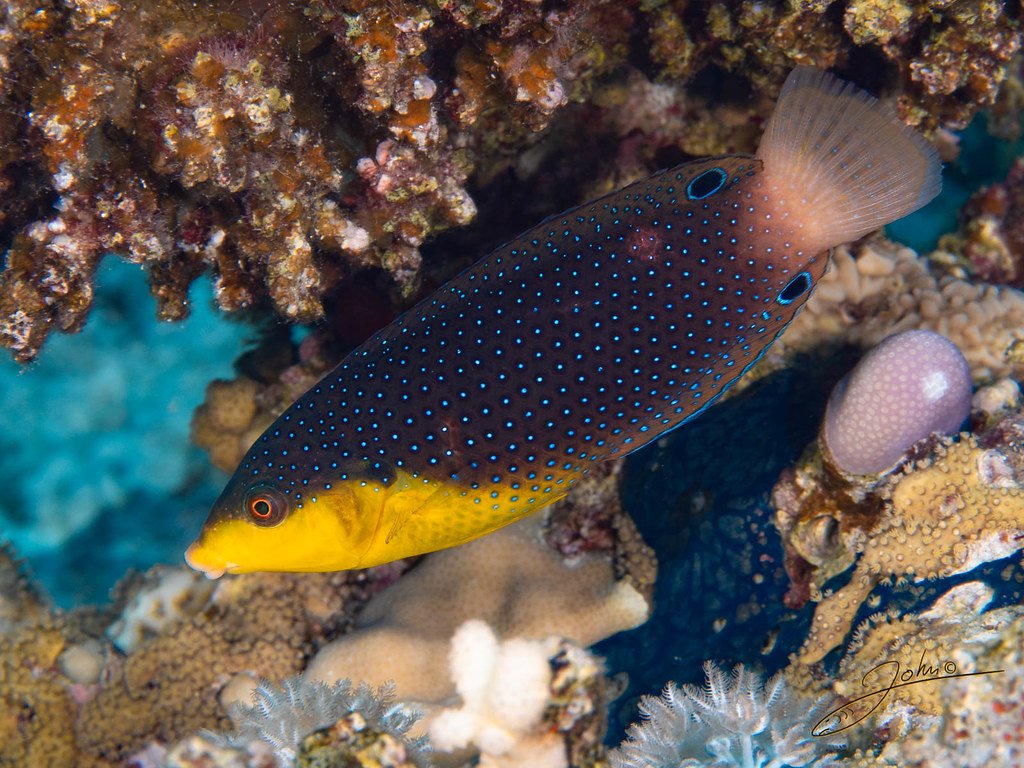
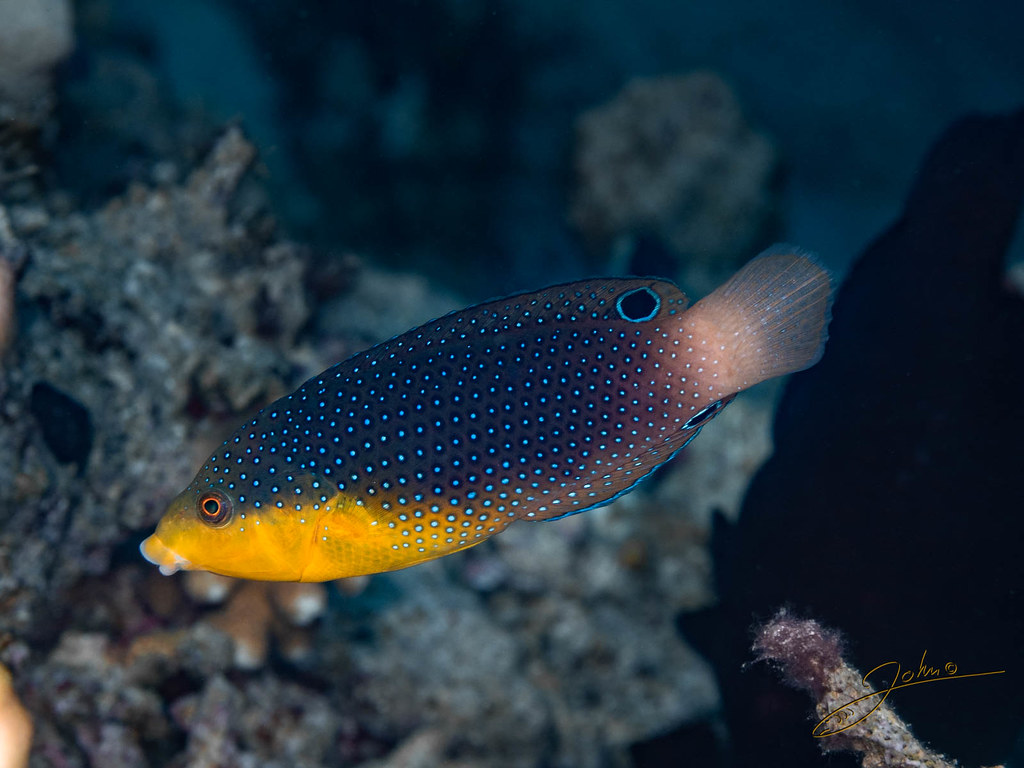
That combination is why the family has produced everything in this section: a fish that fires its jaw like a telescope, one that smashes clams on an anvil, one that sleeps buried in sand, one that flashes color for a second at dusk, and this one, dark green with a yellow breast, working coral and rubble at an unhurried pace.
The species. Anampses twistii Bleeker 1856 - Honours Albertus Jacobus Duymaer van Twist. ETYFish
- dark green-brown body with a bright yellow breast patch
- small blue spots scattered over the body, yellow spot at the rear of the dorsal fin
- juveniles dark with white blotches and a false eyespot in the fins
- up to 18 cm
Why it's threatened
There are no known major threats to this species, though specimens are occasionally captured live for the marine aquarium fish trade, and others are occassionally sold in local fish markets for food.
Threat classification from the IUCN Red List.