It sleeps underground. At dusk this wrasse goes down into open sand headfirst, works itself under, and stays there until morning, and a patch of bottom that carried a dozen busy fish in the afternoon has none at all after dark.
That is a completely different solution from the one most reef fish use. The great majority wedge into a hole in the coral at night and rely on structure. A sand-sleeper needs no structure at all, which means it can live on open bottom where there is nothing to hide in, and it is invisible to every nocturnal predator that hunts by working over the reef.
The cost is that it has to get in and out. Coming up in the morning is the moment of maximum exposure, and it is done fast.
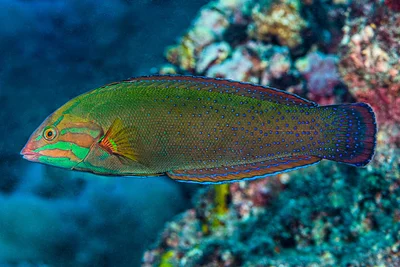
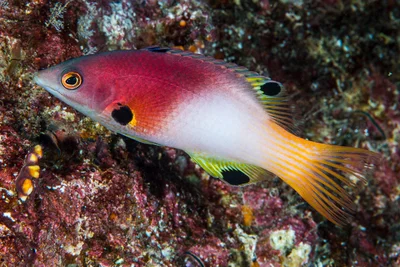
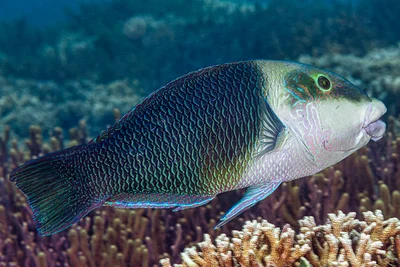
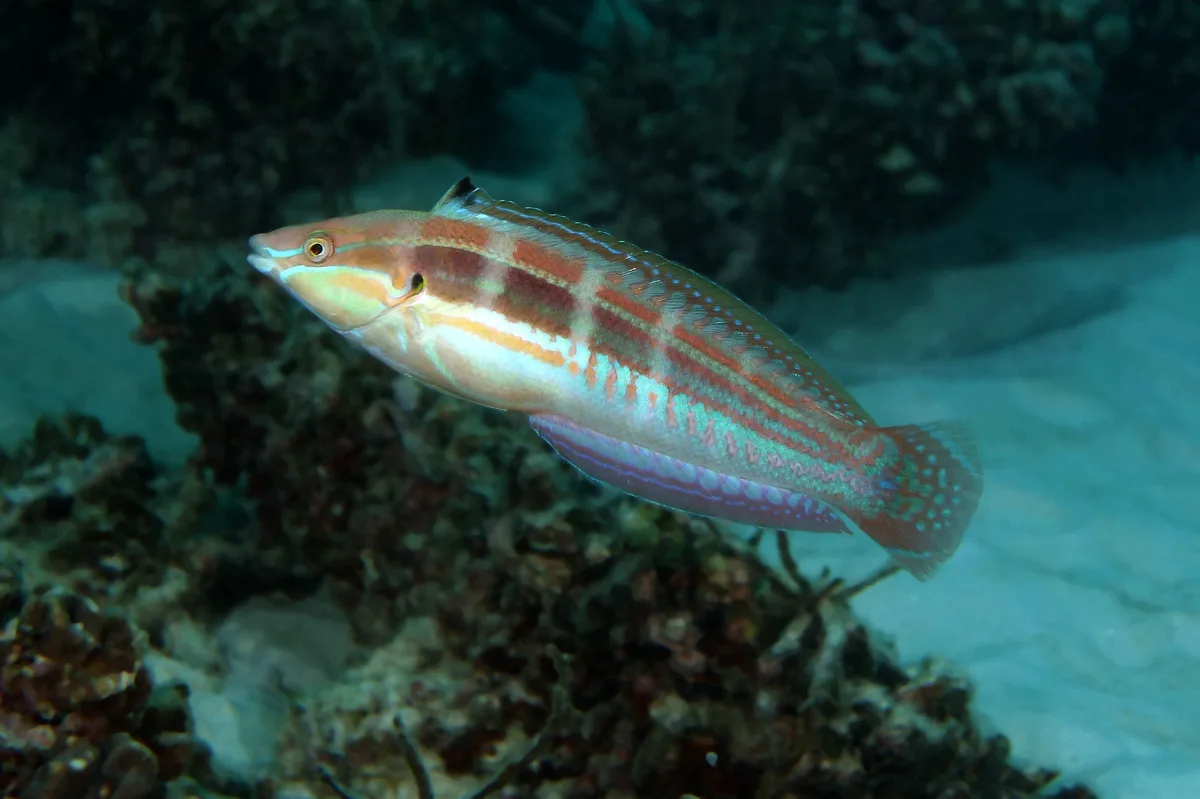
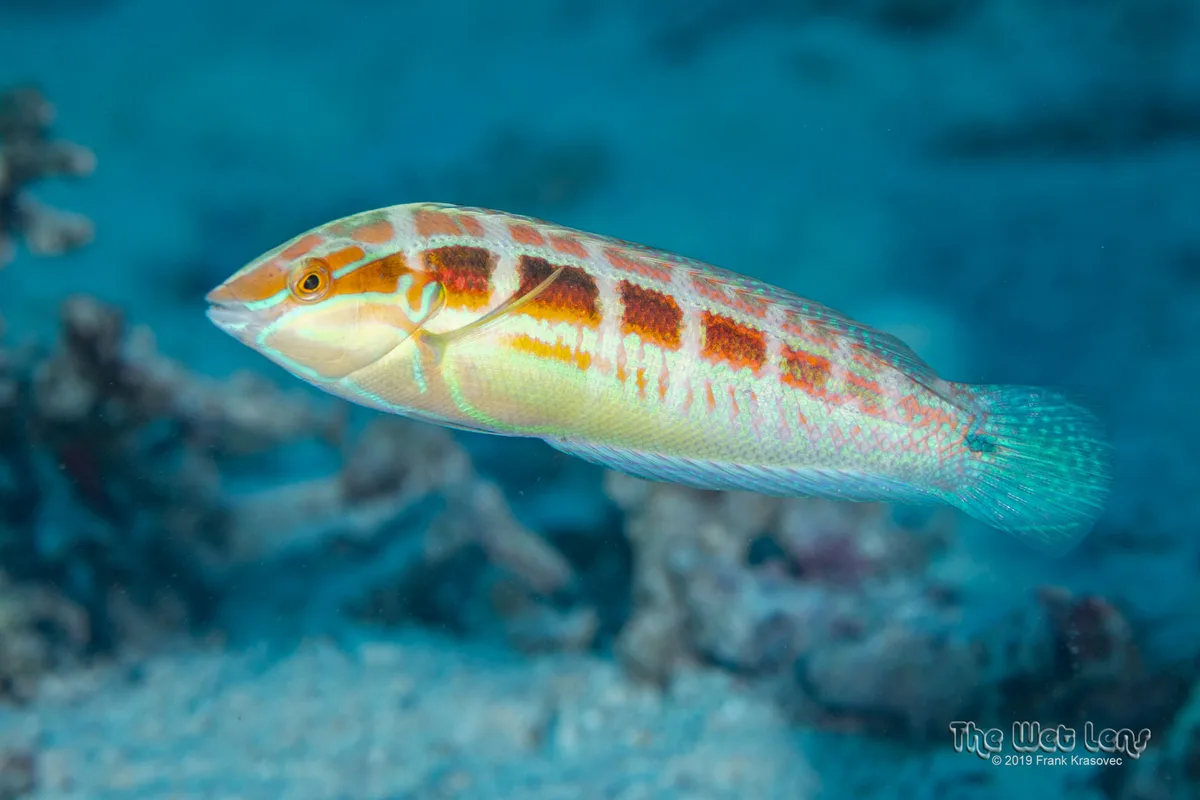
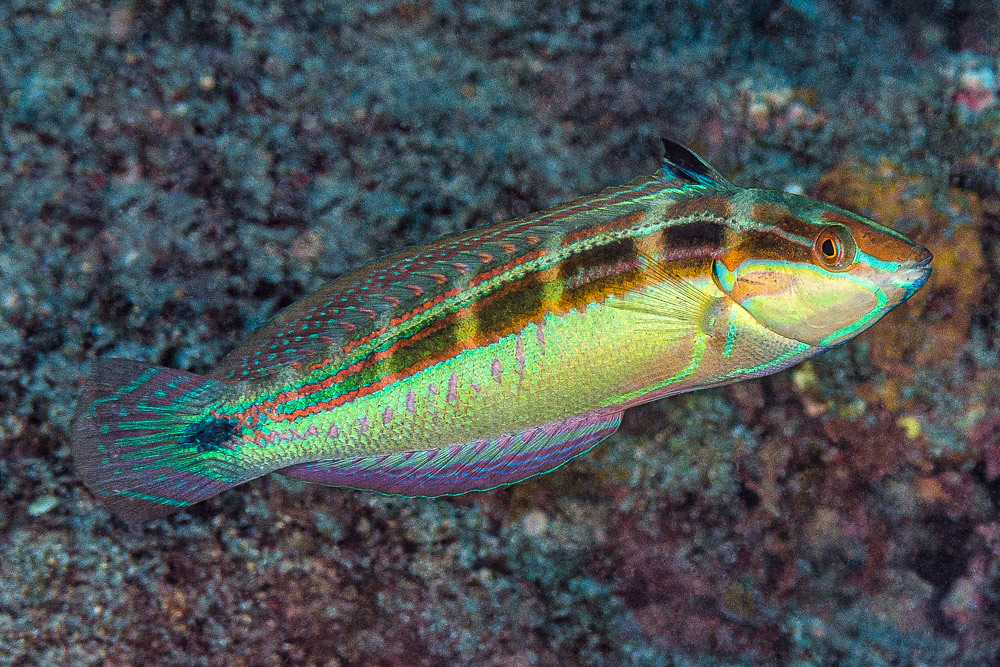
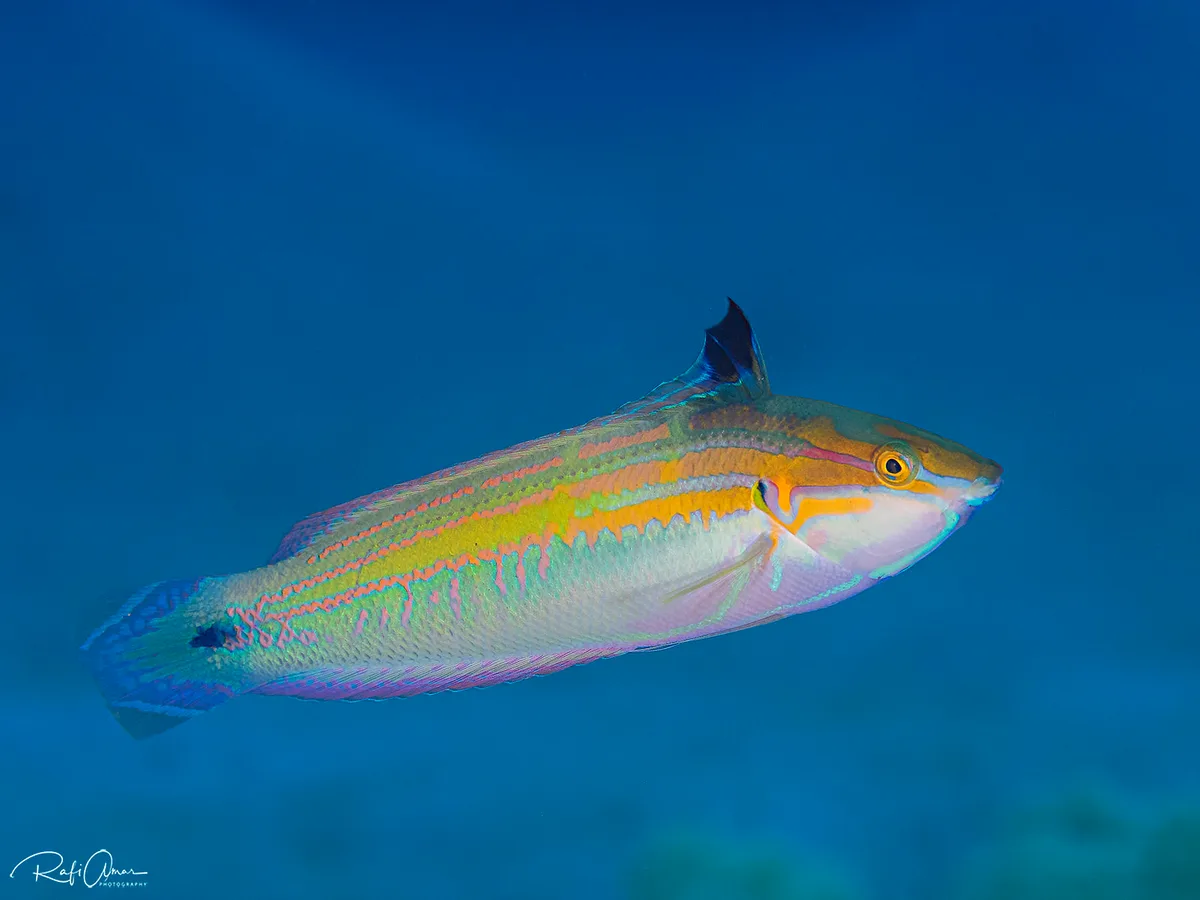
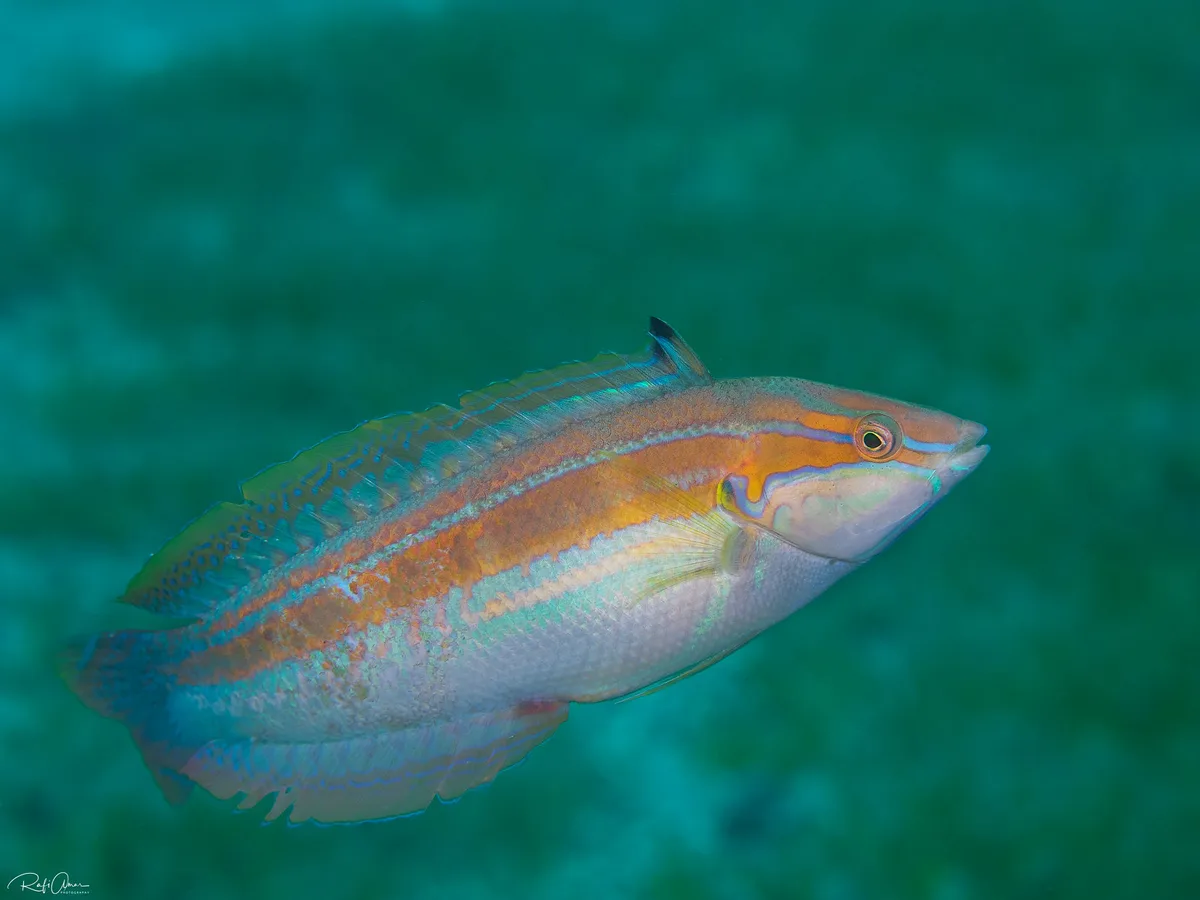
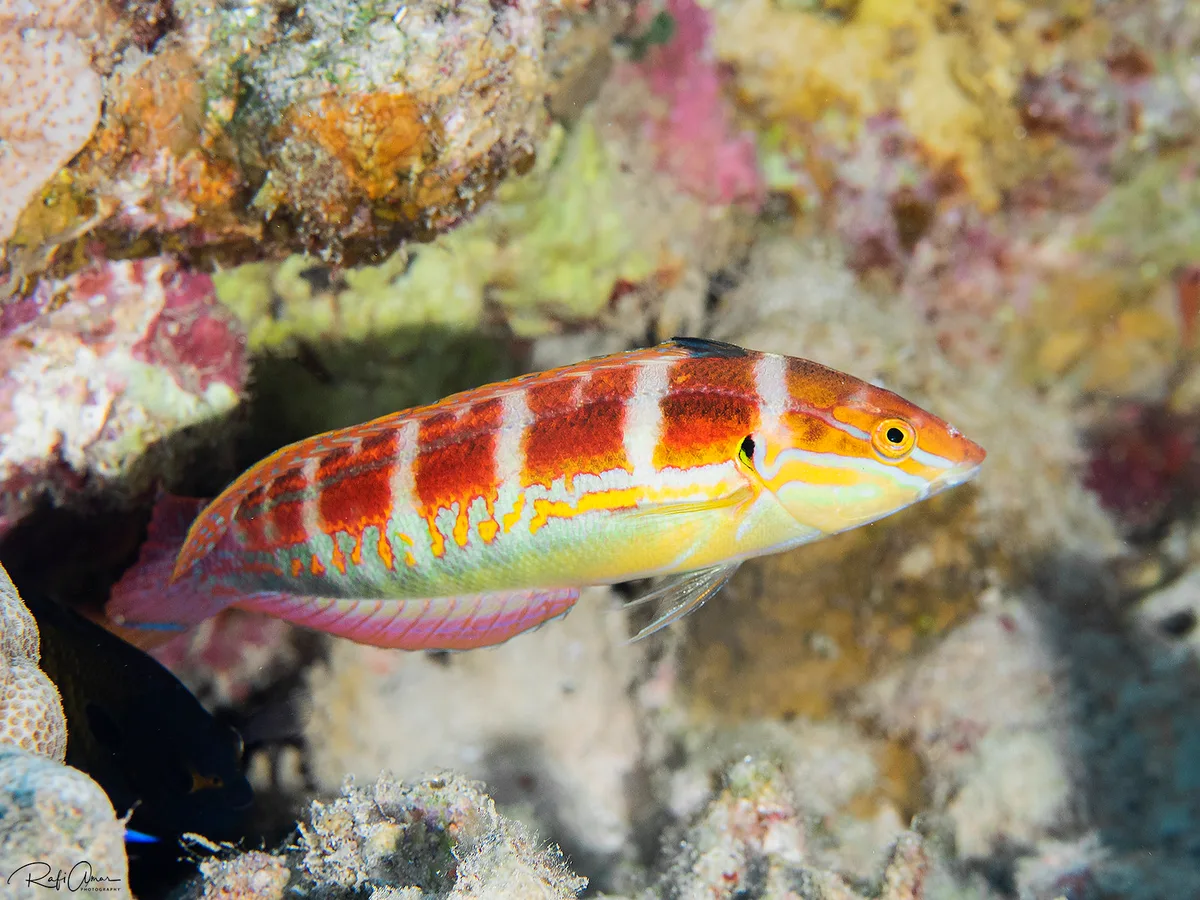
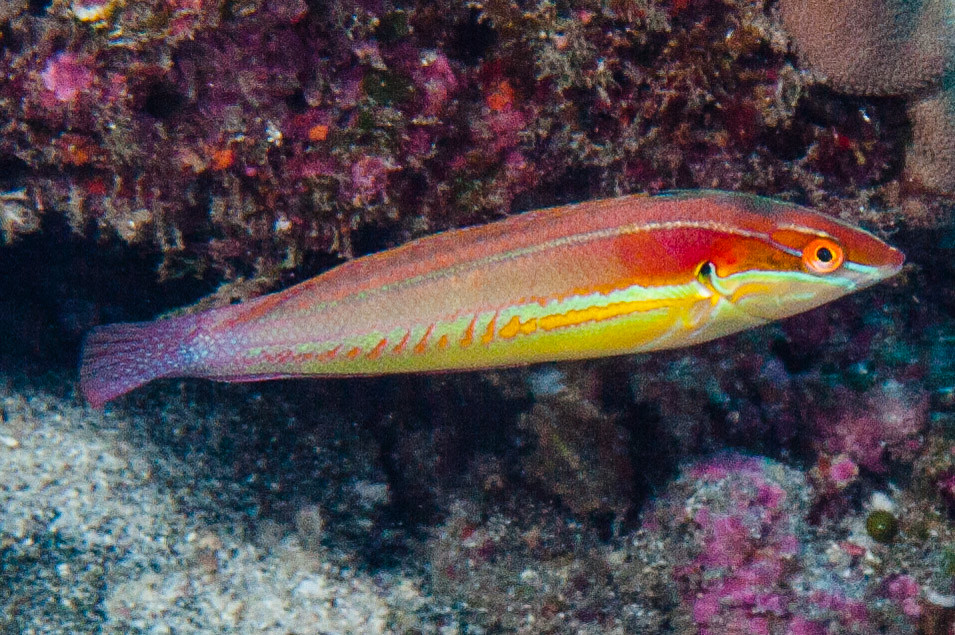
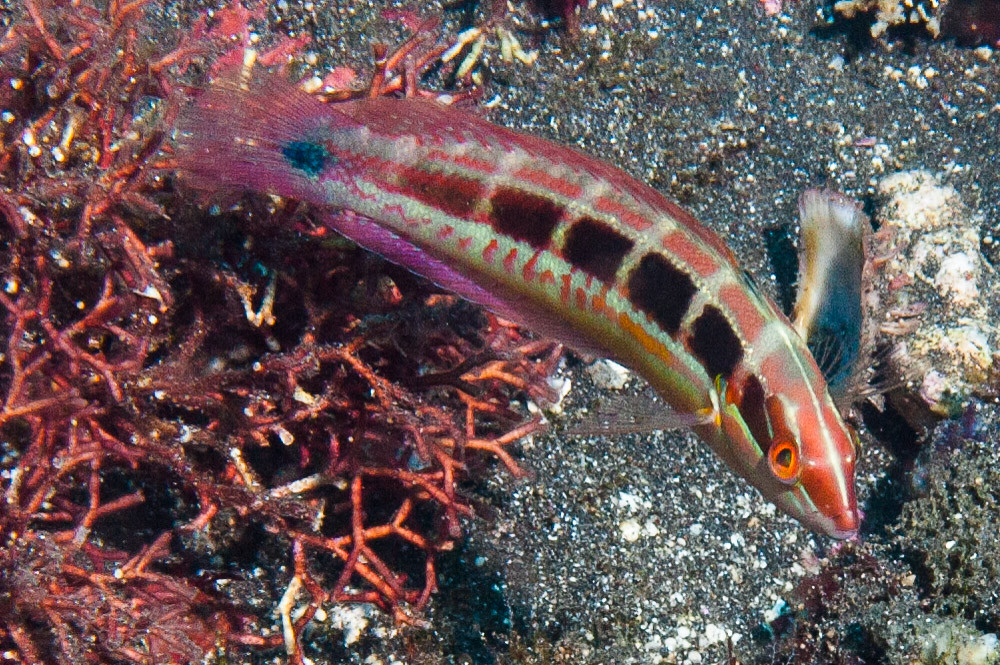
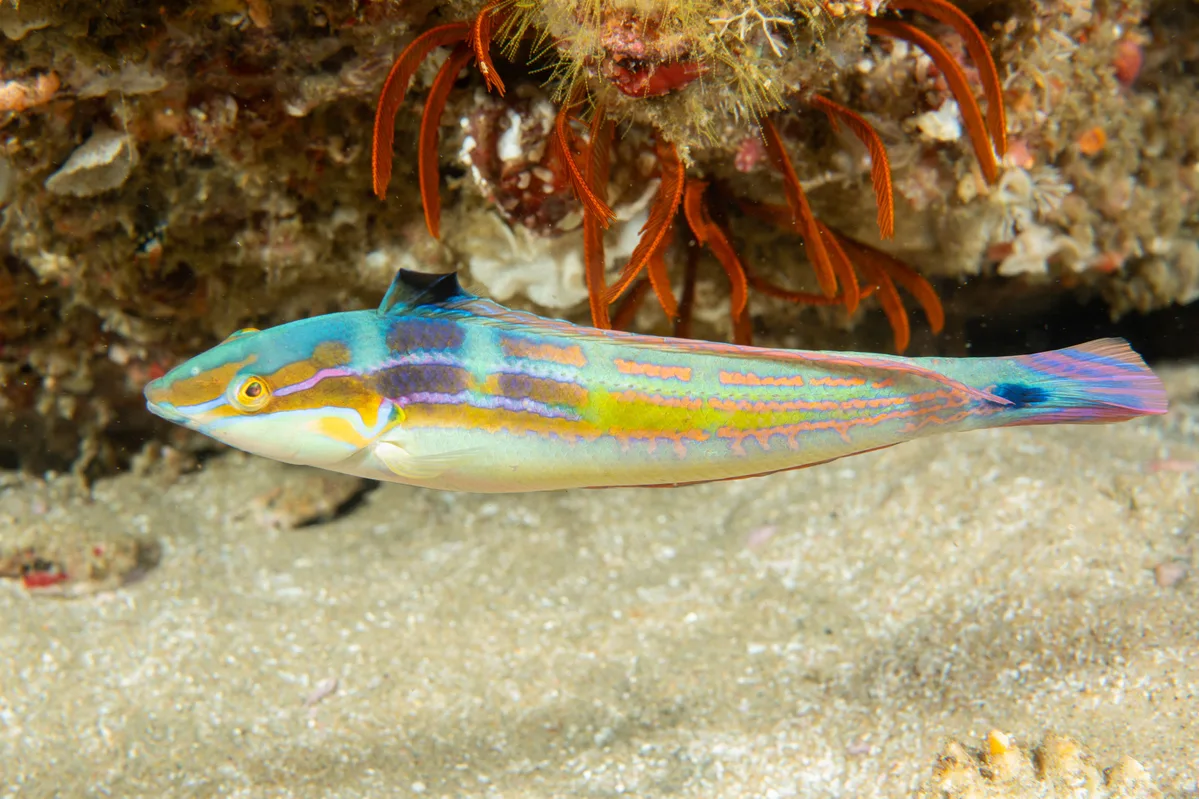
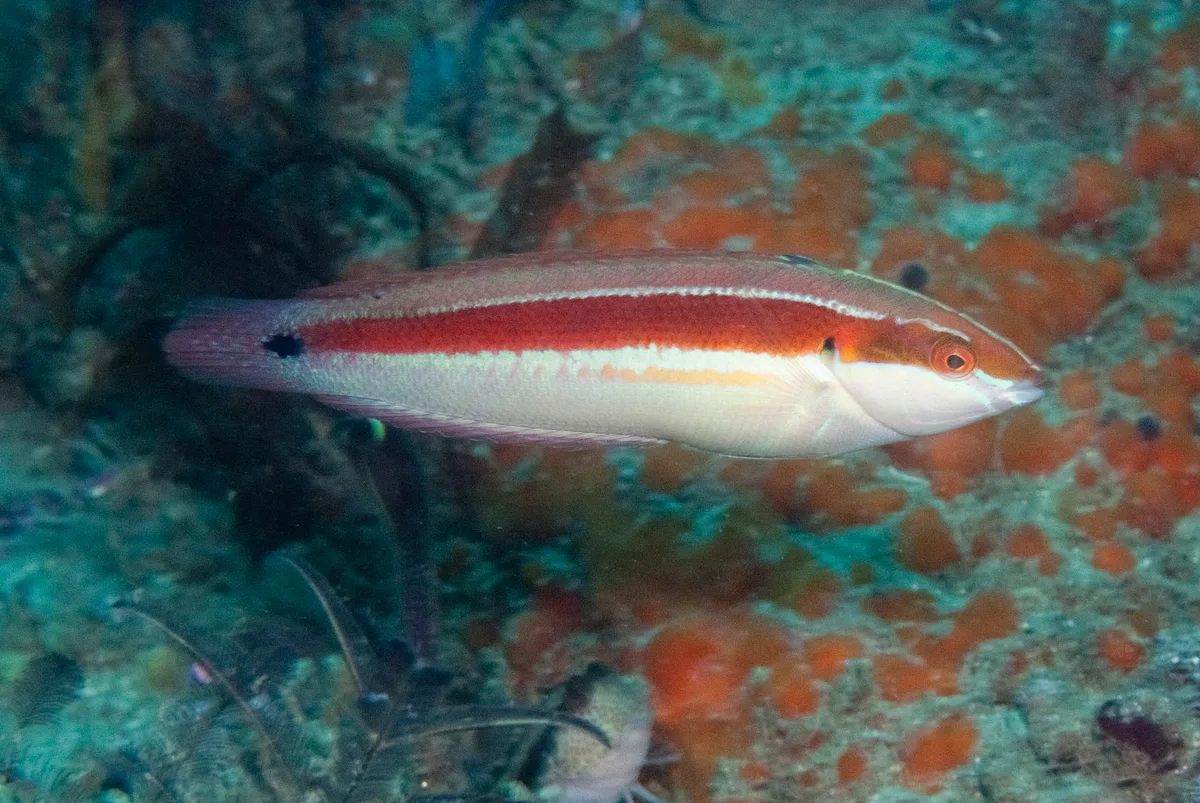
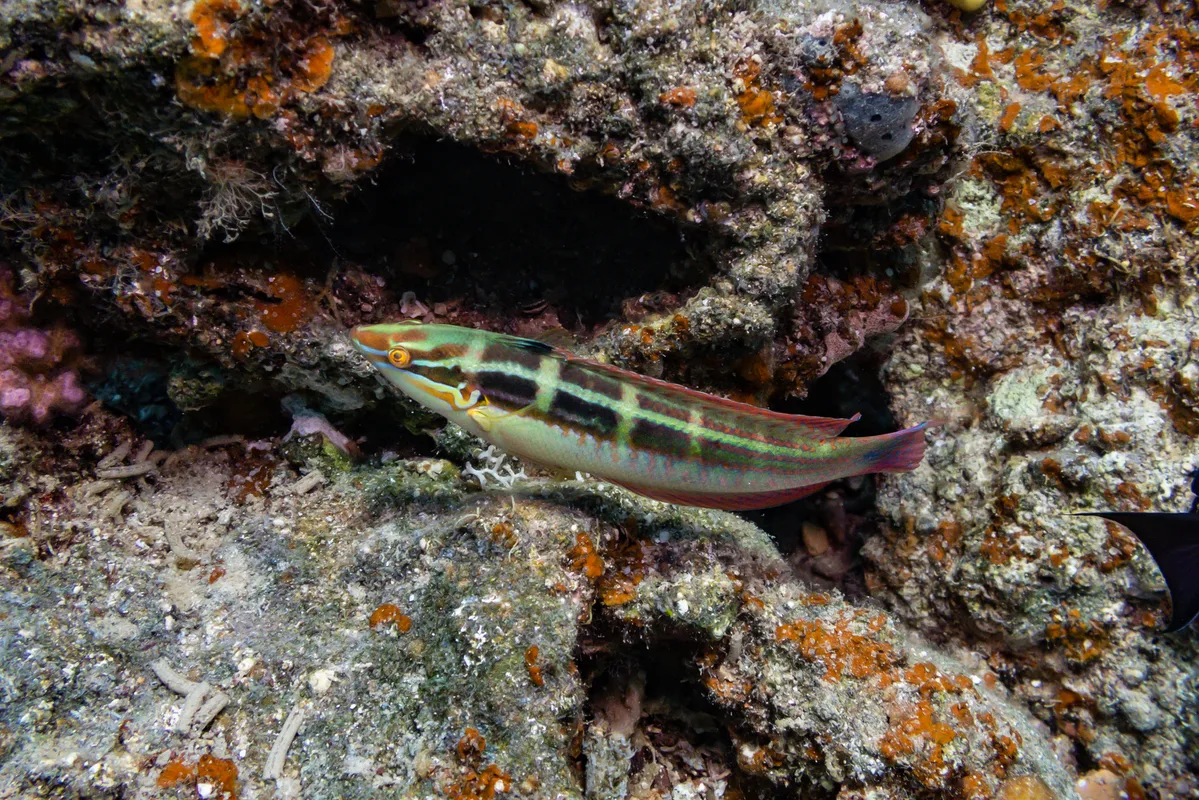
By day it works sand and rubble at a steady trot, turning over small stones and taking what is underneath, and it is one of the more visible fish on mixed bottom here. Males and females look different enough that they are regularly logged as two species.
The genus. Coris Lacepède 1801 - korys (helmet). ETYFish
The species. Coris caudimacula (Quoy & Gaimard 1834) - caudi- (tail) + macula (spot). ETYFish
- olive body with a dark spot on the tail base
- females with brown stripes above, males greener with pink face lines
- works sand at a steady trot, turning small stones
- up to 20 cm
Why it's threatened
This species is not known to face any major threats, althoug it is likely to be undergoing localised declines in abundance in areas of coastal development and coastal pollution.
Threat classification from the IUCN Red List.