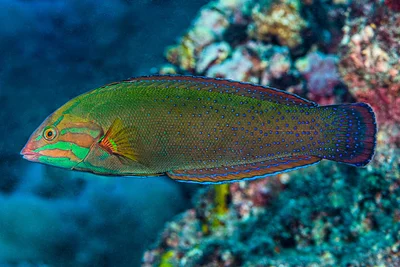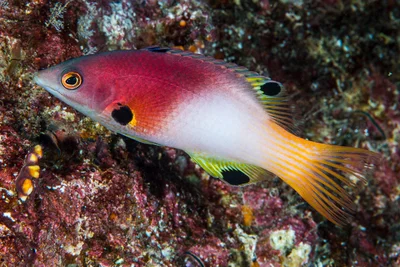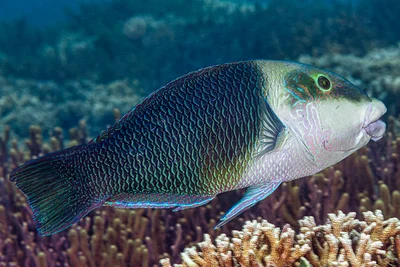
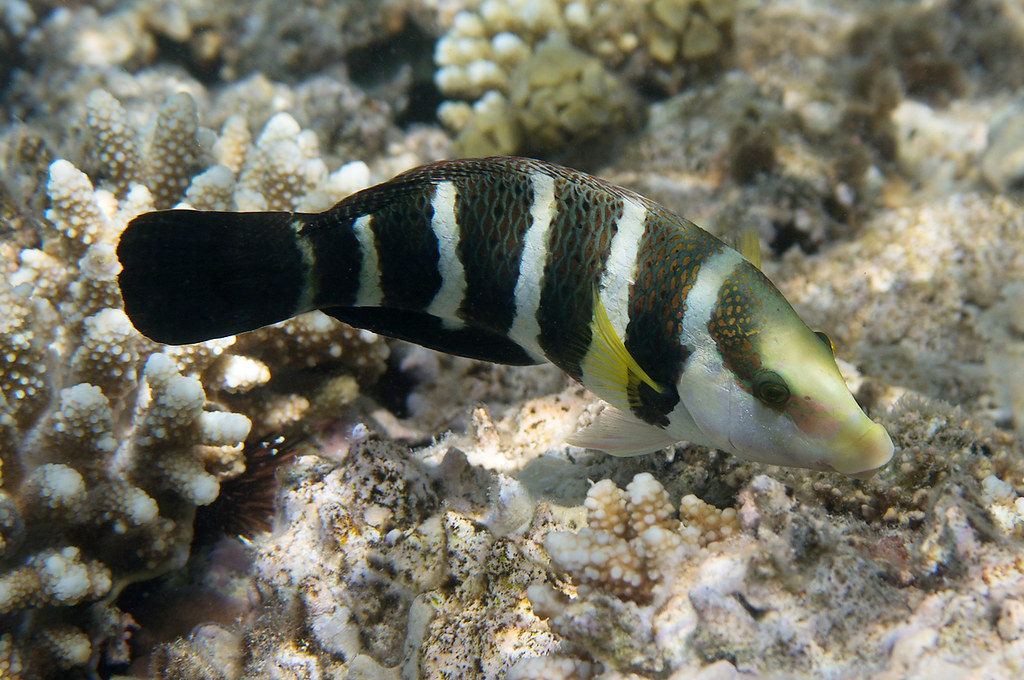
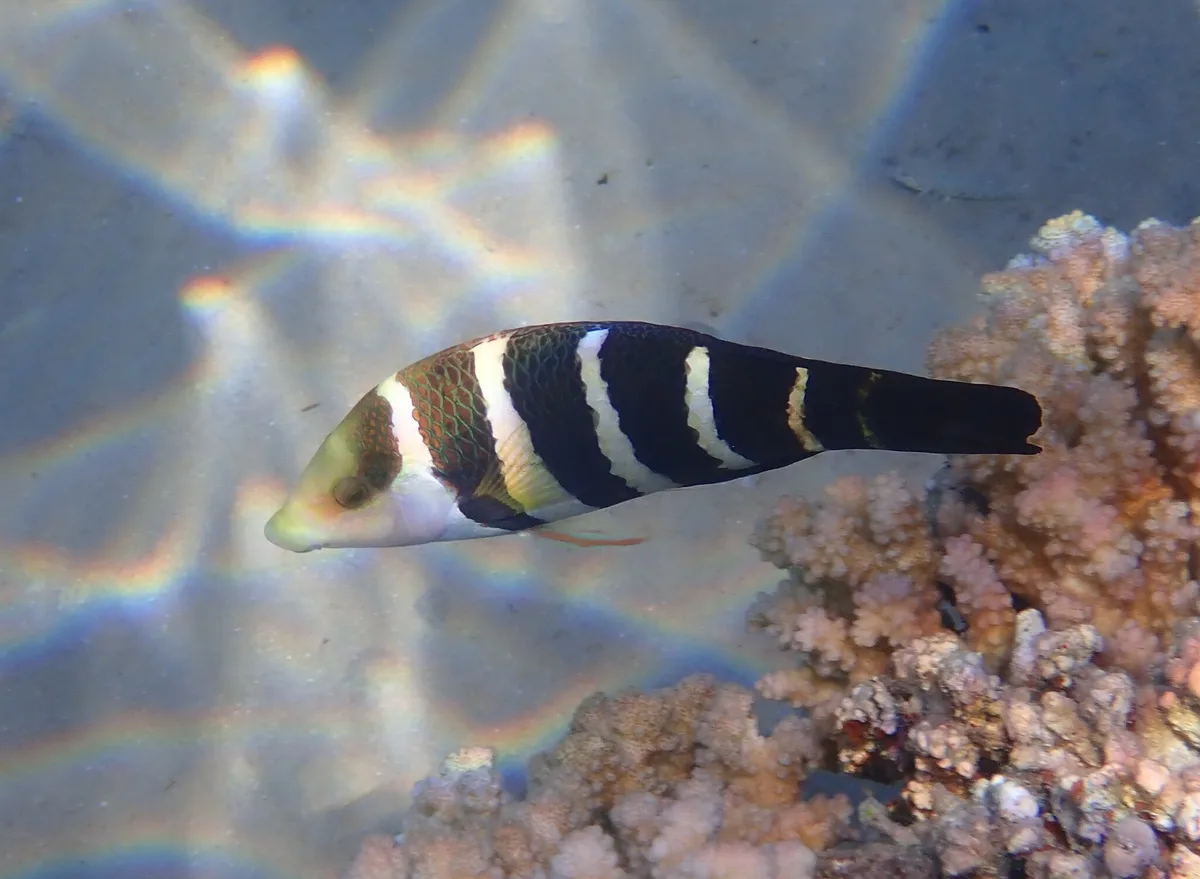
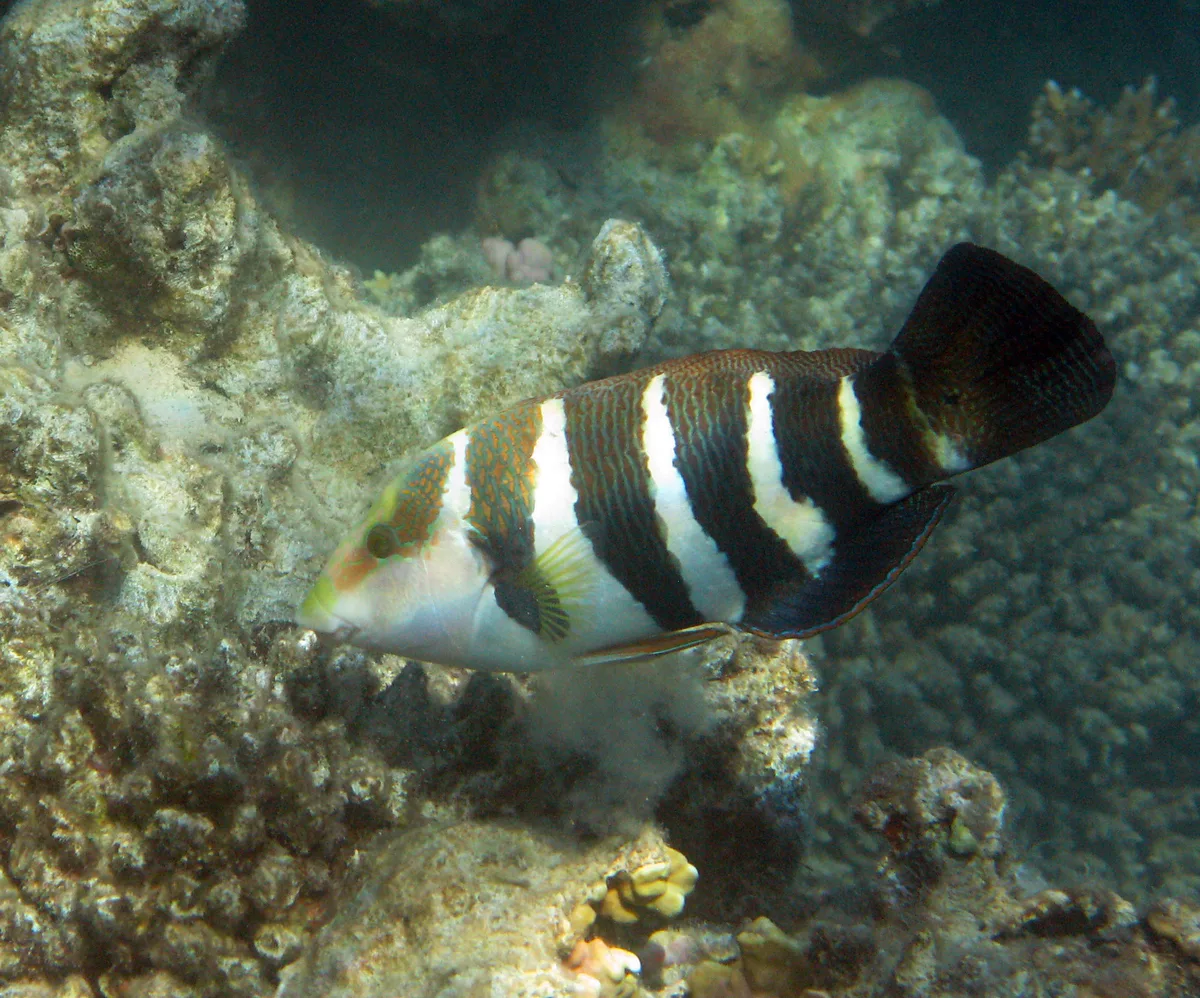
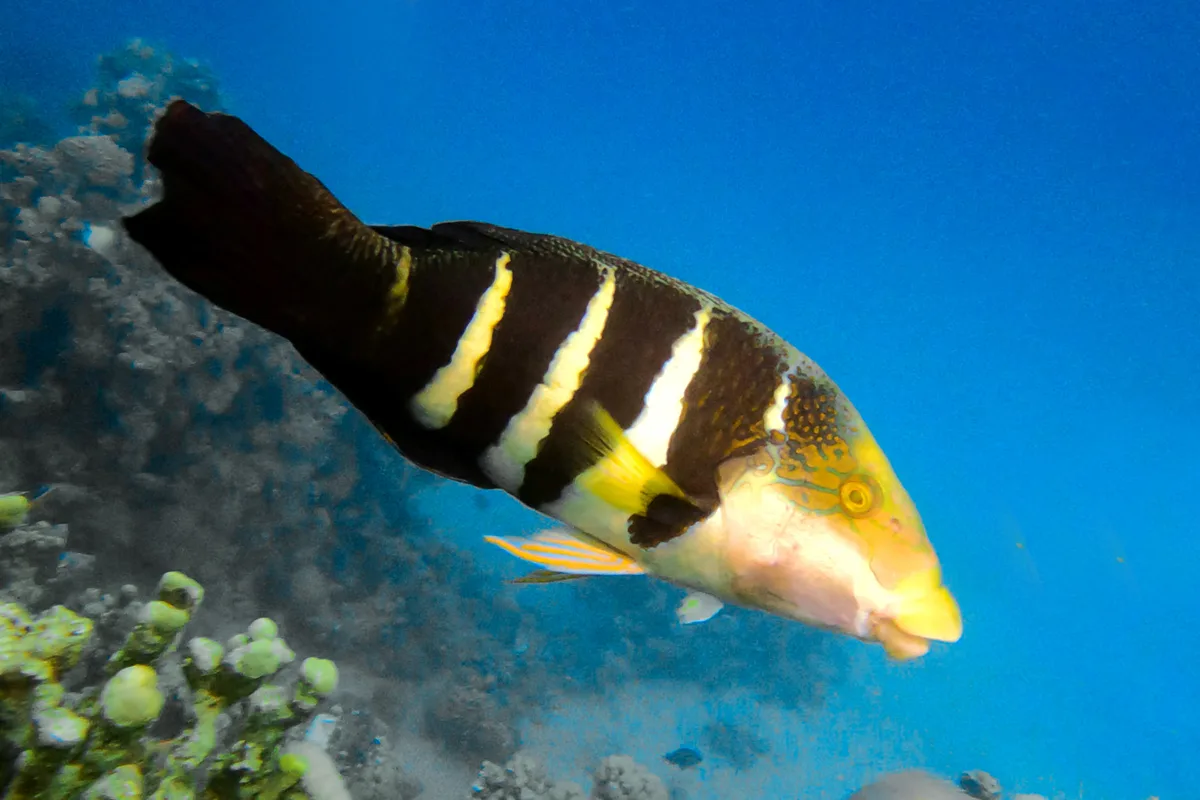
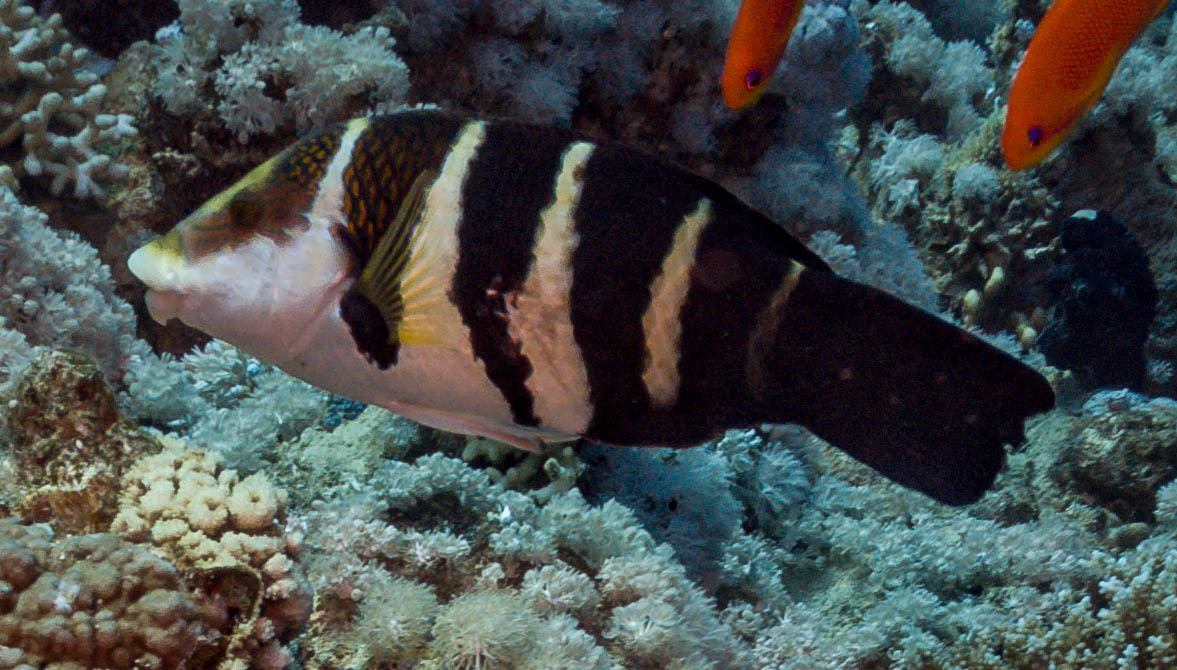
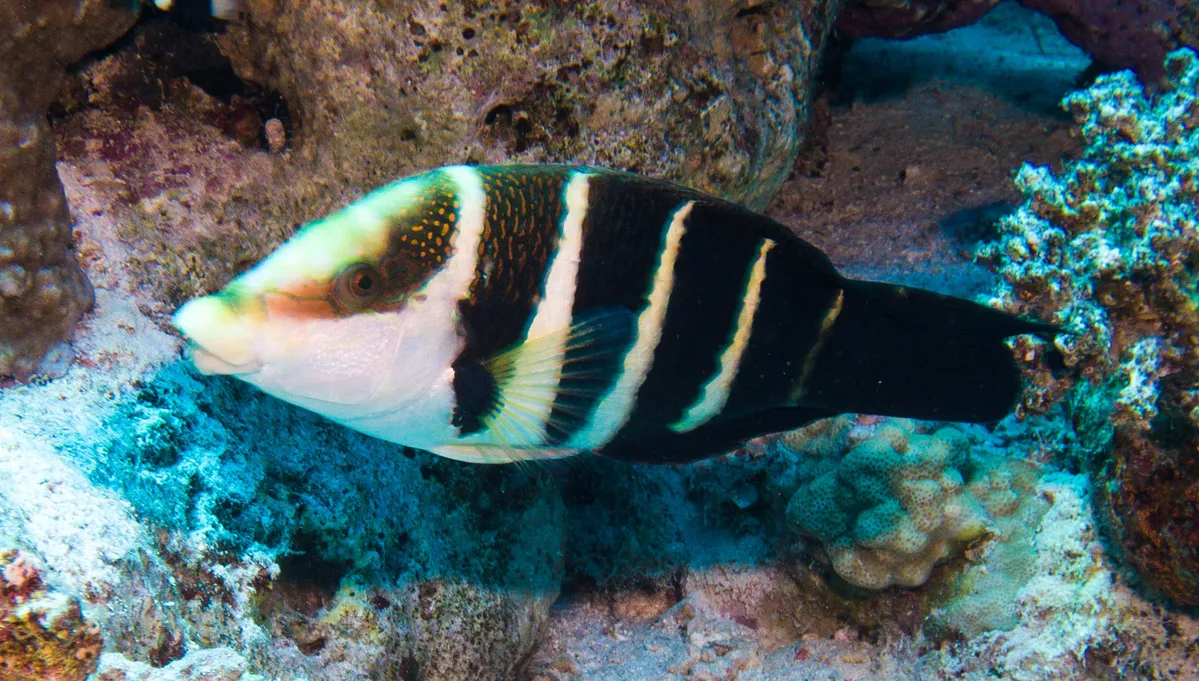
Two thicklip wrasses live on this coast and only one of them is ours.
The blackeye thicklip is spread across the Indo-Pacific. This one is a 🌊 Red Sea endemic, produced by the same isolation that gave this basin its damselfish, its butterflyfish and its anemonefish, and it does the same job the other one does: takes a whole mouthful of sand and rubble, sorts the animals out inside the mouth with those enormous lips sealing the load in, and blows the sediment out through the gills.
Where two close relatives share a coast, something usually separates them, and here it is mostly depth and exposure - the endemic works shallower and more sheltered ground. Two species that feed identically cannot occupy identical space for long.
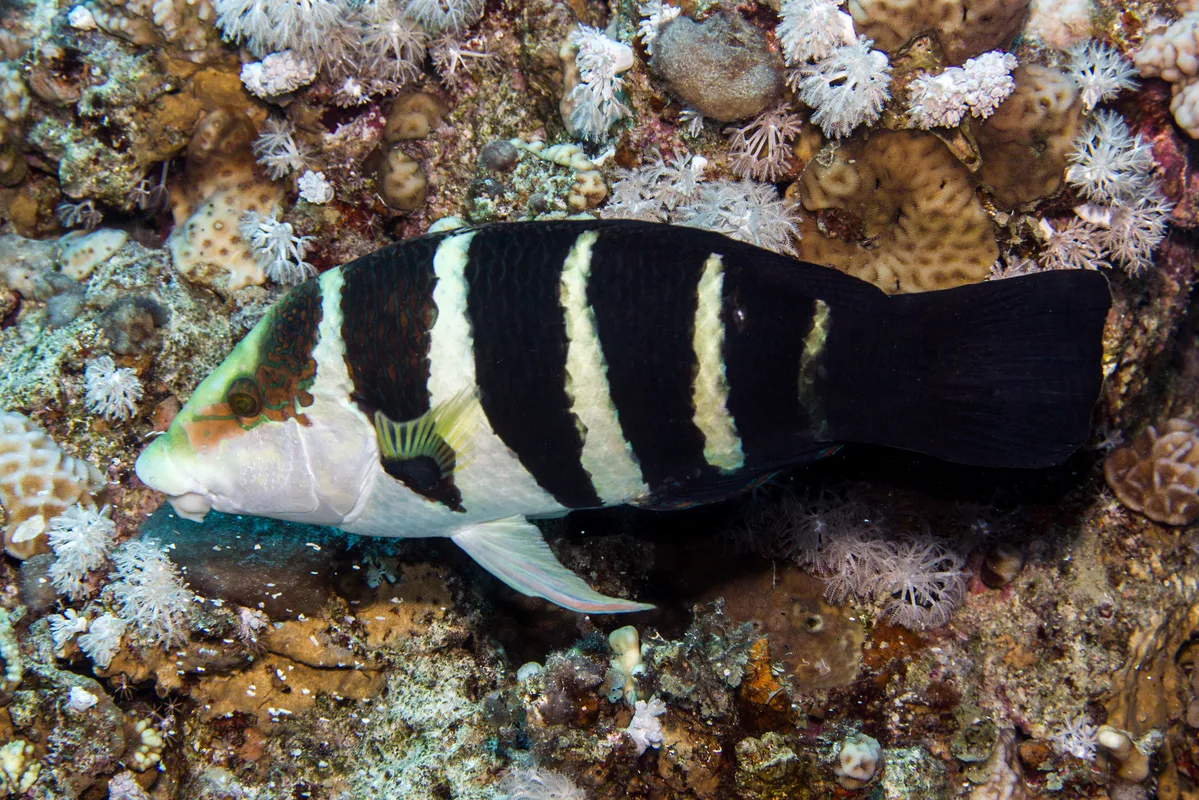
At half a meter it is a big fish and a conspicuous one, barred with six dark bands that are boldest on young animals and fade as they grow. Big males lose most of the pattern and turn a heavy blue-green, which is why the largest individuals are regularly logged as something else entirely.
The genus. Hemigymnus Günther 1861 - hemi- (partial) + gymnos (bare or naked). ETYFish
The species. Hemigymnus sexfasciatus (Rüppell 1835) - sex (six) + fasciatus (banded). ETYFish
- six dark bars down the body, strongest in juveniles and young adults
- very thick fleshy lips
- large, to half a meter, and heavy-bodied
- up to 50 cm
Why it's threatened
There are no major threats known for this species.
Threat classification from the IUCN Red List.