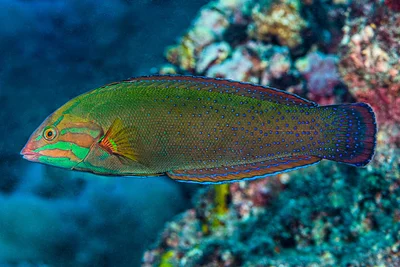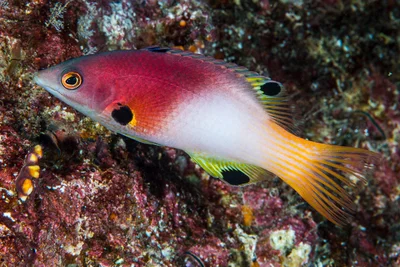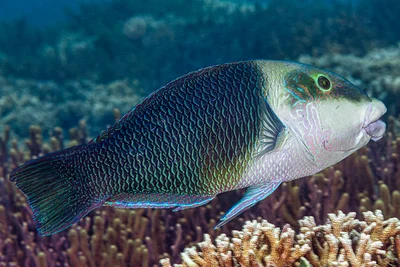
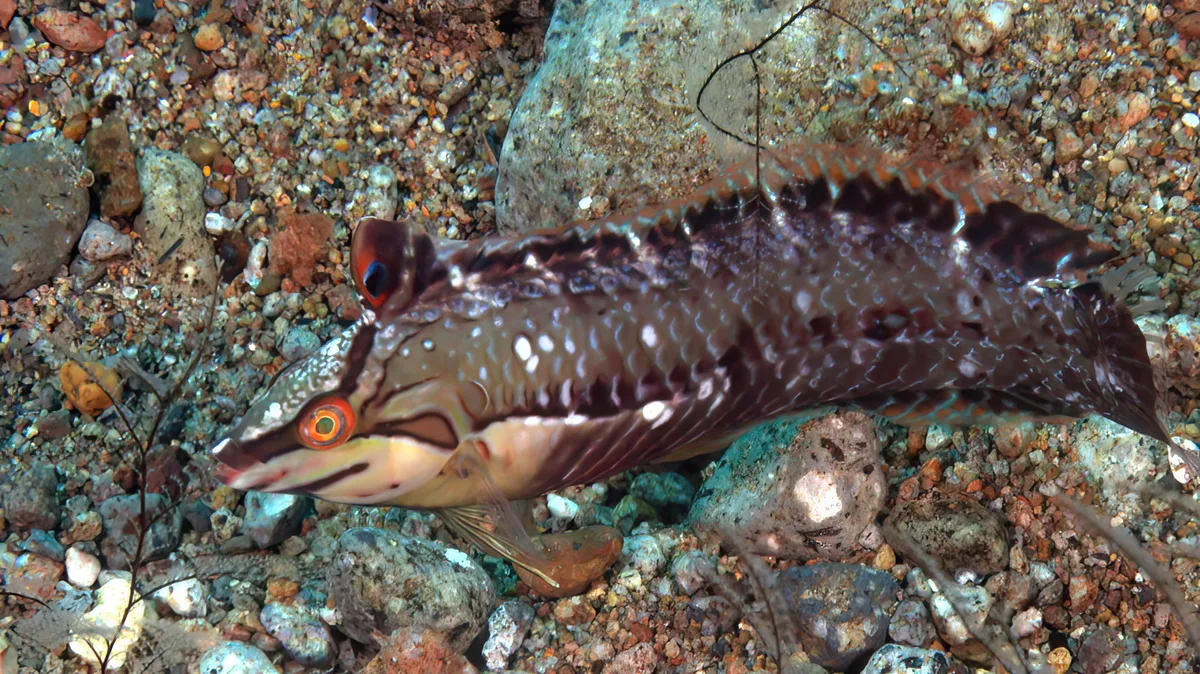
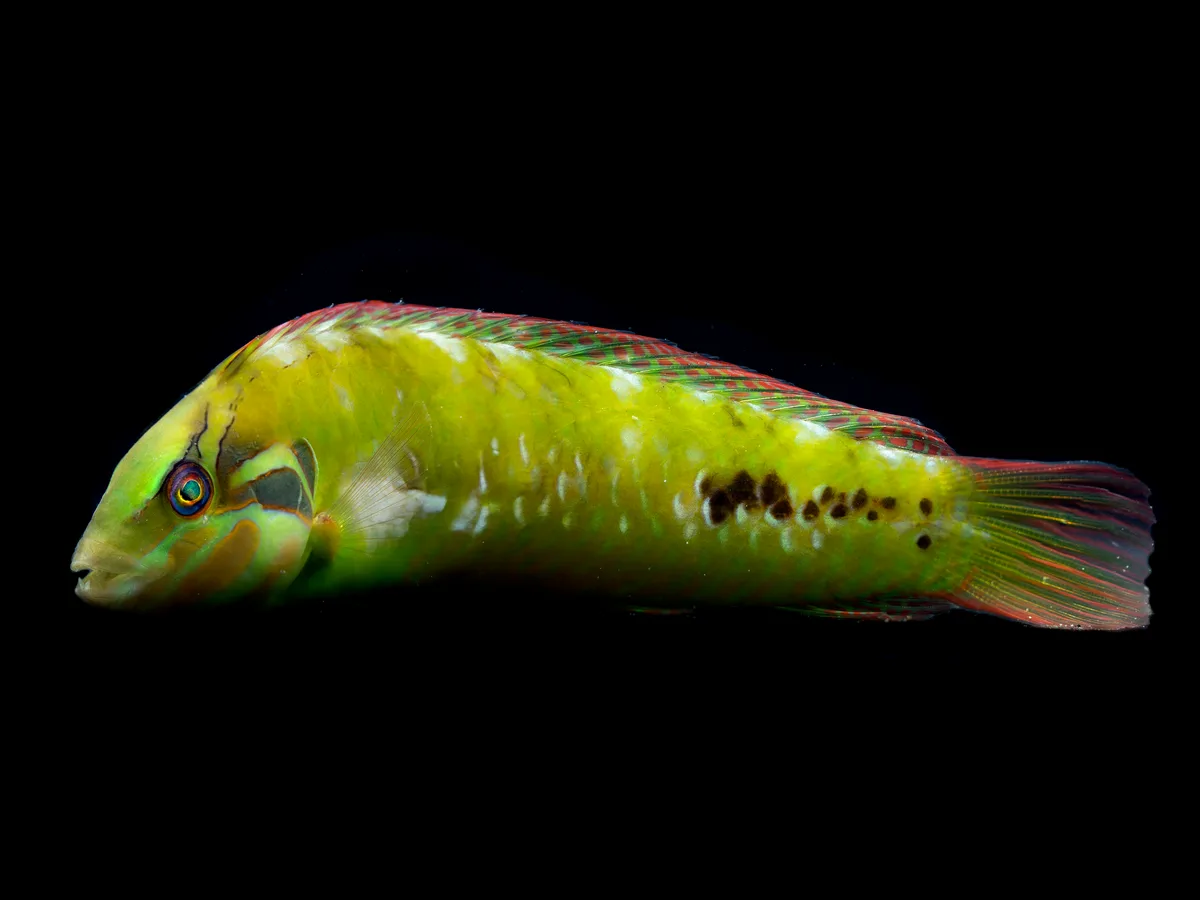
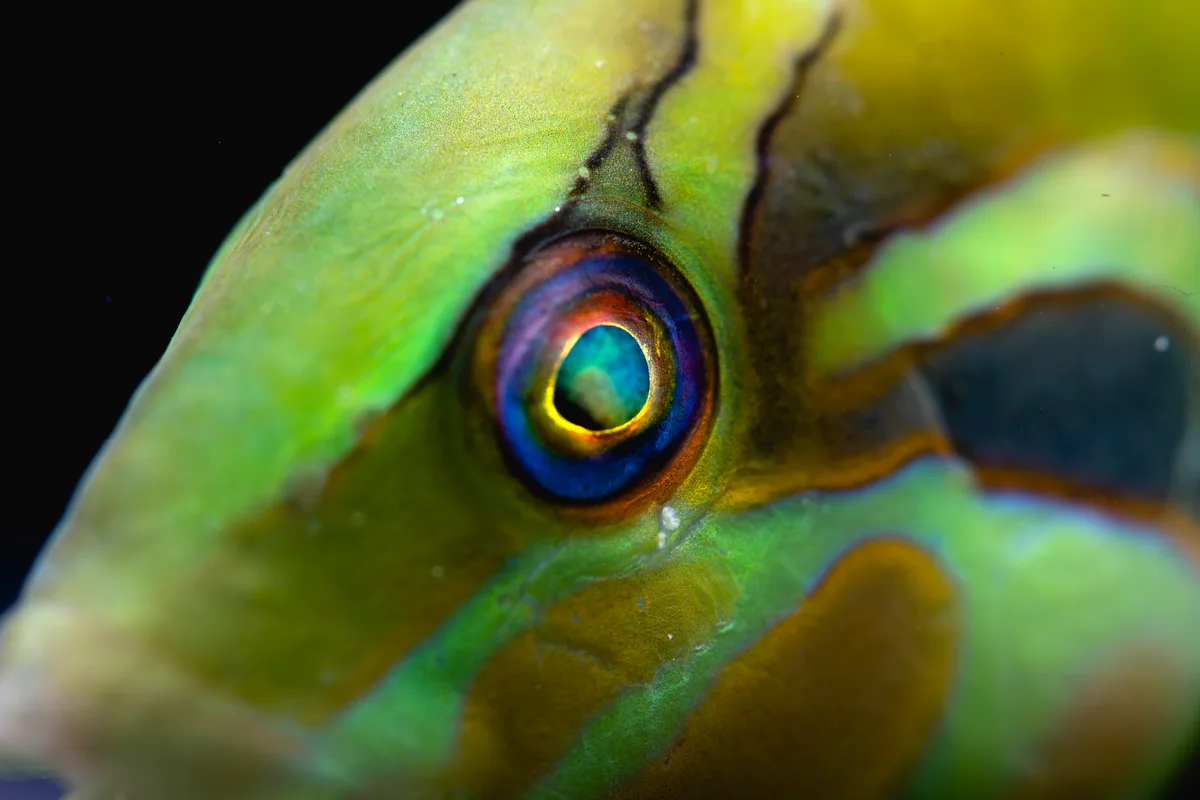
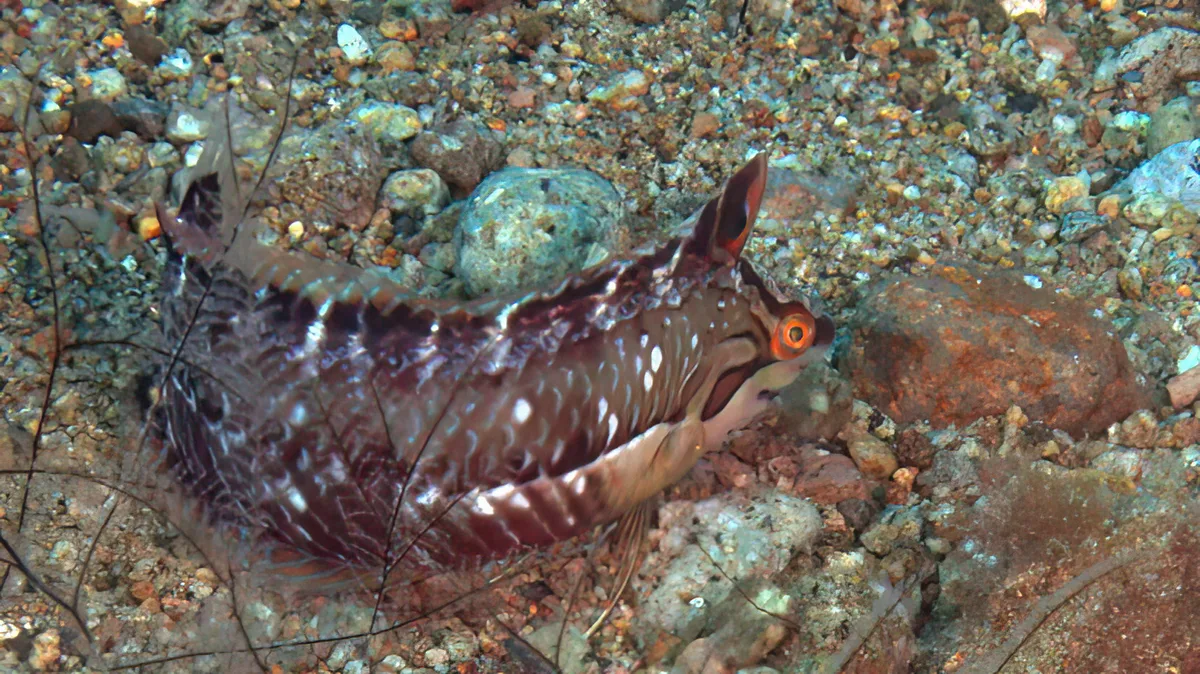
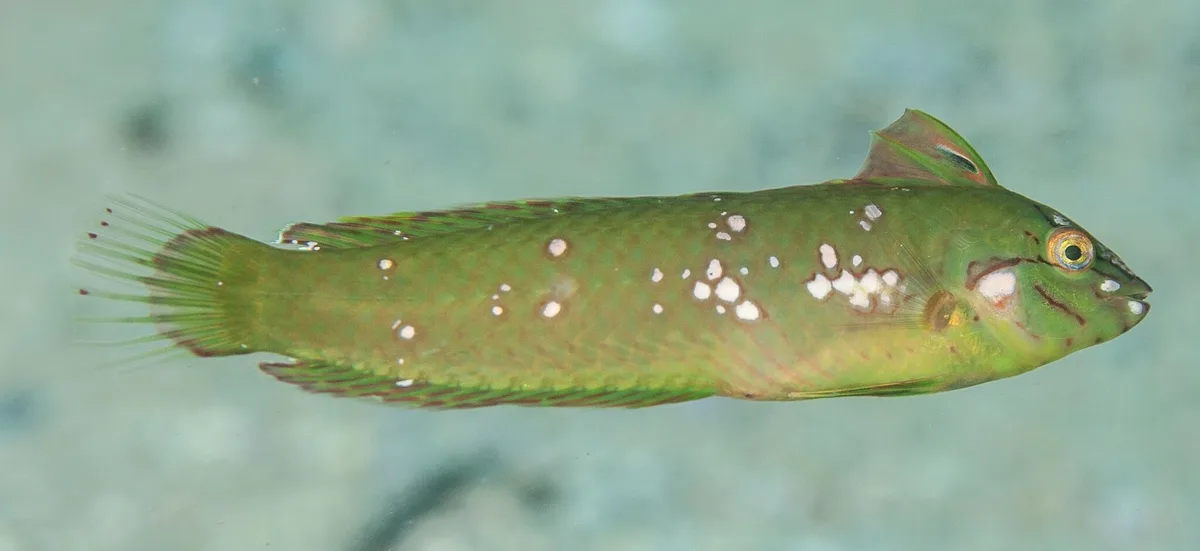
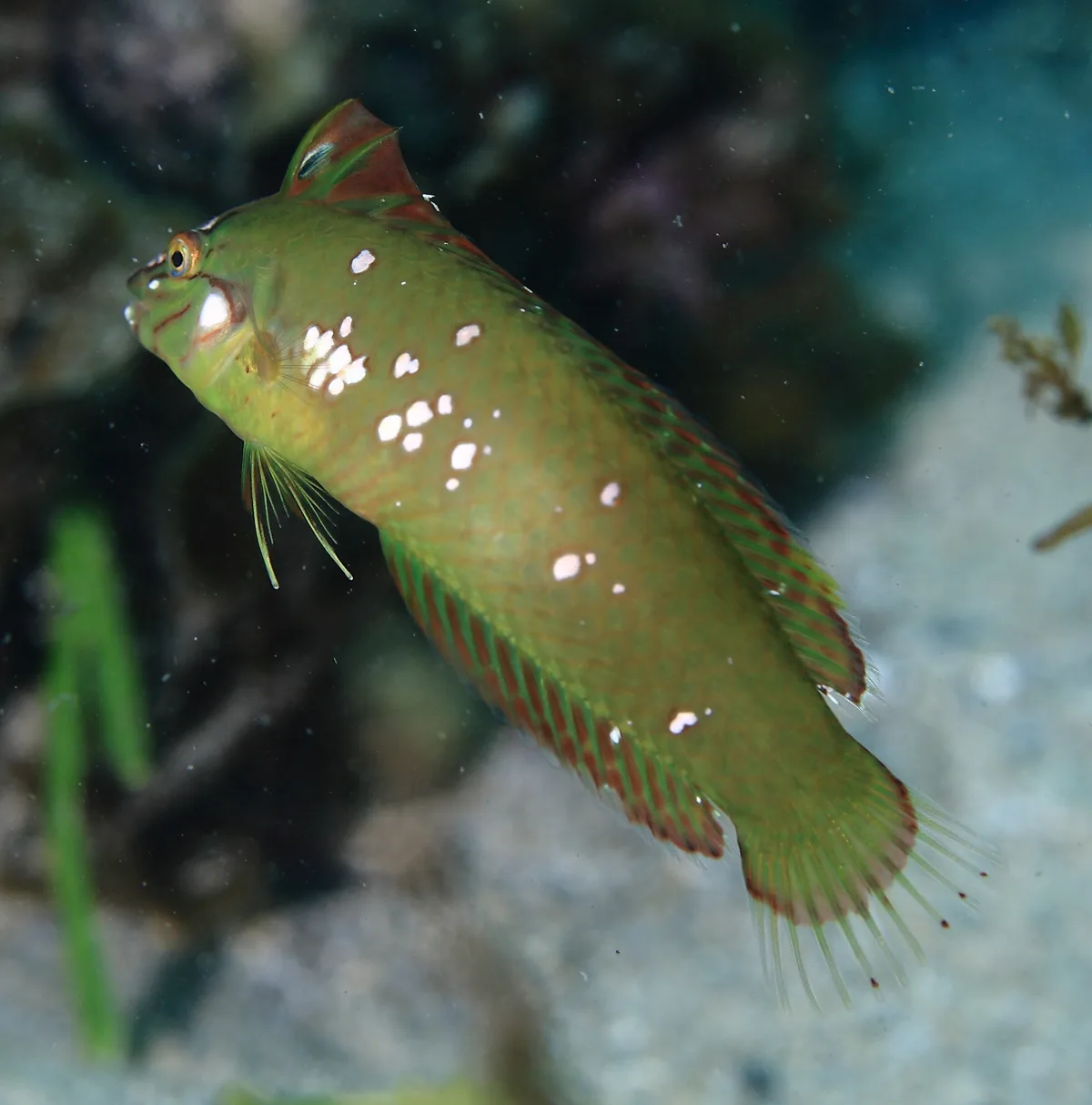
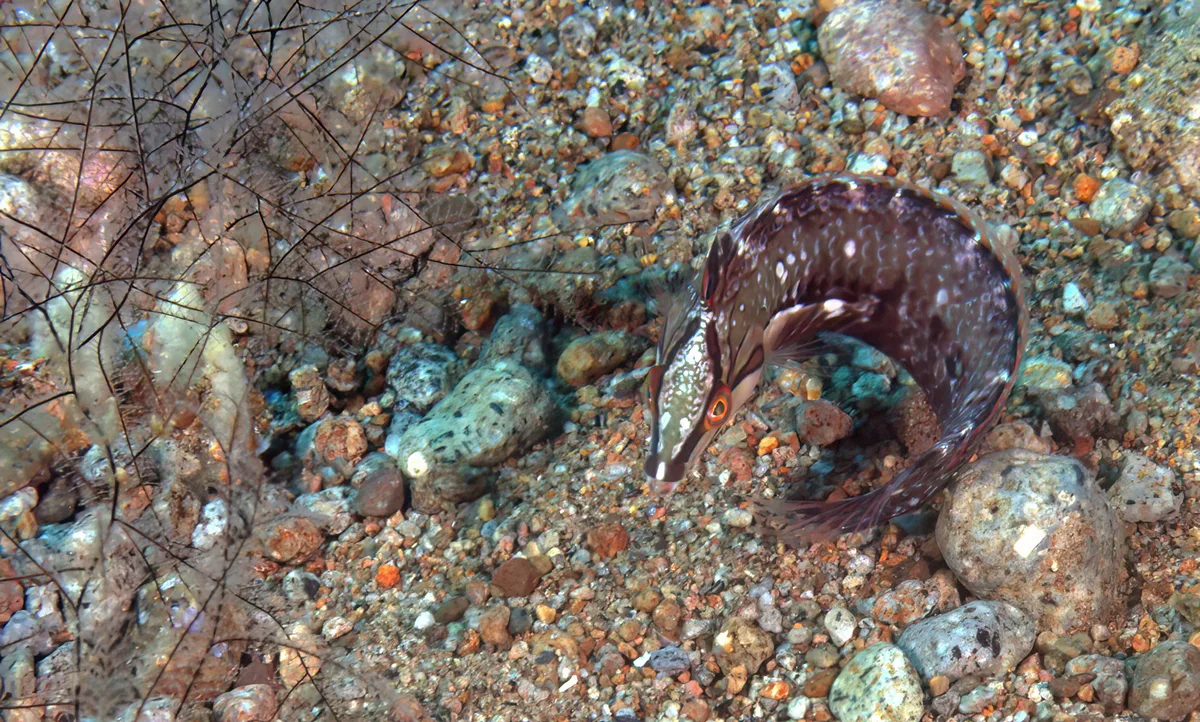
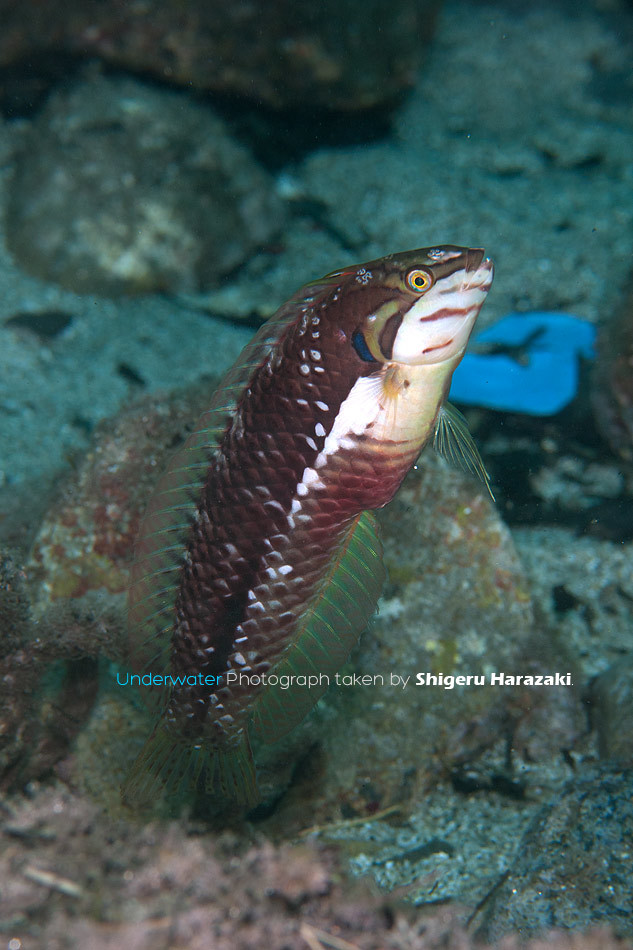
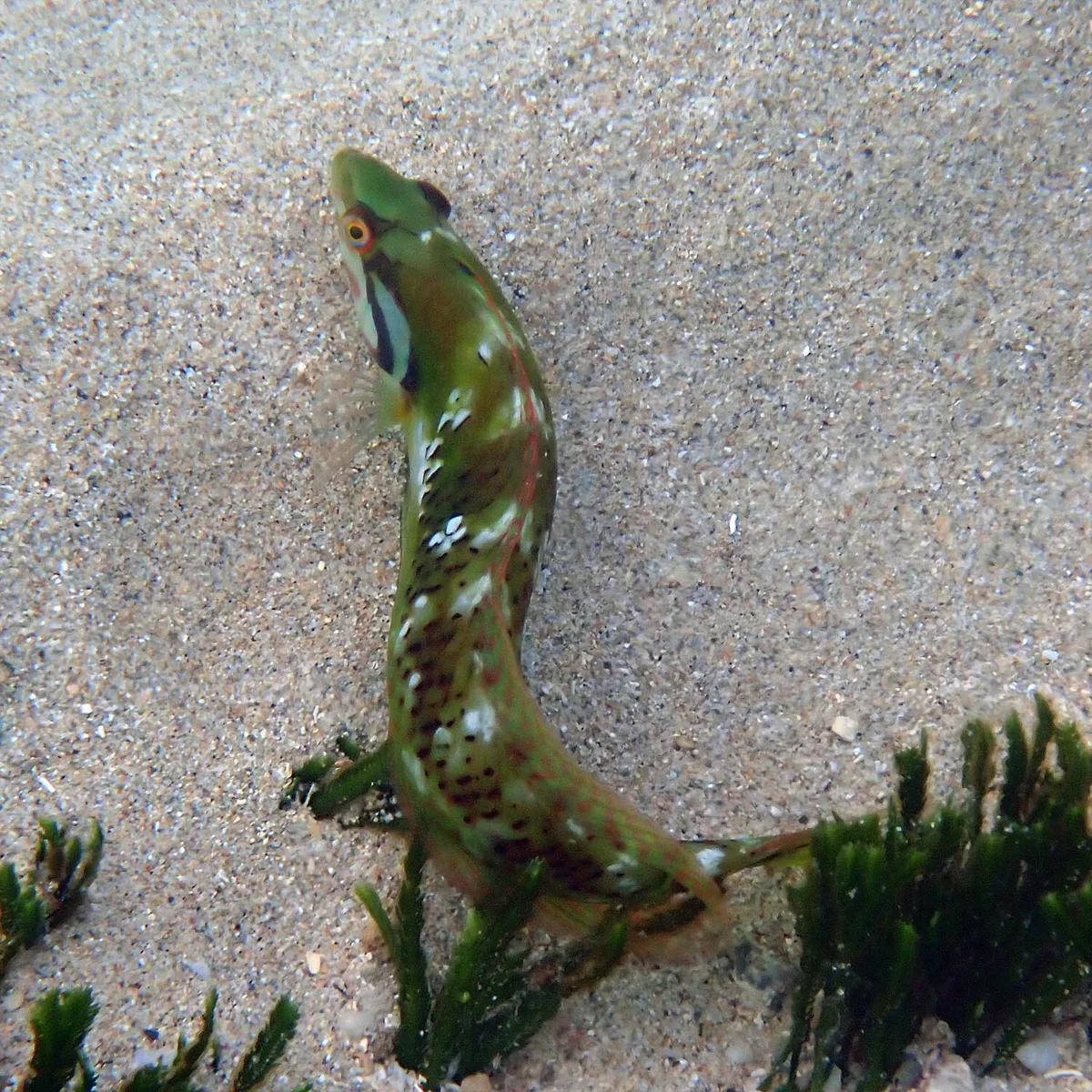
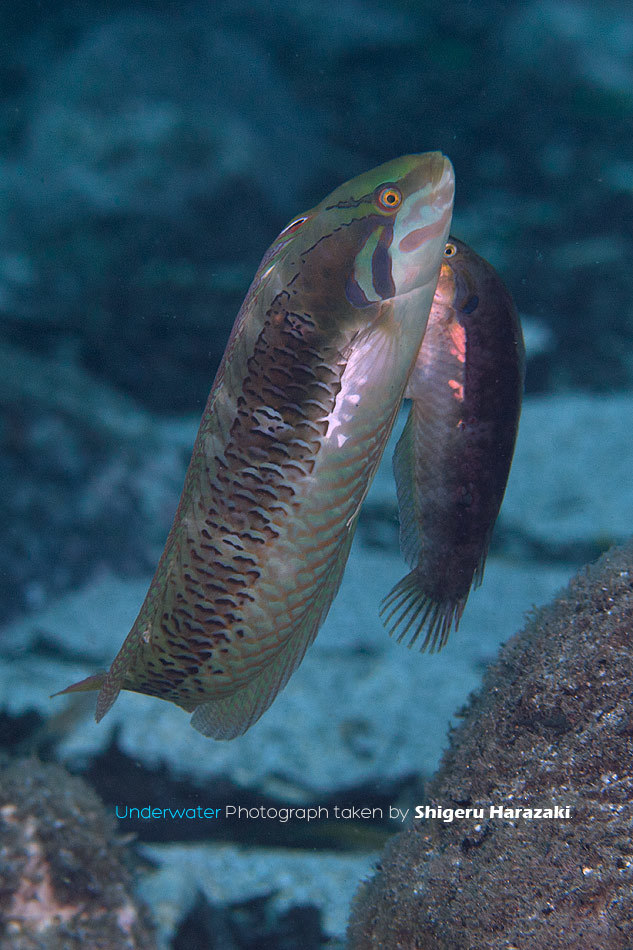
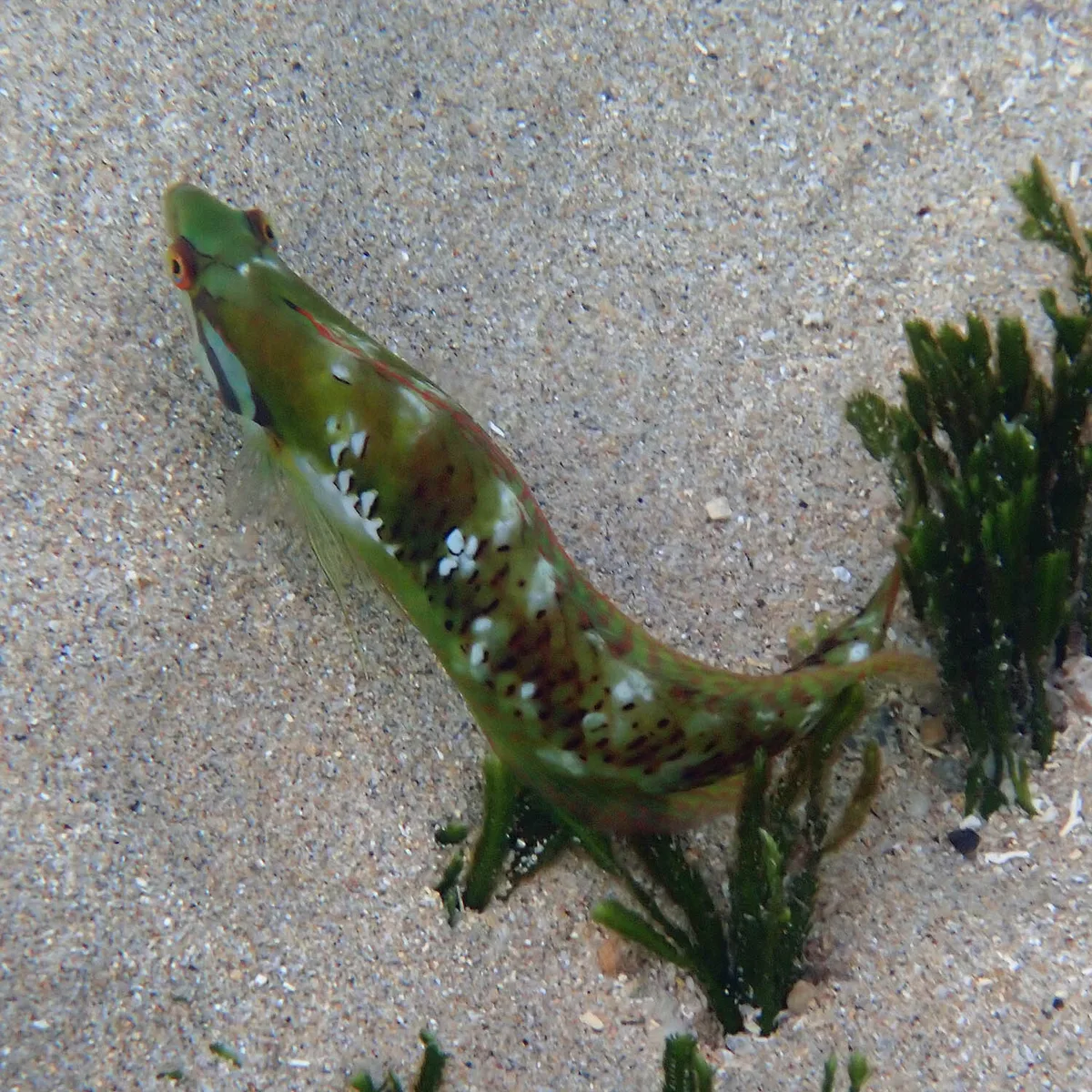
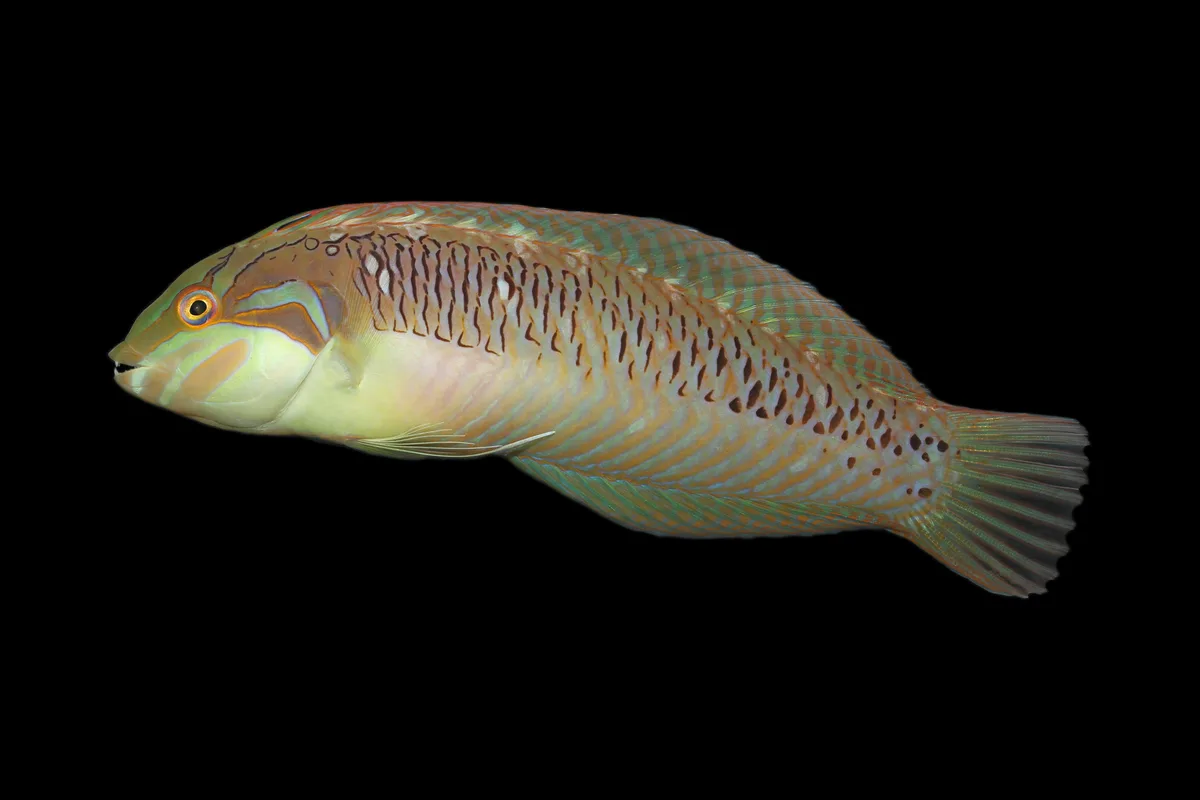
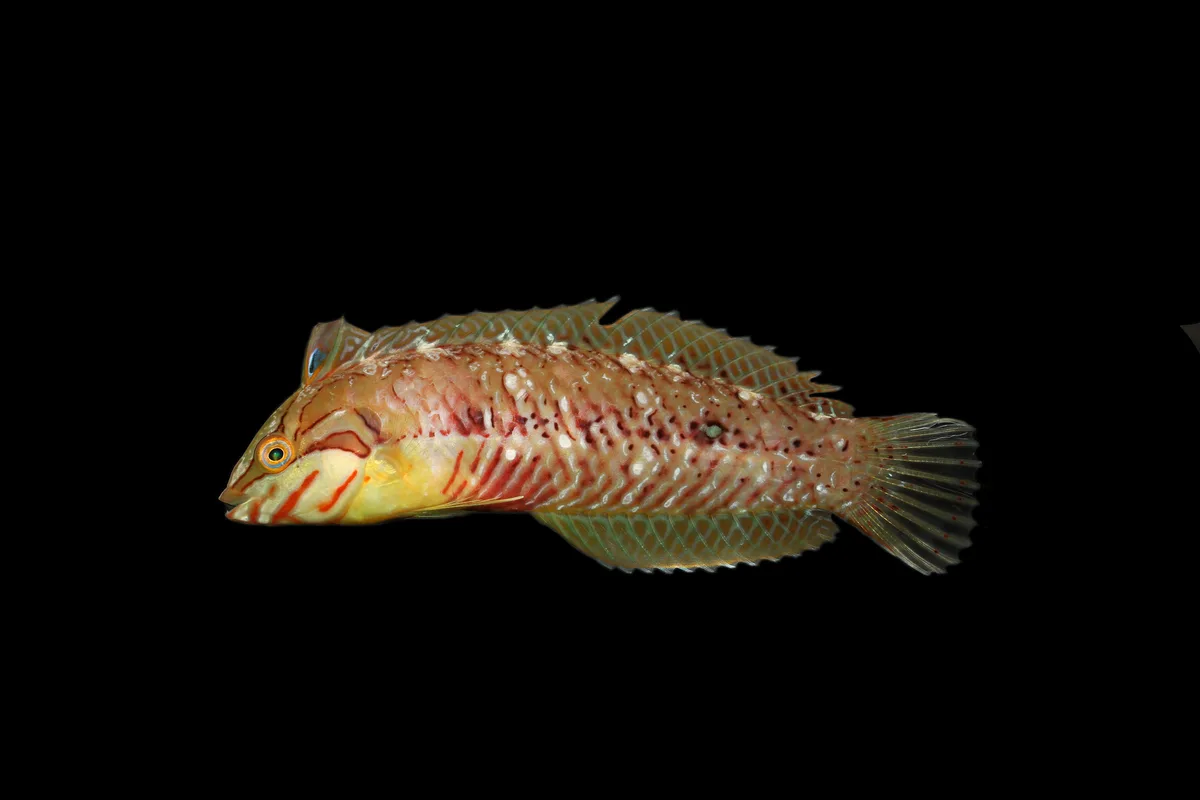
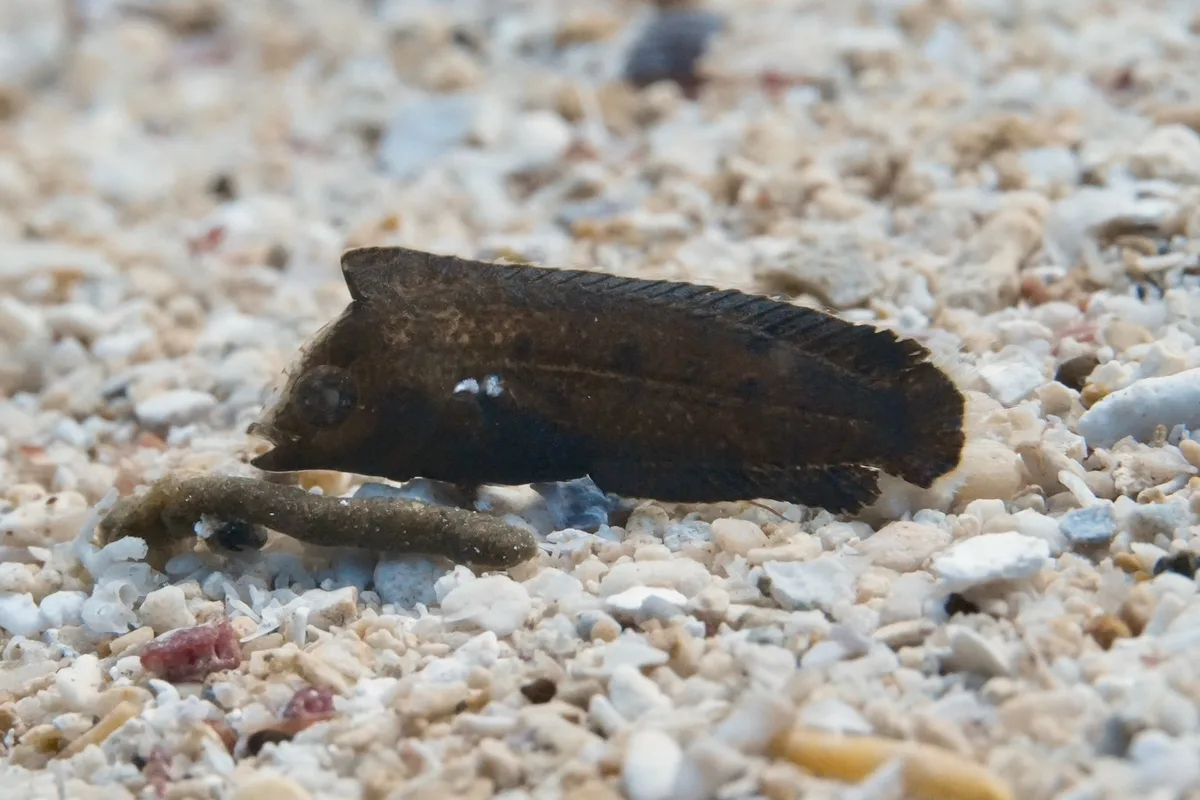
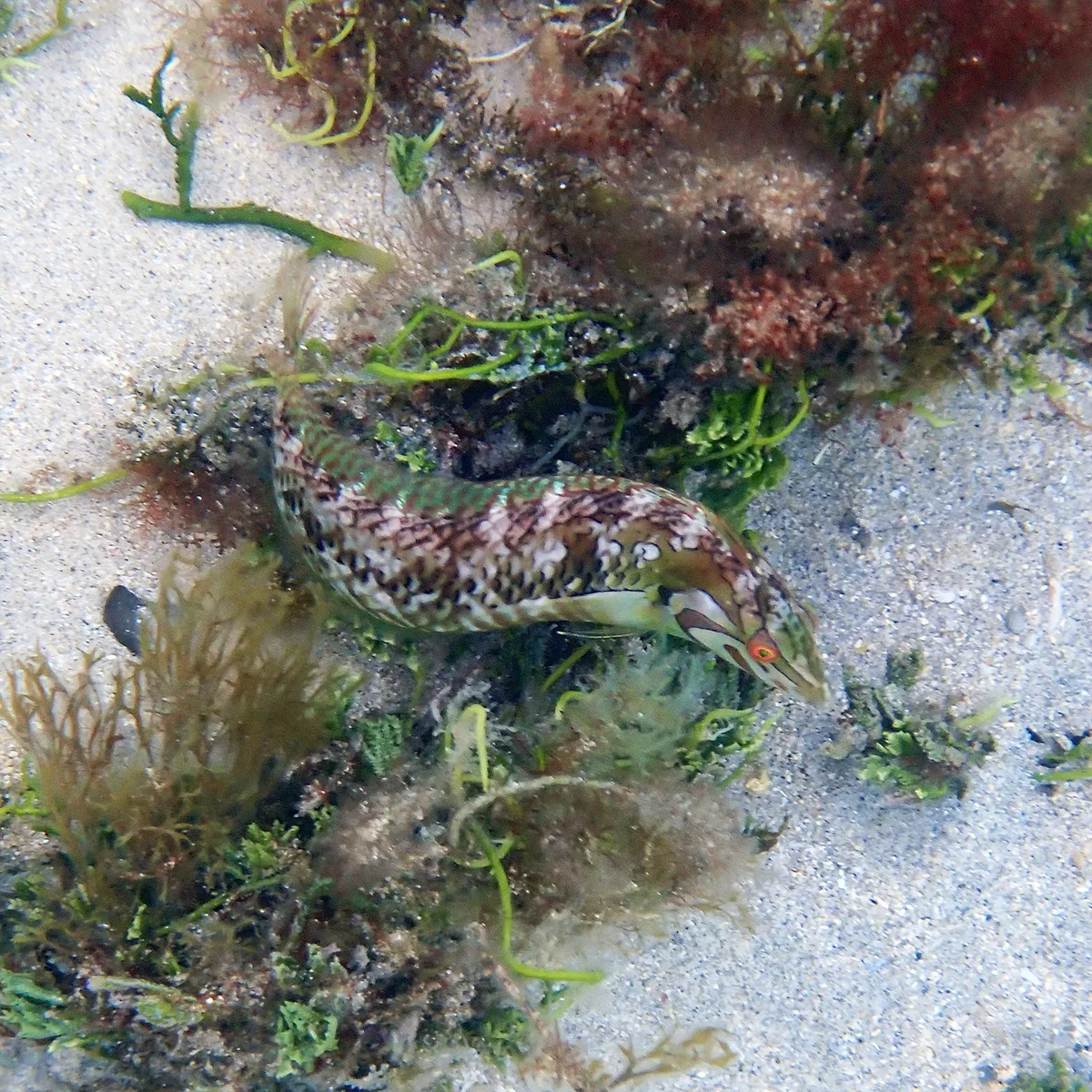
The head is a blade, and that is what makes the disappearing act possible.
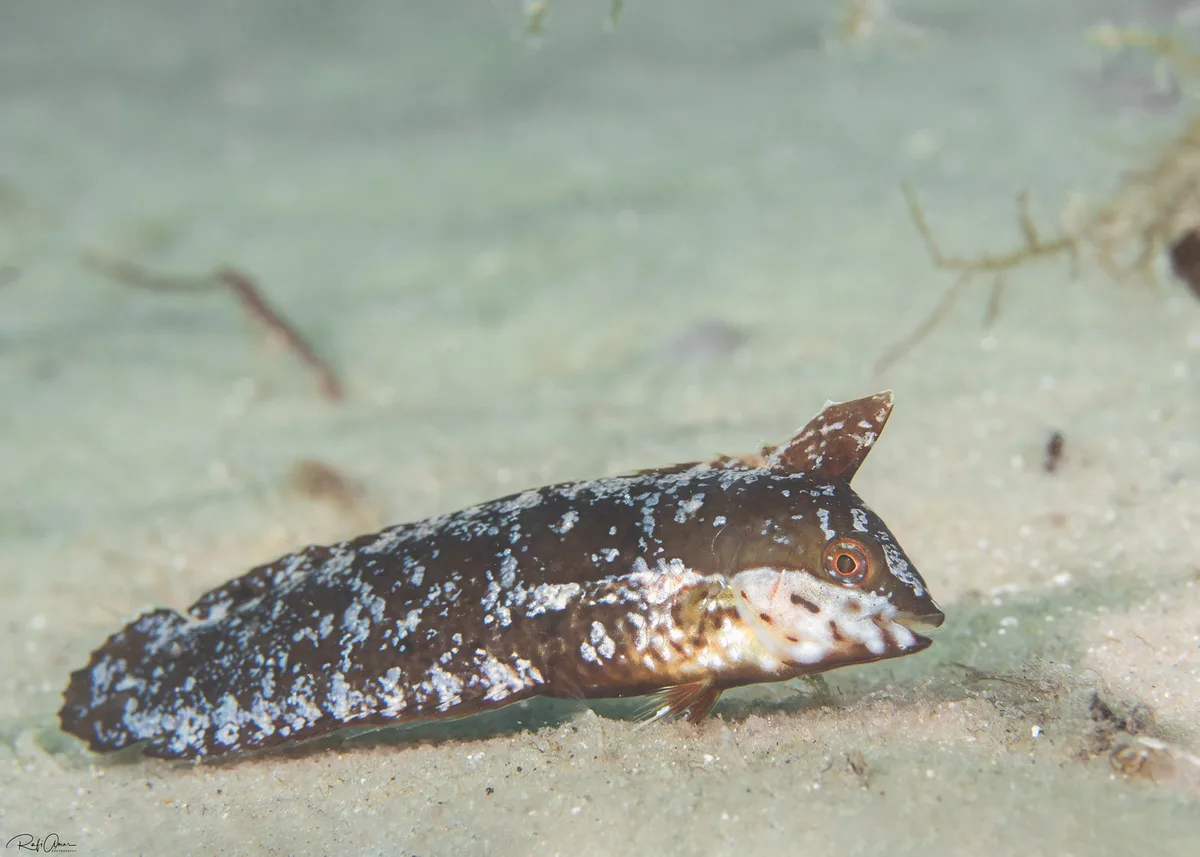
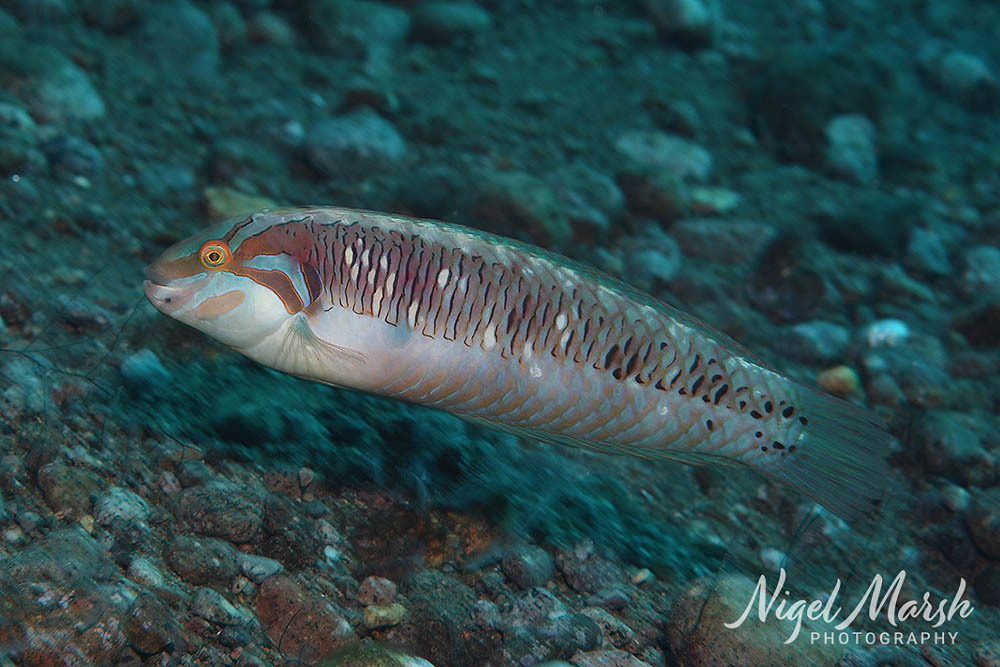
Razorfishes and their relatives dive into open sand to escape, and doing it takes more than nerve. The body is strongly compressed side to side, and the front of the head is drawn into a steep vertical edge with the mouth at the bottom, so the fish presents a knife to the sediment rather than a face. It swims at the bottom at speed, the edge parts the sand, and the whole animal is under in well under a second, leaving no visible hole.
Underneath, it keeps going. These fish move horizontally through loose sand for a meter or more before stopping, so a predator that marks the entry point and digs there finds nothing.
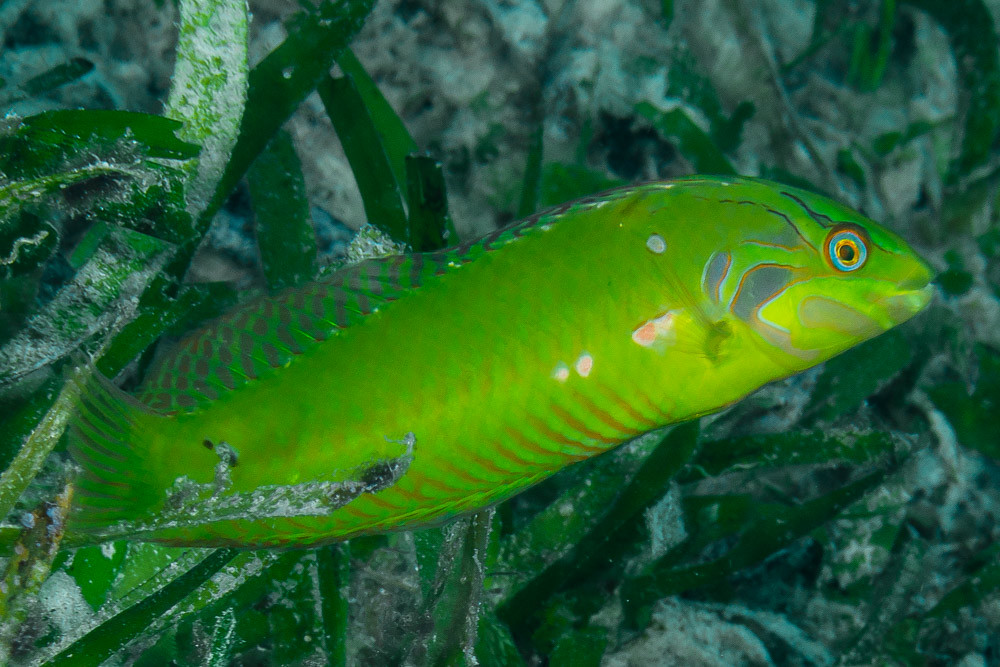
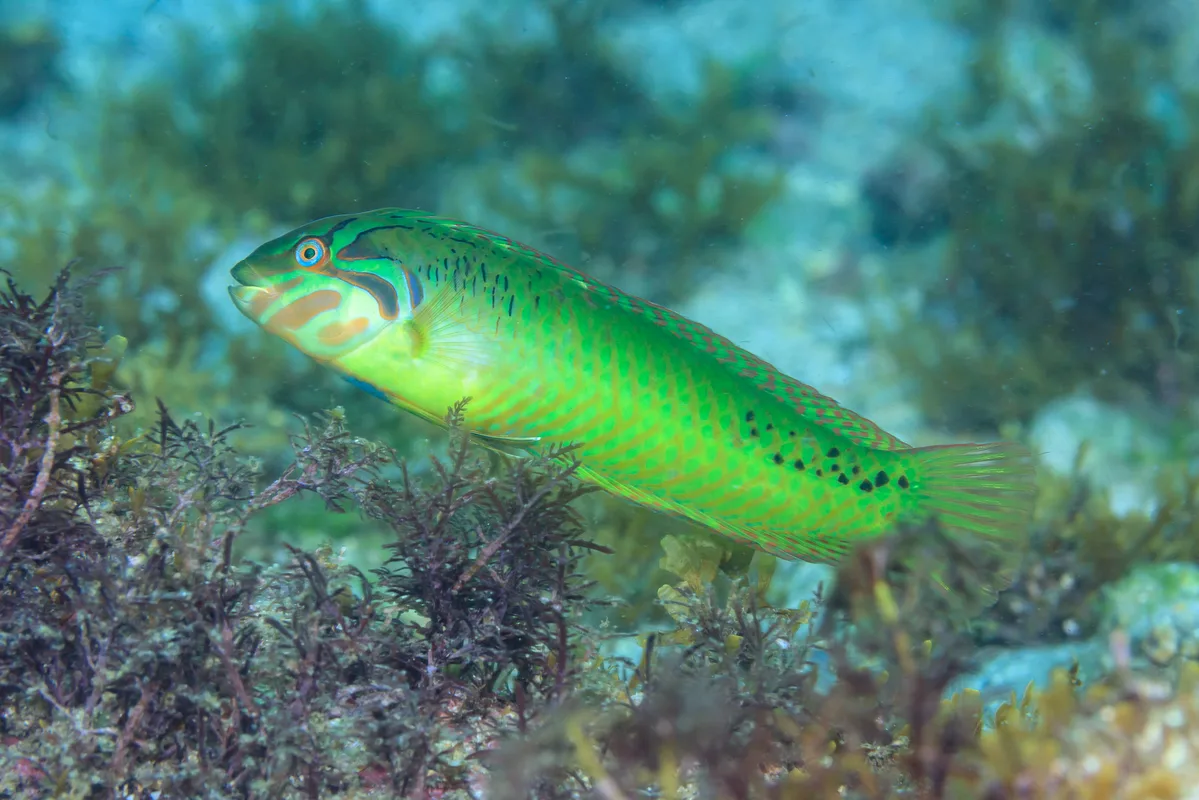
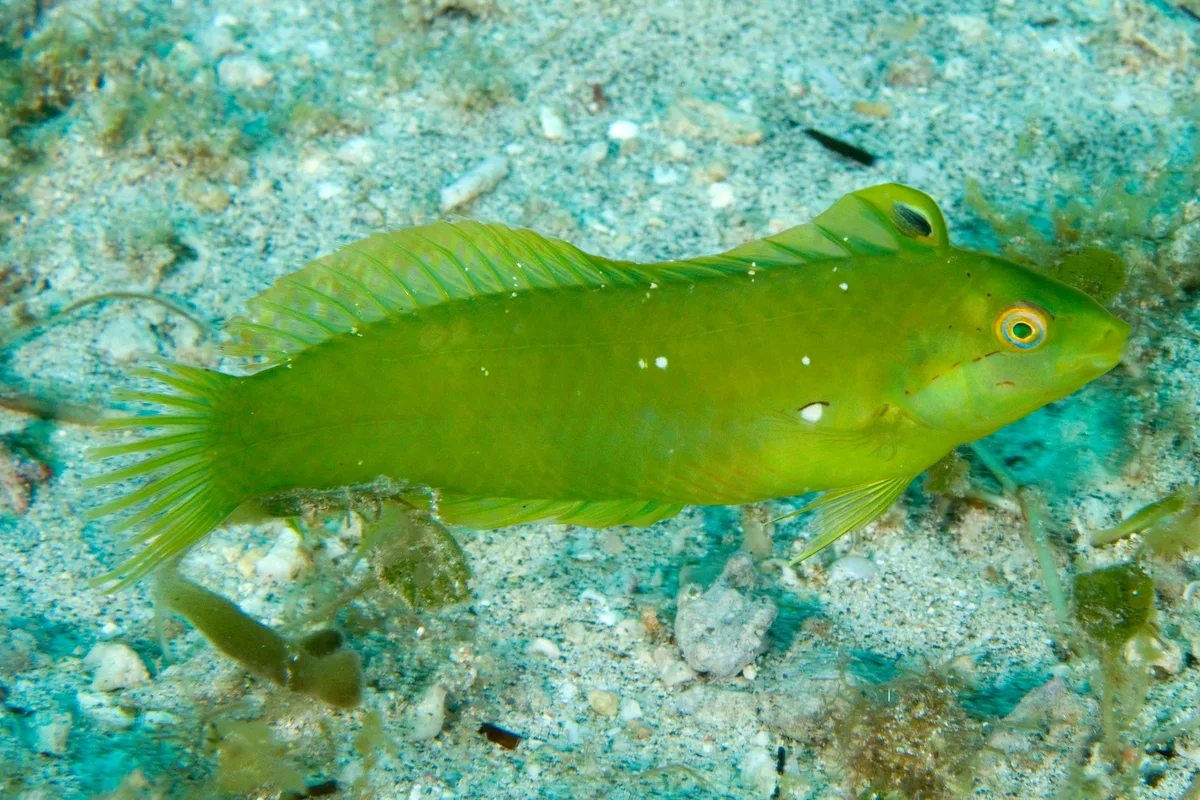
This species lives in seagrass rather than open sand, green to brown to match the blades, moving slowly among them. It is the only member of its genus, and it is easy to miss right up until it is not there anymore.
The species. Novaculoides macrolepidotus (Bloch 1791) - macro- (large) + lepidotus (scaled). ETYFish
- compressed body with a steep, knife-edged head profile
- green to brown, matching seagrass
- swims slowly among blades, then vanishes into the sand
- up to 16 cm