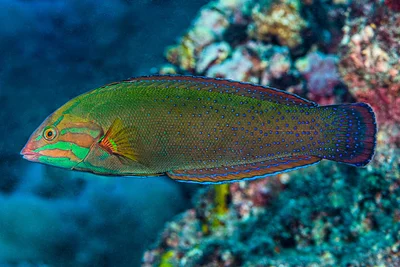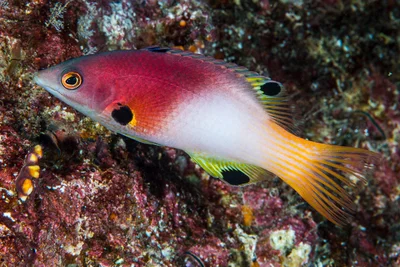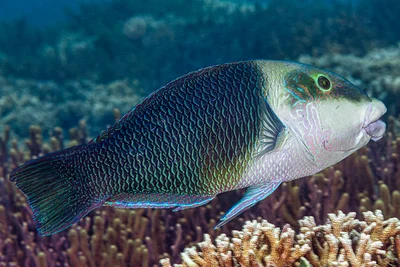
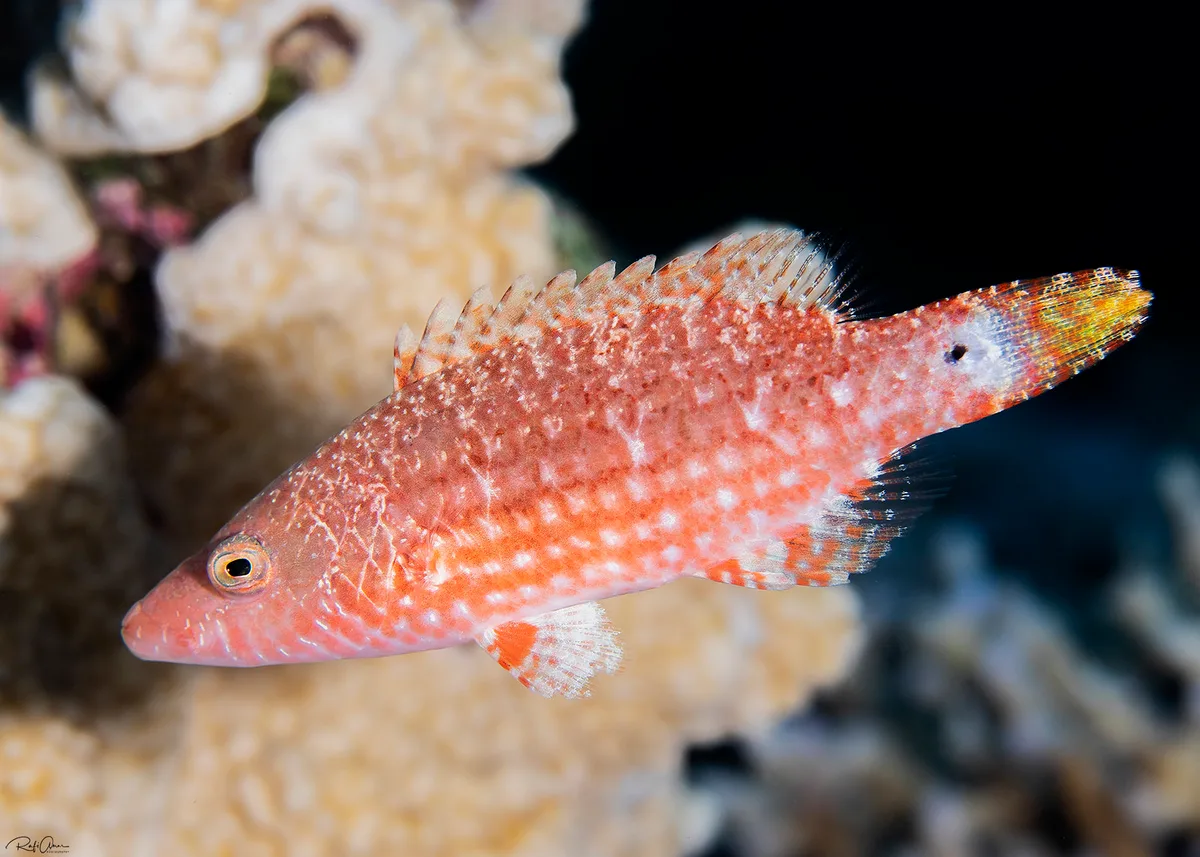
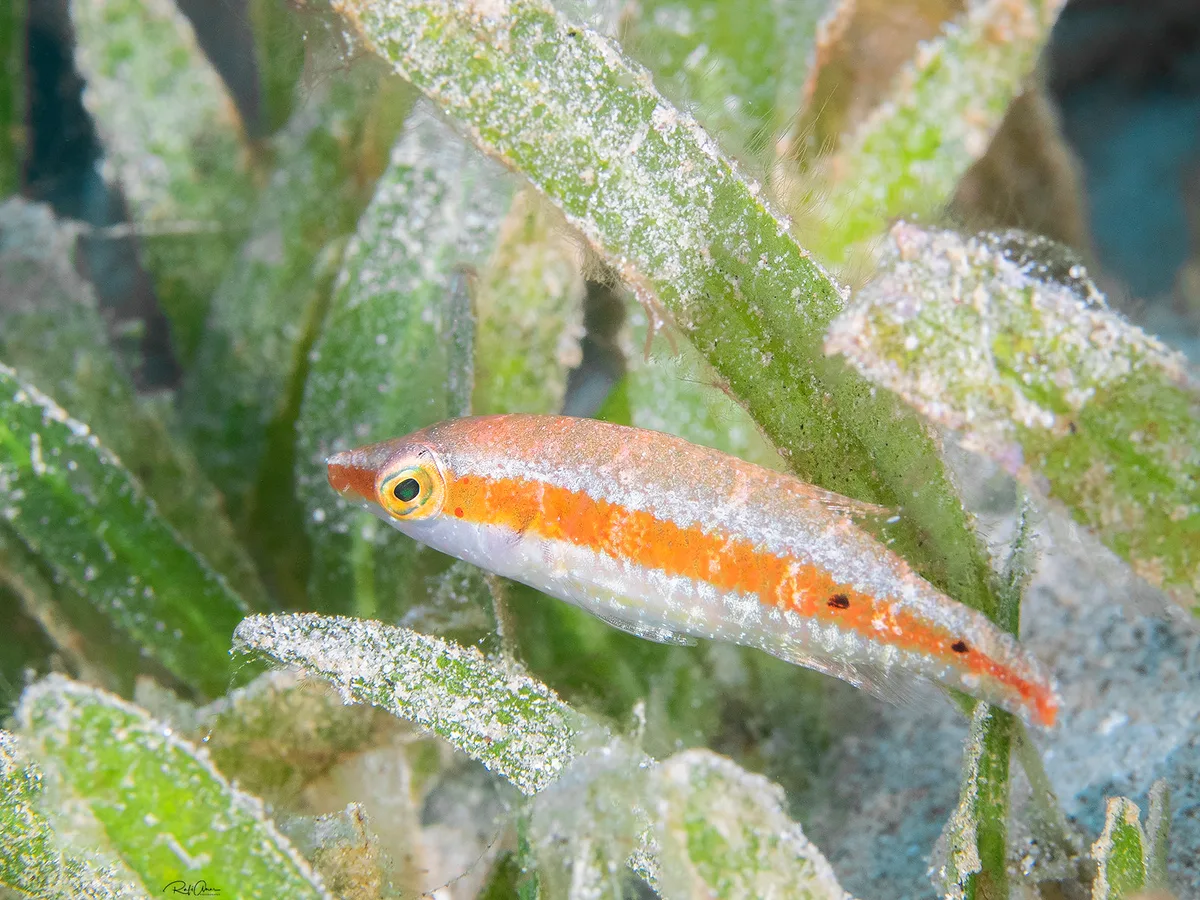
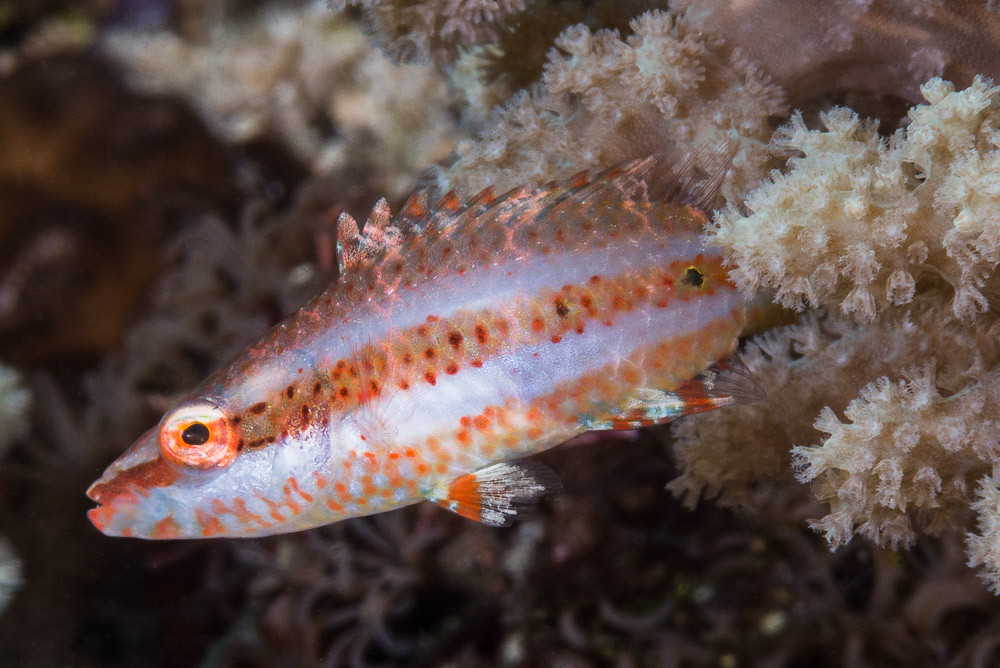
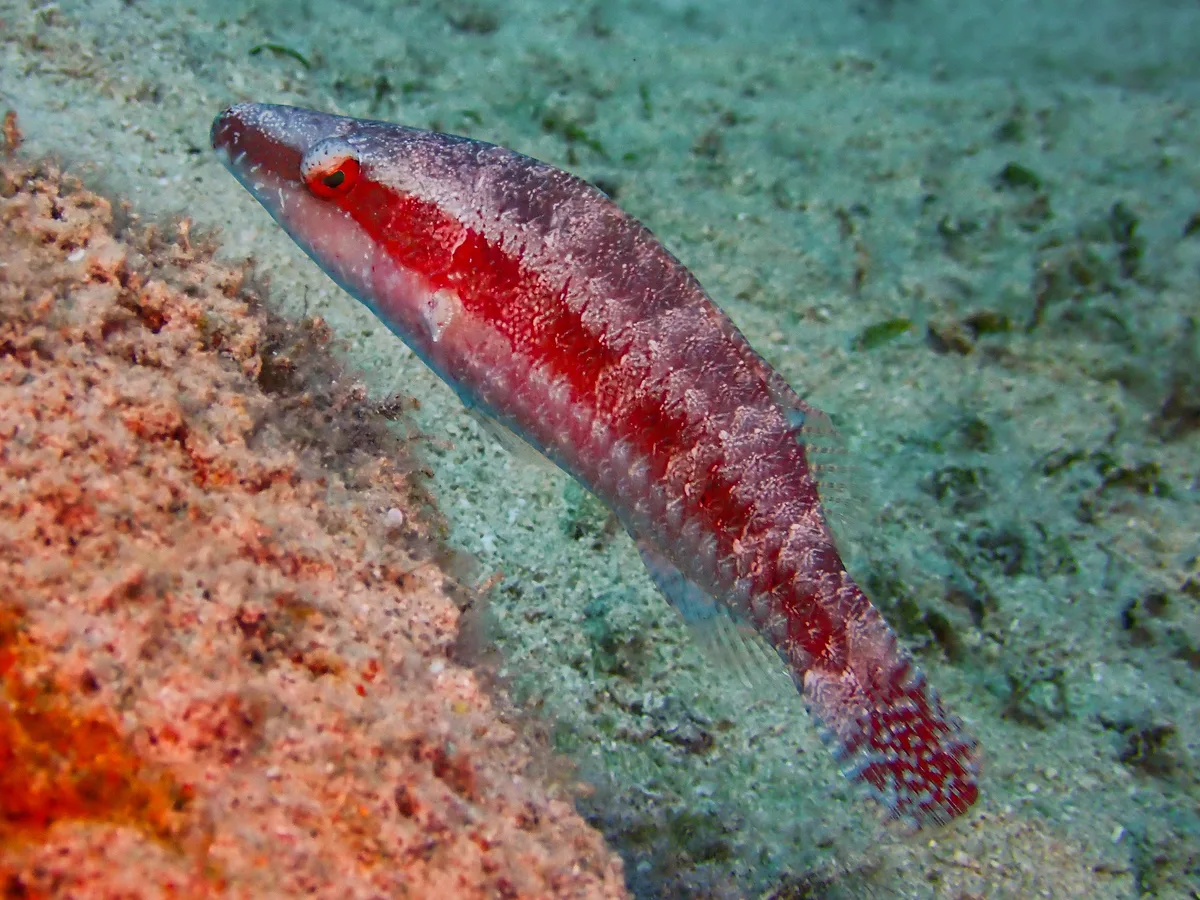
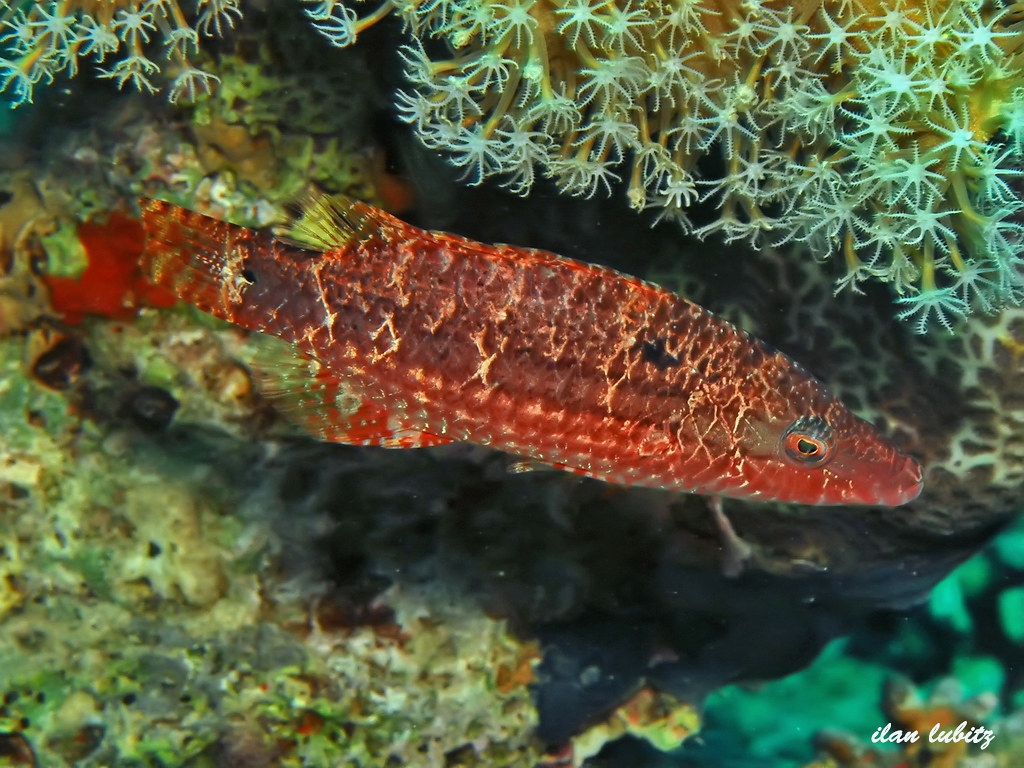
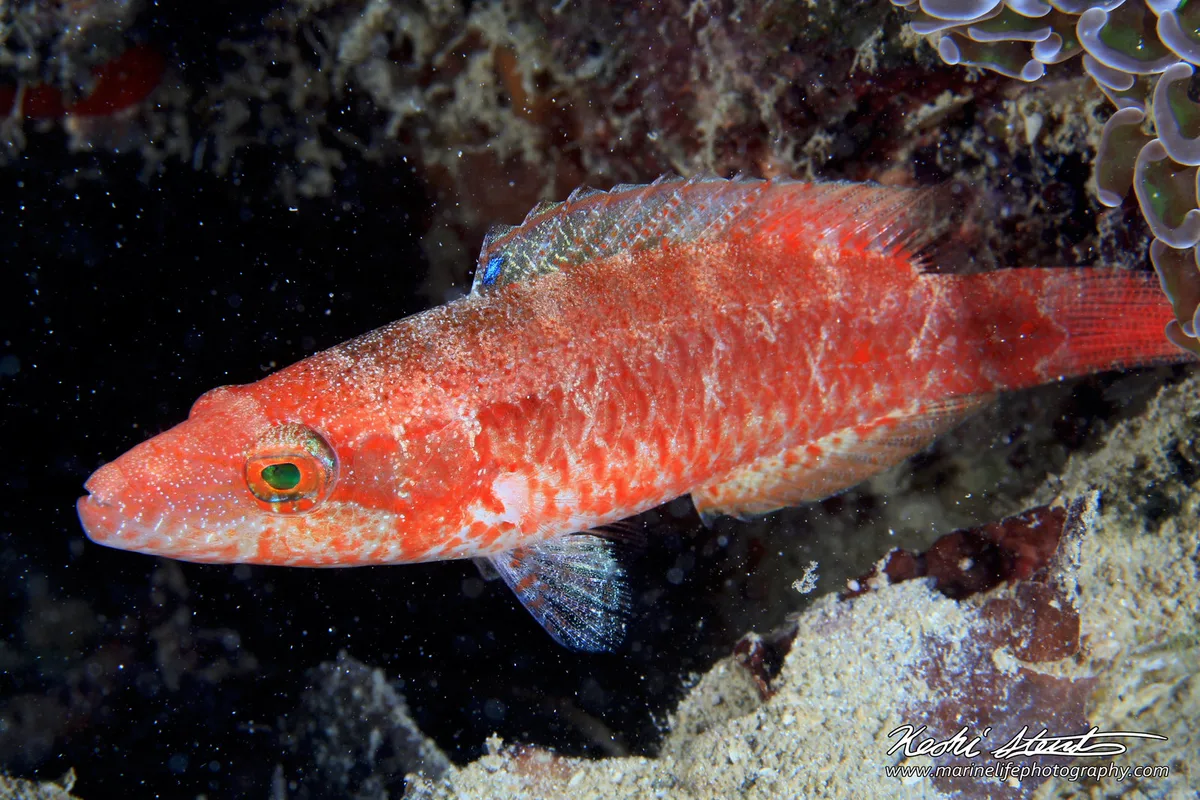
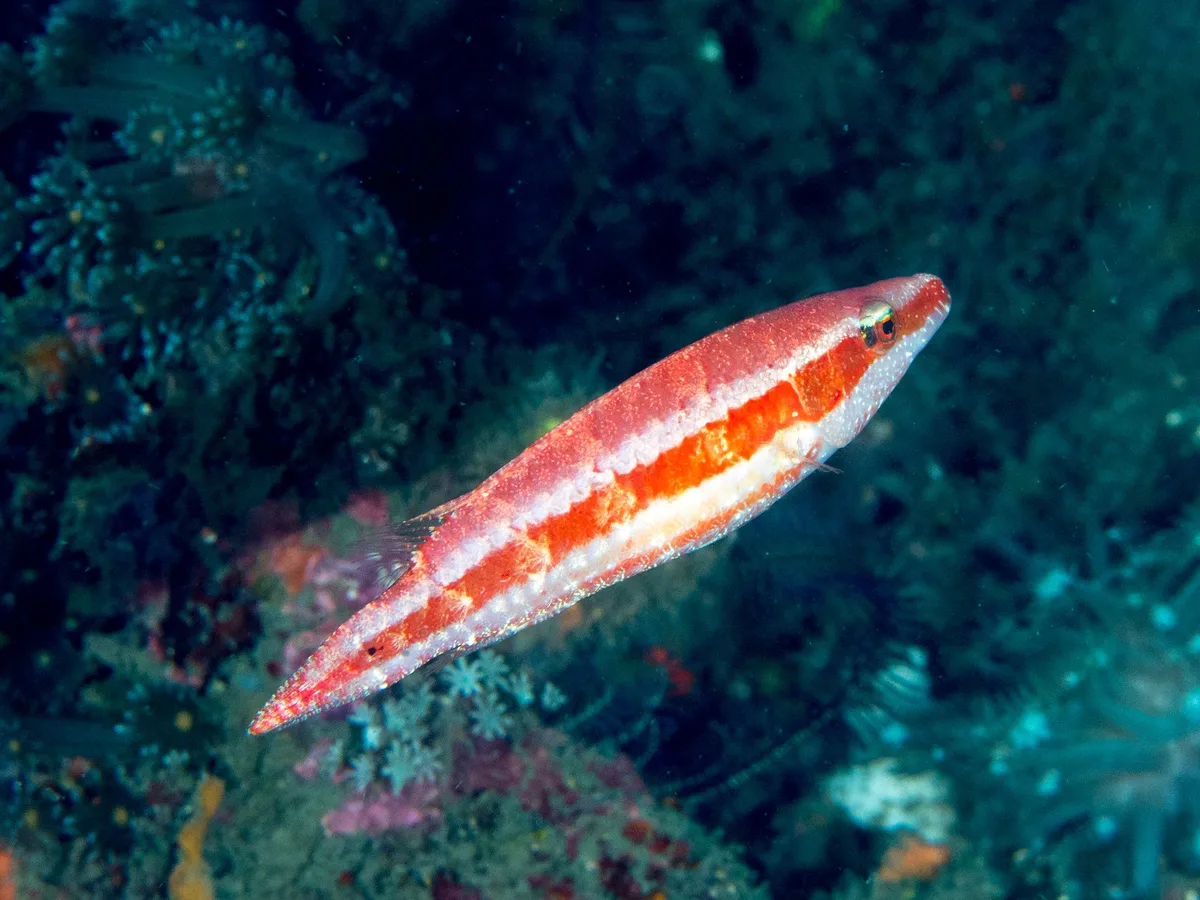
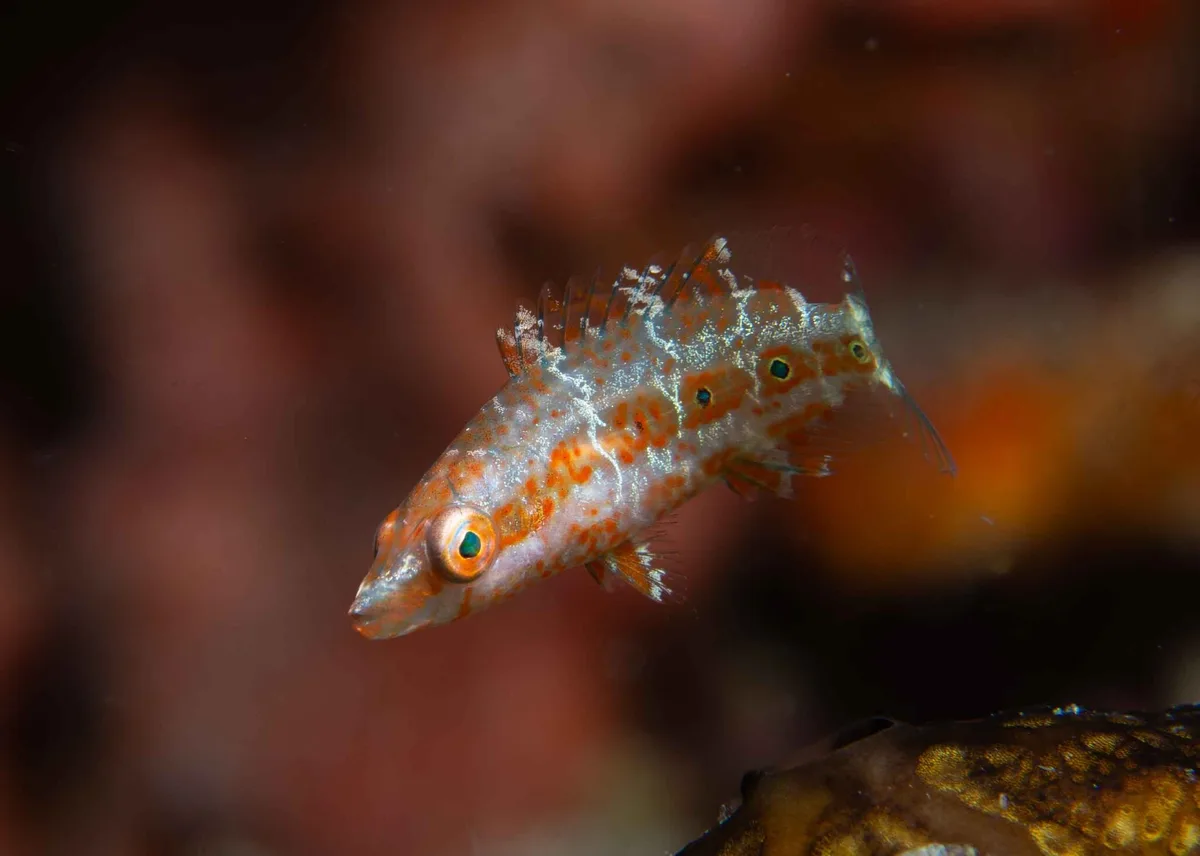
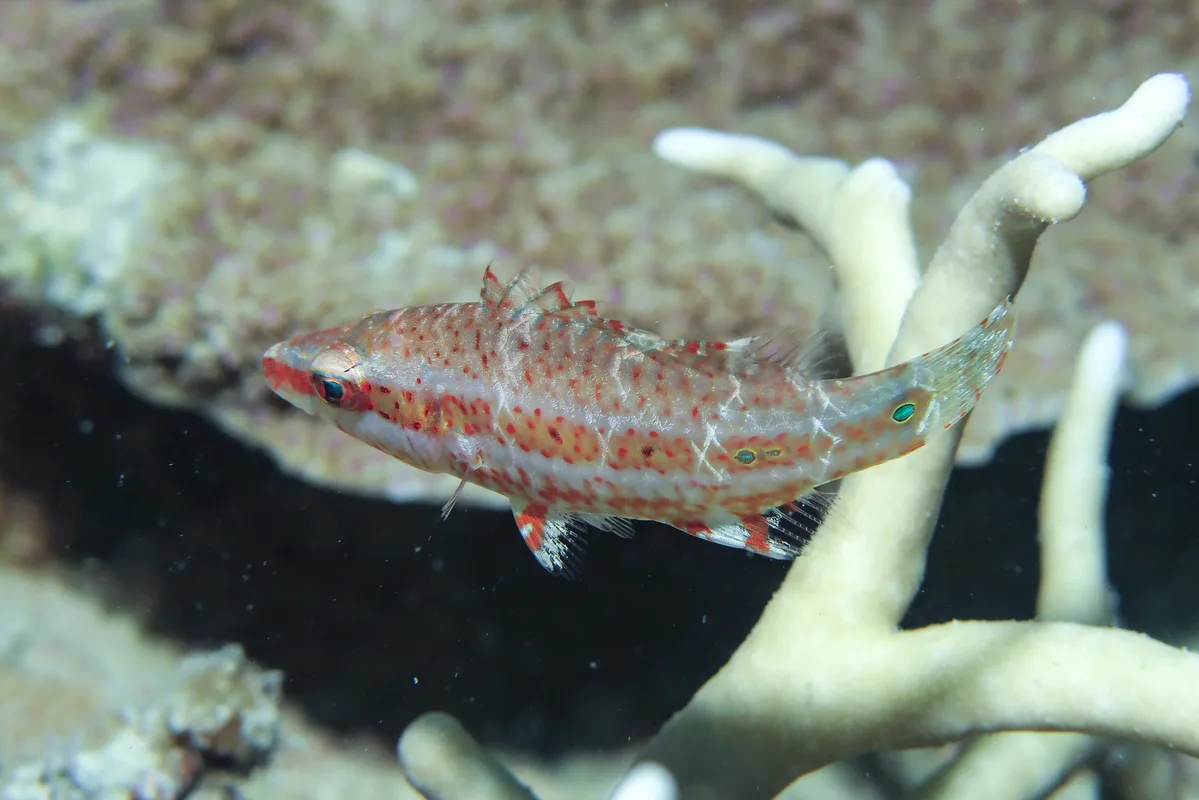
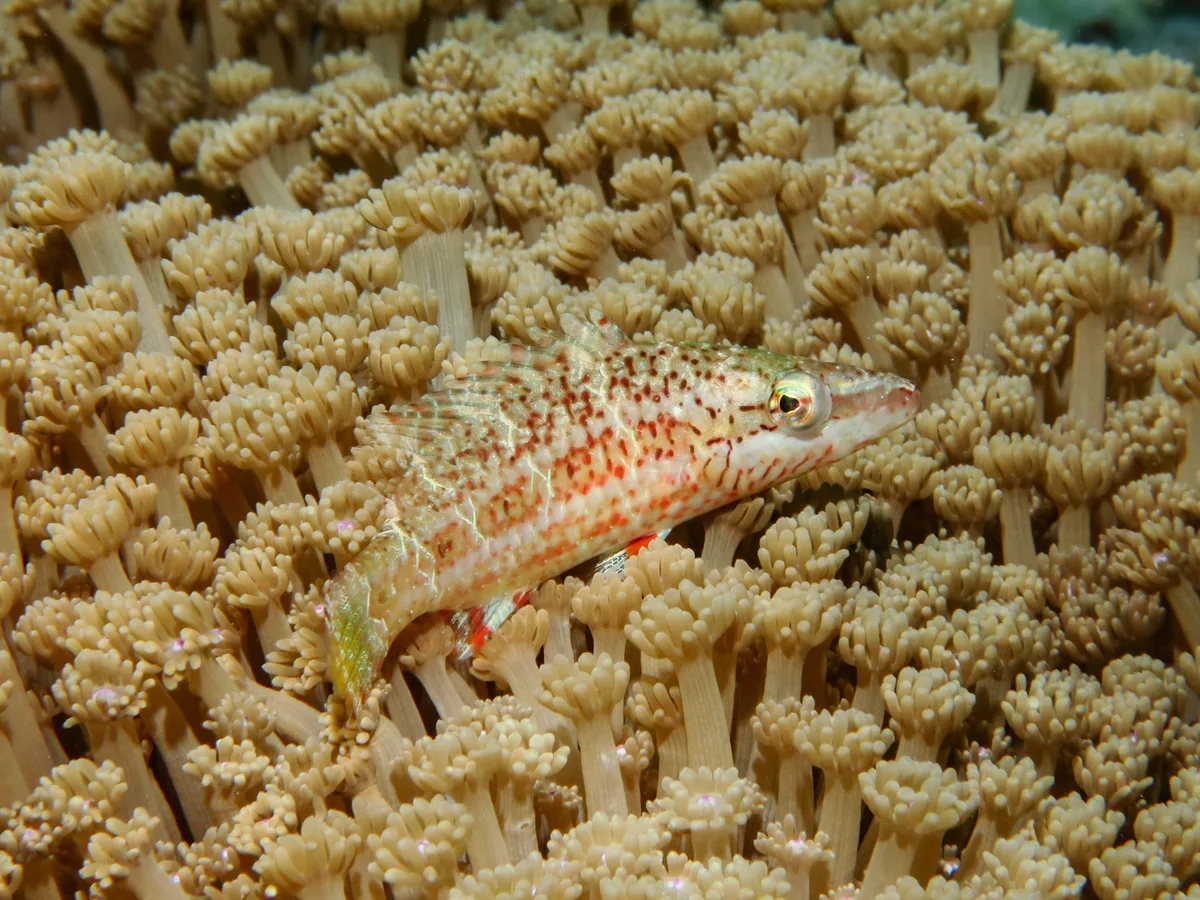
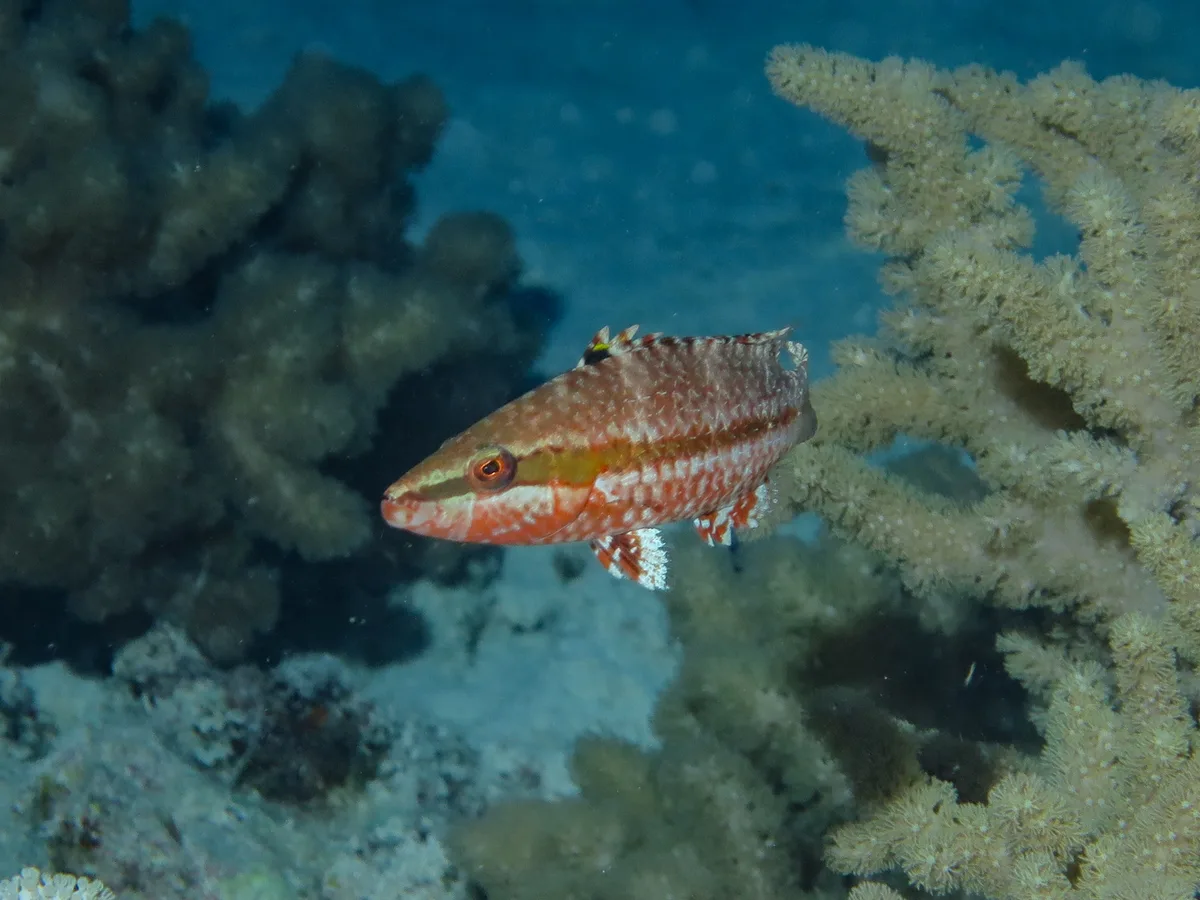
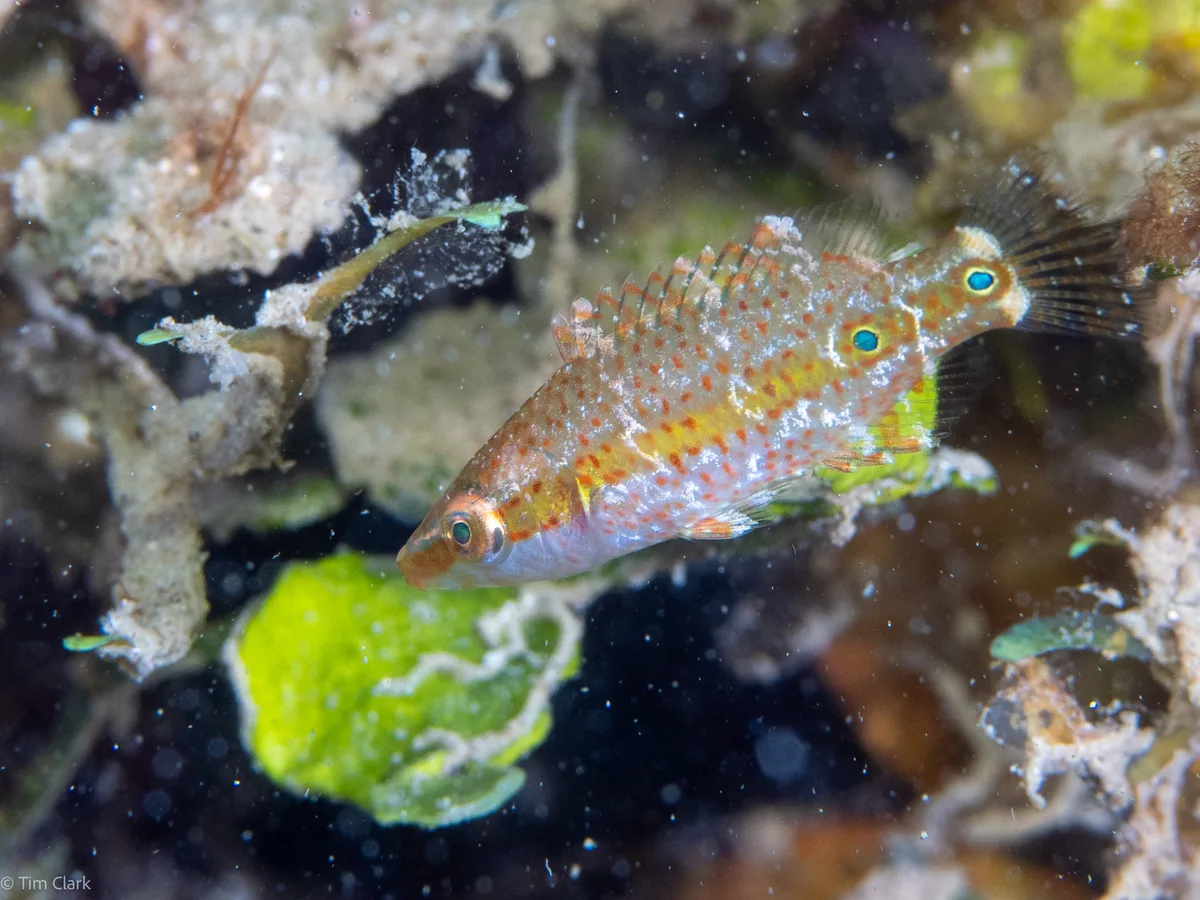
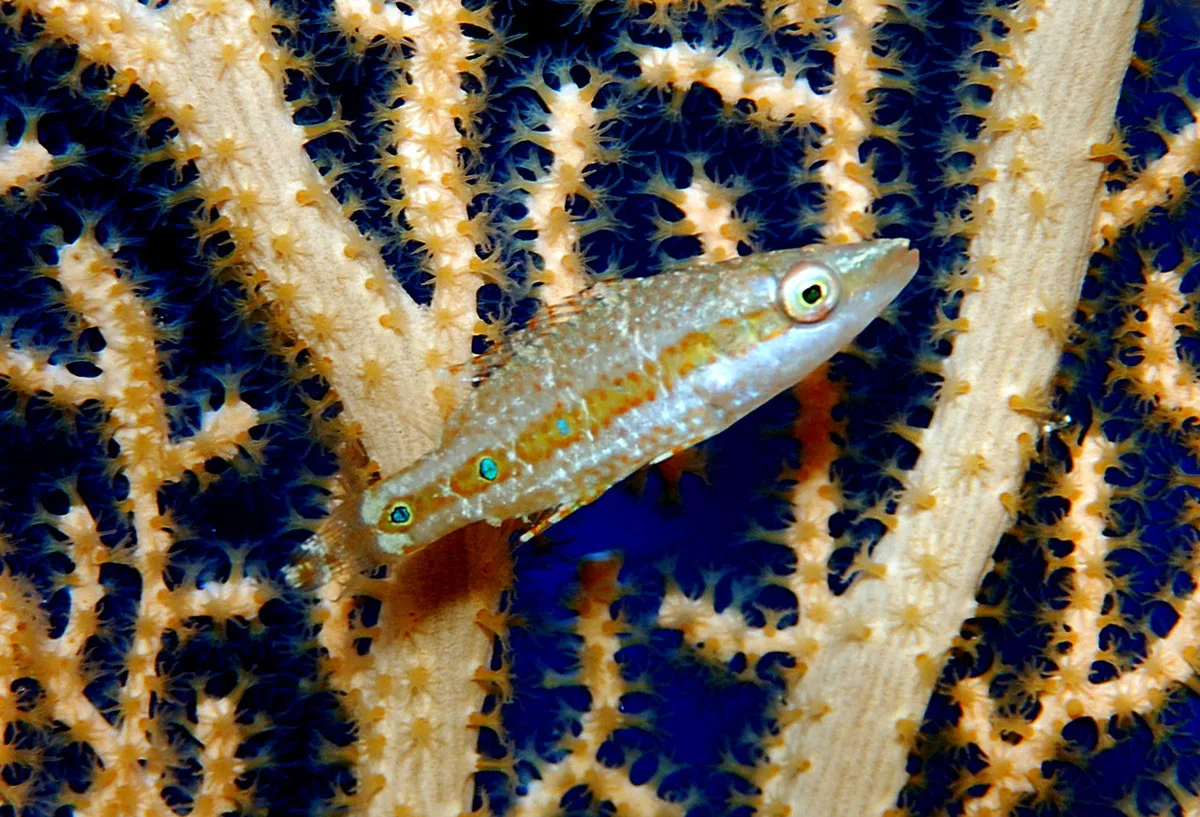
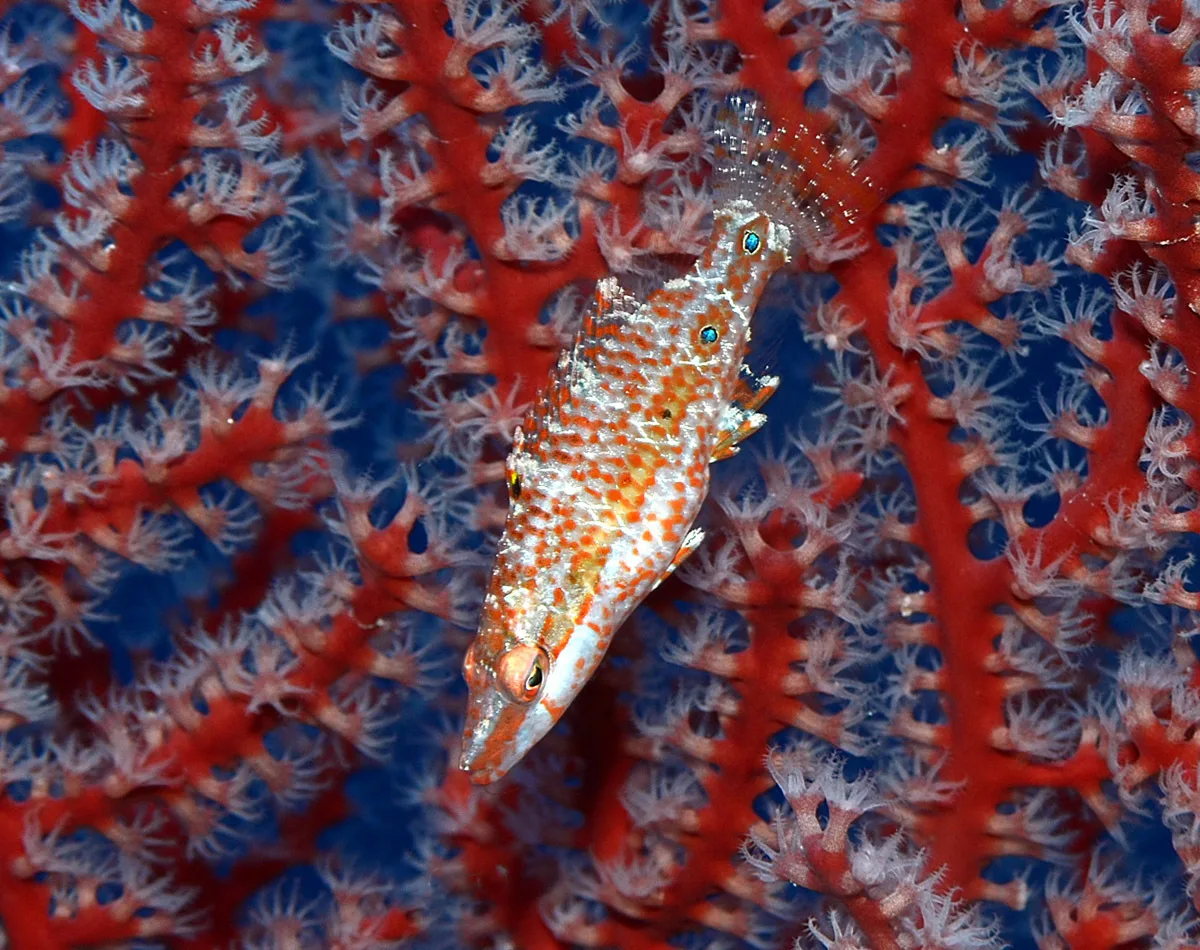
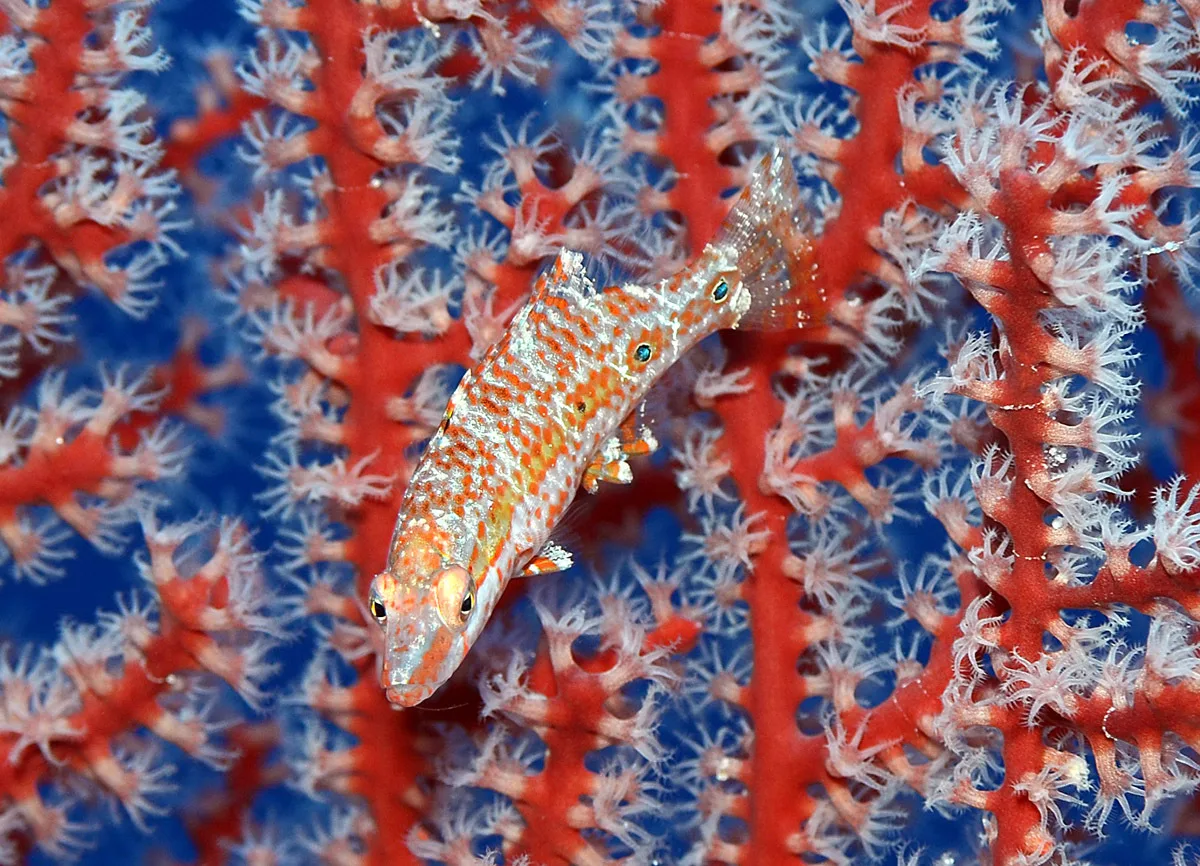
It changes color faster than you can photograph it. A fish that was mottled brown against rubble goes deep red against a gorgonian and pale olive over sand, and the whole change takes seconds rather than minutes.
The machinery is chromatophores: cells in the skin holding pigment that can be spread out to darken an area or pulled into a dot to pale it, under direct nervous control rather than hormonal. Nervous control is what makes it fast. Most fish adjust their color over minutes or hours; the ones that do it in seconds are working the same way an octopus does, with the brain wired directly to the skin.
For a slow-moving ambush predator that hunts by getting close to small fish, that is the entire strategy. It does not chase. It arrives looking like the background it arrived from.
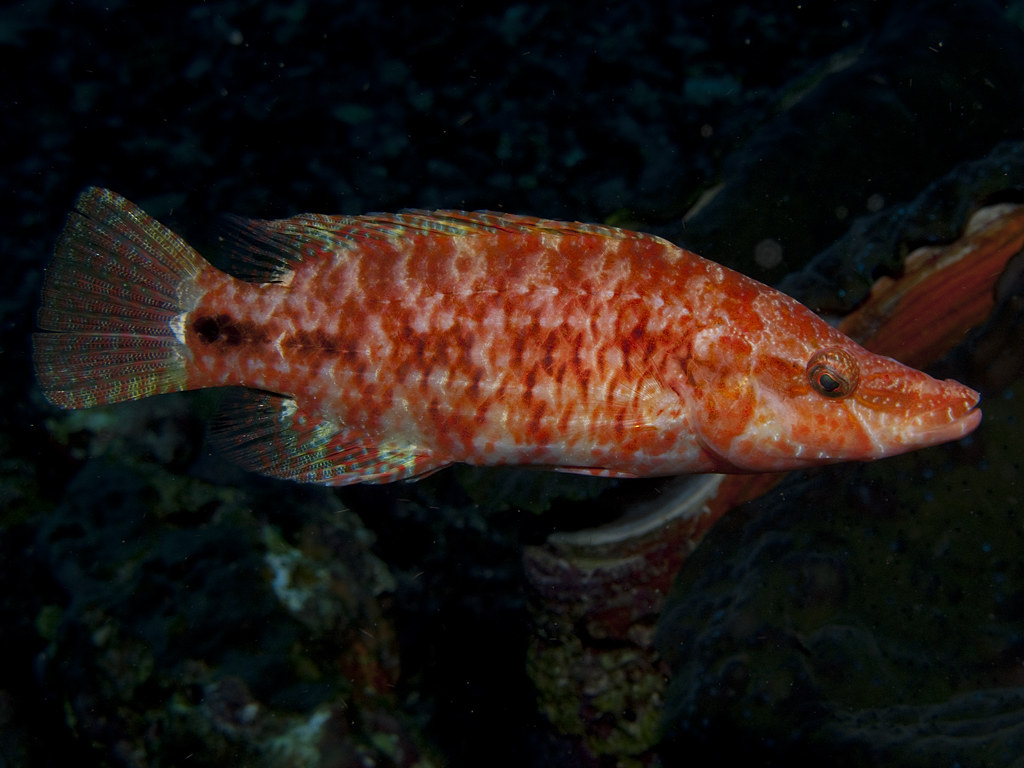
It is elongate, pointed and long-tailed, works coral-rich reef from the shallows down to eighty meters, and is easy to overlook precisely because it never looks the same twice.
The genus. Oxycheilinus Gill 1862 - oxy (sharp). ETYFish
The species. Oxycheilinus orientalis (Günther 1862) - eastern. ETYFish
- elongate body with a pointed snout and a long tail
- color highly variable: red, brown, olive or mottled, changing within seconds
- dark bar or streak behind the eye in most individuals
- up to 20 cm
Why it's threatened
There are no major threats known to this species. There is no information on the level of fishing on this species neither for food or ornamental trade.
Threat classification from the IUCN Red List.