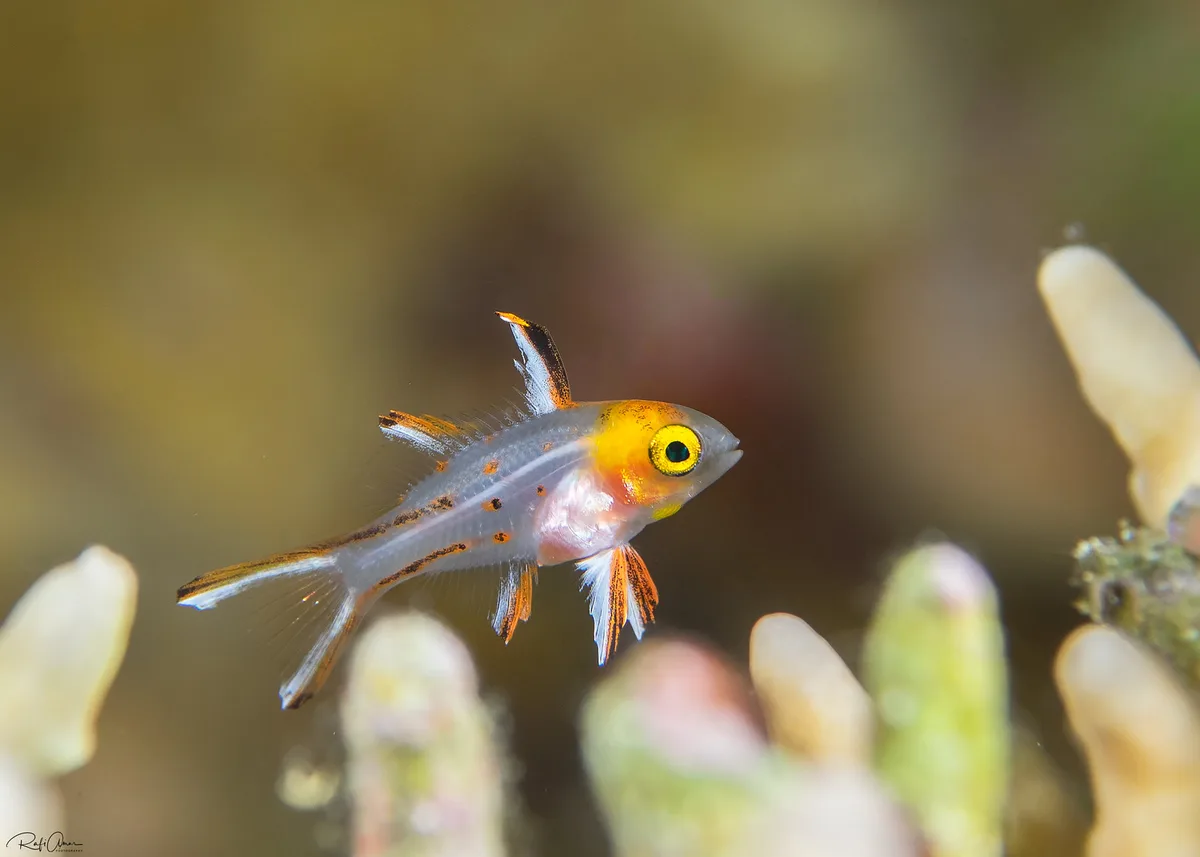
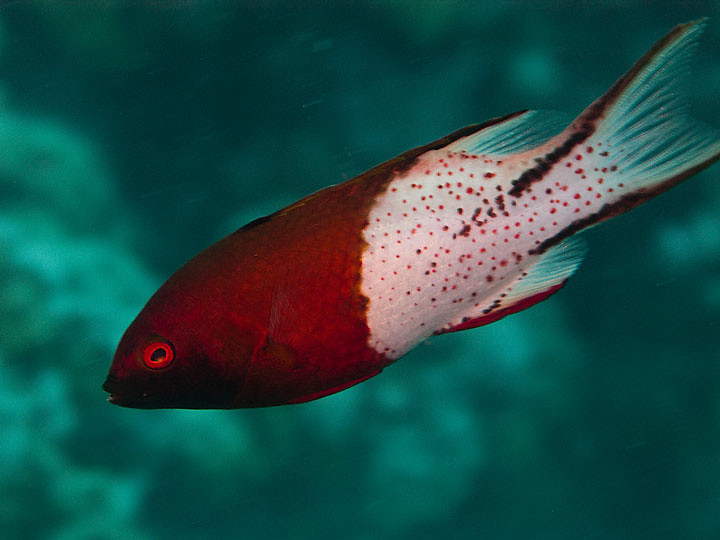
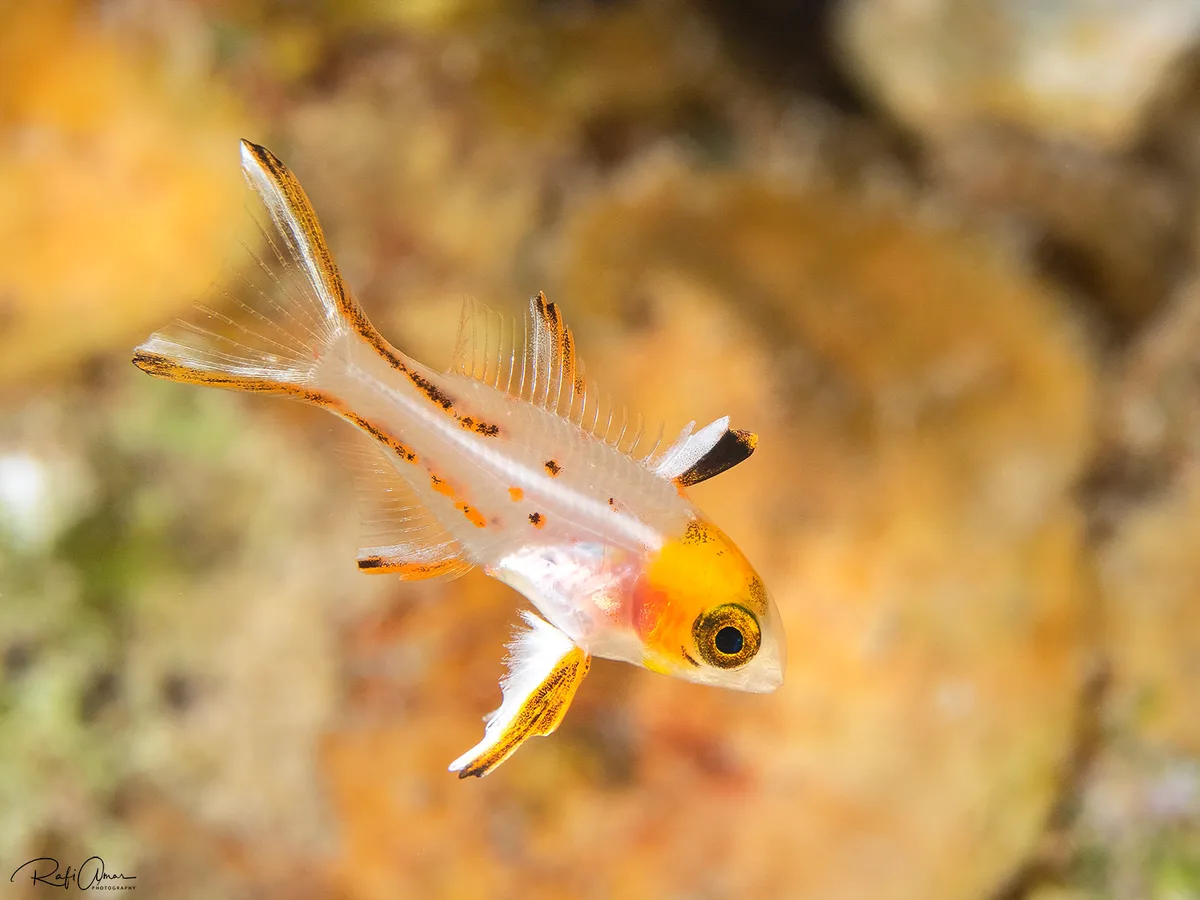
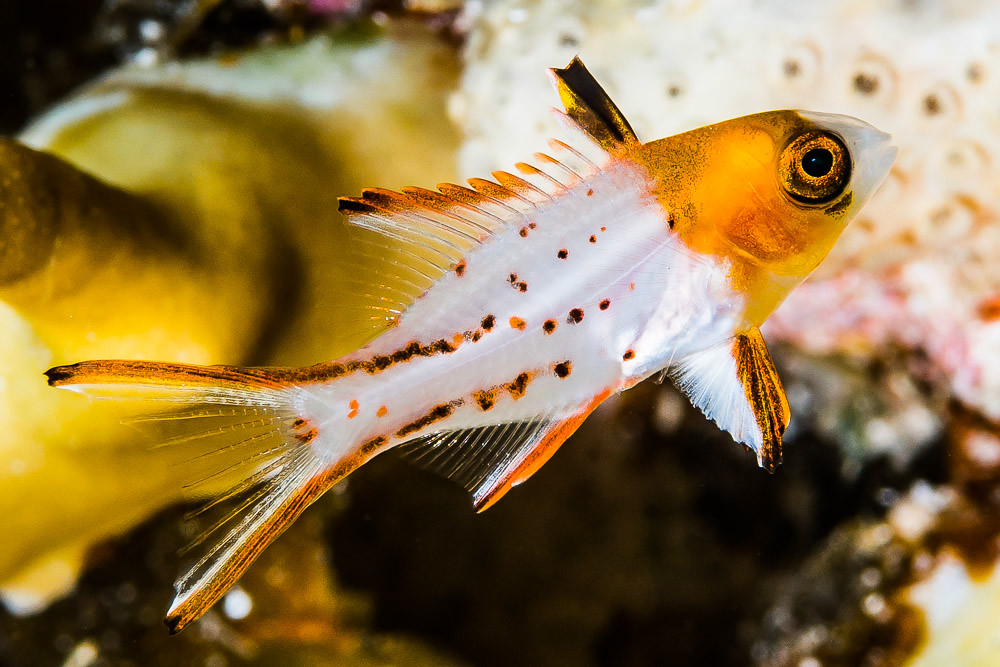
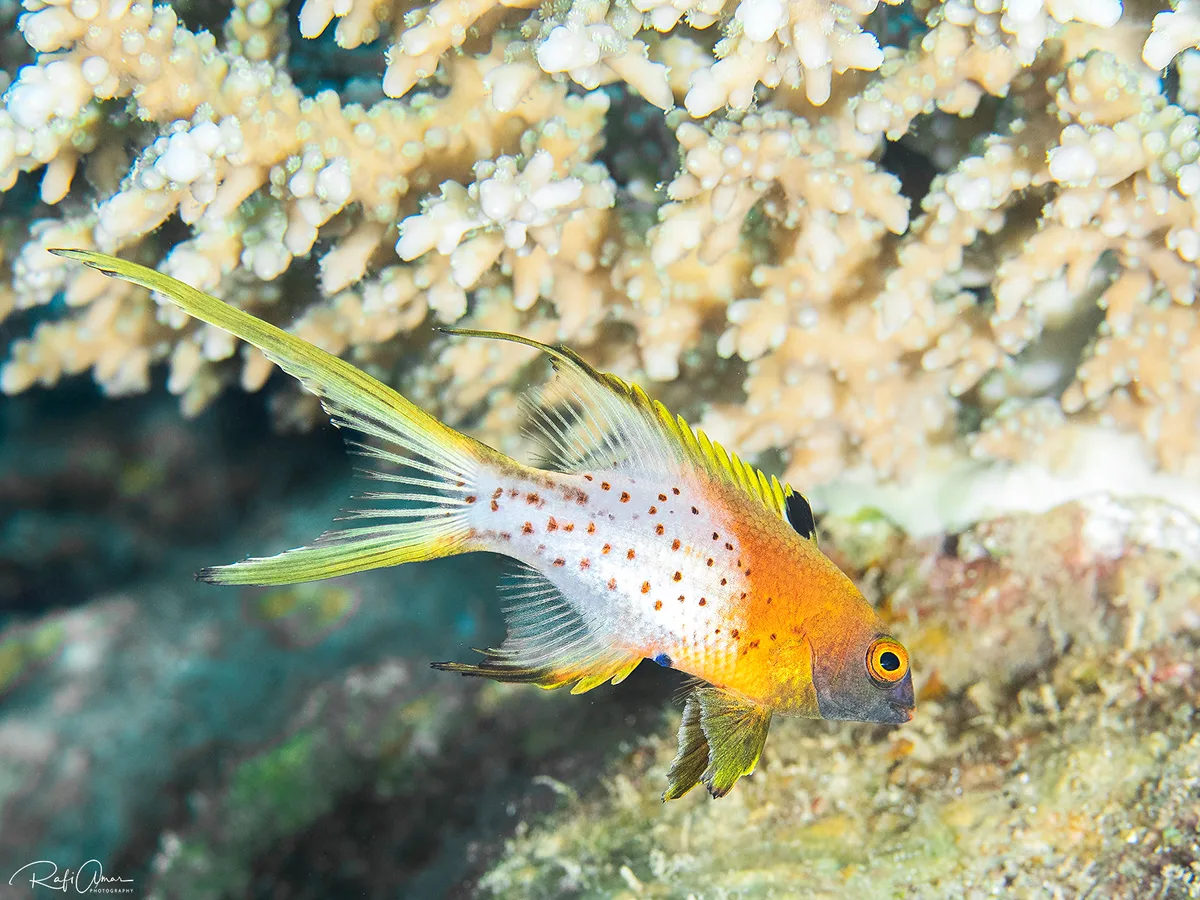

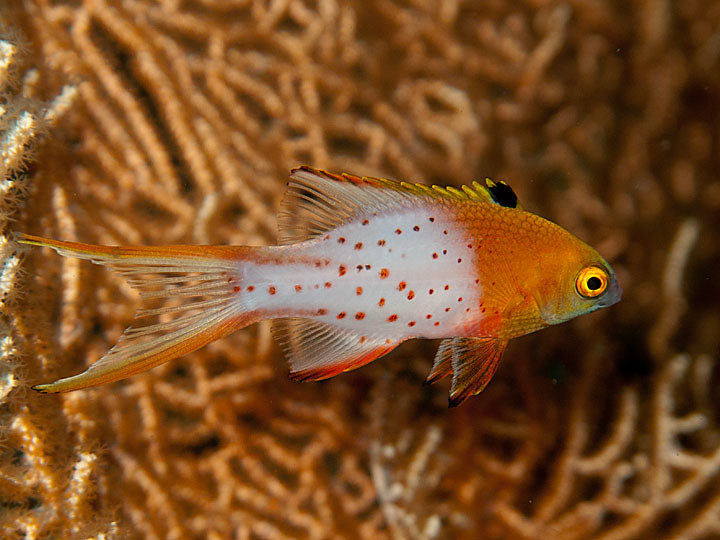
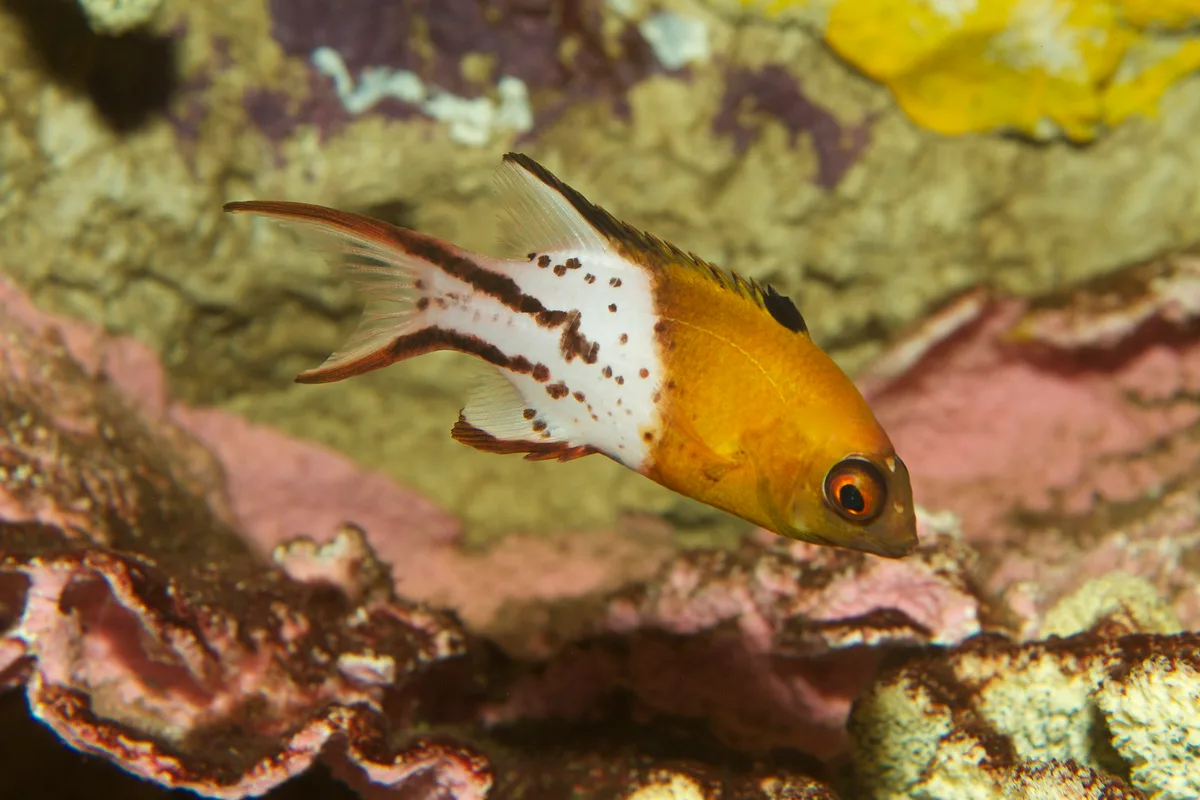
The name means anthias-like, and it was given for the young.
Juvenile lyretail hogfish are small, dark, deep-bodied and carry a pale forked tail, and they live in the same water as the anthias clouds that hang over drop-offs here. Mixed into that swarm, a young hogfish is one more small fish among thousands, and a predator hunting anthias has to pick it out of a moving crowd of near-identical shapes. It is protection bought entirely with other animals' bodies.
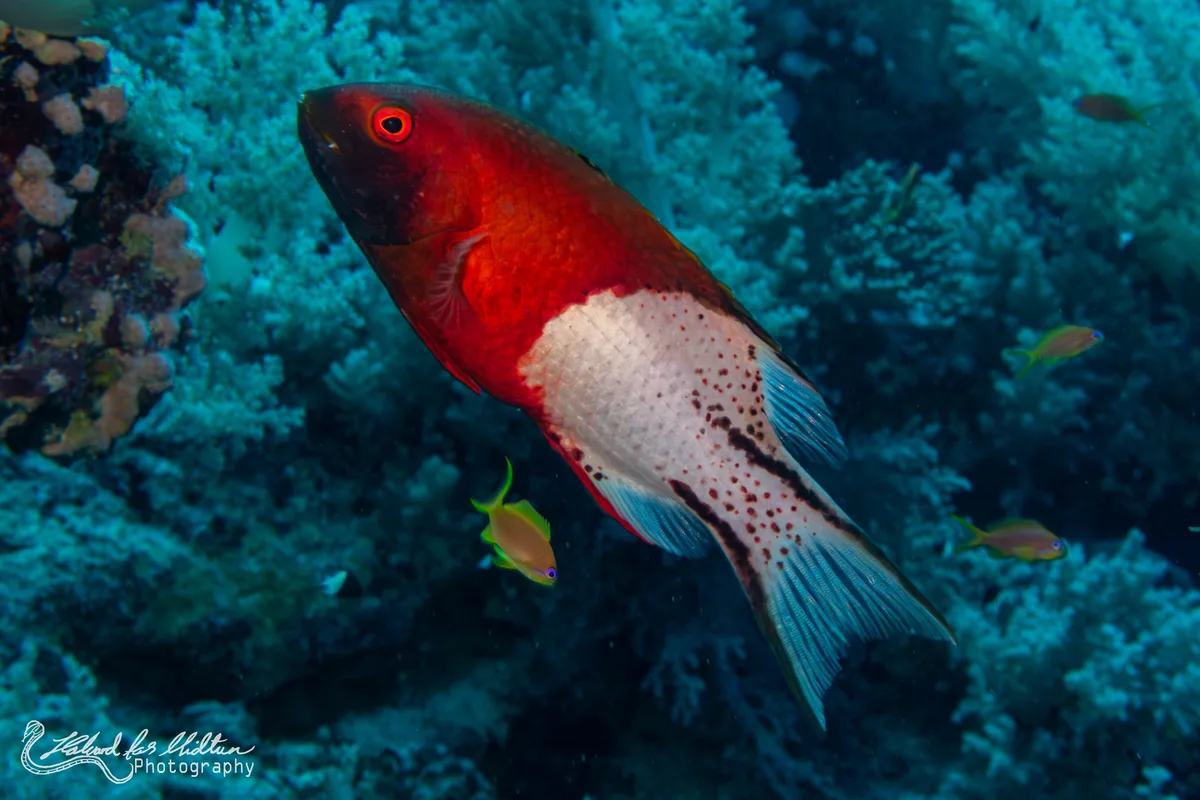
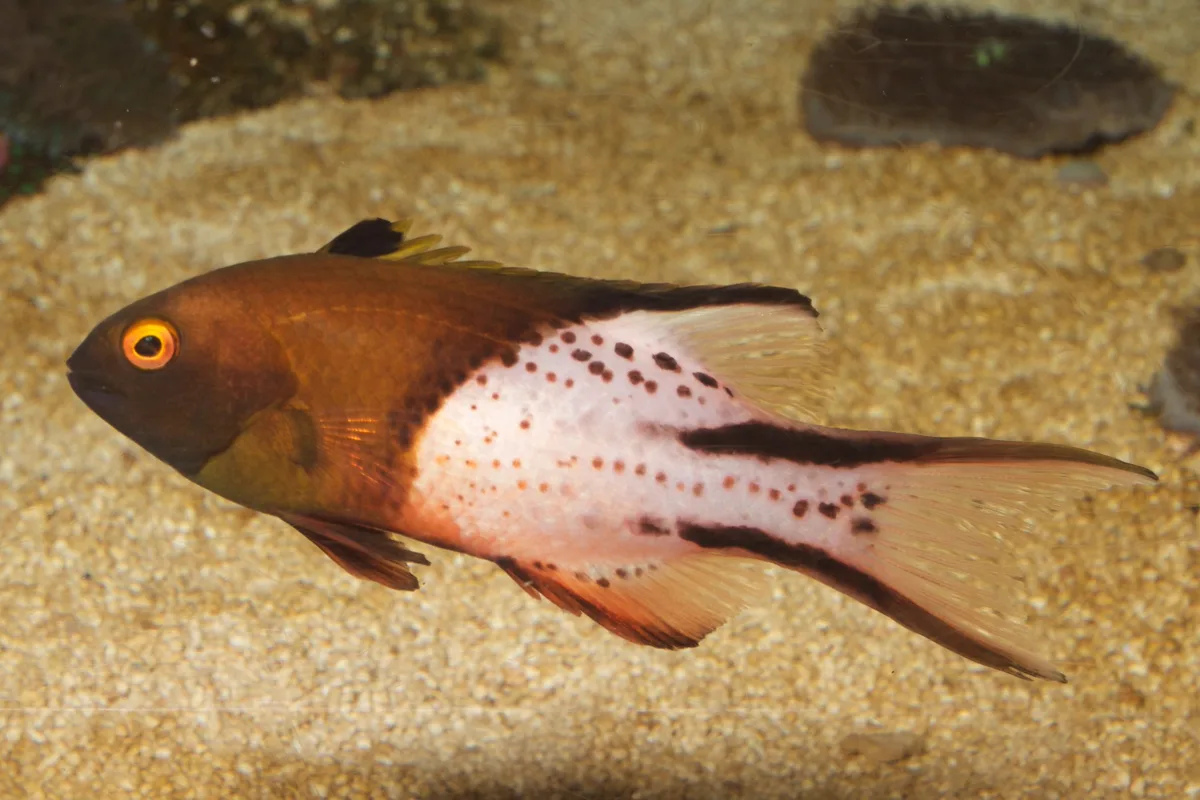
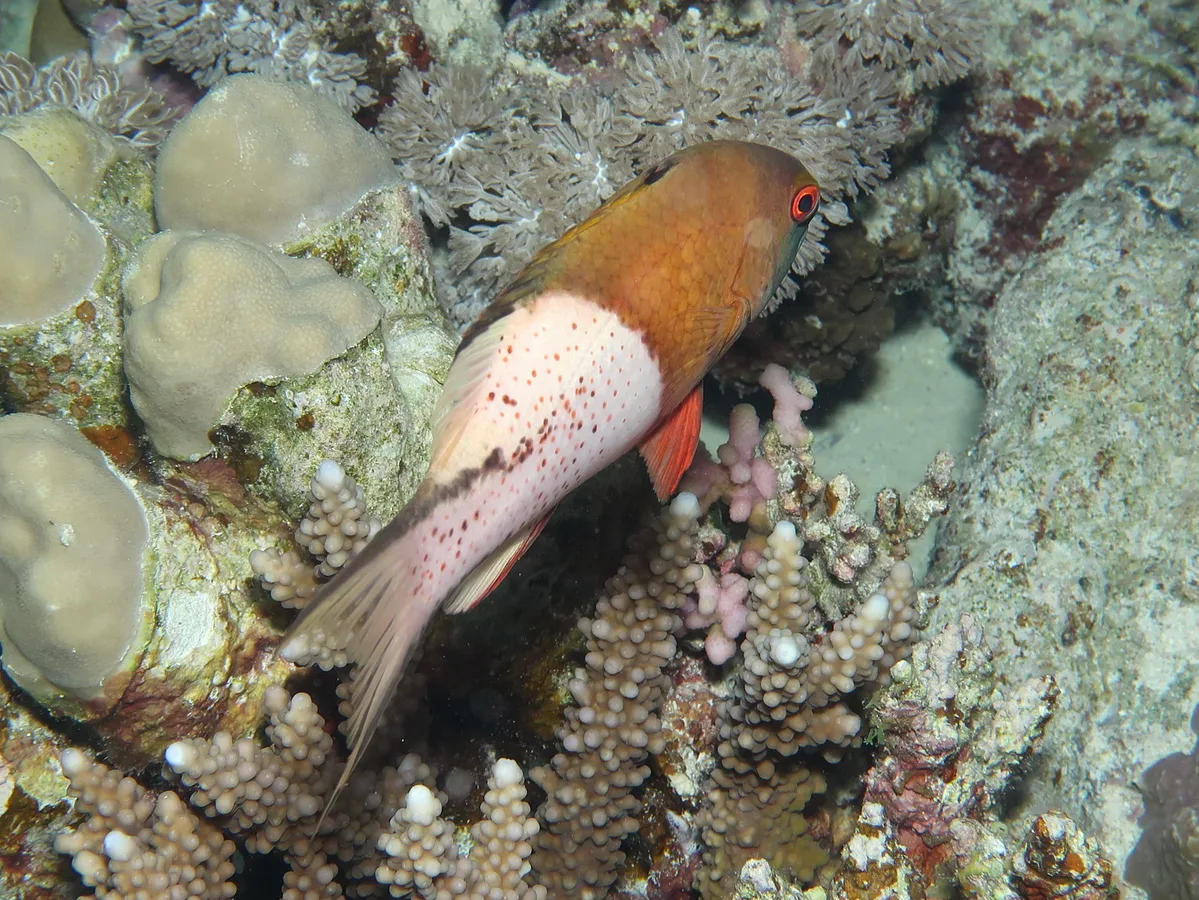
The adult leaves that behind and becomes a solitary fish of steep outer slopes, working down the wall alone, and its tail keeps the lyre shape into a body that no longer needs to keep up with a swarm.
A deeply forked tail like that is a cruising tail: efficient over distance, poor for sudden acceleration, which fits a fish that patrols large stretches of wall rather than ambushing anything.
It goes deep, recorded past eighty meters, and on a wall dive here it is usually seen once, at the deepest point, and not again.
- deeply forked lyre-shaped tail with long trailing lobes
- mottled brown front half, white rear half with dark speckling
- juveniles small, dark and pale-tailed, often among anthias
- up to 24 cm
Why it's threatened
There are no major threats known for this species. Aquarium collection of juveniles can be a potential threat to this species.
Threat classification from the IUCN Red List.