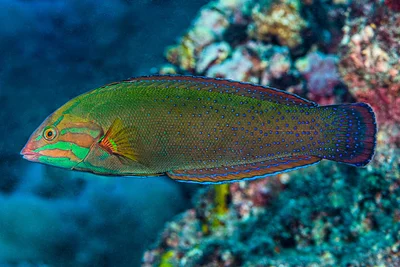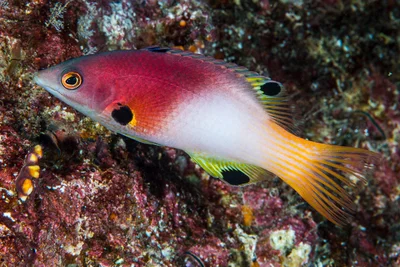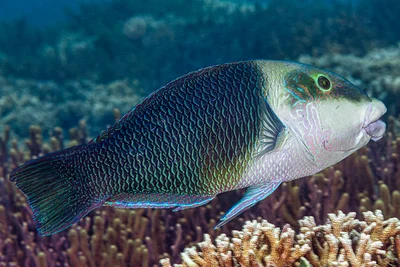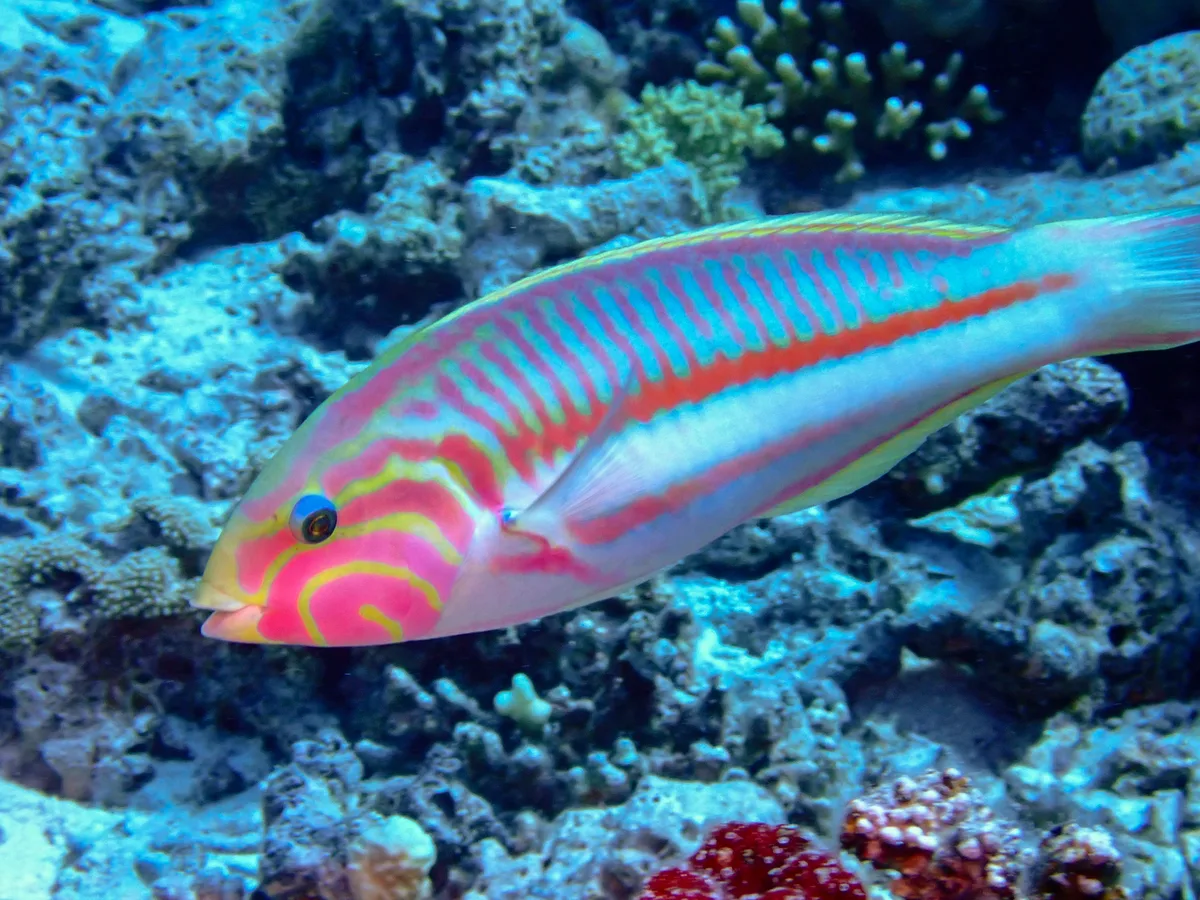
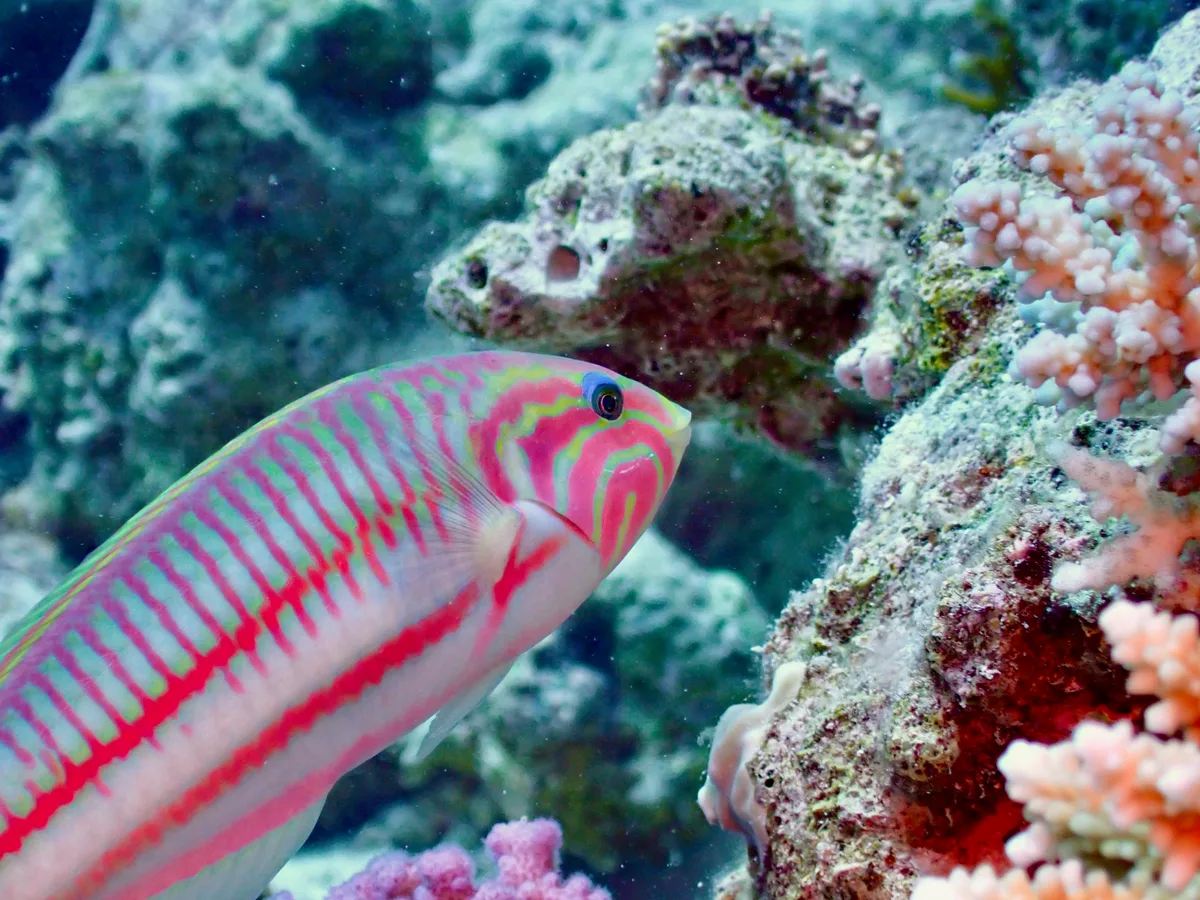
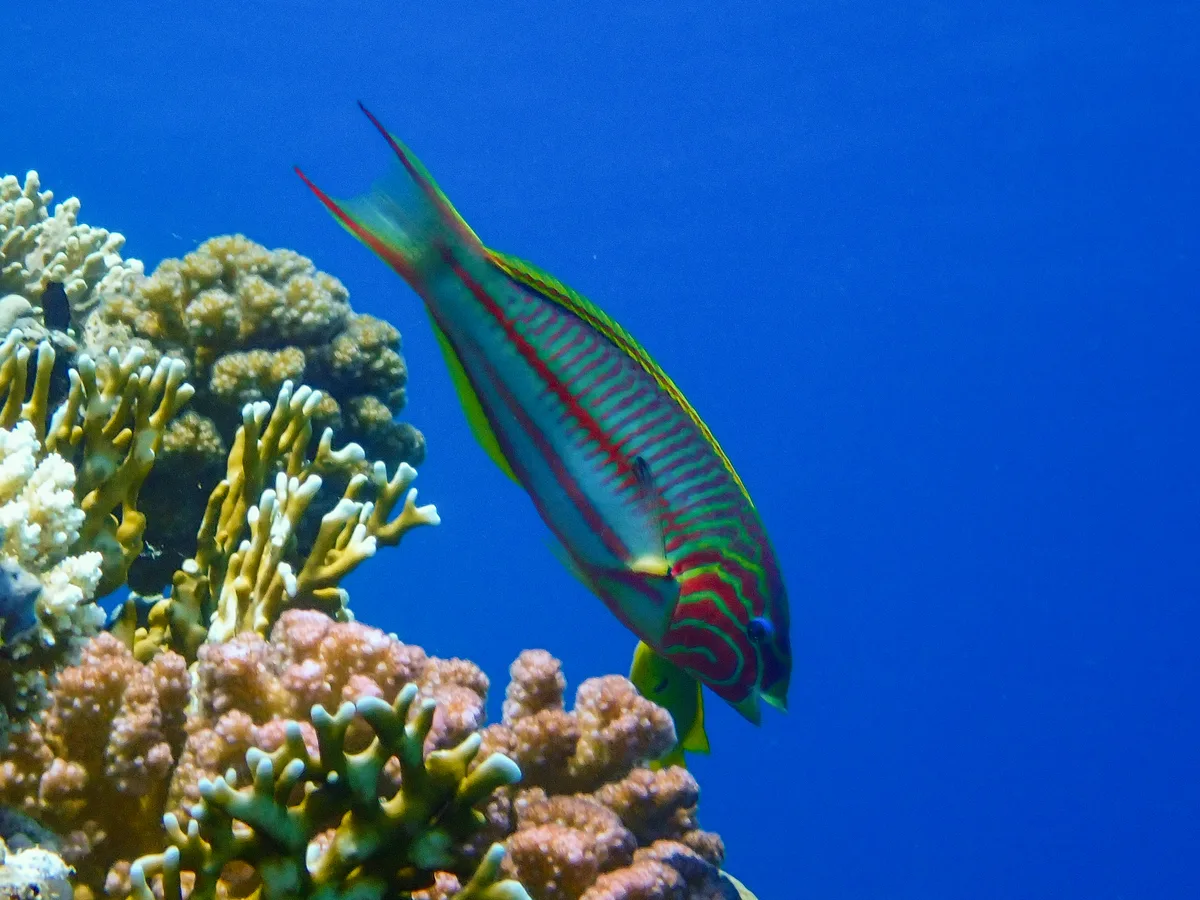
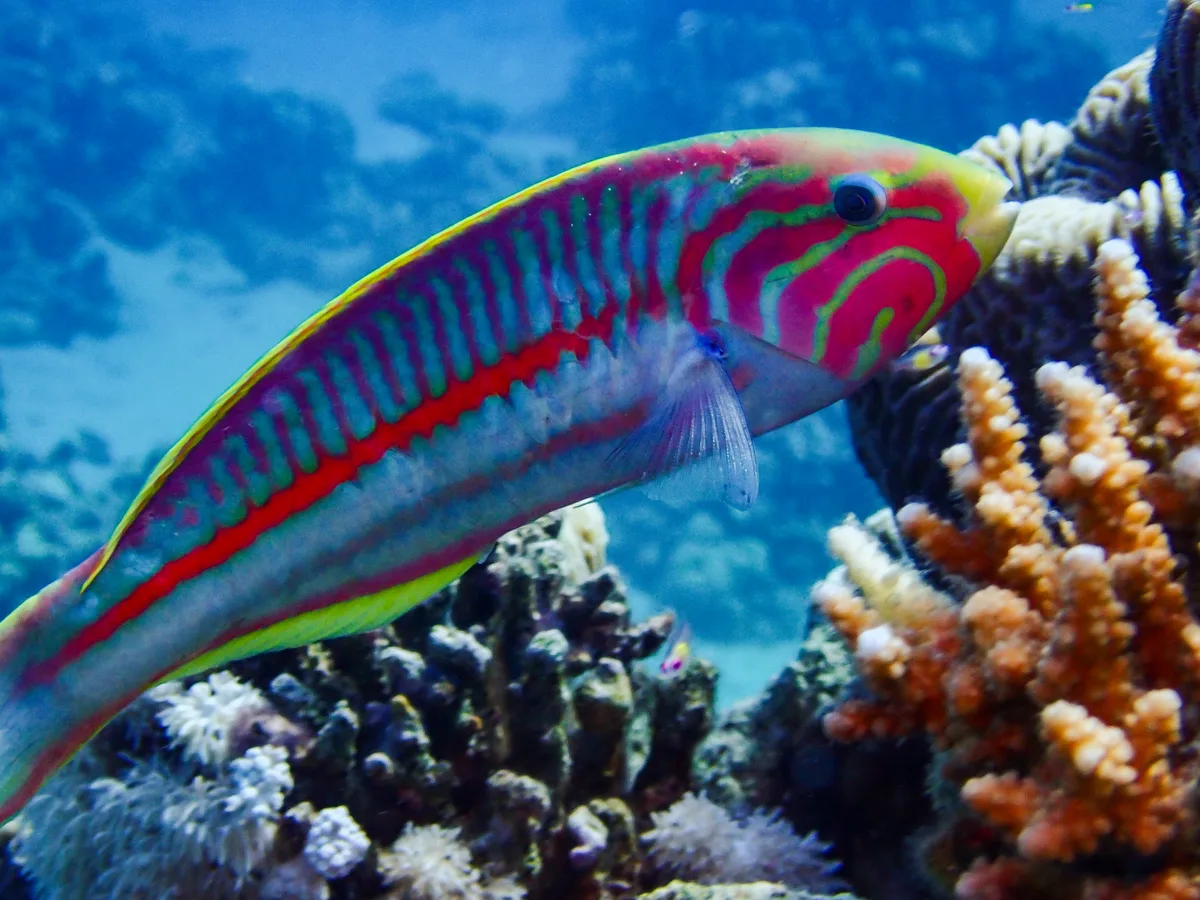
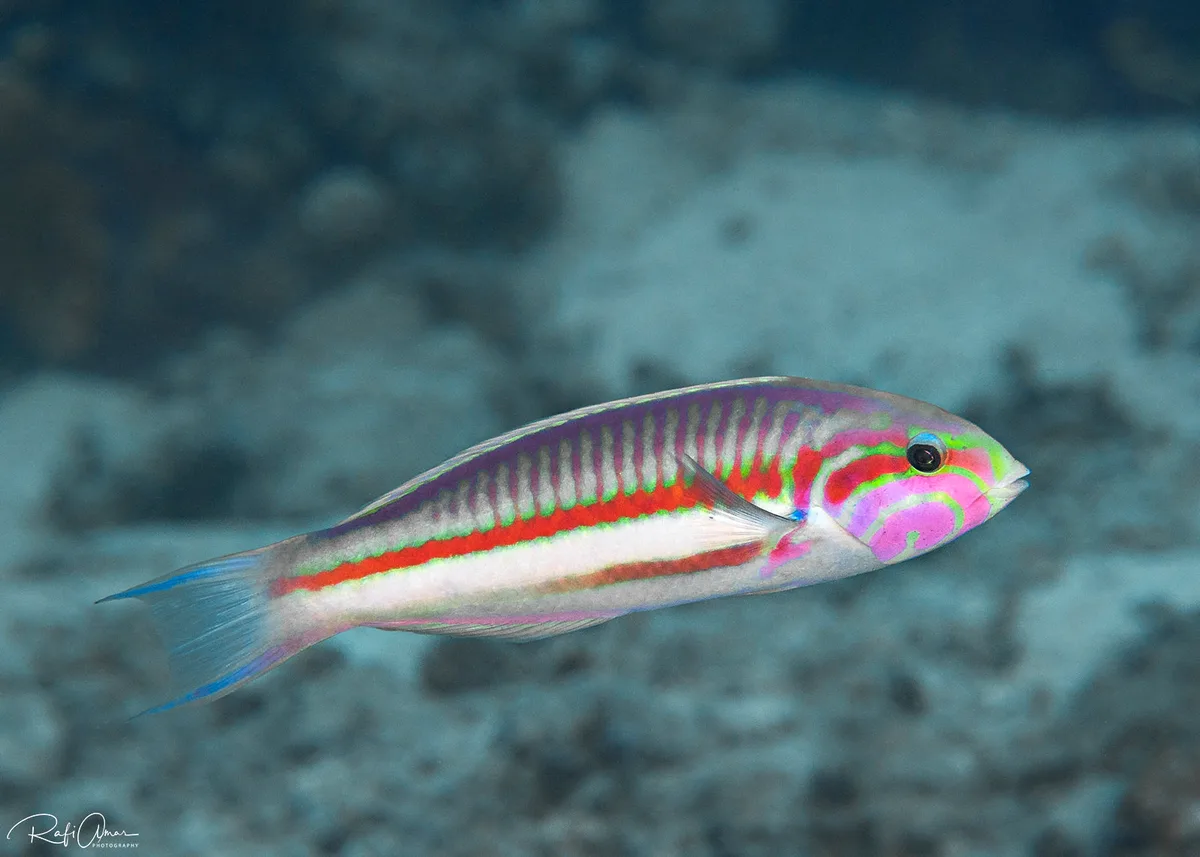
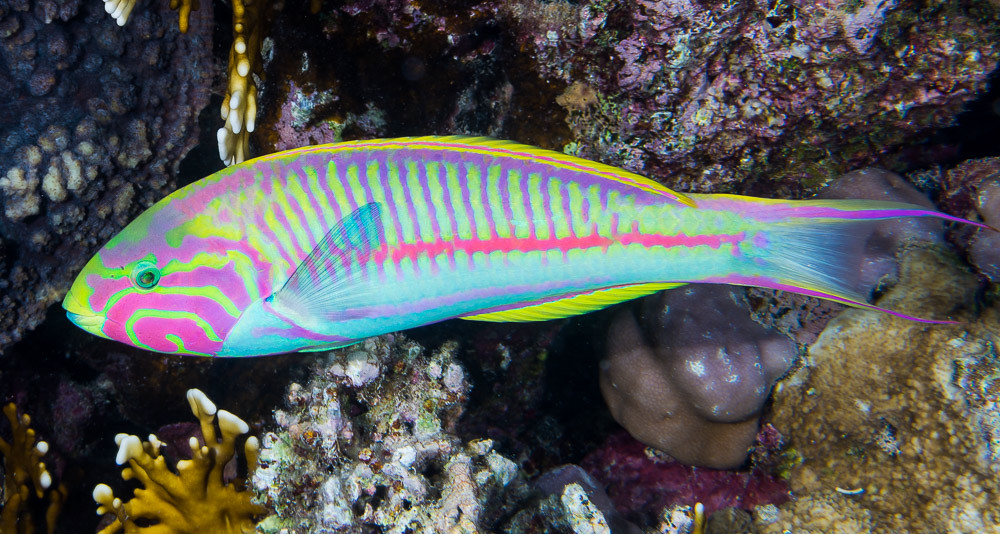
Green with magenta scribbles across the face, never holding still for a second, and found in this sea and nowhere else. It is one of the most abundant fish on any 🌊 Red Sea reef top and one of the hardest to photograph, for the same reason: it does not stop.
The restlessness is how it feeds. It works the shallows in fast loops, taking small crustaceans, snails and worms, and it follows larger fish around to snatch whatever they dislodge - a broomtail wrasse turning stones usually has two or three of these in attendance.
It is also a part-time cleaner. Young fish pick parasites off larger species, and adults still do it opportunistically, which is unusual for a wrasse that is not a specialist cleaner.
Twenty centimeters (8 in) of endemic fish that most visitors ignore because it is everywhere. Worth a second look: outside this sea, nobody has one.
The genus. Thalassoma Swainson 1839 - thalassinus (sea-green) + soma (body). ETYFish
- green body with fine magenta lines running back from the eye across the head
- magenta-edged tail and fins
- constantly on the move over shallow reef, never still
- length up to 20 cm
Why it's threatened
There are no major threats to this species. Although it is taken in the marine aquarium fish trade, exploitation levels are unknown.
Threat classification from the IUCN Red List.