It changes career halfway through.
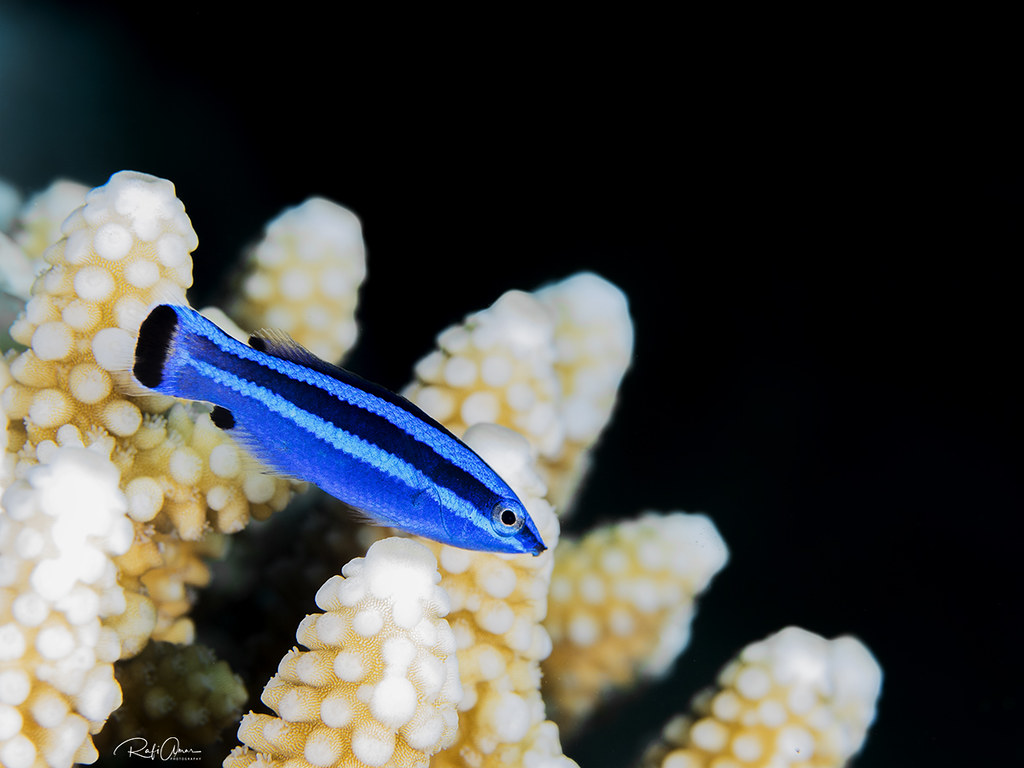
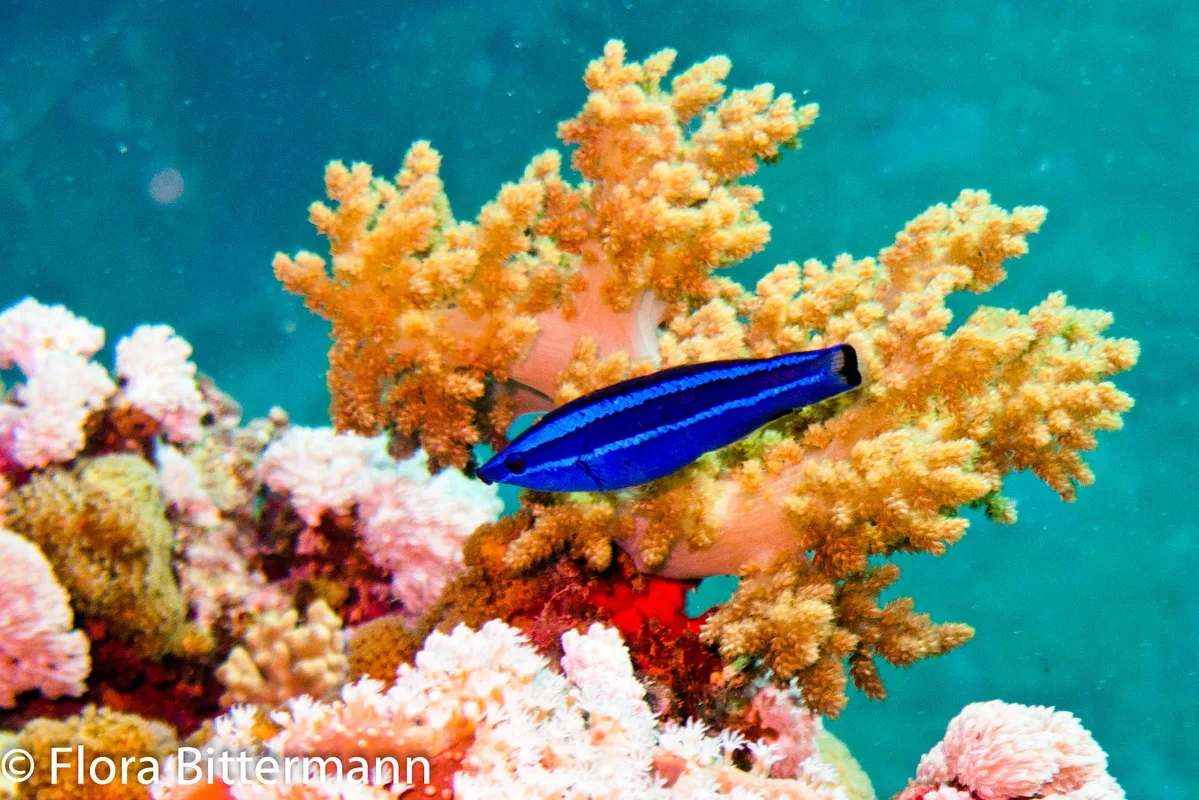
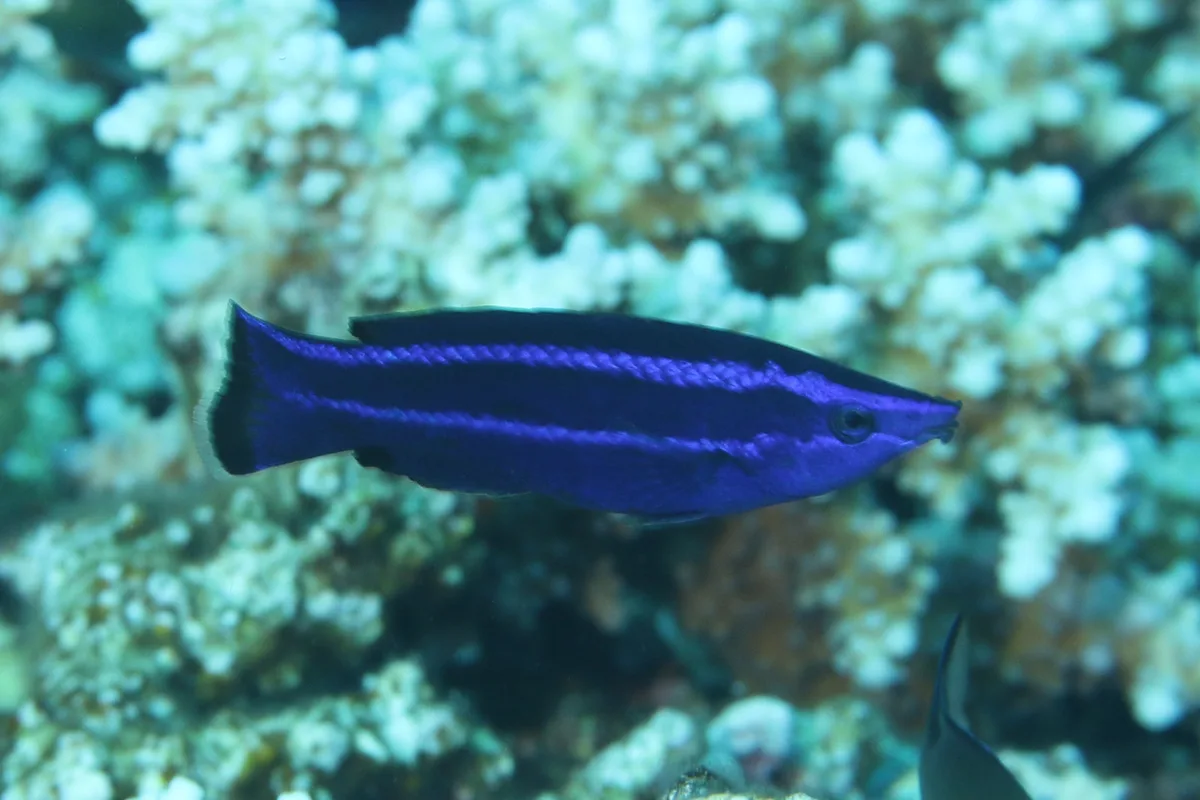
Juveniles are dark blue with four electric blue stripes, and they clean. They set up on a coral head, advertise, and pick parasites off fish that come in and hold still for them, in direct competition with the cleaner wrasse that everyone knows. The stripes are the trade uniform, and they work for the same reason the cleaner wrasse's stripe does: clients recognize the pattern rather than the species.
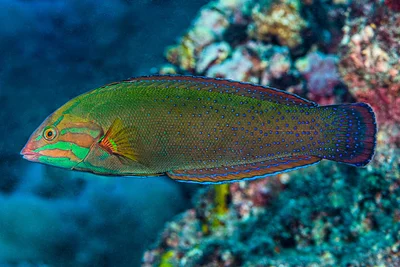
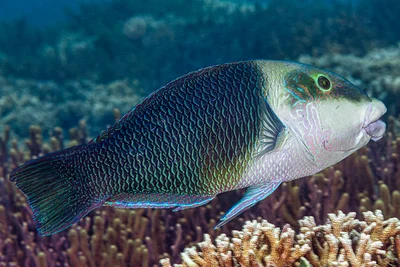
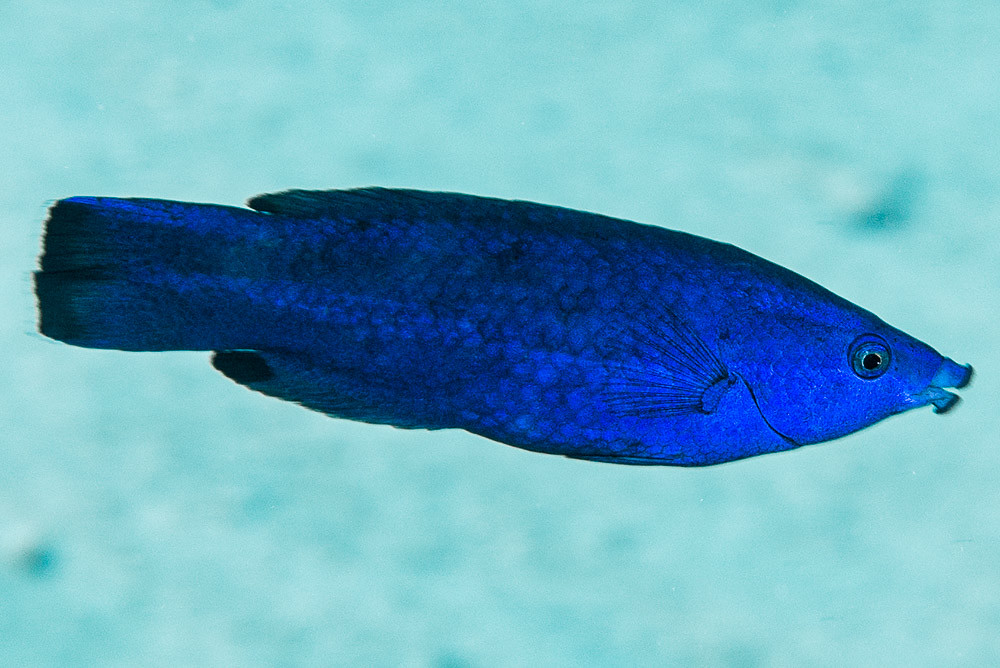
Then they grow up and stop. The adult loses the stripes, turns a heavy green-brown, and switches to eating coral polyps, which is about as far from cleaning as a reef fish can get - from a service that other fish queue for to a diet that damages the reef they live on.
Very few animals make that big a switch. It means the juvenile and the adult are effectively different fish sharing one body, and it is why the two were once taken for different species.
The whole genus is one species, and it lives here and in the 🌊 Gulf of Aden and nowhere else.
- juveniles dark blue with four bright blue stripes, working as cleaners
- adults green-brown, heavier, without the stripes
- small mouth with the lips drawn forward
- up to 11.5 cm
Why it's threatened
This species is collected for the aquarium trade and this could possibly pose as a threat.
Threat classification from the IUCN Red List.