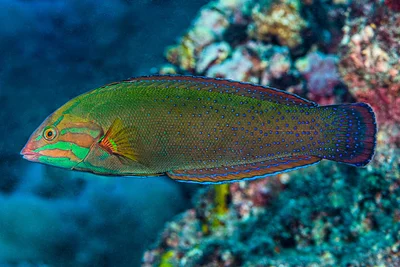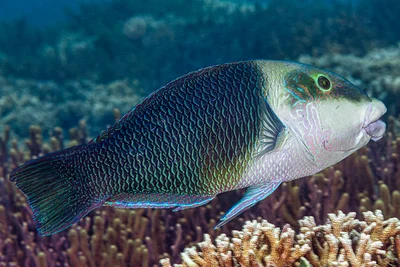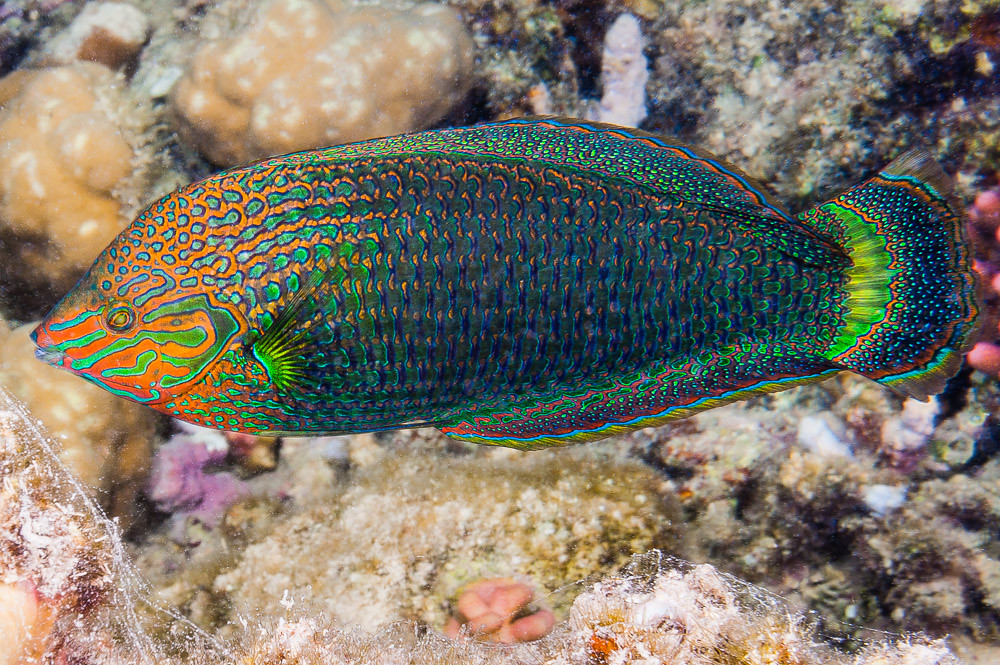
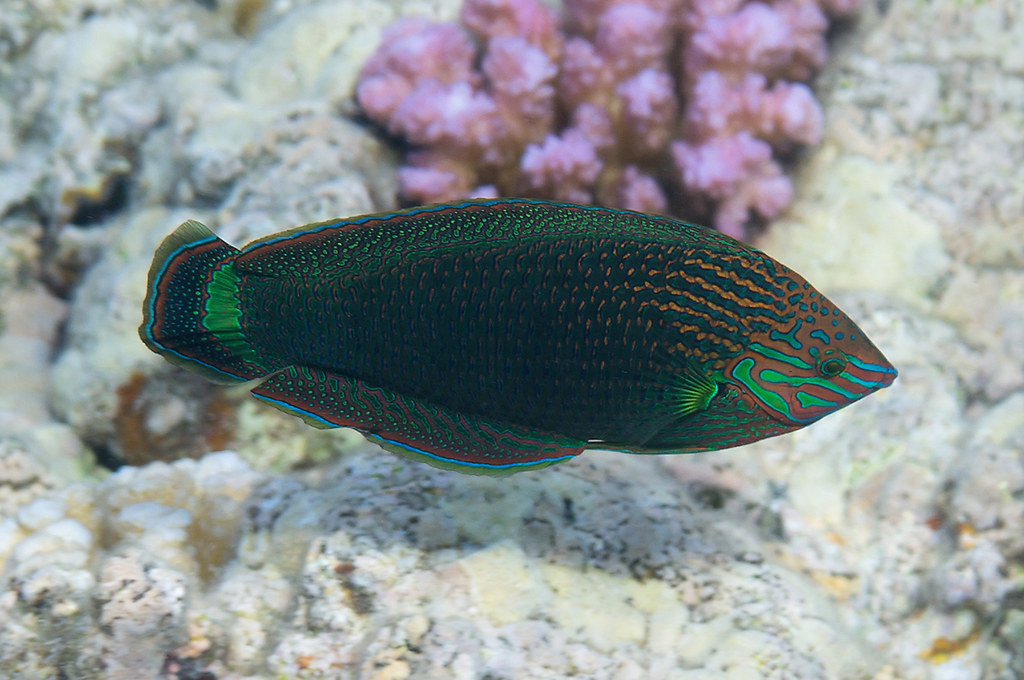
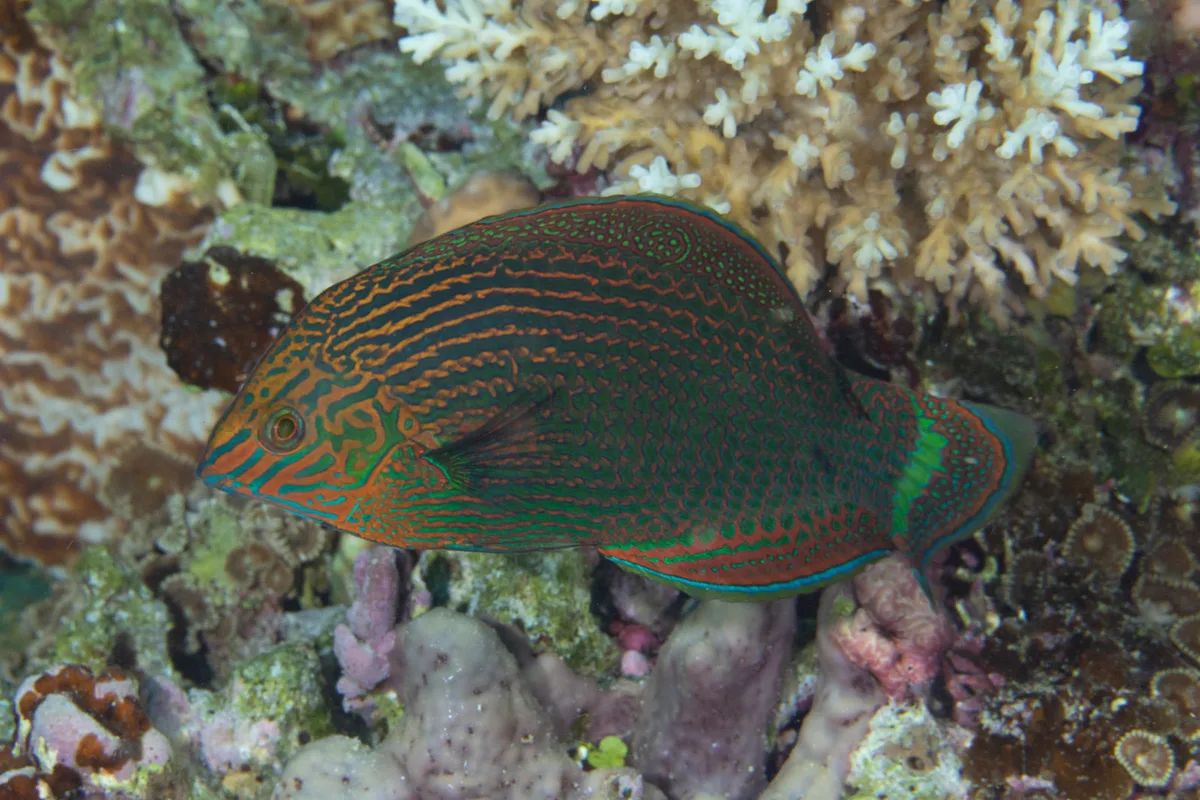
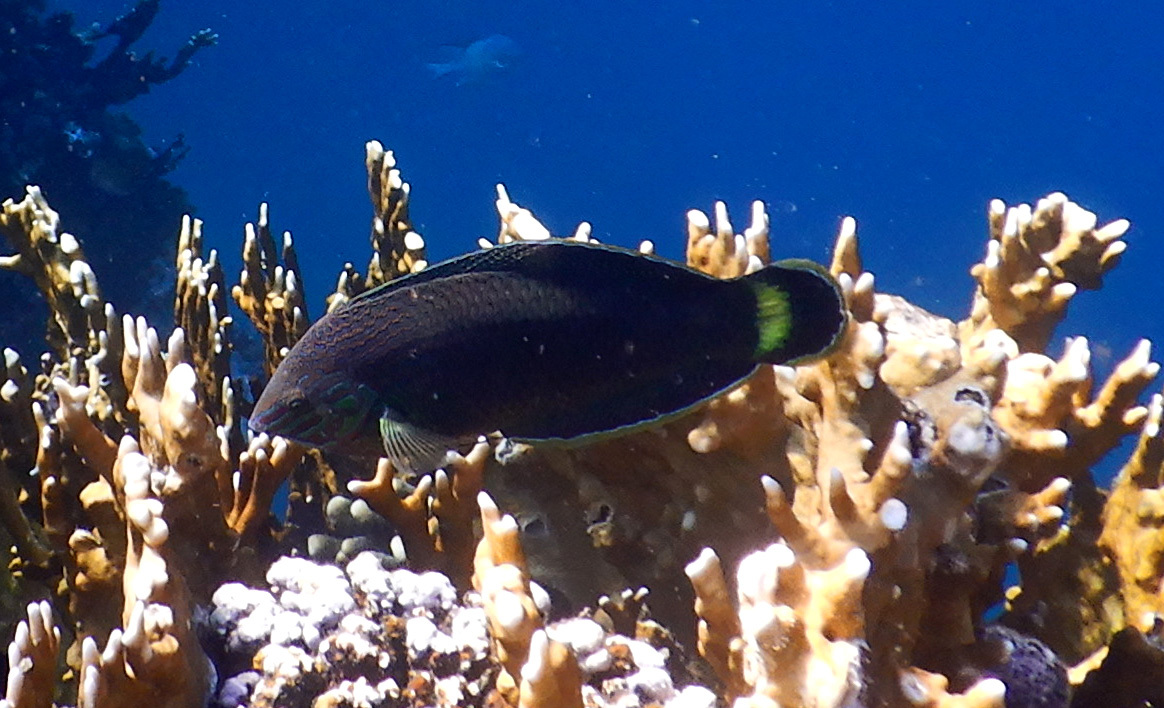
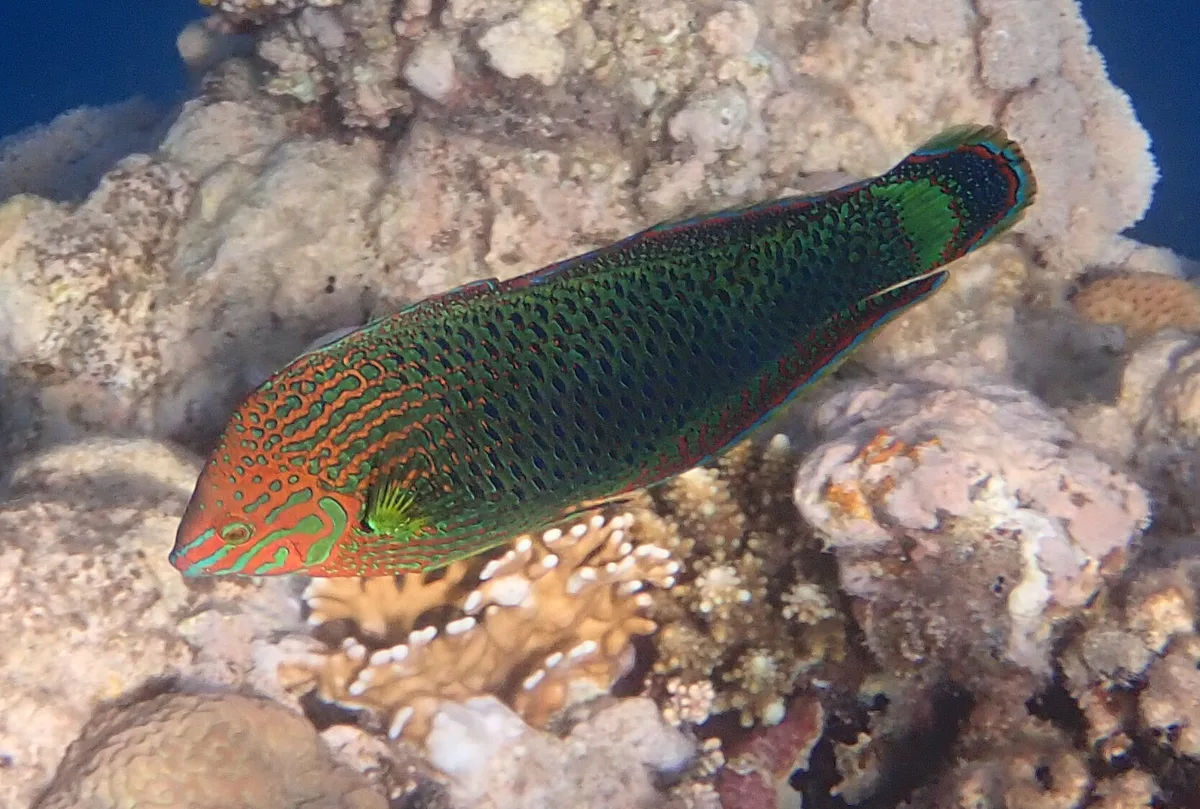
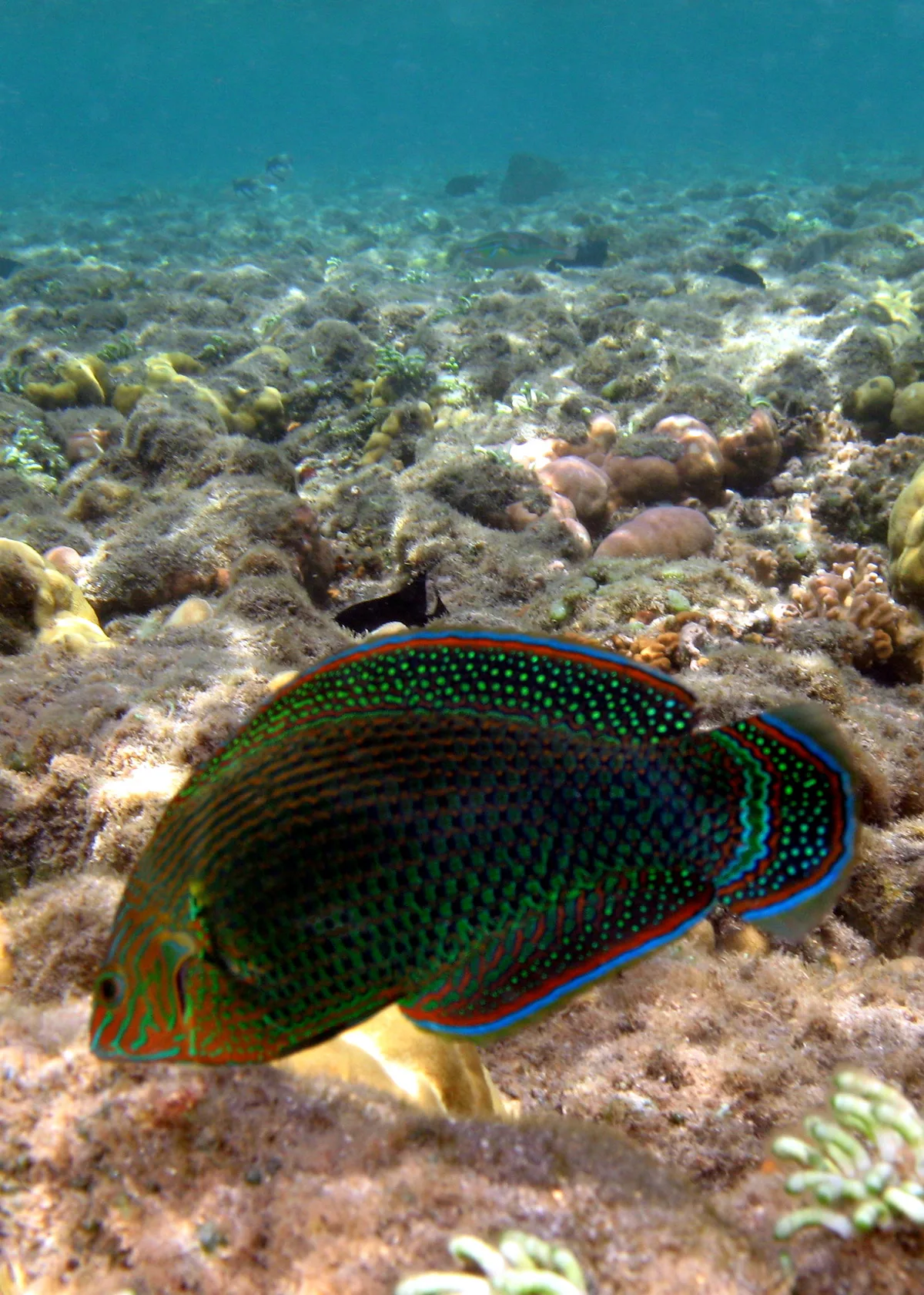
A dark green wrasse of shallow rocky reef, with an orange spot ringed in blue high on the gill cover and a pale bar down the flank. Eighteen centimeters (7 in), and constantly busy in water too shallow for most divers to bother with.
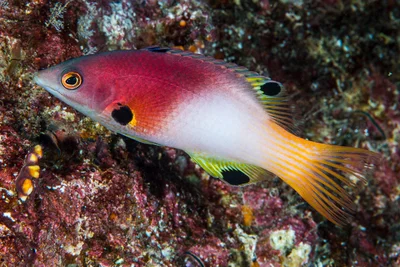
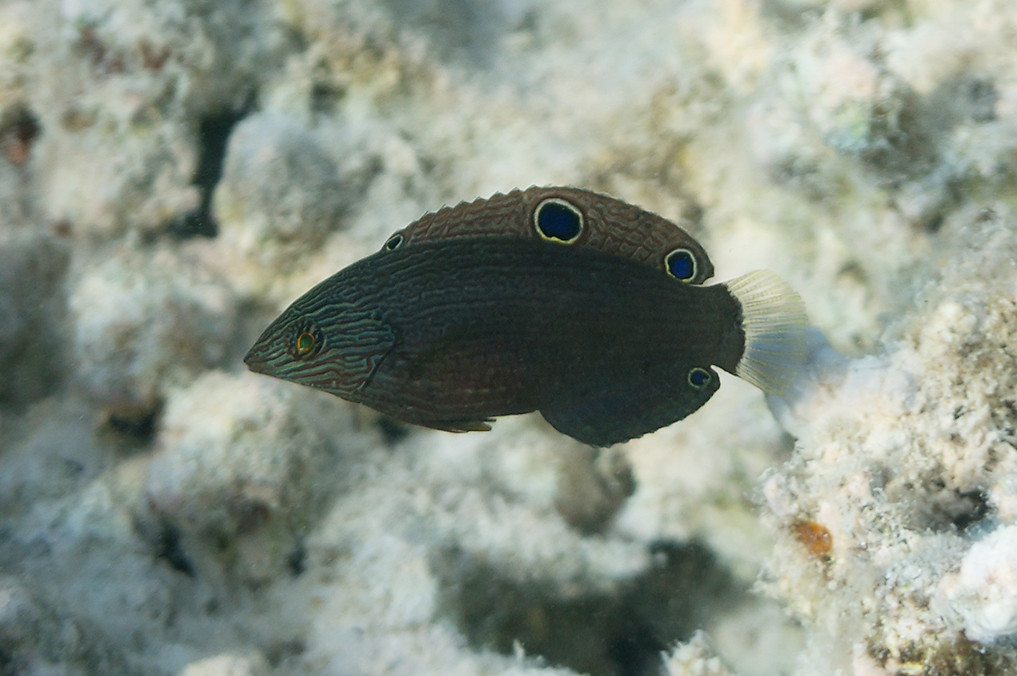
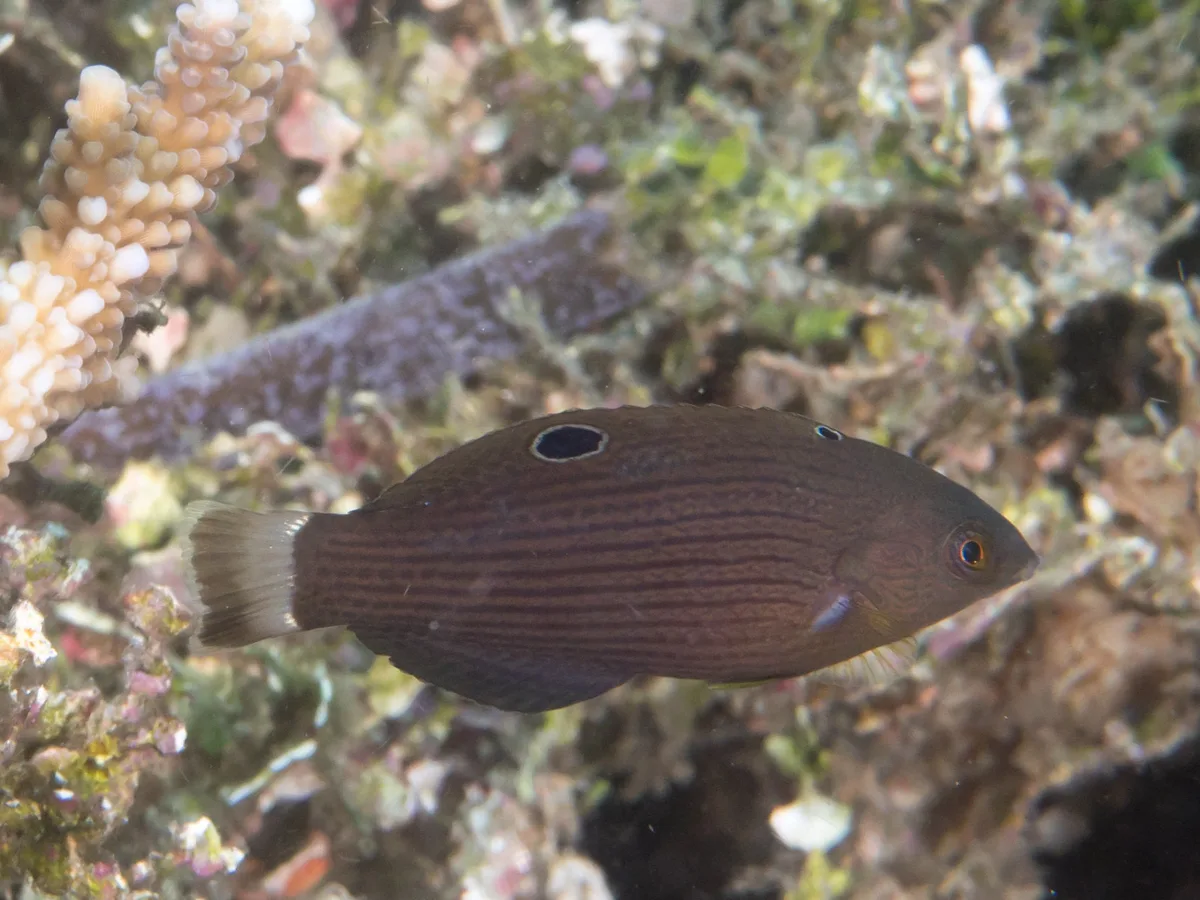
Juveniles carry a black eyespot on the dorsal fin - a false eye at the wrong end of the animal, so a predator aiming for the head takes a mouthful of fin and the fish leaves in the other direction. It is one of the most common defenses on a reef and one of the least noticed.
Adults hunt small crustaceans, worms and brittle stars across rock and rubble, and males hold territories they patrol all day.
Like the rest of the family it starts female. A large green male with the bar and the orange spot was, at some point, one of the plain brown fish it now chases off.
The genus. Halichoeres Rüppell 1835 - halios (sea) + choiros (hog). ETYFish
The species. Halichoeres marginatus Rüppell 1835 - edged or bordered. ETYFish
- males dark green with a vertical pale bar behind the pectoral fin
- bright orange spot ringed in blue at the top of the gill cover
- juveniles with a black eyespot on the dorsal fin
- length up to 18 cm
Why it's threatened
There are no major threats to this species, although it is collected for the aquarium trade in some localities.
Threat classification from the IUCN Red List.