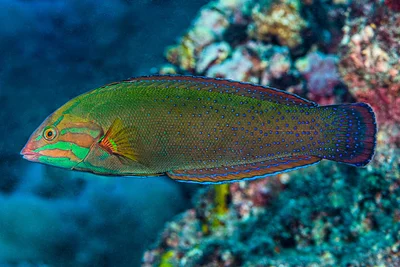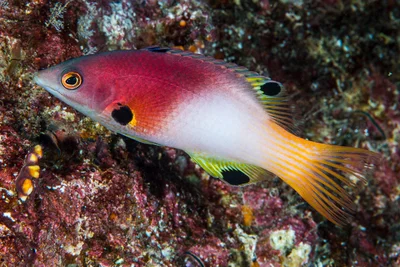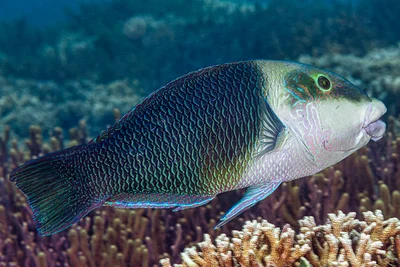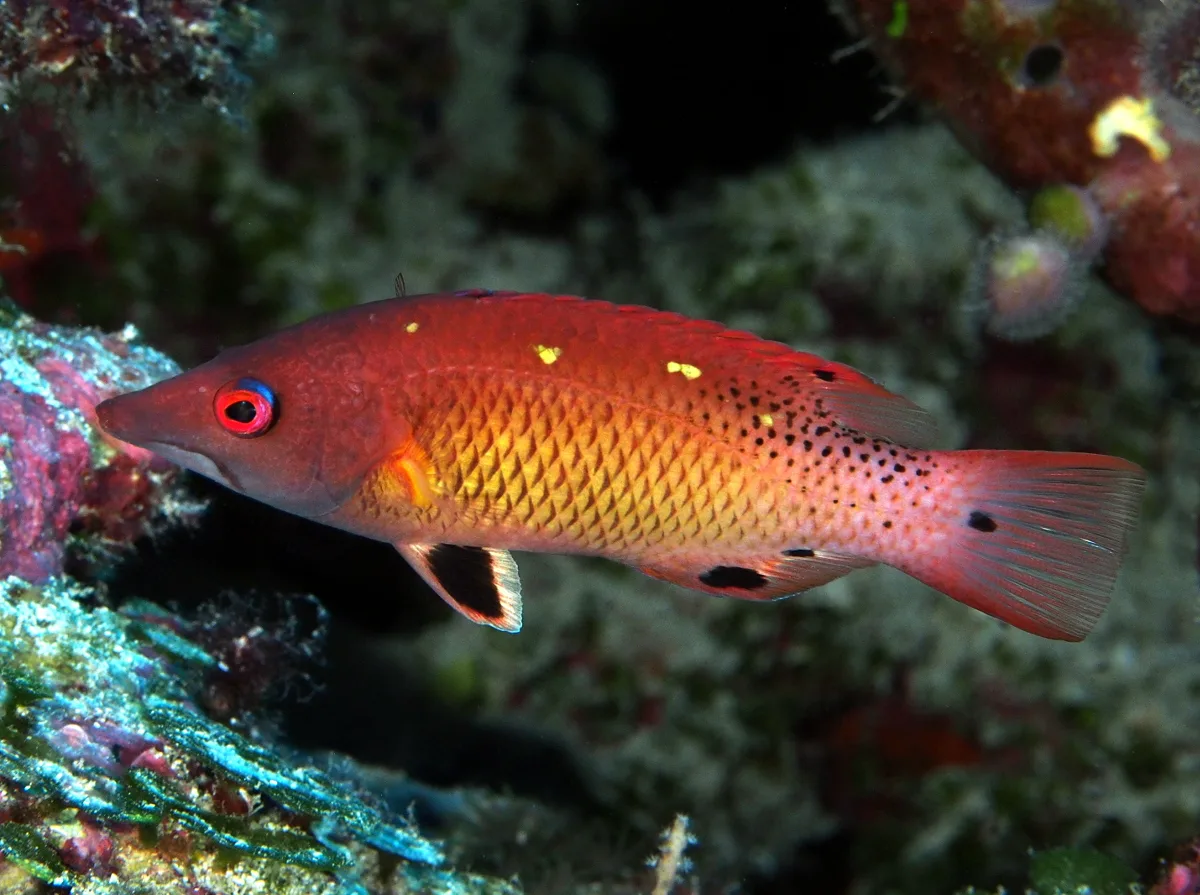
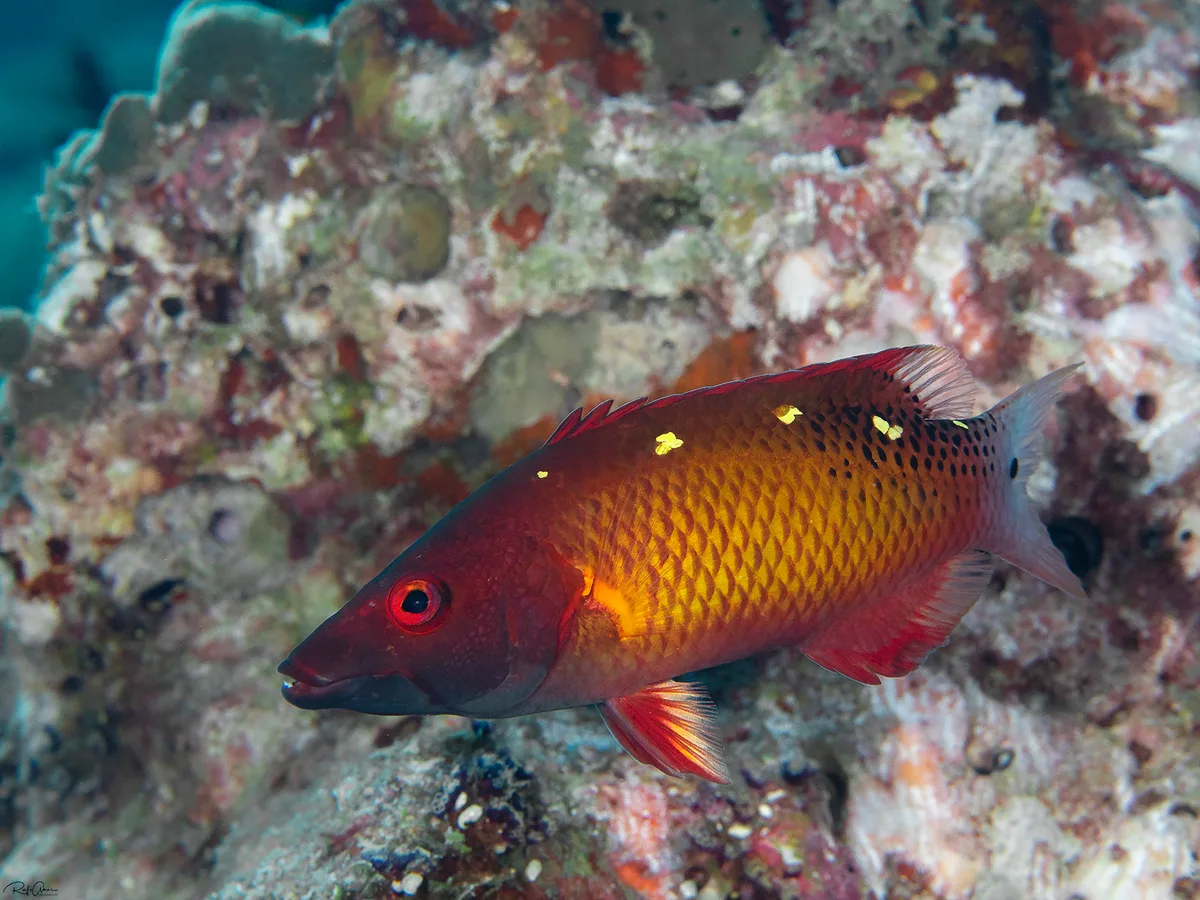
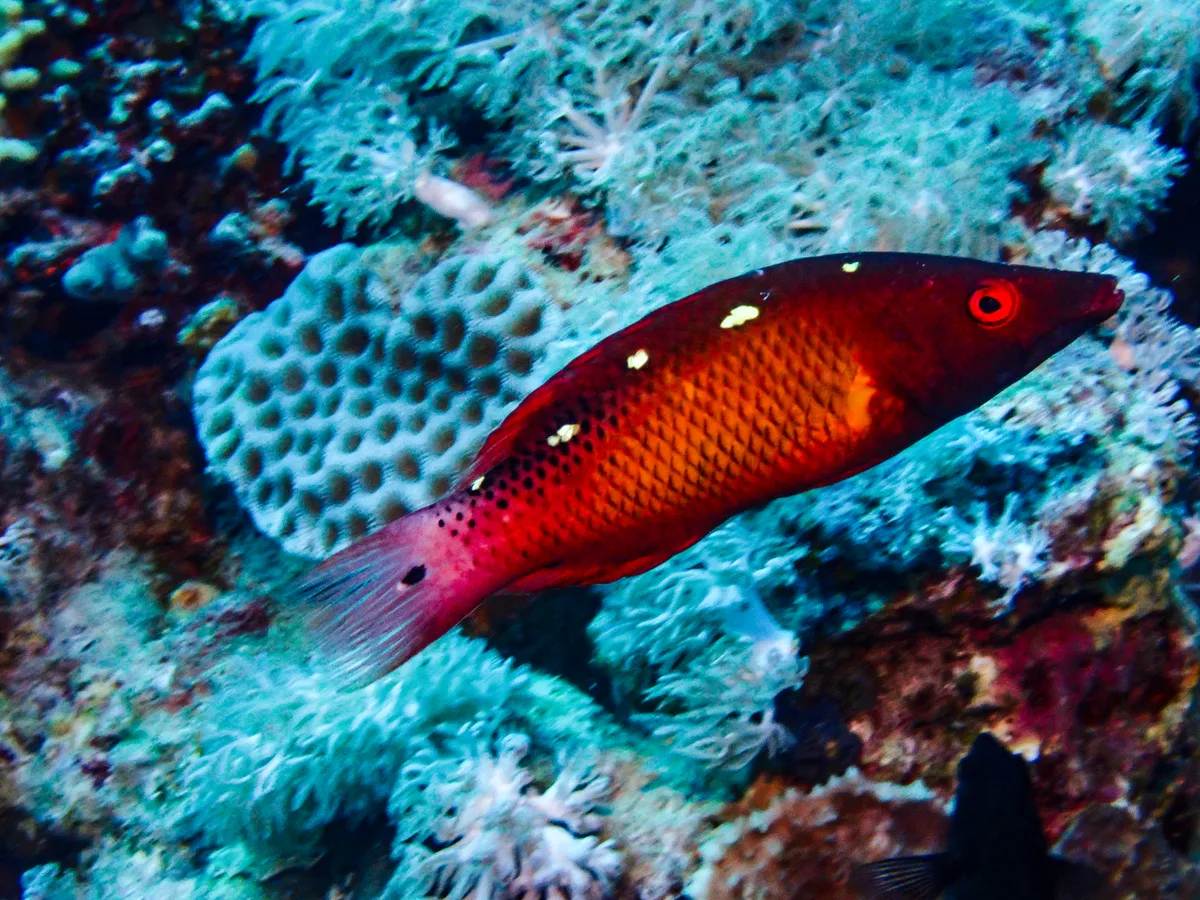
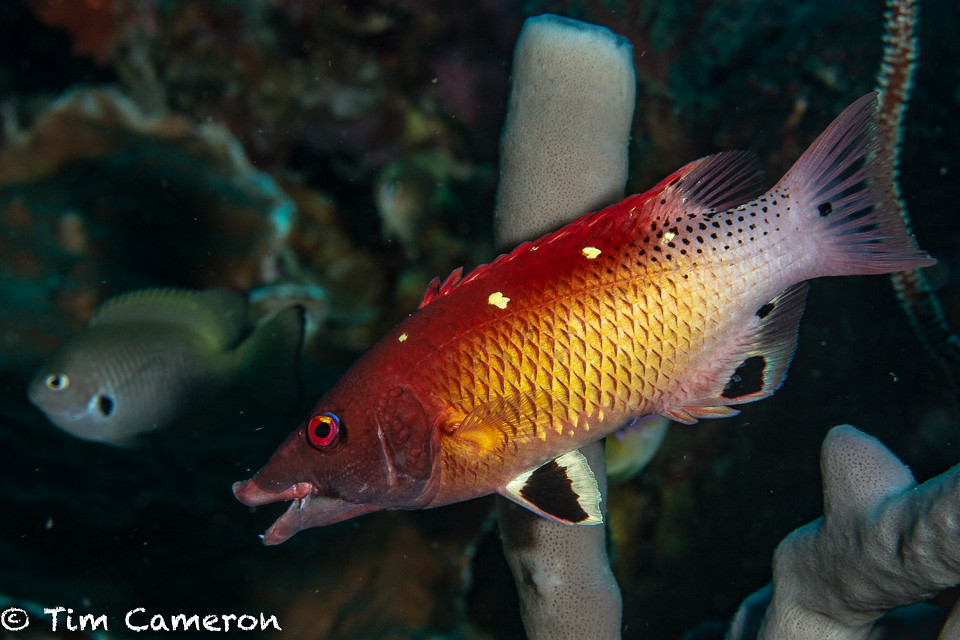
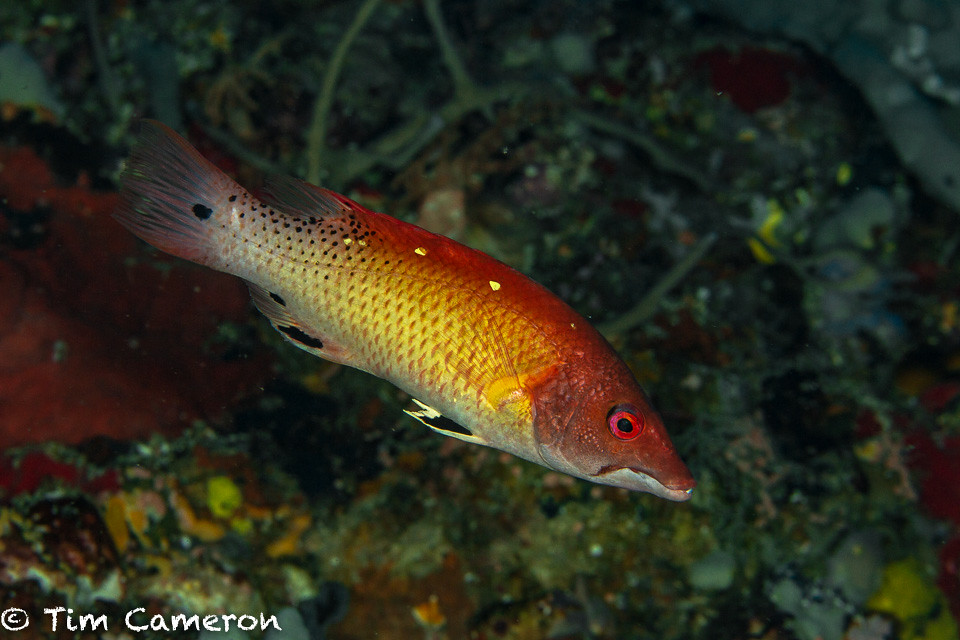
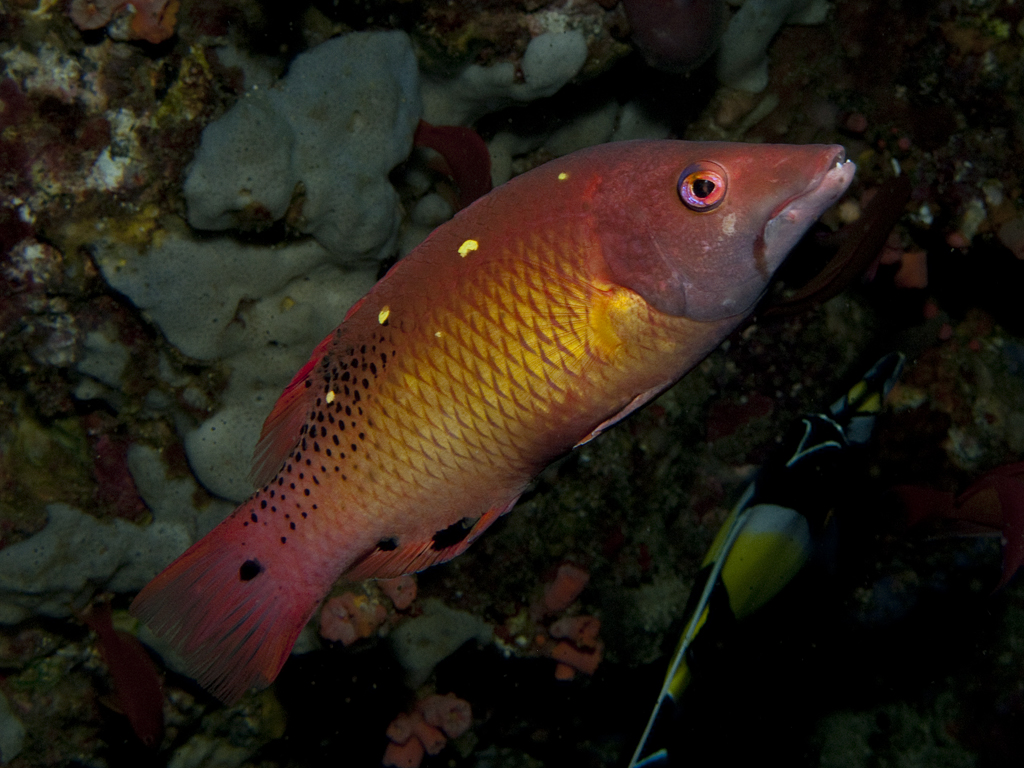
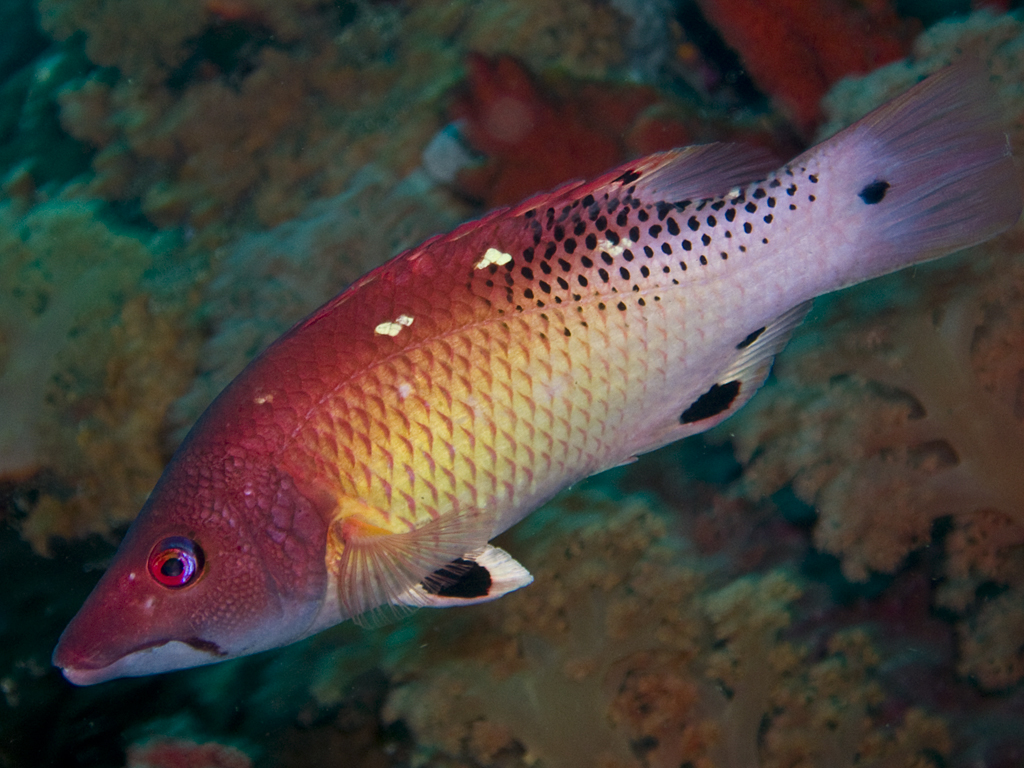
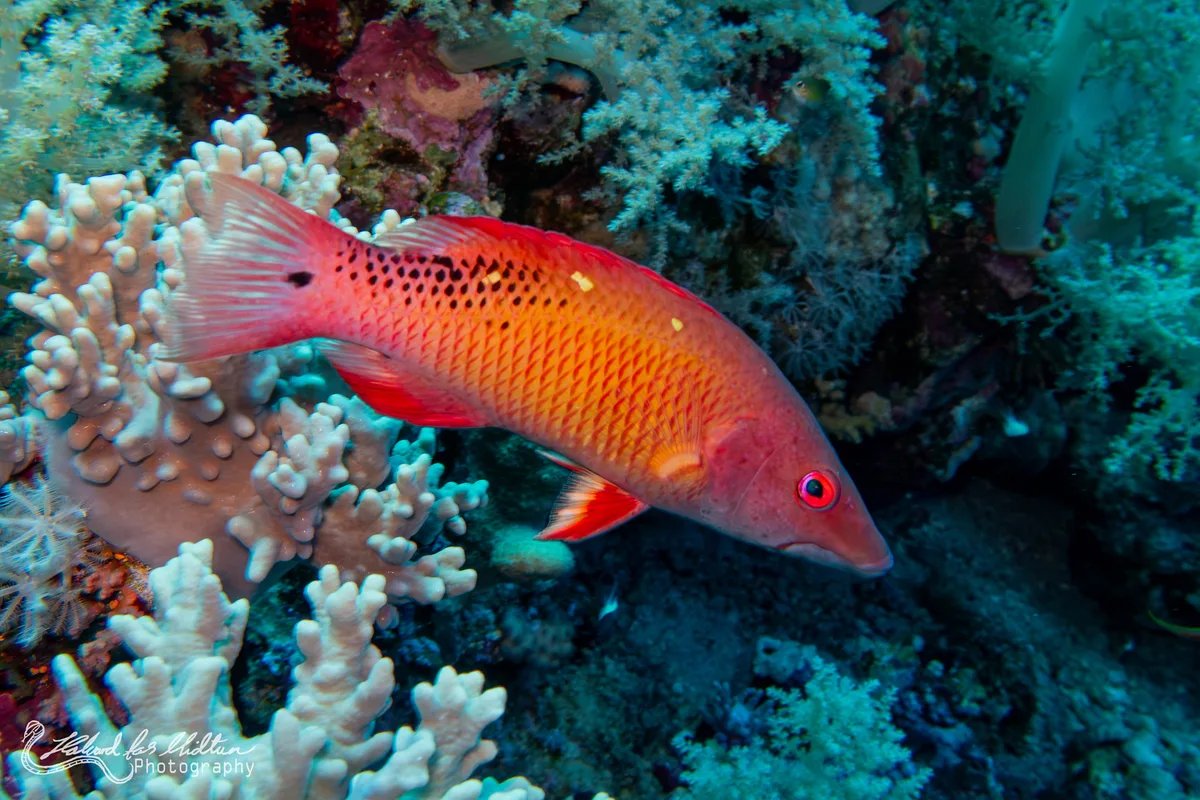
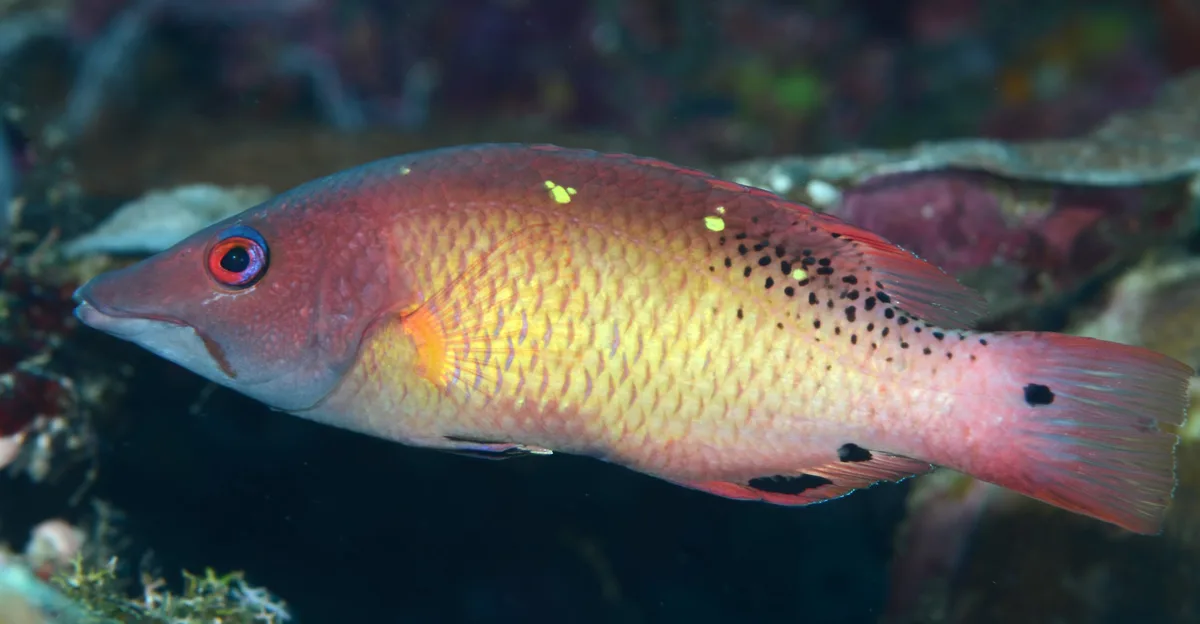
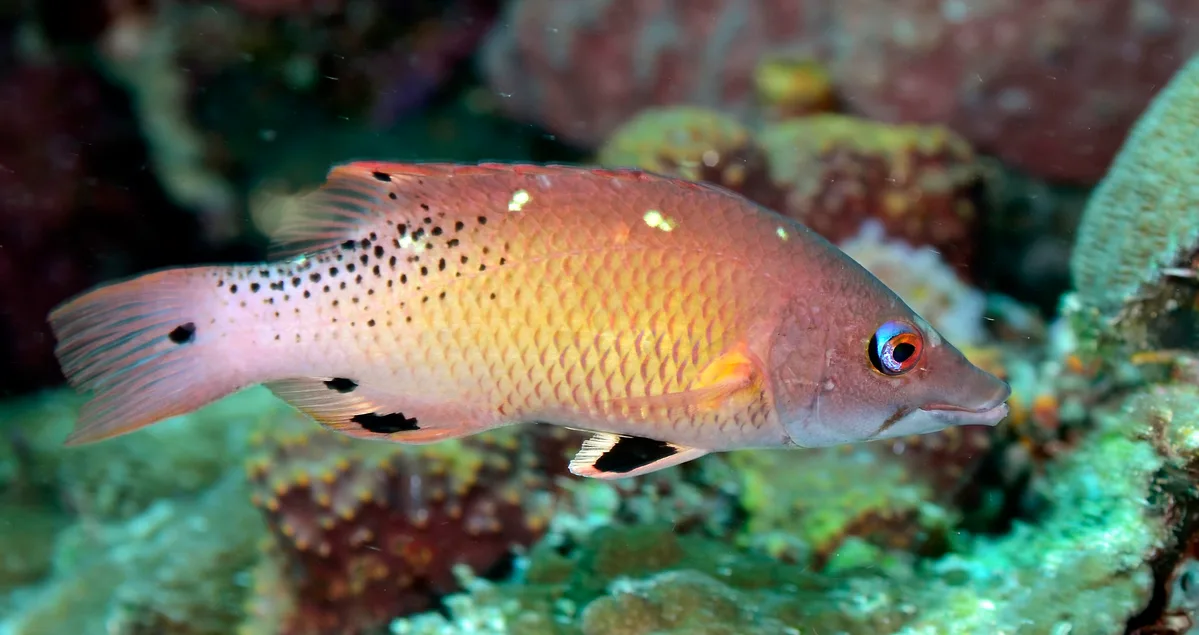
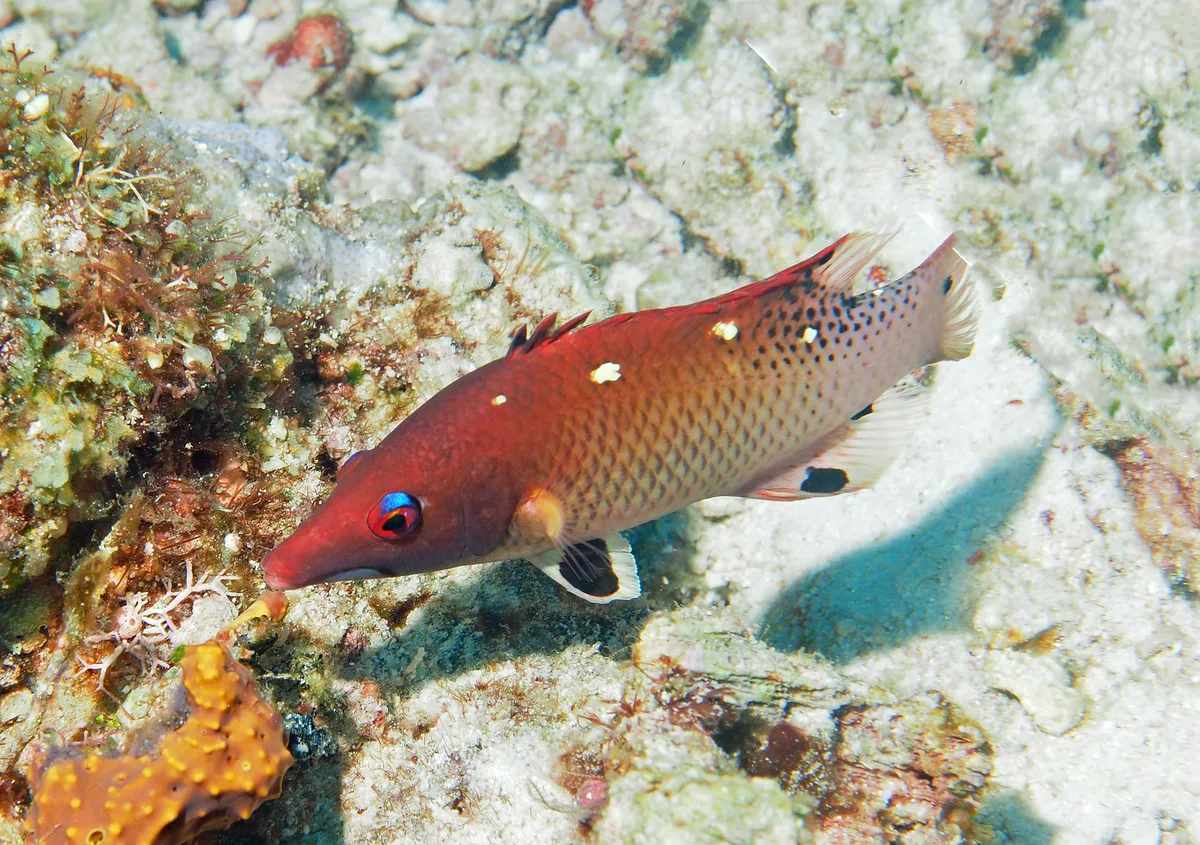
Hogfish are named for what they do with their faces. This one roots: it puts its pointed snout into rubble and coarse sand, shoves material aside, and takes out the shelled animals underneath - snails, small crabs, urchins, brittle stars - which it then crushes with plates in its throat.
That combination of a digging snout and a crushing mill is the family's living, and it is why the front teeth are canines that stick out rather than the neat rows a plankton picker would carry. A hogfish working over a rubble patch leaves it visibly disturbed.
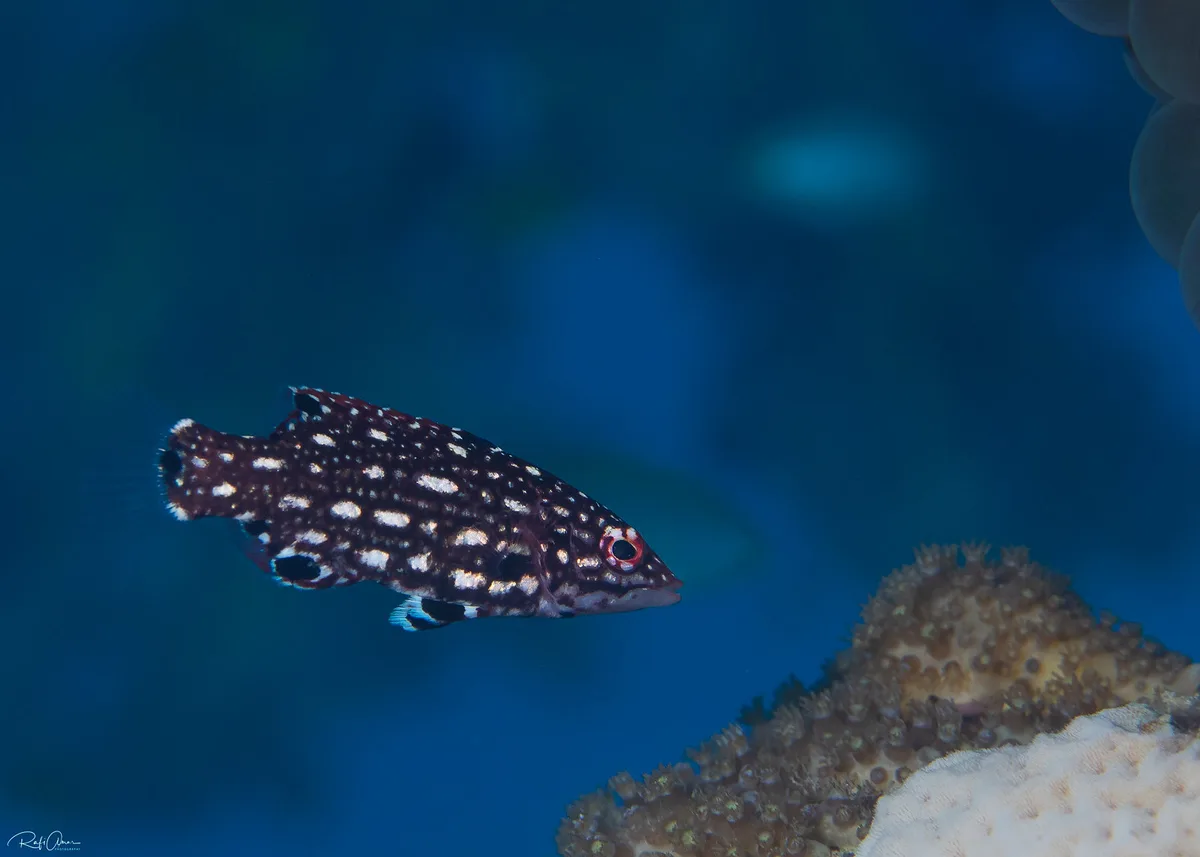
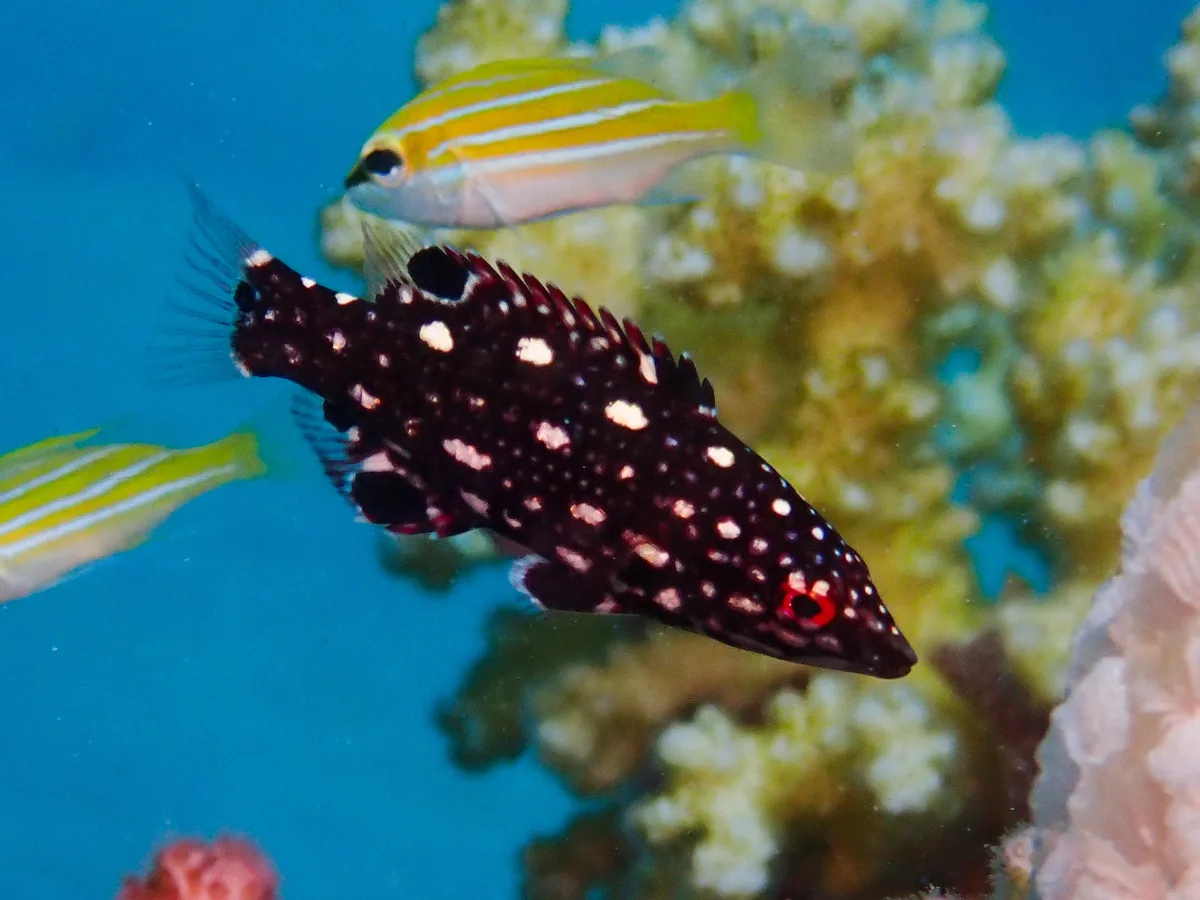
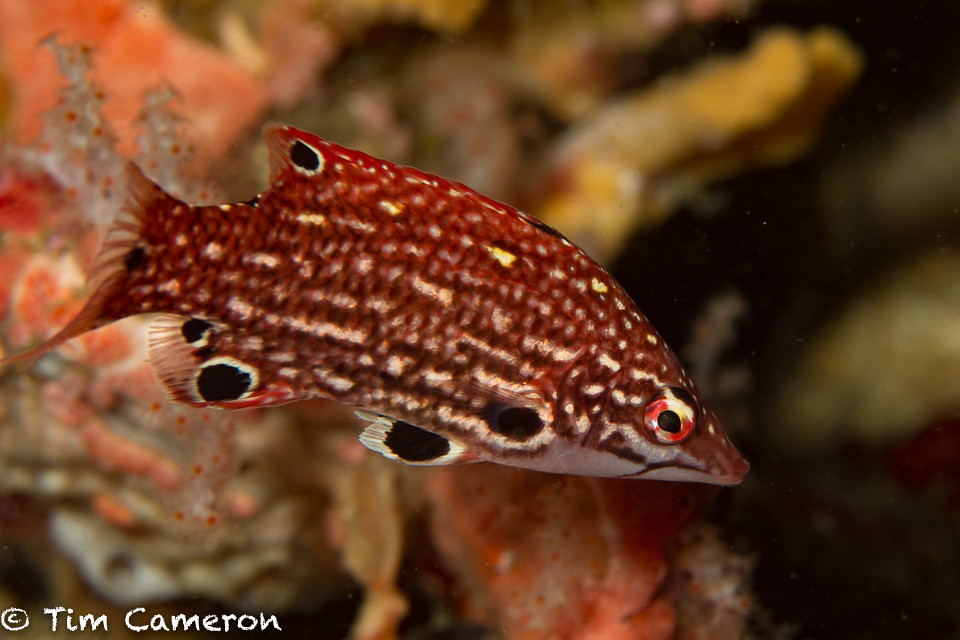
The young are a different proposition entirely: black with white spots and yellow fins, small, conspicuous, and often working as part-time cleaners on other fish - a job the adult drops completely.
Adults go deep. This species is recorded down past eighty meters and is more common below fifteen than above it, so the fish most divers meet here is a small one on a slope rather than a big one on the reef top.
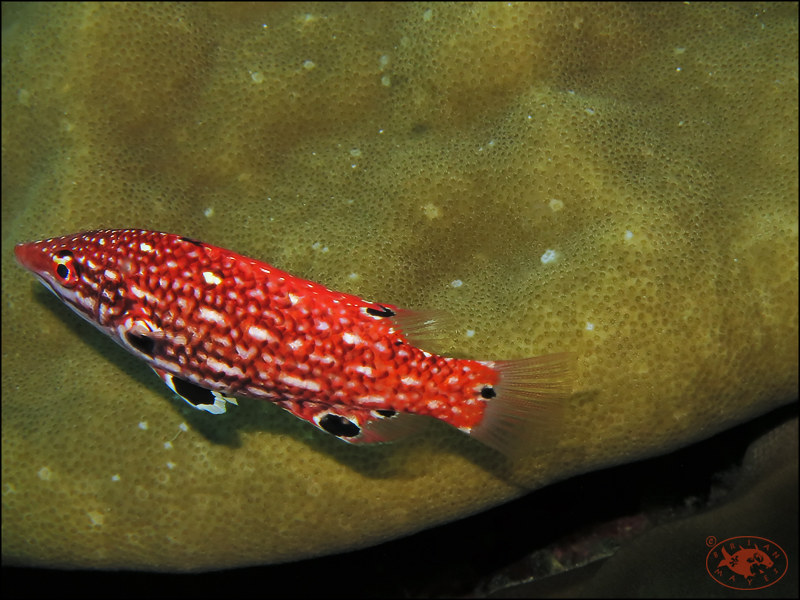
- reddish-brown body with white blotches and dark spots along the dorsal fin base
- pointed snout with visible canines at the front
- juveniles black with white spots and yellow fins
- up to 17 cm
Why it's threatened
Possible threats from reef degradation.
Threat classification from the IUCN Red List.