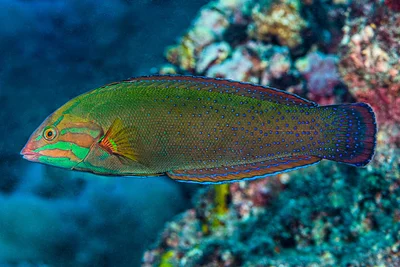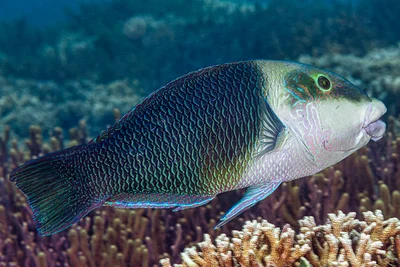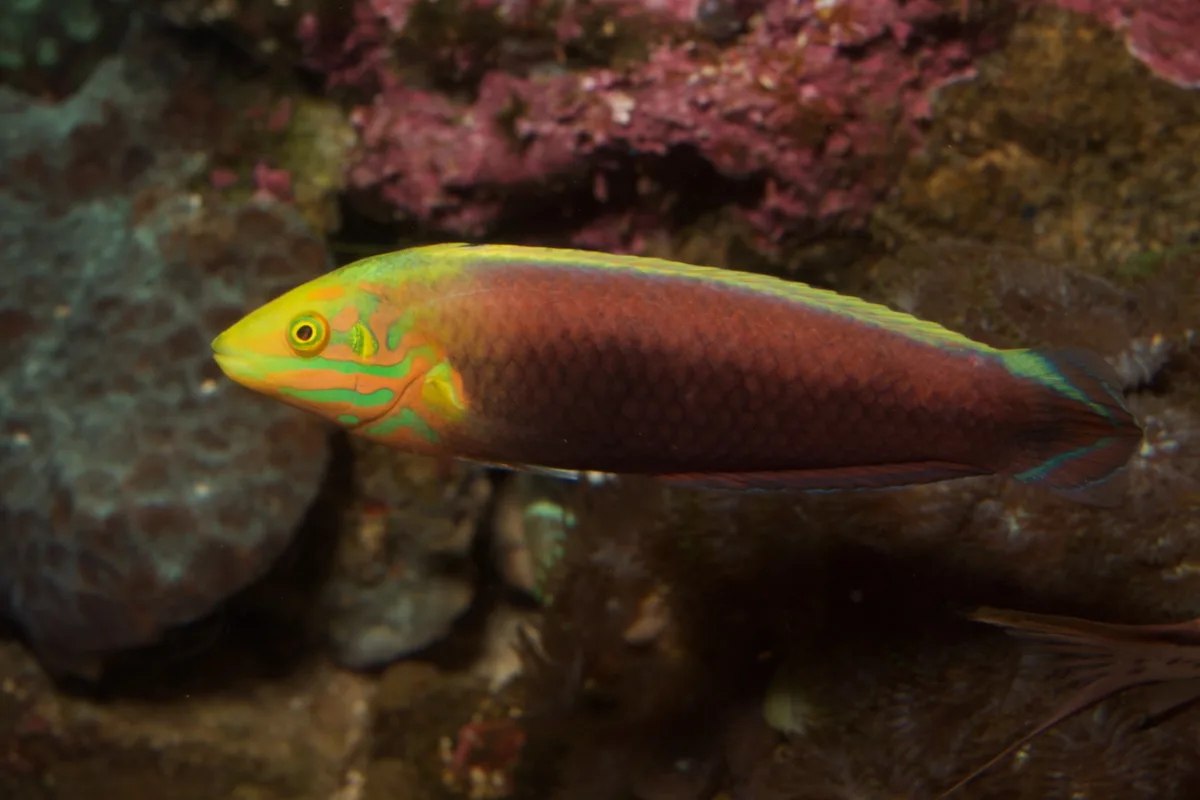
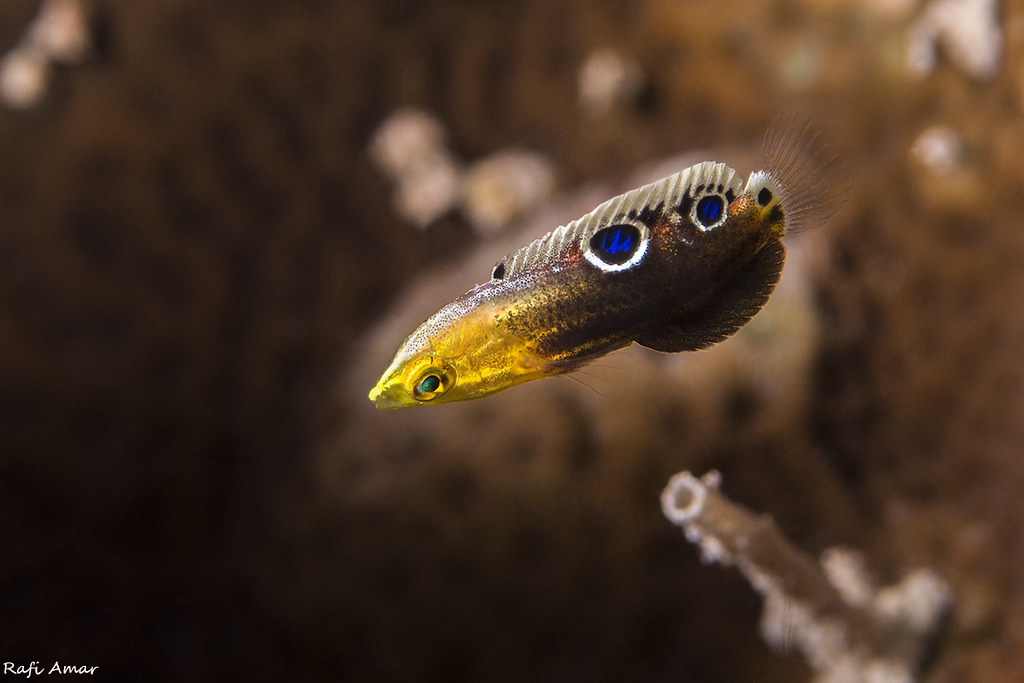
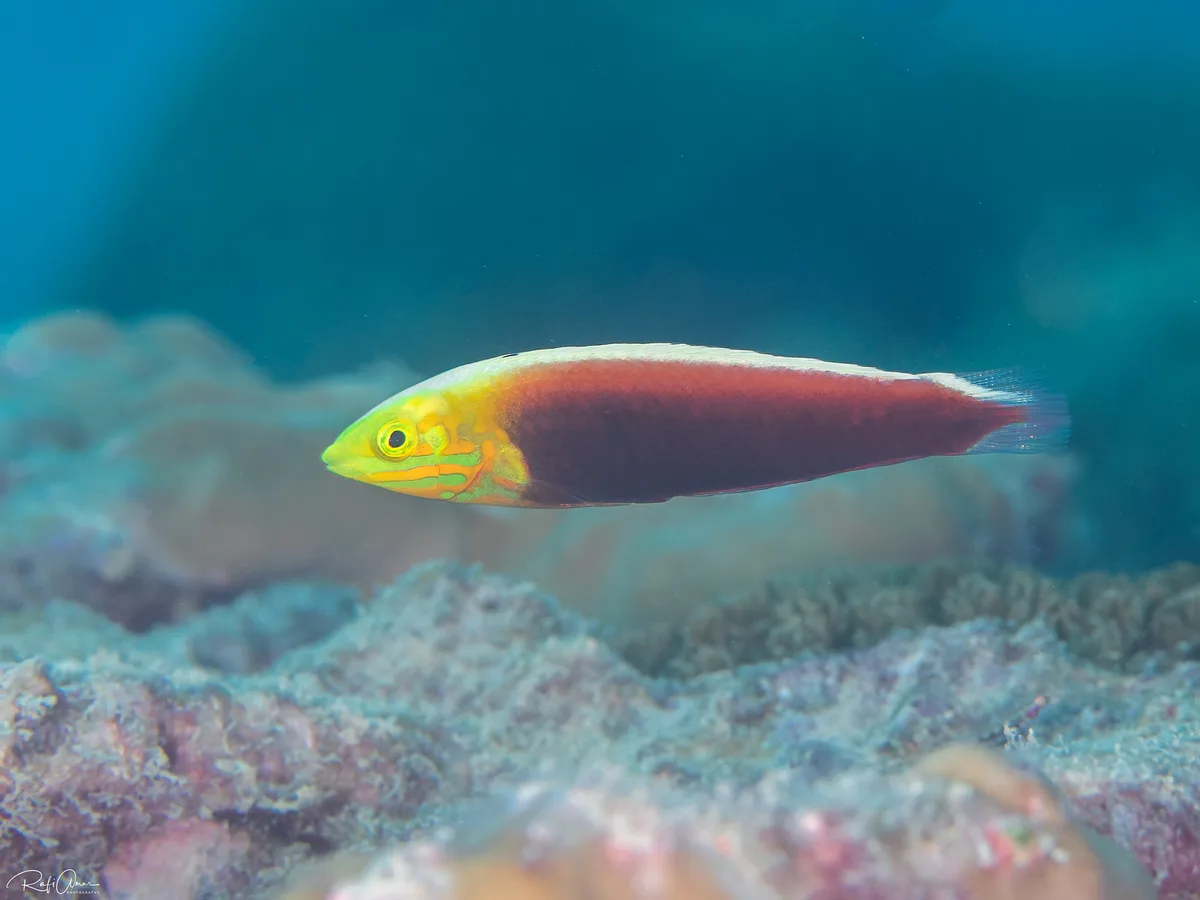
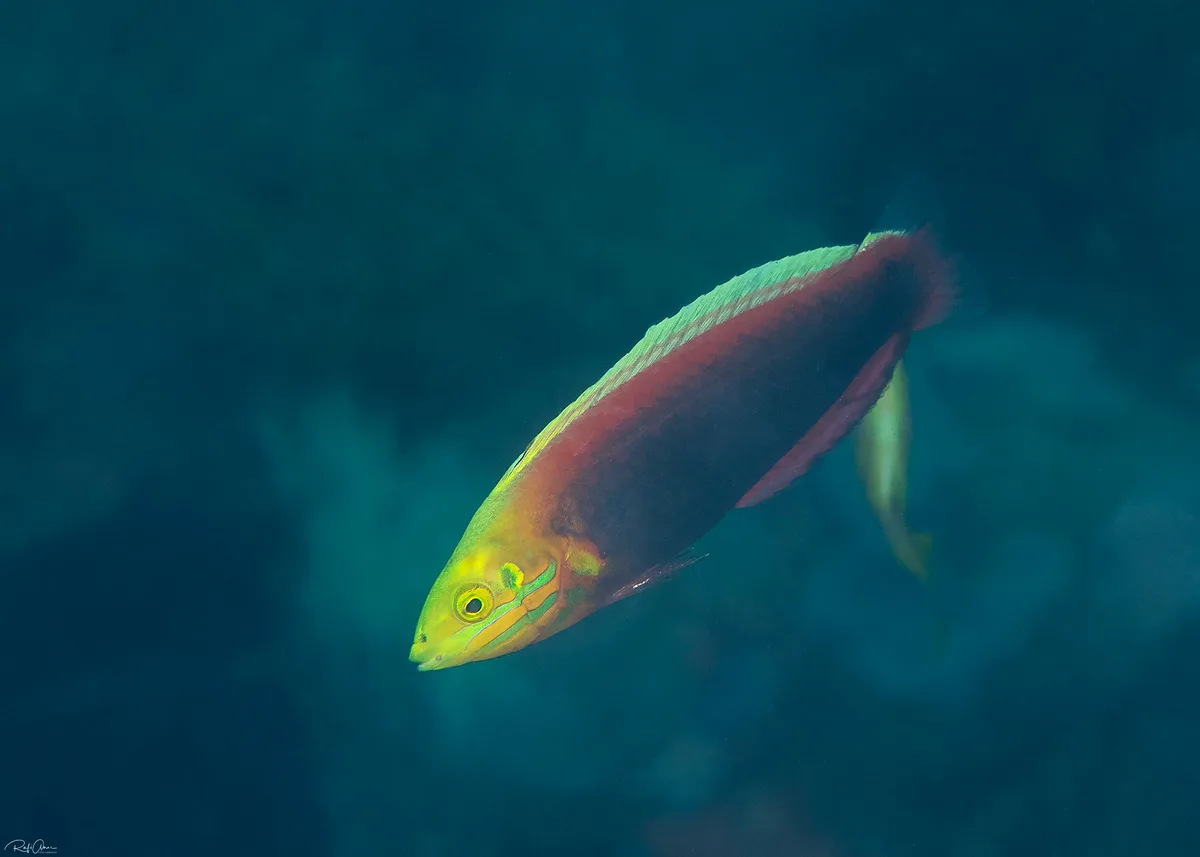
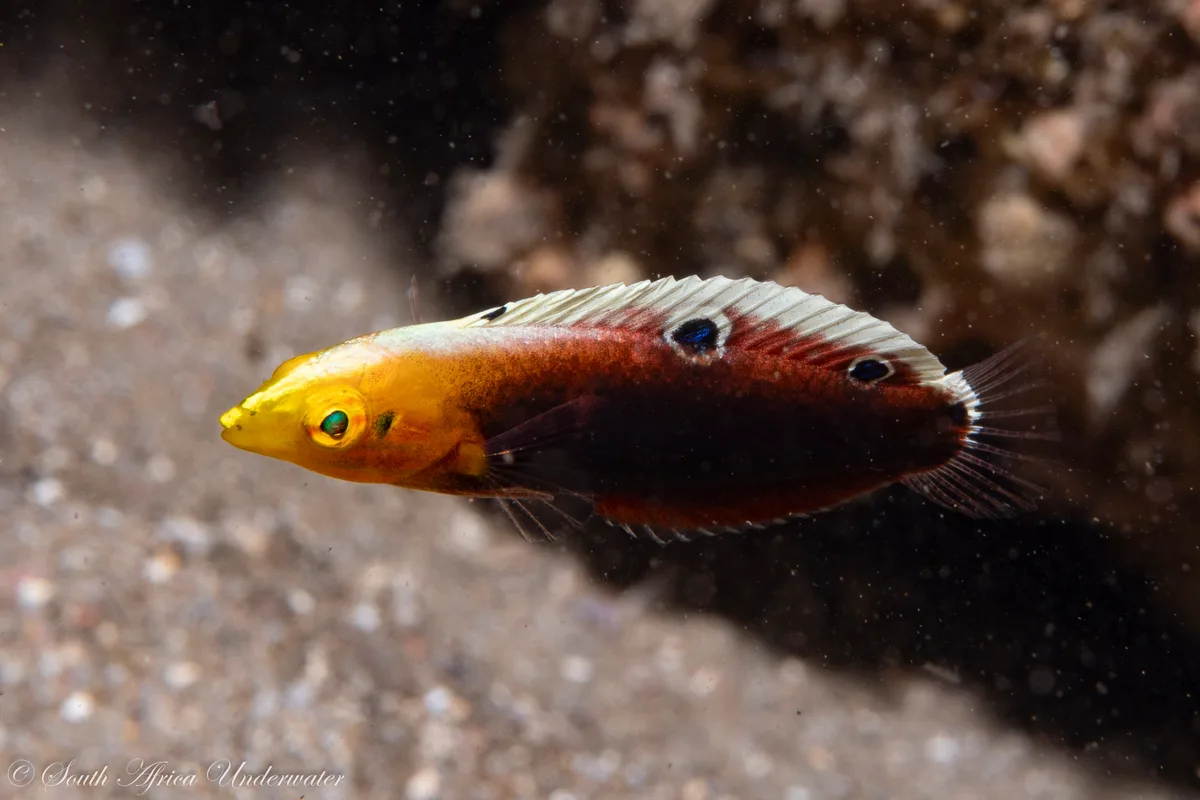
Its genus is a shallow-water genus. Halichoeres wrasses are the small striped fish that work rubble in the top ten meters, dive into the sand when frightened, and sleep buried; there are dozens of them and they are among the first fish anyone learns.
This one went down. It lives on slopes from about six meters to over forty, is more common in the deeper half of that, and is built accordingly: smaller, plainer at the back end, and far less inclined to cross open ground.
What happens on a slope is that everything gets thinner. Less light, less algae, fewer of the small crustaceans that a rubble wrasse eats, and a longer distance between good patches. A fish moving into that band trades abundance for having it to itself, and species that make the move usually end up smaller than their shallow relatives.
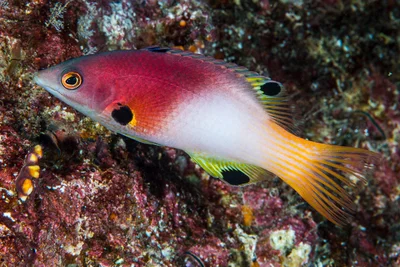
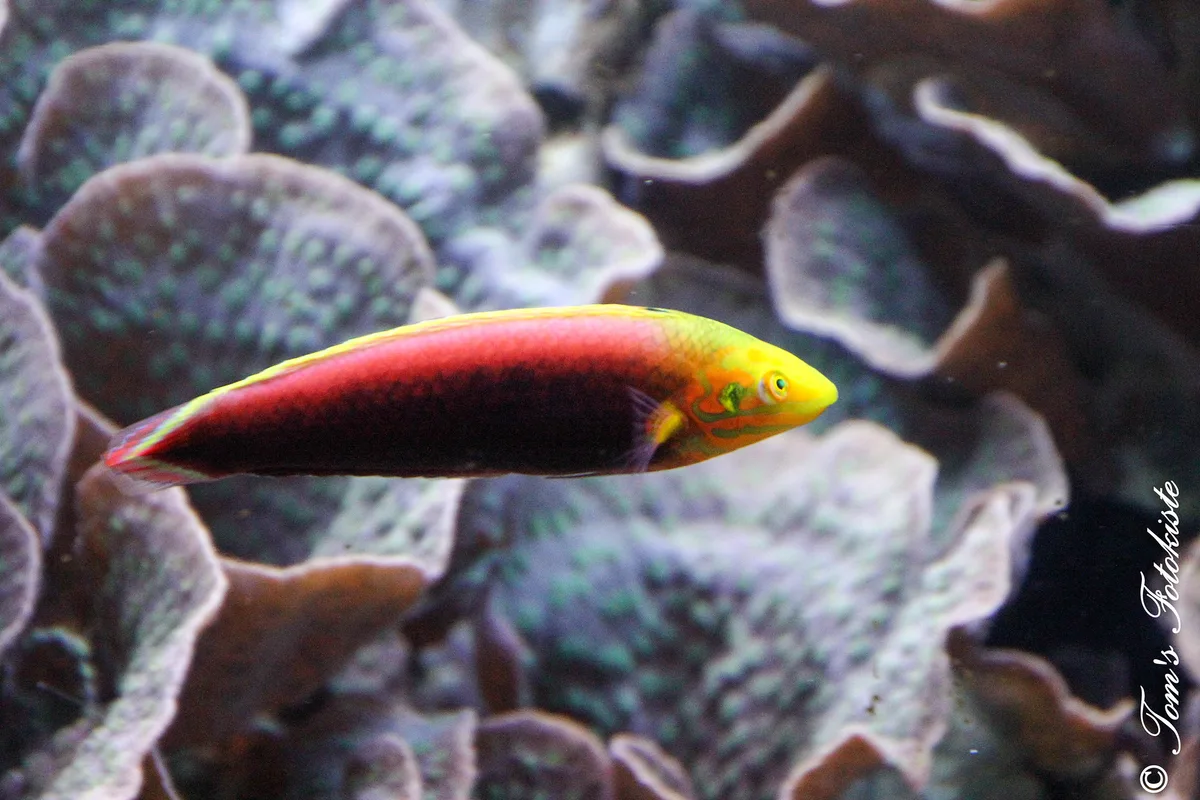
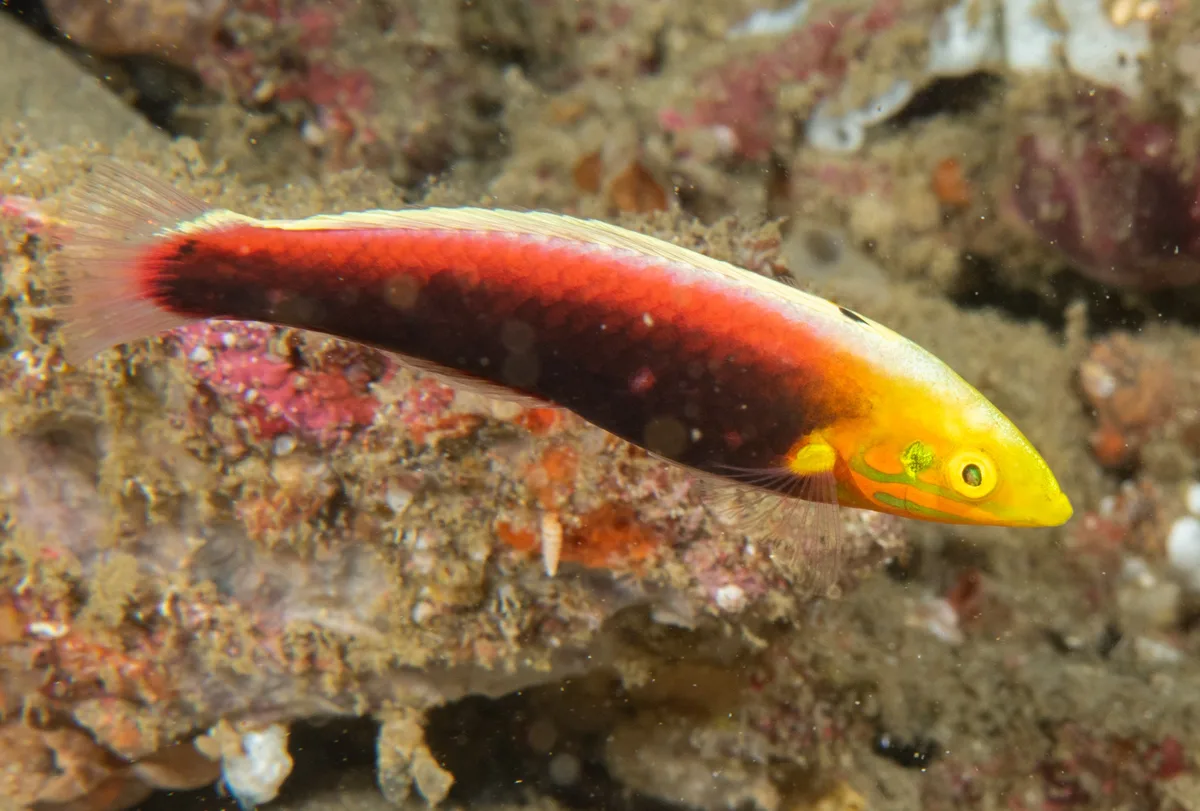
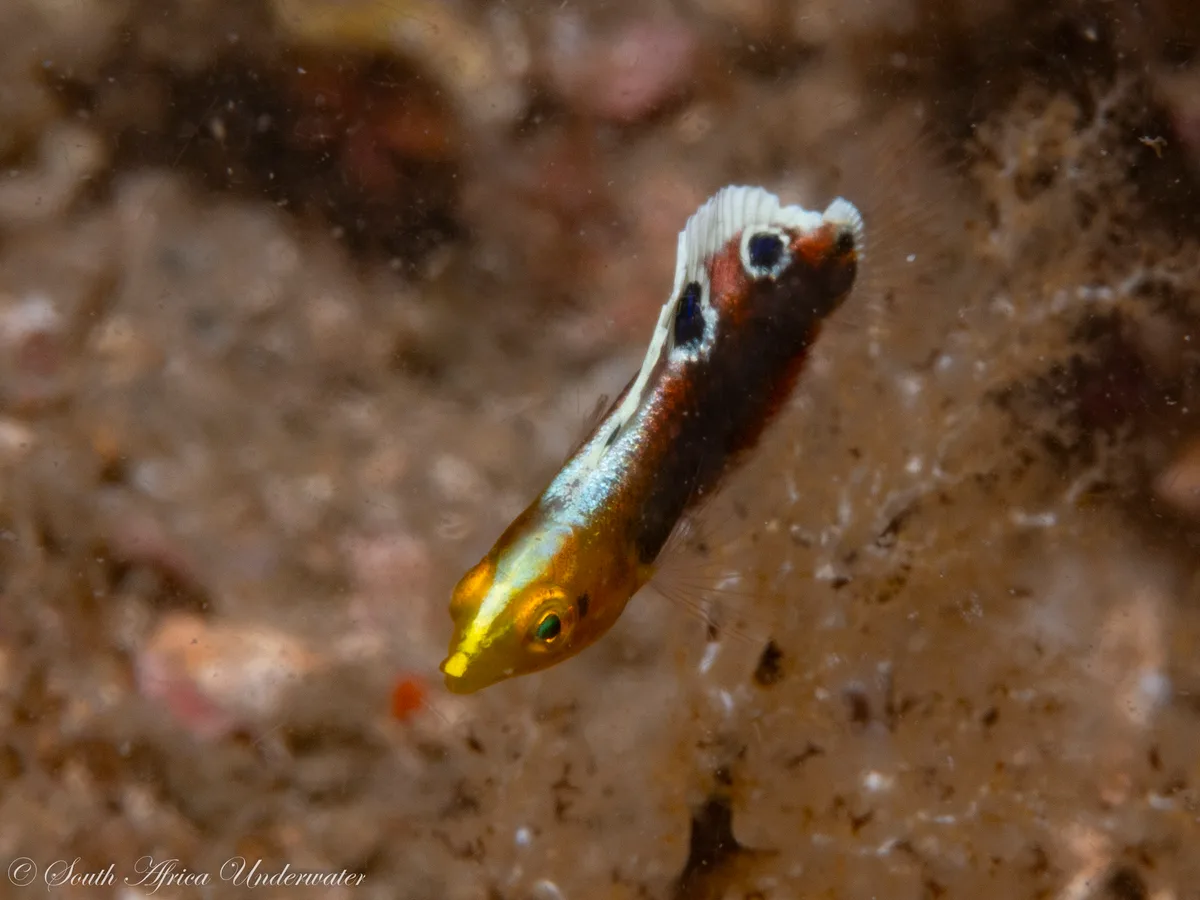
The name is about the color break: an orange-red front half that turns abruptly dark behind, which on a small fish in deep blue light reads as half a fish.
The genus. Halichoeres Rüppell 1835 - halios (sea) + choiros (hog). ETYFish
The species. Halichoeres iridis Randall & Smith 1982 - of the rainbow. ETYFish
- orange-red front half shading abruptly to dark on the rear body
- small size, under twelve centimeters
- over rubble on slopes below fifteen meters rather than on shallow flats
- up to 11.5 cm
Why it's threatened
There are no known threats to this species.
Threat classification from the IUCN Red List.