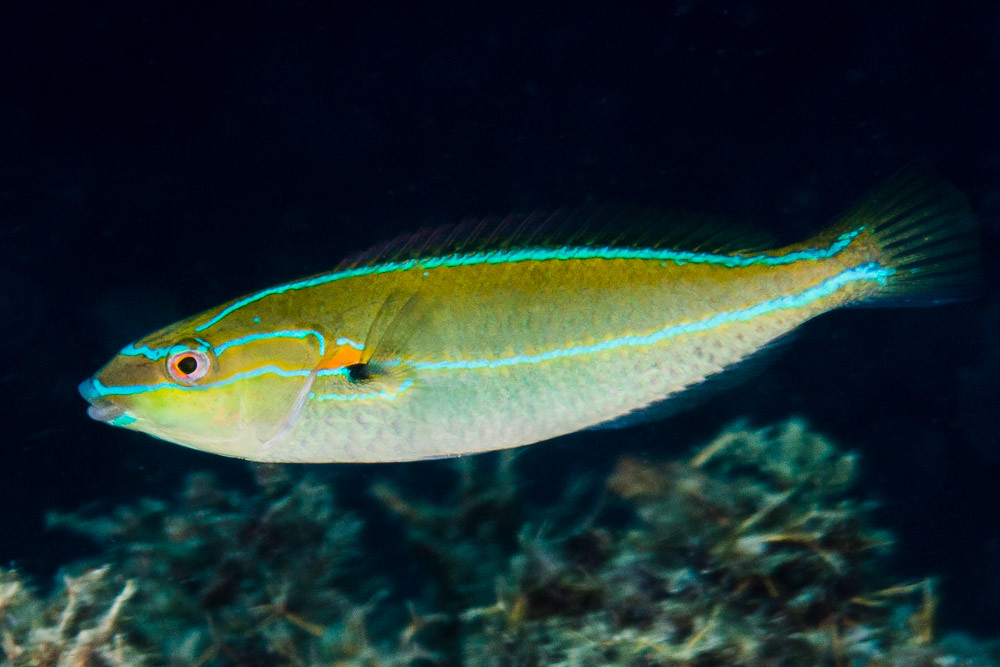
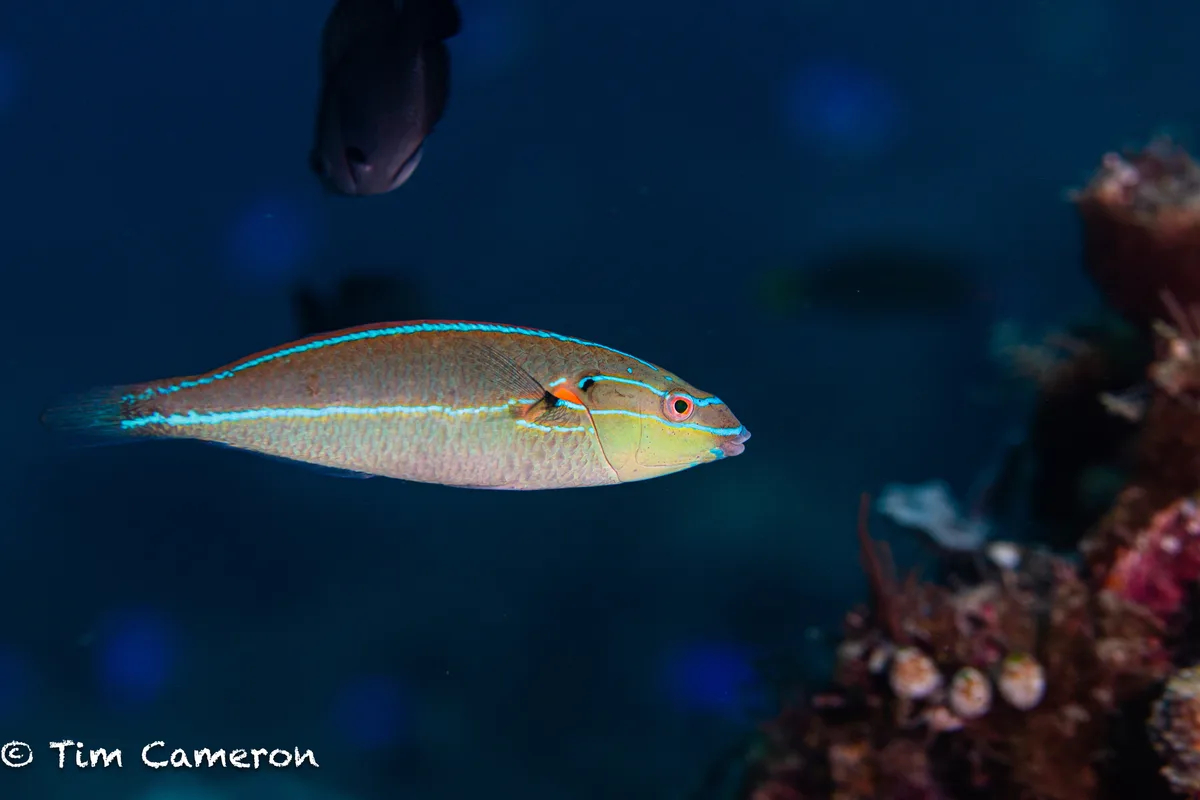
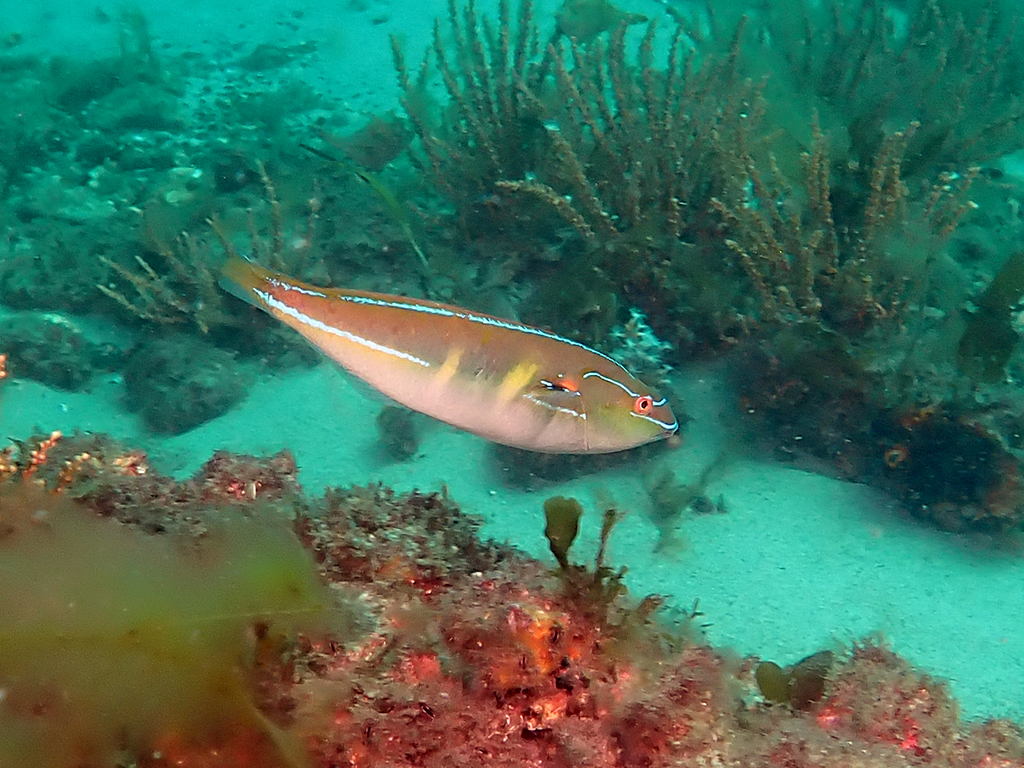
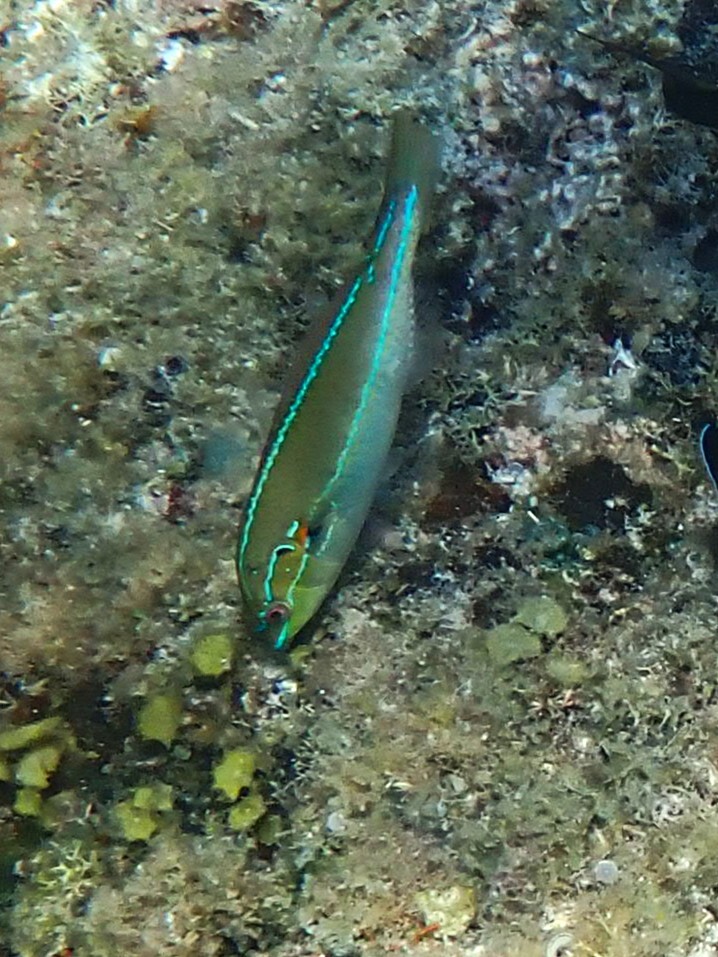
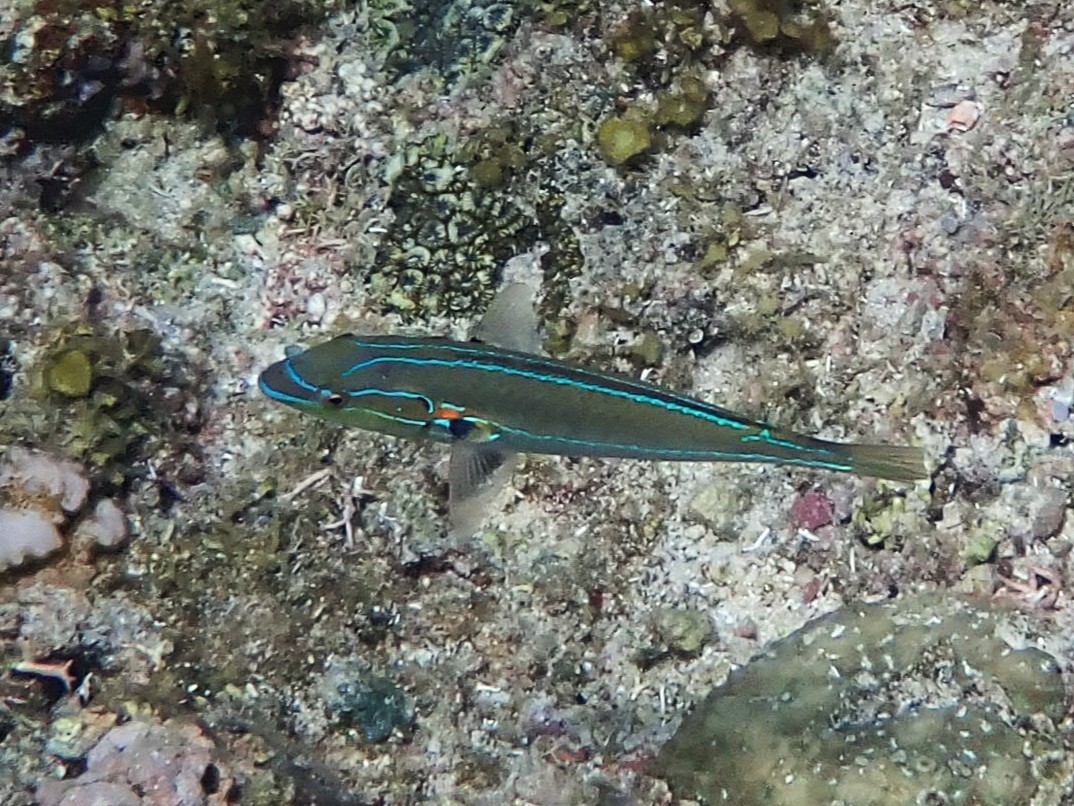
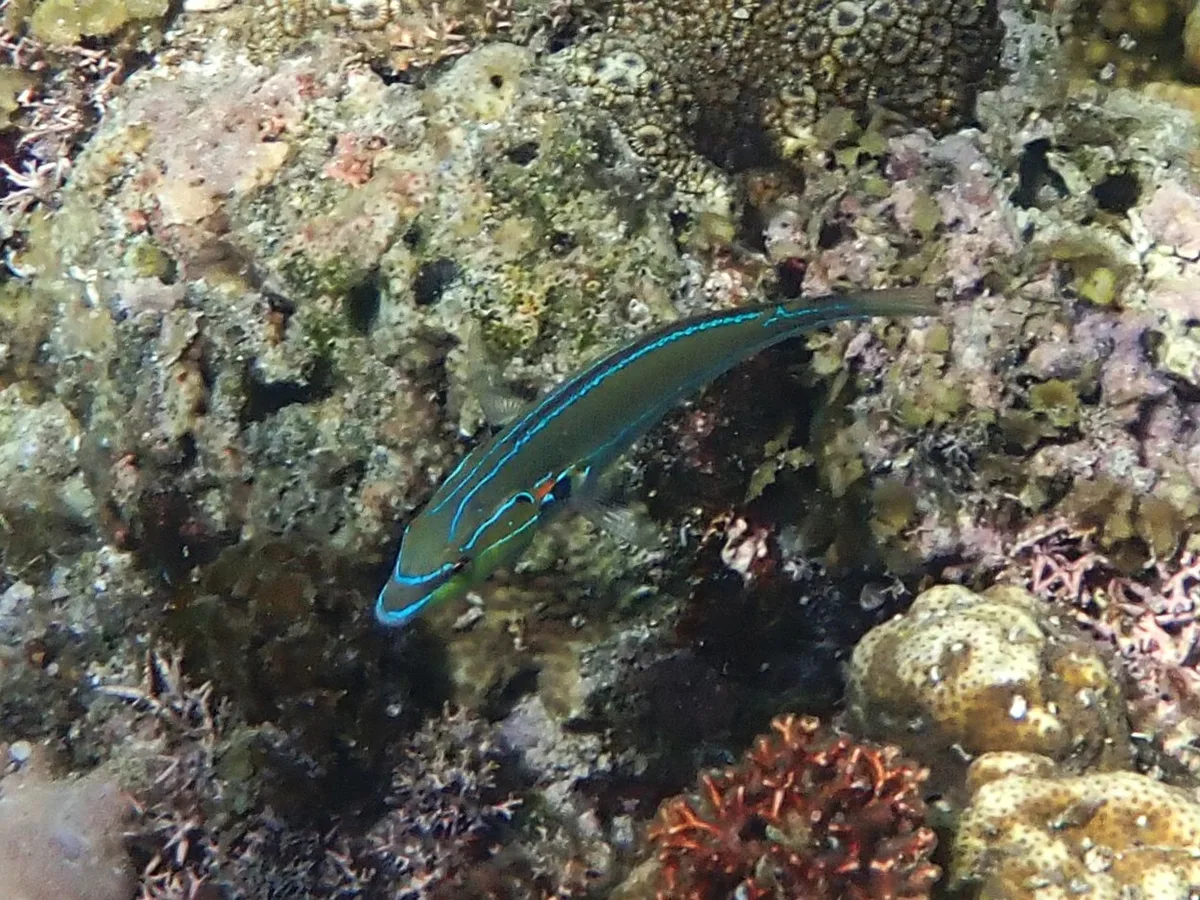
The line stops halfway, and the name is about that break.
A continuous stripe along a fish is a formation signal, useful for holding position in a school. A broken one does something else. On an animal moving fast, high-contrast markings that start and stop make it hard for an eye to track speed and direction accurately: the edges give a pursuing predator conflicting information about where the fish is and how quickly it is going, and a strike computed on bad information lands behind. Zebras are the famous example and small fast reef fish are the underwater version.
This is a fish that never stops. It works shallow rubble in continuous fast loops, feeding as it goes, and getting a photograph is a matter of prefocusing on a patch and waiting for it to cross rather than following it.
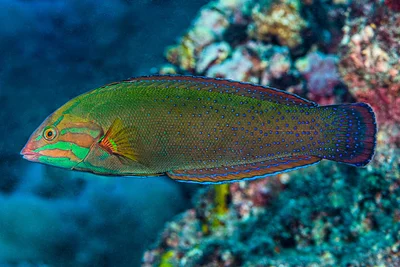
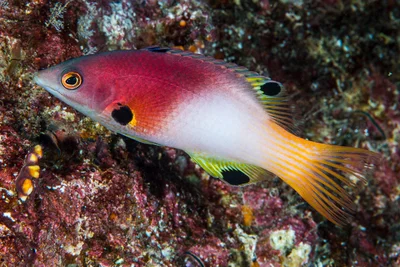
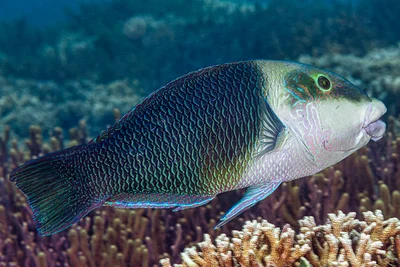
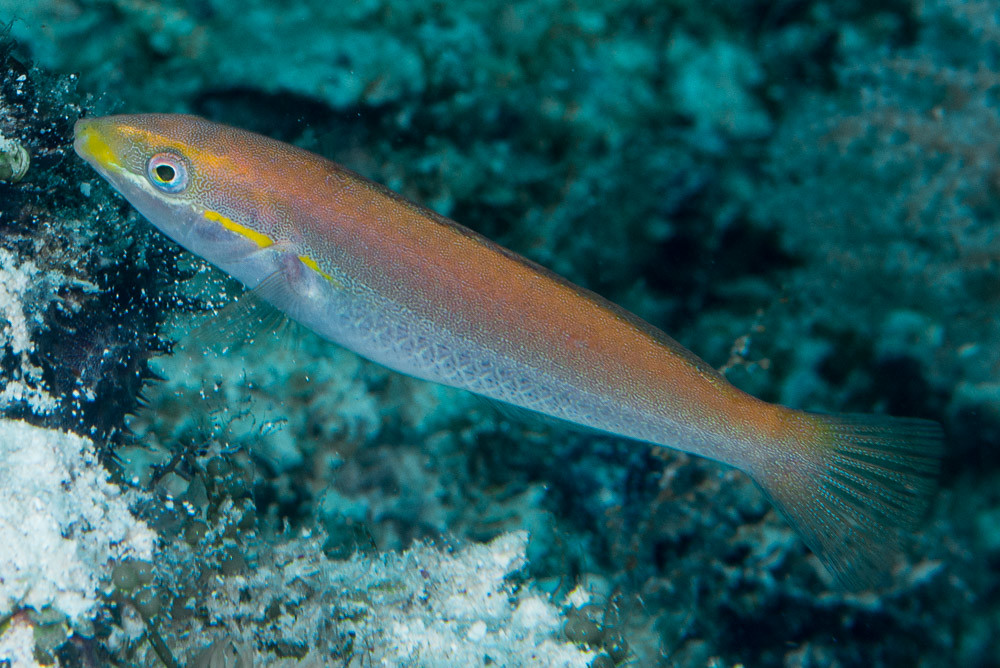
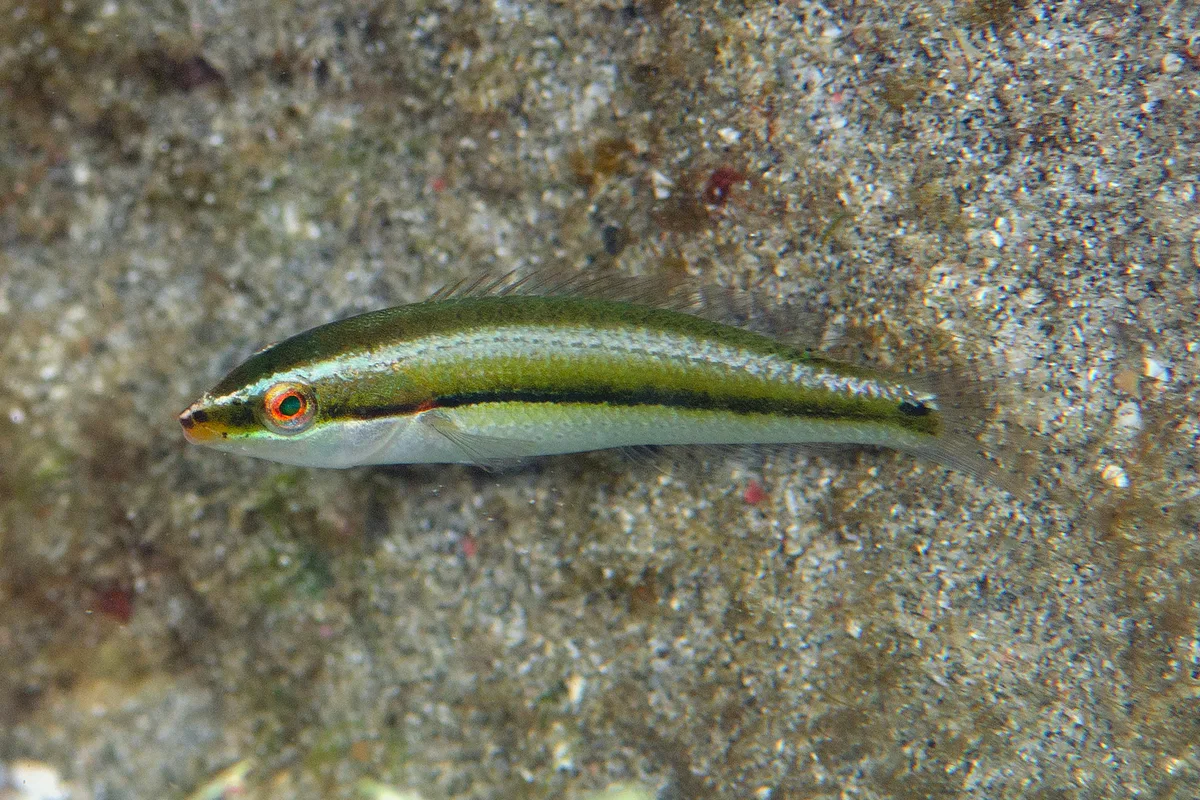
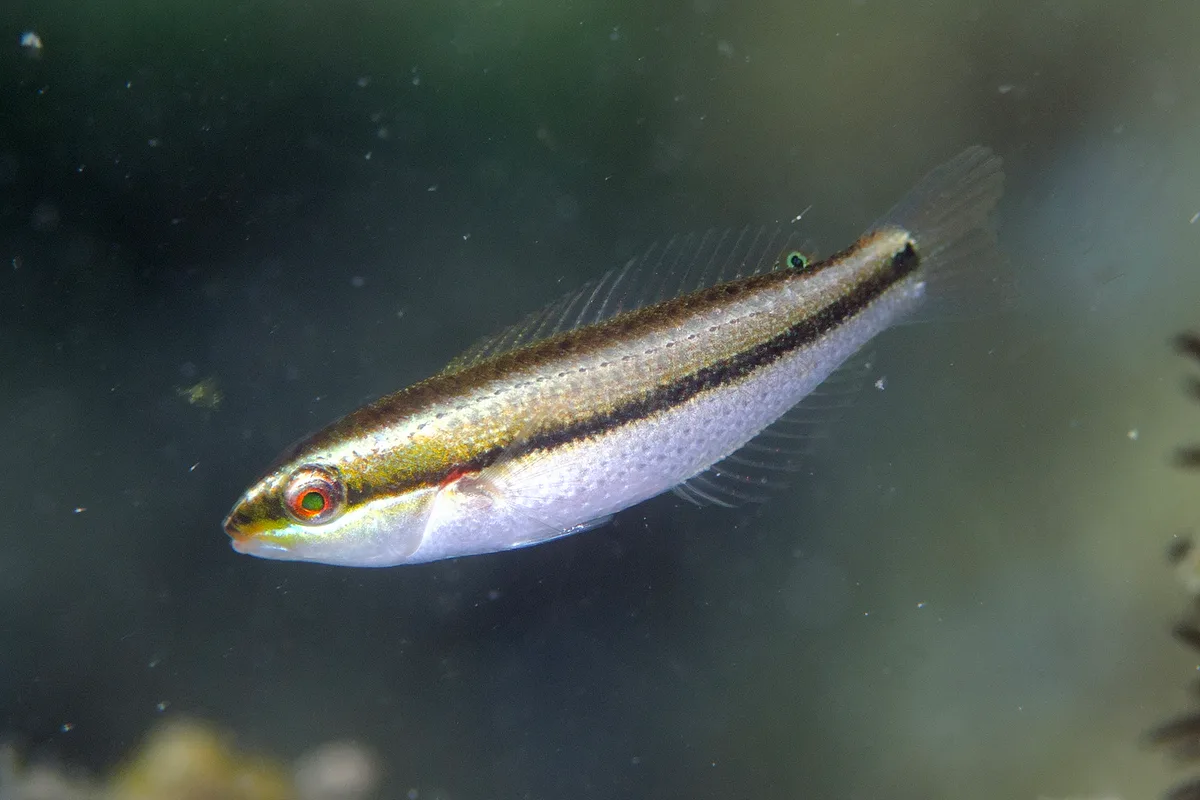
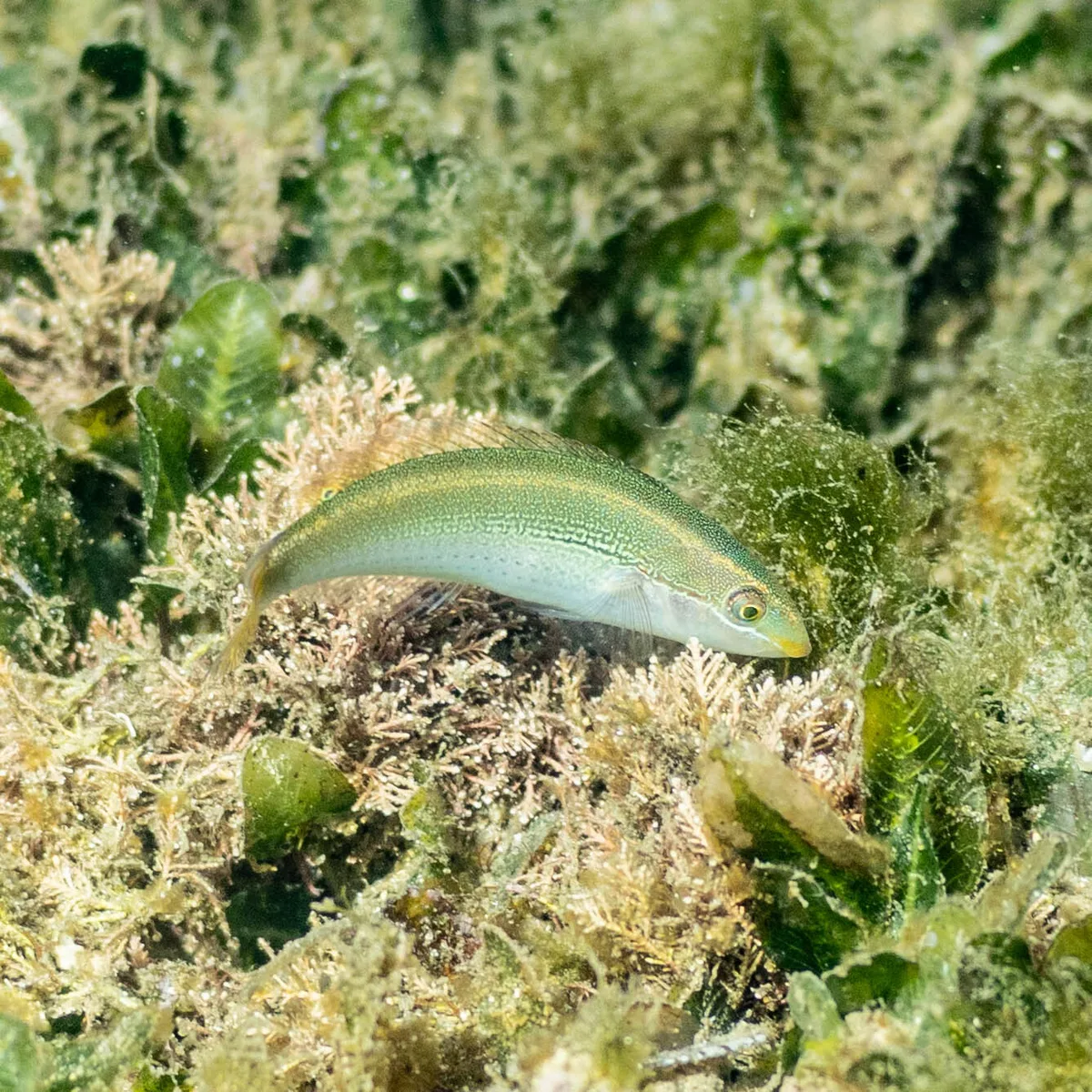
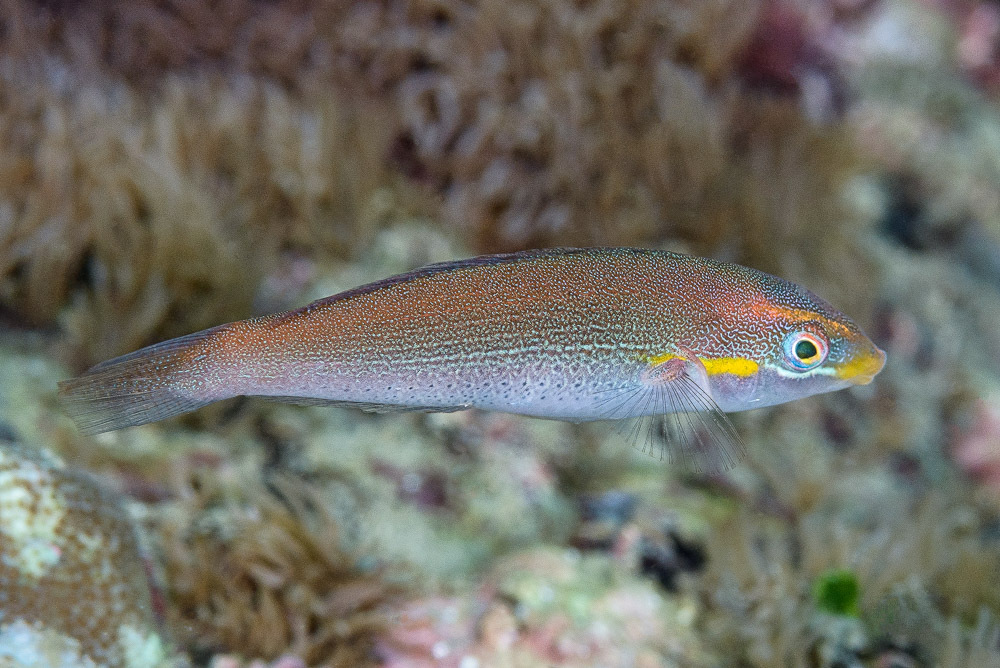
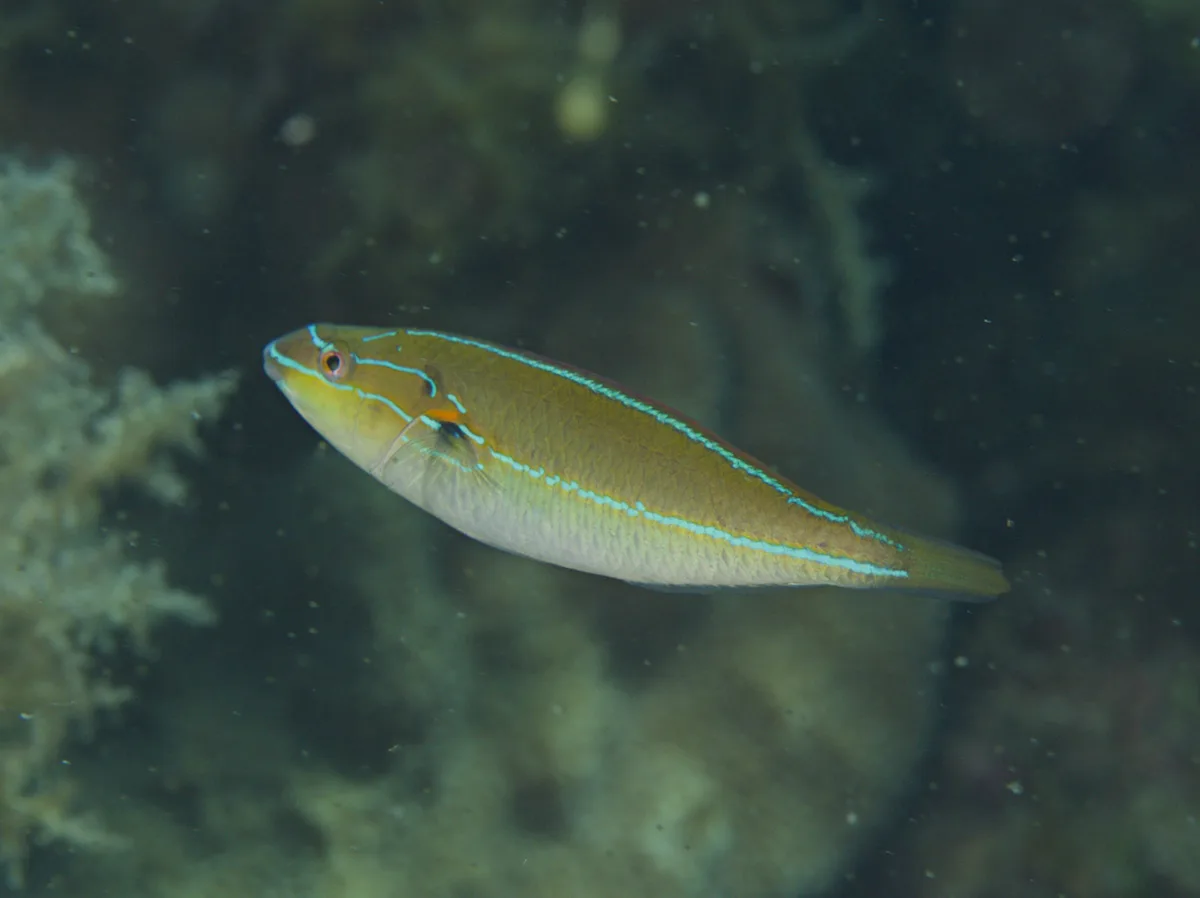
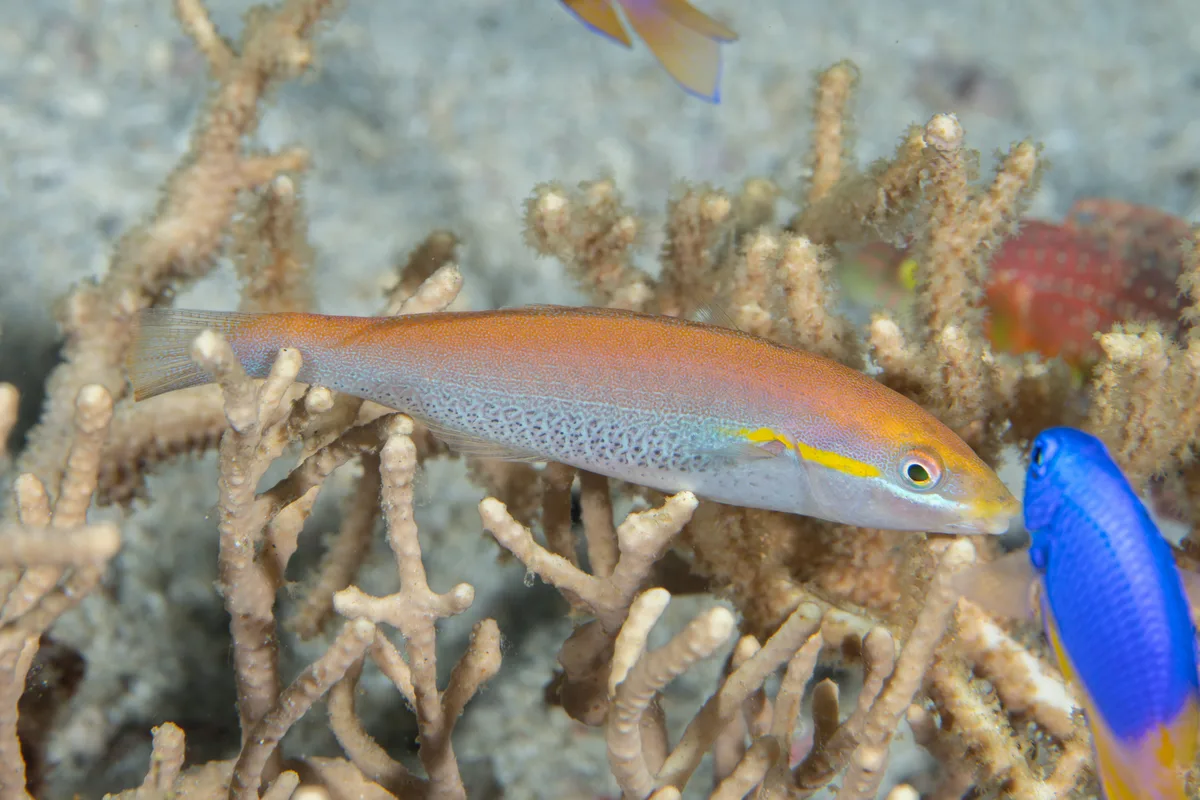
Males carry the blue line and a good deal of color; females are plain brown with fine speckles, and the two are logged as different species regularly.
The genus. Stethojulis Günther 1861 - stethos (breast or chest). ETYFish
The species. Stethojulis interrupta (Bleeker 1851) - interrupted. ETYFish
- males with a blue line along the side that breaks off partway down the body
- females plain brown with fine white speckling
- never stops moving, working shallow rubble in fast loops
- up to 15 cm
Why it's threatened
A major threat is the degradation of the coral reef habitat. This species is collected for the aquarium trade, which is considered a threat due to the fact that they are rare.
Threat classification from the IUCN Red List.