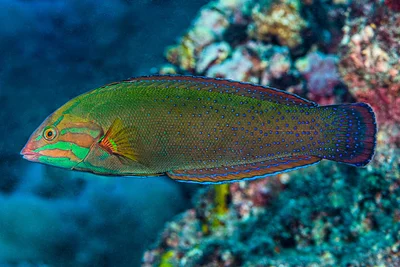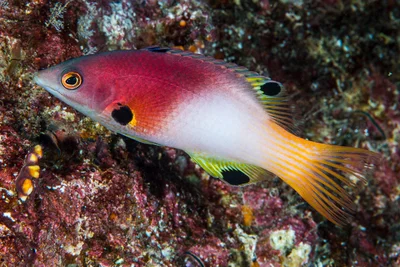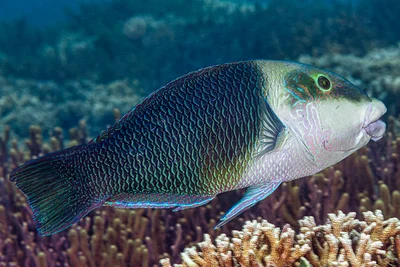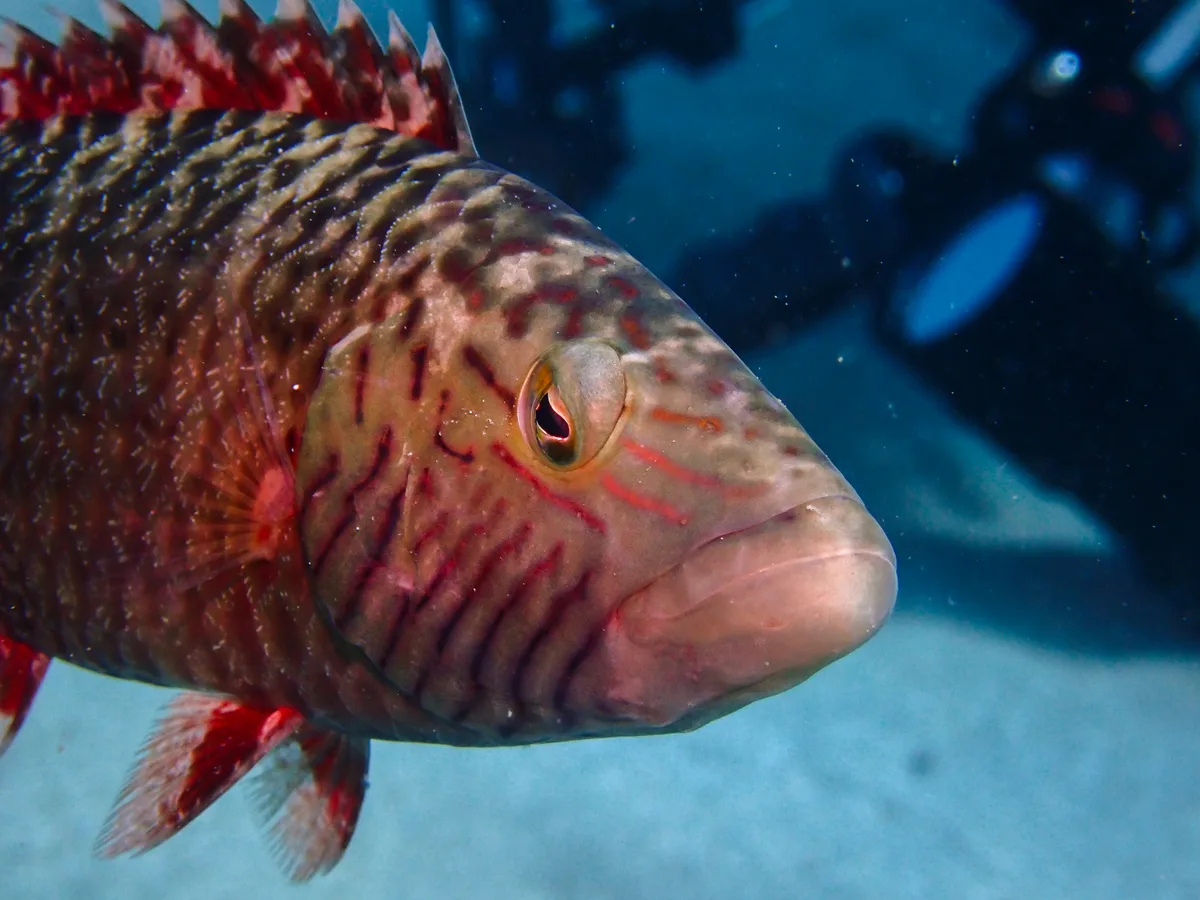
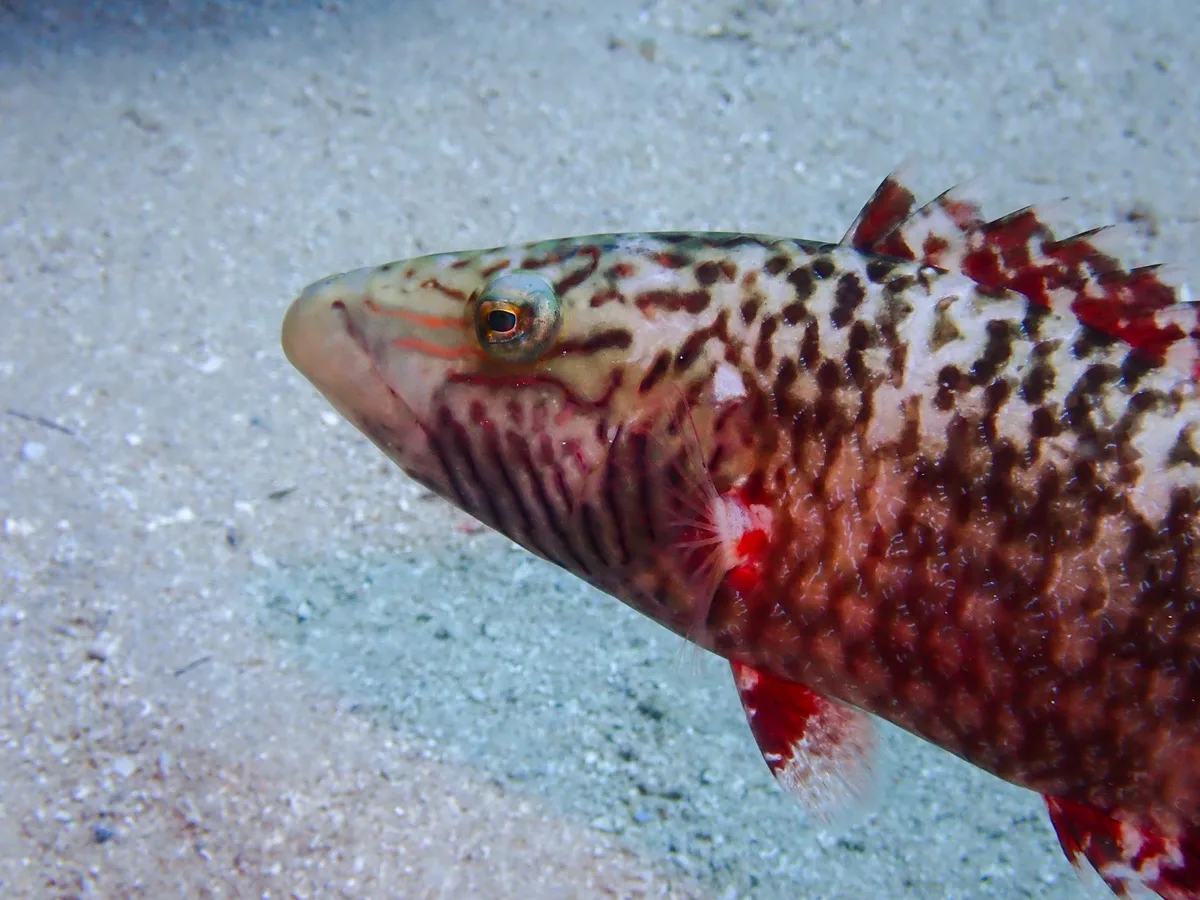
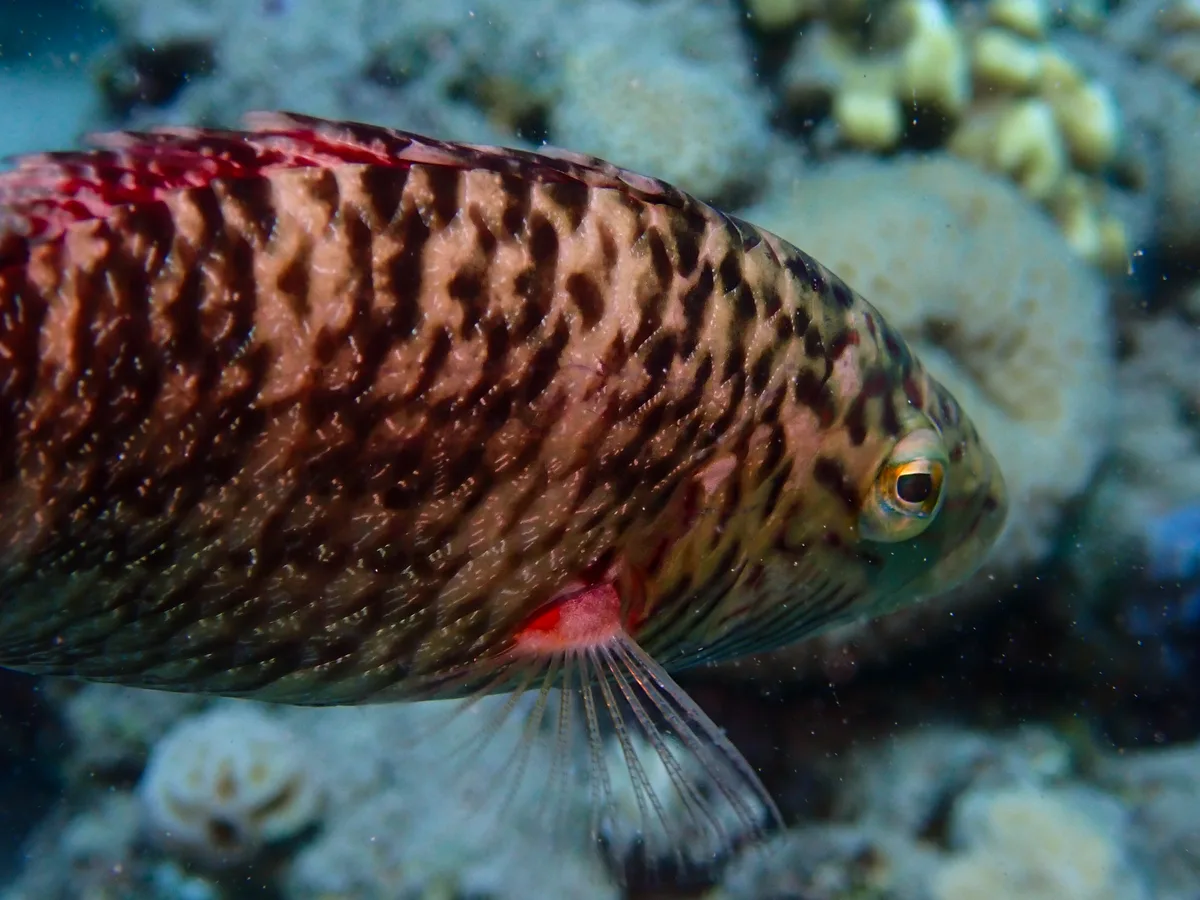
A pointed-headed wrasse with fine lines fanning back from the eye, cruising the reef at a deliberate pace and changing color as it goes - pale one minute, brick red the next.
That color shift is part of how it hunts. This is a predator that follows other predators, shadowing groupers and larger wrasses to catch whatever they flush out, and the ability to change shade lets it slip into a hunting party without being obvious about it. Wrasses of this genus have been recorded pairing with groupers for whole hunting bouts.
It takes small fish and crustaceans with a mouth that is large for a wrasse, and it is quick enough to make its own catches when nothing else is working the area.
Forty centimeters (16 in), common, and easy to overlook because it never does anything dramatic - it just keeps arriving where something else is hunting.
The genus. Oxycheilinus Gill 1862 - oxy (sharp). ETYFish
The species. Oxycheilinus digramma (Lacepède 1801) - di- (two) + gramma (line). ETYFish
- olive to reddish body with fine dark lines radiating back from the eye
- pointed head and a large mouth for a wrasse of its size
- changes shade rapidly, from pale to almost brick red
- length up to 40 cm
Why it's threatened
Threat classification from the IUCN Red List.