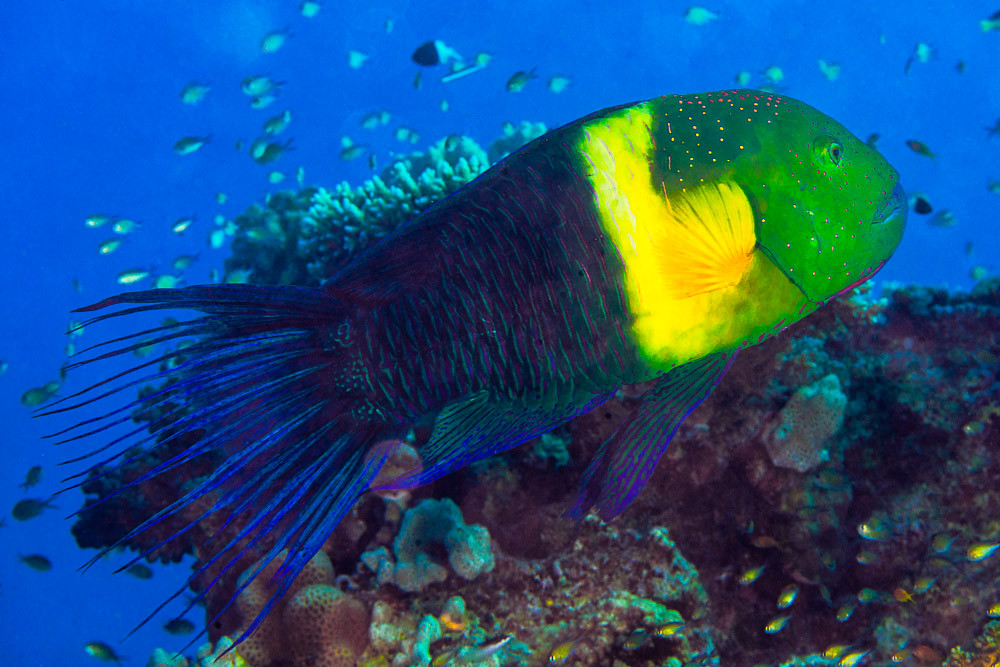
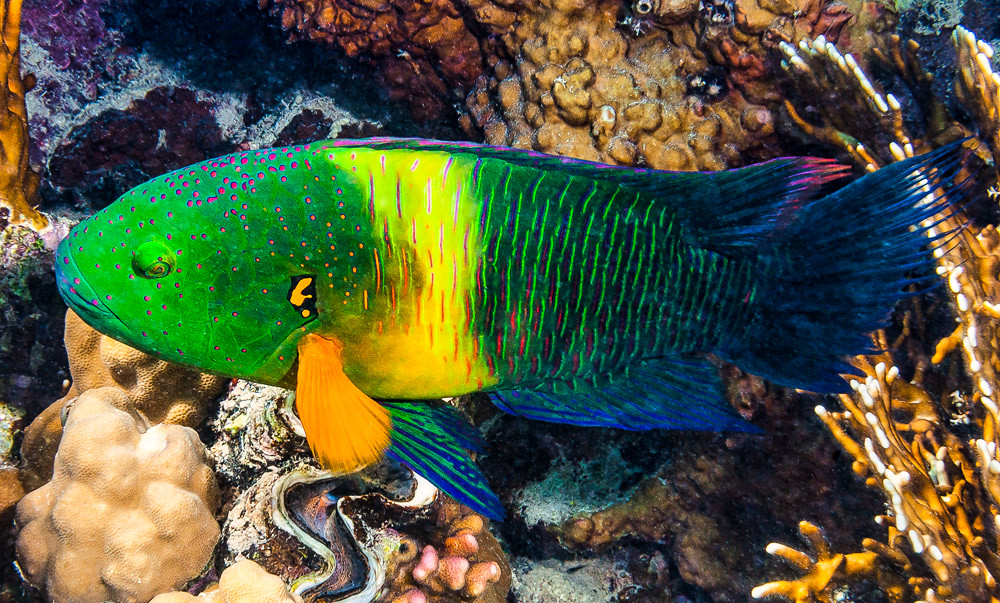
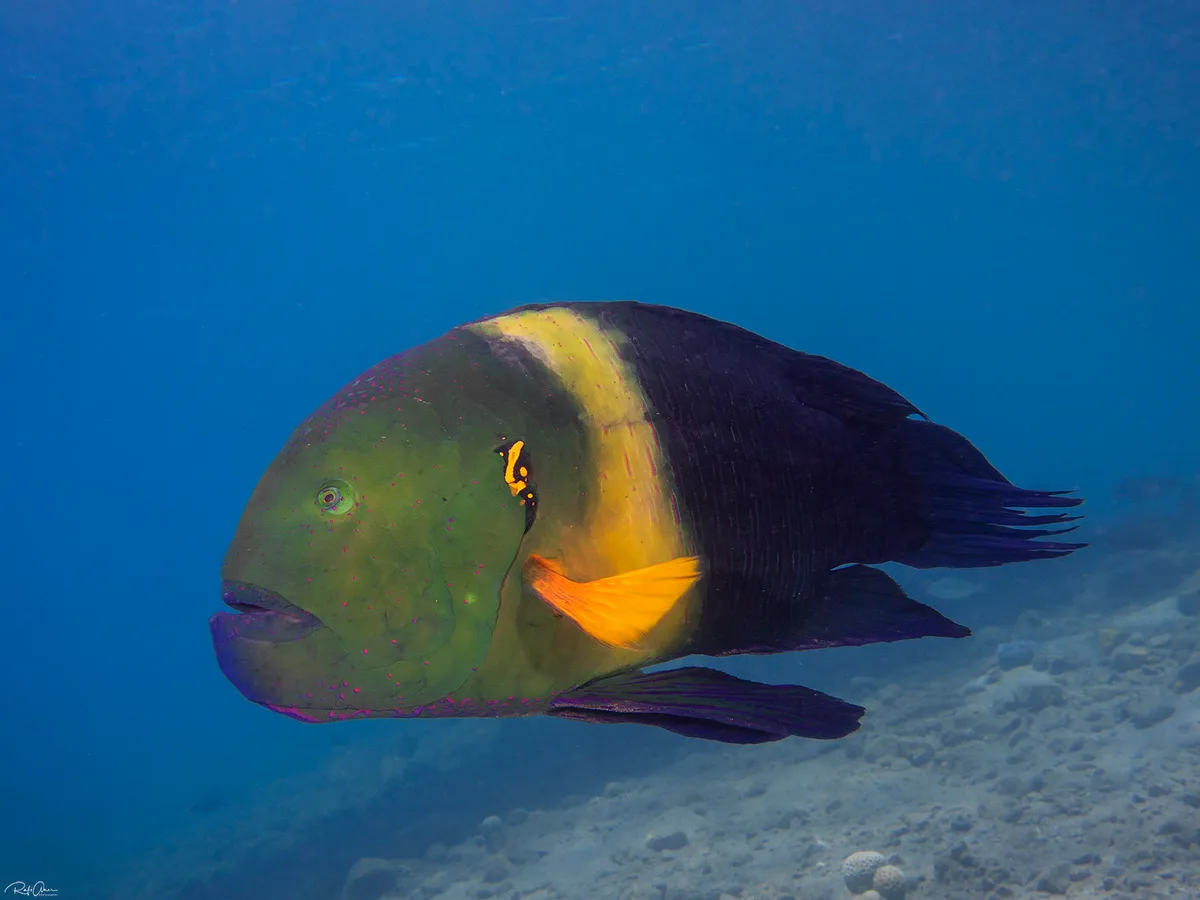
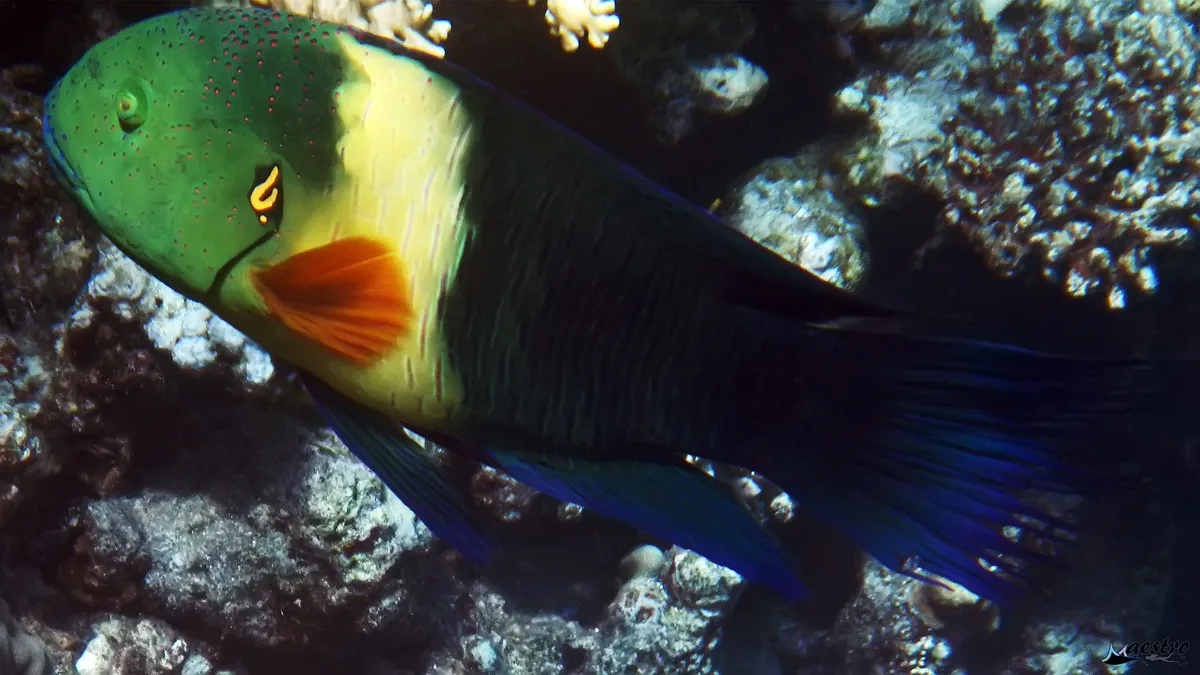
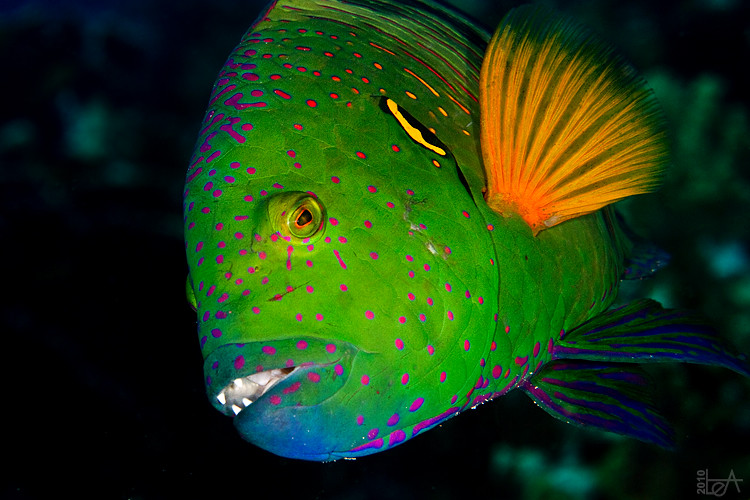

A big blue-green wrasse whose tail has come apart. The rear edge frays into stiff separate rays with age, so an old male trails something closer to a broom than a fin, and the effect gets more pronounced the older the fish is.
It hunts hard-shelled animals - crabs, snails, urchins, brittle stars - and takes them apart with heavy conical teeth and a set of crushing plates in the throat. Watch one work a rubble patch and it will pick a stone up in its mouth, carry it aside, and go through what was underneath.
That habit makes it worth following on a dive. Wrasses of this size turn over a lot of bottom, and goatfish, small wrasses and jacks tag along to take whatever escapes - a feeding broomtail usually has a retinue.
Like nearly every wrasse it starts female and turns male, and the biggest, gaudiest fish on a patch of reef was once a plain brown one. This species belongs to the 🌊 Red Sea and the western 🌊 Indian Ocean; the Pacific has other, similar fish that are not this one.
The species. Cheilinus lunulatus (Forsskål 1775) - somewhat moon-shaped. ETYFish
- large wrasse with a tail that frays into separate stiff filaments with age
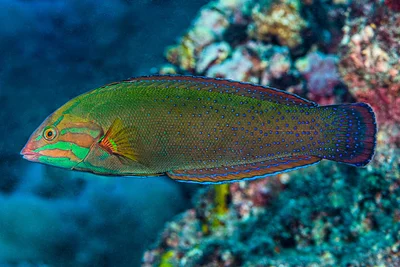
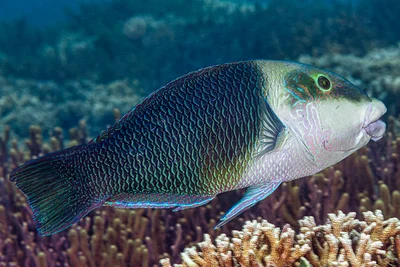
- males blue-green with fine dark scale outlines and a yellow-orange throat
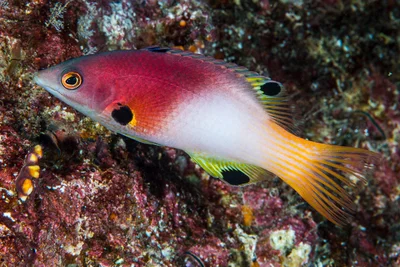
- females and young duller, with a plain rounded tail
- length up to 50 cm
Why it's threatened
Threat classification from the IUCN Red List.