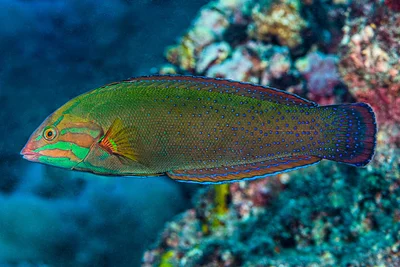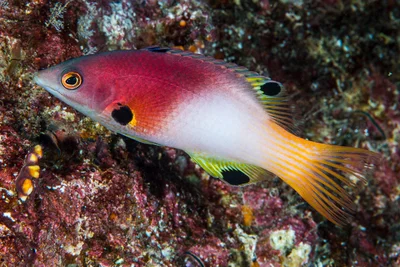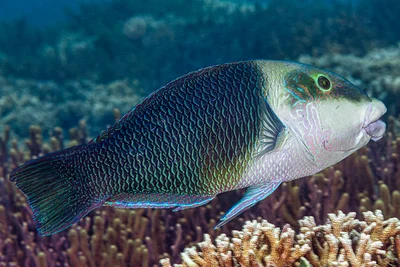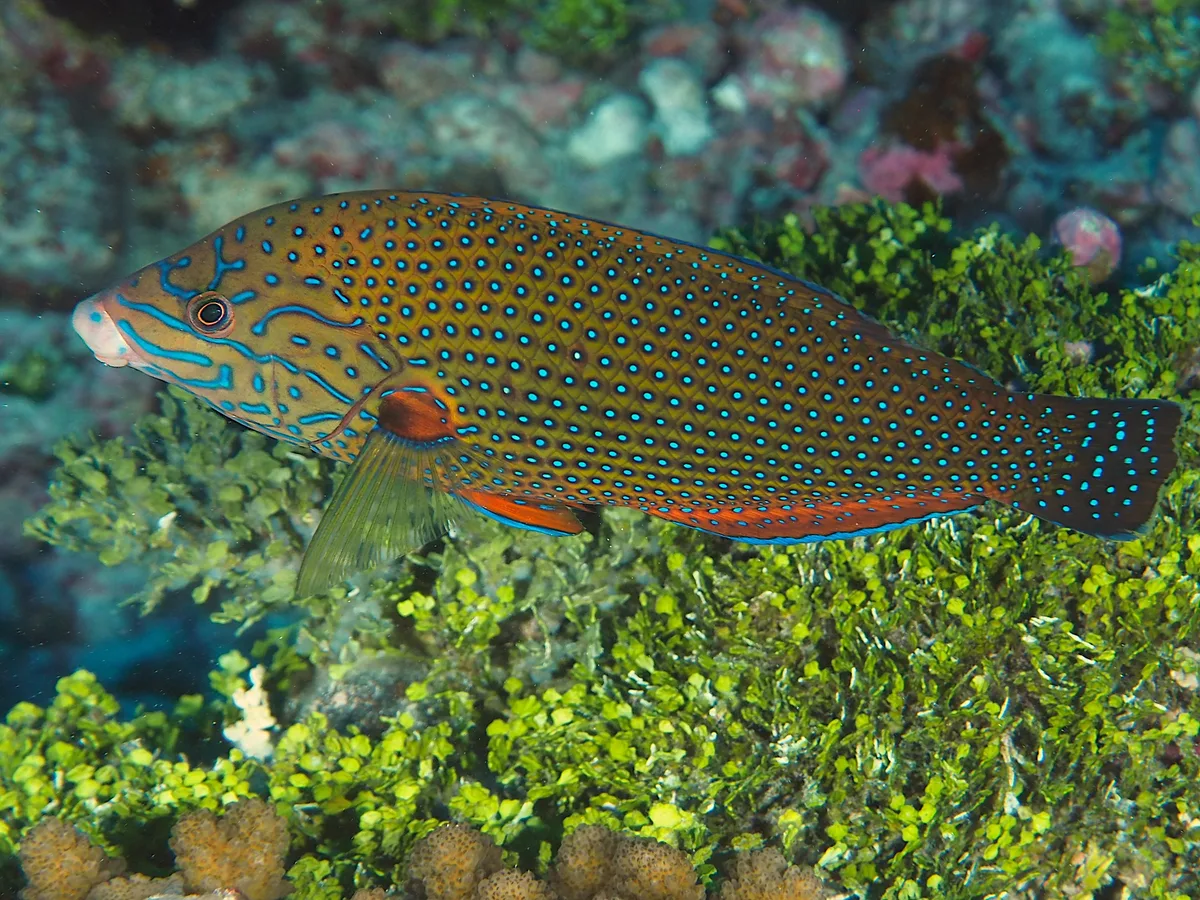
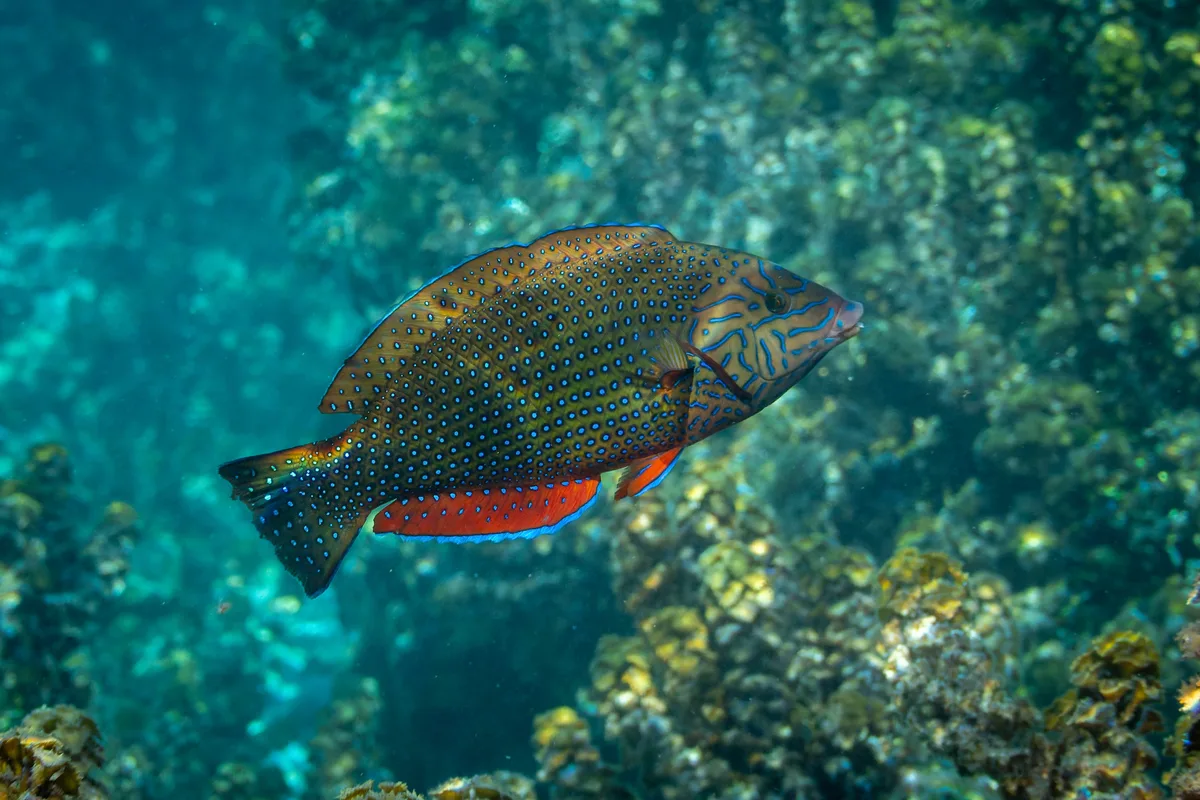
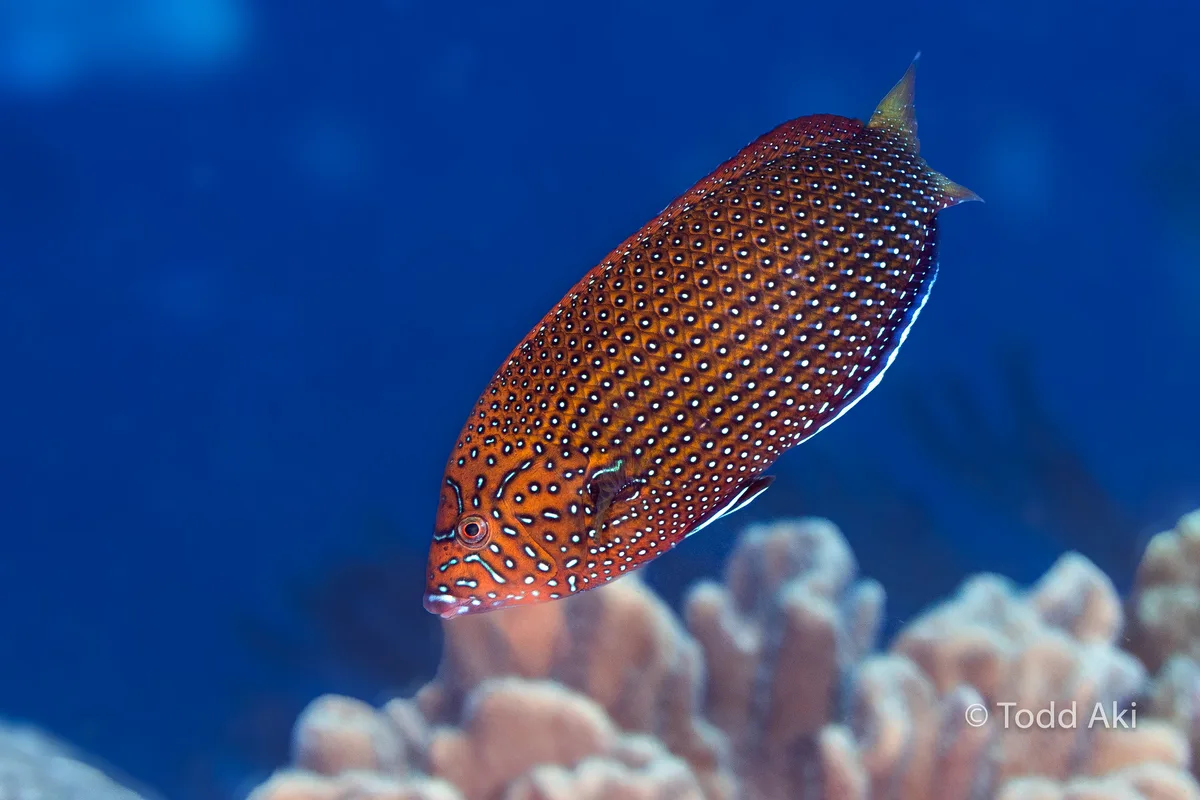
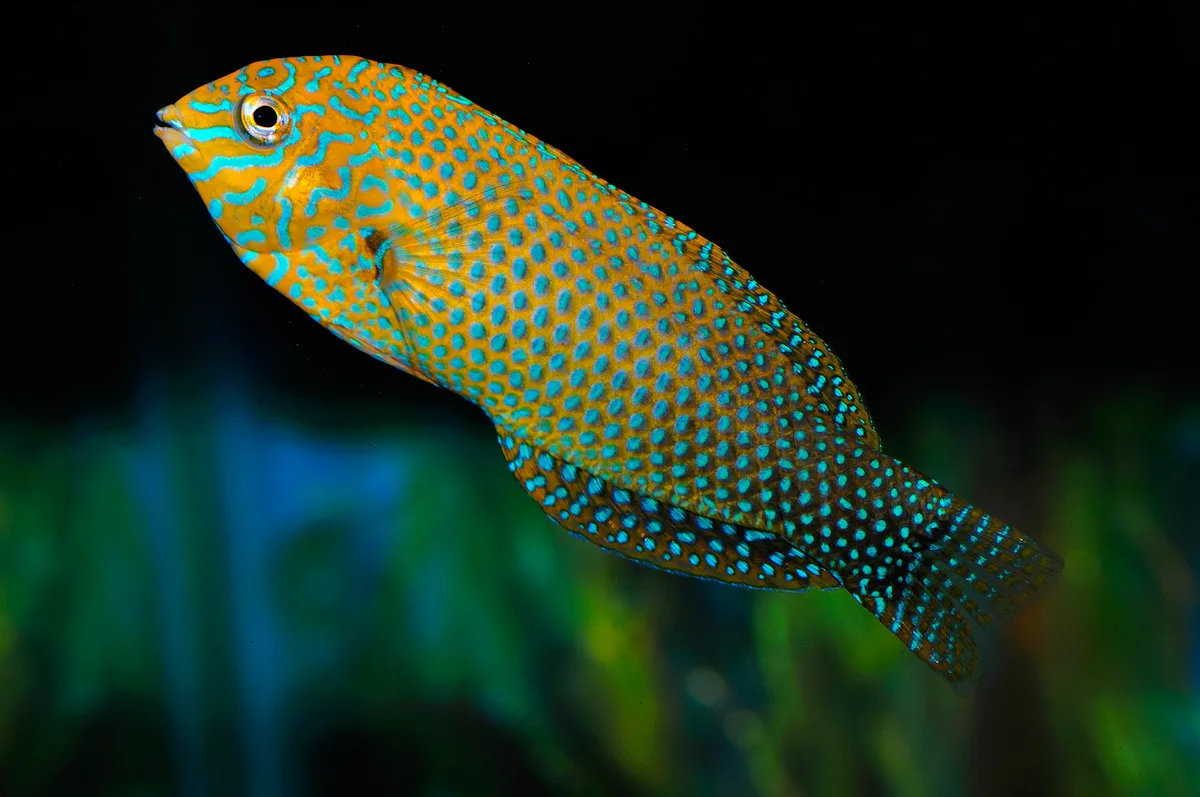
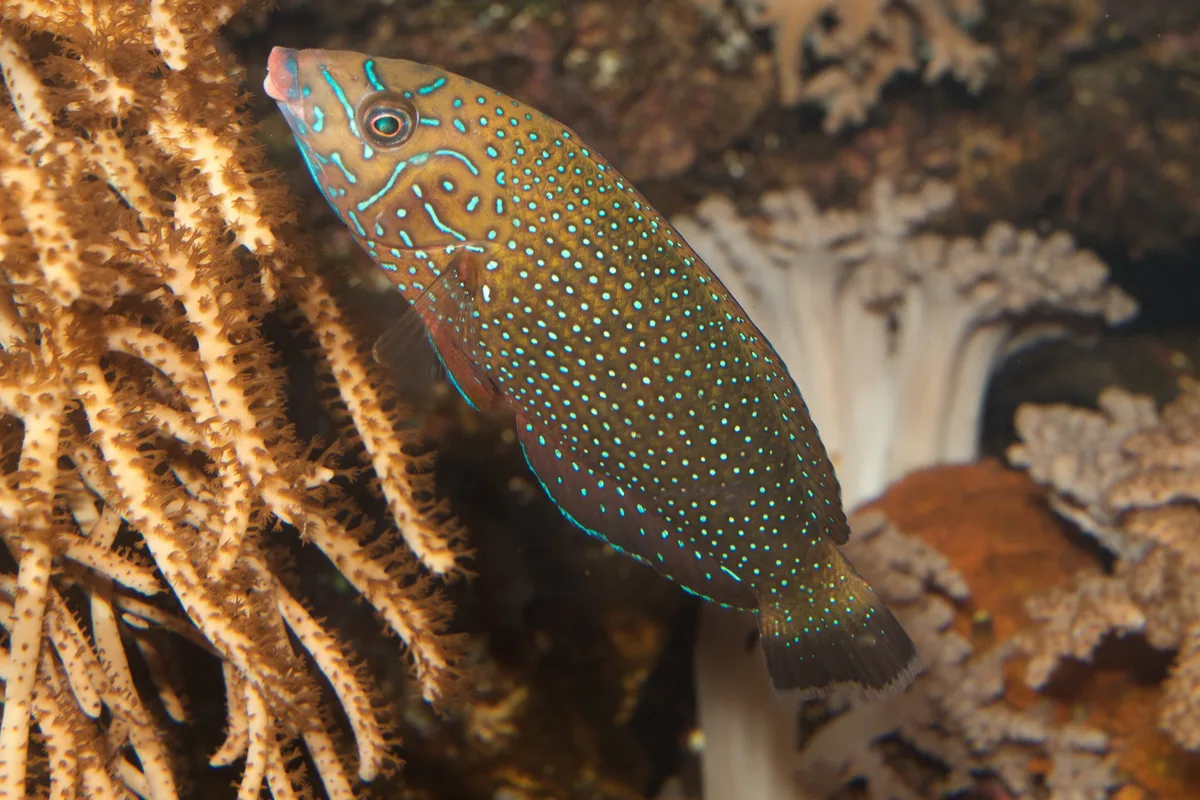
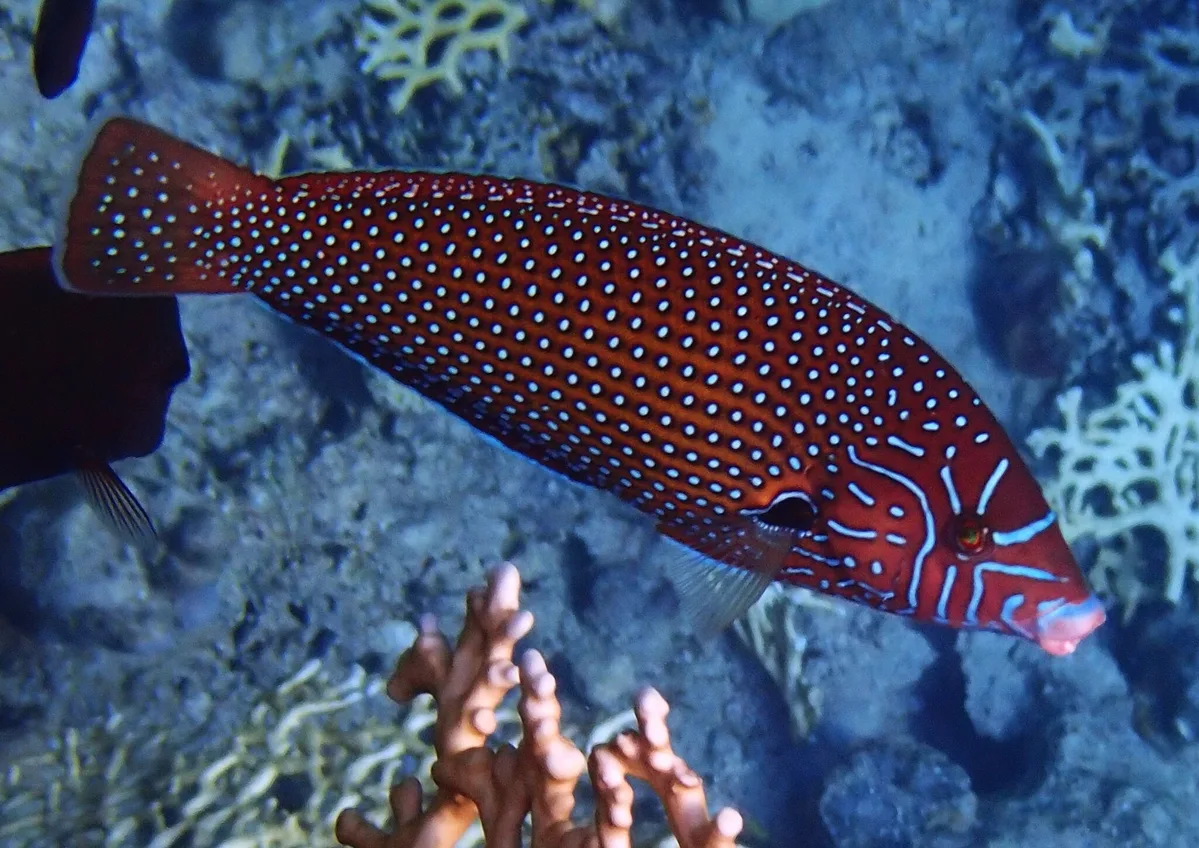
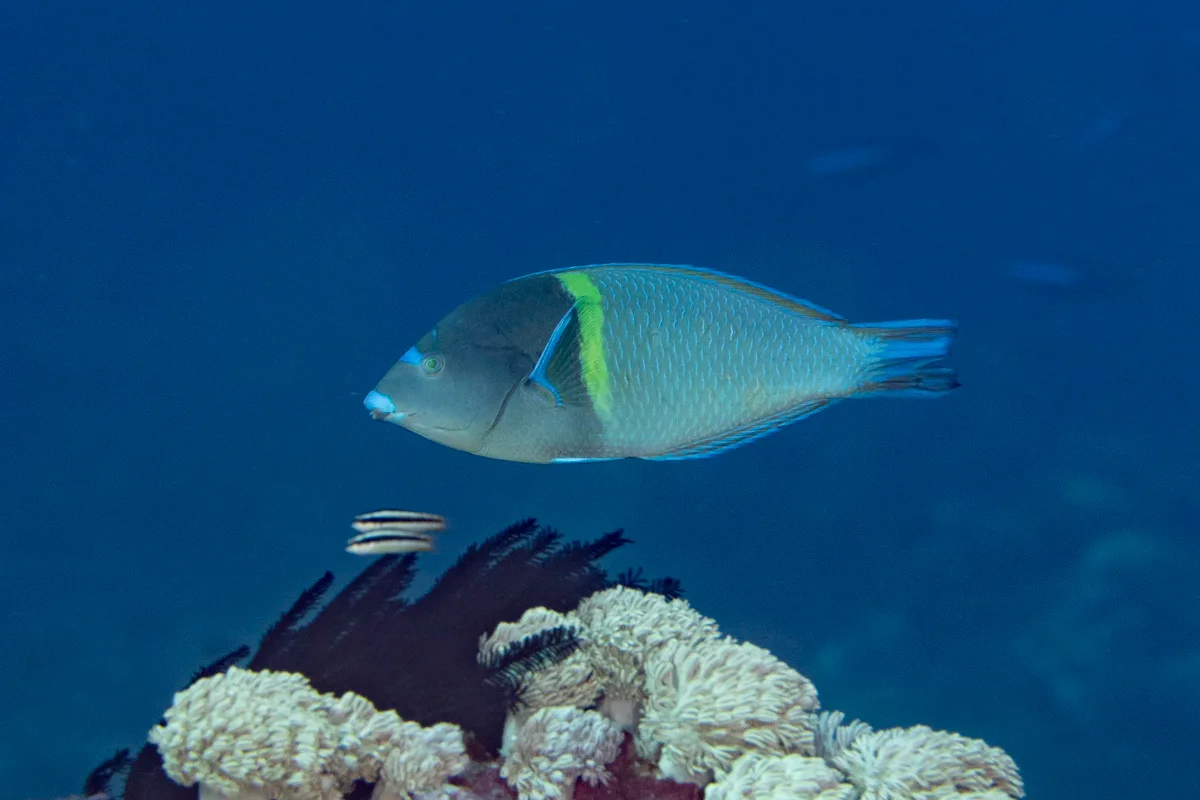
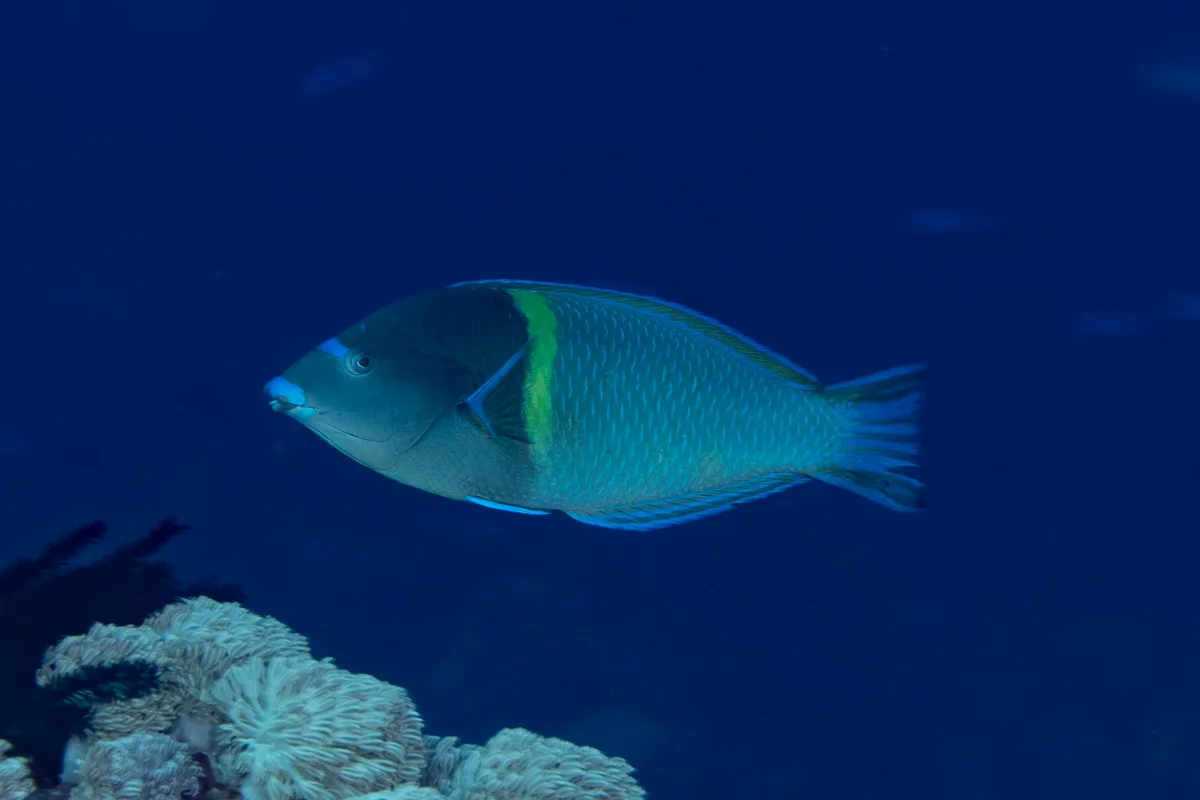
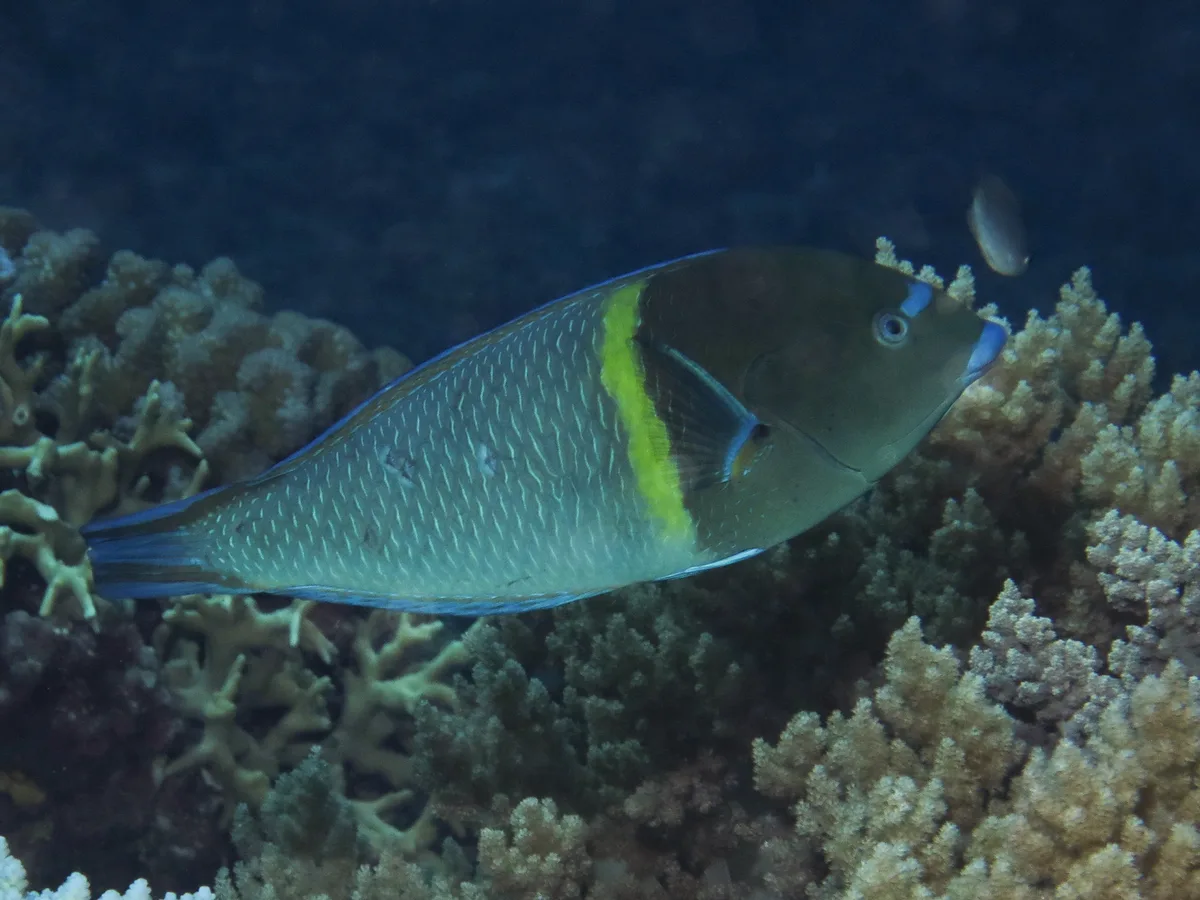
It is four times the size it has any business being. The genus is a set of small, neat, twenty-centimeter fish that pick single animals off rubble with tweezer teeth, and this one reaches forty-two centimeters, which makes it a heavy fish by wrasse standards and by far the largest of its kind.
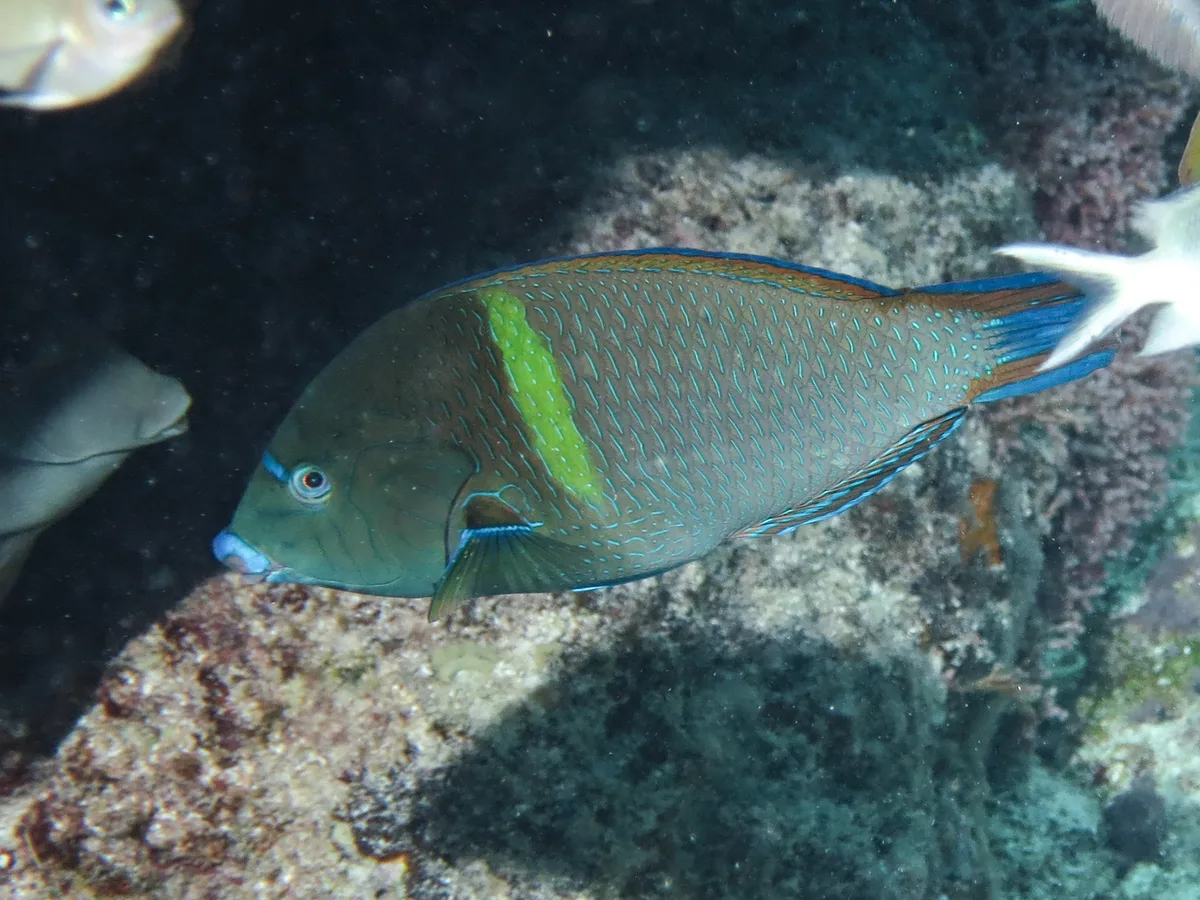
Growing that big changed what it can do. It works exposed reef and surge-swept rock rather than sheltered rubble, it takes larger and harder prey, and a big male develops a green head and a broad pale bar behind the gill cover that no small individual carries.
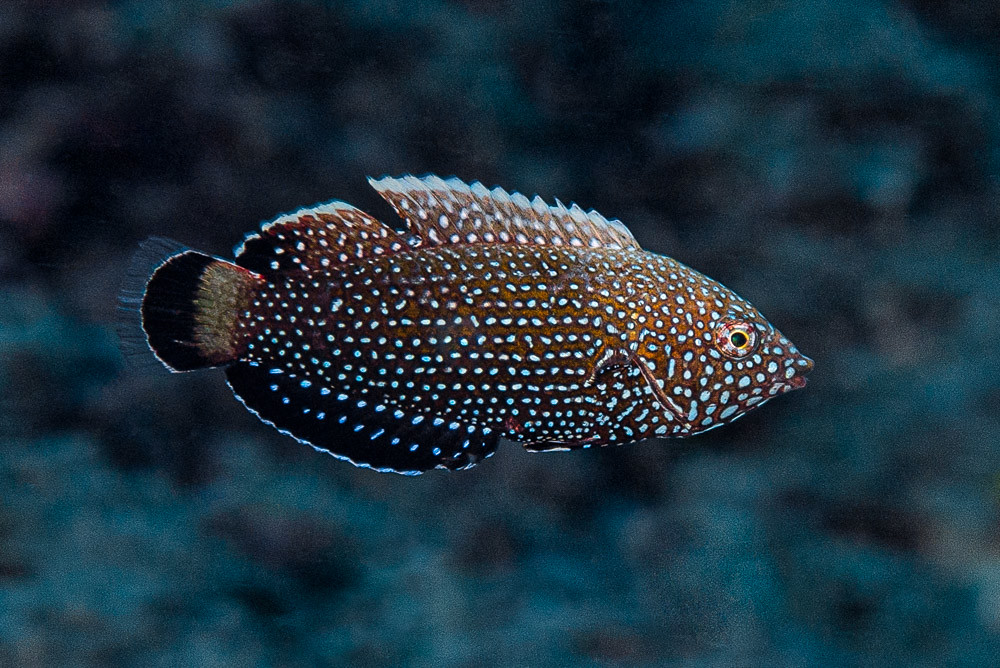
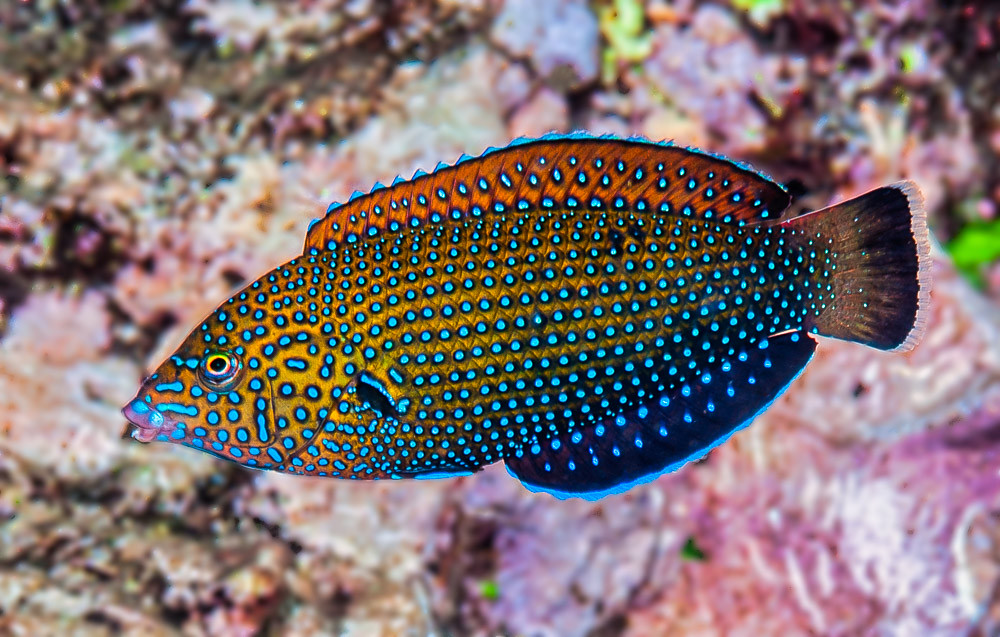
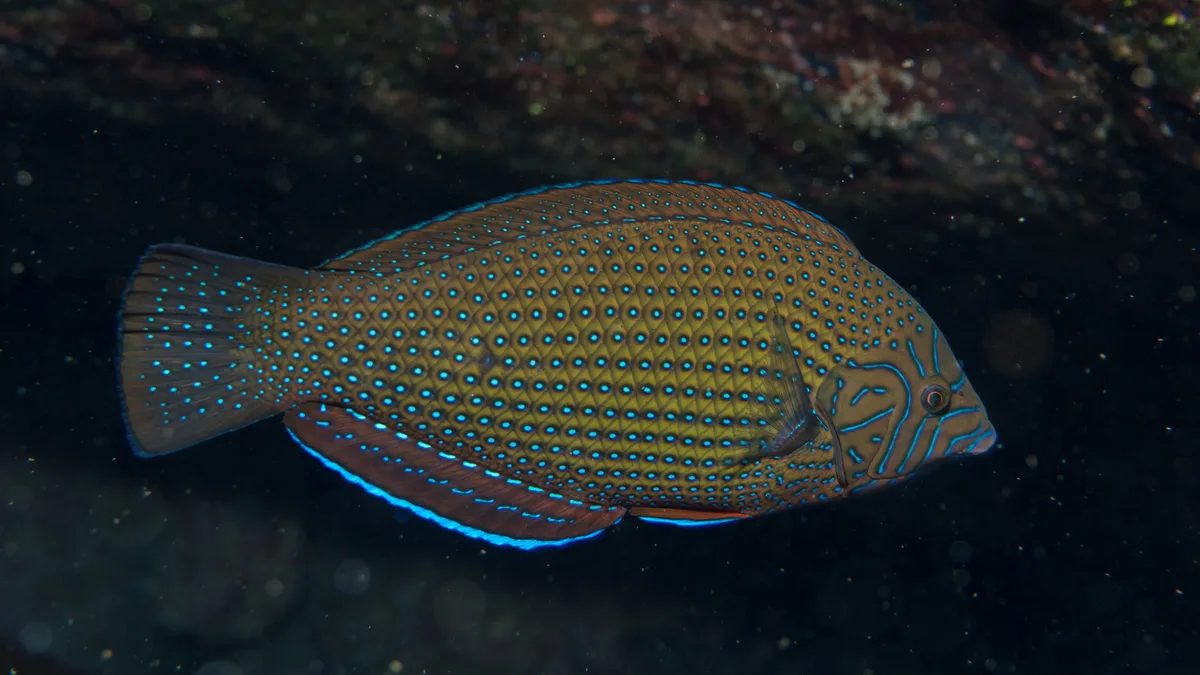
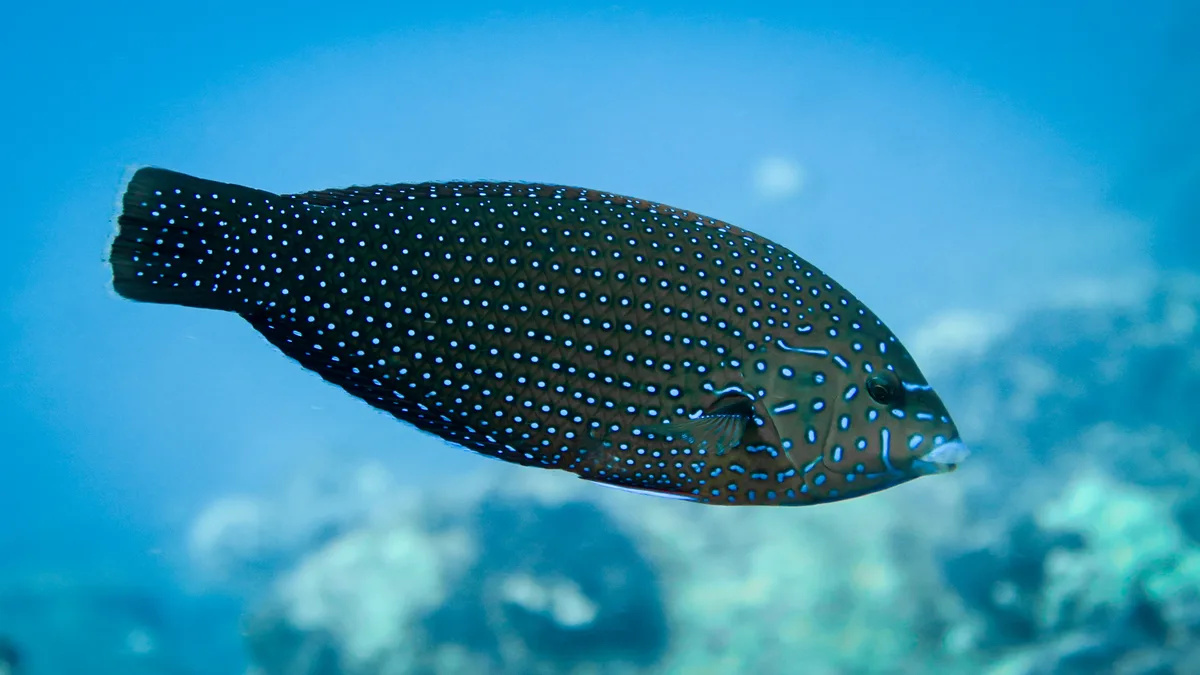
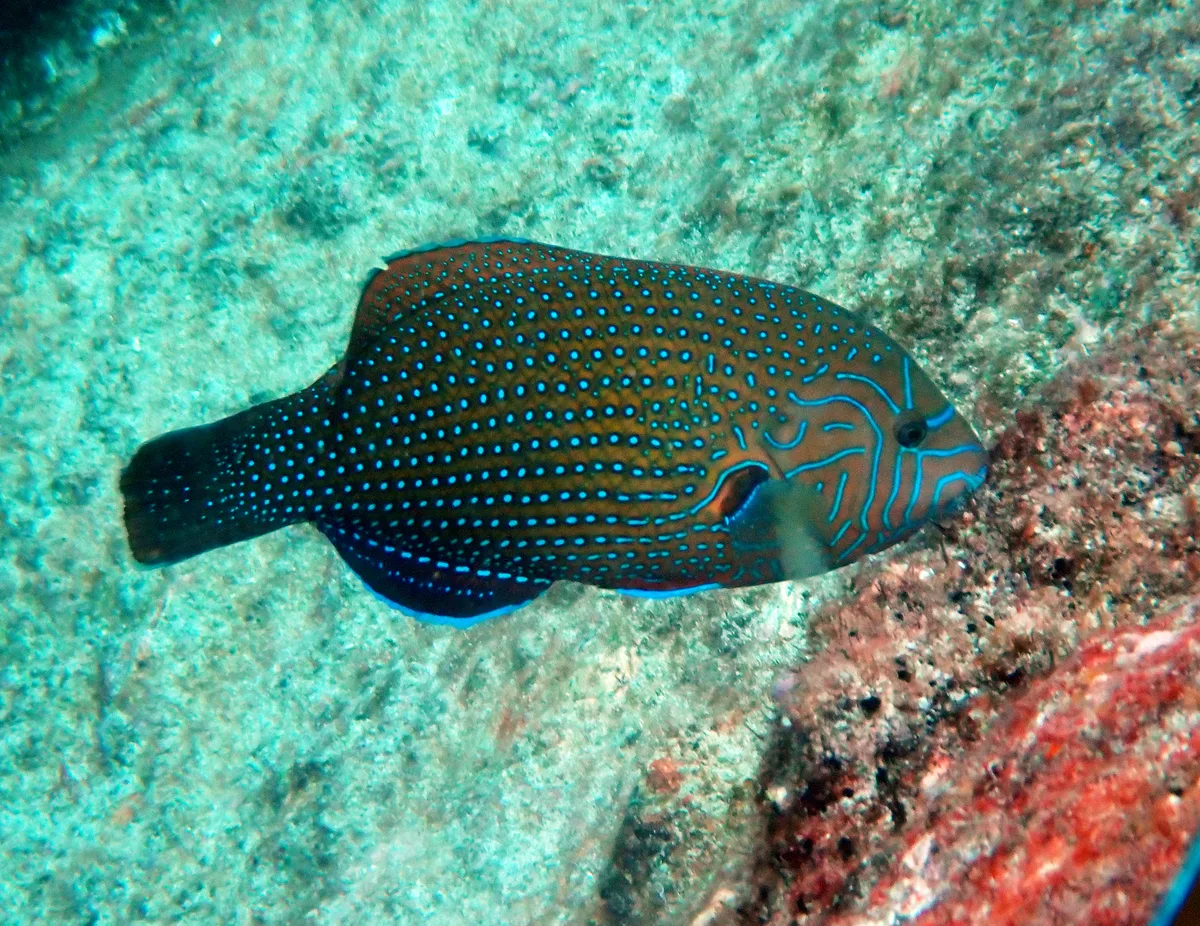
The blue spots are the constant. Every scale carries one, which on a dark body reads at a distance as a fine blue dusting, and it is the one mark that survives the enormous change in appearance between a juvenile, a female and a terminal male.
Like the rest of the family it starts female. Unlike most, the fish it turns into is big enough to hold ground on the reef front, which is the most physically demanding address available.
The species. Anampses caeruleopunctatus Rüppell 1829 - caeruleus (blue) + punctatus (spotted). ETYFish
- large wrasse, far bigger than any other in its genus
- each scale carrying a single small blue spot
- big males with a broad pale vertical bar behind the head and a green head
- up to 42 cm
Why it's threatened
There are no major threats to this species, although it is collected for the aquarium trade and caught locally as a food fish in some parts of its range.
Threat classification from the IUCN Red List.