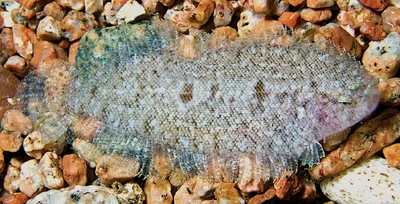

In the 1970s Eugenie Clark put one of these soles into a tank with sharks in this sea, and the sharks would not eat it. A shark that took the fish into its mouth let go at once, jaws locked open, and swam off shaking its head.
The cause is a milky secretion squeezed out of pores along the bases of the dorsal and anal fins. Its active component was named pardaxin after the genus, and it works on several fronts at once: it is bitter, it breaks up cell membranes, and it acts directly on the soft tissue of a predator's mouth and gills. It was investigated for years as a candidate shark repellent, and it remains one of very few substances a shark reliably refuses.
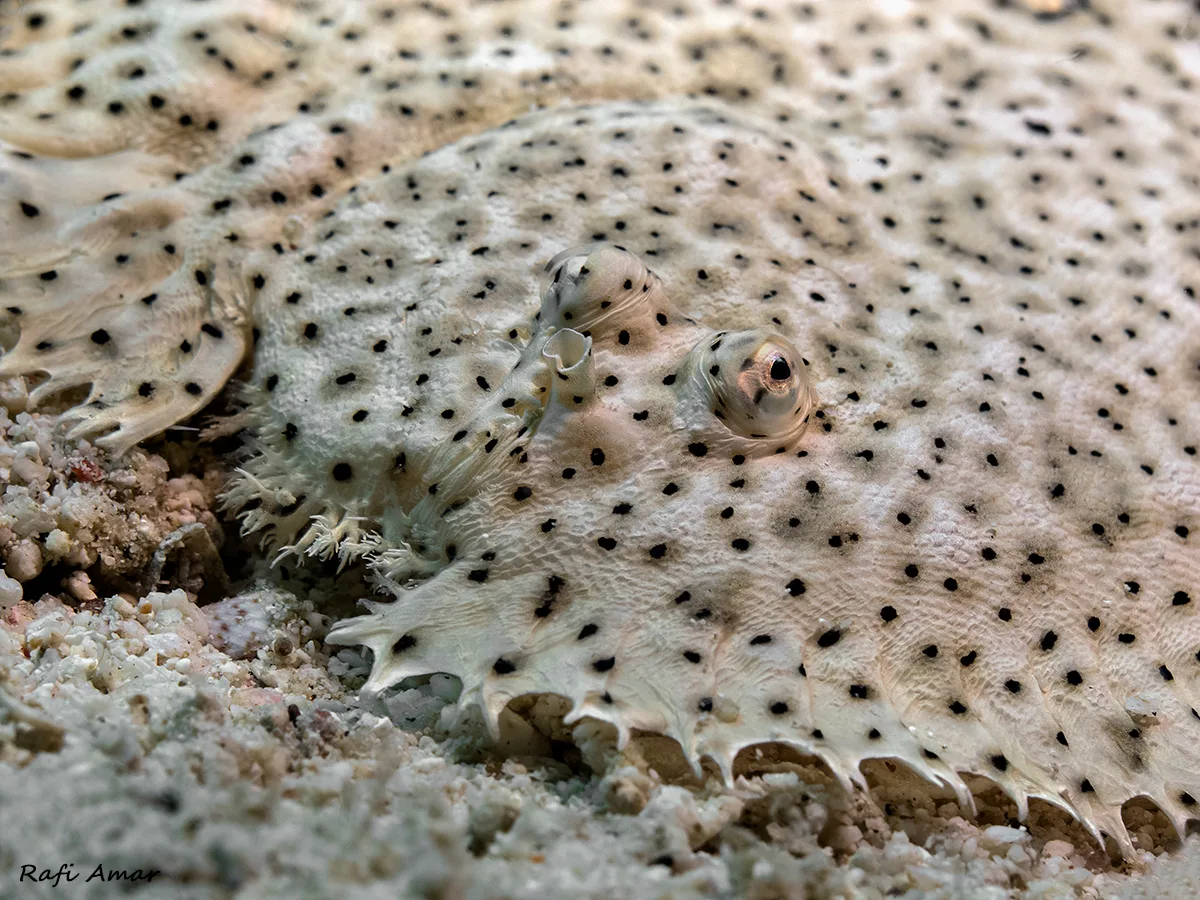
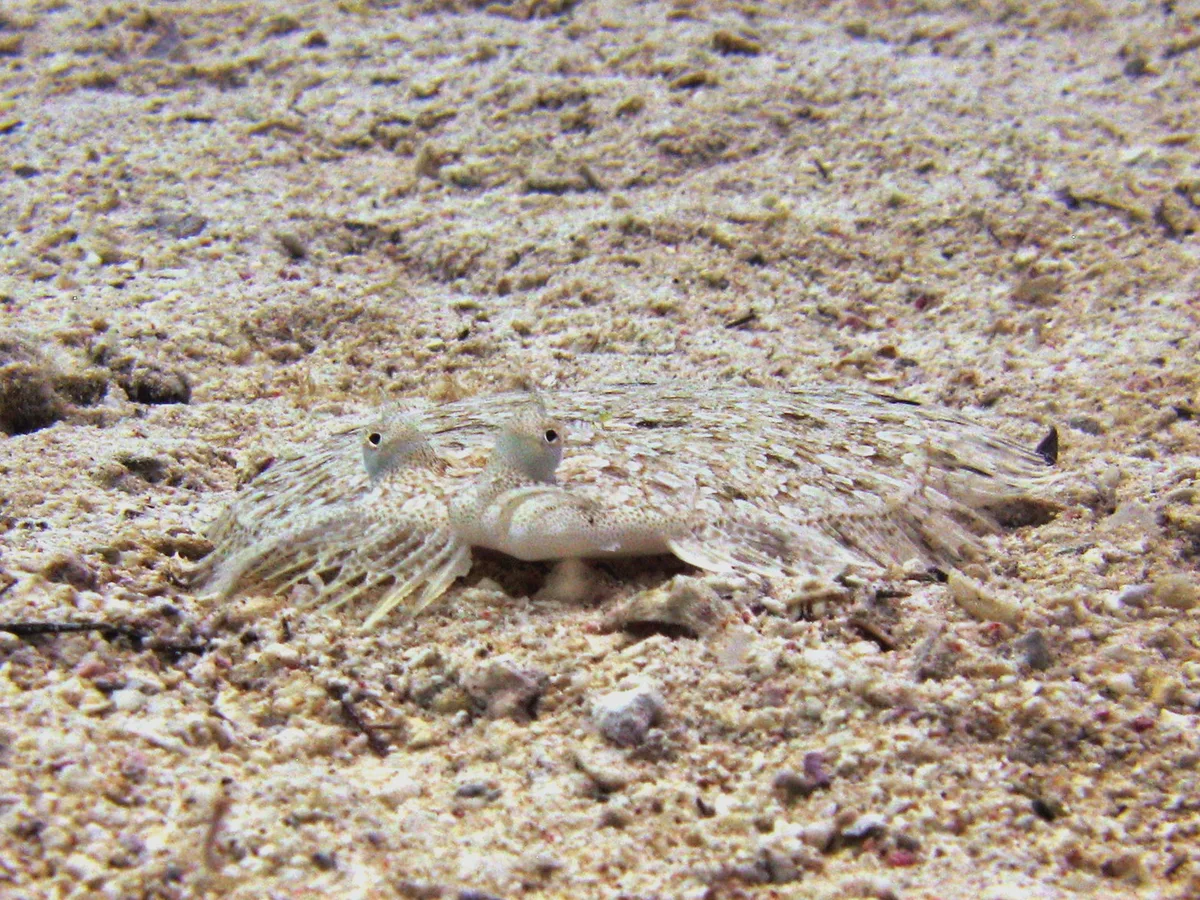
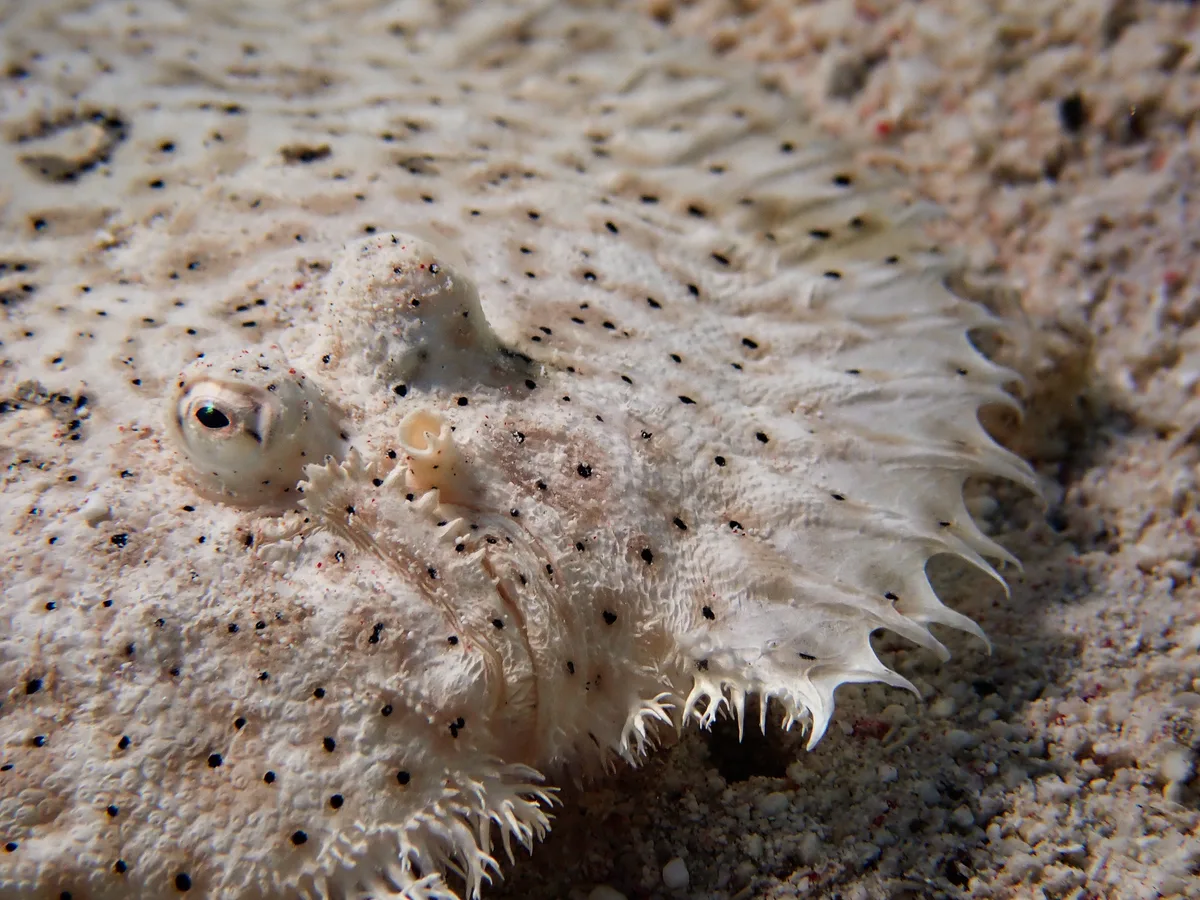
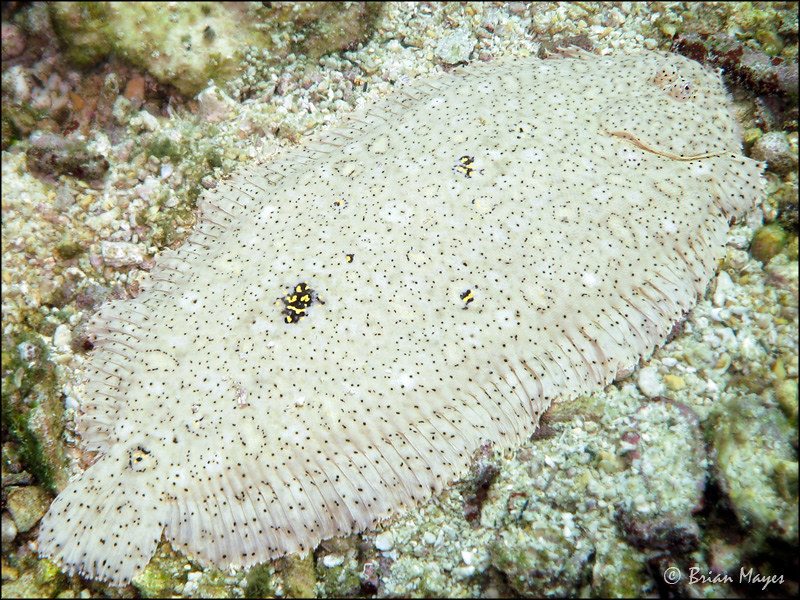
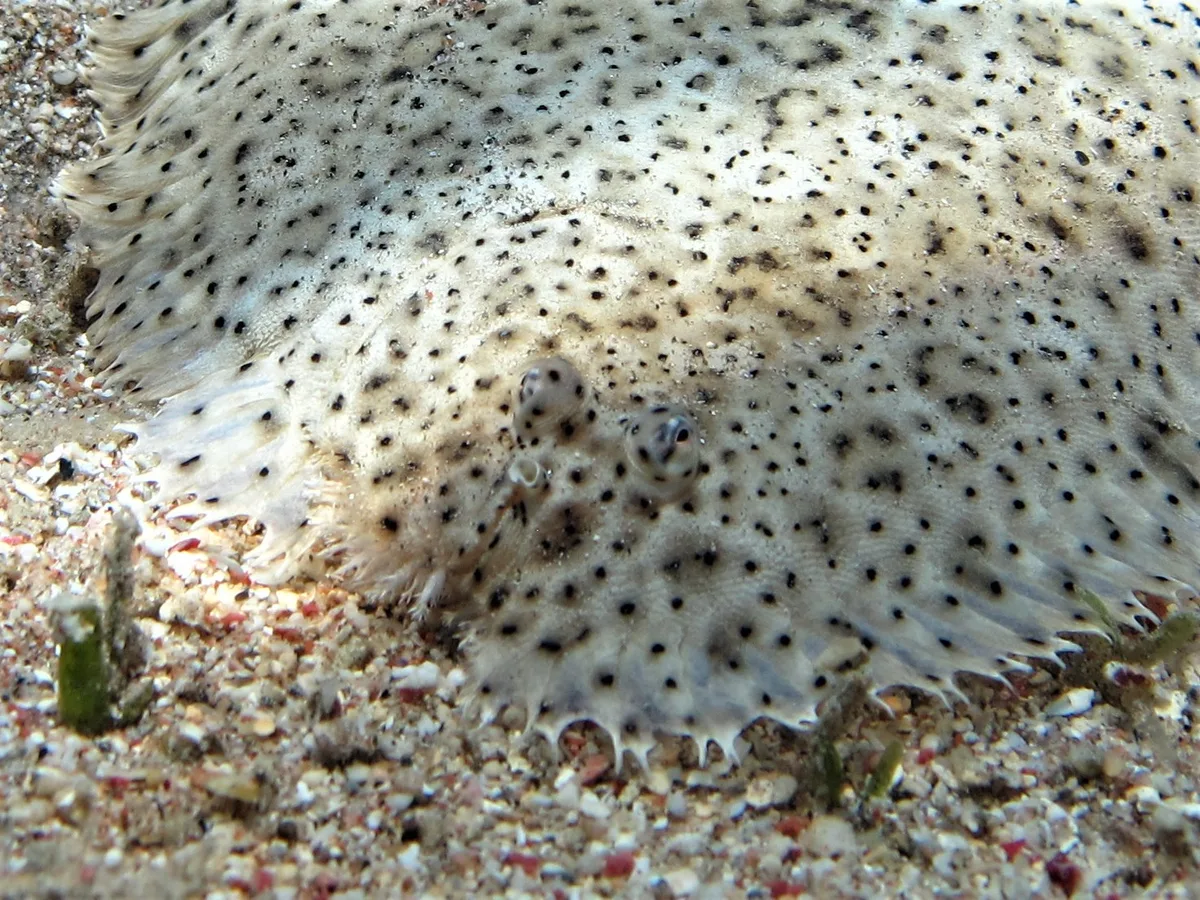
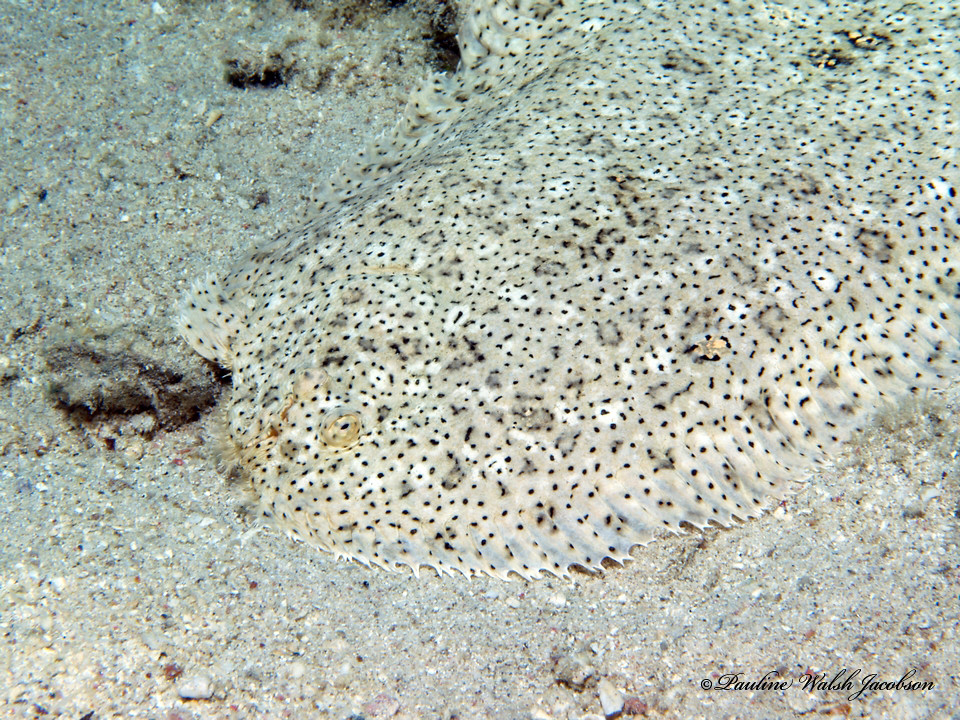
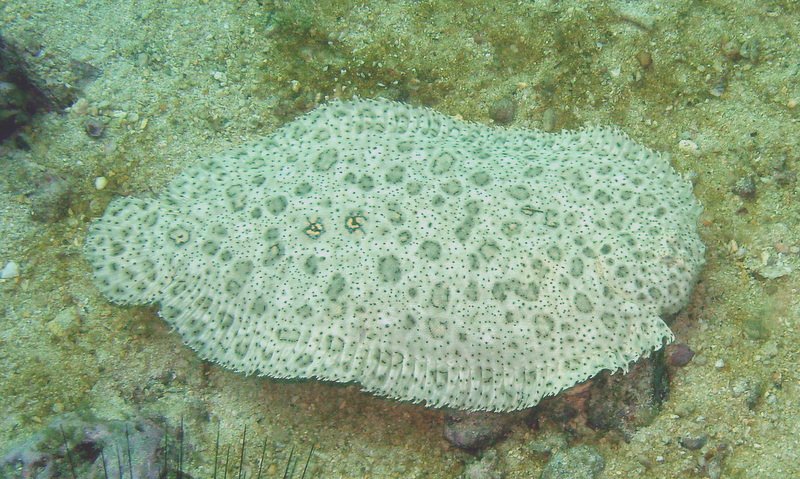
The rest of the animal is unremarkable in the best possible way. It is a small flatfish, mottled brown and cream, lying on sand in shallow water with a film of sediment over it, and it does not move.
The name has a story attached: Moses parting the sea and the fish with it, which is offered as the reason a sole has both eyes on one side. It is a good story and it is not why.
The genus. Pardachirus Günther 1862 - pardos (leopard) + a- (without and cheiros). ETYFish
The species. Pardachirus marmoratus (Lacepède 1802) - marbled. ETYFish
- oval flat body with no obvious pectoral fins
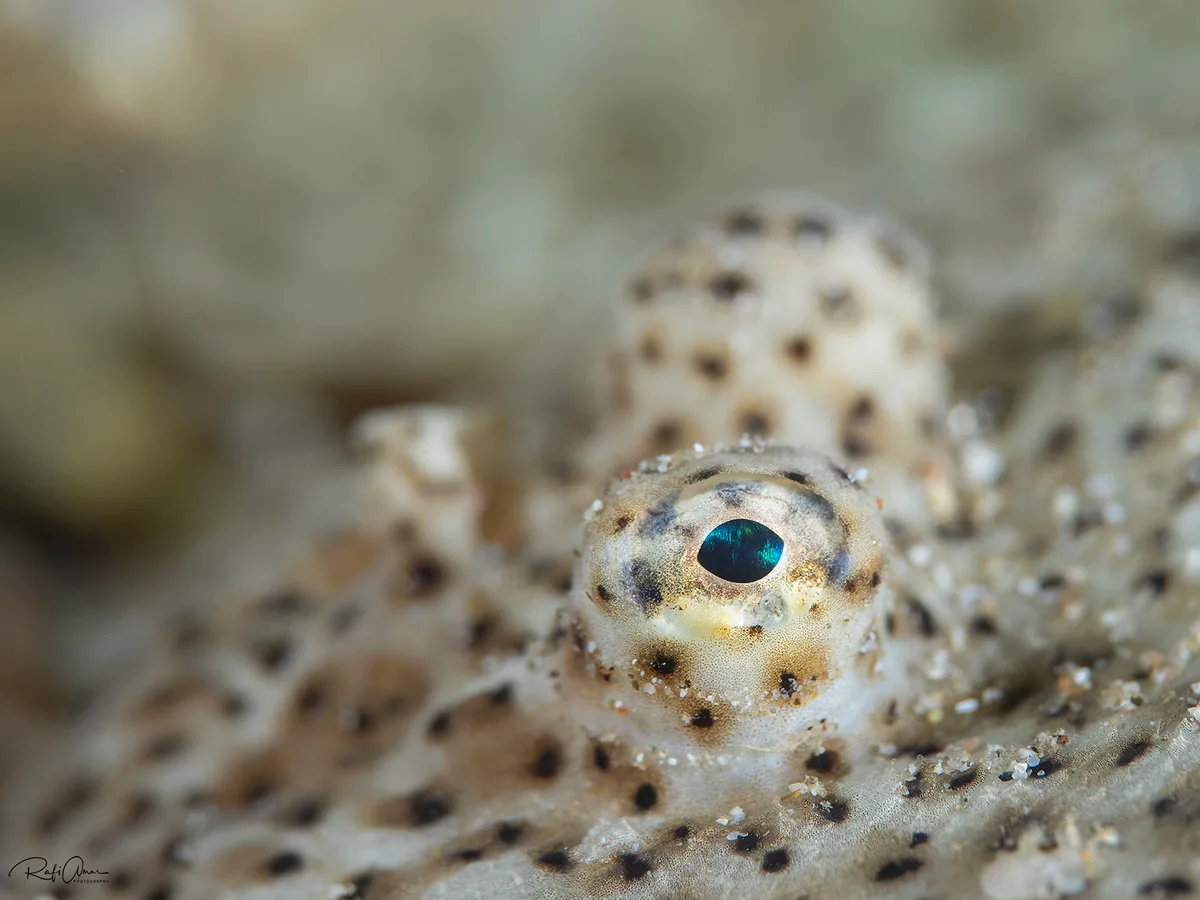
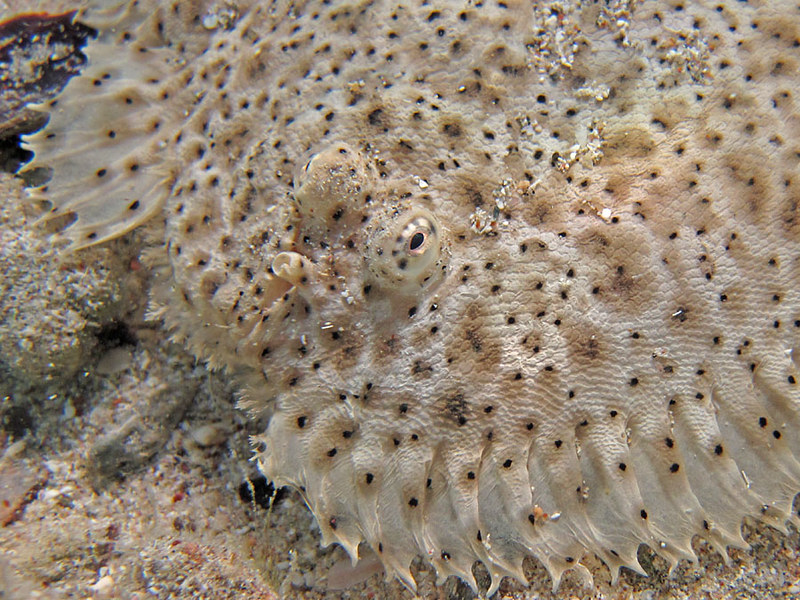
- both eyes on the right side of the head, small mouth at the front
- mottled brown, gray and cream, usually dusted with sand
- a row of pores along the bases of the dorsal and anal fins
- up to 26 cm