Out of season this is a slow, unremarkable gray fish blowing at sand. In season it is the reason divers on this coast learn triggerfish geometry.
The female digs a crater up to a meter across in rubble and lays in it. The nest is a shallow crater in sand or rubble, and the territory the female defends stands on it as a cone that widens toward the surface. Swimming up keeps you inside that cone the whole way, and swimming up and away puts you further in rather than further out. Leave sideways, stay low, keep the fish in sight, and put your fins between the two of you. She charges anything inside it, and at 60 cm (24 in) the bite takes chunks out of fins and skin. Nothing about her behavior changes gradually: a fish that ignored you last month will come at you this month, and the only thing that has changed is what is in the sand underneath her.
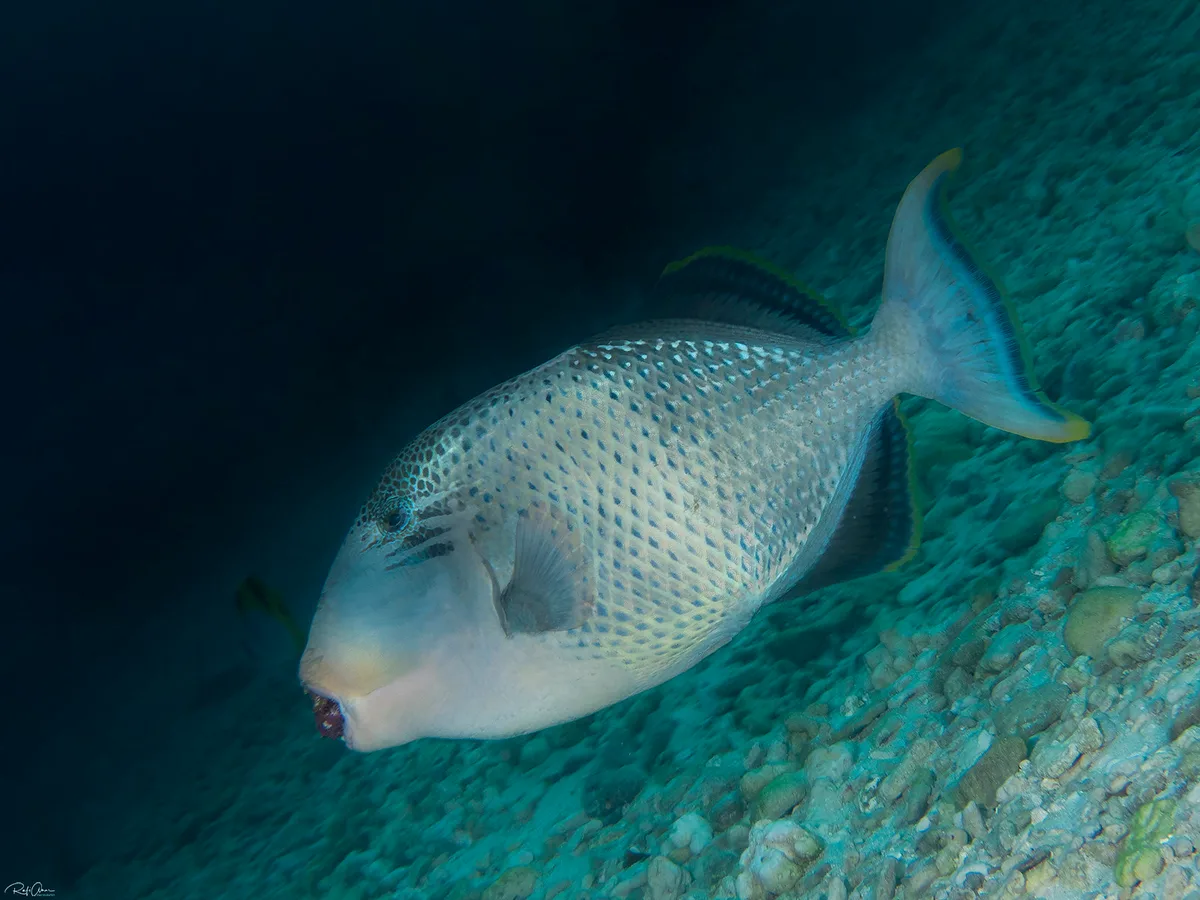
Feeding is excavation. It shifts stones with its teeth and blasts water at the bottom to uncover urchins, molluscs and crustaceans, and it will pull branching coral apart to reach what is living inside. Other fish follow for the leftovers.
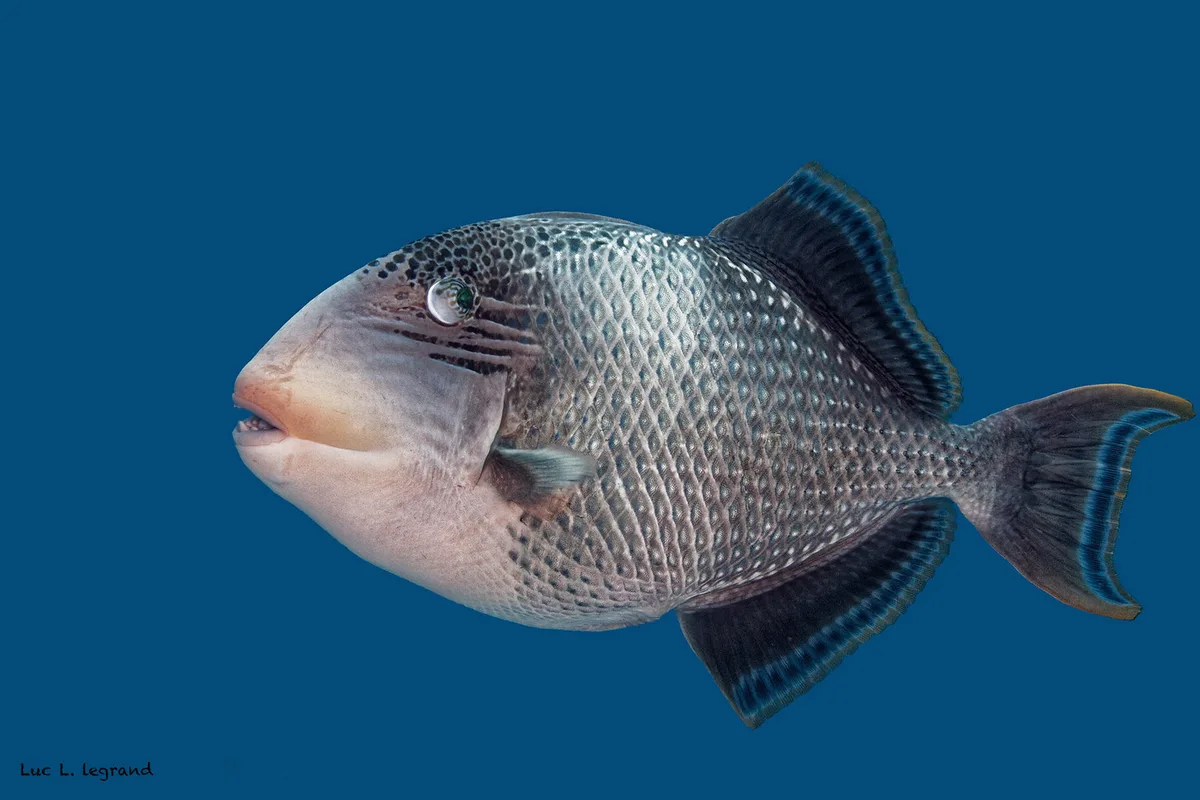
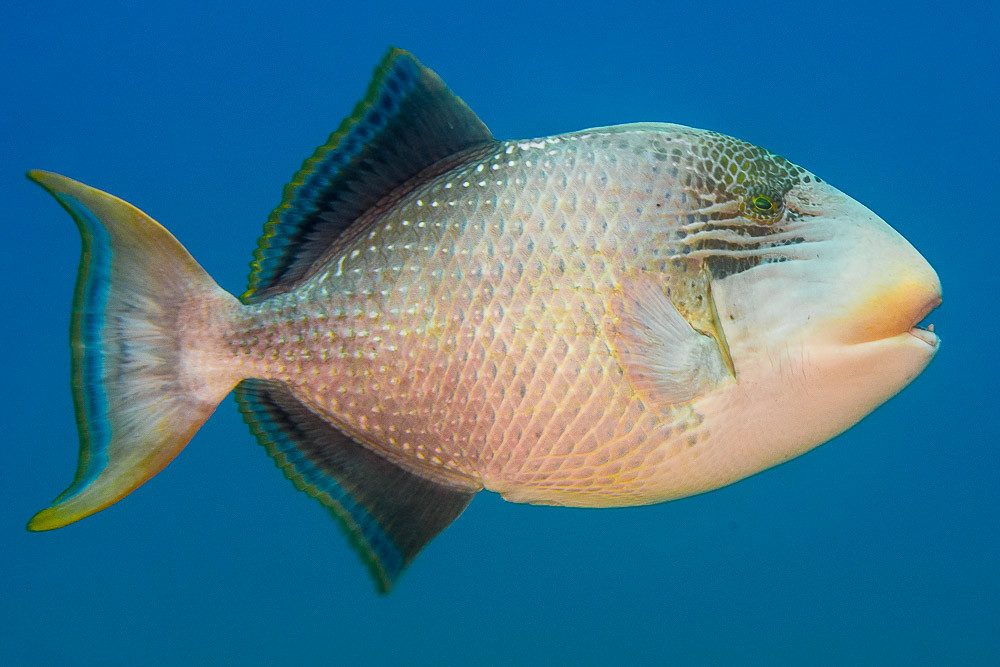
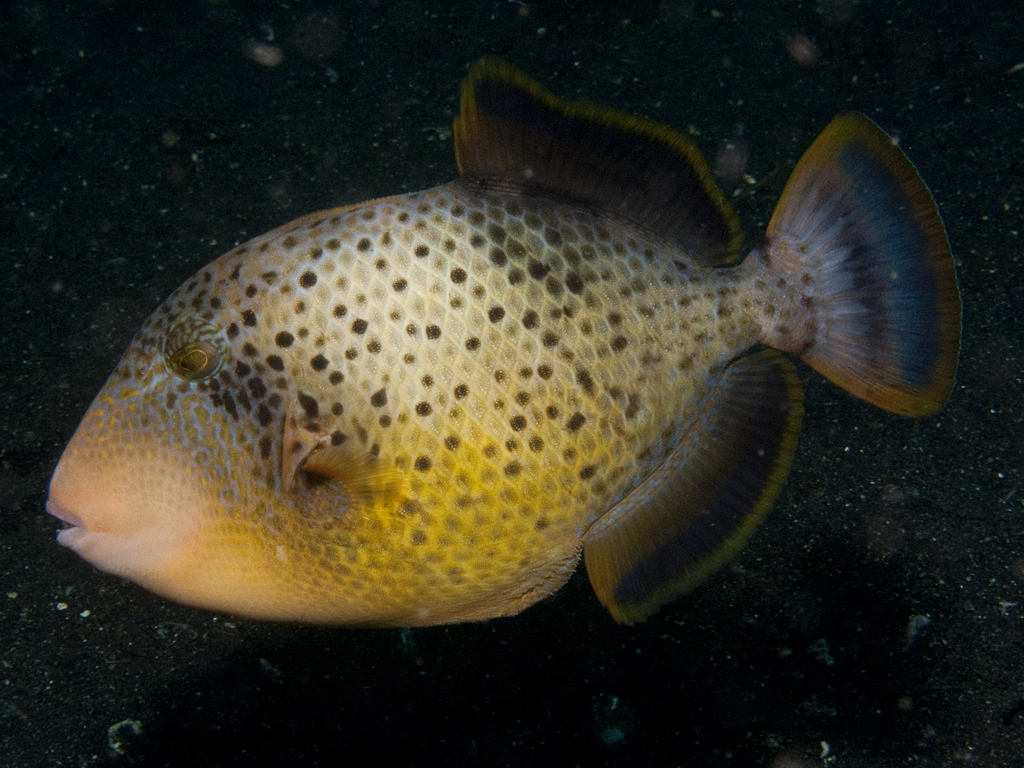
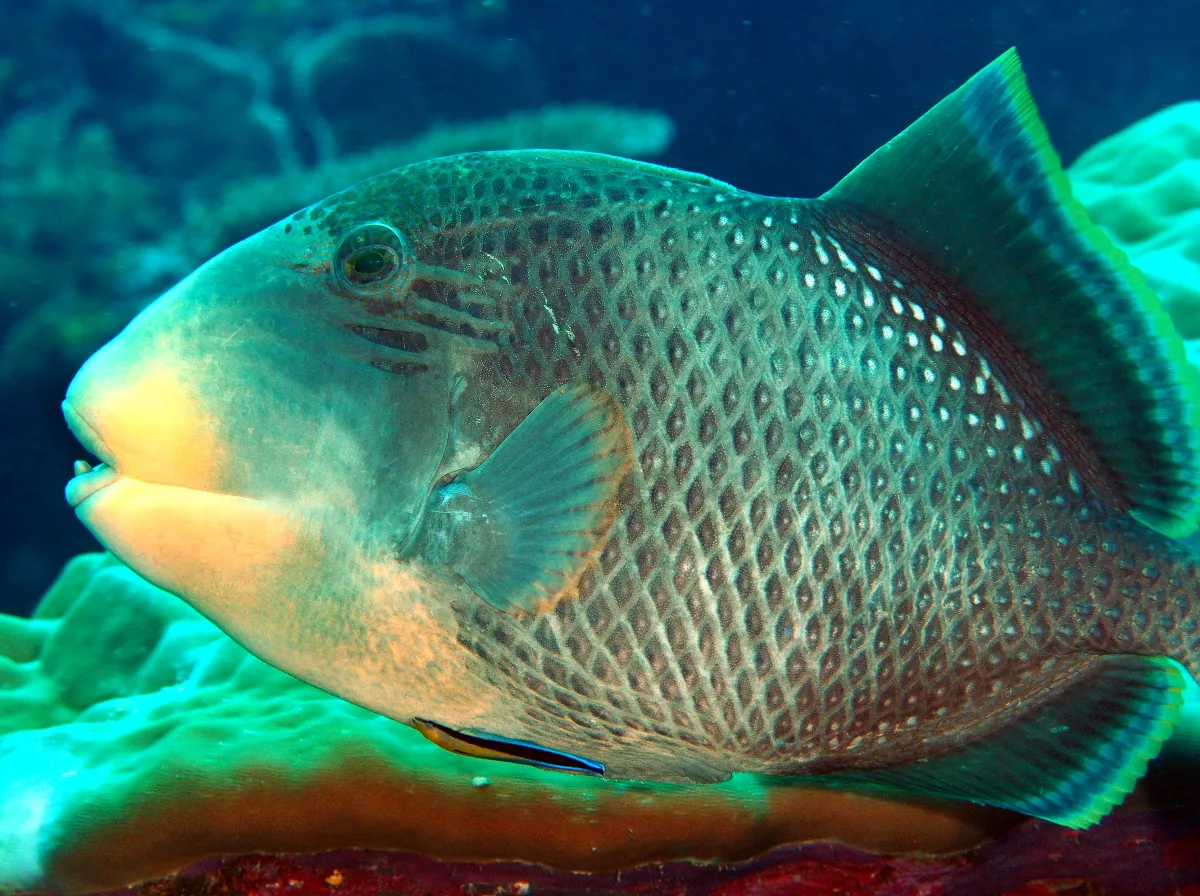
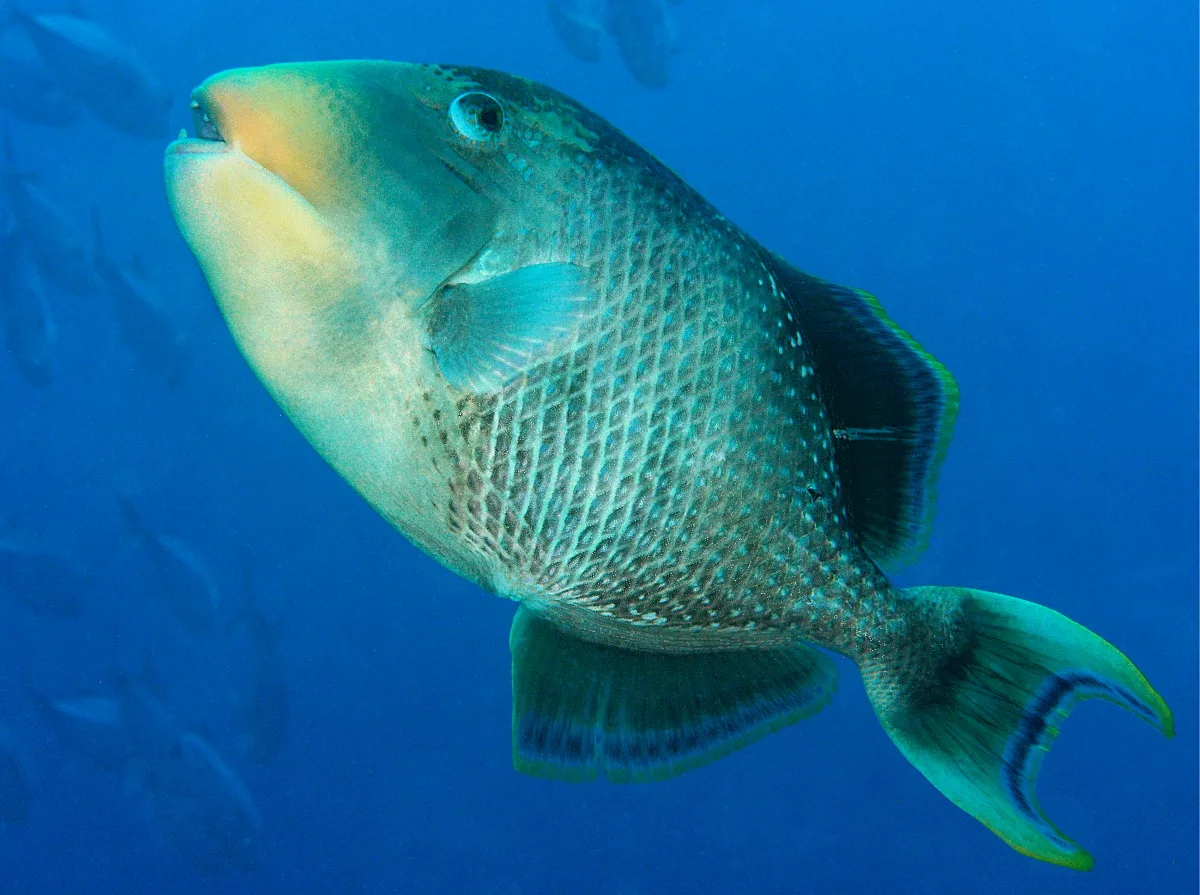
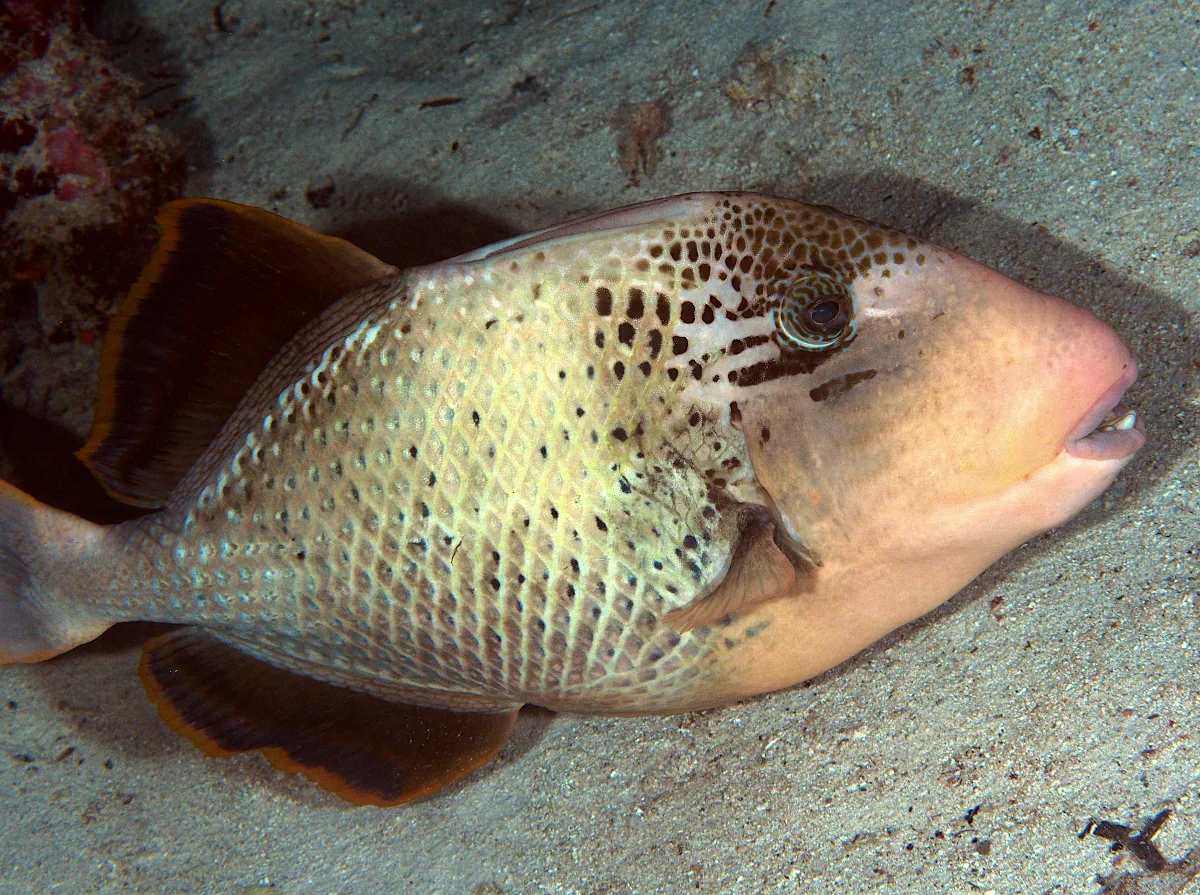
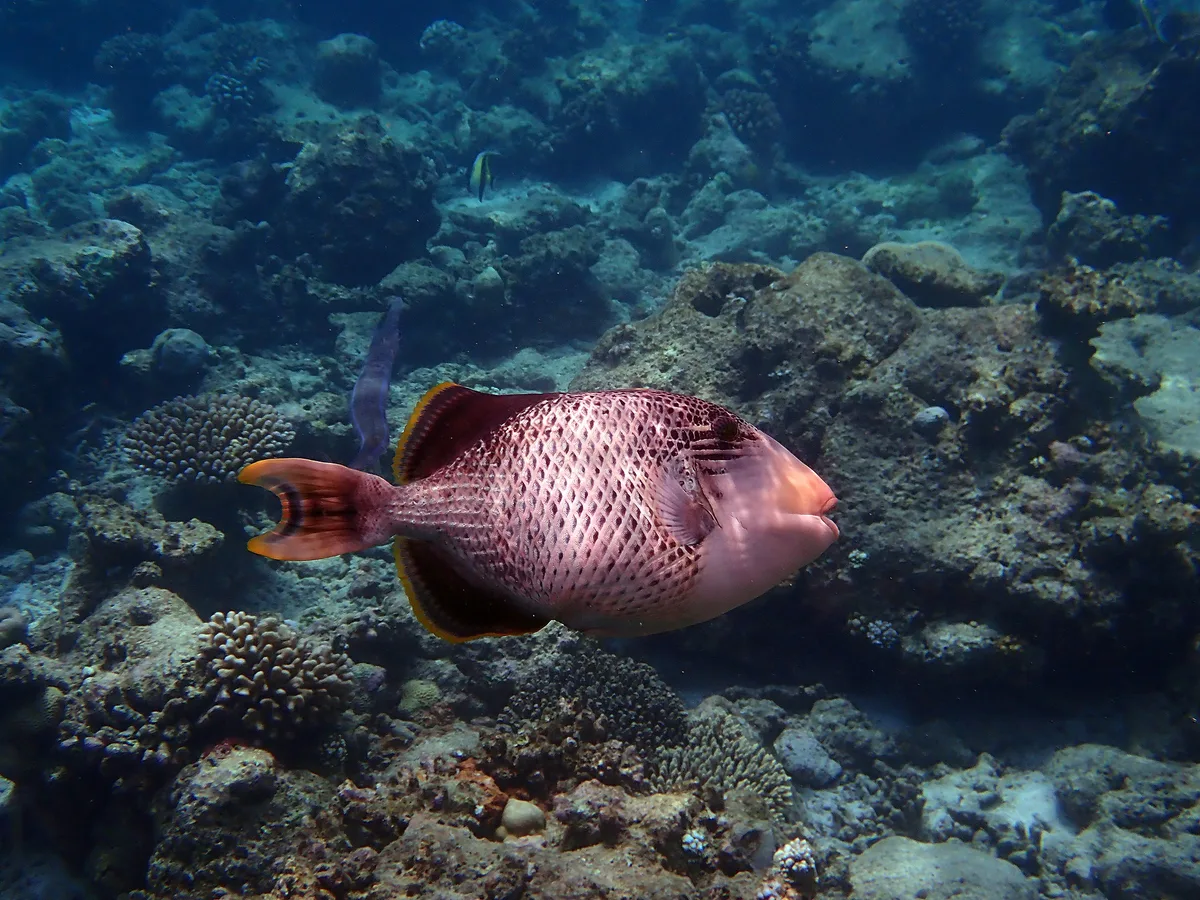
Rueppell described it from this sea in 1829. What you look for is a heavy gray-brown animal with yellow-edged fins, a yellow band across the cheek and pale scale outlines that give the back a netted look.
And everything in the family is built around one lock: the first dorsal spine raises and is held by a smaller spine behind it, so a fish wedged into a hole cannot be pulled out.
The genus. Pseudobalistes Bleeker 1865 - pseudo- (false). ETYFish
The species. Pseudobalistes flavimarginatus (Rüppell 1829 - flavus (yellow) + marginatus (edged or bordered). ETYFish
- heavy gray-brown body with yellow edges to the fins and a yellow band across the cheek
- pale scale outlines giving a netted look over the back
- digs a broad crater in sand and hangs above it
- up to 60 cm
Why it's threatened
There are no known major threats.
Threat classification from the IUCN Red List.