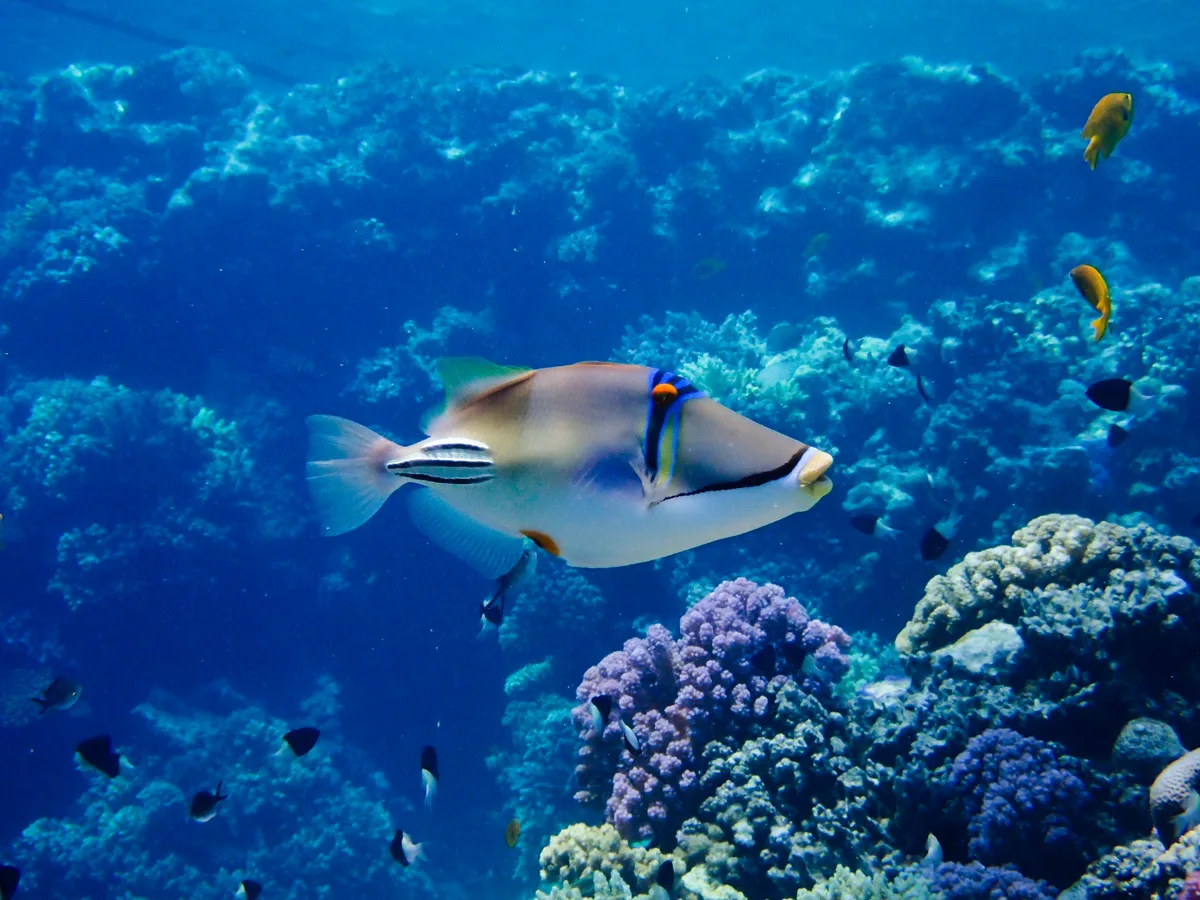
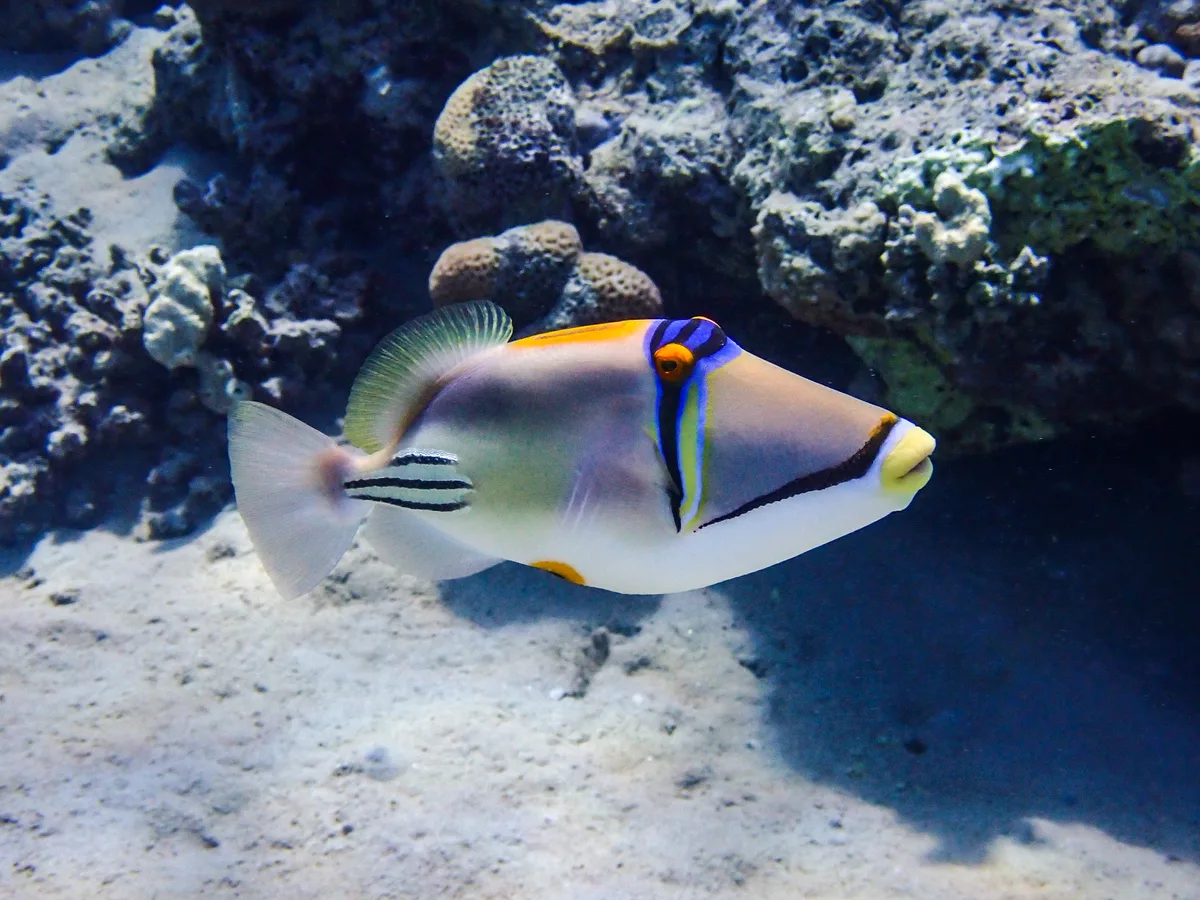
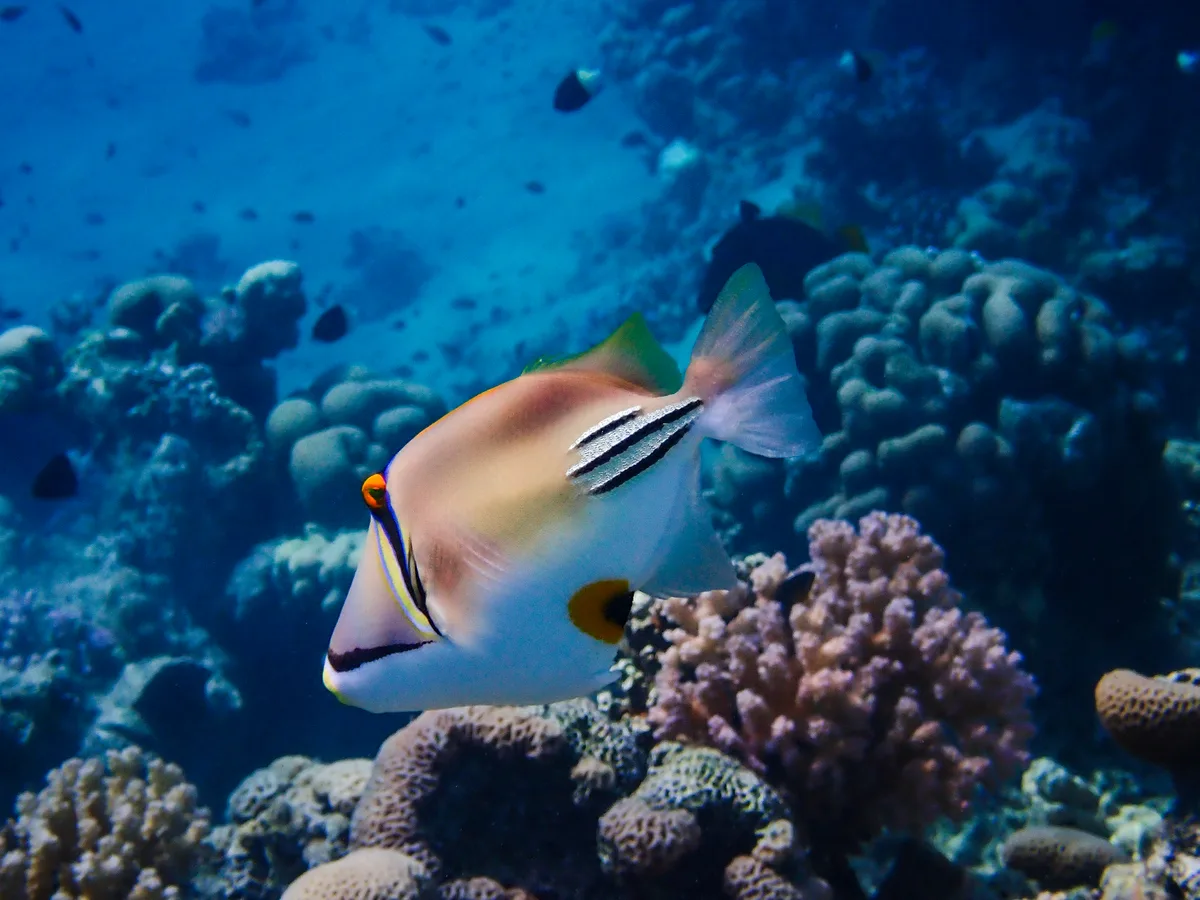
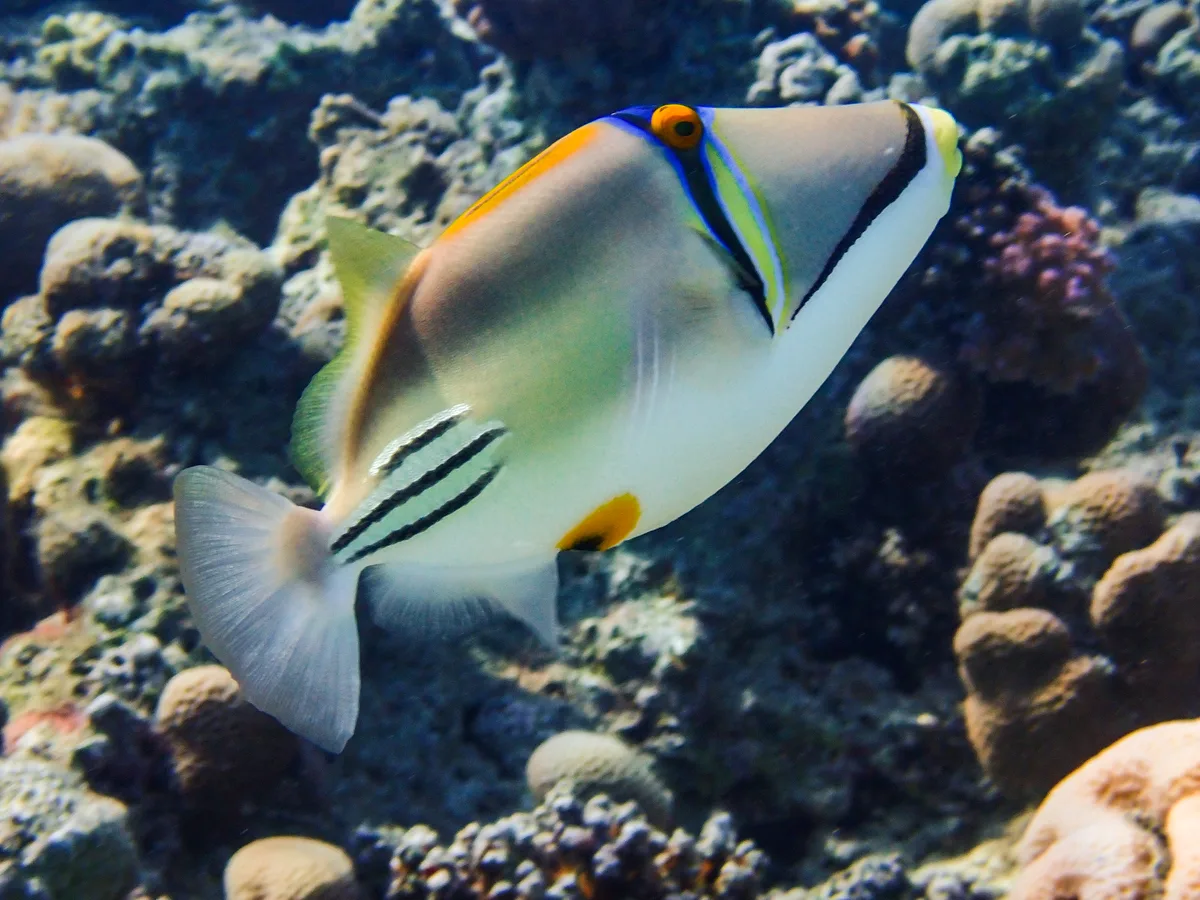
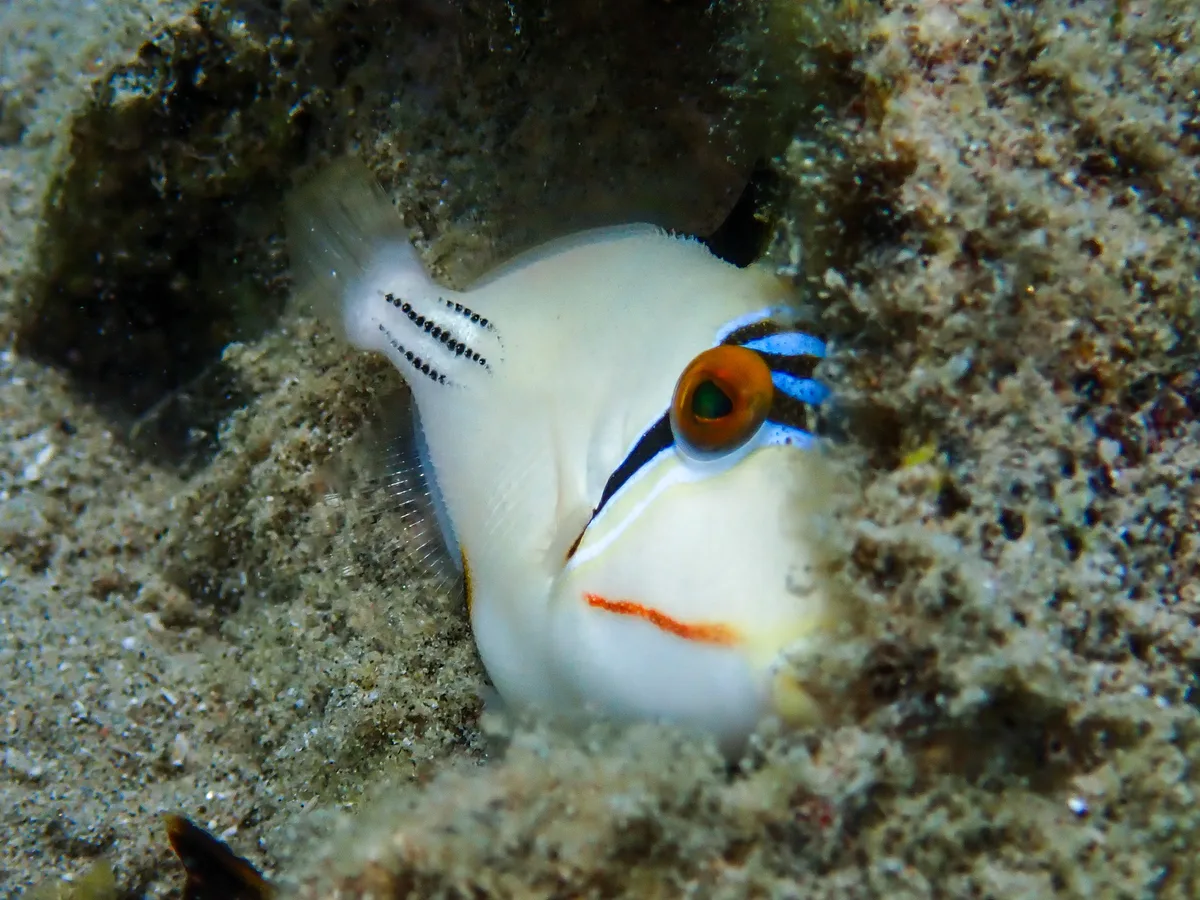
It feeds by moving the bottom. A jet of water blown from the mouth lifts sand off whatever is buried in it, small stones are turned with the teeth, and the urchins, worms and crustaceans underneath are crushed in a jaw built for armor. It works the same route through its patch every day, which is why the same fish is at the same coral head dive after dive.
The name is the other thing worth knowing. Forsskal recorded it in 1775 as assasi, a Latinized form of the Arabic name Azzazi that fishermen on this coast used, so the animal carries a local word into the scientific literature. He did the same on the same expedition with the blackspot emperor, whose name harak comes from Abu m'harrak. Two of the most familiar fish here are named in the language spoken on the shore.
It lives in this region and nowhere else - the 🌊 Red Sea, the 🌊 Gulf of Aden and the 🌊 Persian Gulf, replaced beyond that by the Picasso triggerfishes of the wider Indo-Pacific. The fish tourists greet by its Hawaiian name is, here, a different and local animal.
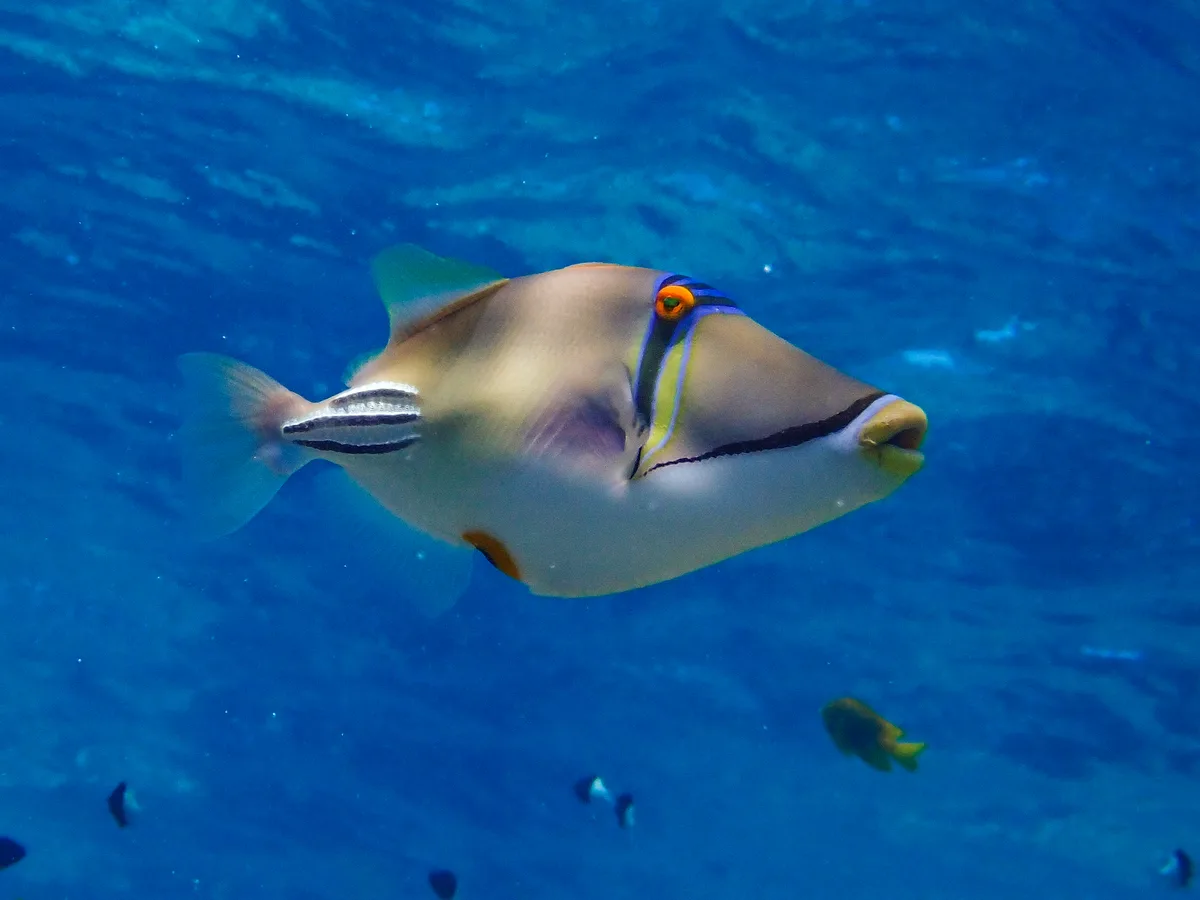
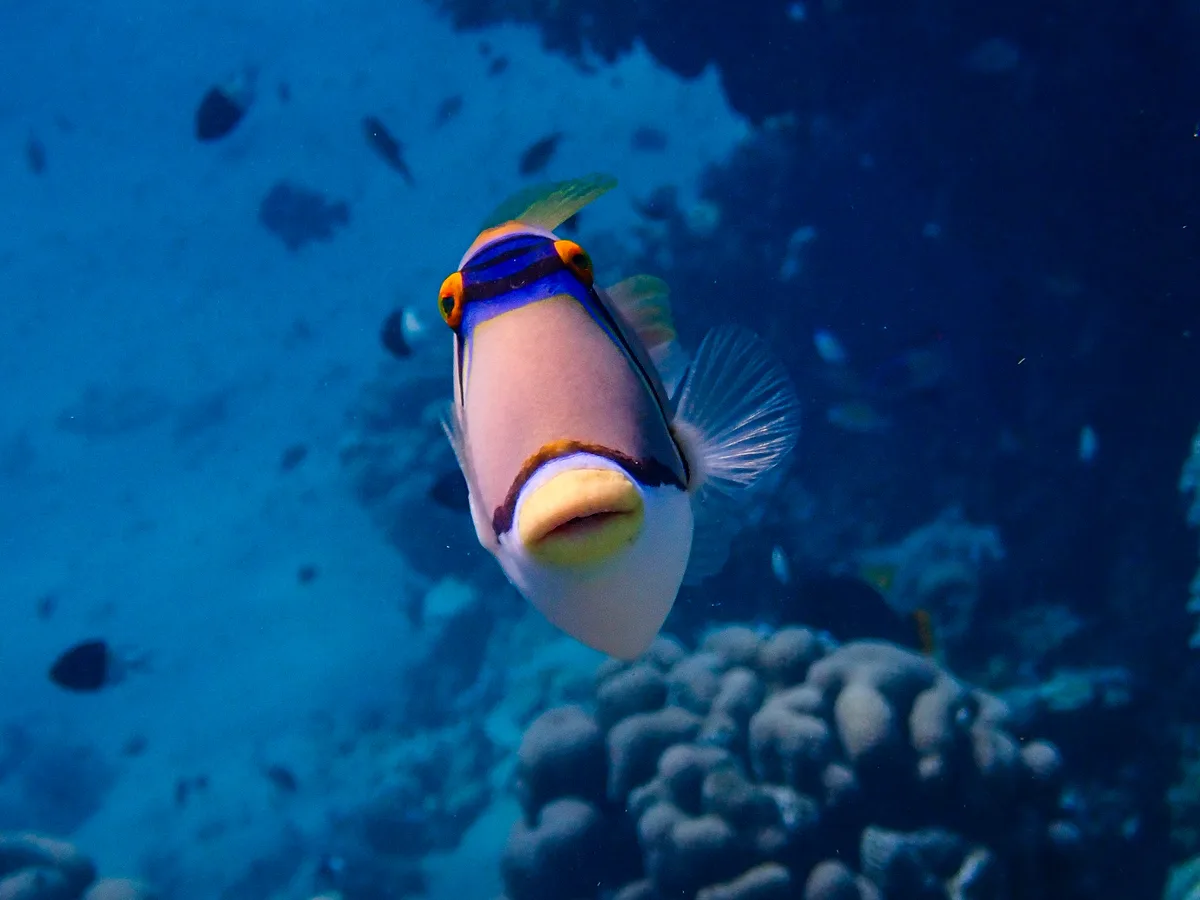
What you see is a pale triggerfish drawn on with blue and yellow lines across the snout and bold black stripes at the tail, up to 30 cm (12 in), holding still over shallow sand and rubble.
The nest is a shallow crater in sand or rubble, and the territory the female defends stands on it as a cone that widens toward the surface. Swimming up keeps you inside that cone the whole way, and swimming up and away puts you further in rather than further out. Leave sideways, stay low, keep the fish in sight, and put your fins between the two of you. A guarding fish charges anything inside it, and the bite is entirely capable of removing part of a fin or a finger.
The genus. Rhinecanthus Swainson 1839 - rhine (rasp) + acanthus (thorn or spine). ETYFish
The species. Rhinecanthus assasi (Fabricius 1775) - latinization of Azzazi. ETYFish
- pale body with a dark band from the eye to the pectoral fin and bold black stripes at the tail
- blue and yellow lines drawn across the snout as though painted on
- yellow line running back from the mouth toward the gills
- blows water at sand to feed, working the same route each day
- up to 30 cm