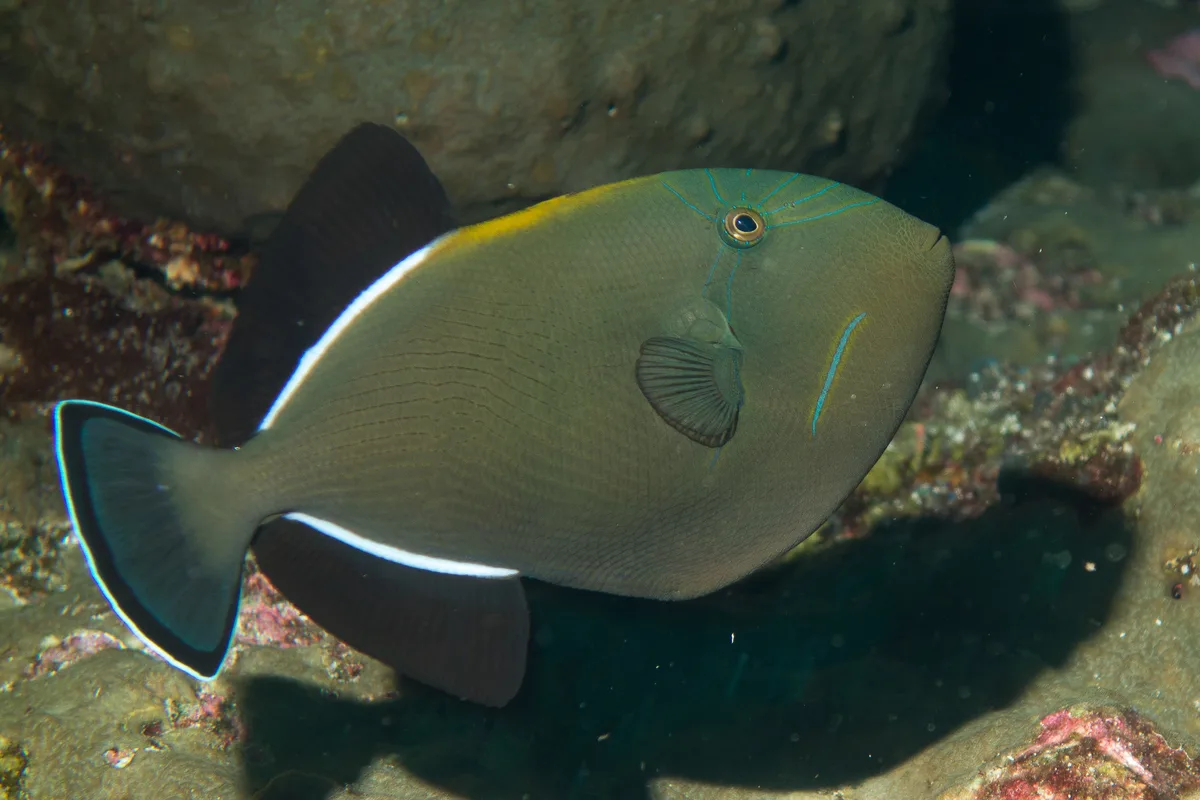
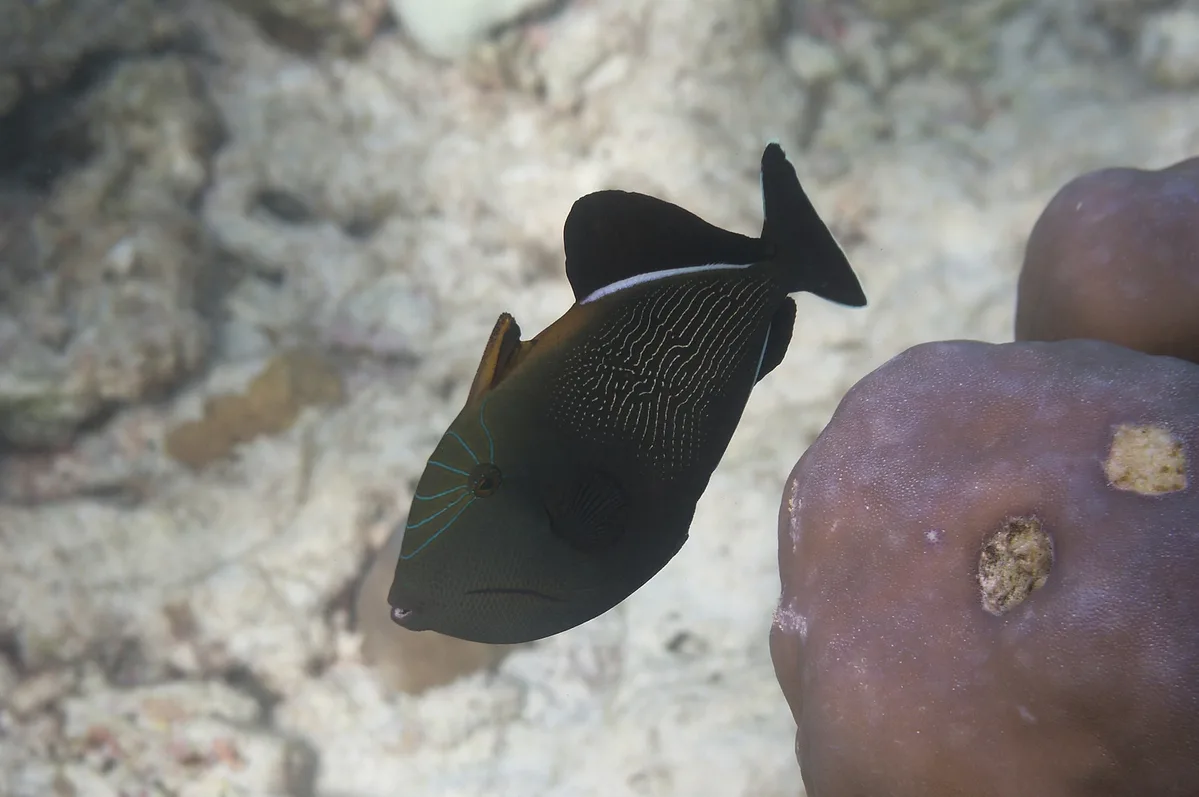
Most triggerfish work the bottom. This one hangs off it, in open water above a slope or a drop-off where the current runs, taking plankton and drifting algae out of the flow and dropping back to the reef only when something comes at it.
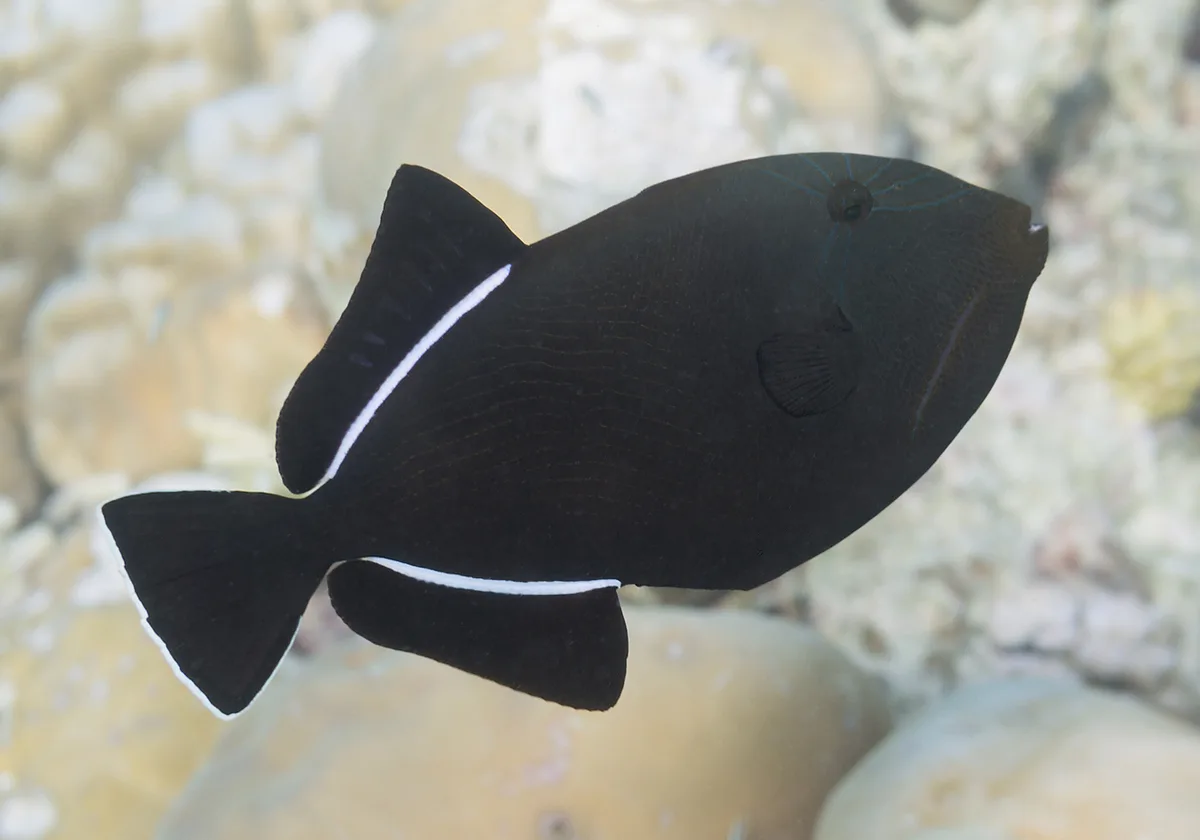
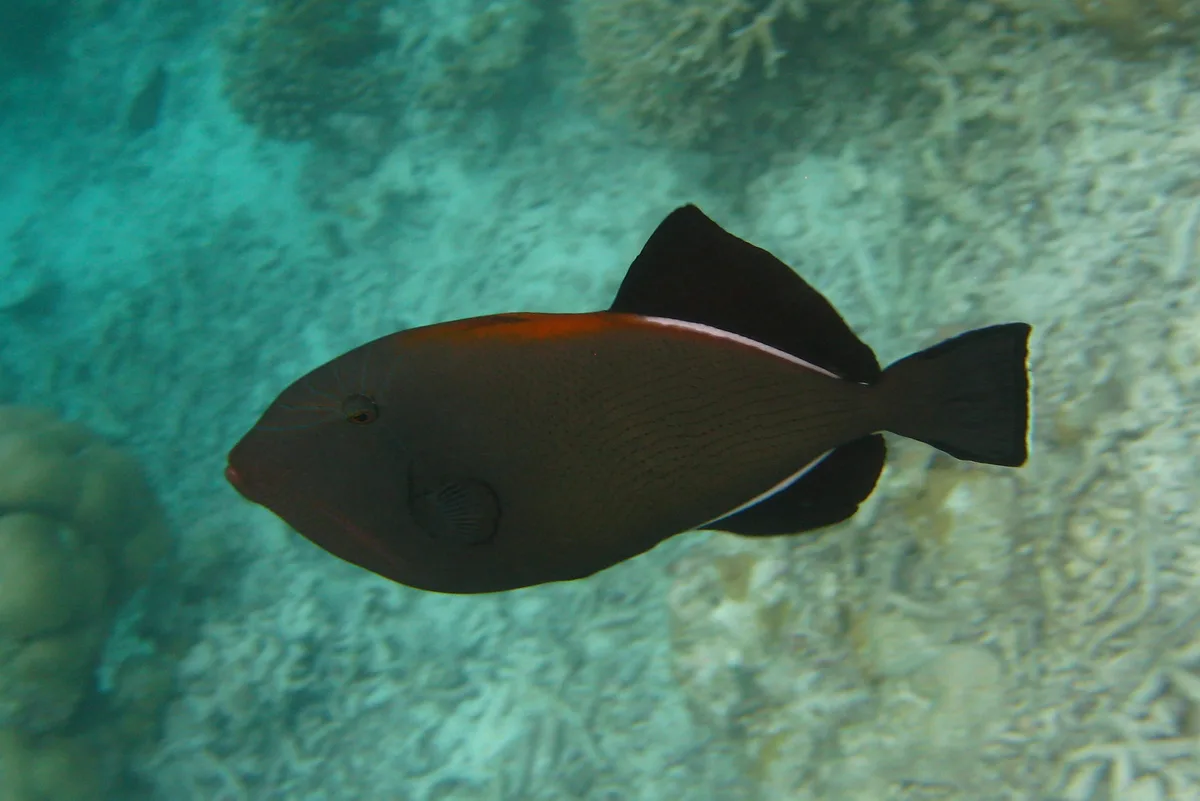
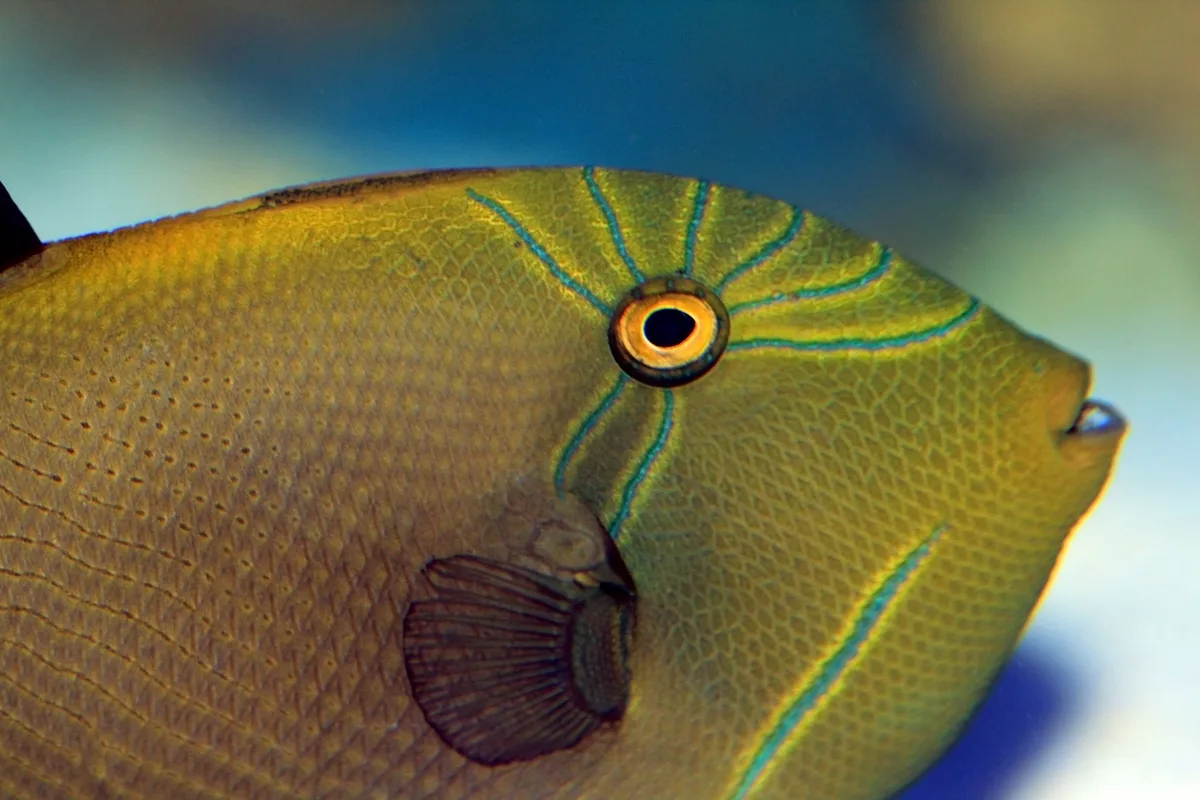
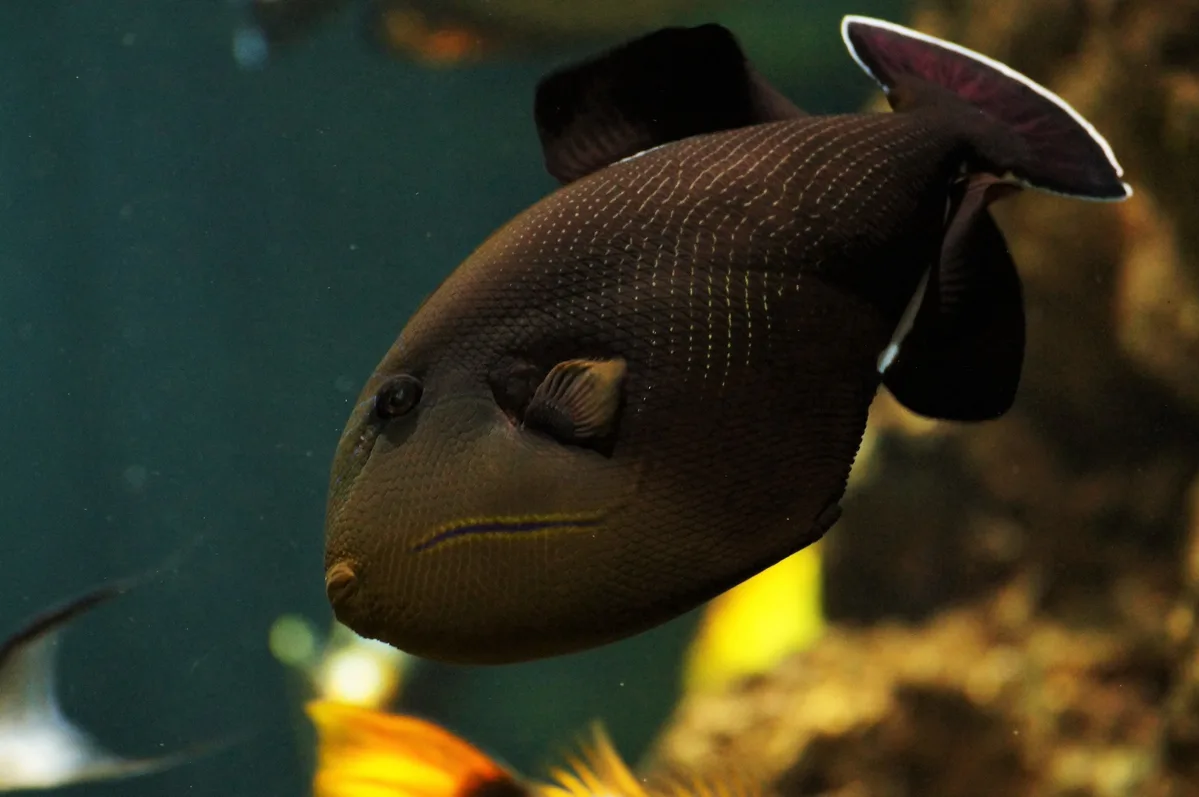
That is a different living from its relatives, and the body shows it: smoother and more streamlined than the bottom-working triggerfishes, built to hold station in moving water rather than to lever stones about. Dark brown to black, with a thin white line running along the base of the dorsal and anal fins that is the easiest mark to catch underwater.
It has not given up the family jaw, though. It still takes hard-shelled animals off the bottom when it feels like it, molluscs and urchins included, so the equipment is kept in reserve rather than discarded.
Randall and Klausewitz described the species in 1973. In the aquarium trade it is regularly sold or reported as the black durgon of the Pacific, which it closely resembles and has never met: this fish has not been recorded anywhere near Hawaii.
The danger flag here is nest defense, as it is for every triggerfish. A fish that turns to face you head on with its first spine raised is telling you there are eggs below, and the answer is the same in every case: leave sideways and low, not upward.
- dark brown to black body with black fins
- thin white line along the base of the dorsal and anal fins
- pale line at the base of the tail in some individuals
- hangs in open water off a slope rather than sitting on the reef
- up to 25 cm
Why it's threatened
Harvesting of this species for the aquarium trade may cause localised population declines. Ongoing coral reef degradation may also impact this species.
Threat classification from the IUCN Red List.