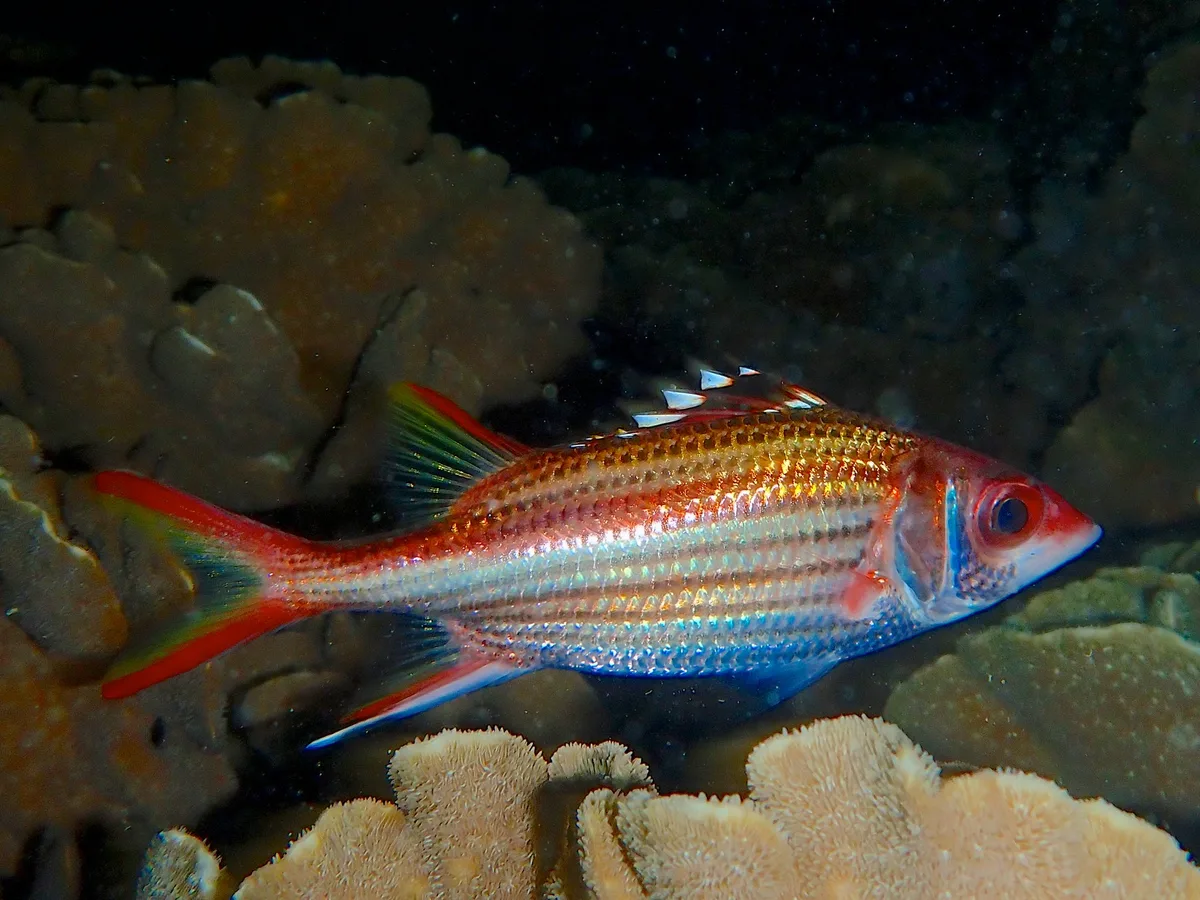
Squirrelfish hear better than almost anything else on the reef. In this family the front of the swim bladder is drawn out into a pair of extensions that press against the inner ear, so the bladder works as an eardrum and passes pressure changes straight into the hearing organ. They also talk: grunts, staccato clicks and growls, used in arguments over shelter and at anything that comes too close to it.
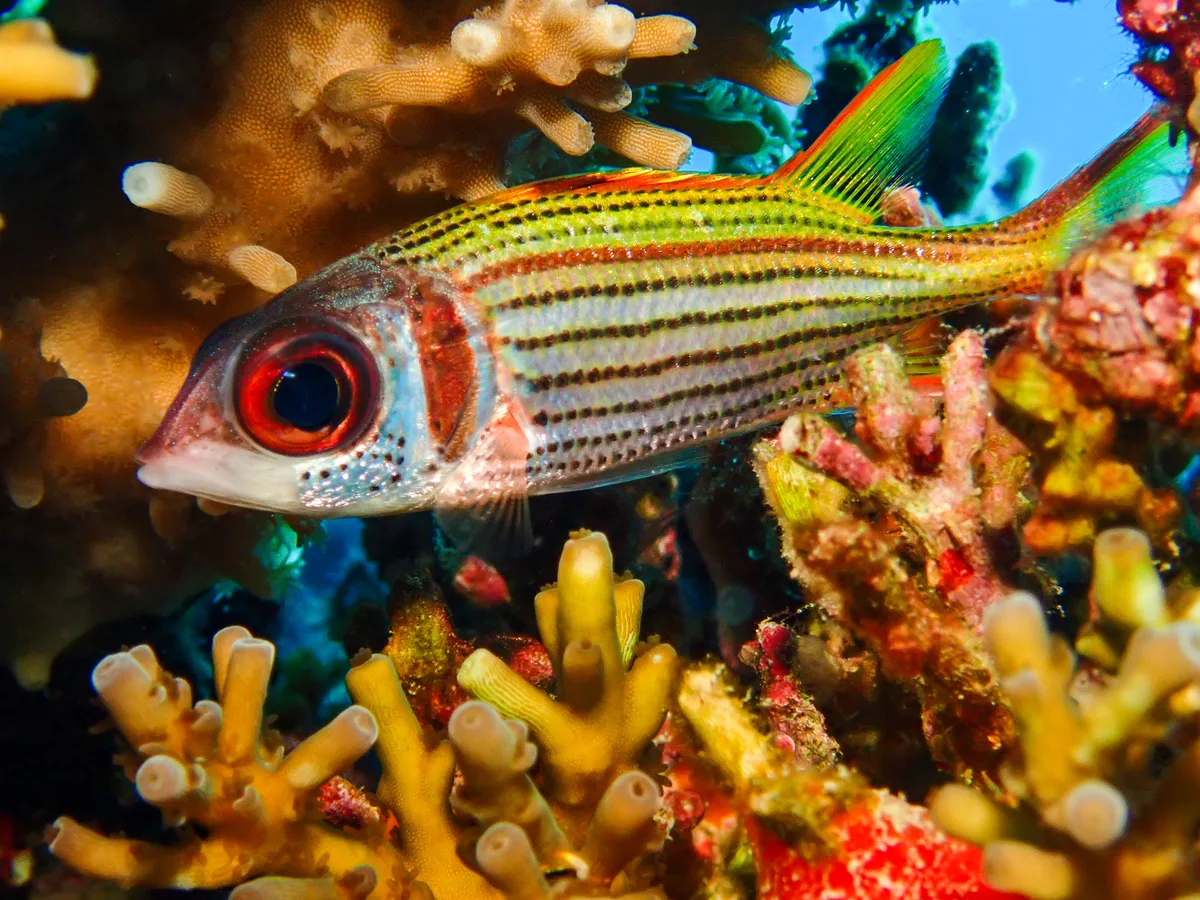
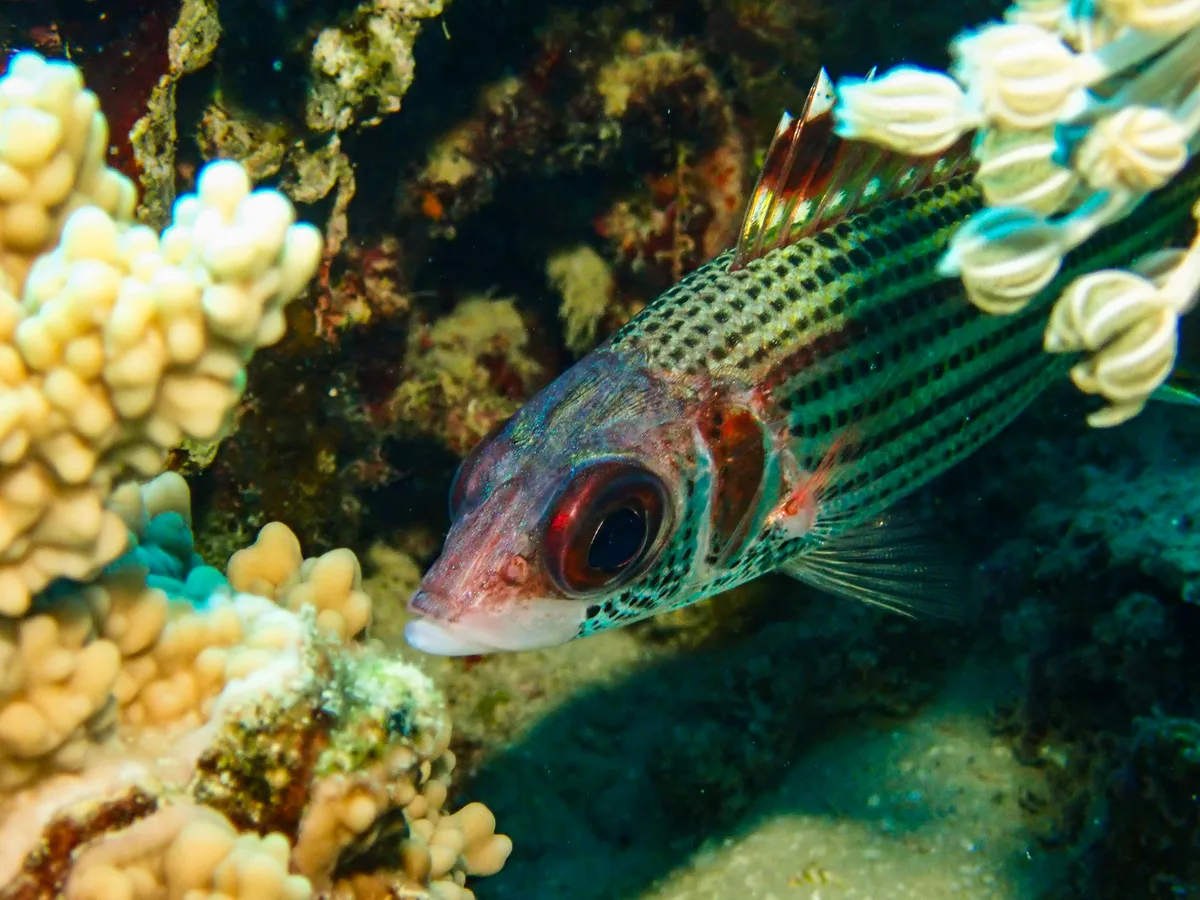
By day it hides, and it is particular about where. This is the squirrelfish that lives inside branching Acropora, sitting among the branches in ones and twos on reef flats and in lagoons, shallower than the rest of its family. At night it comes out over sand and seagrass for shrimp, small crabs and fish.
Handle it and you will regret it. There is a sharp spine at the corner of the gill cover with venom associated with it, and squirrelfish spines produce a wound that hurts far out of proportion to its size.
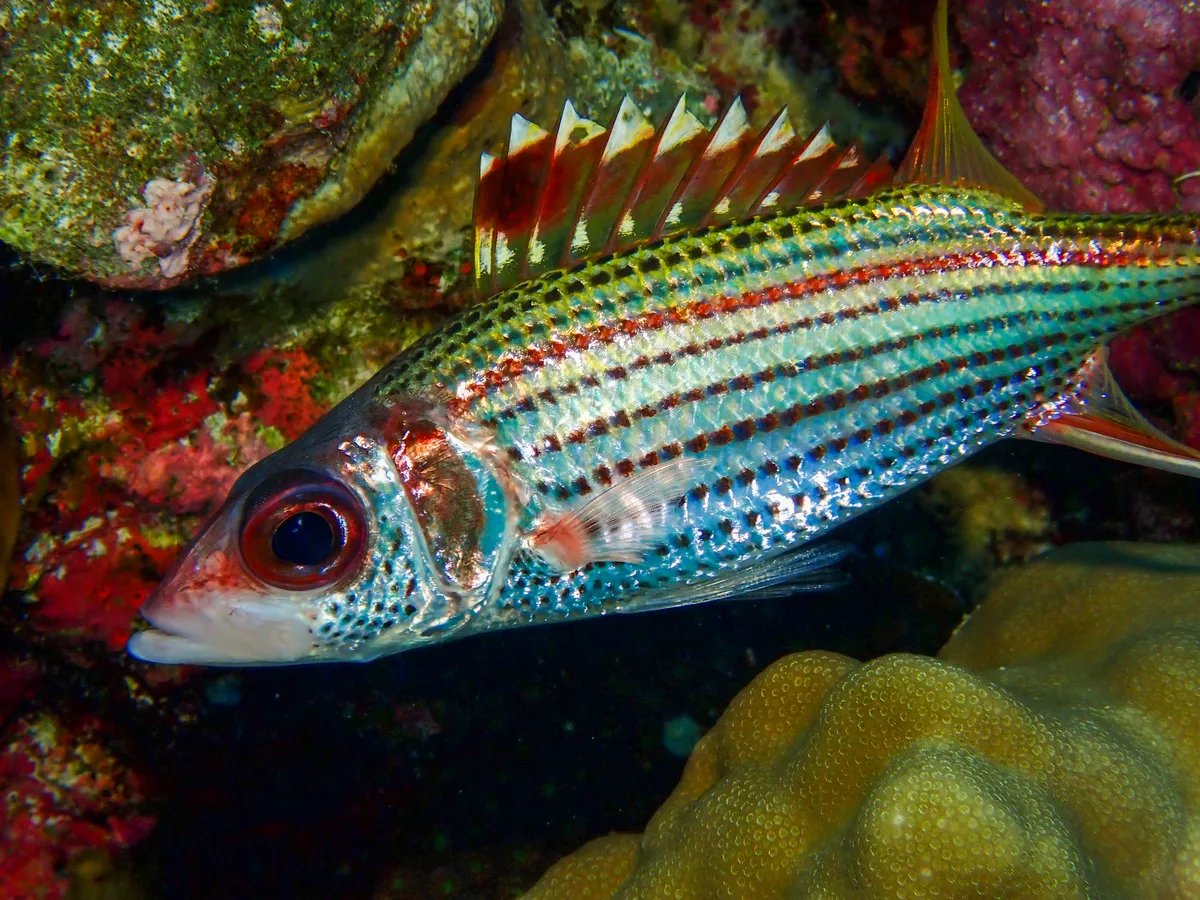
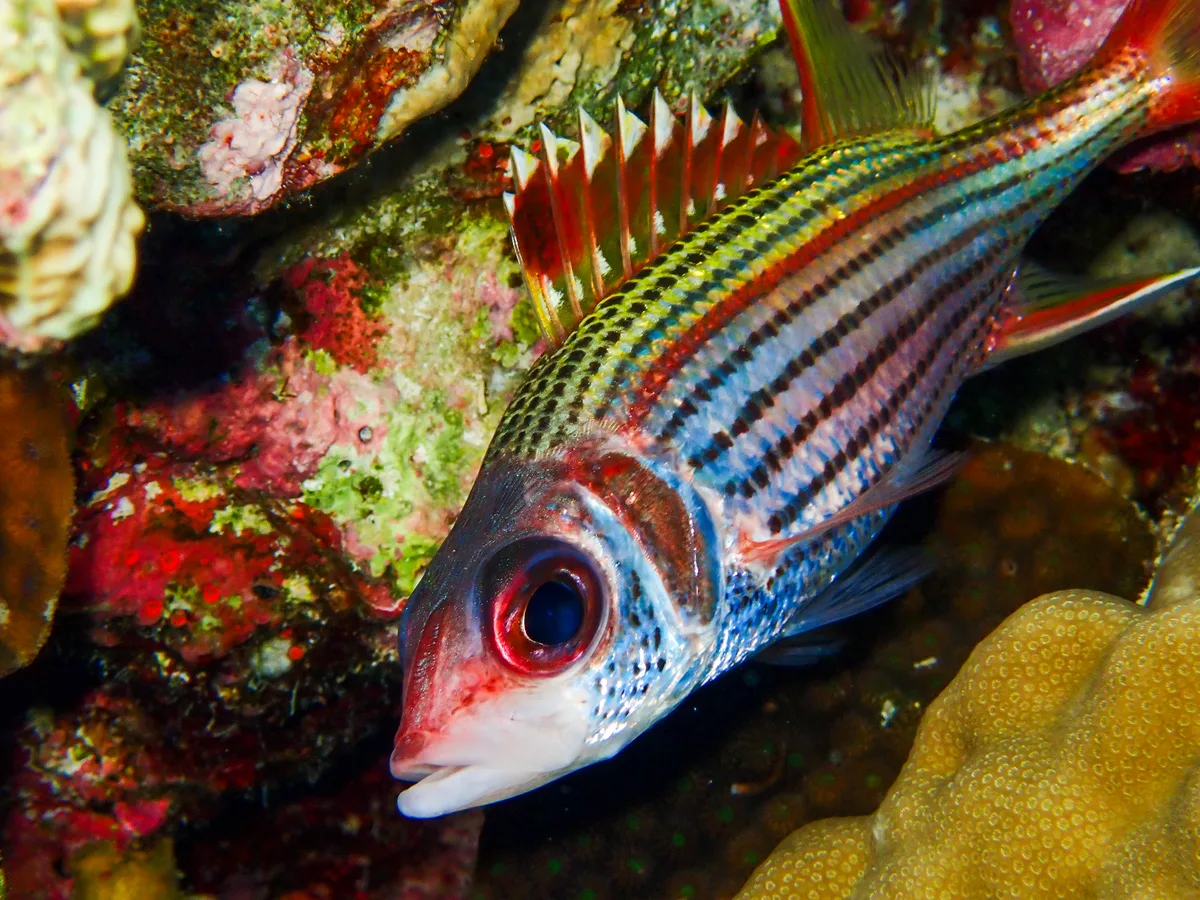
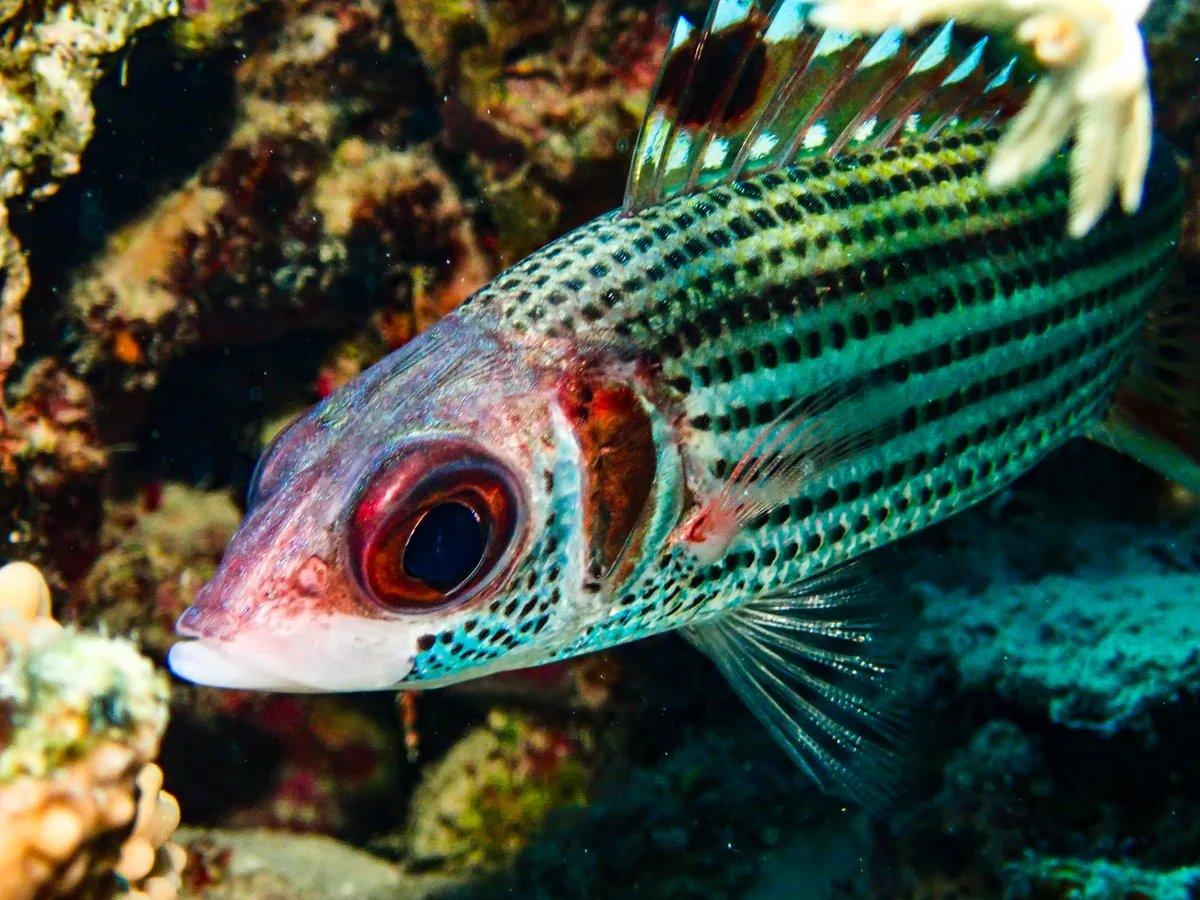
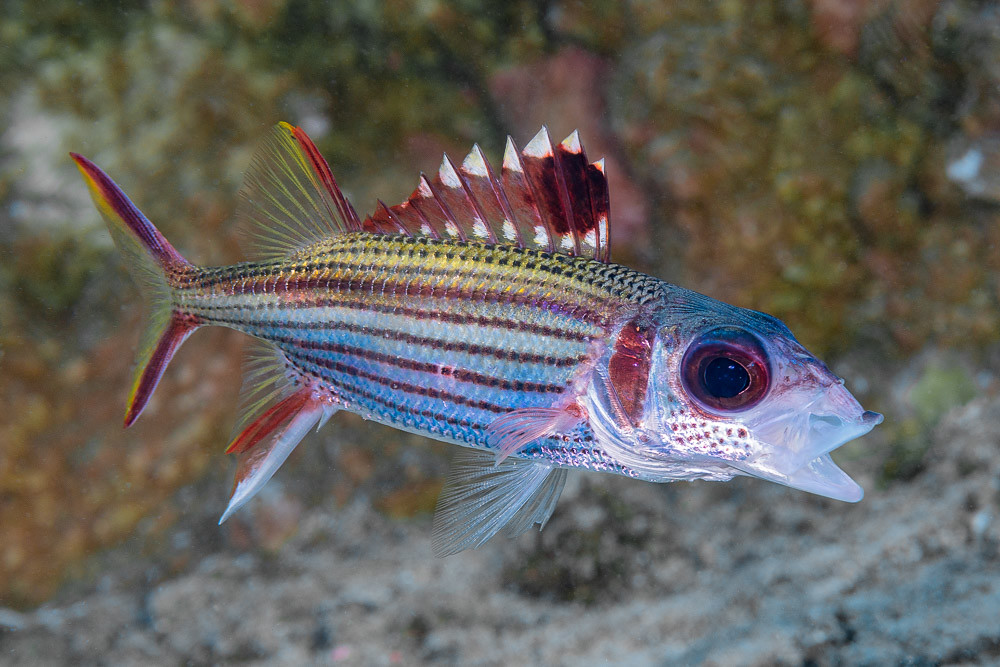
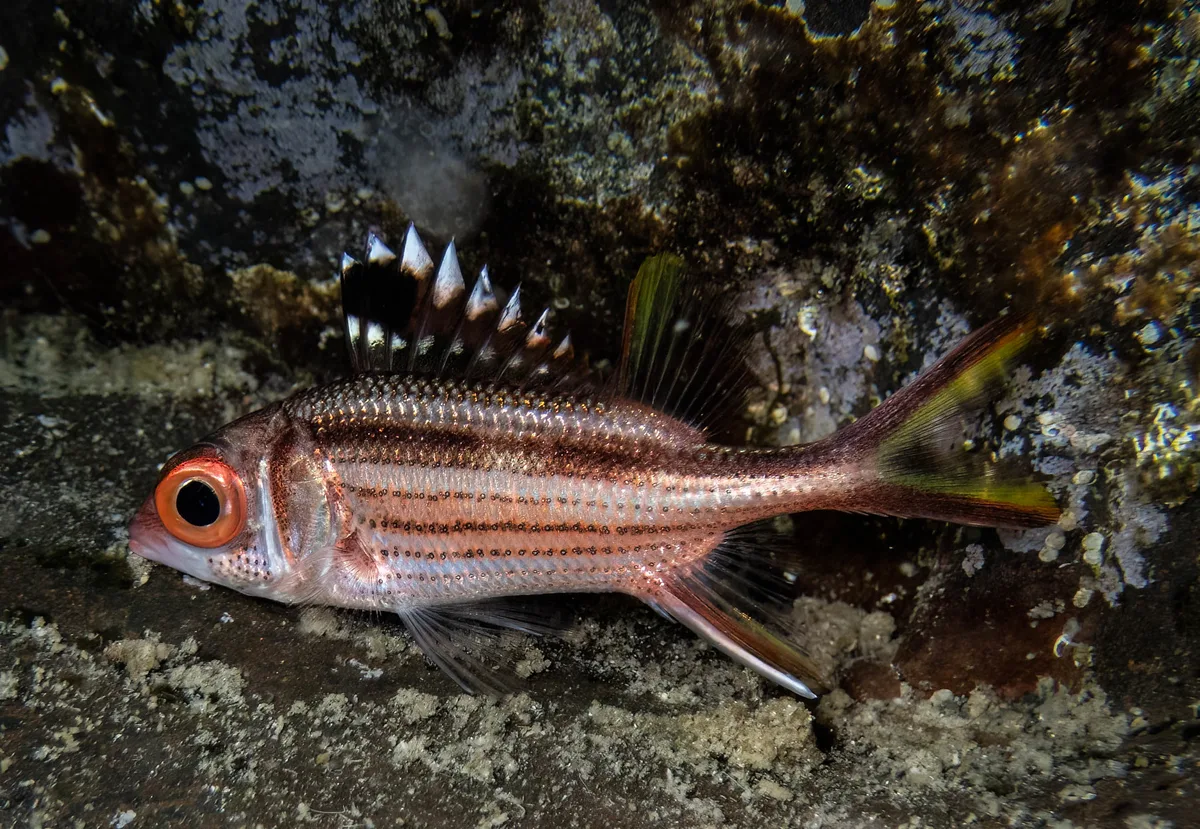
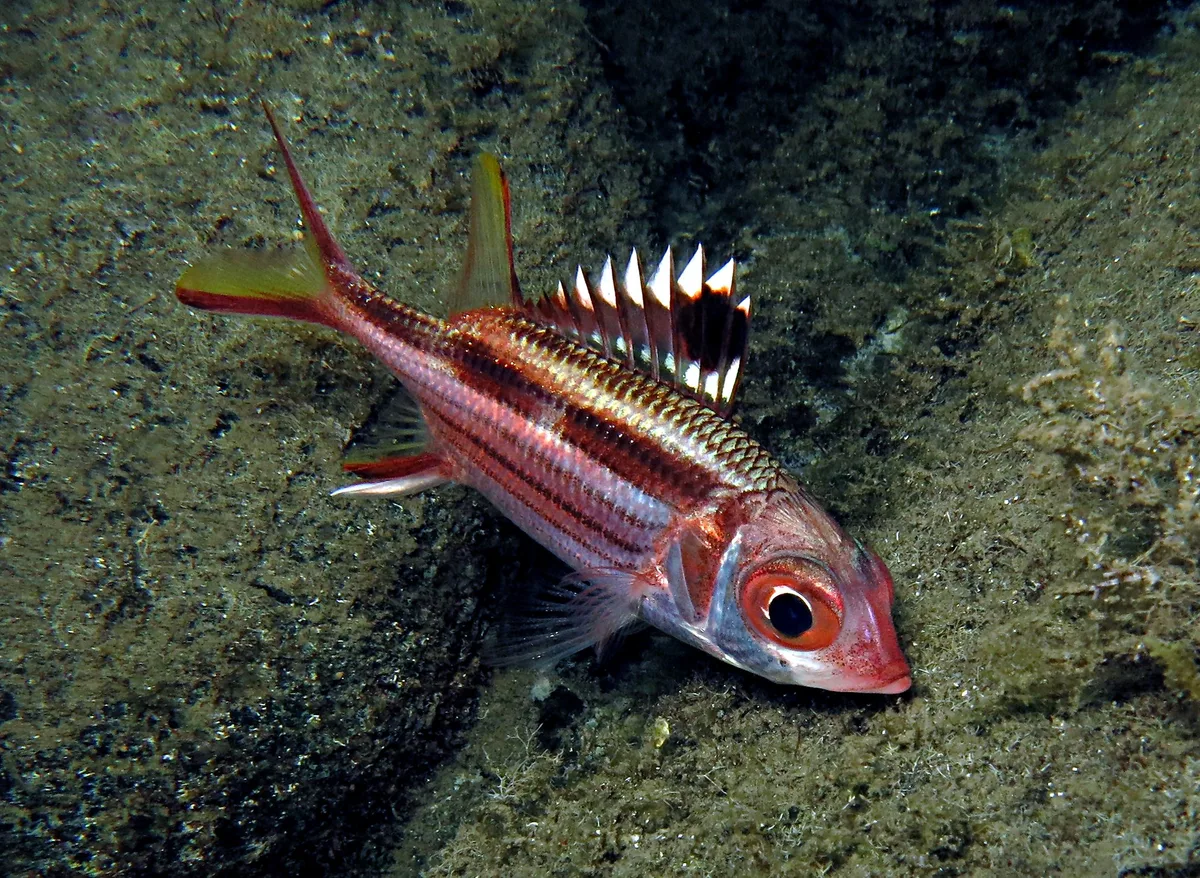
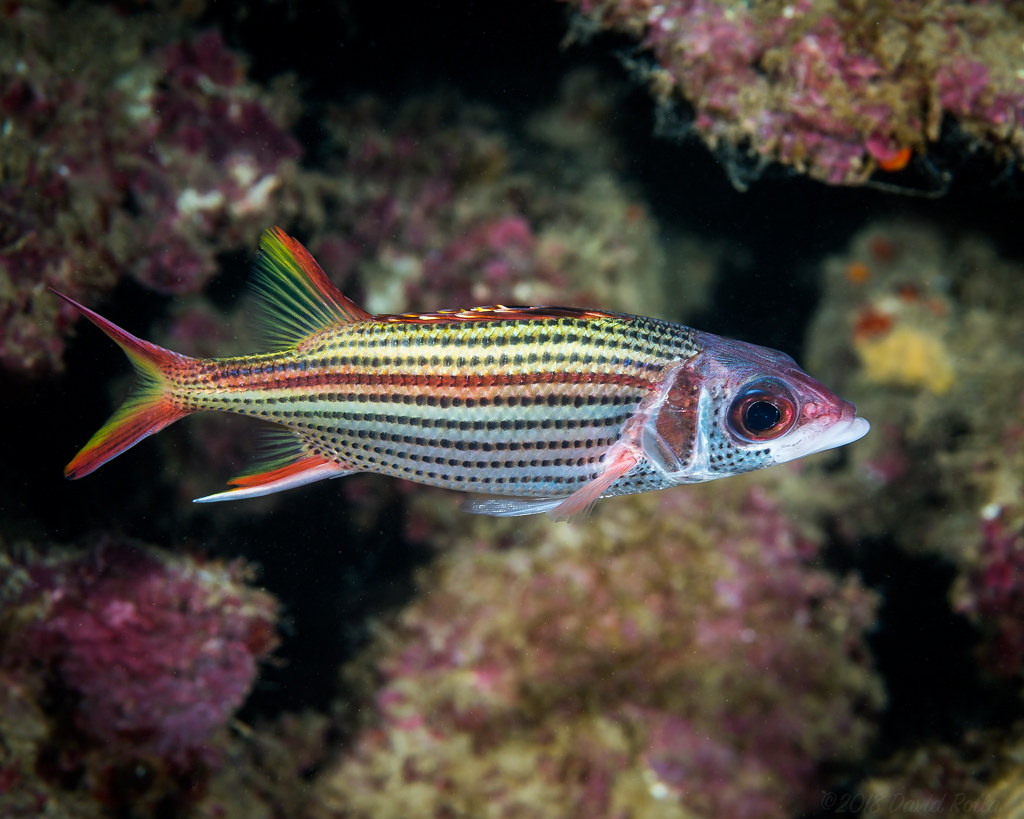
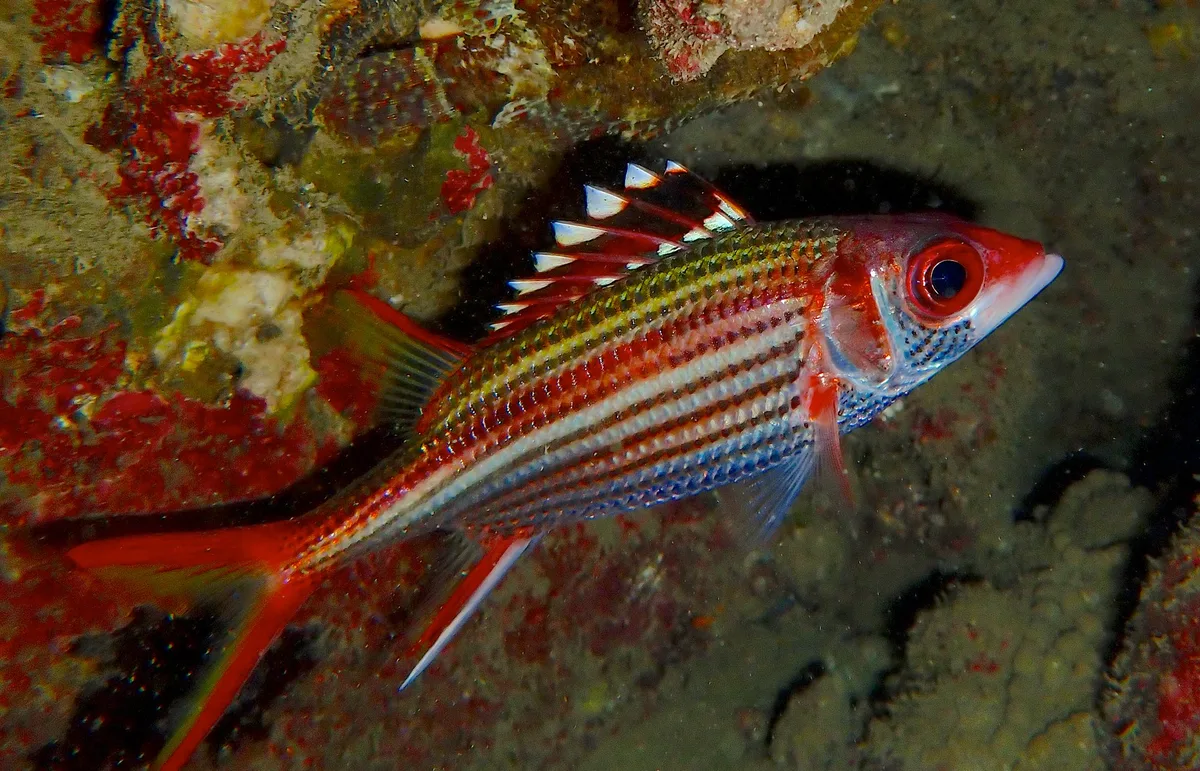
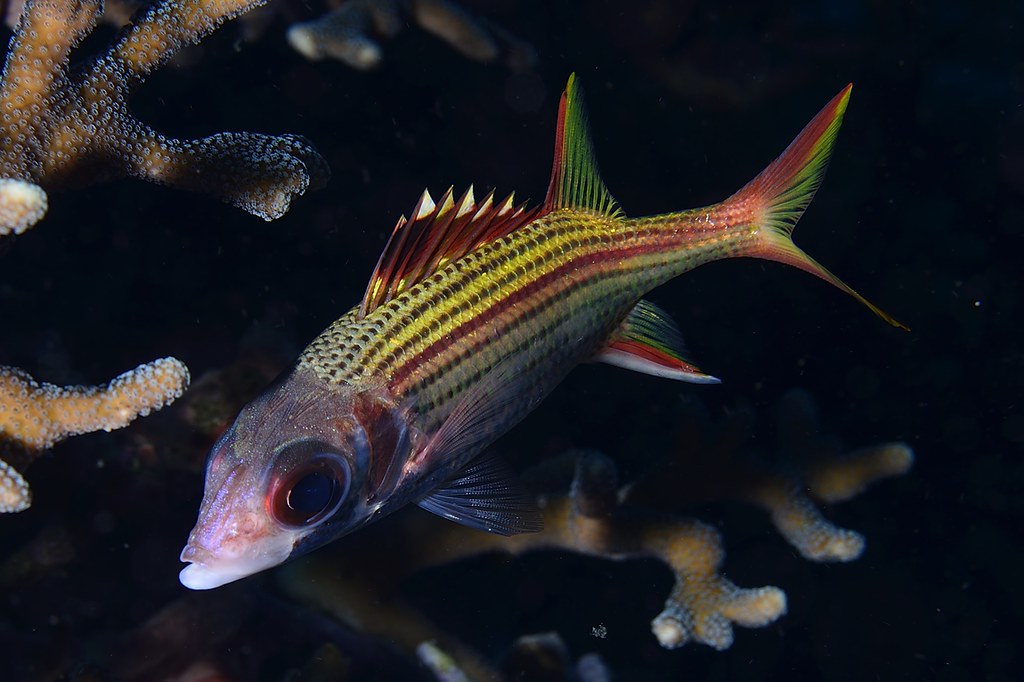
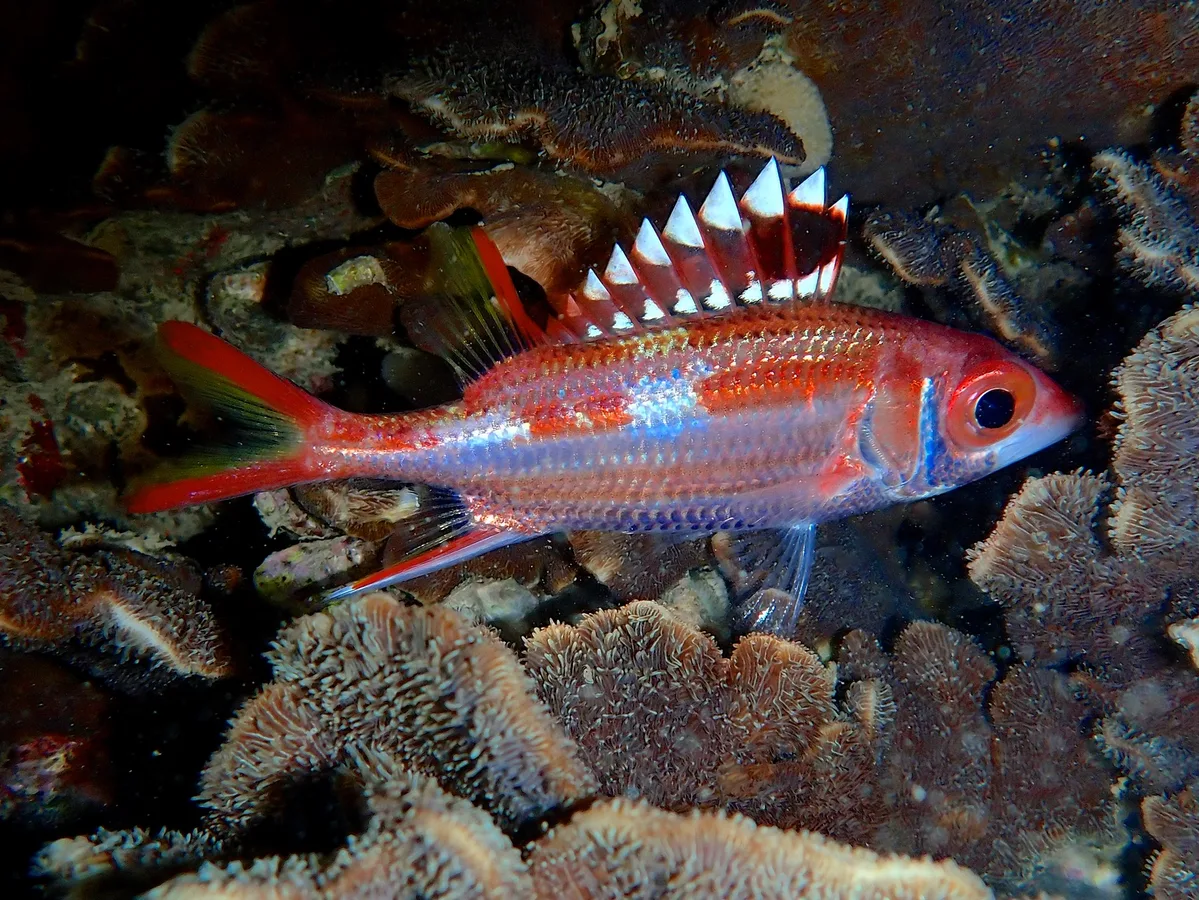
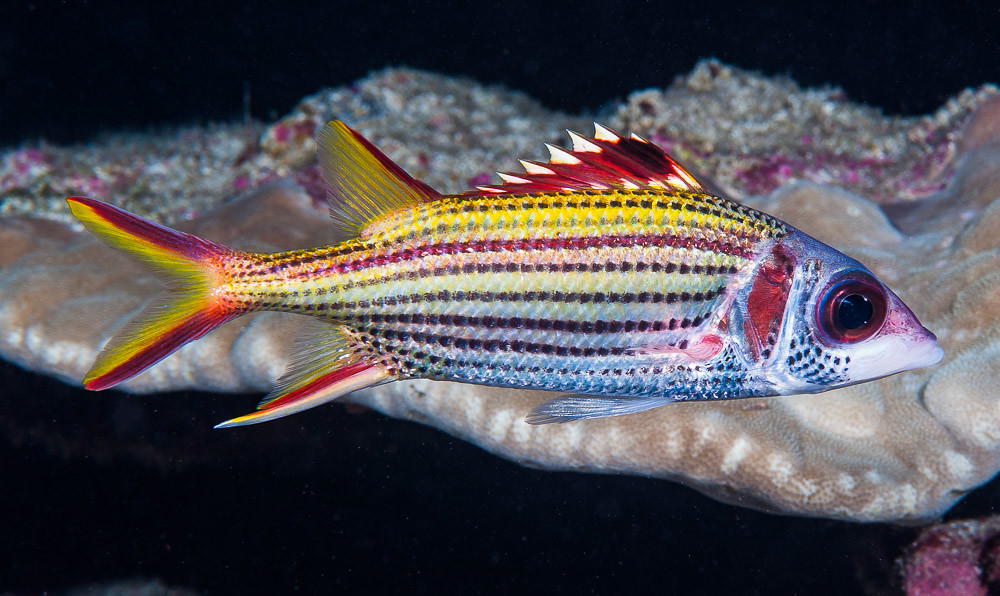
It is easy to name underwater: fine red-brown stripes along the scale rows on a silvery body, and a blood-red blotch on the front of the spiny dorsal fin.
The genus. Neoniphon Castelnau 1875 - néos (new). ETYFish
The species. Neoniphon sammara (Forsskål 1775) - Arabic name for this fish. ETYFish
- fine red-brown stripes along the scale rows on a silvery body
- blood-red blotch on the front of the spiny dorsal fin
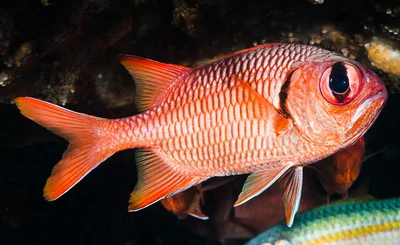
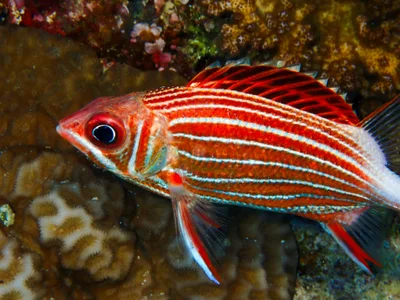
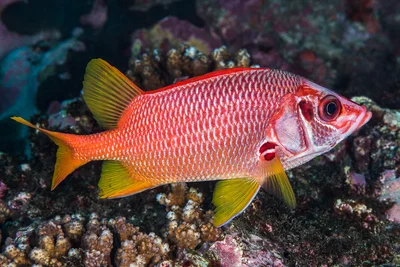
- large eye and a sharp spine at the corner of the gill cover
- usually inside branching coral, in ones and twos
- up to 32 cm