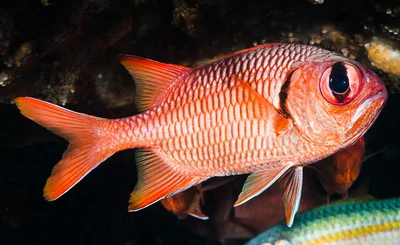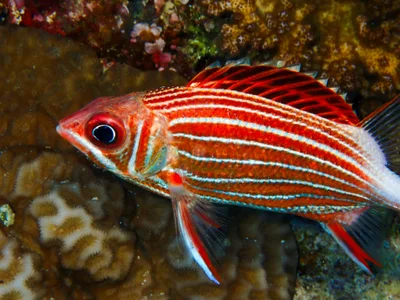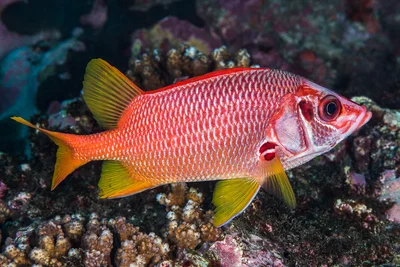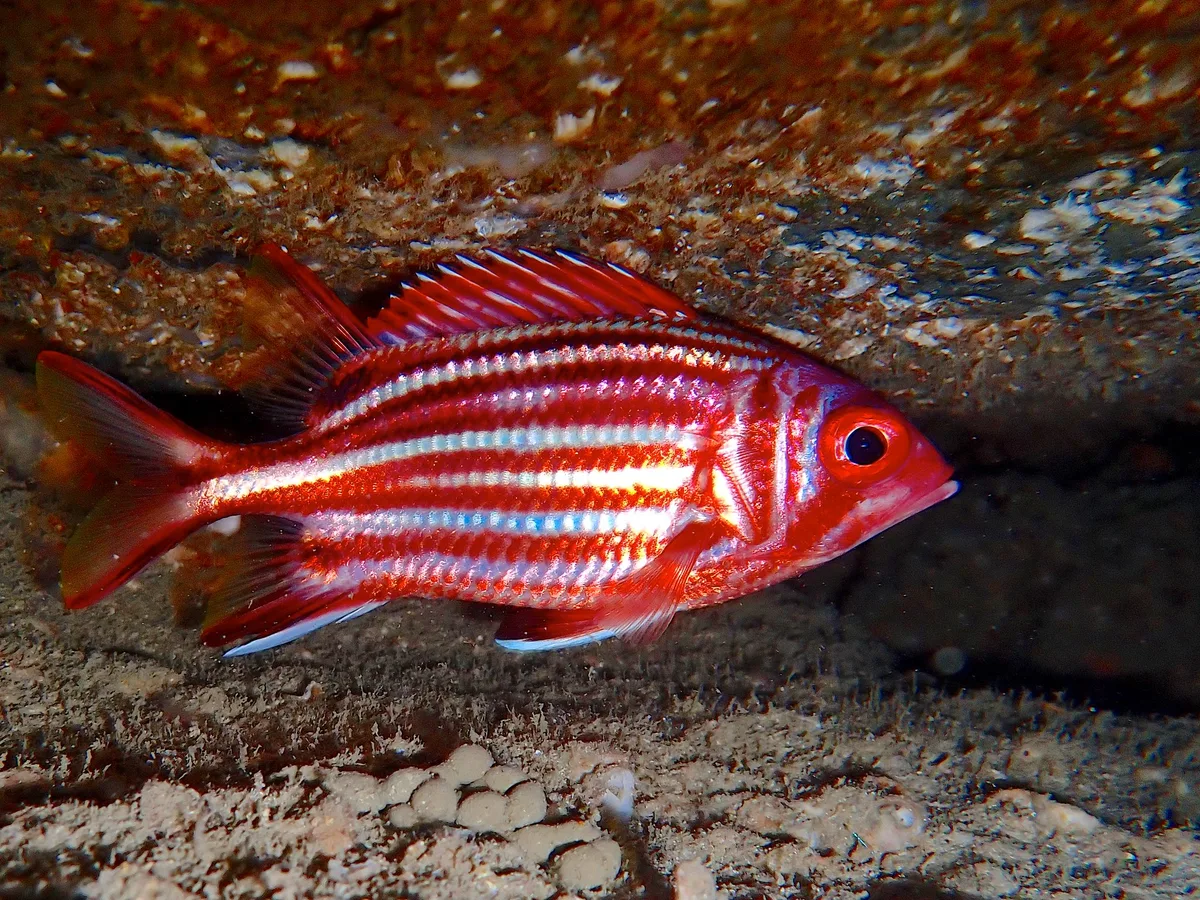
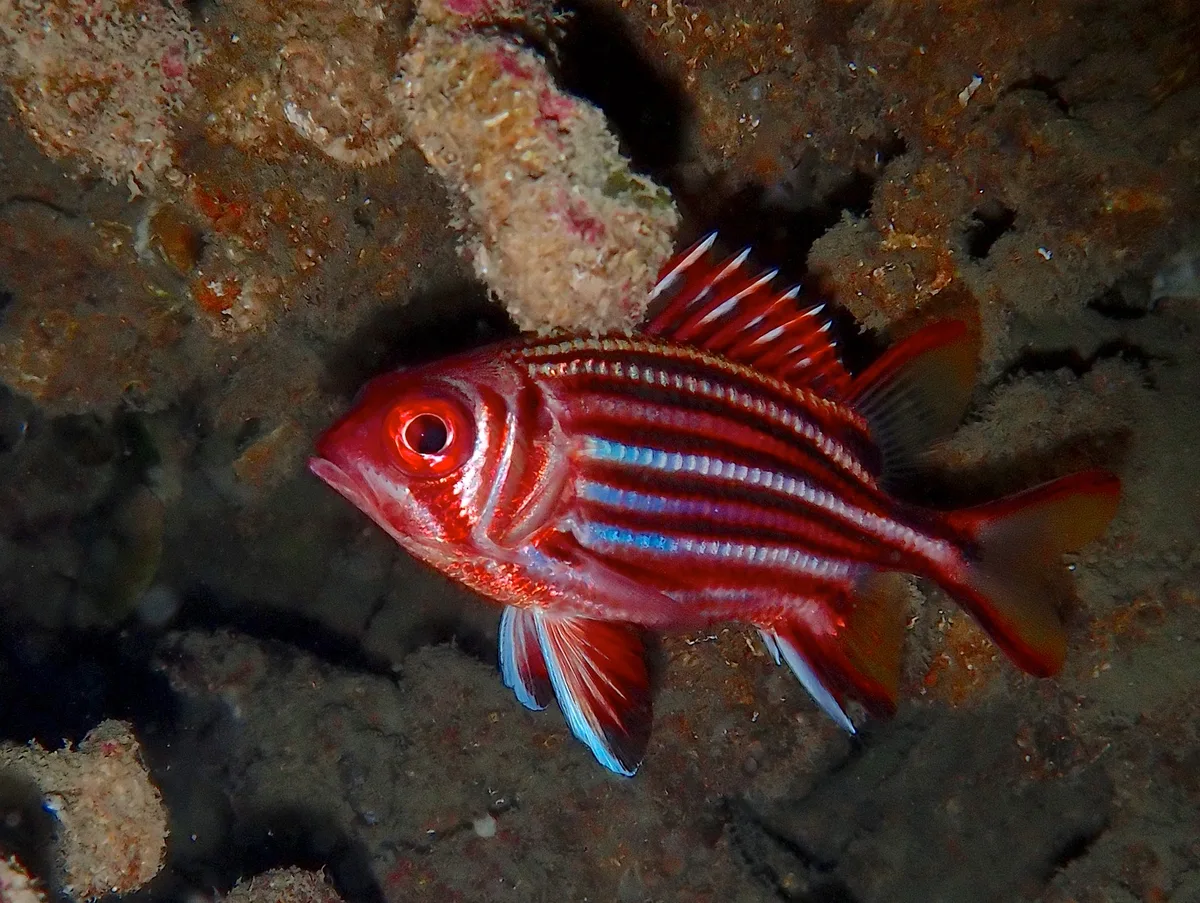
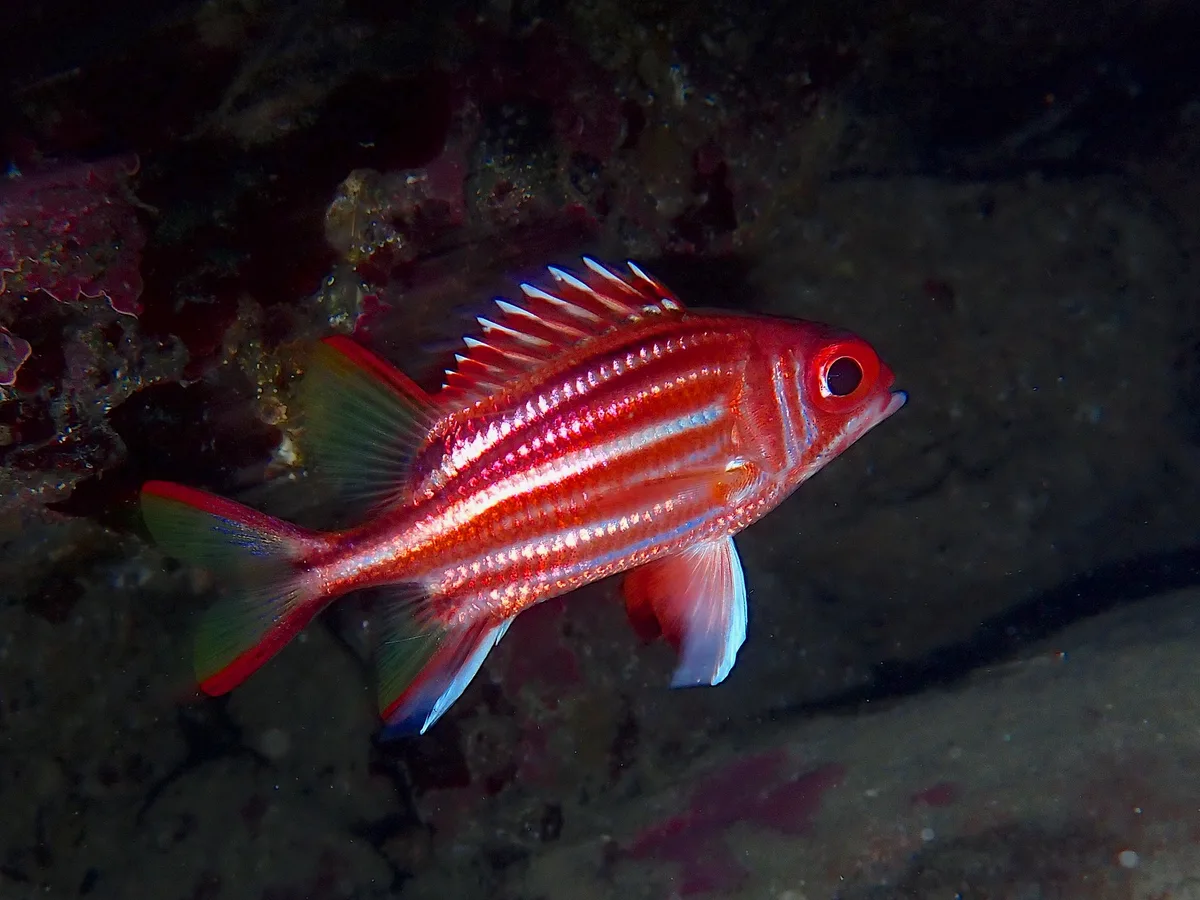
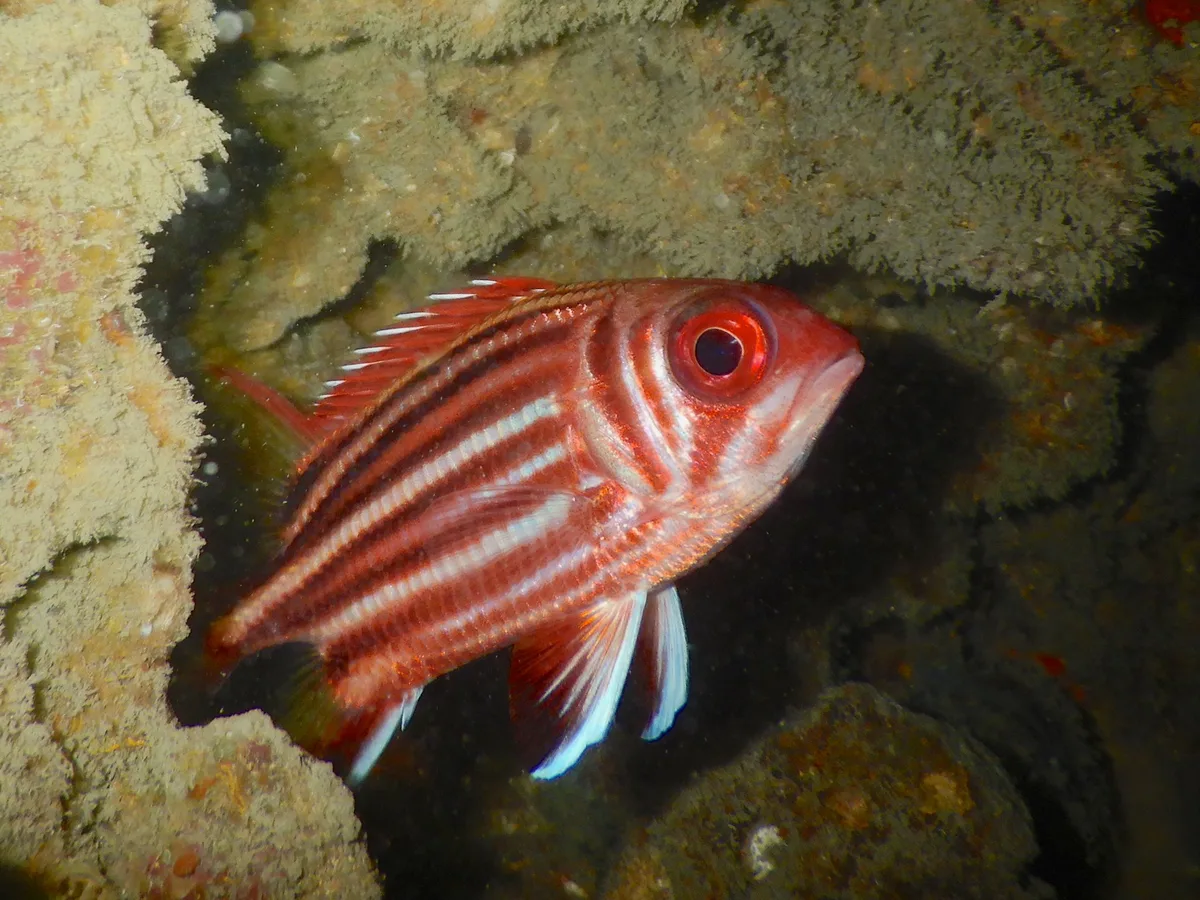
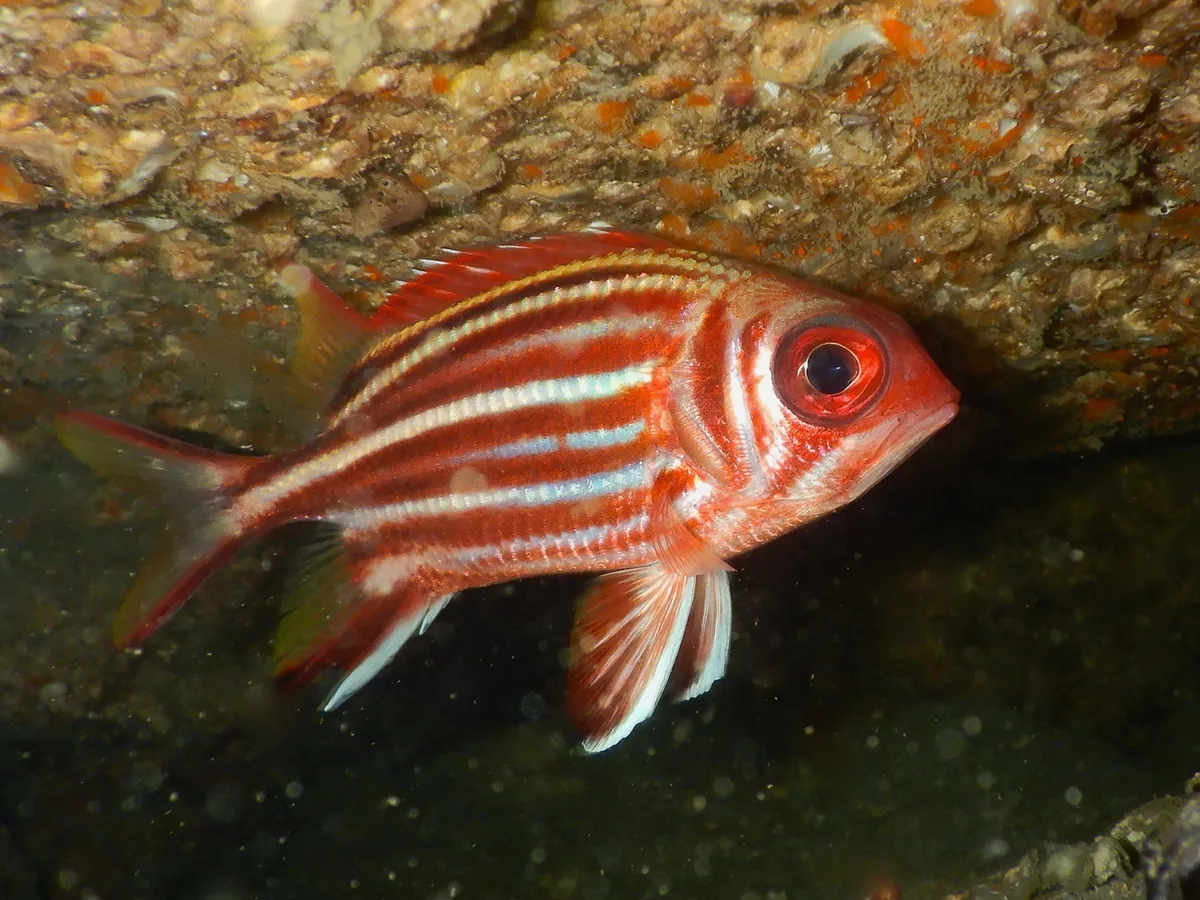
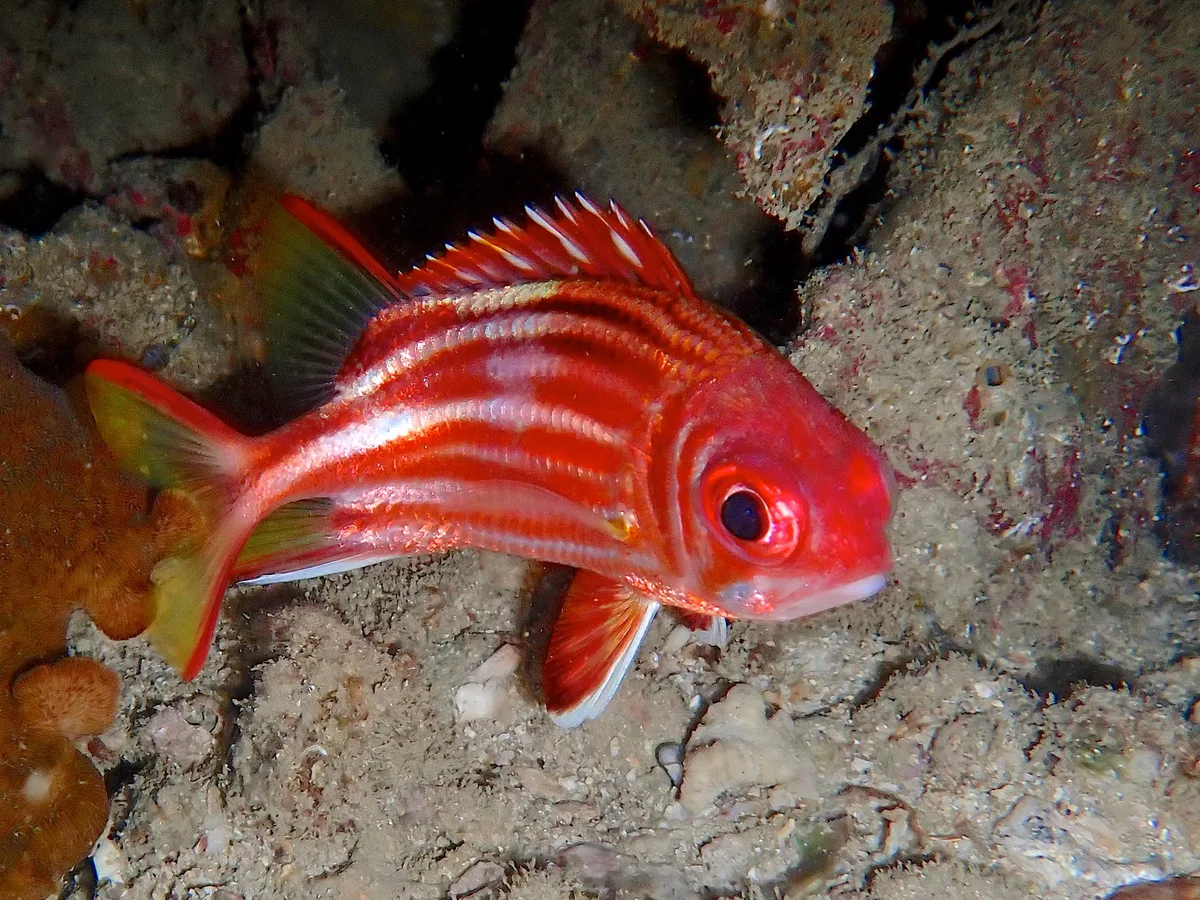
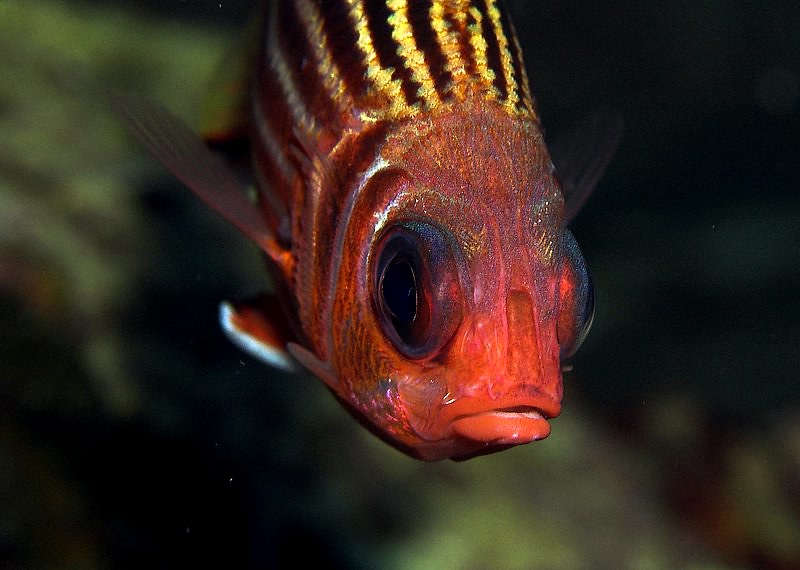
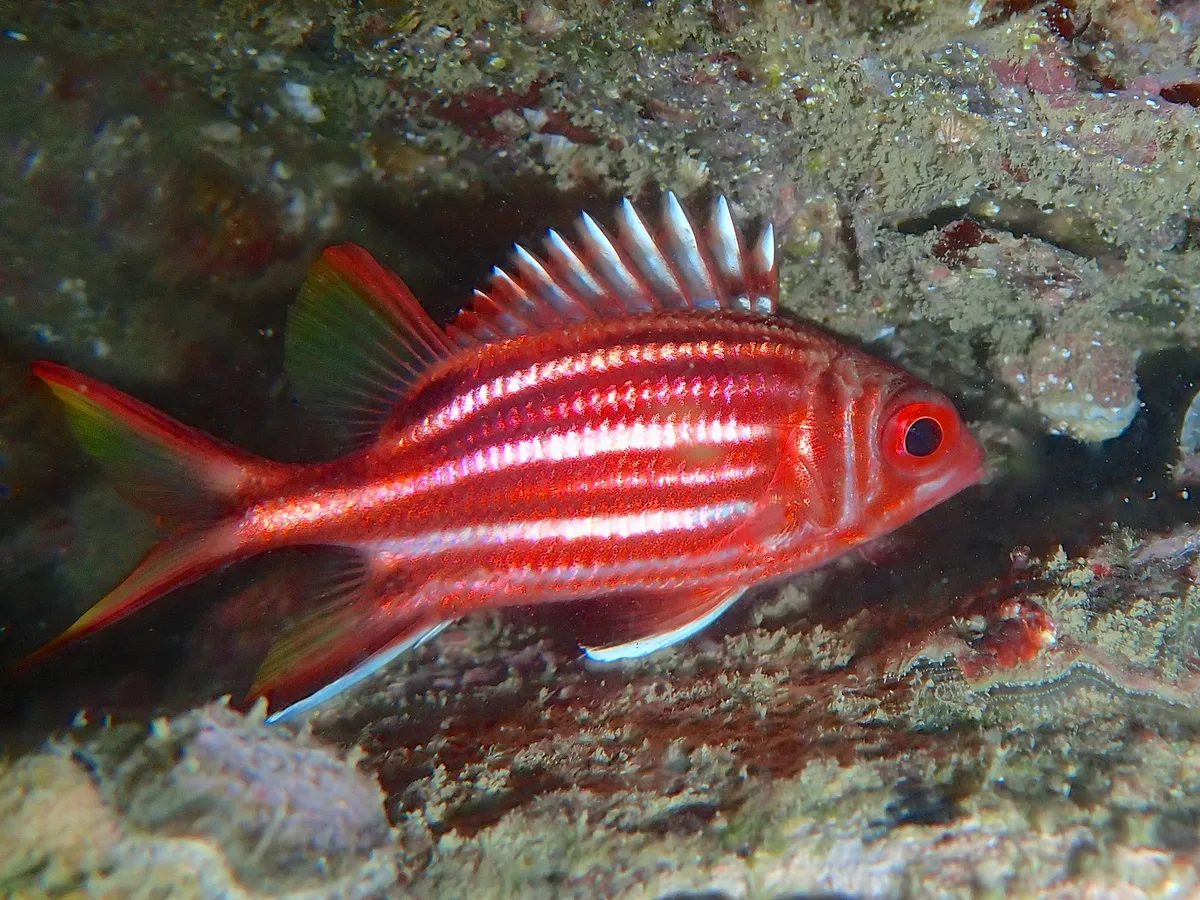
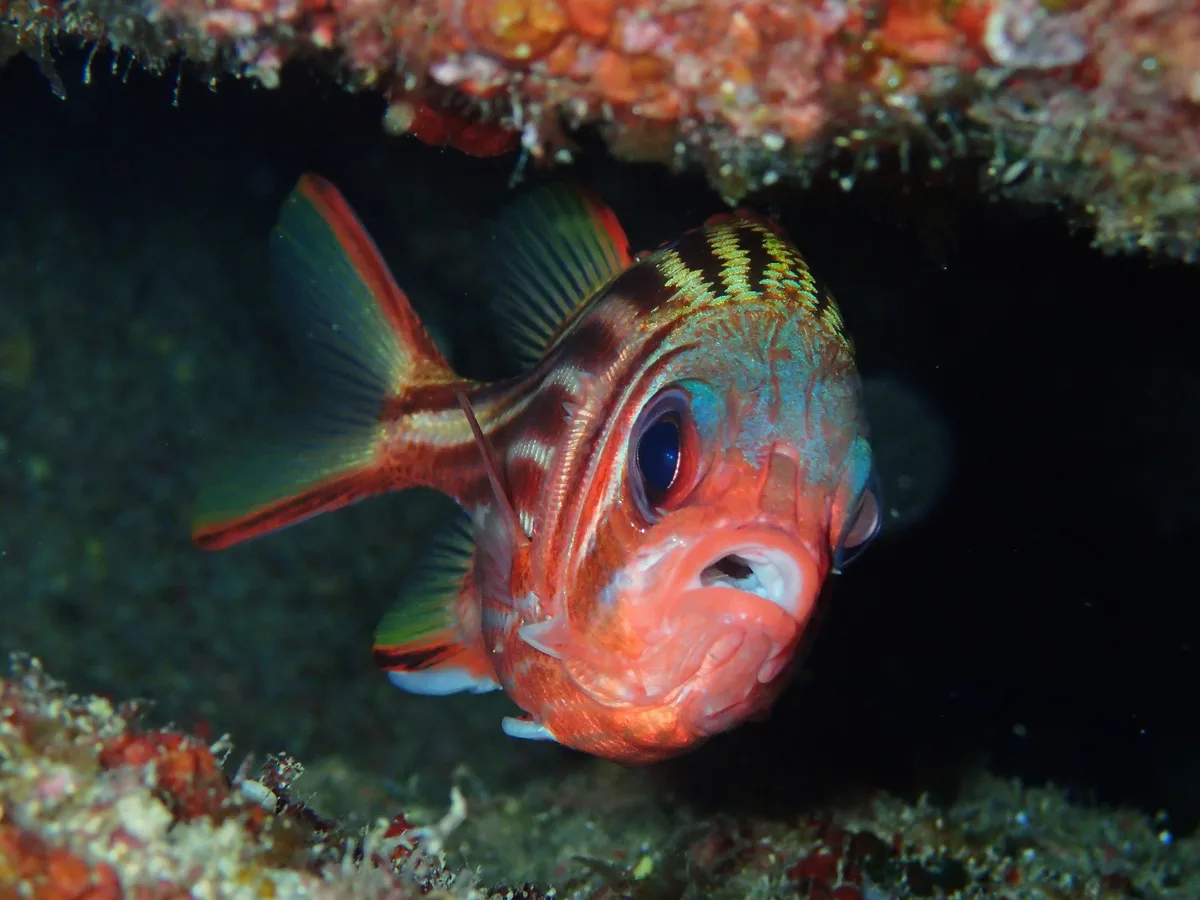
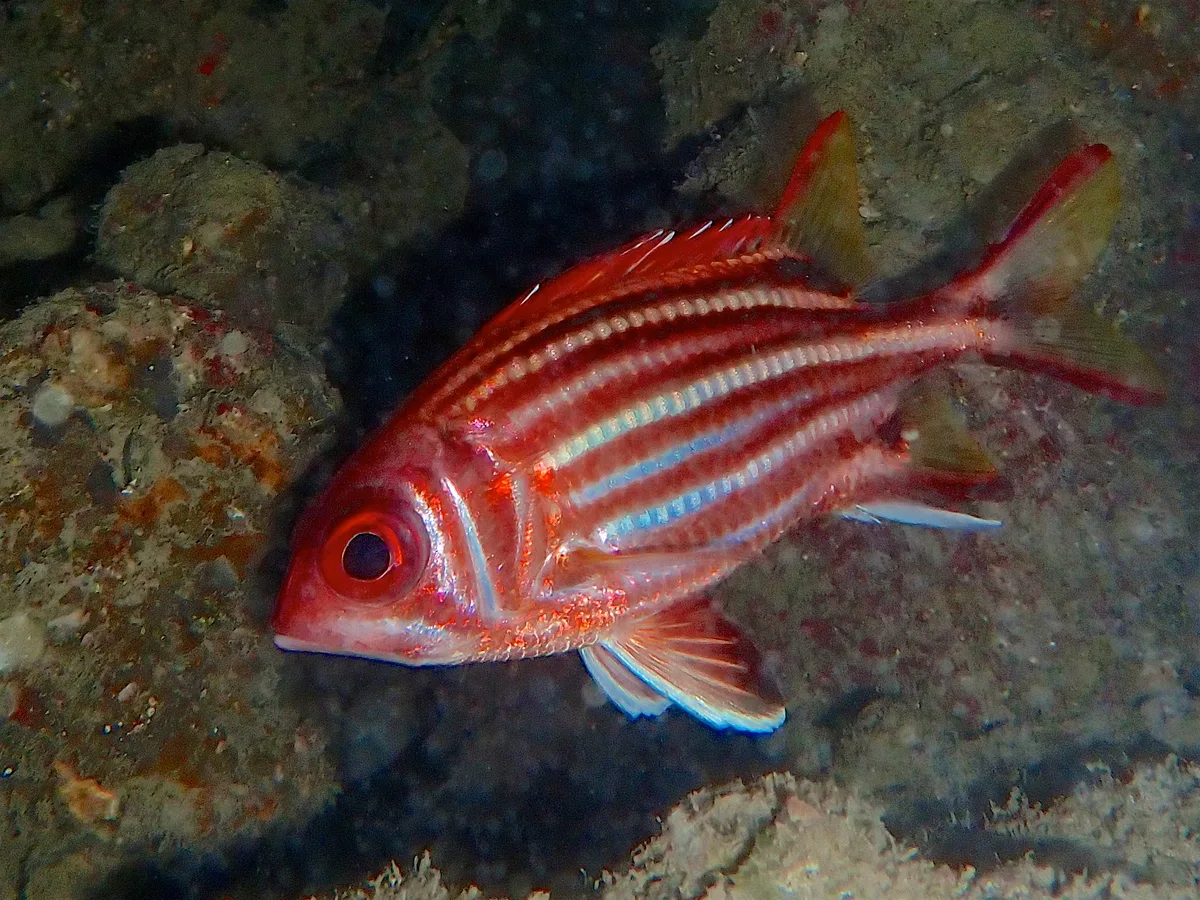
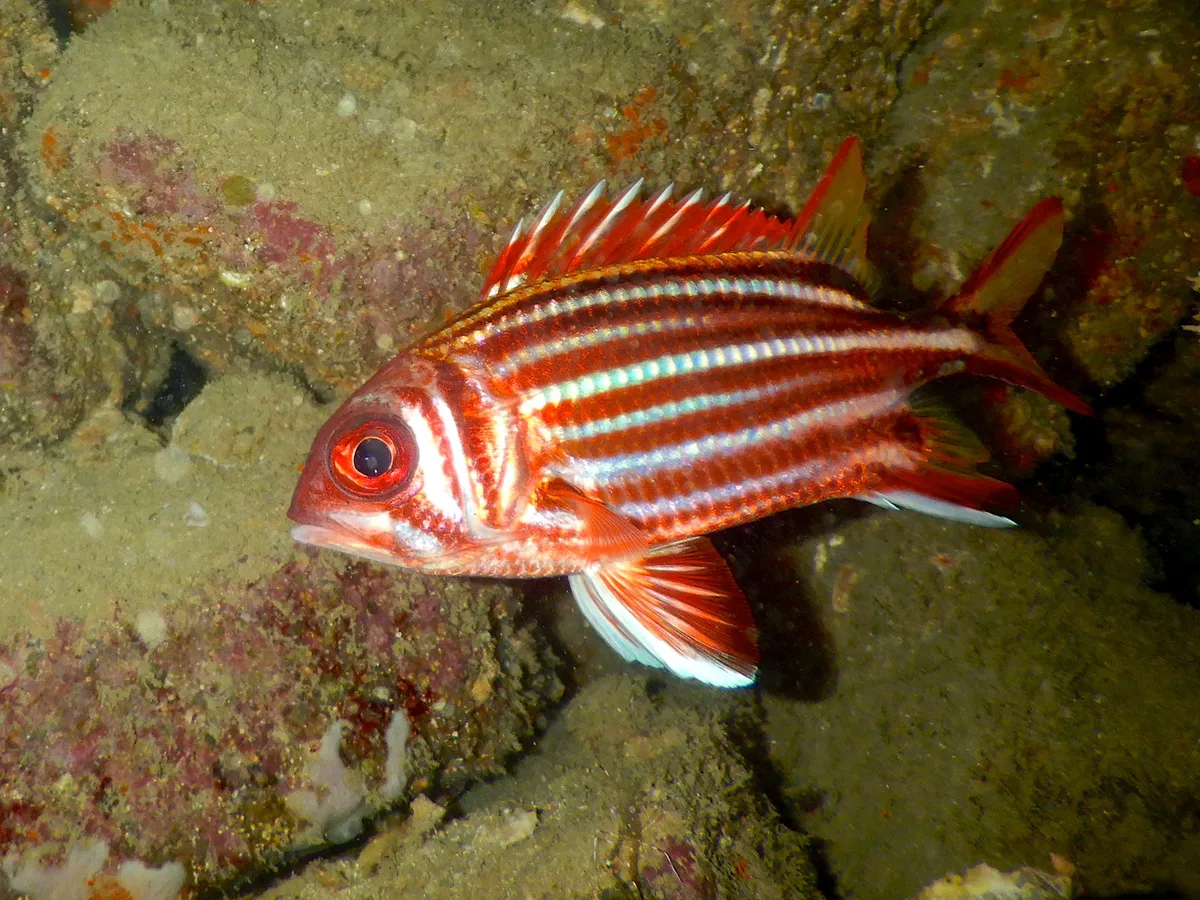
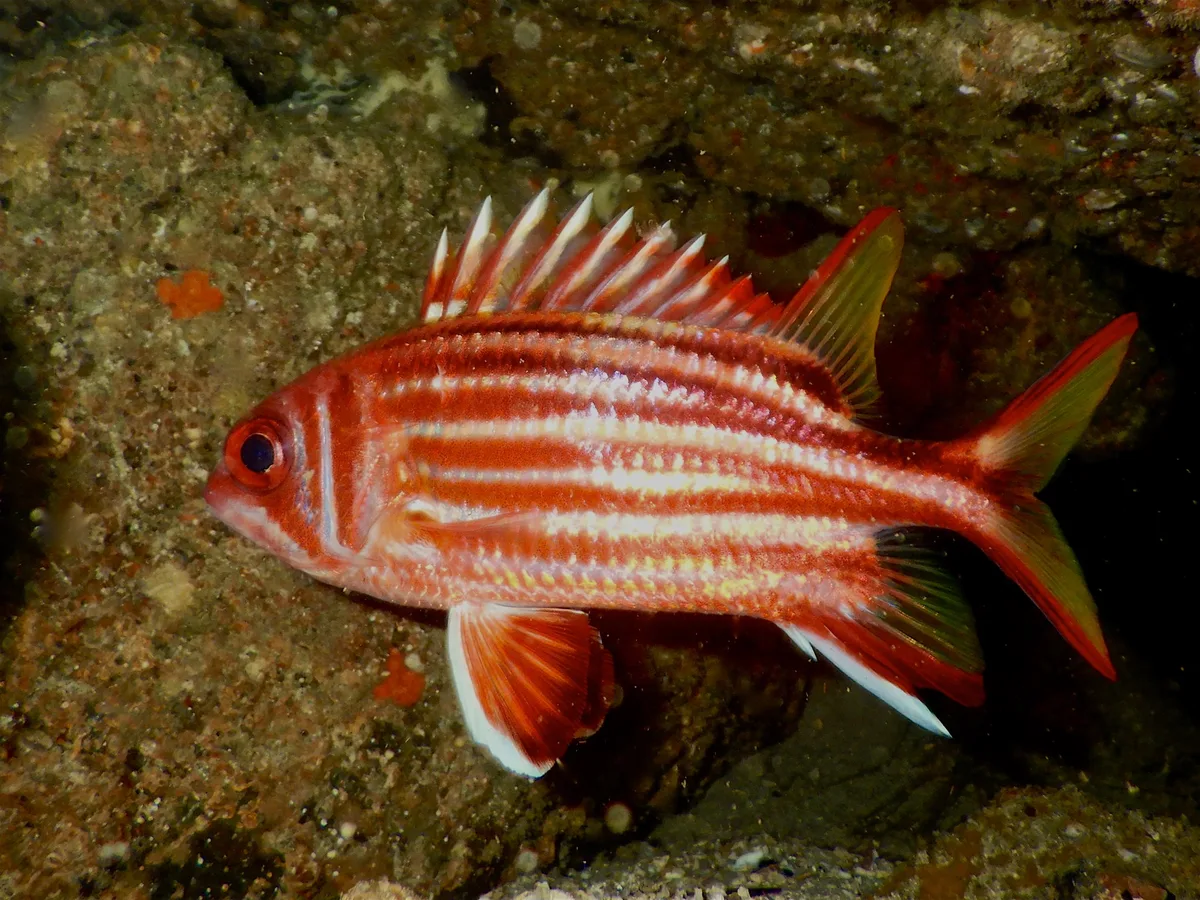
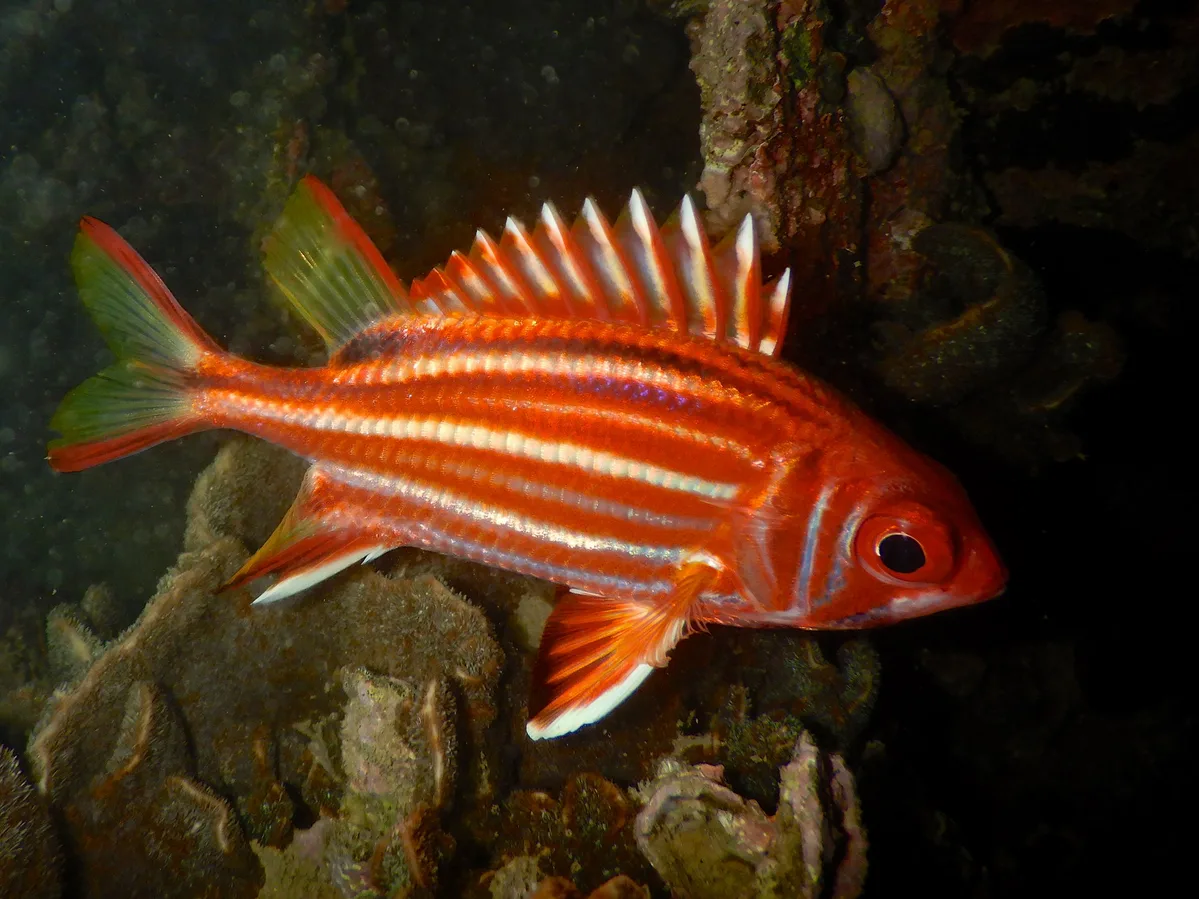
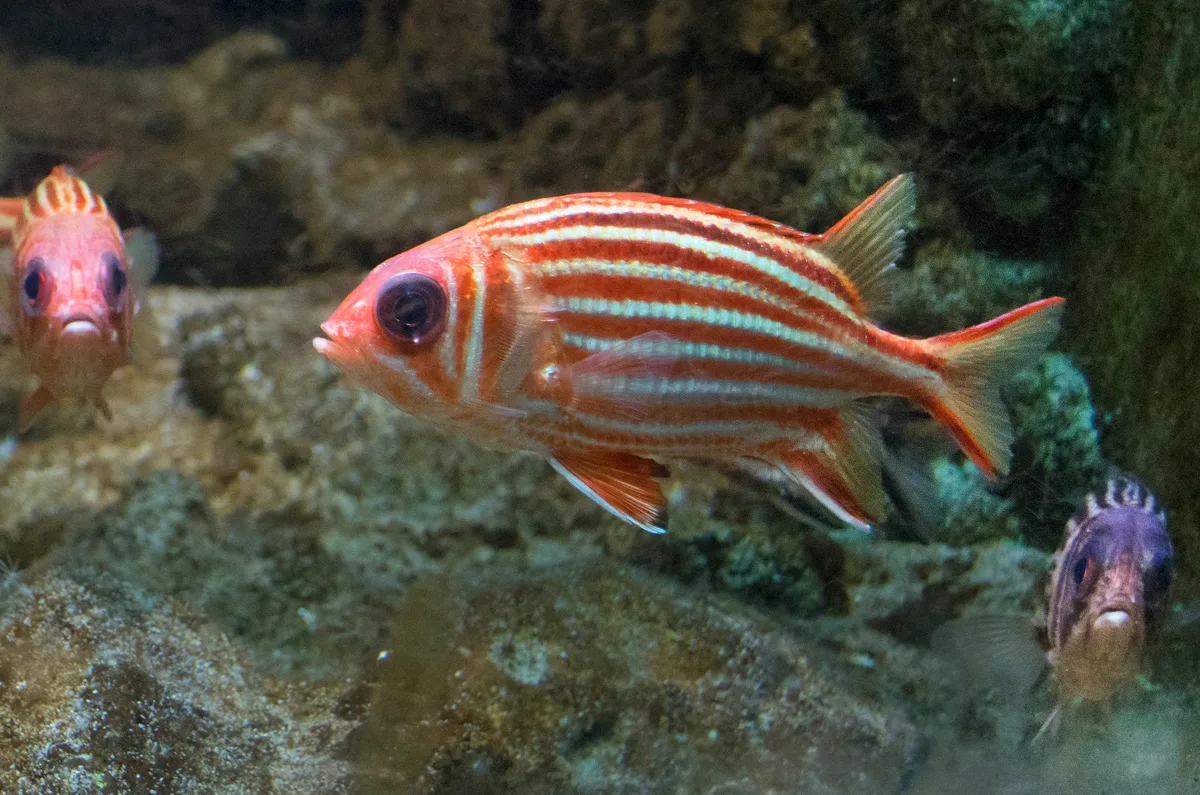
This fish walked out of the 🌊 Red Sea and took over a piece of the Mediterranean.
When the Suez Canal (🇪🇬 Egypt) opened in 1869 it connected two seas that had been separated for millions of years, and species began moving north through it. Well over four hundred have made the crossing, almost all of them in that direction, and the process is named after the canal's builder: Lessepsian migration. This squirrelfish was one of the early and most successful arrivals, reported from the Levant in the first half of the twentieth century and now a common commercial fish along the eastern Mediterranean coast.
What makes it able to do that is visible in where it lives here. It tolerates murky water, silt, harbors and wrecks better than most reef fish, it eats a wide range of bottom invertebrates, and it does not need coral. A species with those tolerances lands in a new sea and finds it usable rather than hostile.
The consequences are not neutral. Some natives have been displaced, some fisheries rebuilt around the newcomers, and the exchange runs one way because the 🌊 Red Sea is warmer and saltier than the Mediterranean, so the door is easier to walk through northbound.
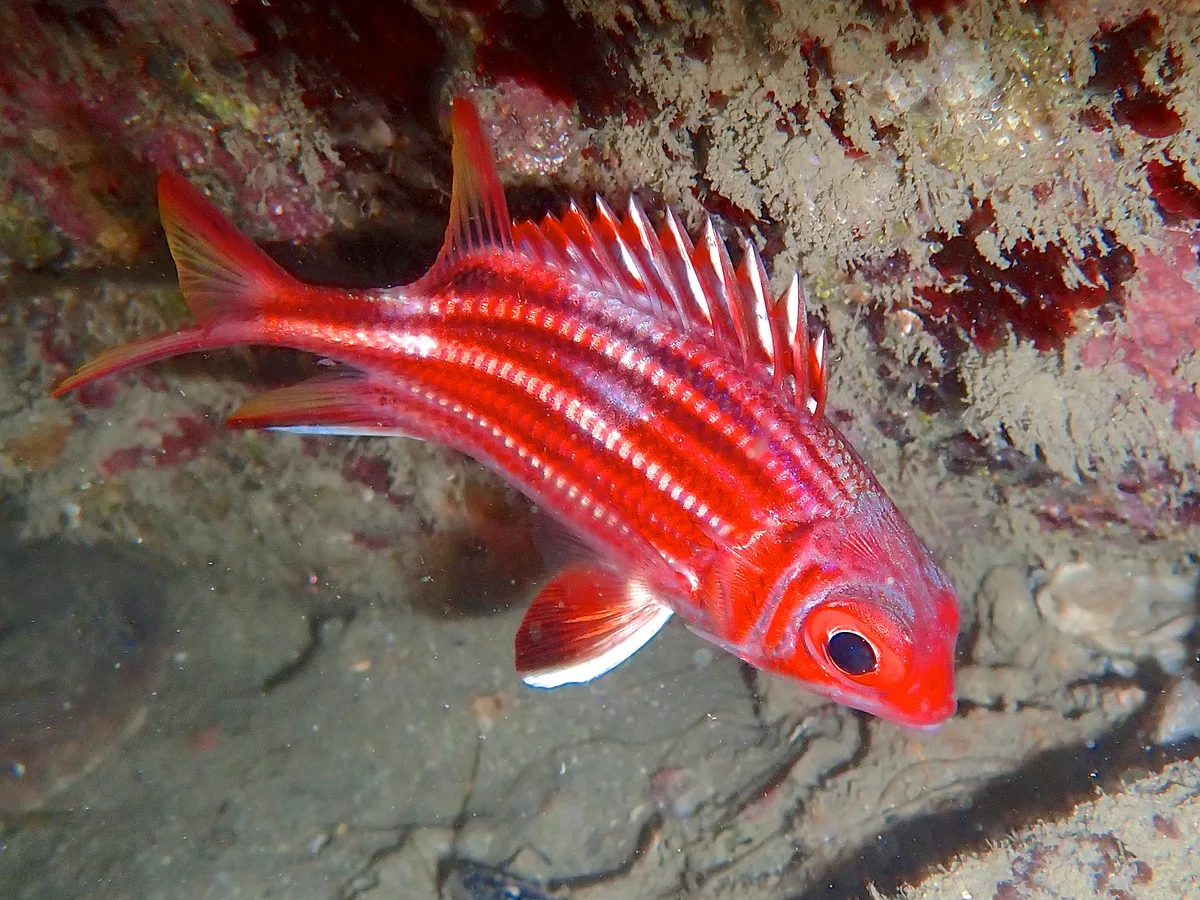
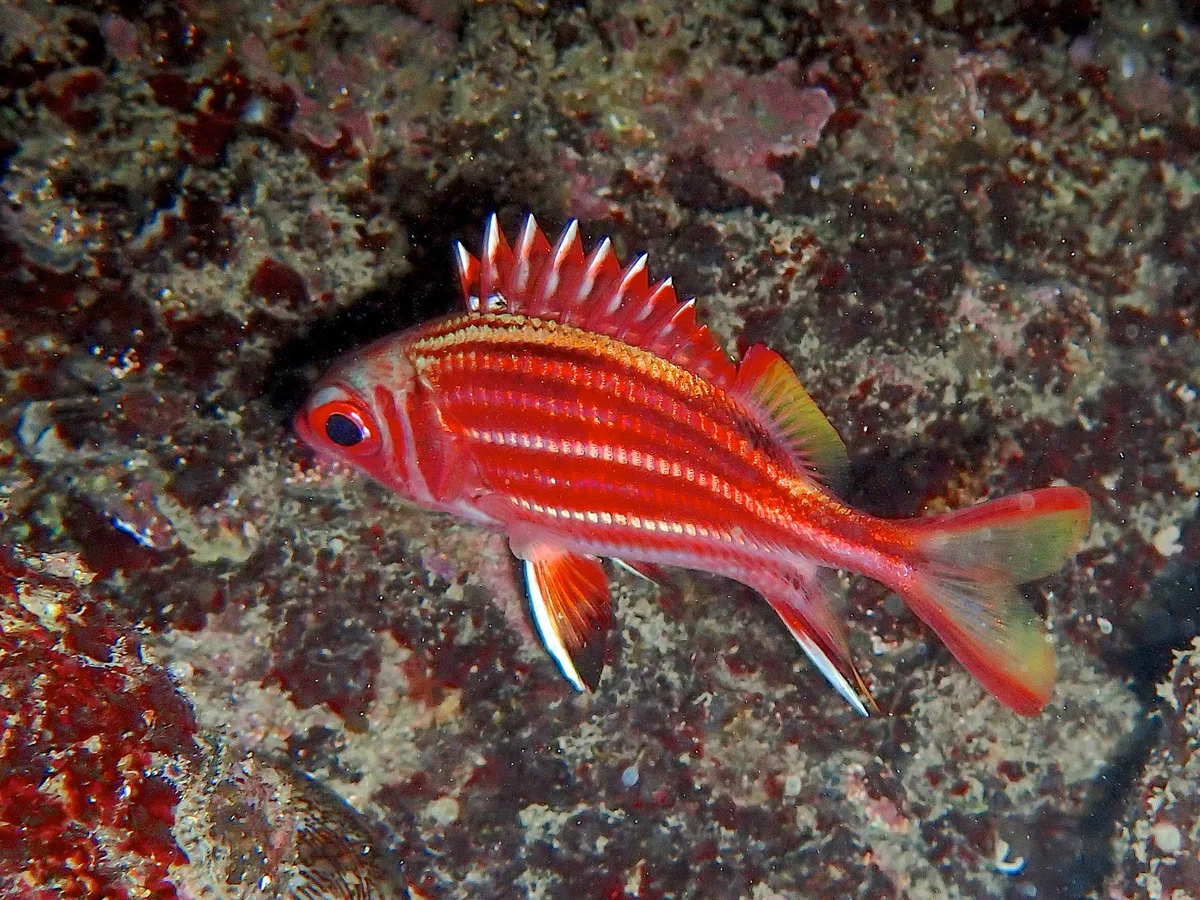
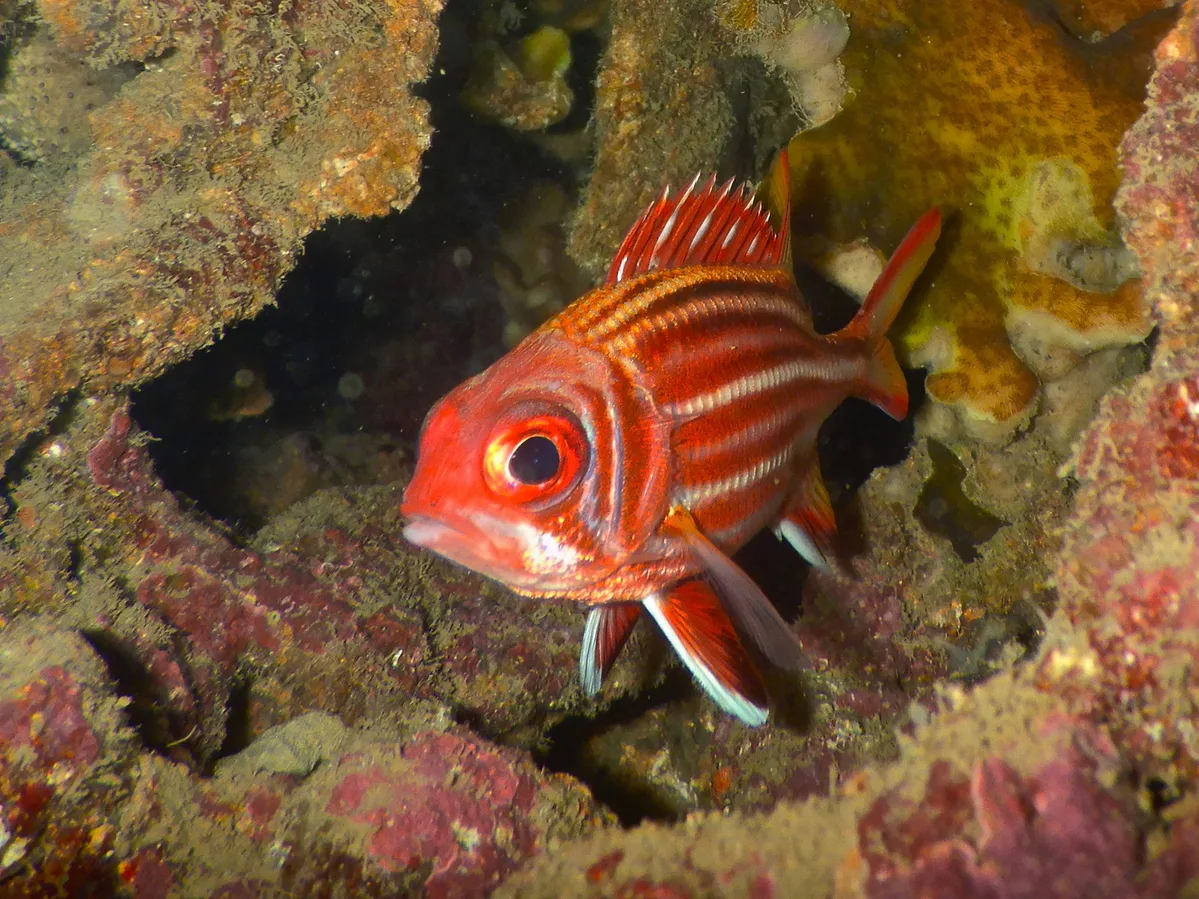
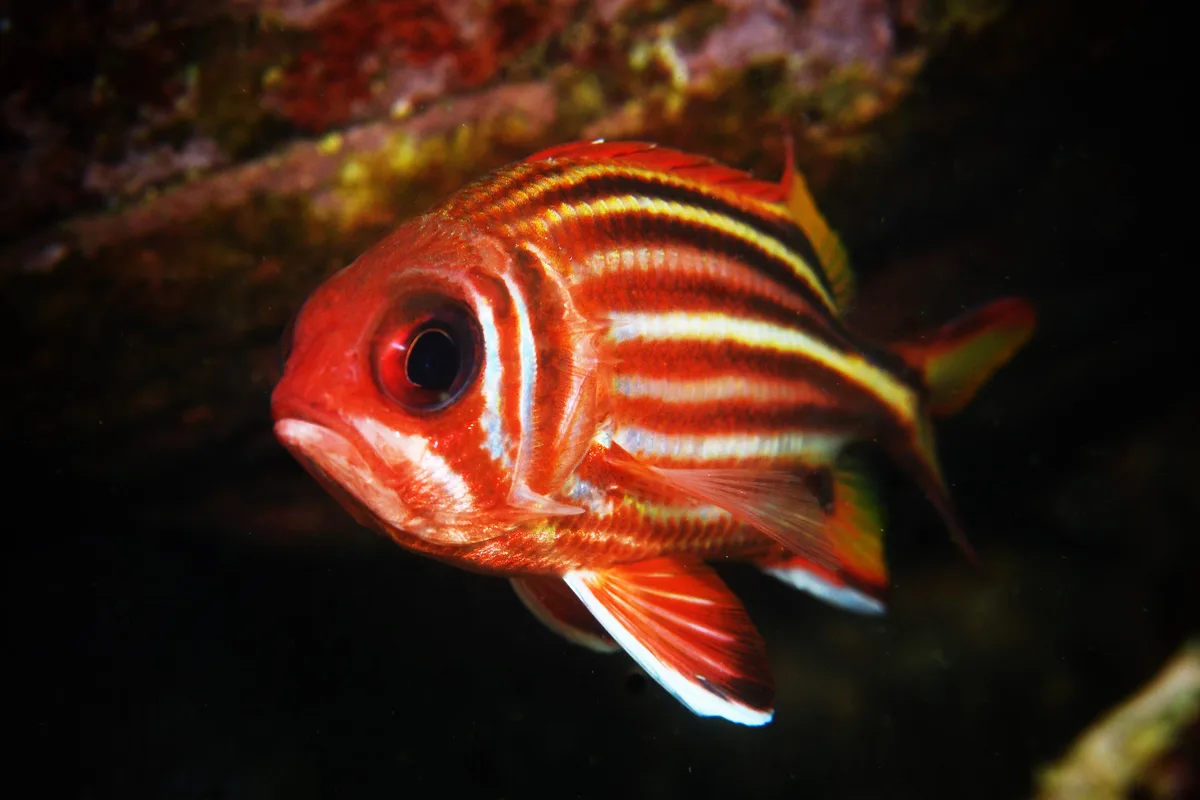
Here it is the striped one with a dark bar at the base of the tail, and like its relatives it carries a venomous cheek spine.
The genus. Sargocentron Fowler 1904 - sargós (Greek) + centron (any sharp point). ETYFish
- red and silver-white stripes running the length of the body
- dark stripe at the base of the tail
- tolerant of murky water, common around wrecks and harbors
- up to 27 cm