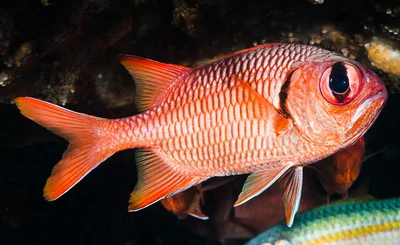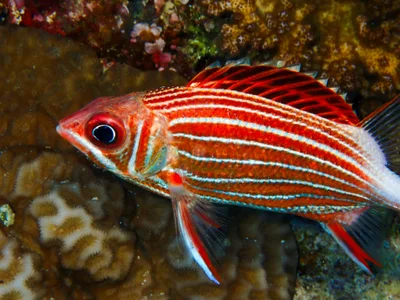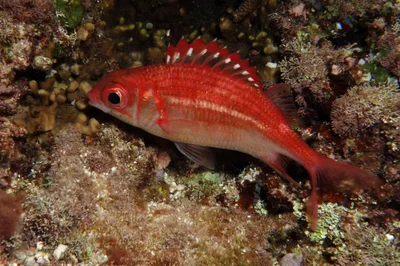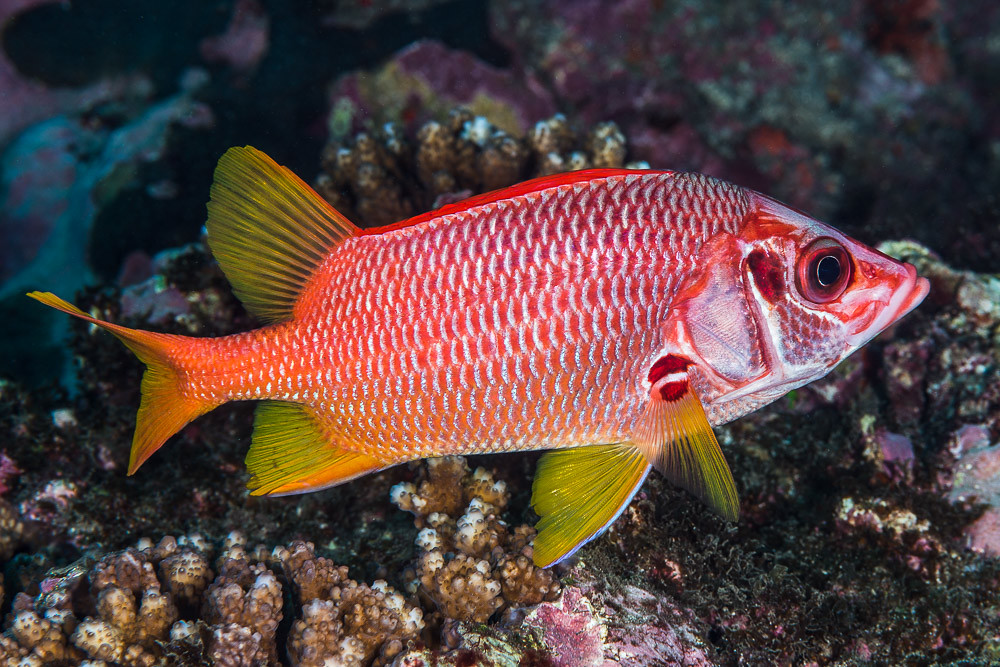
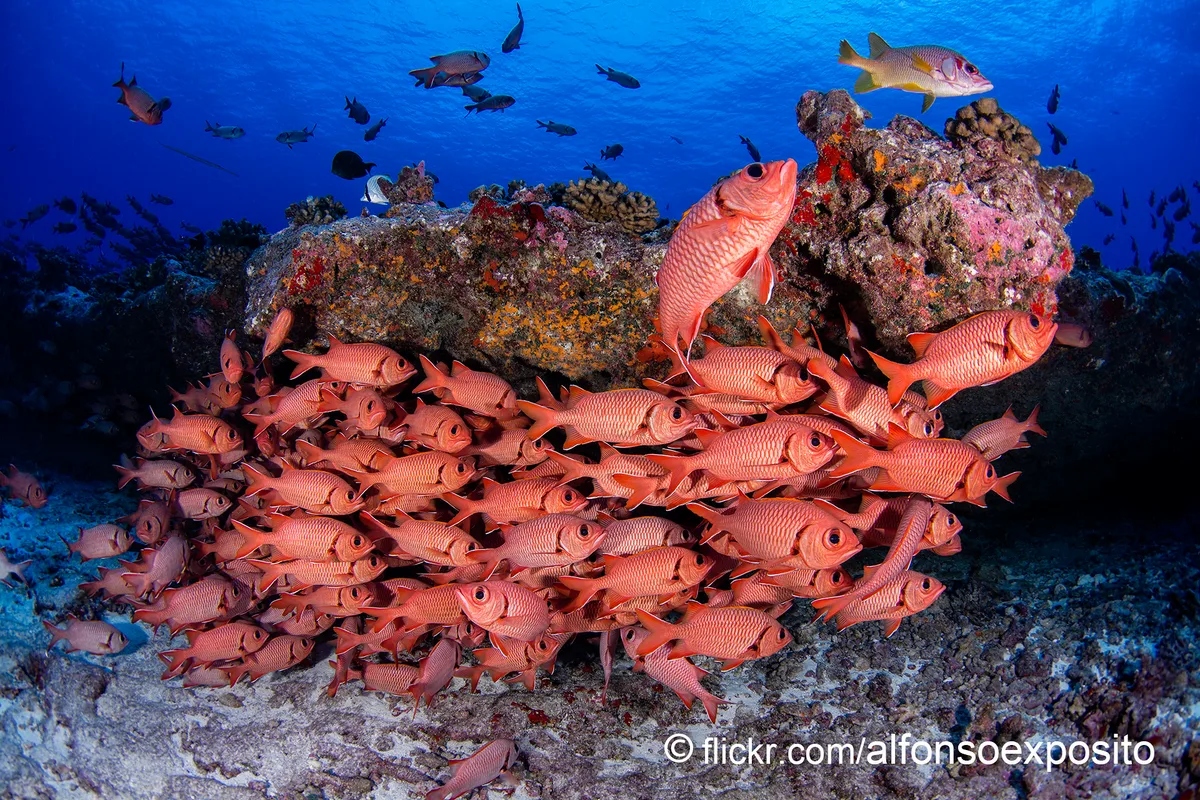
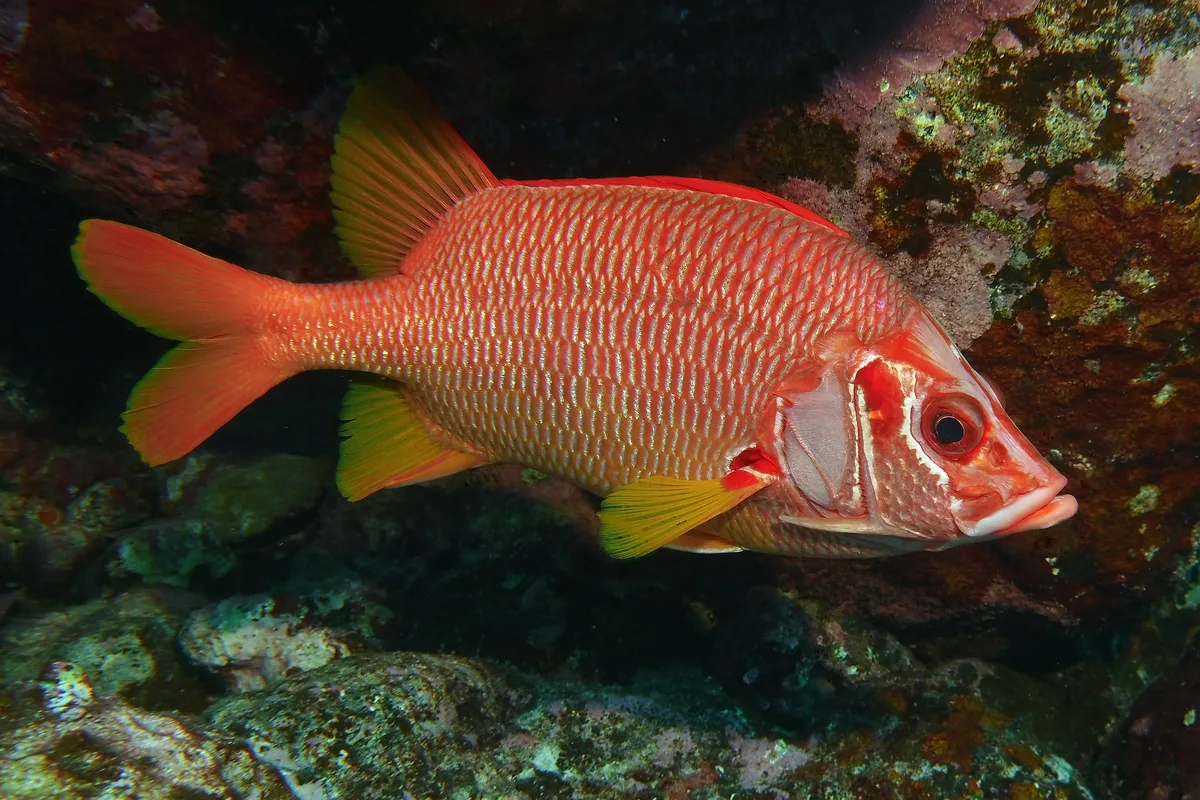
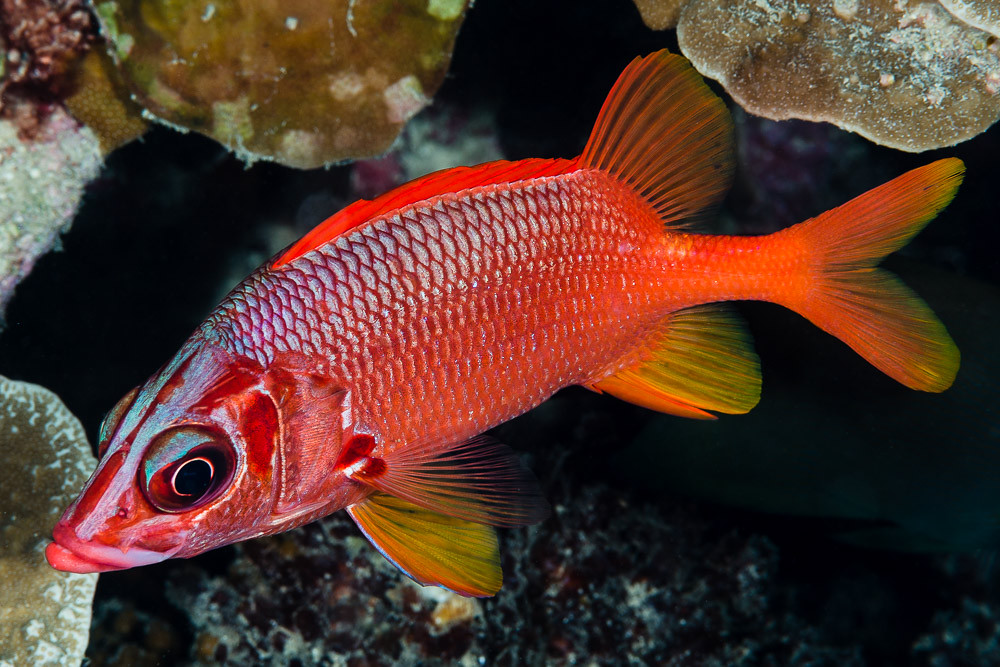
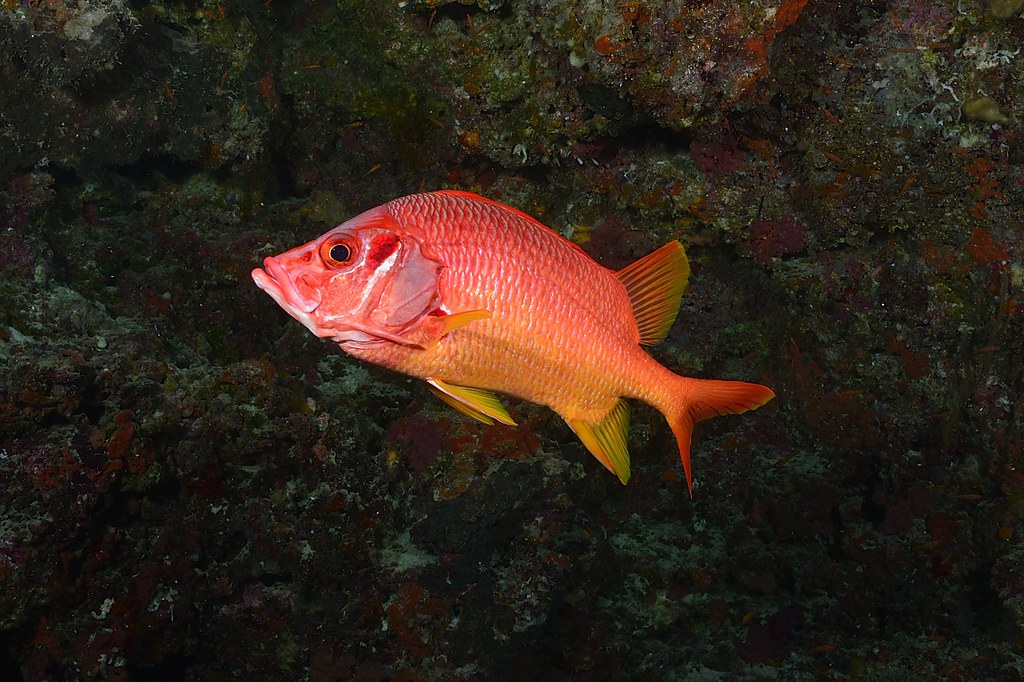
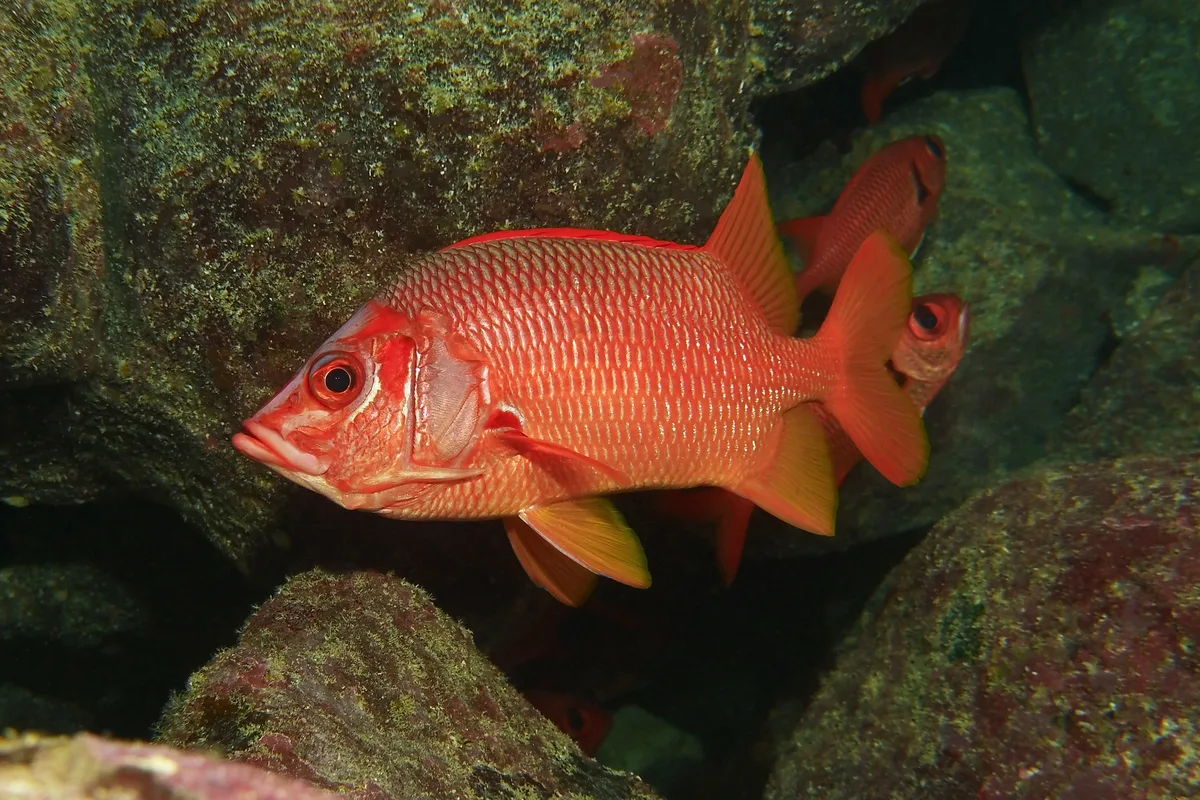
The largest squirrelfish in the sea, up to 51 cm (20 in), deep red with a maroon patch behind an eye that takes up a third of the head. By day it hangs under ledges and in caves, facing out, and it is one of the fish a torch beam finds looking straight back.
The eye is the whole design. Squirrelfishes feed at night on crustaceans and small fish taken off open sand, and the retina is built for it: dense in rods, backed by a reflective layer that gives light a second pass and makes the eyes glow in a torch beam. Red pigment is the other half of the trick, because red light is the first to disappear with depth and a red fish at night is a black fish.
The cheek carries a weapon. A long spine on the rear edge of the gill cover stands out sideways and is sharp enough to cut a hand that reaches into a hole - the reason for the family's other name, soldierfish, and for the care fishermen take handling them.
They are noisy. Squirrelfishes grunt and click by vibrating the swim bladder with specialized muscles, and a cave full of them at dusk is audible to a diver hanging outside it.
The genus. Sargocentron Fowler 1904 - sargós (Greek) + centron (any sharp point). ETYFish
The species. Sargocentron spiniferum (Forsskål 1775) - spina (thorn) + ferum (having or bearing). ETYFish
- deep red body with a large maroon patch behind the eye and pale stripes along the scales
- very large eye, taking up much of the head
- long sharp spine on the rear edge of the cheek
- length up to 51 cm