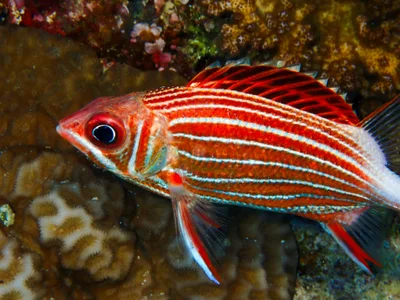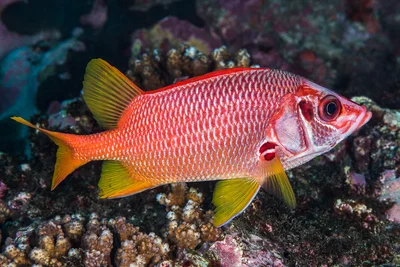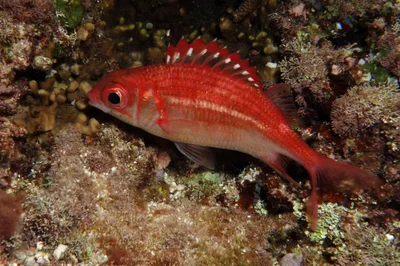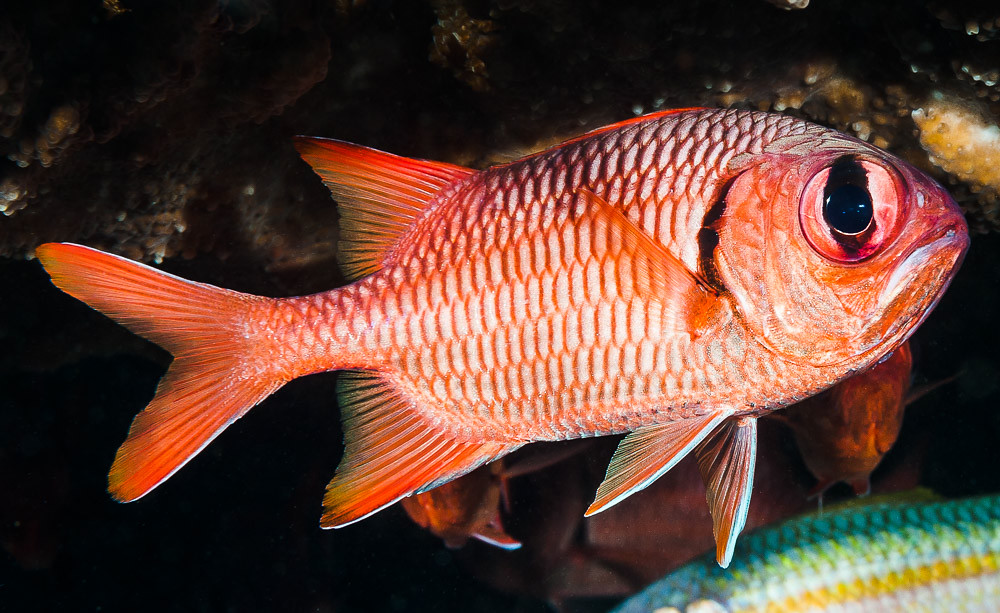
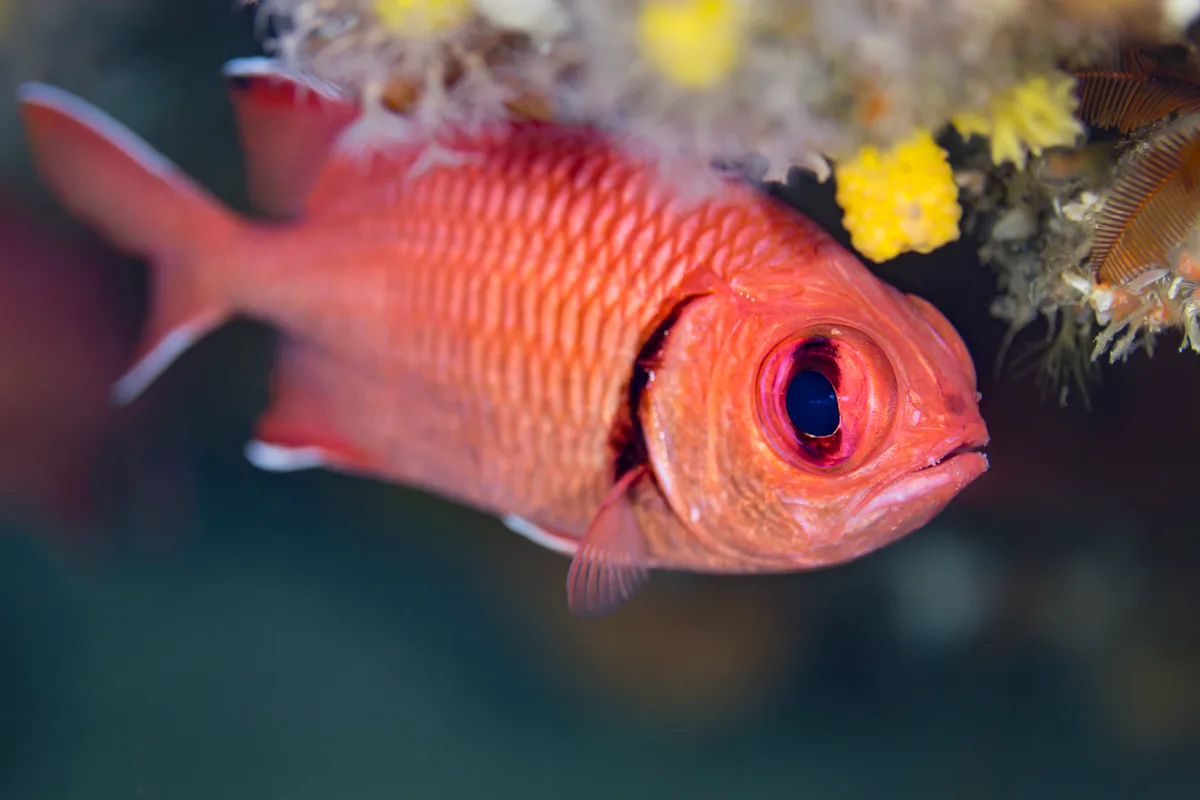
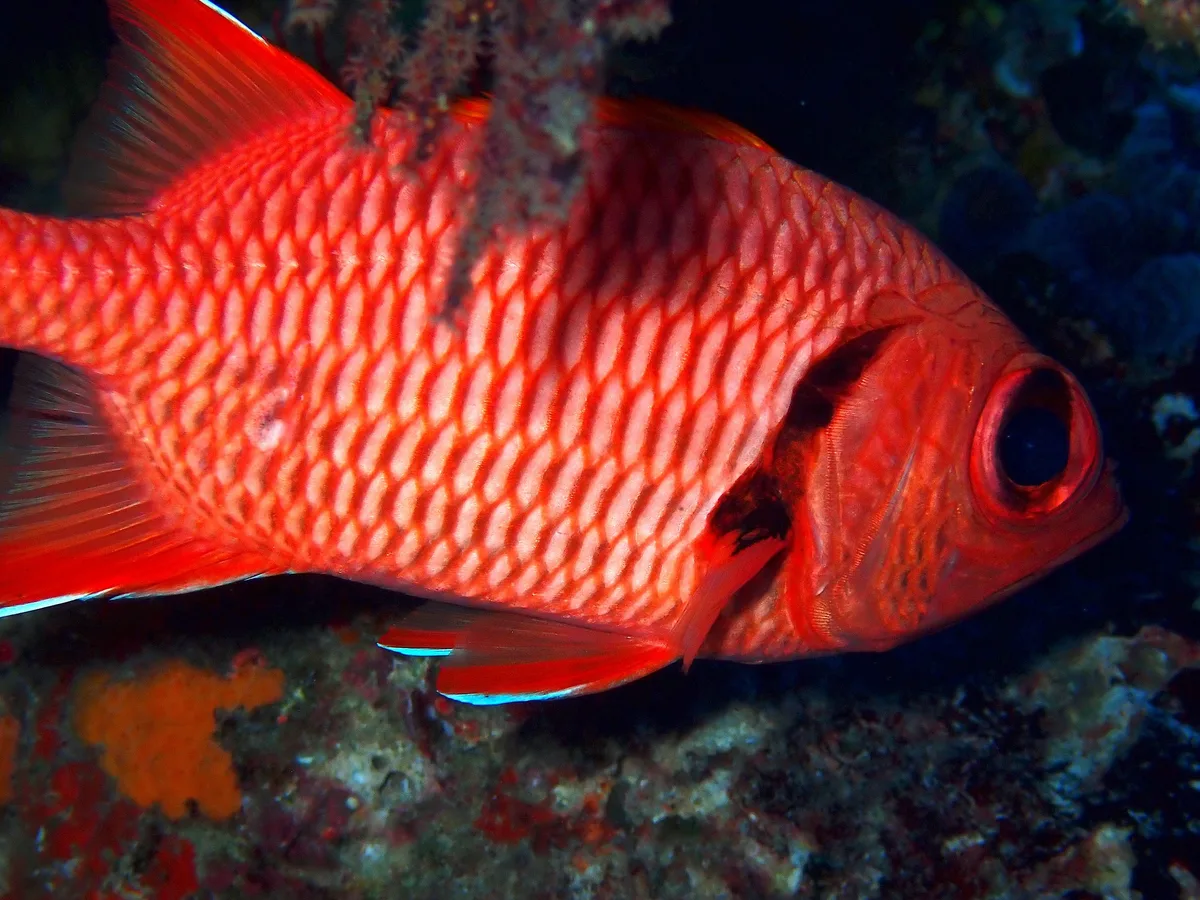
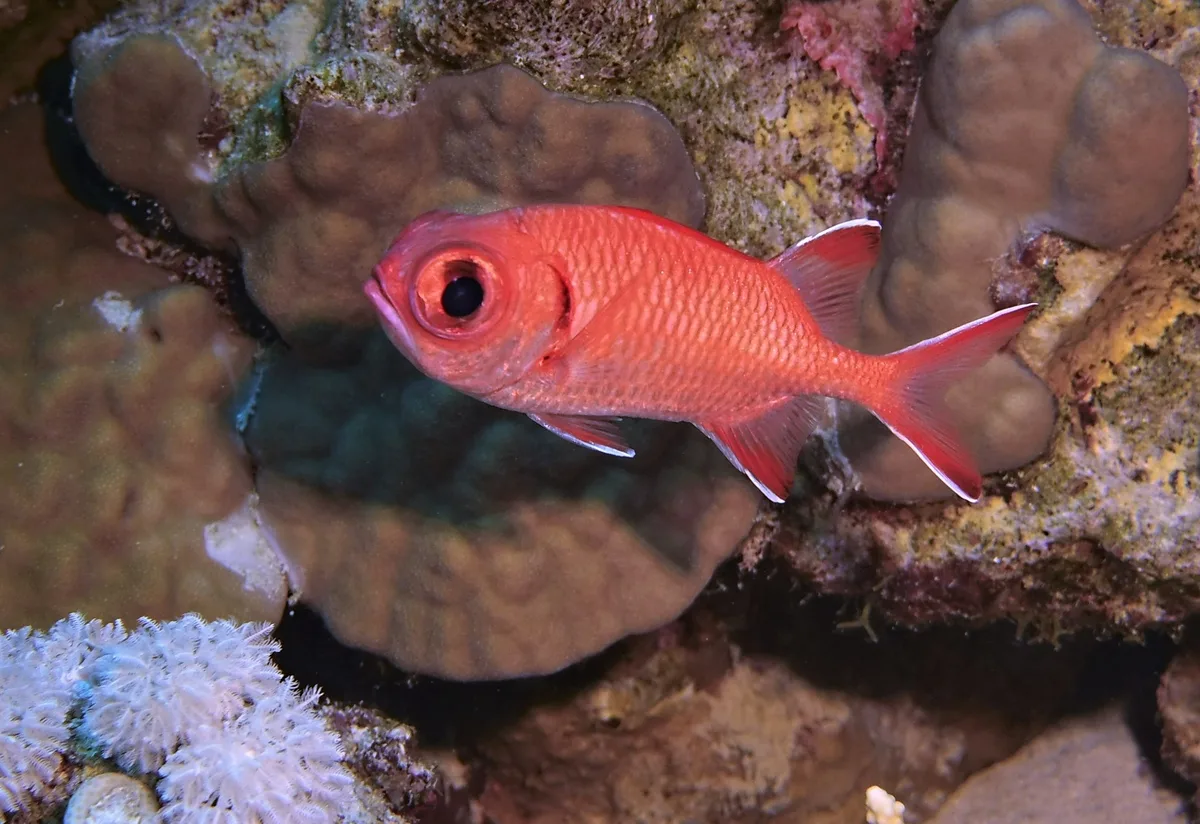
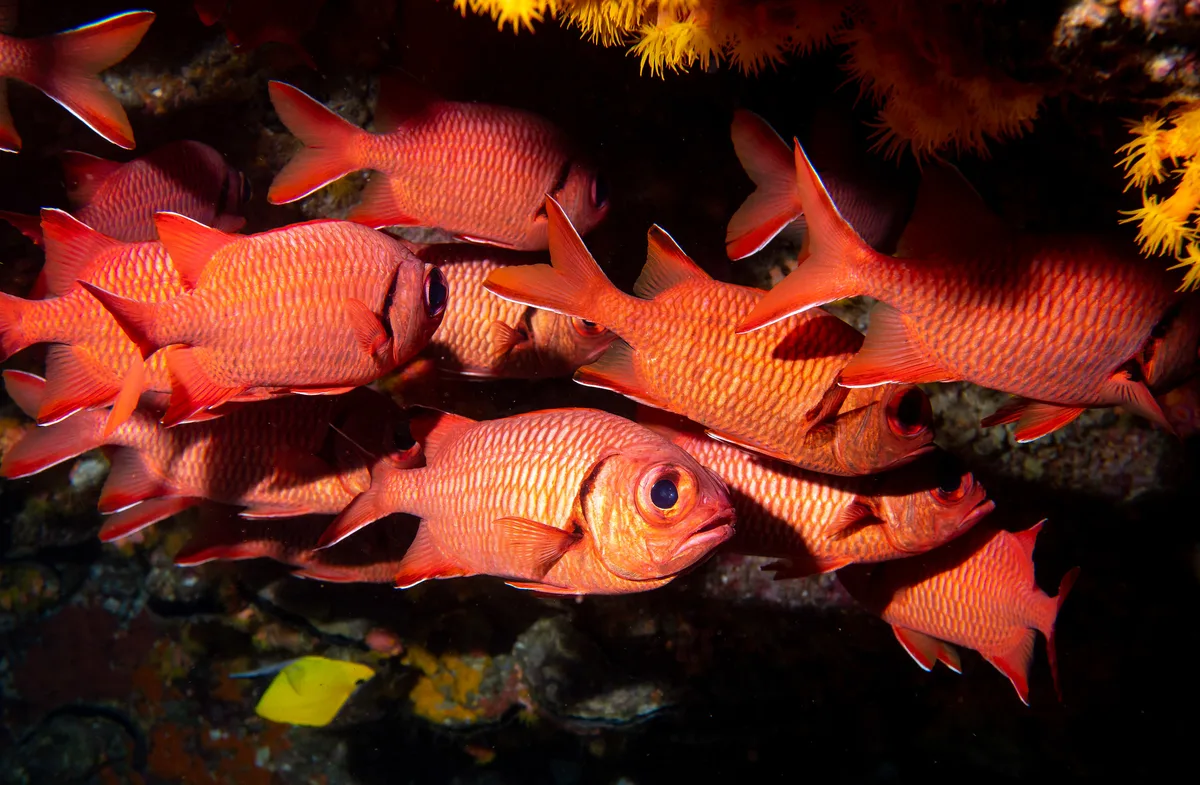
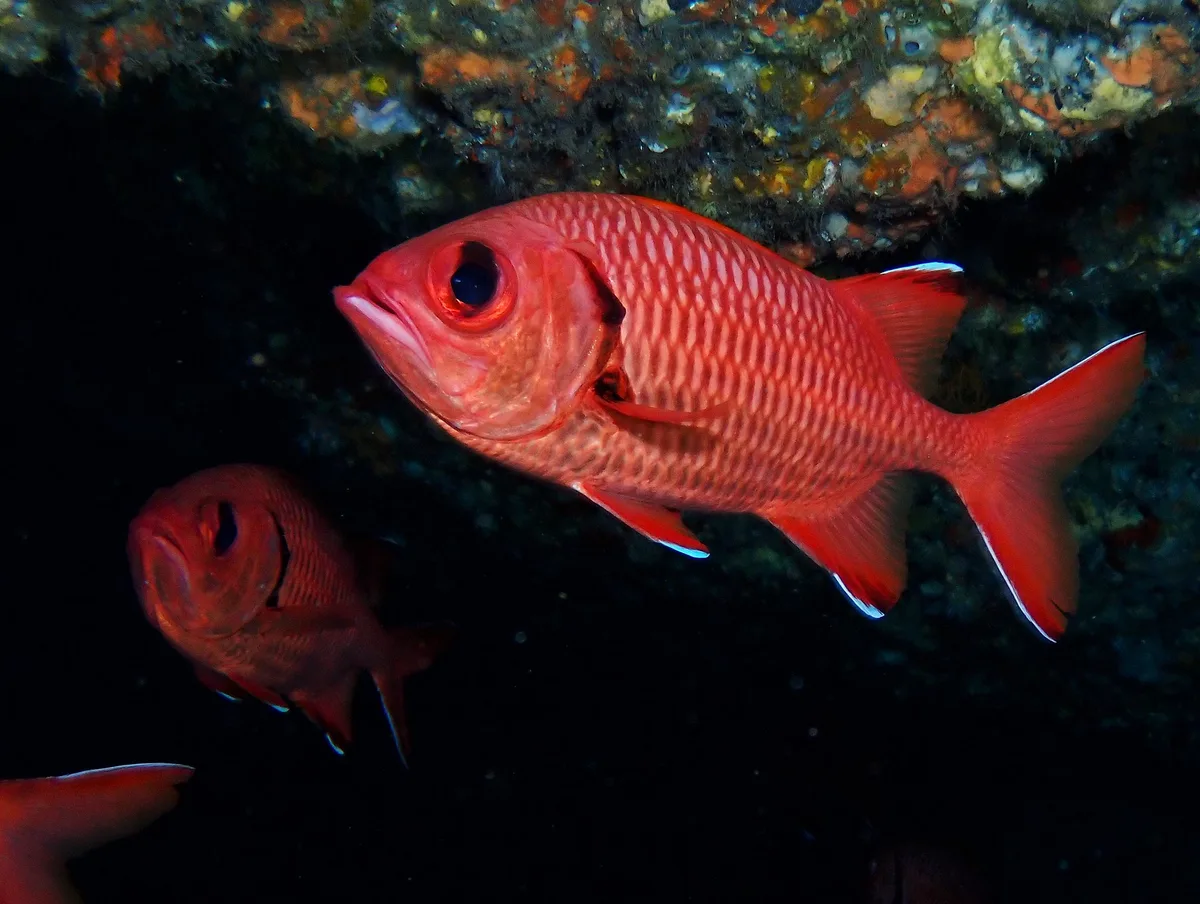
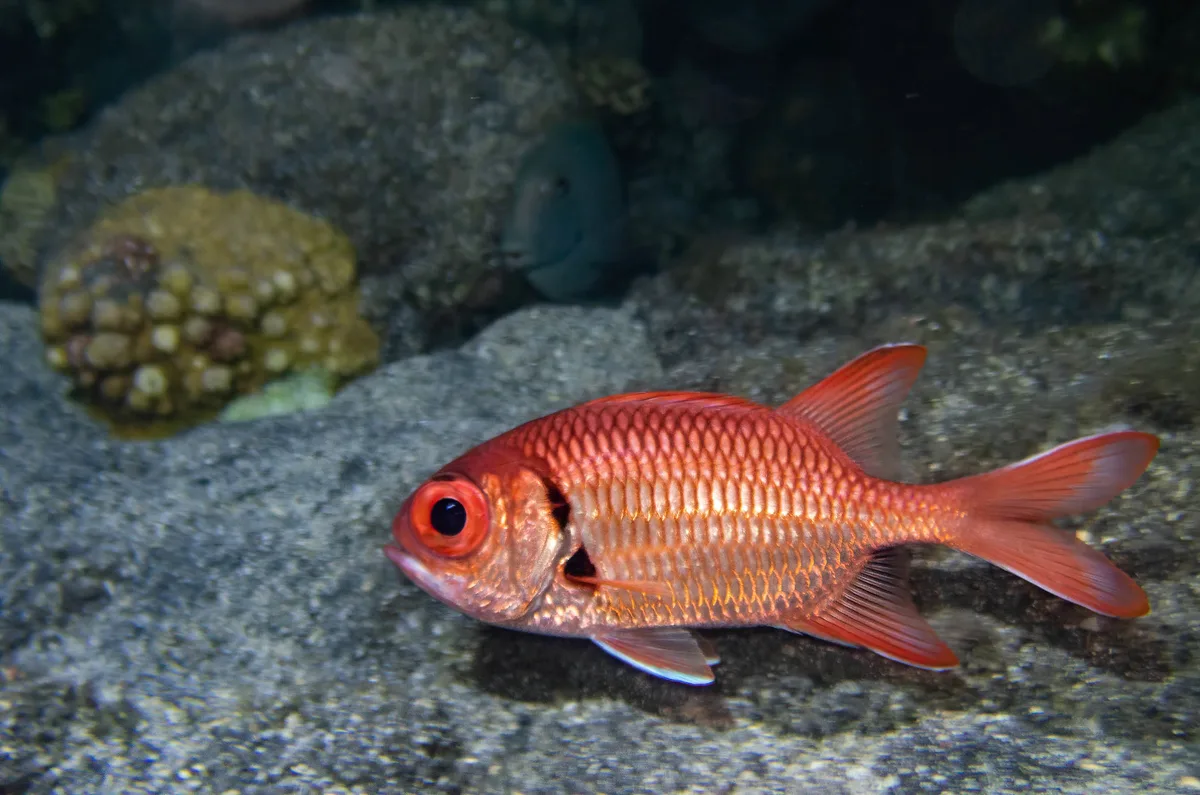
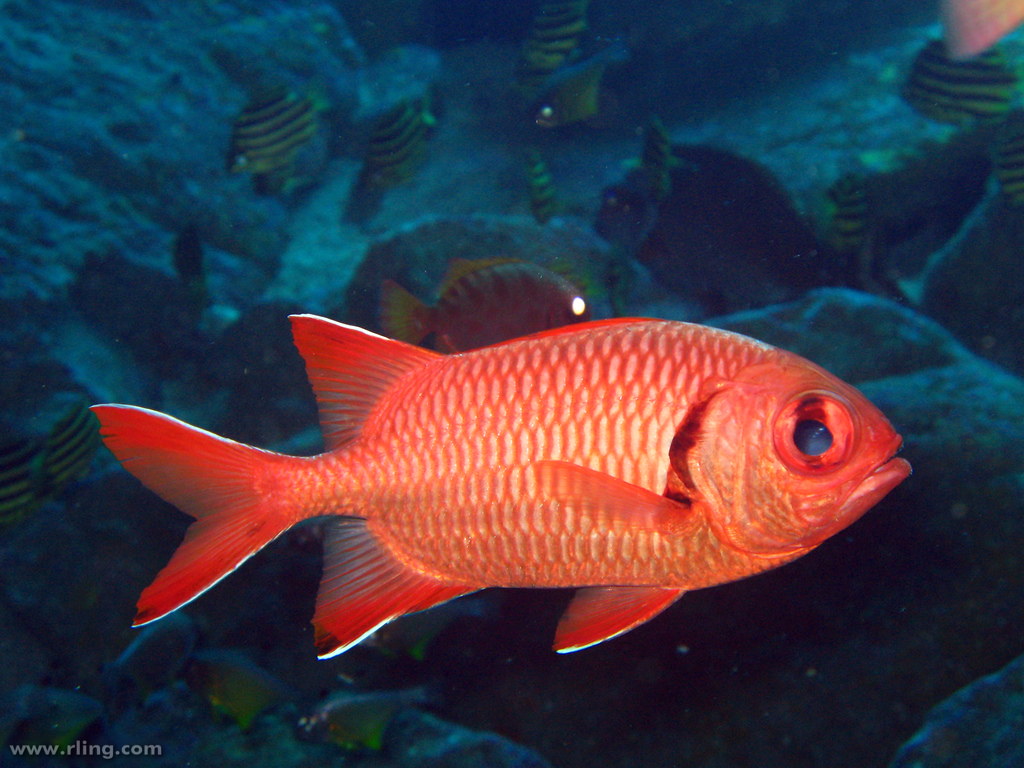
This fish hears better than almost anything else on the reef, and you can see the reason from the outside if you know what you are looking at: the eye is enormous, but the real equipment is behind it.
The front of the swim bladder is drawn out into a pair of horns that run forward and press directly against the inner ear. A swim bladder is a gas-filled bag, so it vibrates when a sound wave passes; connect it to the ear and the fish stops sensing only particle motion and starts hearing pressure, the way we do. It extends the range upward by more than an octave and improves sensitivity by an order of magnitude.
Which matters because these fish talk. Soldierfish produce grunts, knocks and staccato bursts by contracting muscles against the swim bladder, and they use them in territorial disputes and alarm inside the caves where they spend the day. A cave full of them is not quiet; it is simply pitched and quiet enough that a diver's own bubbles drown it.
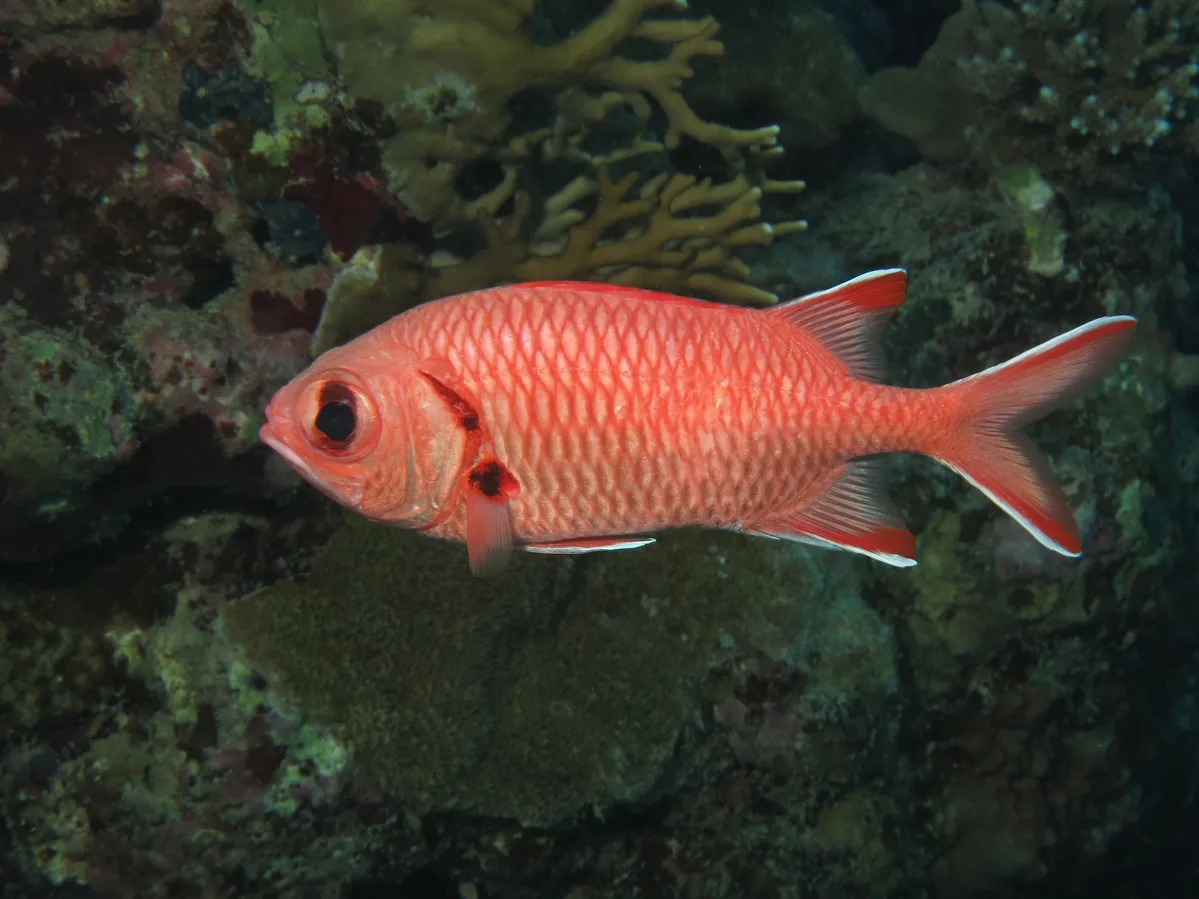
By day they hang in loose groups under overhangs, silver-red with a huge eye and a narrow dark bar across the top of the gill opening. At night they move out over the reef to feed on plankton.
The genus. Myripristis Cuvier 1829 - myrios (countless or ten-thousand and pristis). ETYFish
The species. Myripristis murdjan (Forsskål 1775) - murdjân. ETYFish
- narrow dark bar across the upper edge of the gill opening
- outer part of the first dorsal fin red
- very large eye, silver-red body
- hanging in loose groups inside caves during the day
- up to 27 cm