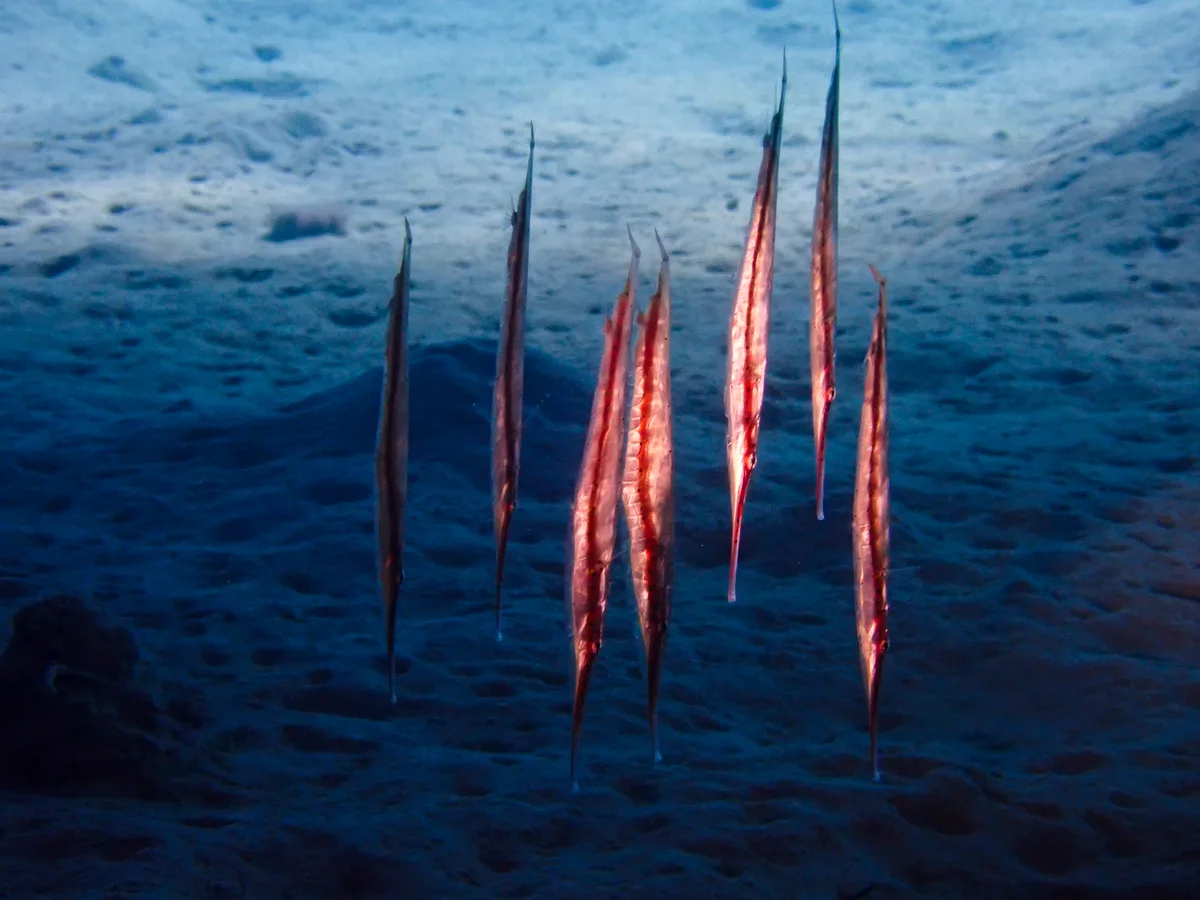
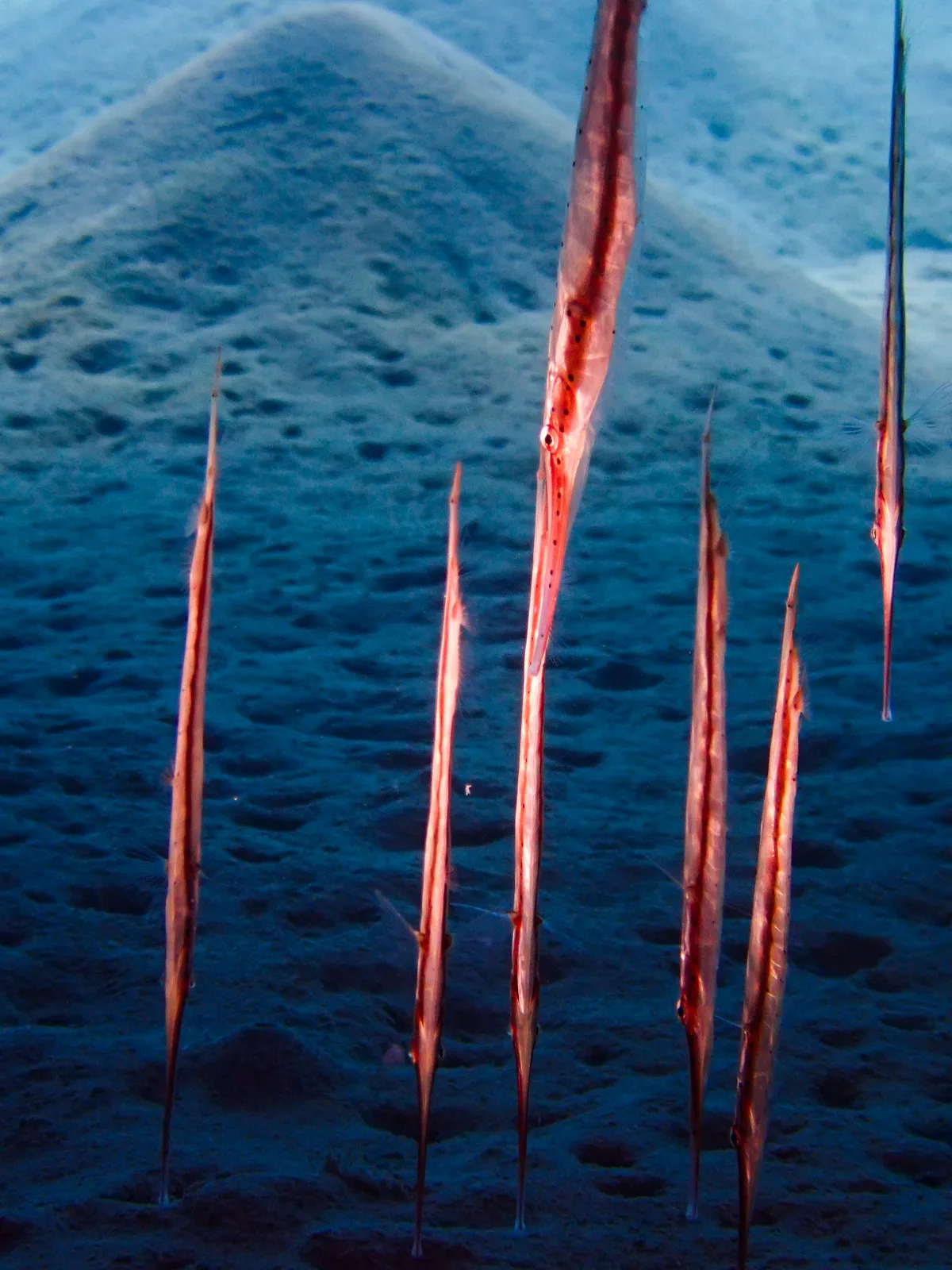
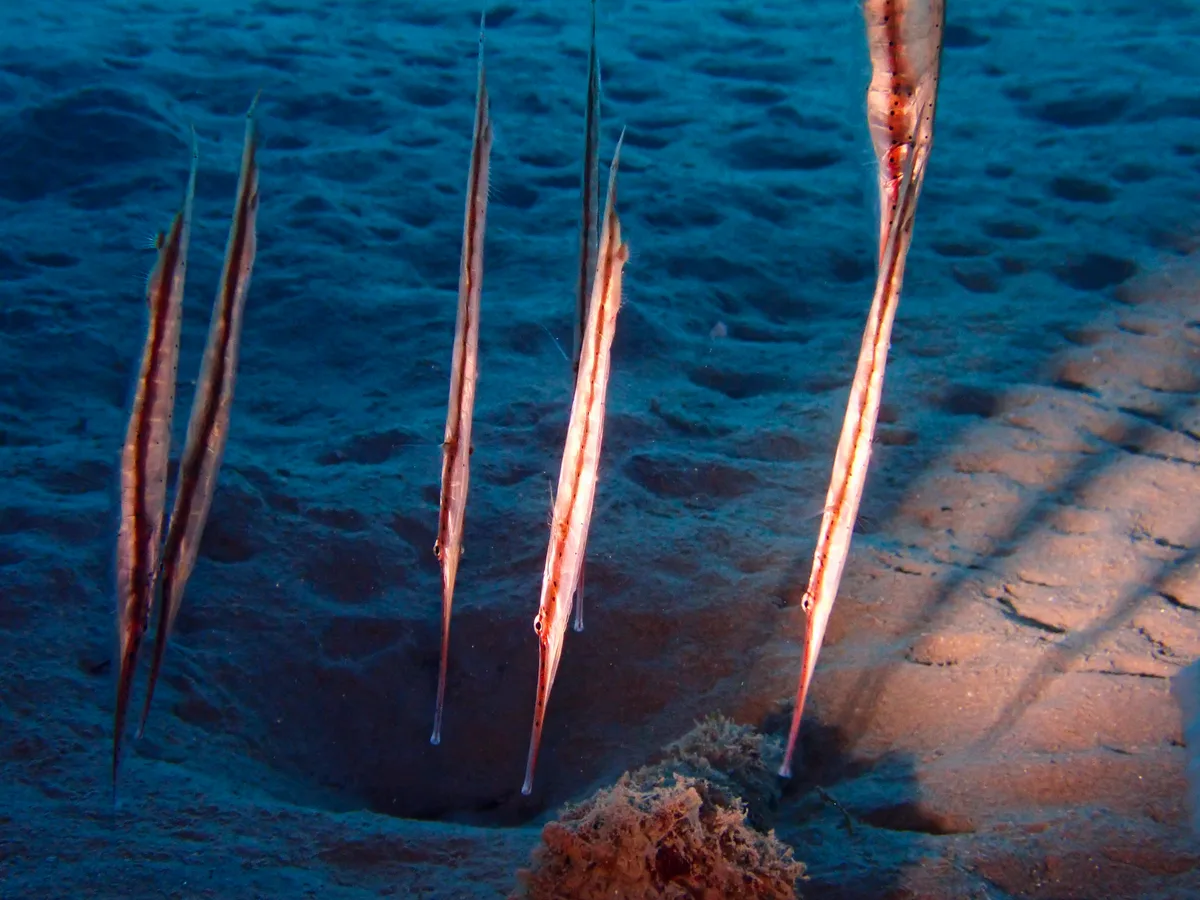
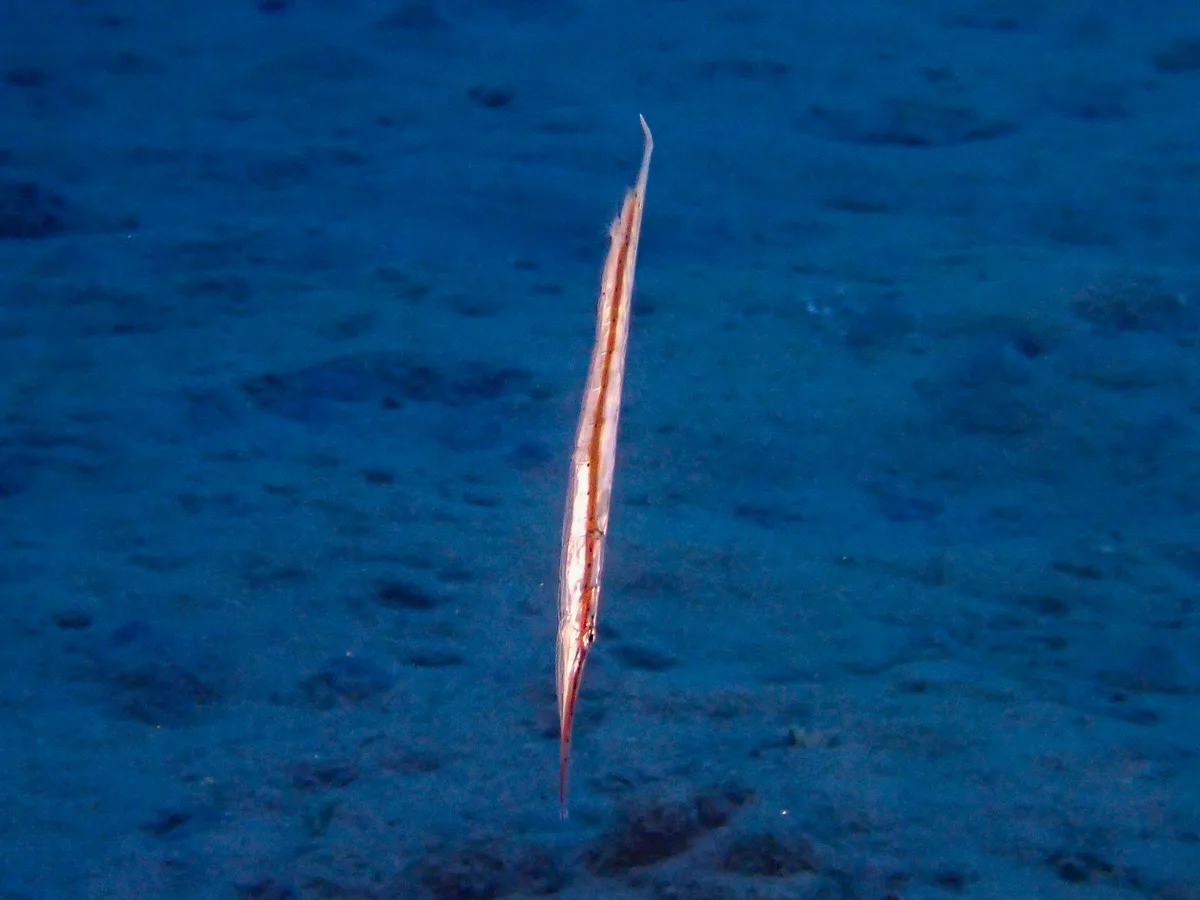
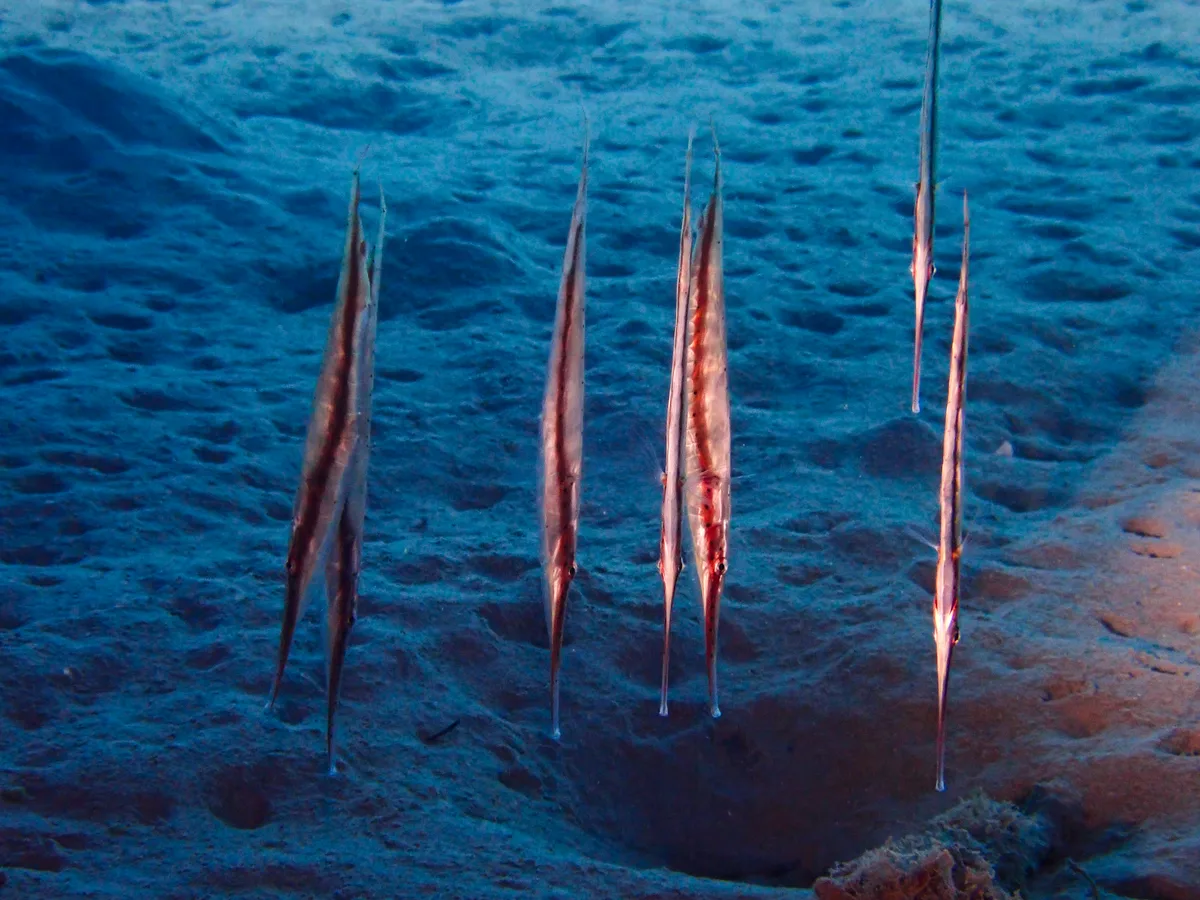
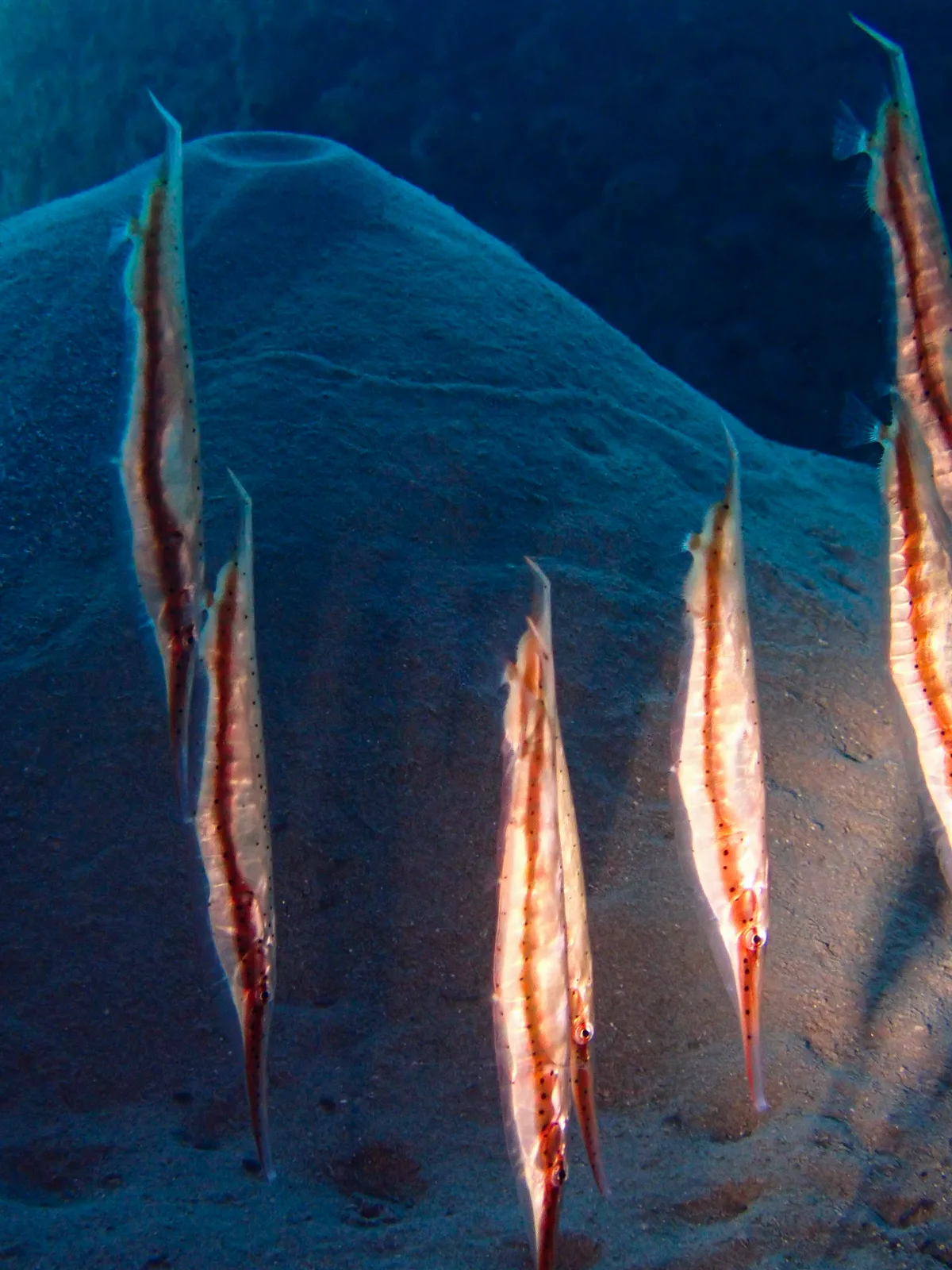
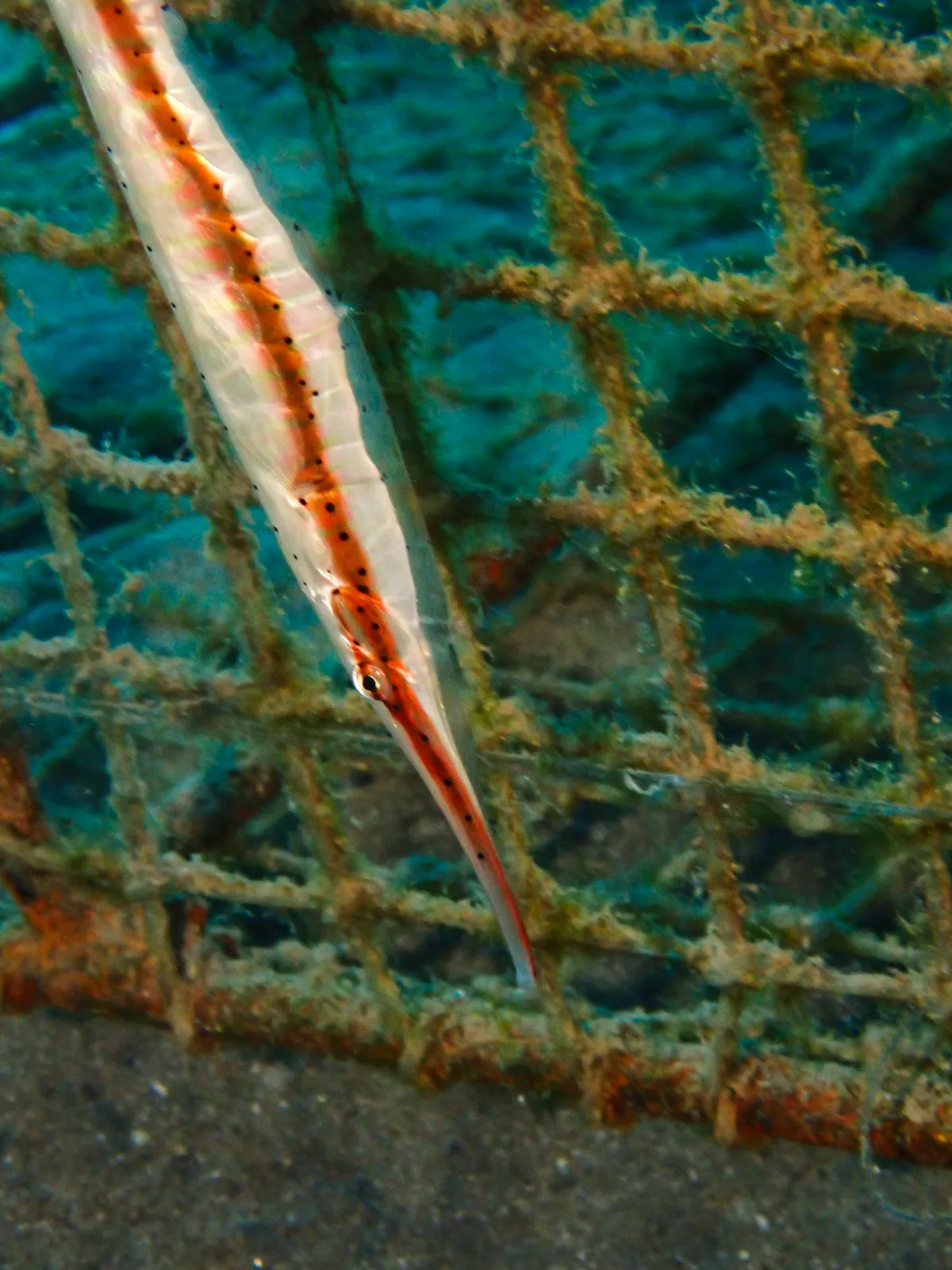
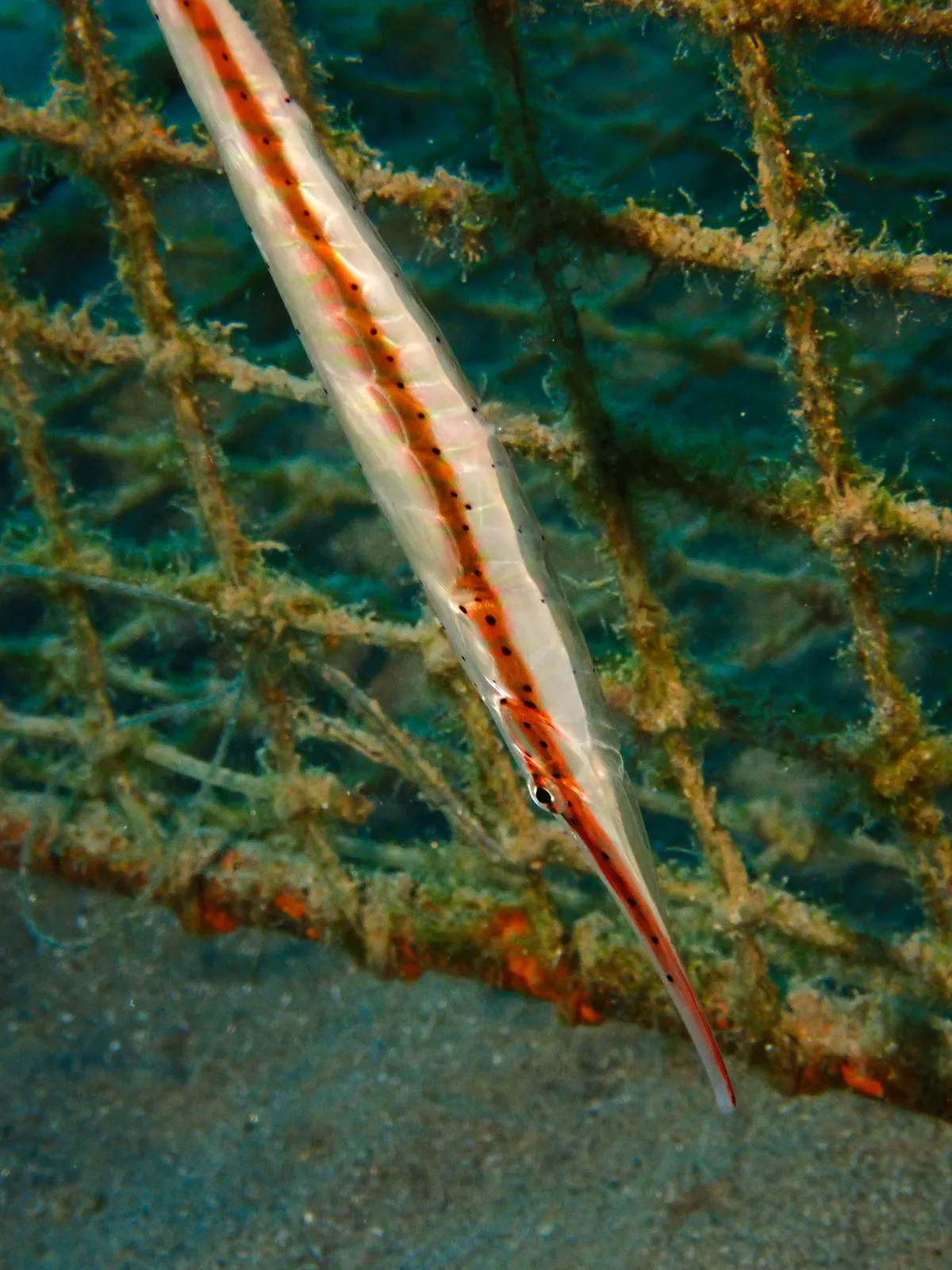
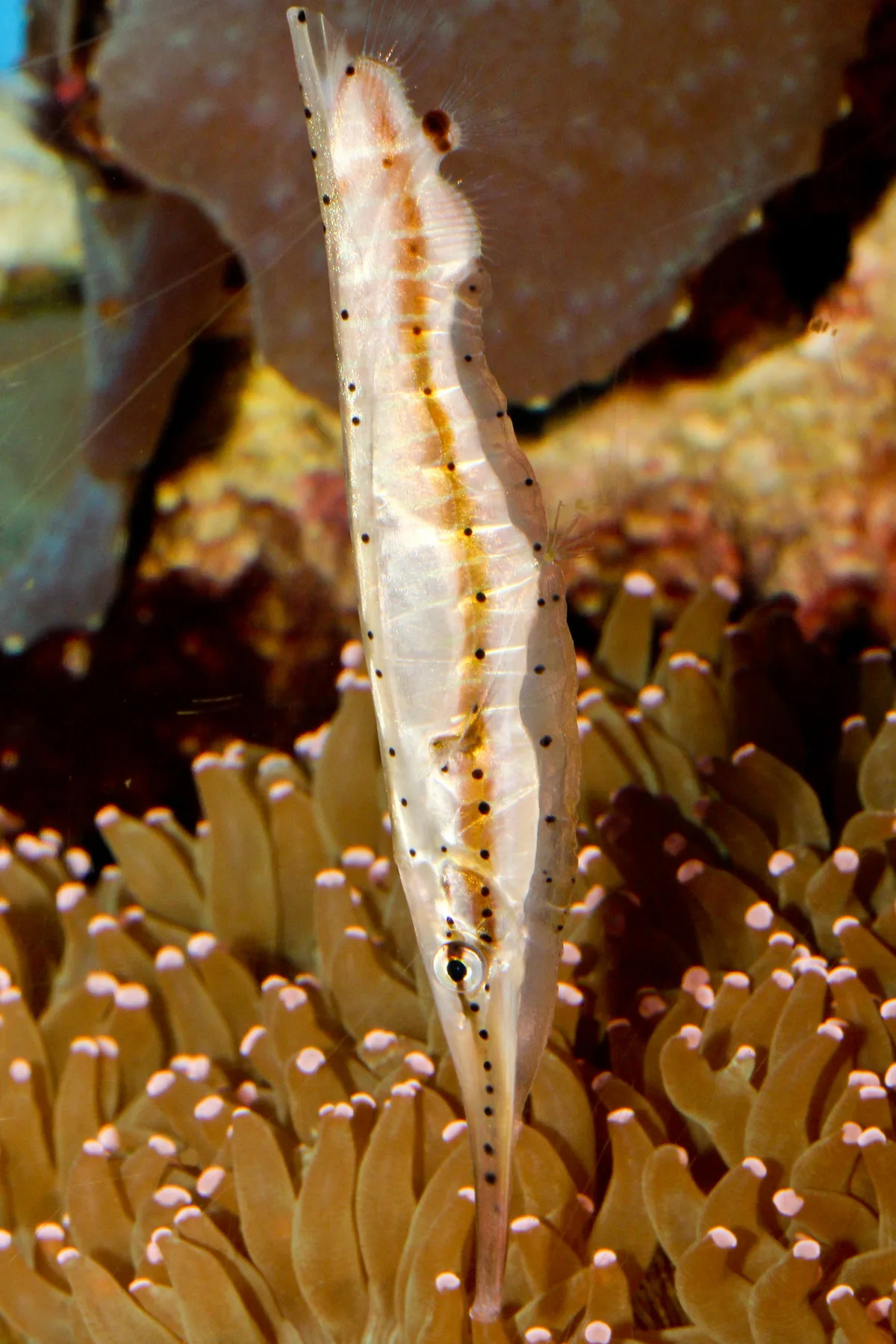
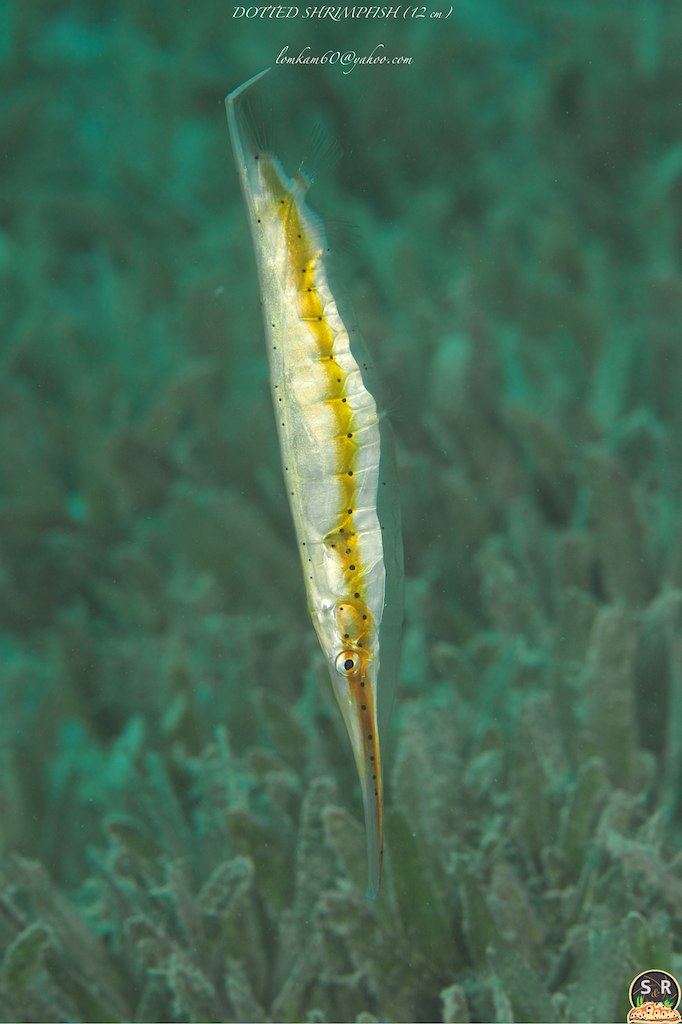
It swims standing on its head. Not occasionally, permanently: the shrimpfish holds its body vertical with the snout pointing at the bottom and moves that way in small synchronized groups, all tilted at the same angle, drifting over seagrass and sand like a handful of glass slivers.
The body is a blade. It is flattened side to side, encased in thin transparent bony plates fused into a rigid case, and the lower edge is drawn out into a sharp keel, which is where the other name, razorfish, comes from. There is almost no flexibility left in it. The tail fin has been displaced around to the underside, behind a spine at the end of the body, and that is what lets the fish drive itself along while staying upright.
The posture is camouflage, and it is specific. Head-down among the spines of a long-spined urchin, the fish is one more spine; among the branches of a hard coral, one more branch. Push the group and it flips horizontal, darts a couple of meters, and stands up again.
Feeding is done by suction through the tube of the snout, one small planktonic crustacean at a time.
- swims vertically, snout pointing at the bottom
- body flattened into a transparent blade with a sharp lower keel
- brown stripe along the side and scattered small black spots
- often lined up among the spines of long-spined urchins
- up to 15 cm
Why it's threatened
Threat classification from the IUCN Red List.