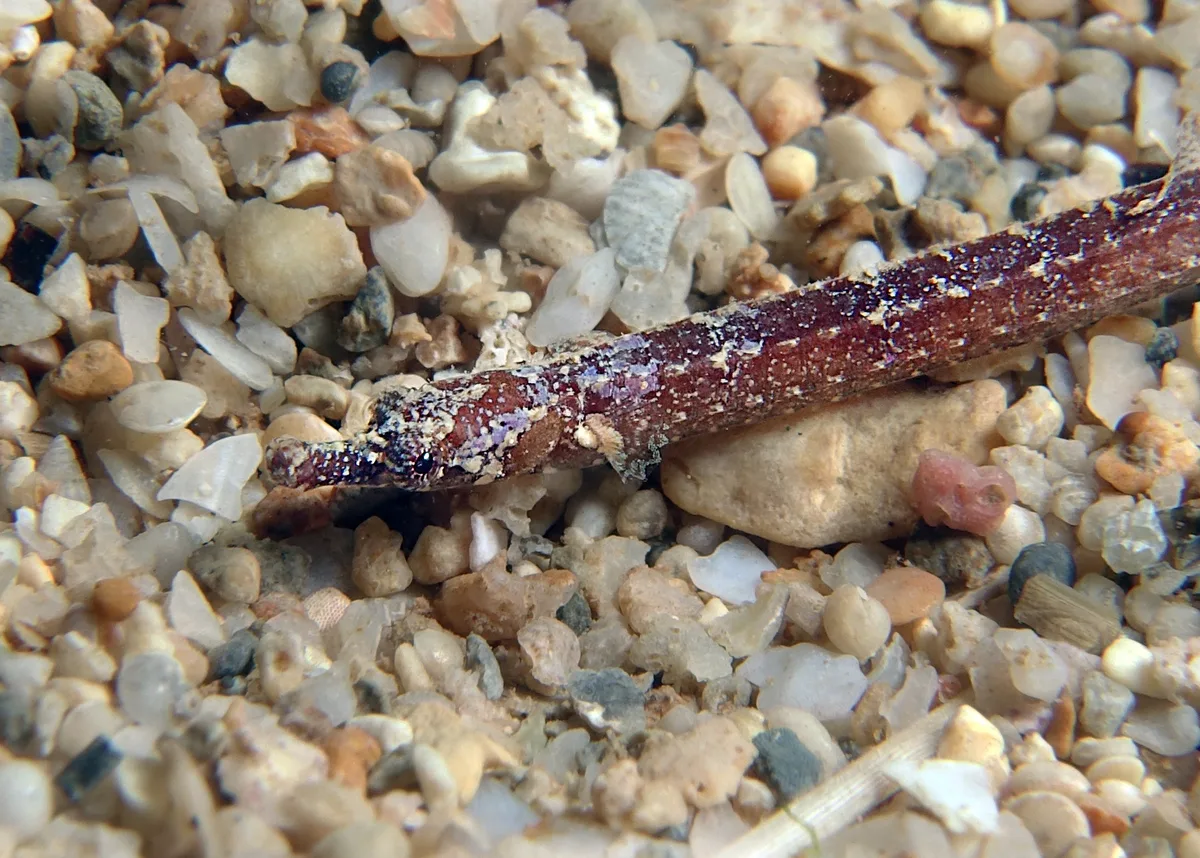
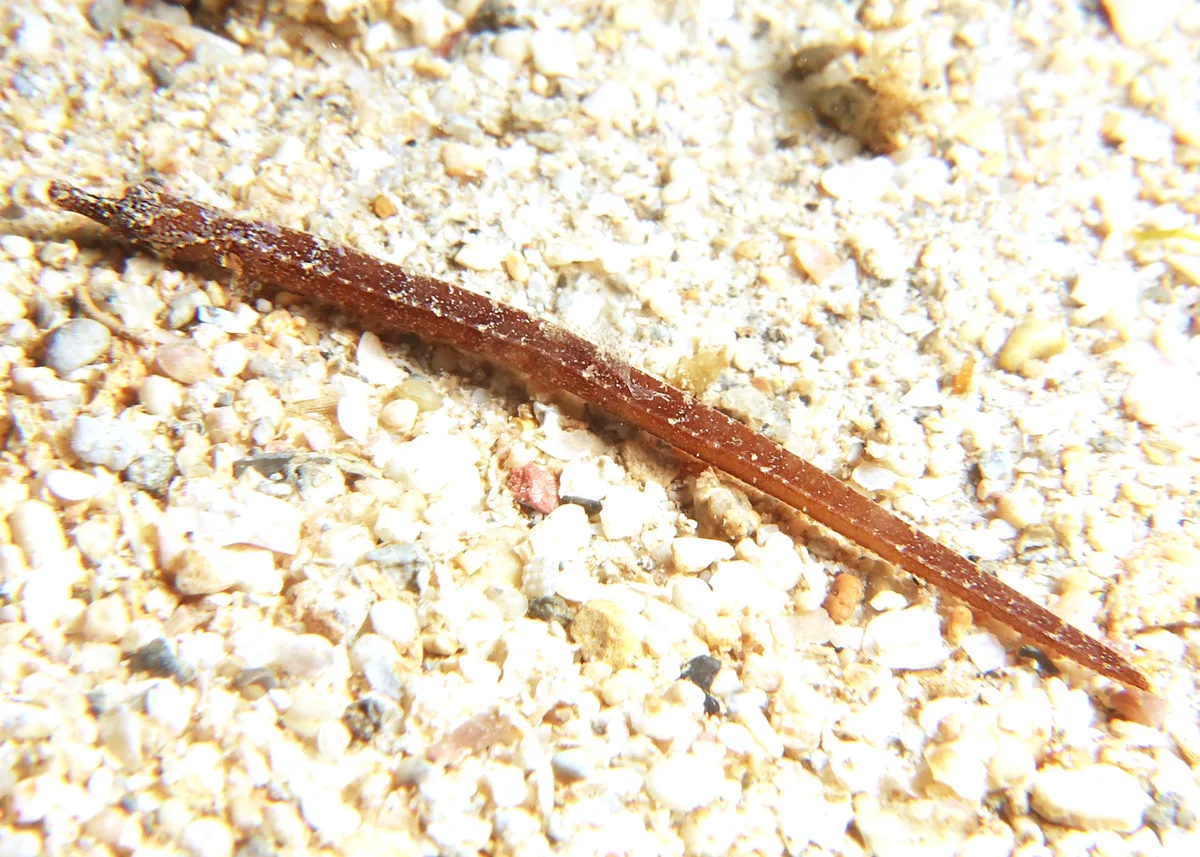
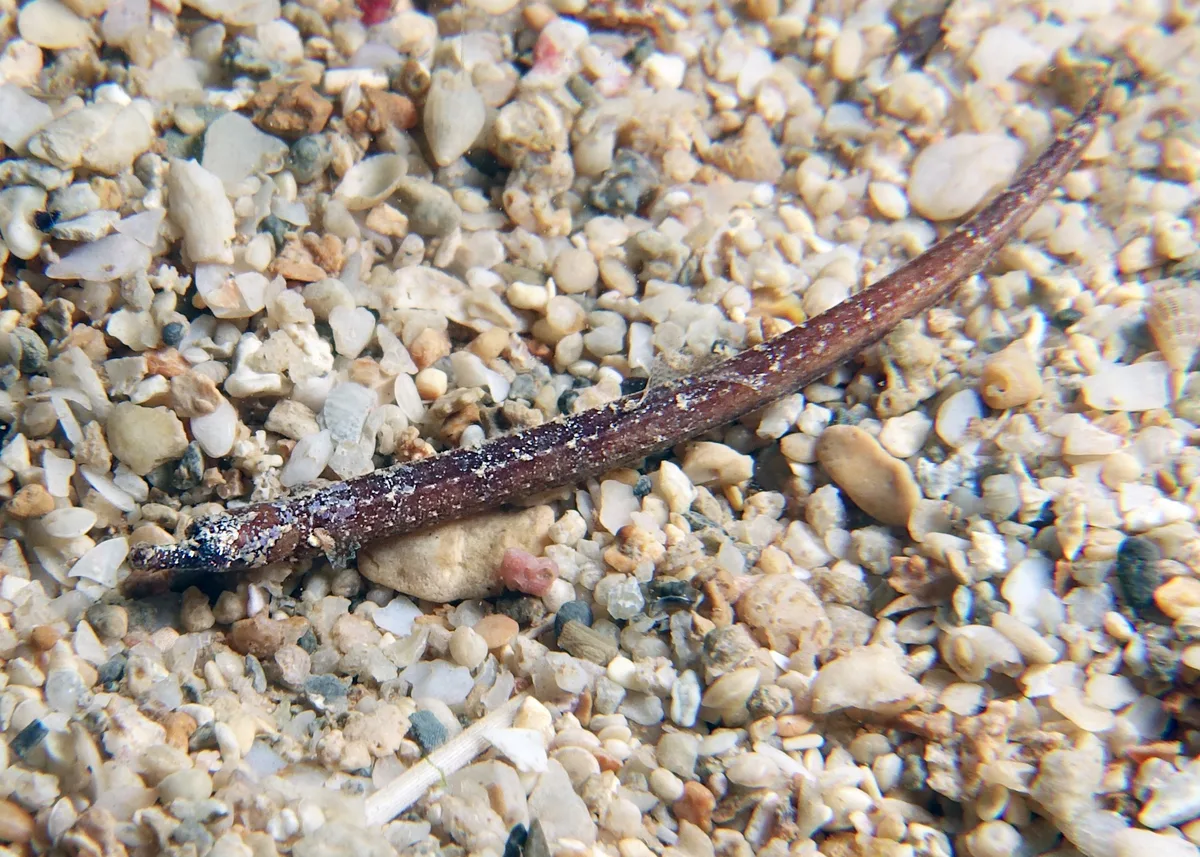
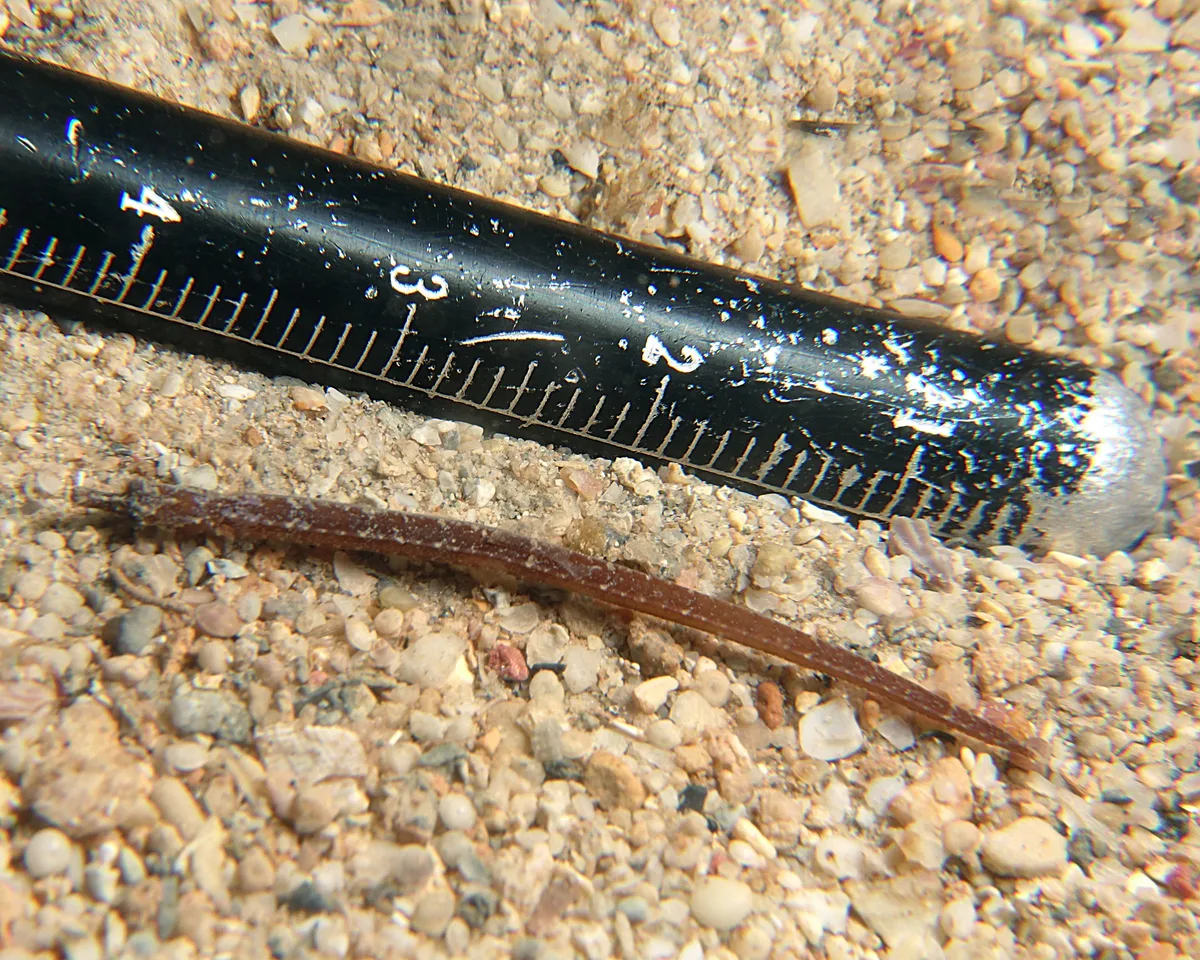
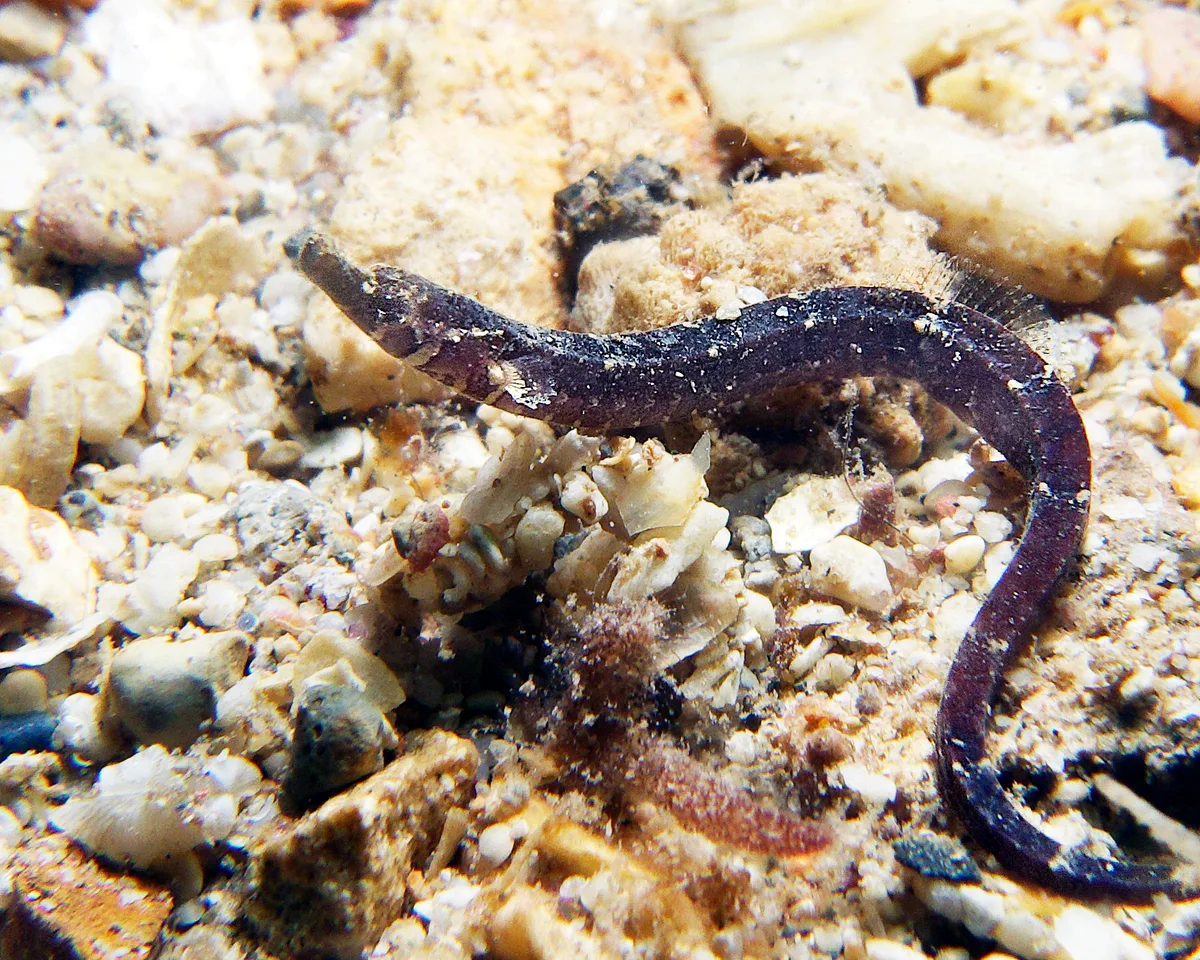
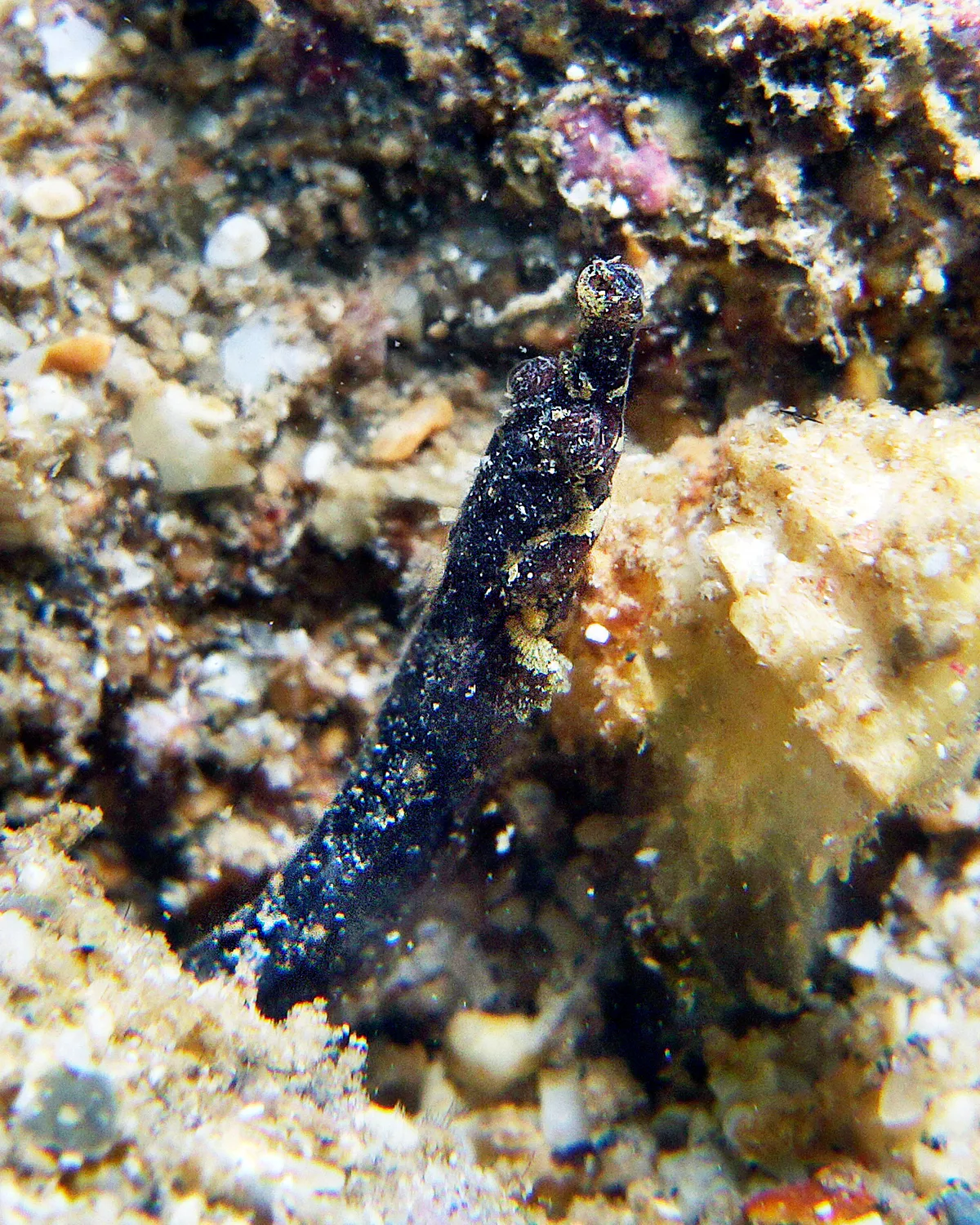
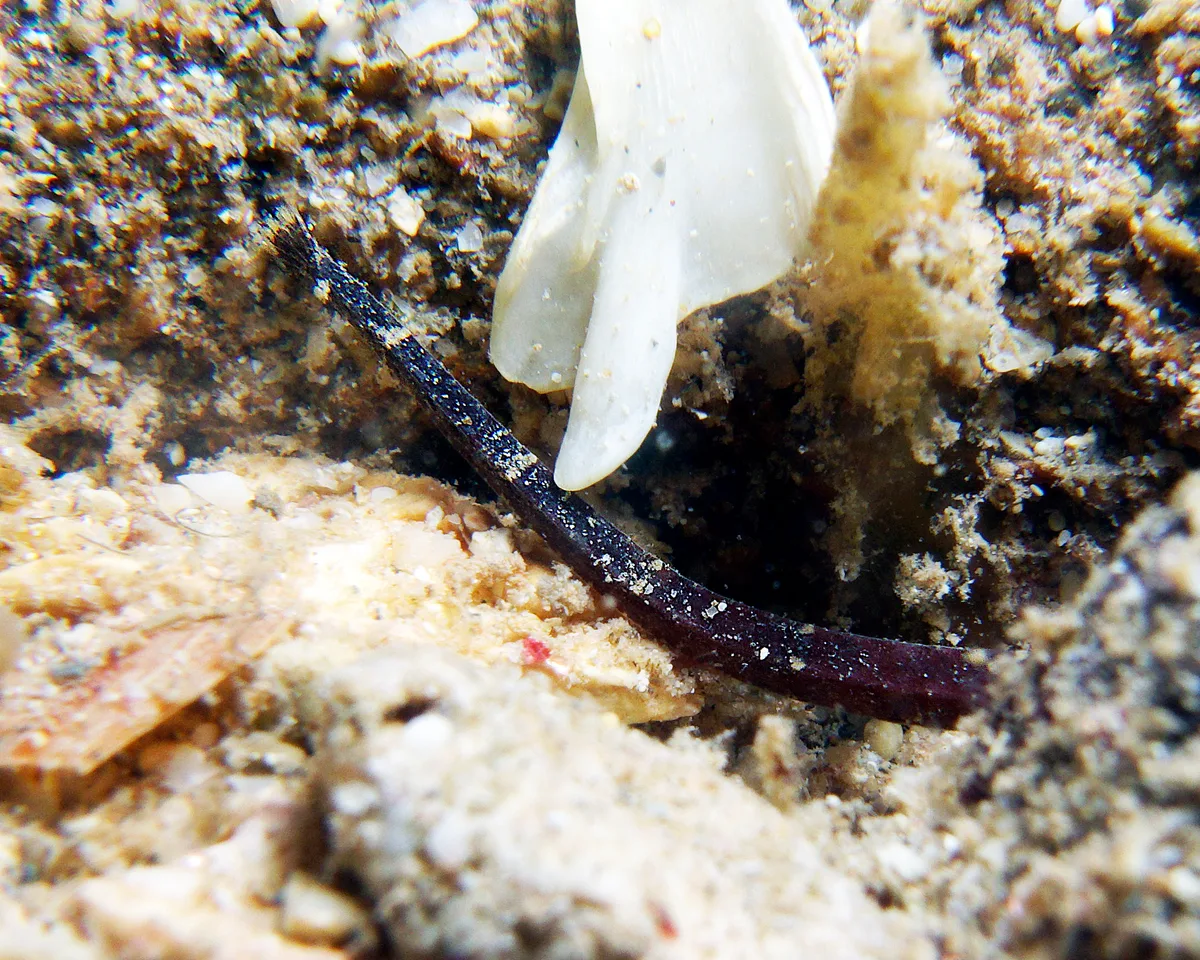
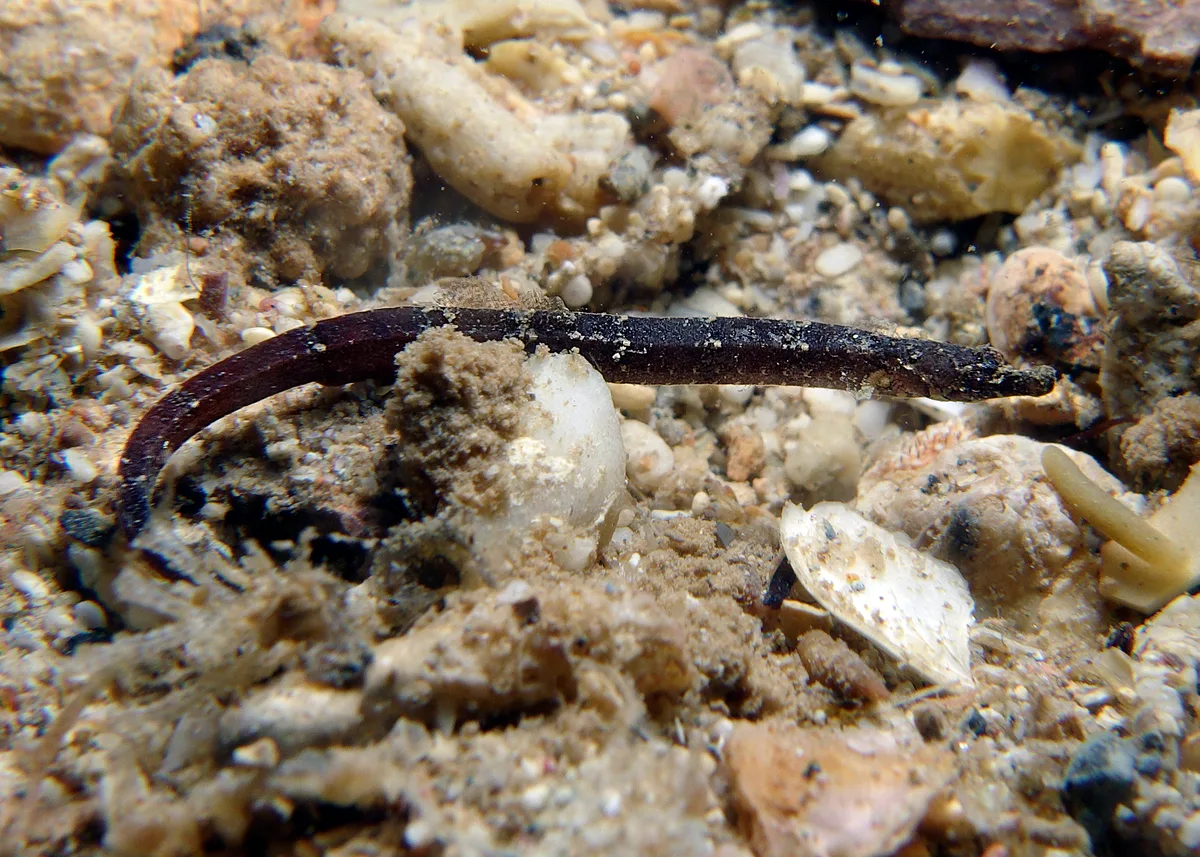
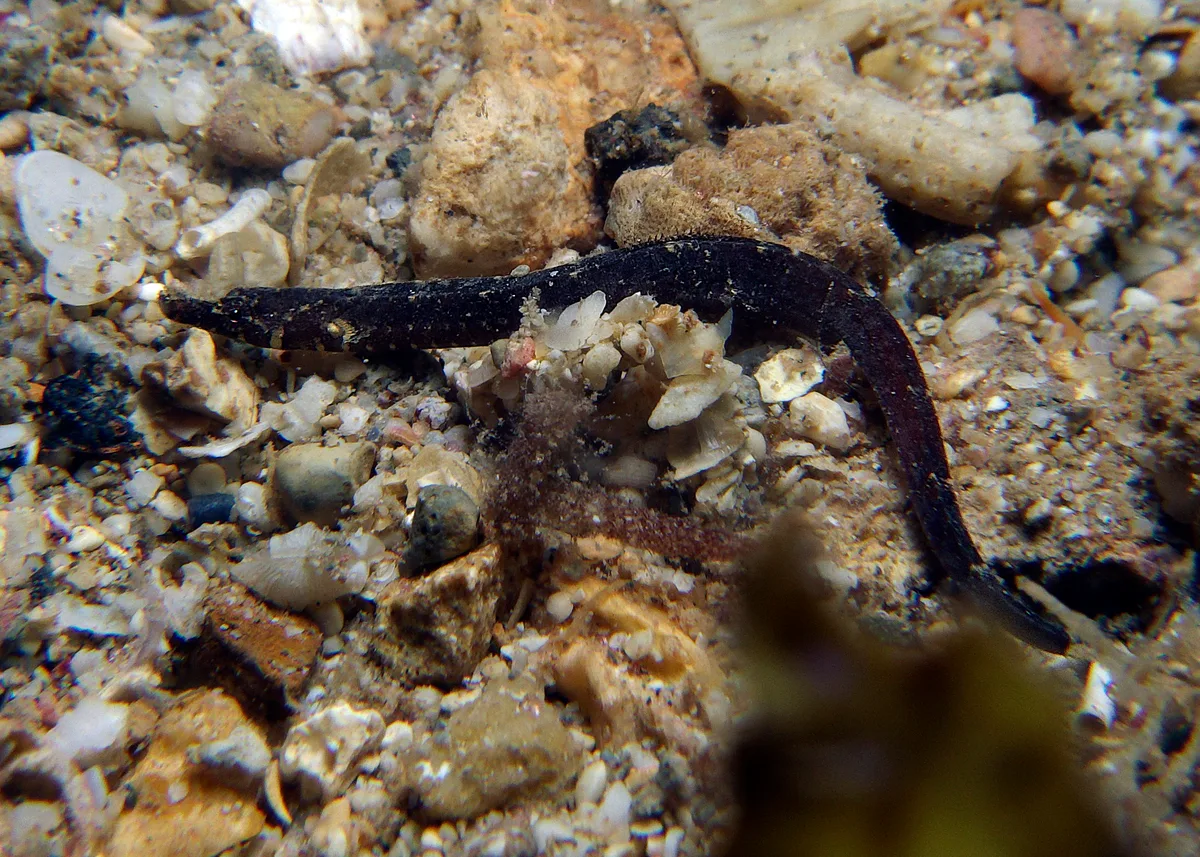
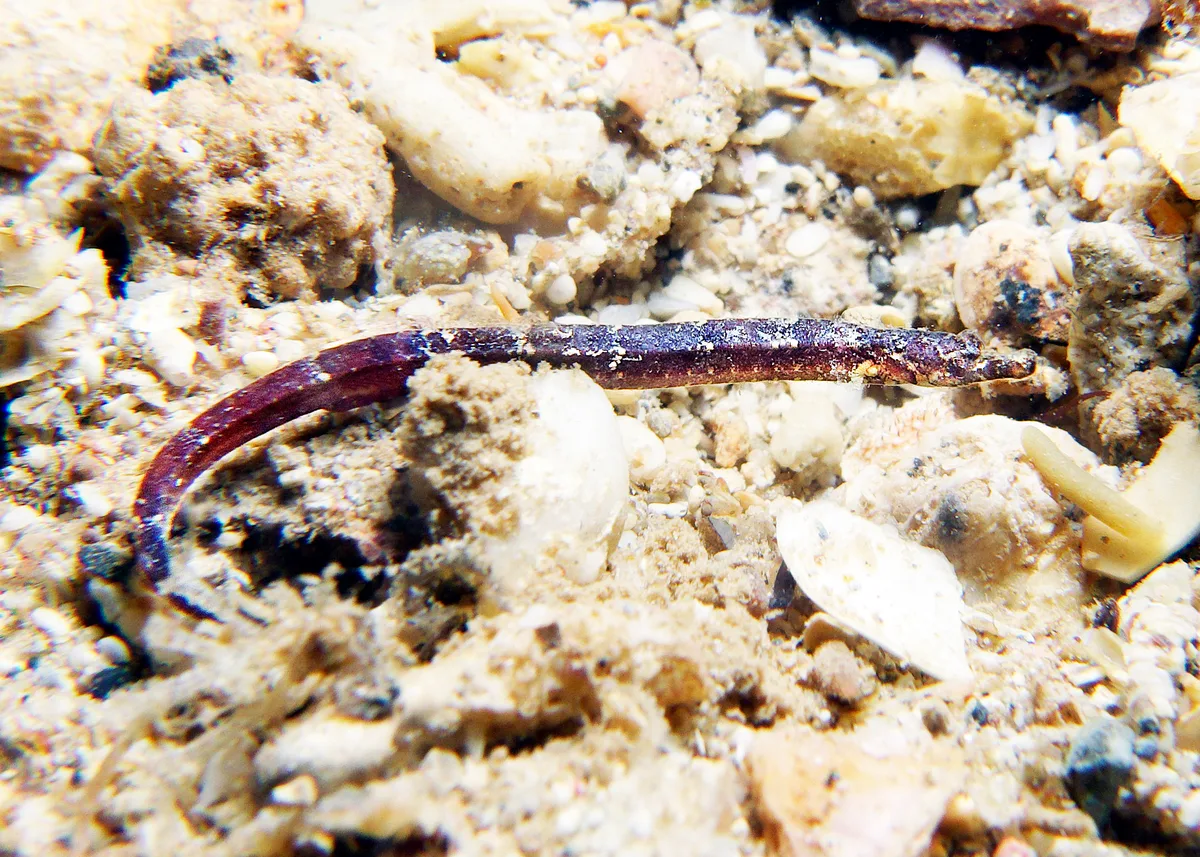
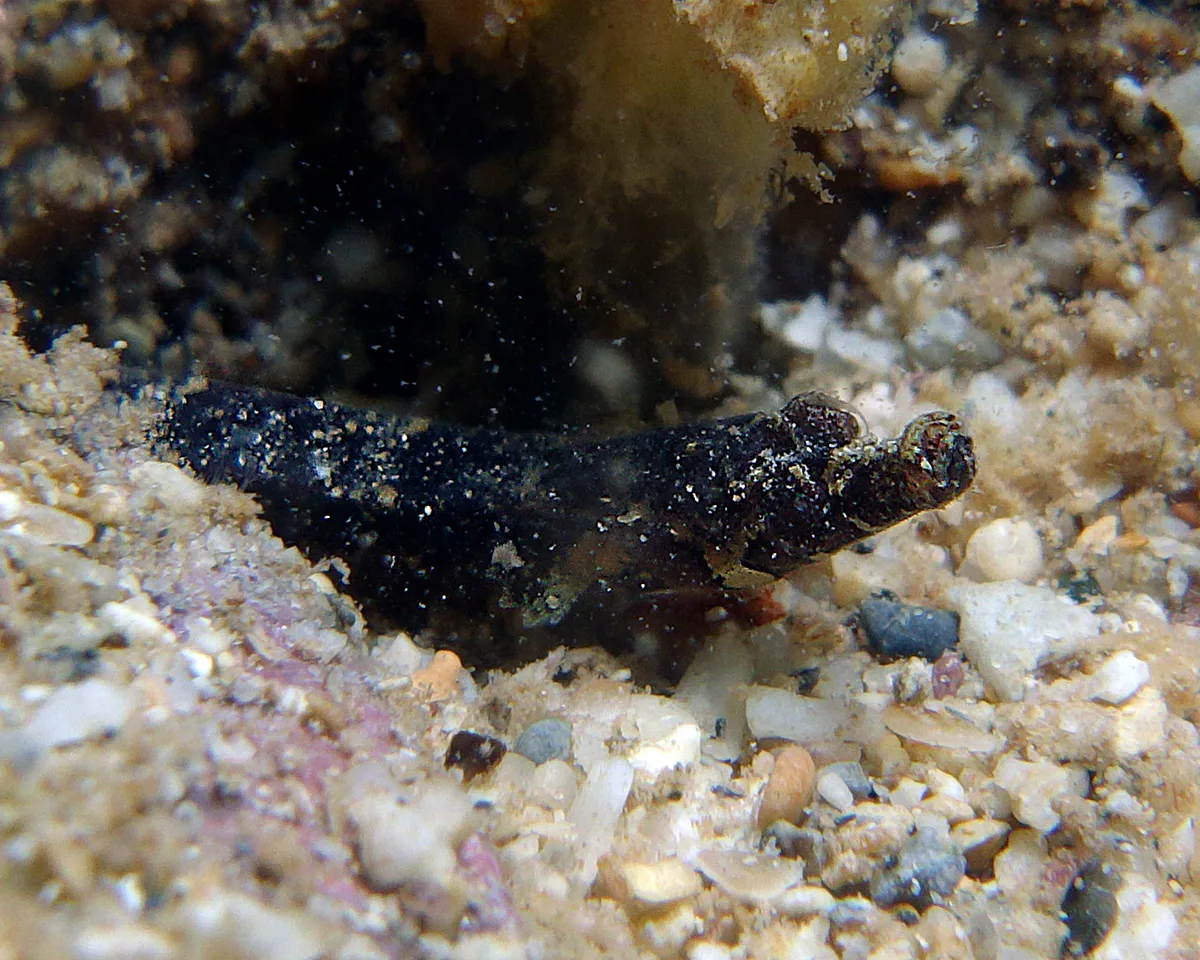
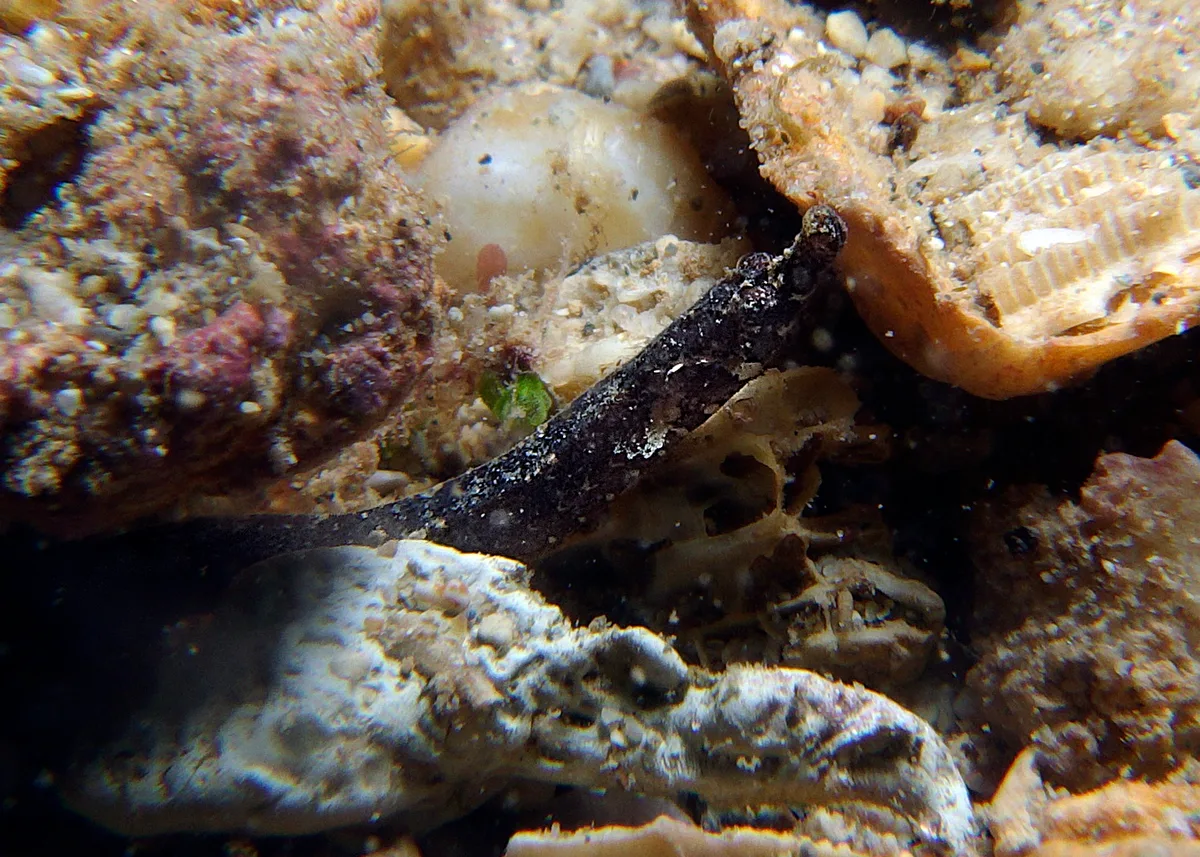
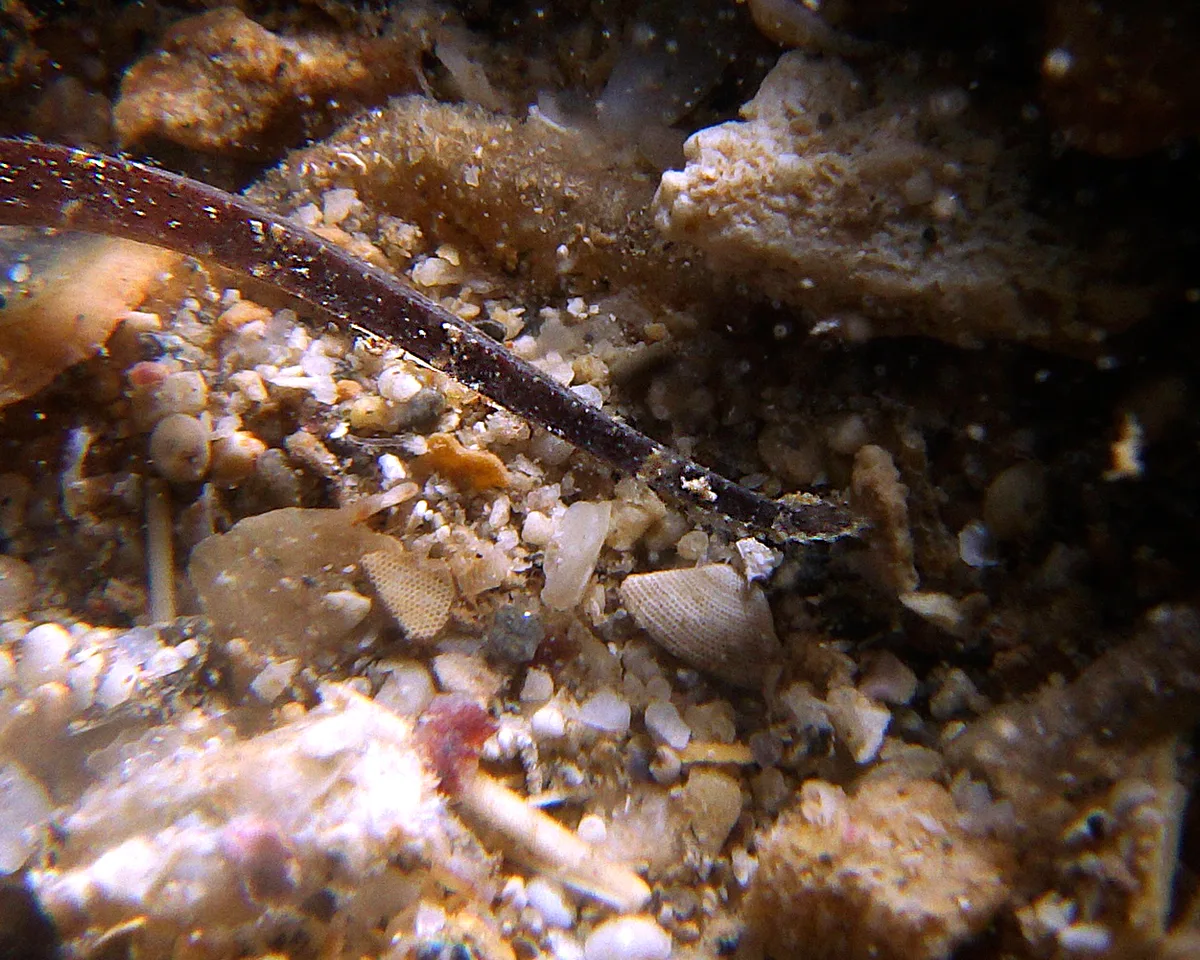
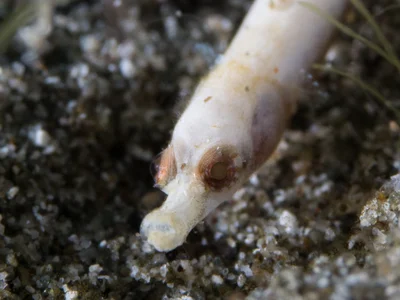
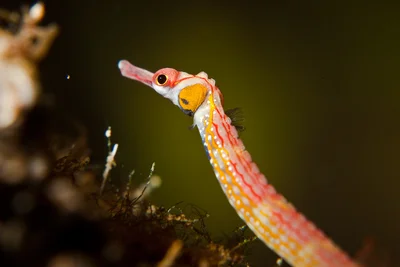
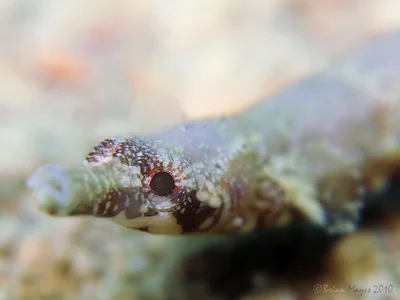
A short, almost black pipefish living inside cracks in coral rock, seven centimeters (3 in) long and visible only as a section of something dark in a hole.
Where its relatives are pale sticks on open rubble, this one went the other way: dark, small, and permanently inside the reef, where color is irrelevant because there is no light. The only bright thing on it is the tail fin, pale with a dark edge, which is often the single part a torch beam picks out.
It feeds on the tiny crustaceans that live in the same crevices, so it never has to leave.
The male broods on the underside of the tail like the rest of the family. In a crevice-dwelling species that is an advantage: eggs carried in an open strip need clean flowing water, and the same hole that hides the fish keeps the clutch in a steady current.
Habitat shifting & alteration · Temperature extremes
There are no known direct threats to this species, however they may be declining as a result of habitat loss and degradation. Shallow coastal areas in the region are known to have medium to high levels of impact from humans (Halpern et al. 2008, Crain et al. 2009). Additionally 88% of Southeast Asian coral reefs are at risk from coastal development, destructive fishing practices, pollution and climate change (Burke et al. 2002; see also Bruno and Selig 2007, Carpenter et al. 2008), which suggests some level of decline in habitat for those individuals or populations associated with coral reefs, though not likely at a timescale short enough to be relevant to three generation lengths for the species. Further research is needed in order to determine if and how the species relies on coral reefs, and what their decline means for the wild P. belcheri population.
Threat classification from the IUCN Red List.
Comments
Please, sign in to leave a comment
Continue with a social account - yours will be created automatically.