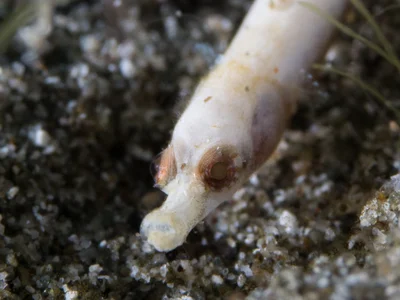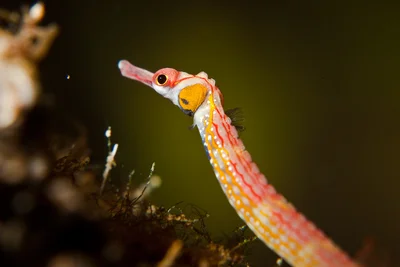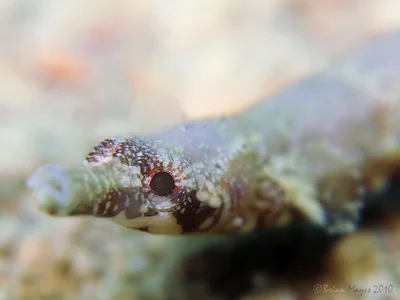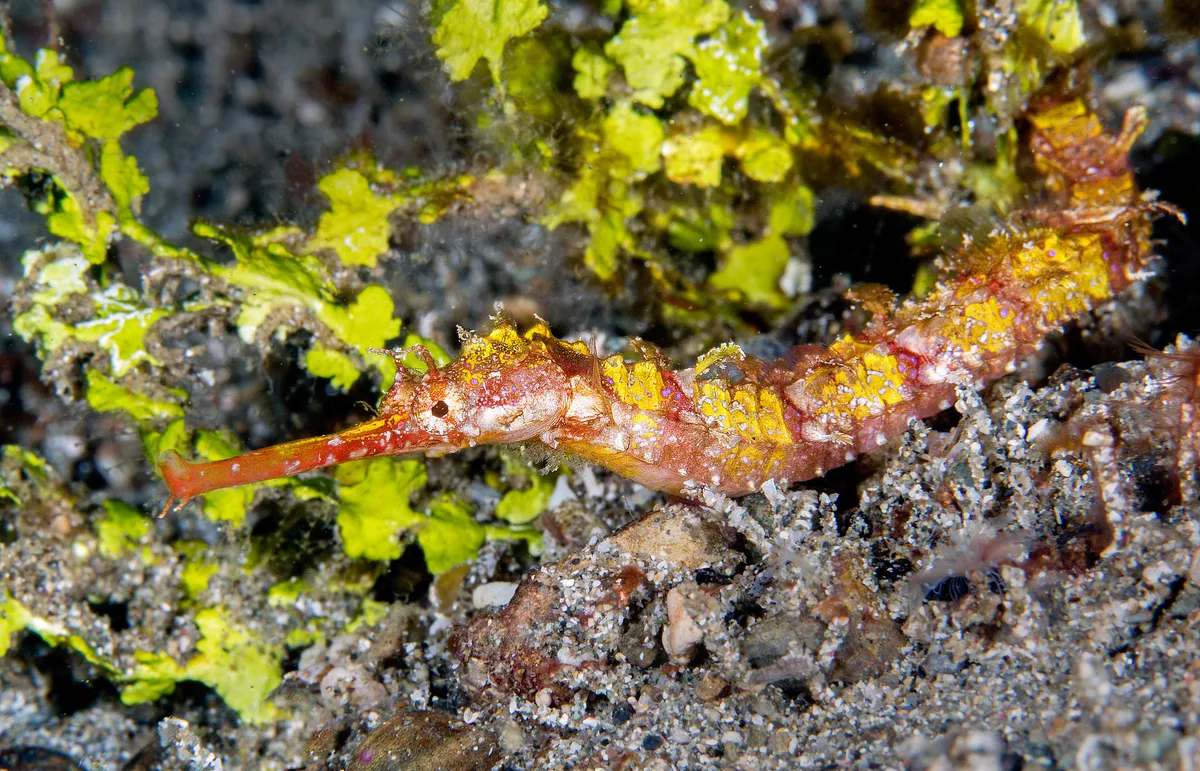
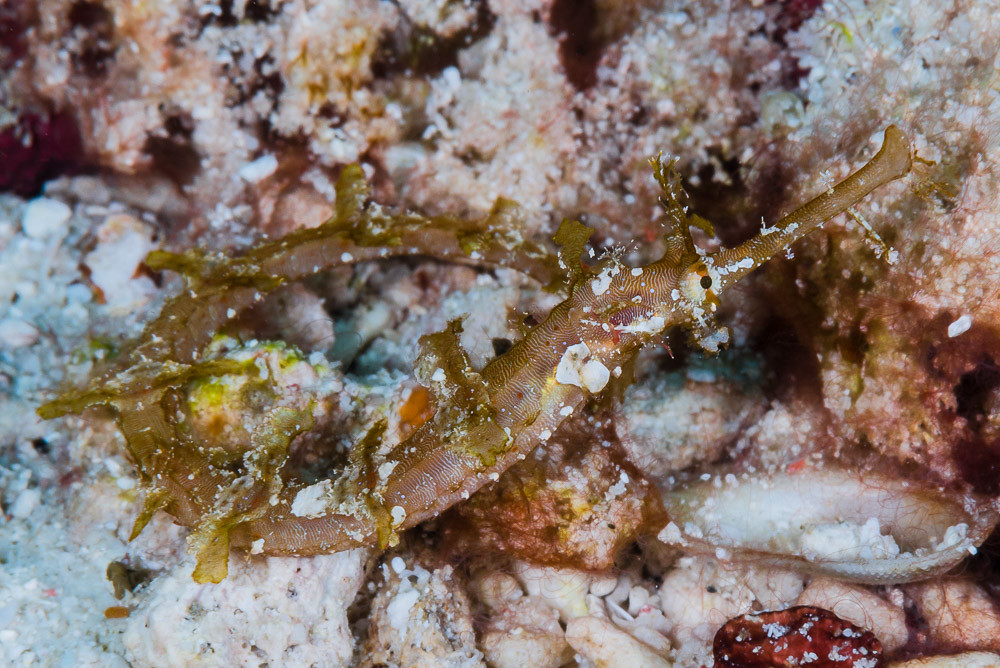
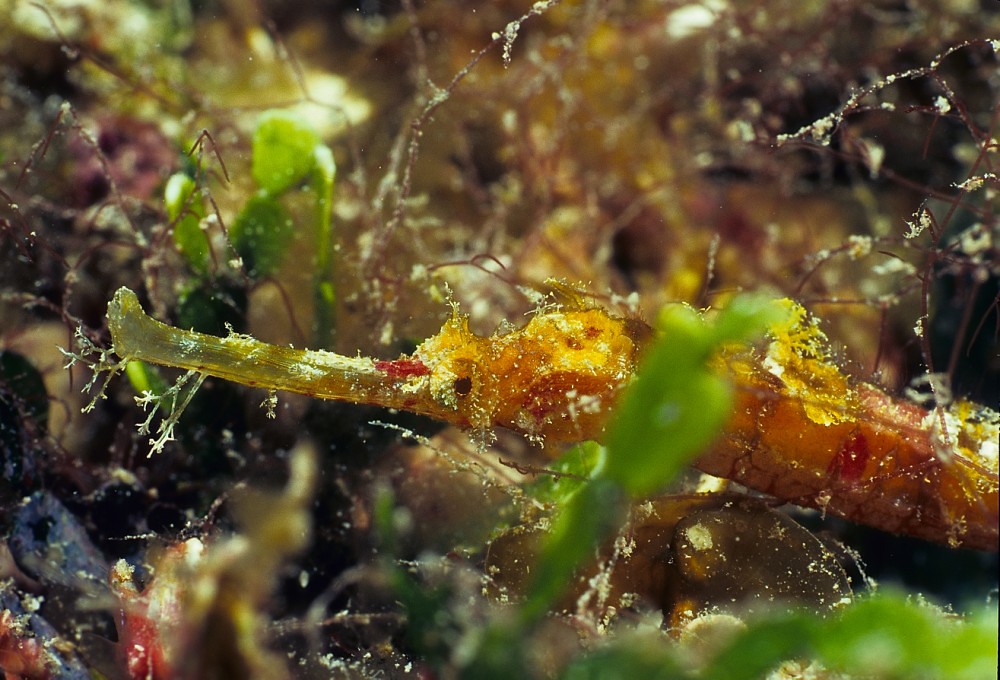
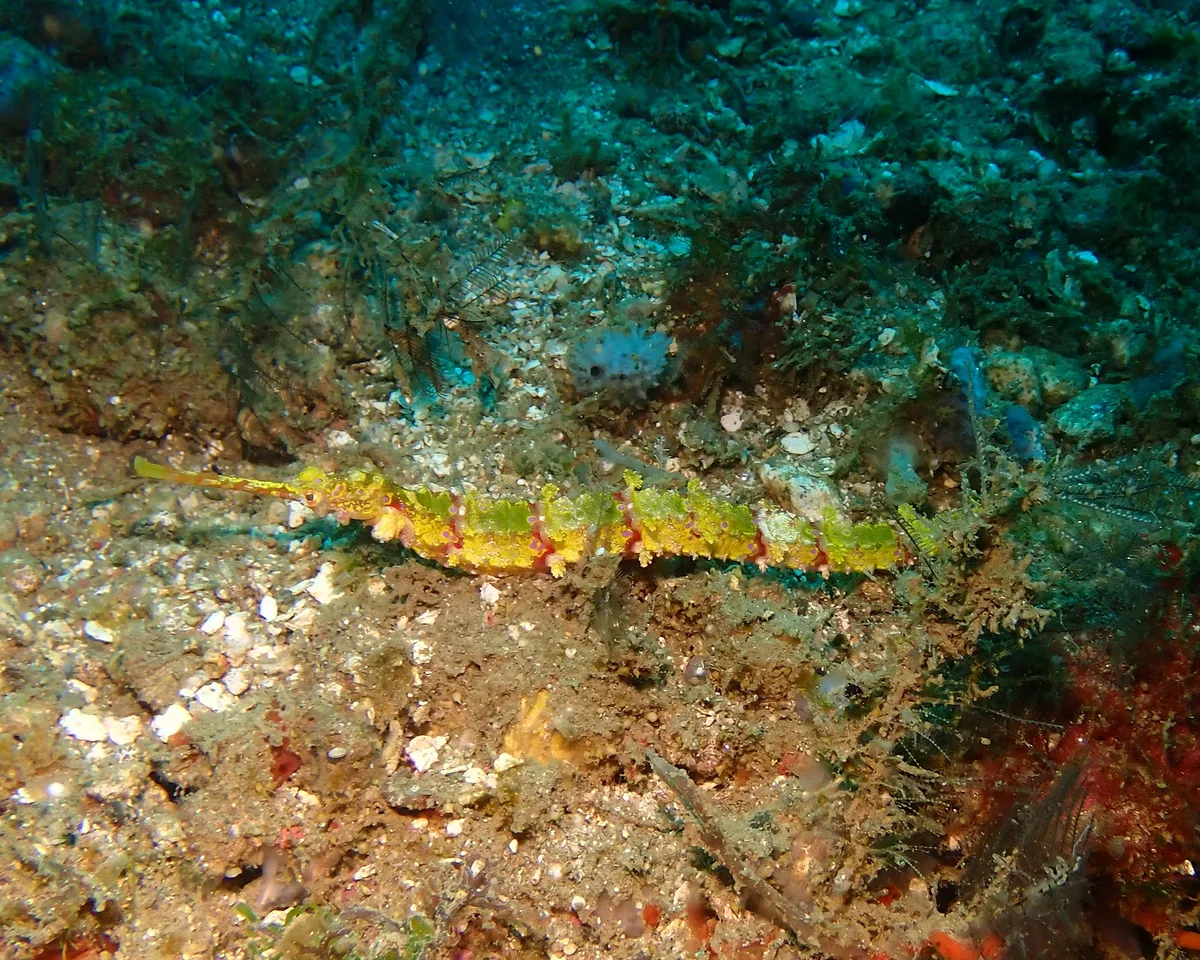
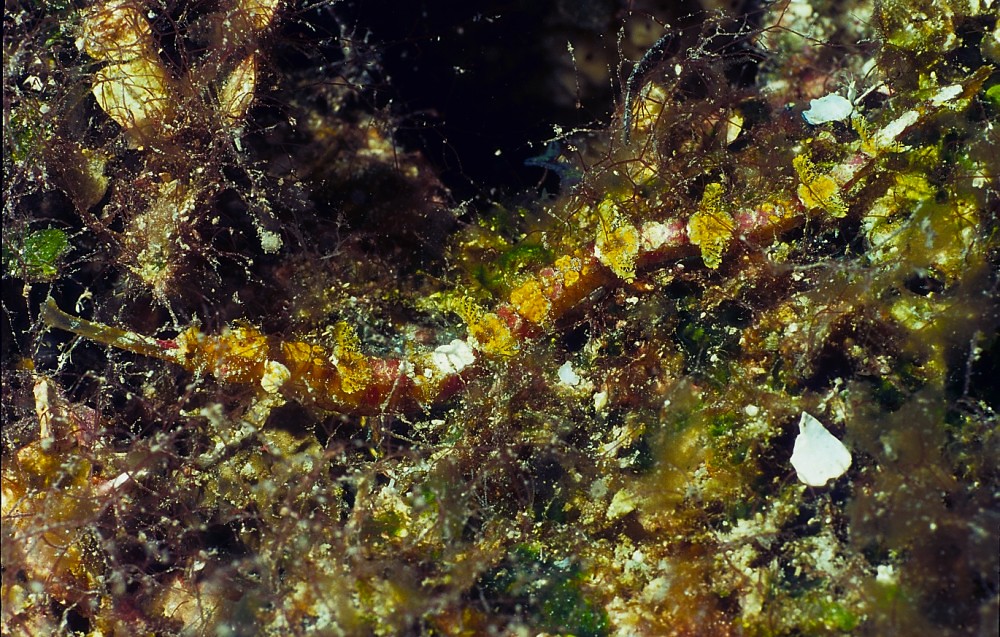
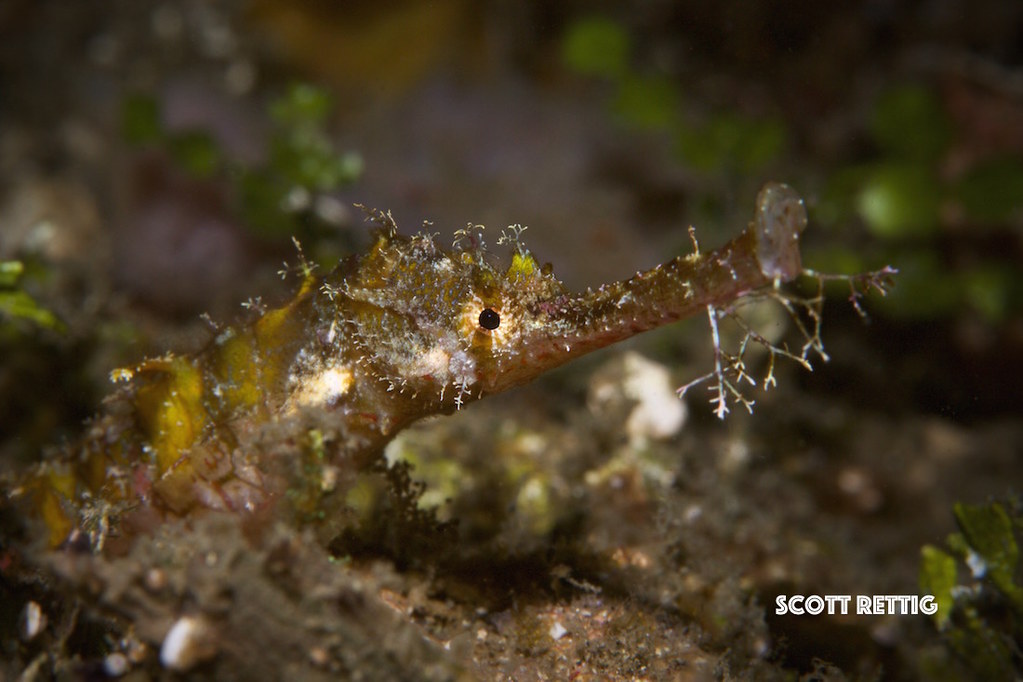
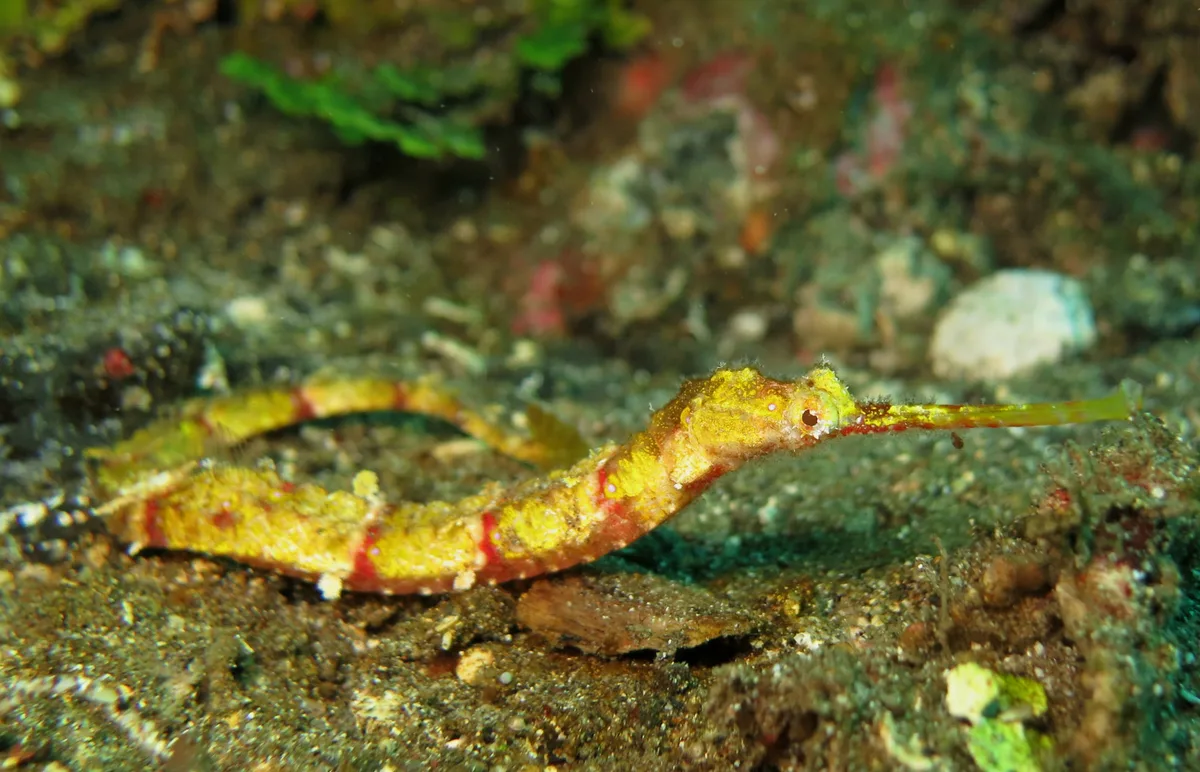
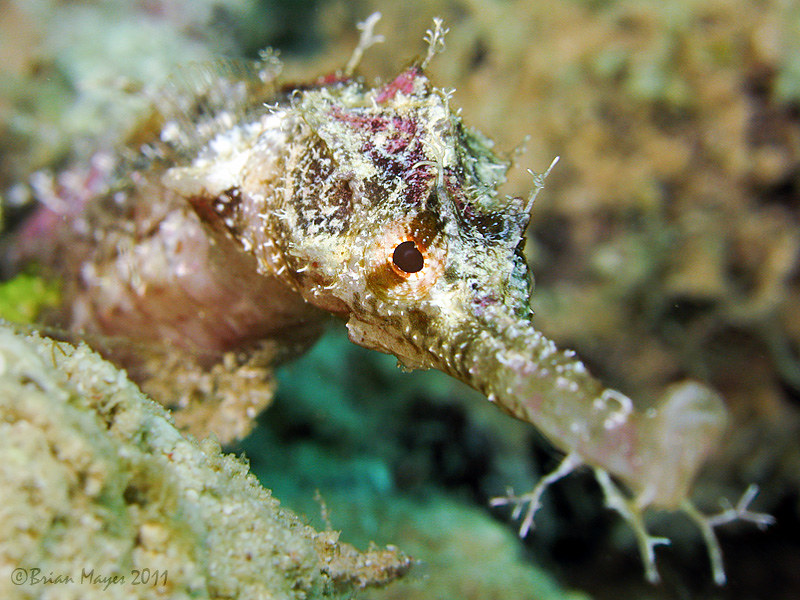
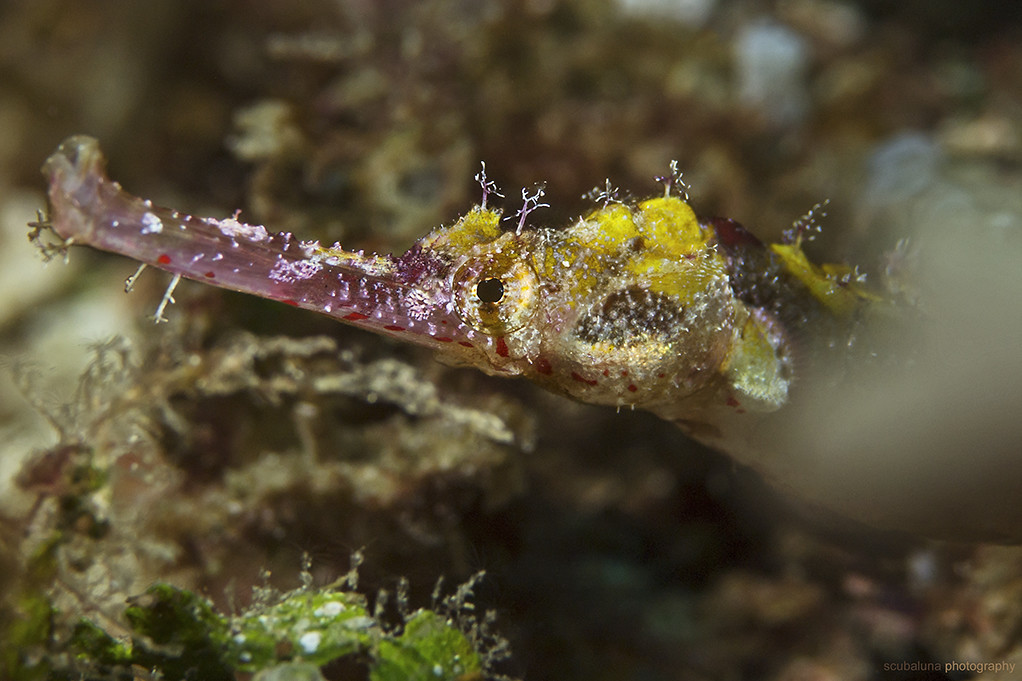
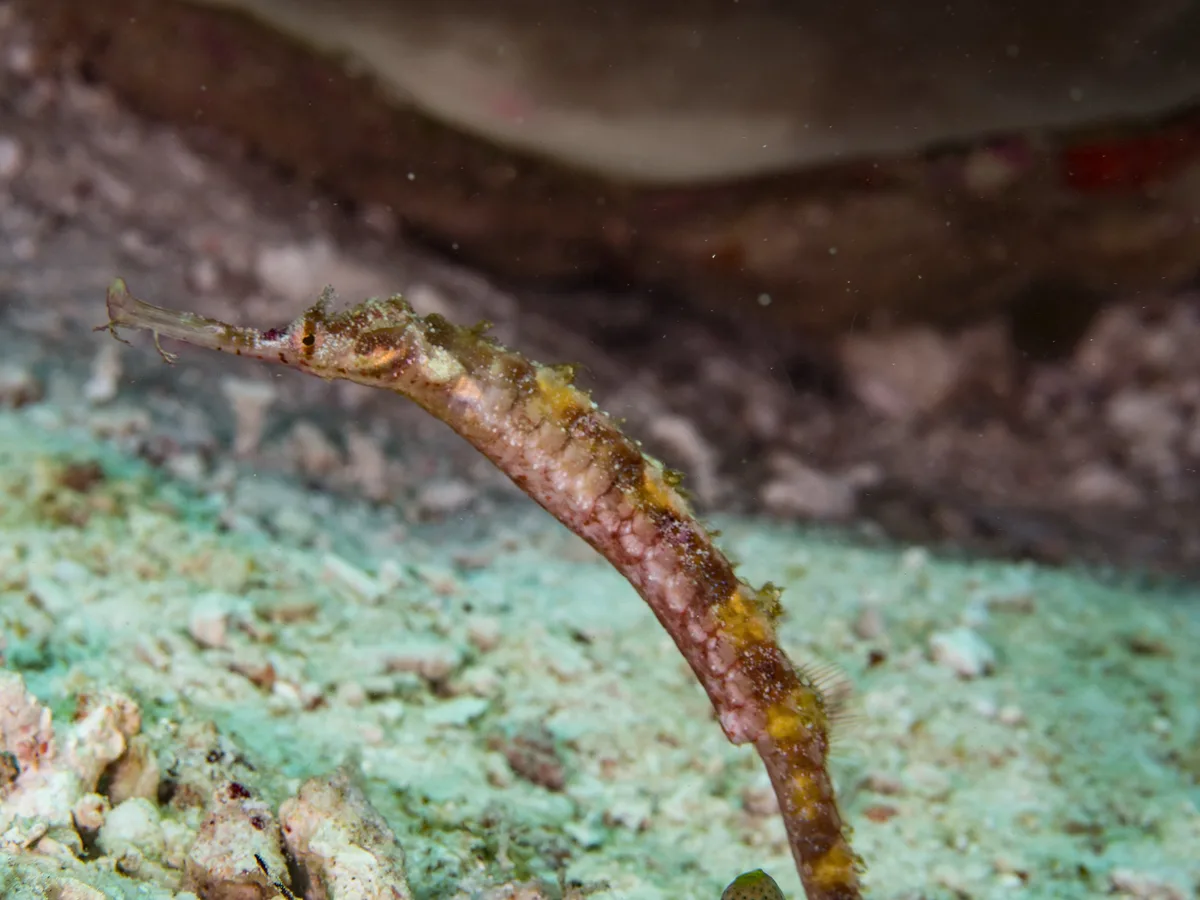
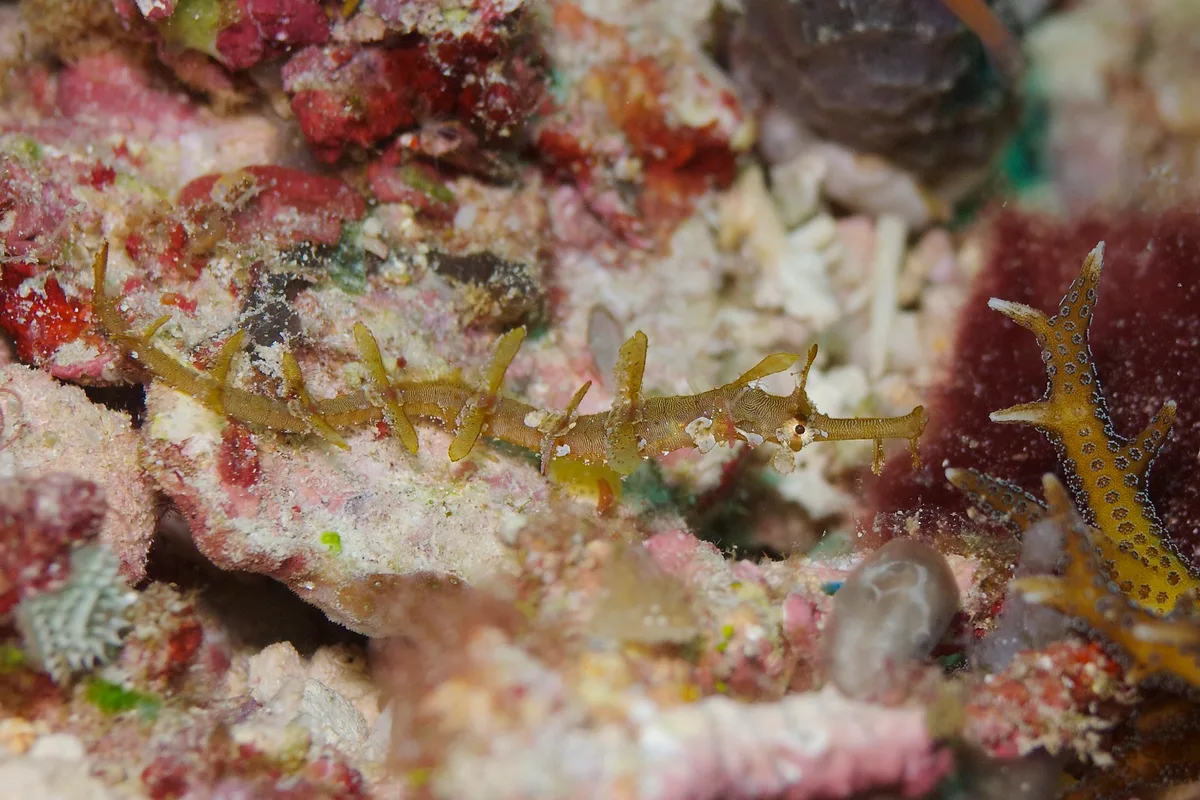
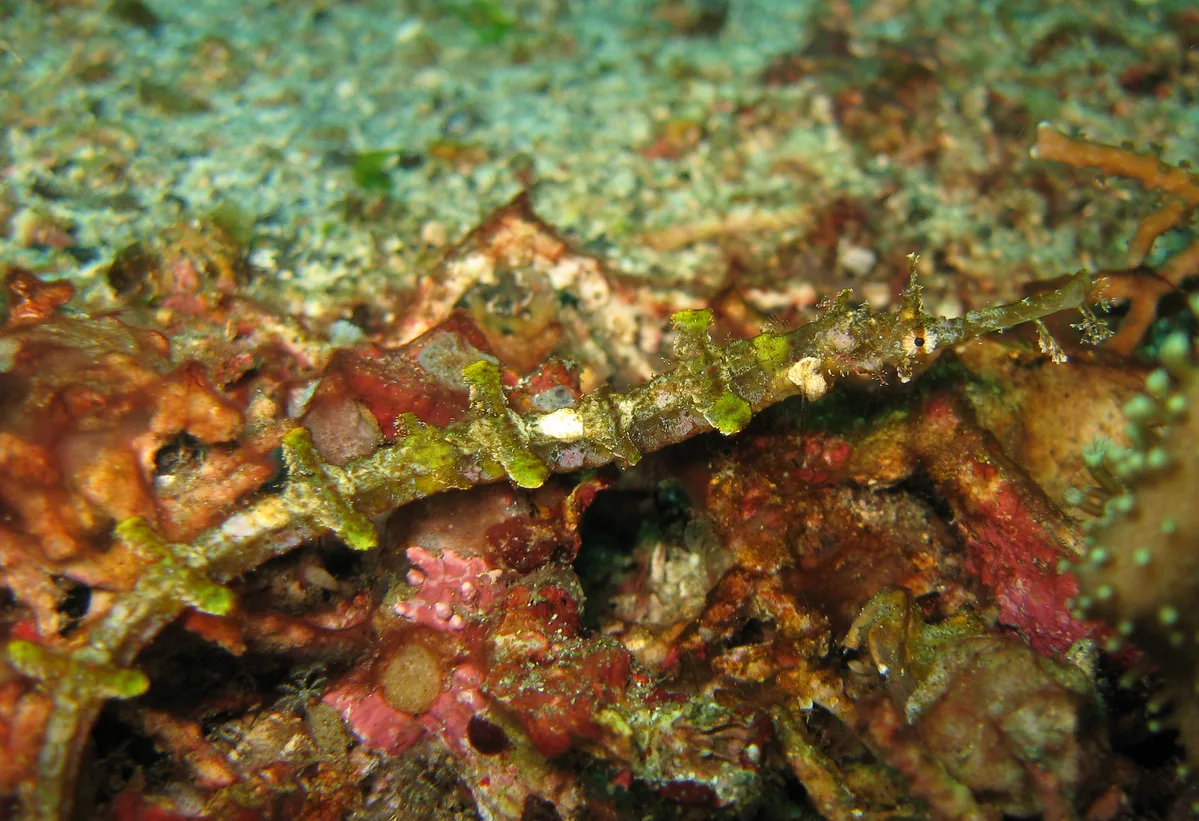
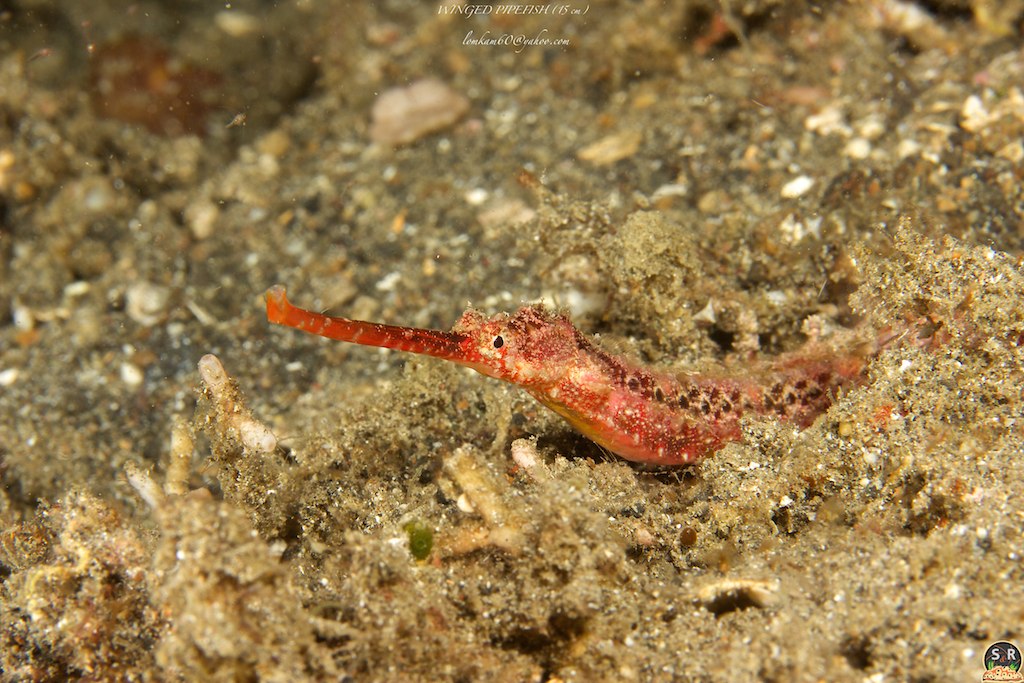
The most decorated pipefish here: eighteen centimeters (7 in) of fish under a coat of leafy skin flaps, red-brown or yellow, lying against sponge and weed on a silty slope.
The appendages do the same job as a scorpionfish's: they destroy the outline. A pipefish is already a stick, and a stick with leaves on it stops reading as an animal entirely - which matters for something that cannot swim away from anything.
It is a prize for macro photographers and a genuine rarity for everyone else, partly because it is uncommon and partly because it is unfindable unless it moves.
Like the rest of the family it feeds through a snout used as a pipette, taking one small crustacean at a time, hundreds a day. The strike is a pivot of the head and a suck, over in milliseconds, and it is the same mechanism that makes seahorses such efficient hunters - the two groups are the same family.
The genus. Halicampus Kaup 1856 - kampos (mythological sea monster). ETYFish
The species. Halicampus macrorhynchus Bamber 1915 - macro- (long) + rhynchus (snout). ETYFish
- body covered in leafy skin appendages, especially along the back and snout
- color from red-brown to yellow, matching sponge and algae around it
- long snout with a fringe of flaps at its base
- length up to 18 cm