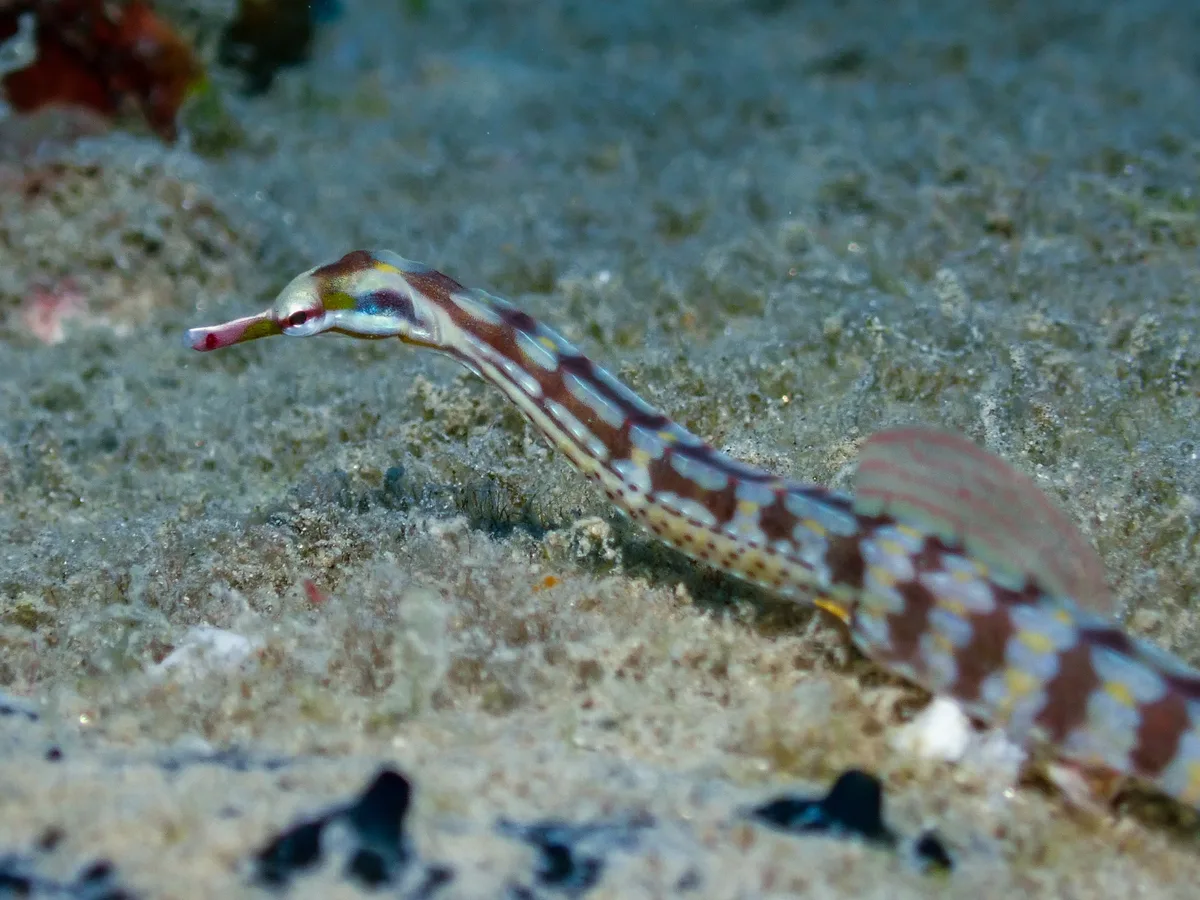
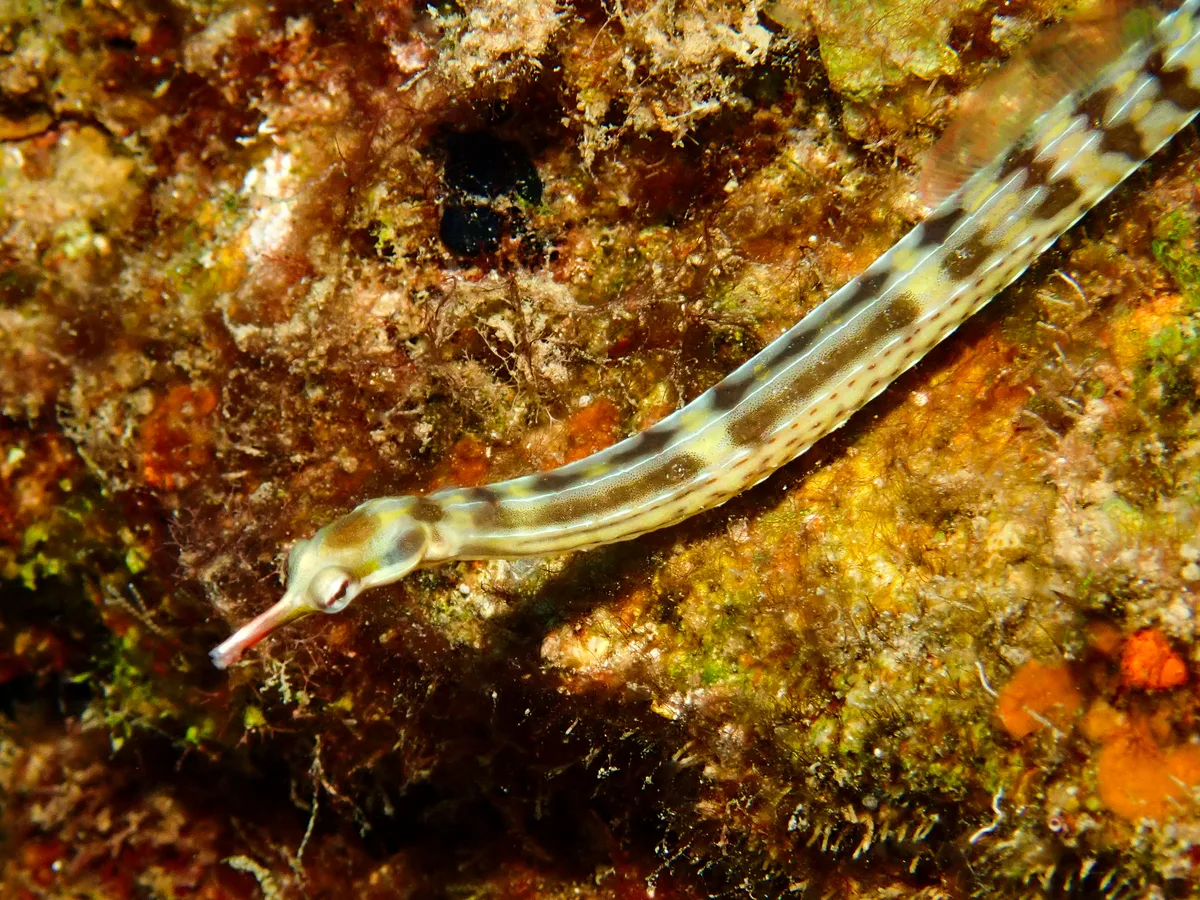
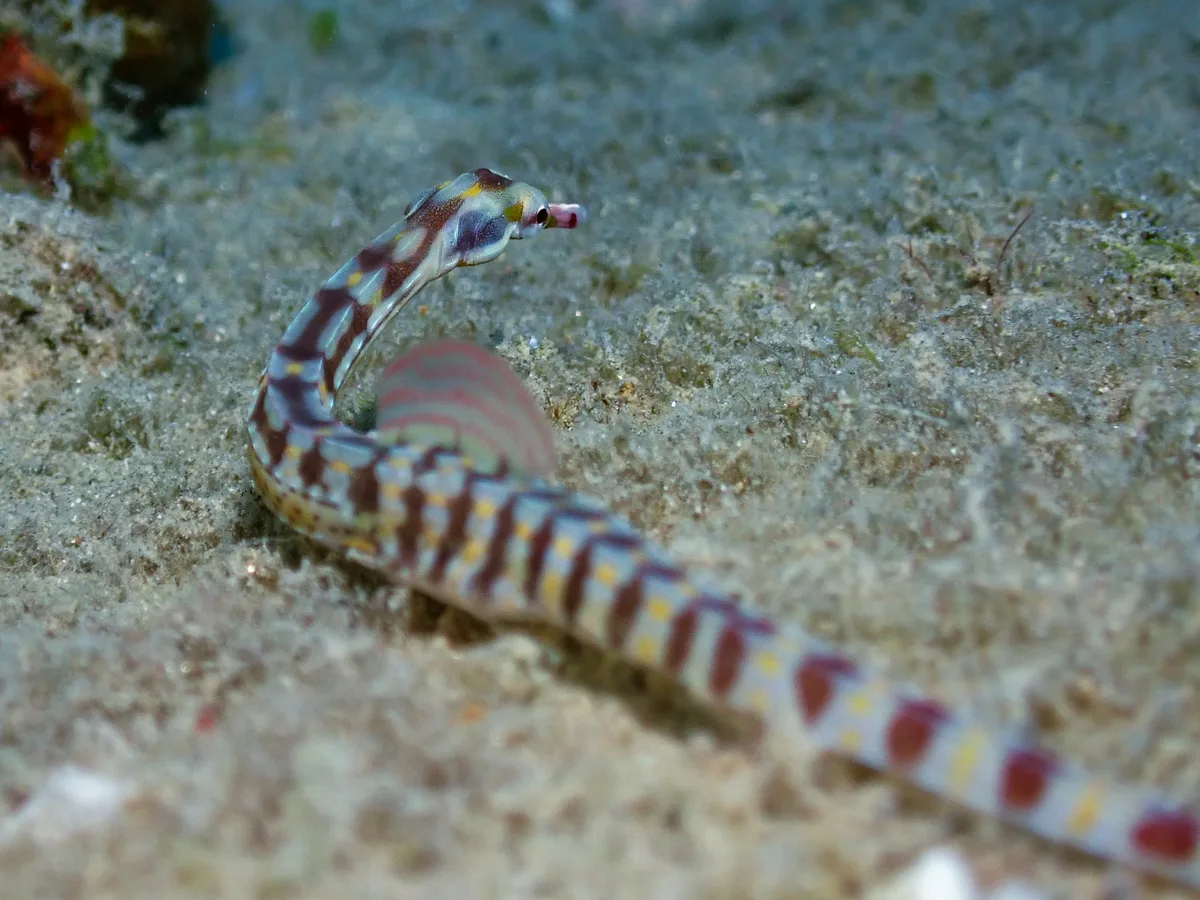
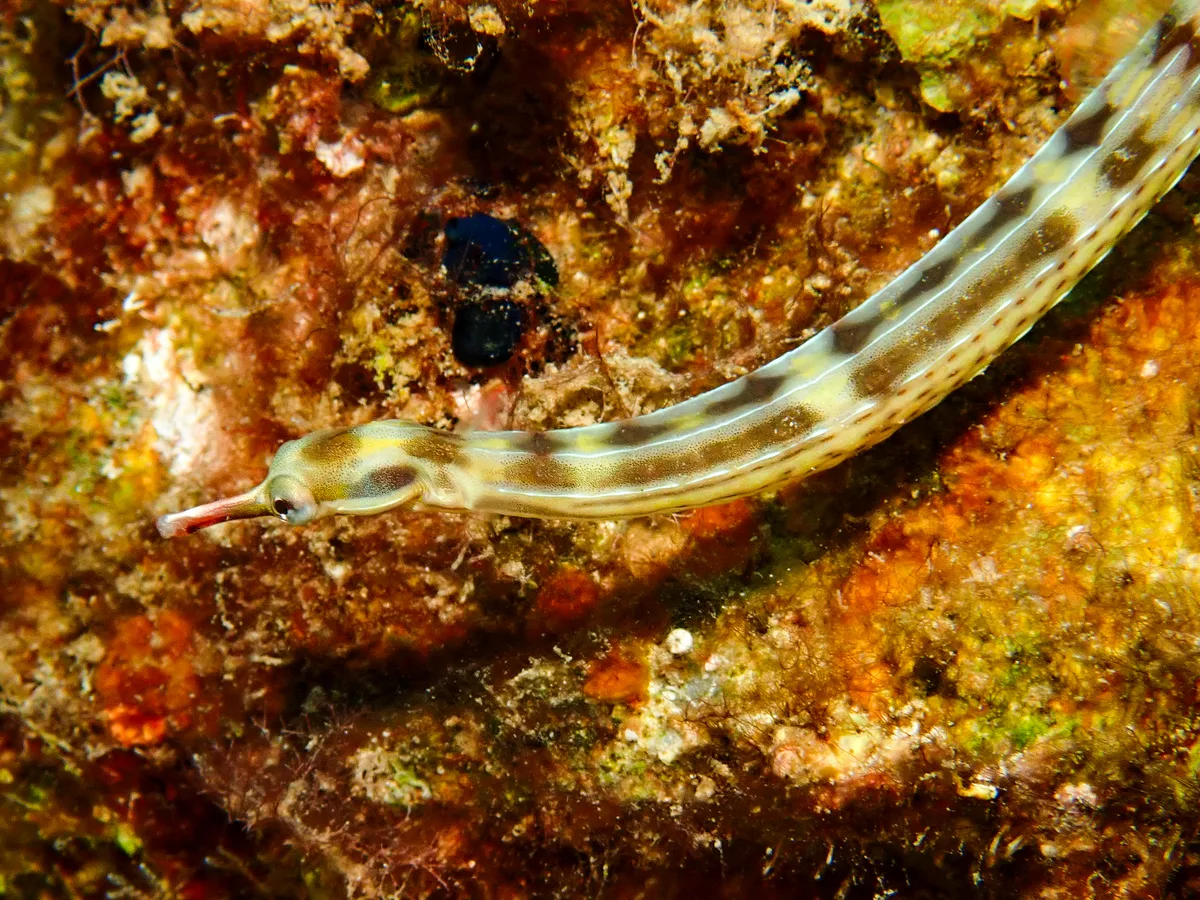
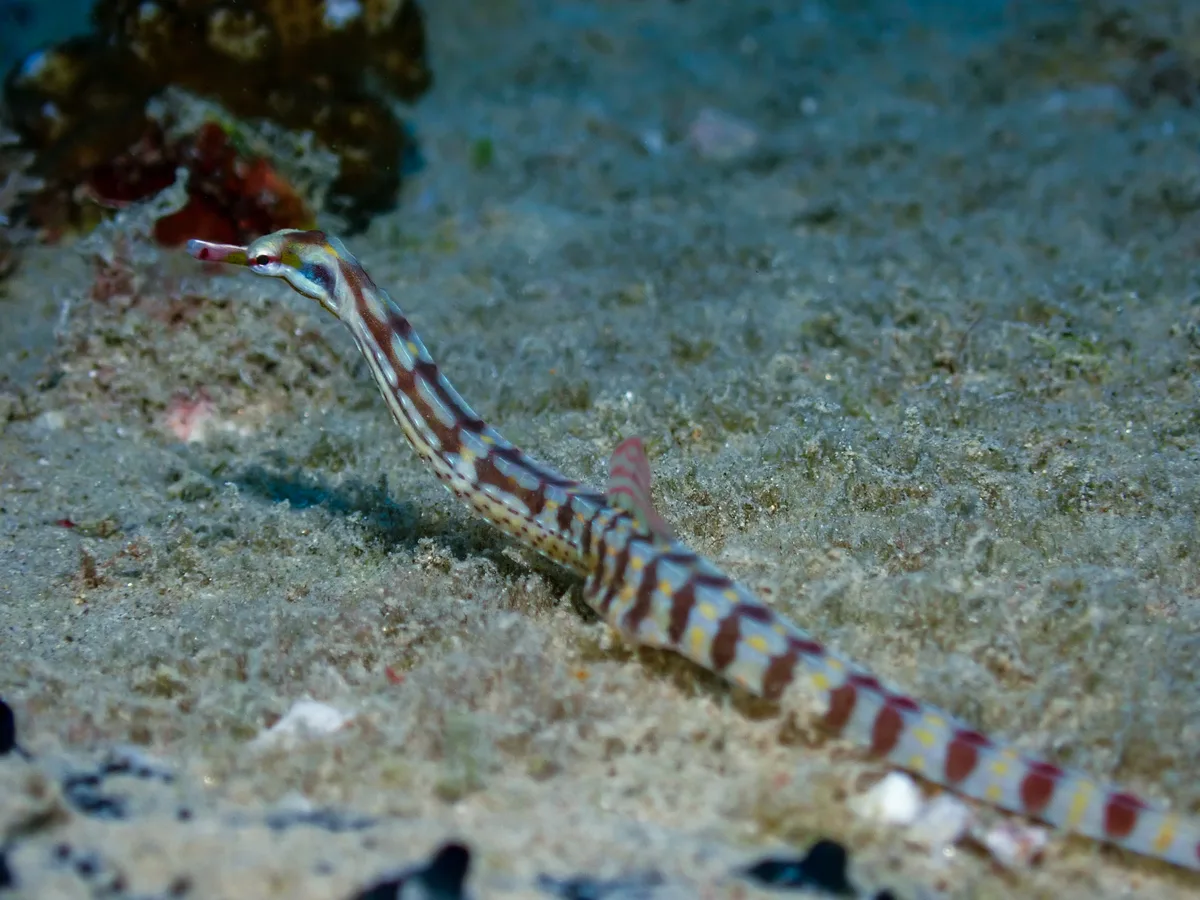
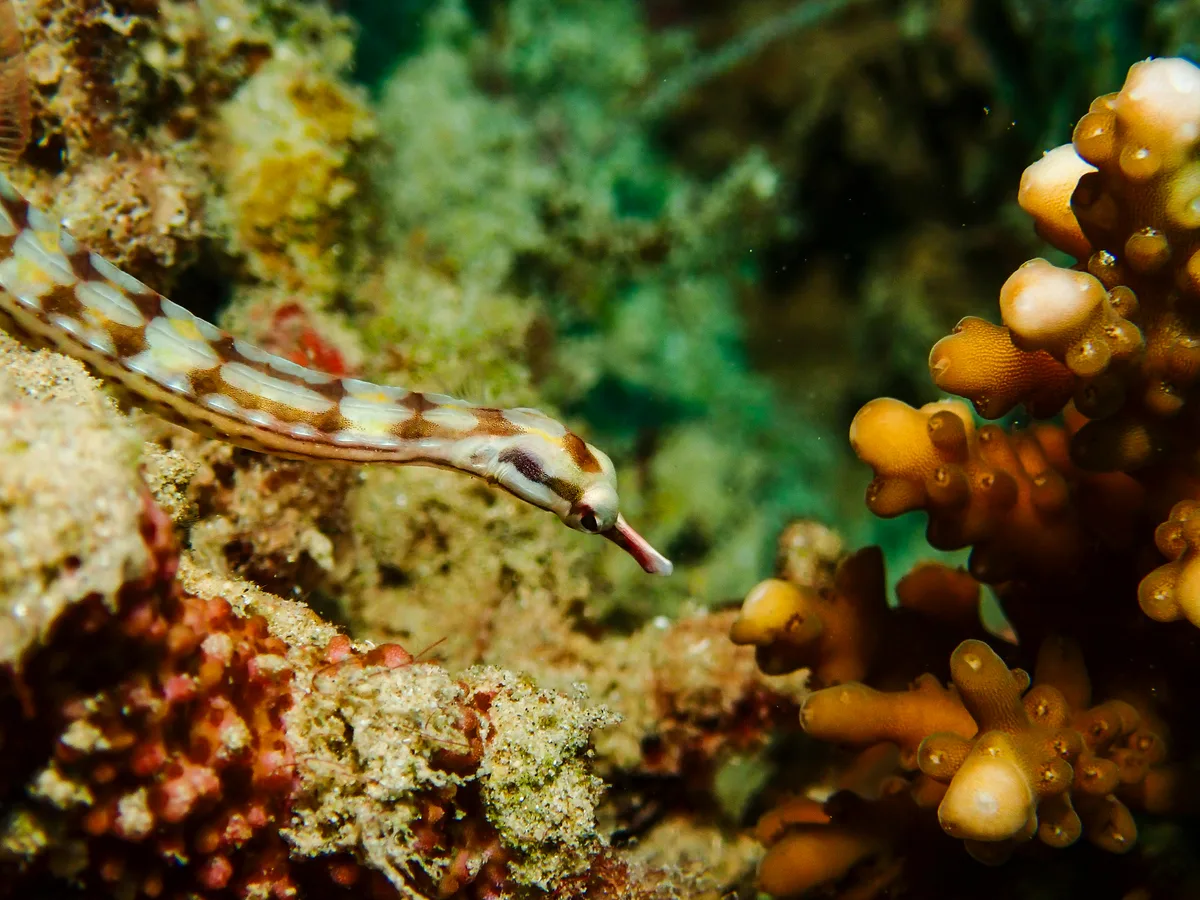
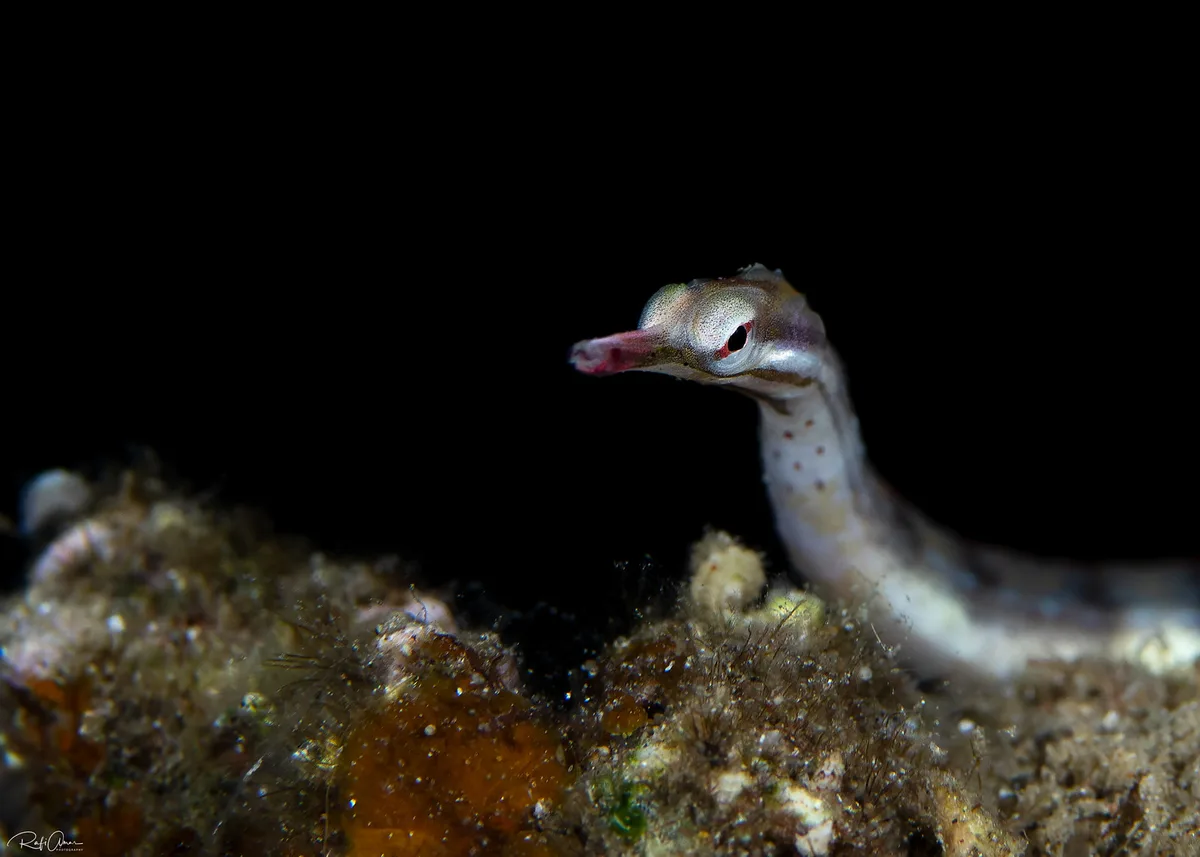
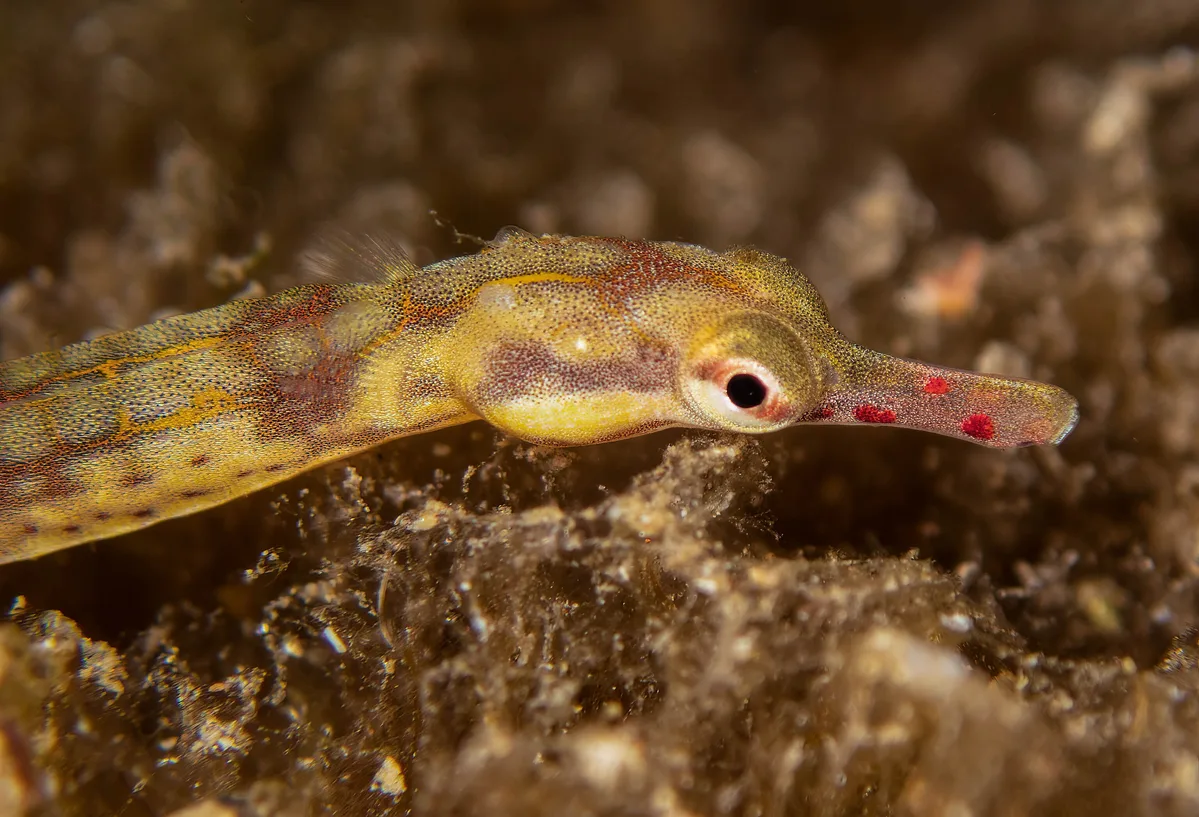
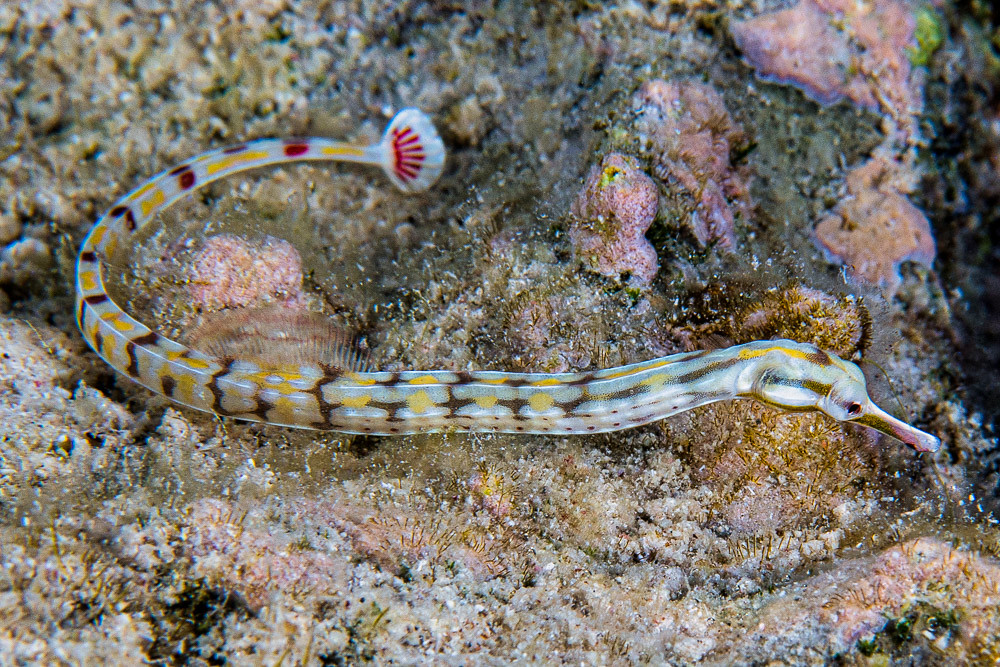
A stick of a fish, 12 cm (5 in), patterned in a fine brown network over cream, lying on rubble between corals and moving in short hovering shifts. Pipefish are seahorses stretched straight, and everything about the biology is the same except the posture.
The male carries the eggs, and in this genus he does it in the open: the eggs are pressed into a soft strip of skin on his belly rather than sealed inside a pouch, and the developing embryos are visible as rows of dots for the two weeks they take. The tissue supplies oxygen and takes away waste, so it is a real pregnancy with the door left open.
Pairs are long-term and territorial, and they greet each other each morning - a brief ritual of rising and circling that keeps the bond and synchronizes the next clutch.
Feeding is a series of tiny snaps. The tube snout sucks in copepods and other small crustaceans one at a time, hundreds of times a day, and a pipefish that stops finding them starves quickly because it has no stomach to store anything in.
Habitat shifting & alteration · Temperature extremes
The major threat to wild populations of Corythoichthys flavofasciatus is coral reef habitat loss due to coastal development, pollution, destructive fishing practices, and climate change (Bruno and Selig 2007, Carpenter et al. 2008, De'Ath et al. 2012). The rate of coral decline has not been quantified throughout the species range, but it is thought to be occurring over timeframes longer than ten years or three generation lengths. The species is also able to utilise several other habitat types.
Corythoicthys flavofasciatus may also be caught as bycatch in trawl fisheries, but this has not been observed or quantified.
Threat classification from the IUCN Red List.
Comments
Please, sign in to leave a comment
Continue with a social account - yours will be created automatically.