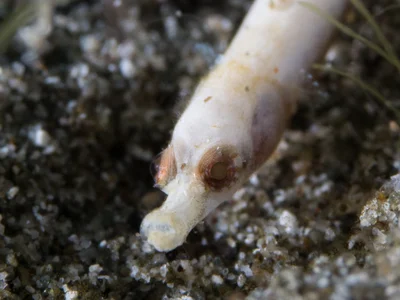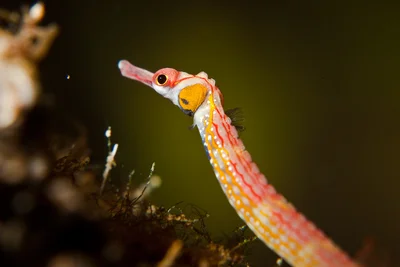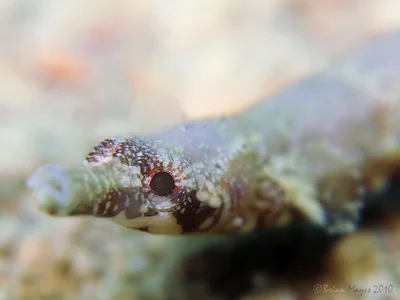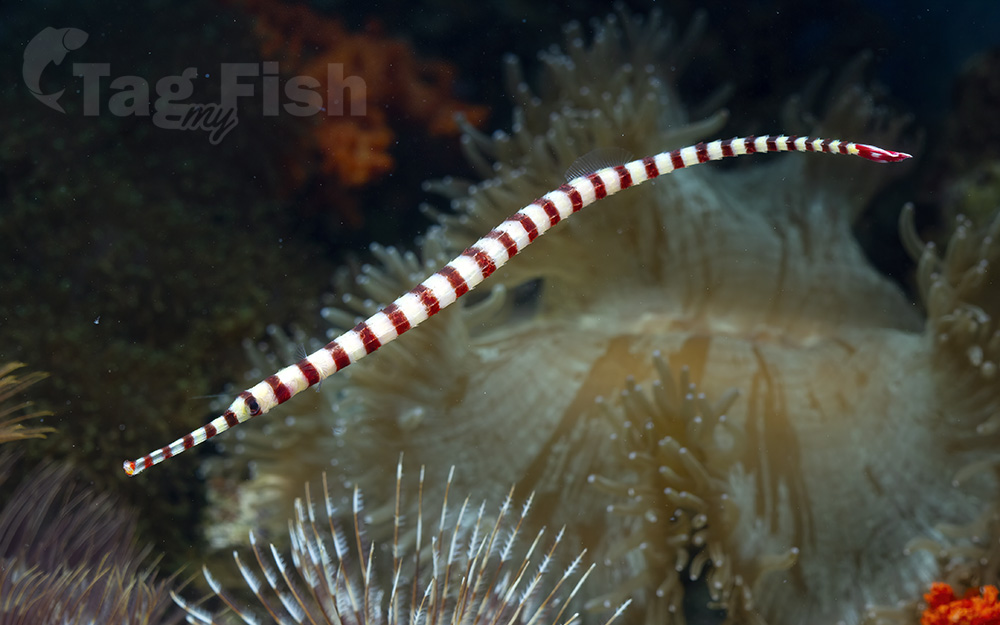
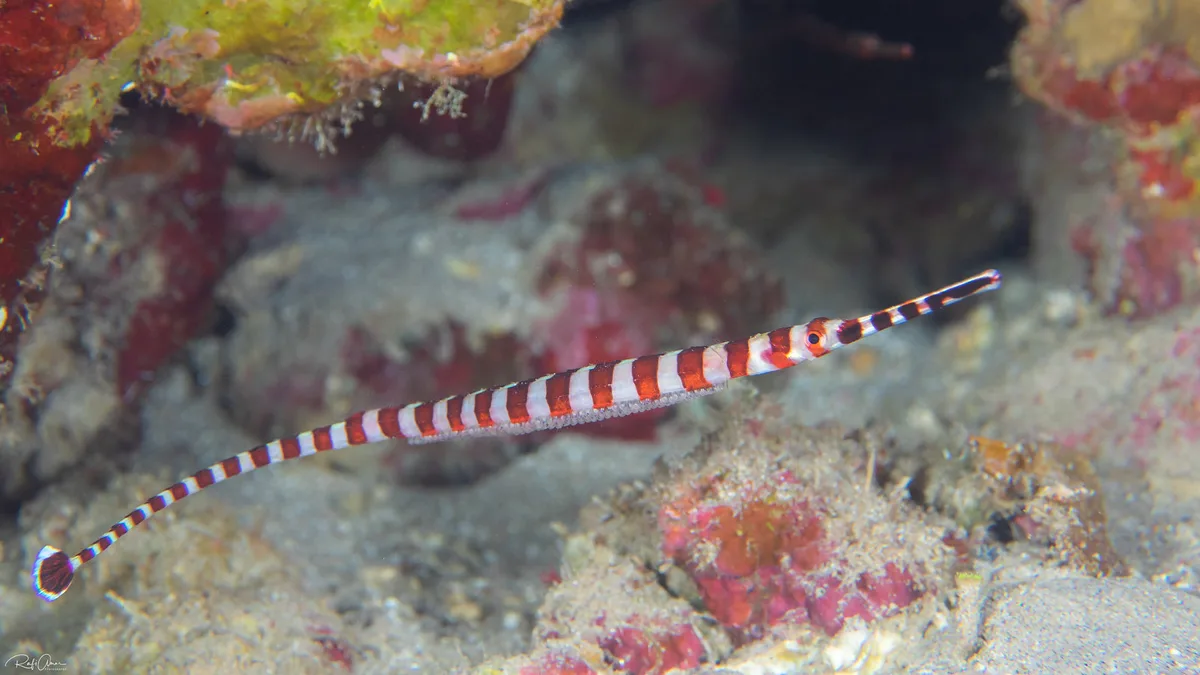
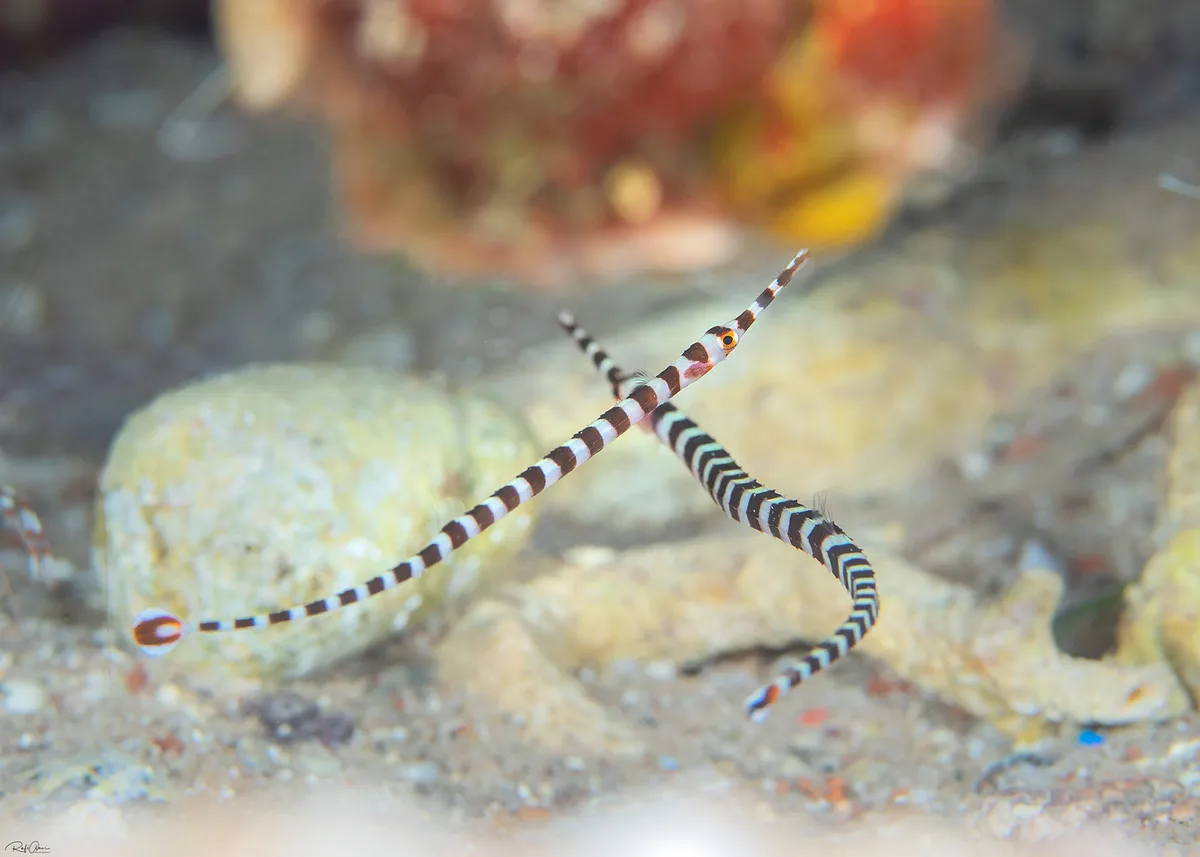
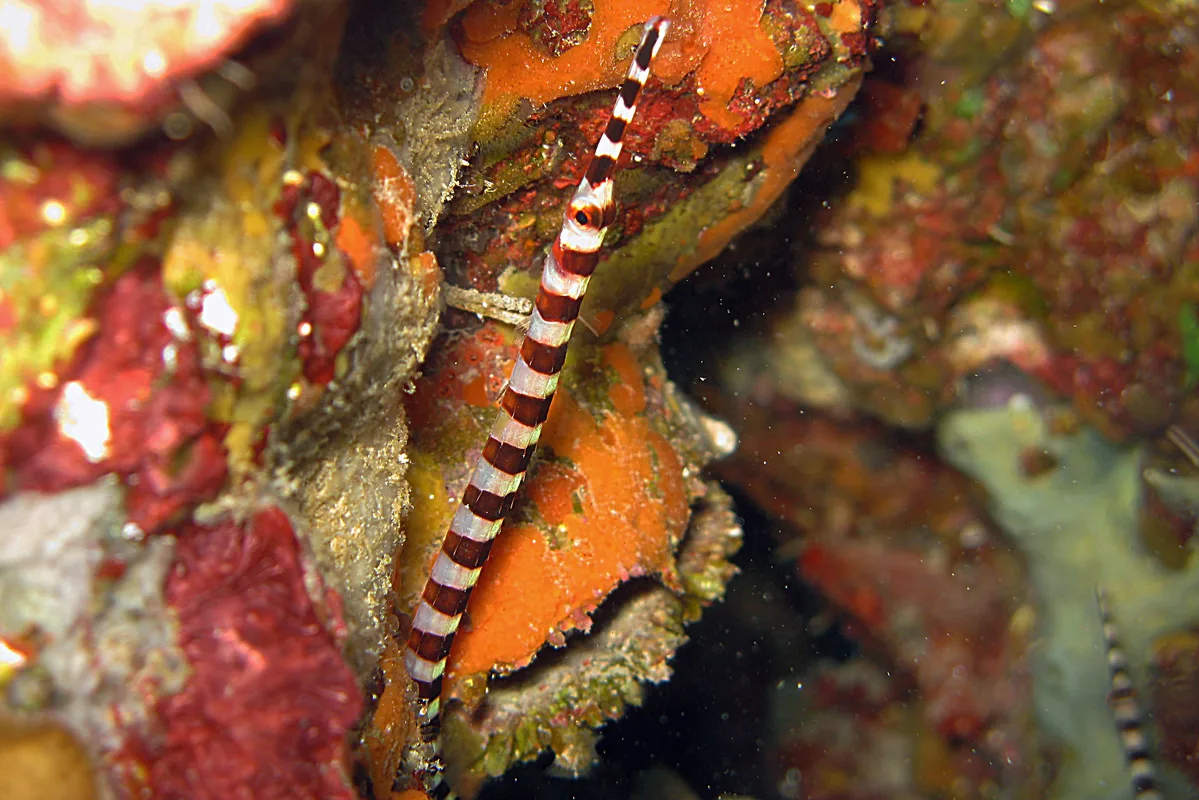
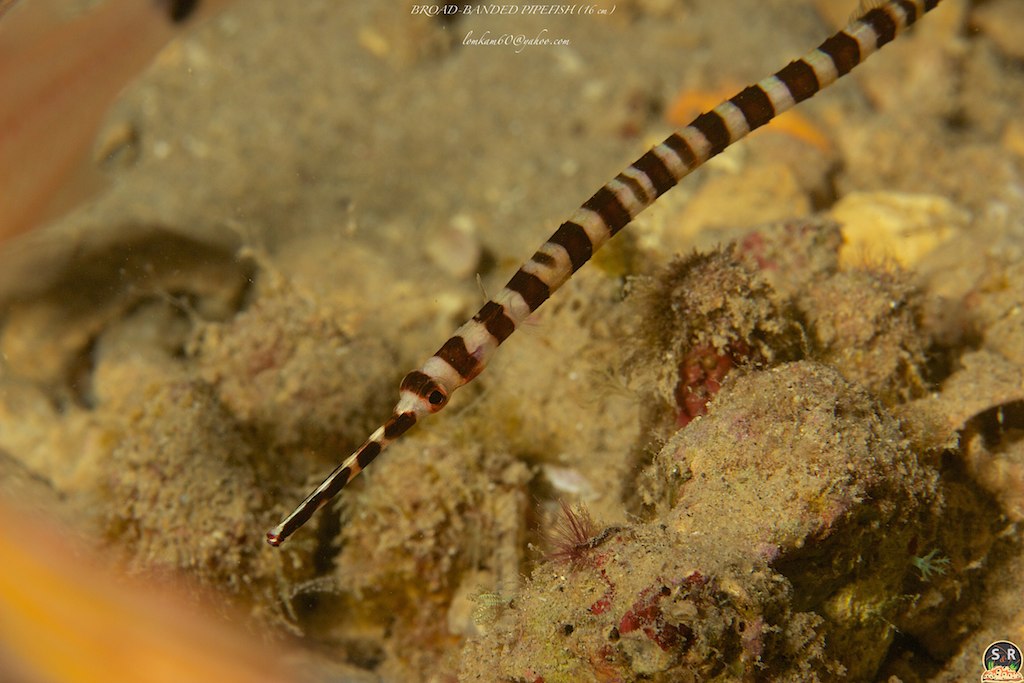
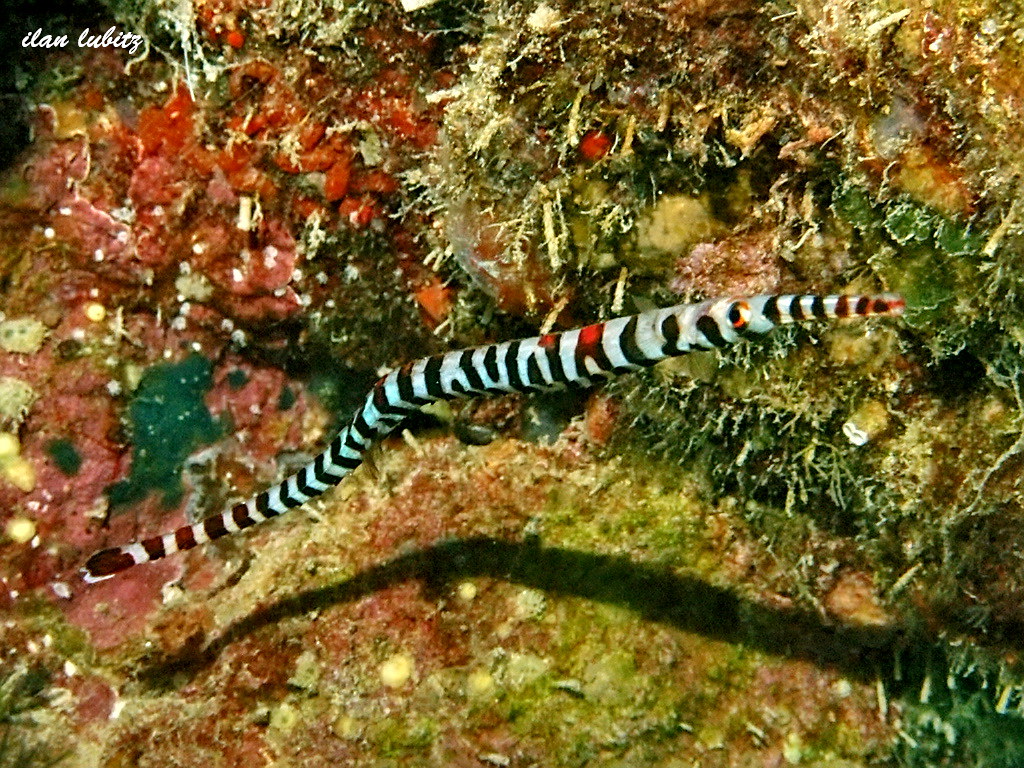
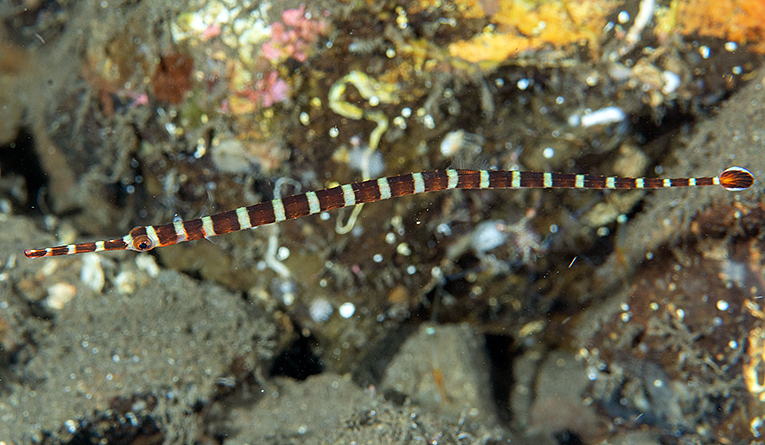
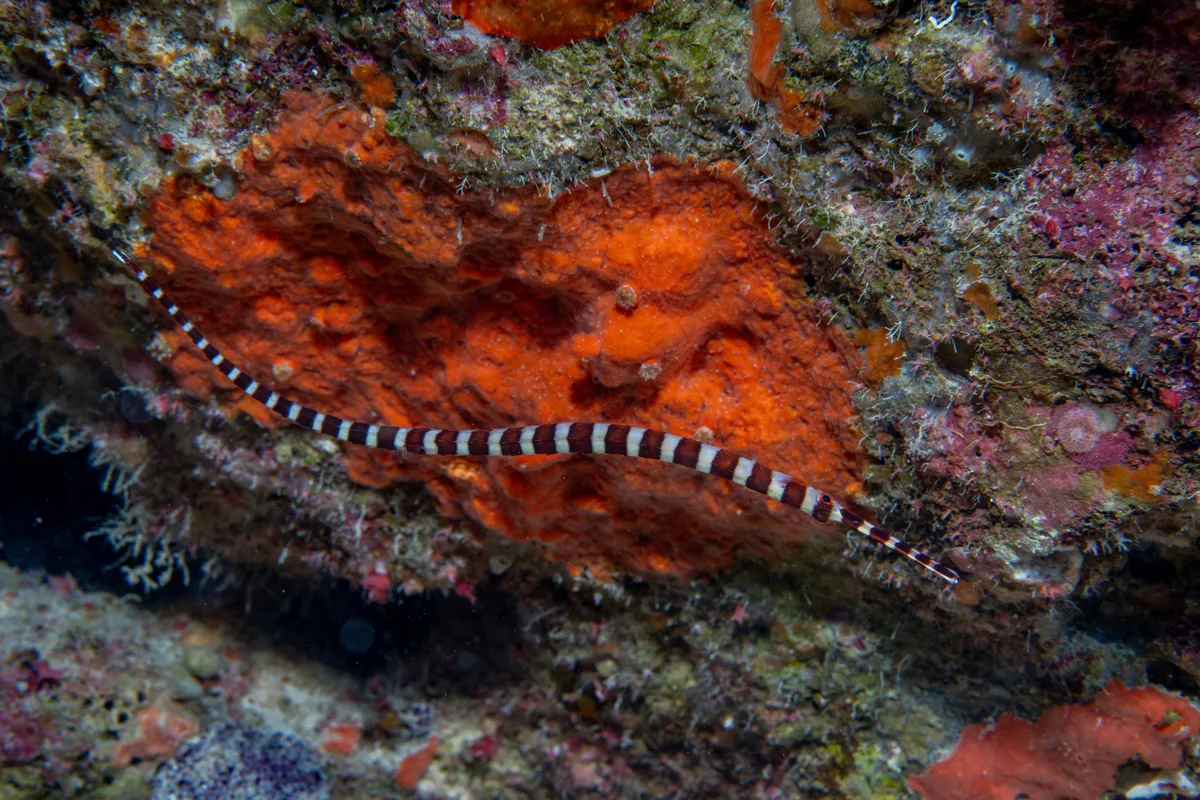
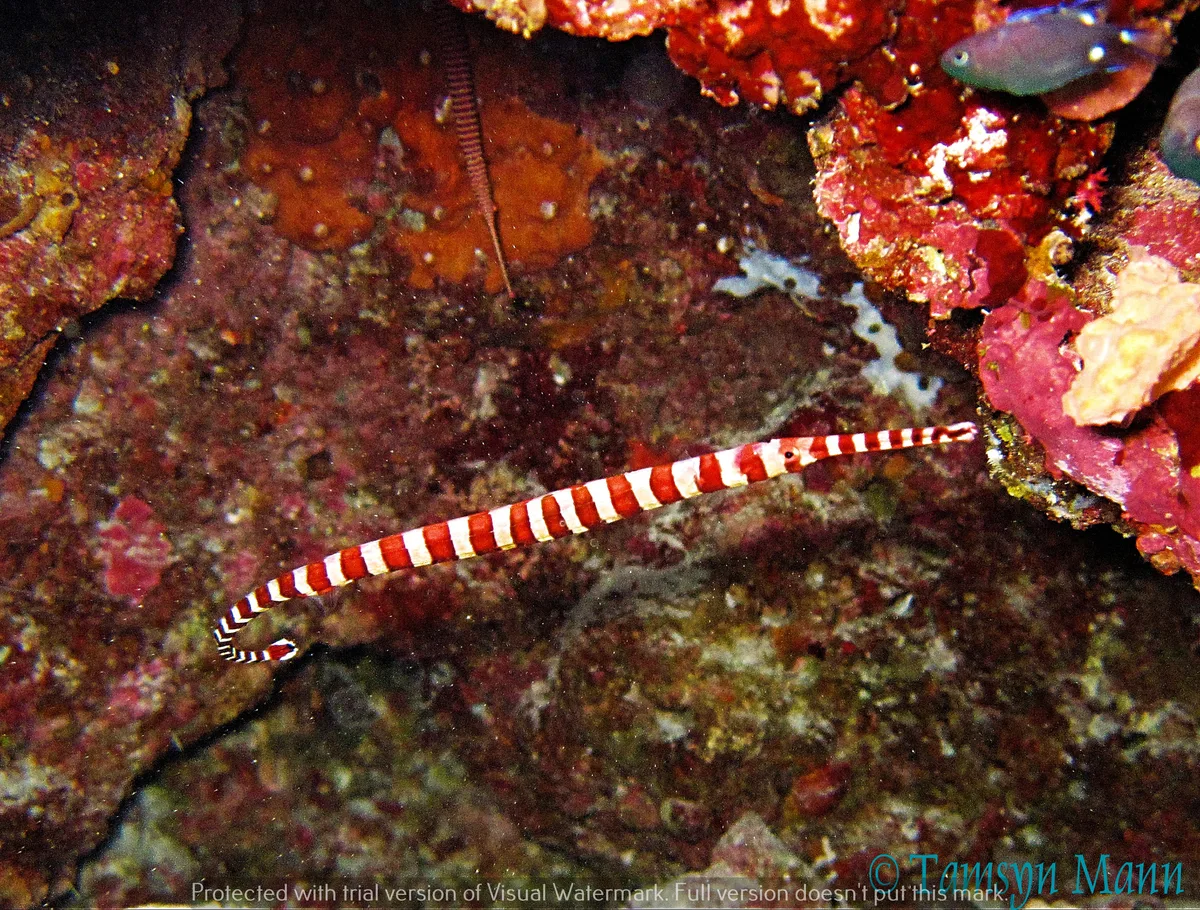
A banded pipefish of deep reef, sixteen centimeters (6 in), hovering under an overhang below twenty meters with its red and white tail fanned.
The banded pipefishes are the family's cleaners. They set up at a station, wave that paddle tail as a signal, and pick parasites and dead tissue off fish that come to them - the same trade the cleaner wrasse runs, done by an animal that cannot swim properly. Fish hold still for them, which for a slow, defenseless stick of a fish is remarkable.
This species stays deep - twenty to ninety-five meters, well past where most divers work - which is why it is rare in photographs and common in the records of technical divers.
Males brood the eggs under the tail. Pairs stay together, and both members of a pair often clean at the same station, which is worth watching for: two banded pipefish at one overhang is usually a couple rather than a crowd.
The genus. Dunckerocampus Whitley 1933 - Duncker (in honor of ichthyologist Georg Duncker) + kampos (mythological sea monster). ETYFish
The species. Dunckerocampus boylei Kuiter 1998 - Honours Bill Boyle. ETYFish
- bold dark red-brown bands on a white body, broader than in its relatives
- red and white paddle-shaped tail fin
- deeper than 20 m, in caves and under overhangs
- length up to 16 cm