Doryrhamphus excisus, commonly referred to as the blue-striped pipefish or blue-and-orange cleaner pipefish, is a distinguished species of flagtail pipefish within the genus Doryrhamphus. This species is widely distributed across much of the Indo-Pacific region as well as the tropical Eastern Pacific.
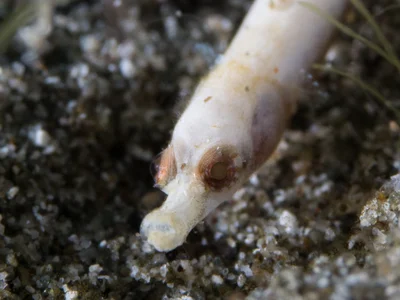
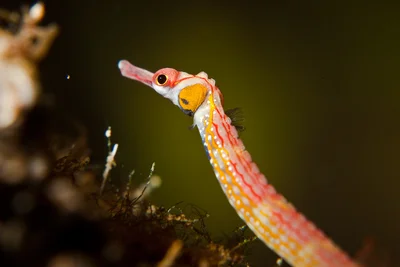
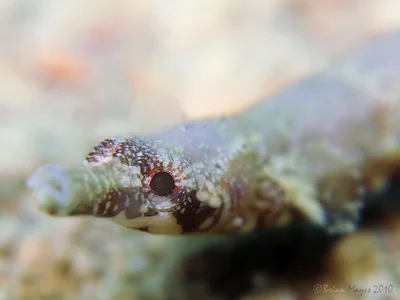
Characterized by its distinct bluish mid-lateral stripe set against an orange or reddish body, Doryrhamphus excisus is further notable for its fan-shaped tail. The caudal fin is rounded with a white outline and predominantly black interior. The species exhibits an elongated snout, with males featuring a series of bumps and hooks on the upper surface, whereas females possess a smooth snout. Both males and females typically attain a length of approximately 7 cm, with males reaching maturity at around 31 mm.
Doryrhamphus excisus boasts a broad geographic range, spanning from the 🌊 Persian Gulf to the coastlines of Central and South America. The species inhabits reef crevices in the Indo-Pacific and Western Pacific and has also been identified within tidal pools.
In ecological interactions, Doryrhamphus excisus engages in symbiotic relationships by inspecting larger fish for parasites. Males of the species may engage in competitive interactions, and they often hover in pairs. This pair activity is characterized by undulating swimming motions above the substrate, likely serving to attract larger fish for cleaning. Observations have noted these pipefish removing parasites from moray eels.
Reproductive behaviors include females depositing eggs into the male's brooding pouch, located on the underside of the male. This pouch provides the eggs with necessary oxygen and nutrients during development.
The diet of the blue-and-orange cleaner pipefish primarily comprises zooplankton, benthic invertebrates, and parasites collected from other fish species. Its specialized tube-like snout facilitates efficient feeding by allowing the rapid intake of water, capturing prey within.