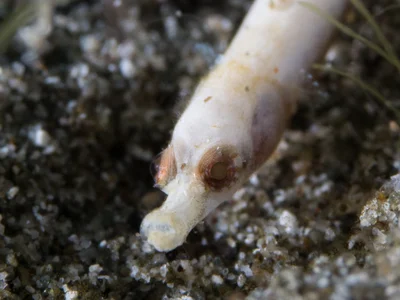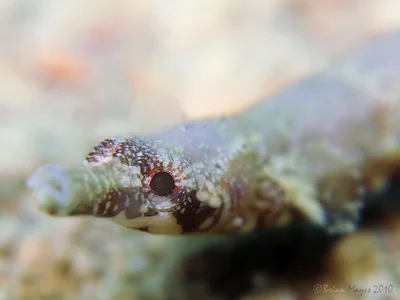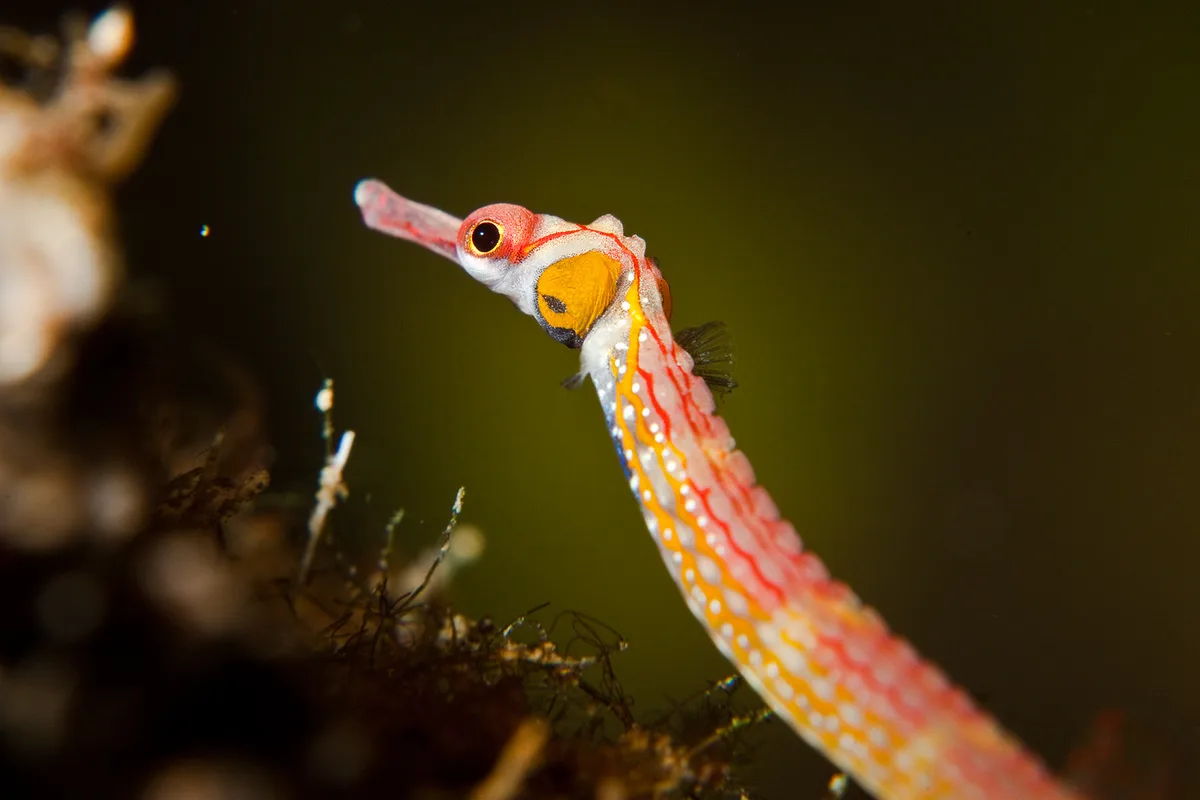
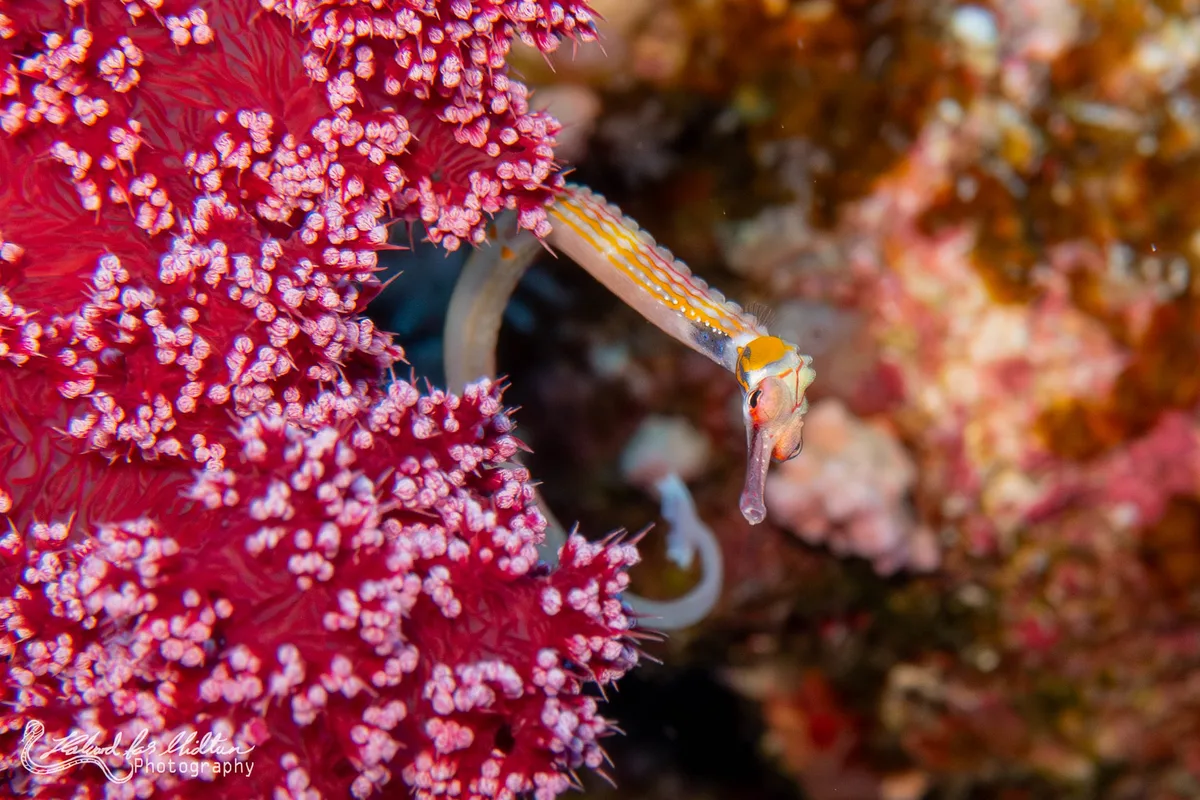
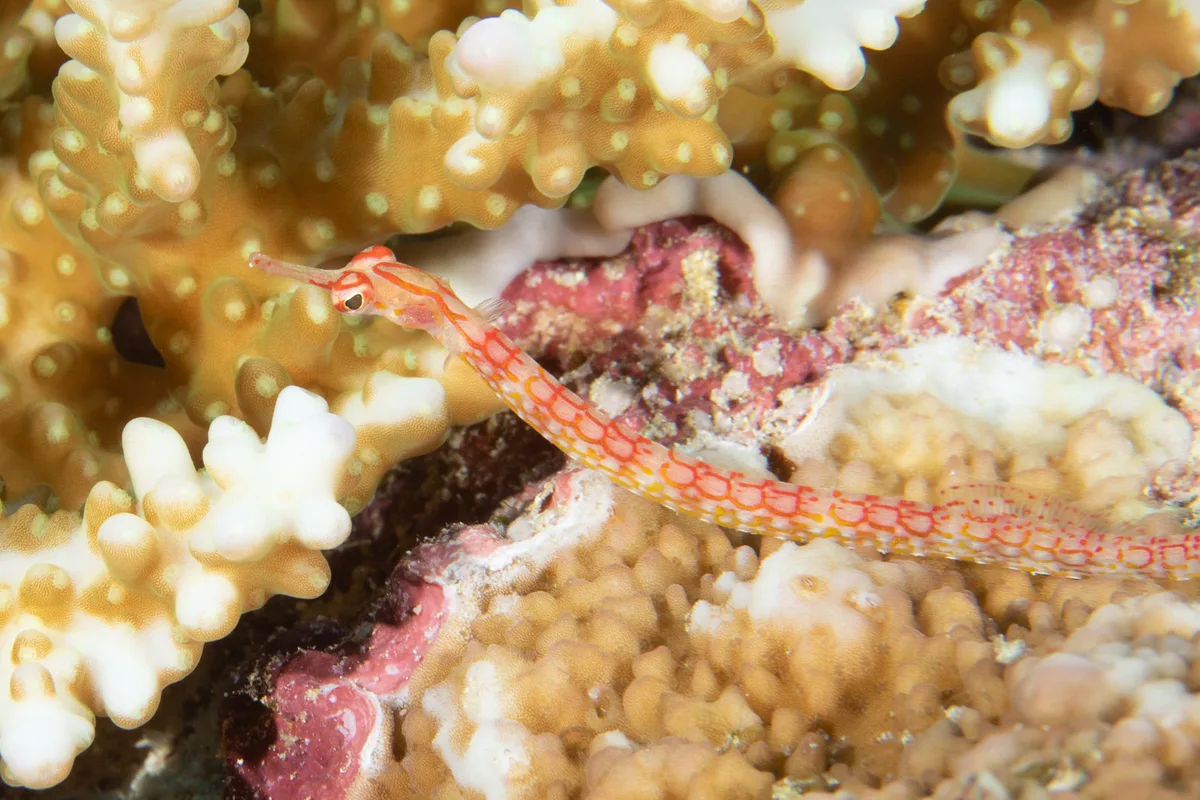
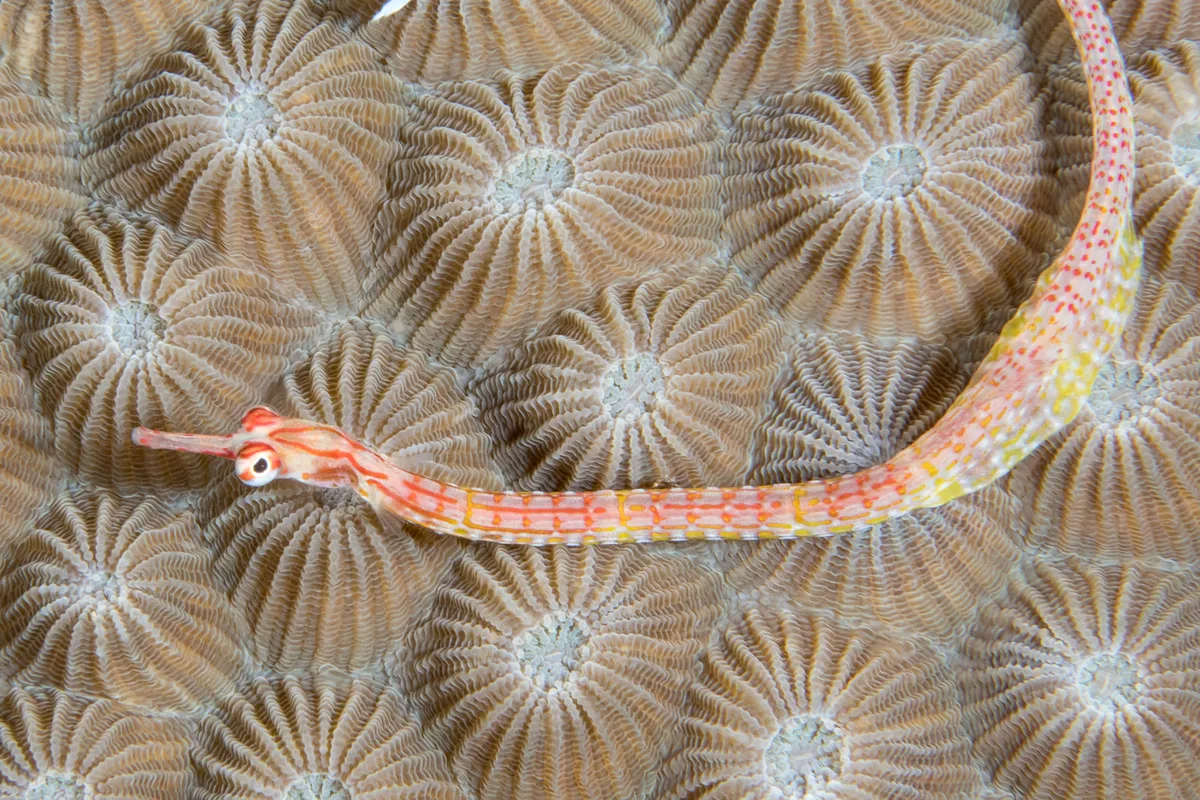
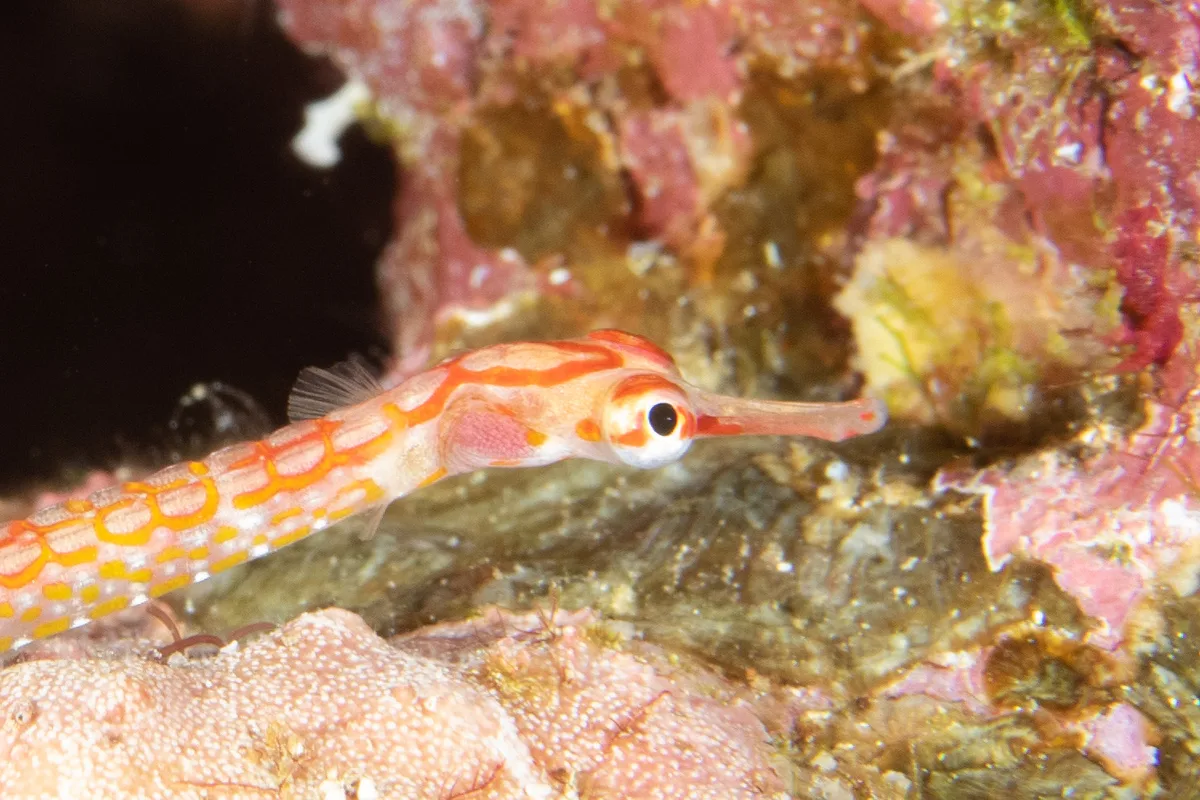
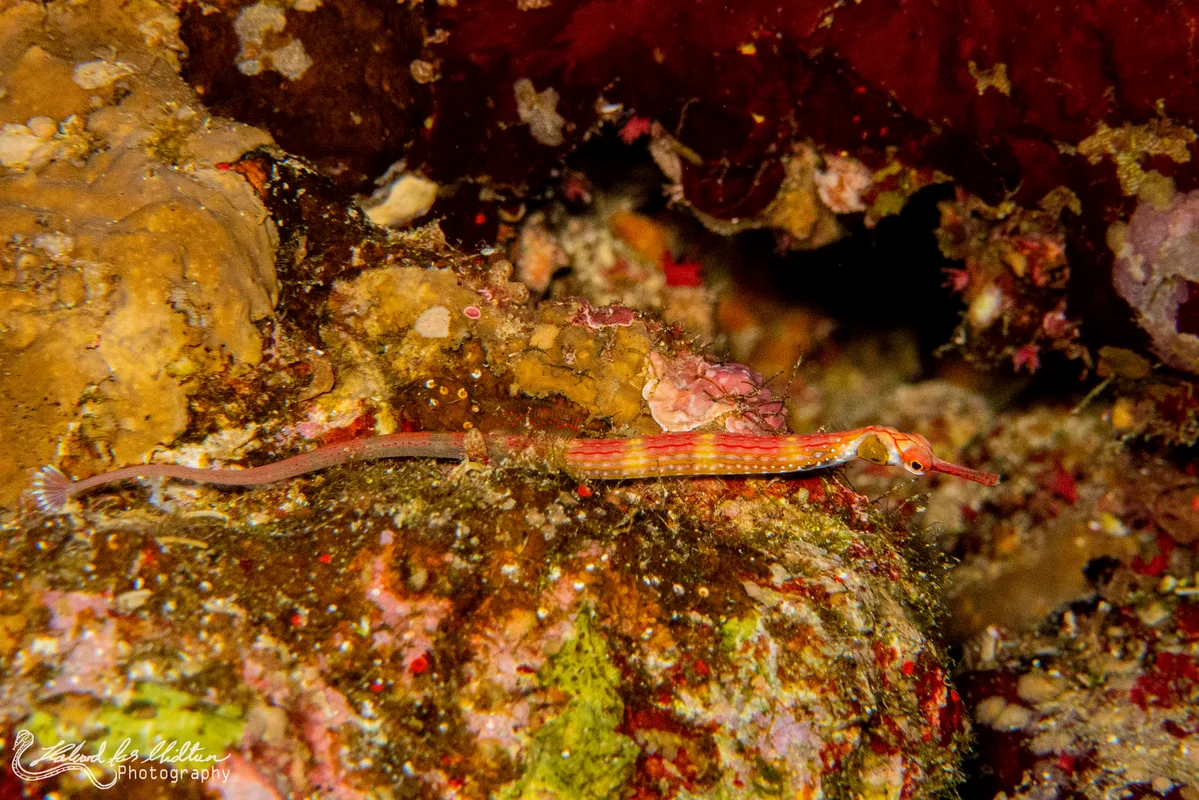
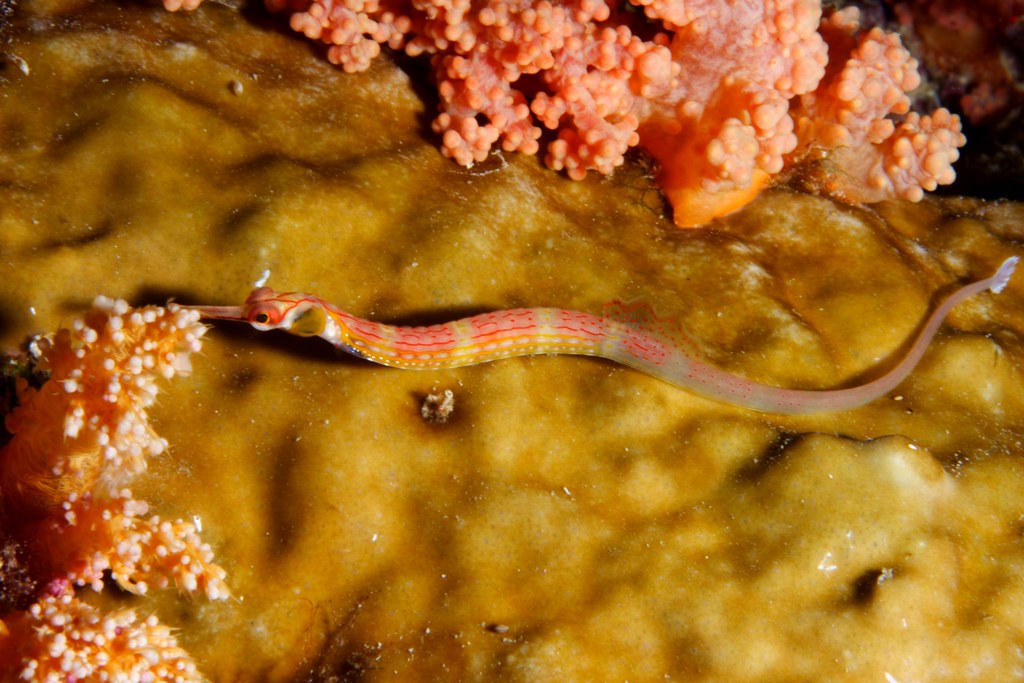
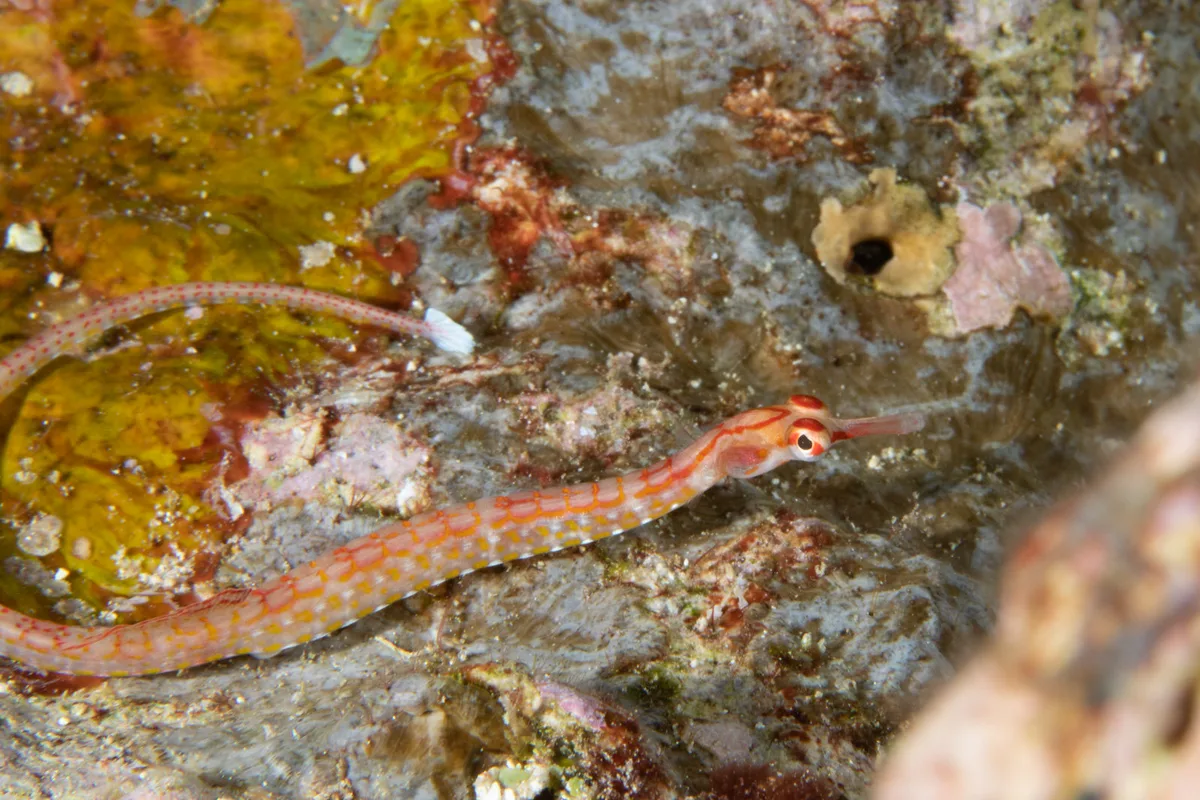
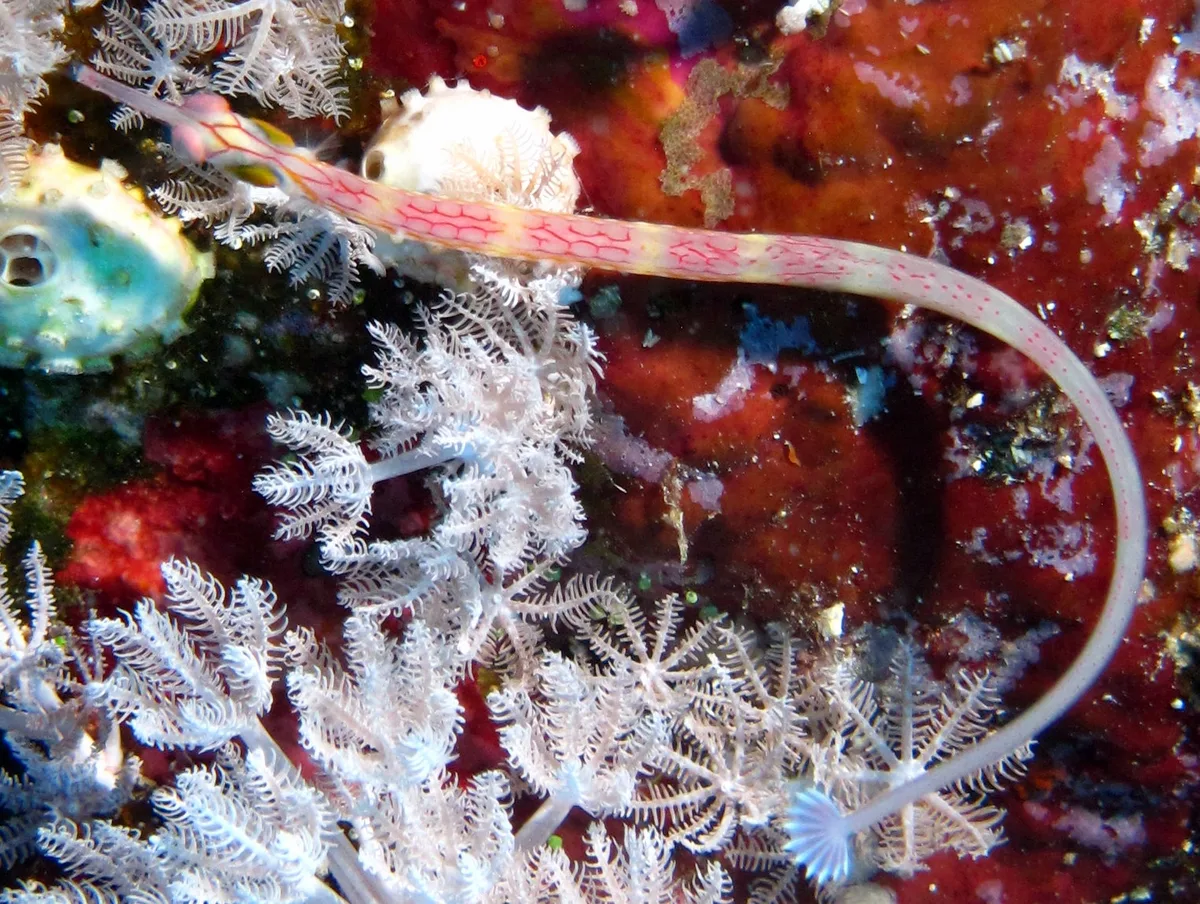
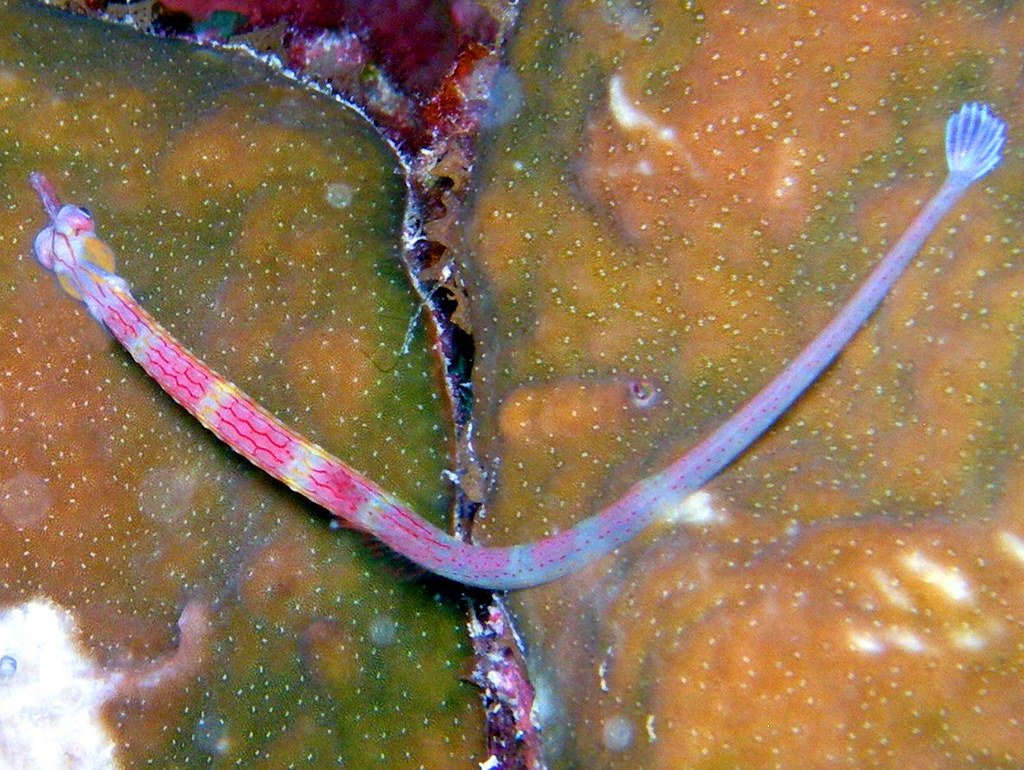
A slim pale pipefish with a dark chest, working rubble on a reef slope, eleven centimeters (4.5 in) long and never in a hurry.
The snout carries a net of fine lines, and in this genus that pattern is different on every individual - stable over time and unique, so researchers photograph the head and use it to tell animals apart the way manta rays are told apart by their bellies. Individuals stay on the same few square meters for months, which is what makes that possible.
They pair up and stay paired. The two fish greet each other every morning, feed within a meter of each other, and a female transfers eggs only to her own partner - a monogamy that is unusual among fish and thoroughly documented in this family.
It eats tiny crustaceans, sucked in one at a time through a snout that works as a pipette. There are no teeth and no jaws to speak of: the mouth at the end of the tube opens, the water rushes in, and the copepod goes with it.
The genus. Corythoichthys Kaup 1853 - corythos (helmet) + ichthys (fish). ETYFish
The species. Corythoichthys nigripectus Herald 1953 - nigri-. ETYFish
- slender pale body with fine dark bars and a dark patch on the chest
- snout marked with a network of fine lines, different on every animal
- usually in a pair, moving over rubble
- length up to 11 cm